In This Article
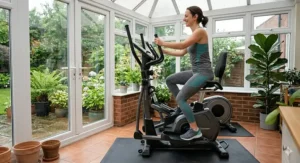
Picture this: you’ve just finished a long day at work, the British weather outside is doing its usual unpredictable thing, and the last thing you fancy is trudging to the gym. What if I told you there’s a fitness solution that combines two powerful cardio machines into one space-saving marvel? That’s precisely what a 2 in 1 cross trainer and exercise bike delivers.
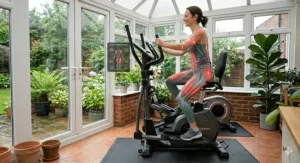
These ingenious hybrid machines are revolutionising home fitness across the UK, offering both elliptical cross-training and stationary cycling in a single unit. Whether you’re a fitness enthusiast in Manchester looking to maximise your spare room, or a busy parent in Brighton trying to squeeze workouts between school runs, these dual-function marvels could be your answer. The beauty lies in the versatility – one moment you’re enjoying a low-impact elliptical session that’s gentle on your knees, the next you’re sitting down for an intense cycling workout targeting different muscle groups entirely.
According to research from health experts, using a hybrid elliptical bike combo can engage multiple muscle groups simultaneously whilst being remarkably gentle on your joints. This makes them ideal for everyone from rehabilitation patients to seasoned athletes. With prices ranging from under £100 to over £300, there’s genuinely something for every budget and fitness level in today’s UK market.
Quick Comparison Table
| Product | Price Range | Max Weight | Key Features | Rating |
|---|---|---|---|---|
| Neezee 2 in 1 Cross Trainer | £149.99-£199.99 | 120kg | LCD monitor, pulse sensor, UKCA certified | 4.5/5 ⭐ |
| Pro XS Sports 2-in-1 | £138.99 | 110kg | Front-mounted flywheel, dual direction | 4.2/5 ⭐ |
| Cowmew Elliptical Trainer | £150-£180 | 120kg (265lbs) | Adjustable seat, 12-month warranty | 4.3/5 ⭐ |
| Opti 2 in 1 Magnetic | £100-£120 | 110kg | 8 resistance levels, 3kg flywheel | 4.0/5 ⭐ |
| Confidence 2 in 1 | £80-£110 | 110kg | Adjustable resistance, compact design | 3.9/5 ⭐ |
| Opti Air Cross Trainer | £90-£110 | 100kg | Air resistance, self-levelling pedals | 3.8/5 ⭐ |
| RevXtreme Old Skool 2.0 | £140-£170 | 110kg | Fan blades, multiple colours available | 4.1/5 ⭐ |
💬 Just one click – help others make better buying decisions too! 😊
Top 7 2 in 1 Cross Trainer and Exercise Bike: Expert Analysis
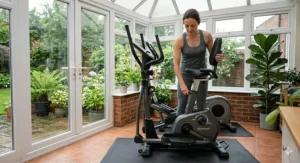
1. Neezee 2 in 1 Cross Trainer with Pulse Sensor and LCD Monitor
The Neezee 2 in 1 Cross Trainer has become somewhat of a legend in UK home gyms, and for good reason. This machine exemplifies what happens when engineering meets practicality.
Key Specifications:
- Maximum weight capacity: 120kg (264lbs)
- Adjustable resistance settings
- Multi-function LCD display tracking pulse, time, speed, distance, calories
- UKCA and CE certified
- Dimensions: 91cm x 51cm footprint
Real UK Customer Feedback: One South London user reported: “The frame is reassuringly chunky, and even at 99kg I can stamp on the pedals without so much as a tremble from the steel. The flywheel rolls around smoothly too, which means the couple downstairs can carry on streaming their box sets in blissful ignorance.”
Pros:
✅ Sturdy steel frame provides excellent stability
✅ Ultra-quiet operation ideal for flats and apartments
✅ Ergonomic design with adjustable seat suits various heights
✅ Transport wheels for easy movement and storage
Cons:
❌ Assembly can take 30-45 minutes
❌ Electronic display positioning requires manual adjustment
Price Range: £149.99-£199.99 (often with promotional vouchers on Amazon.co.uk)
2. Pro XS Sports 2-in-1 Elliptical Cross Trainer Exercise Bike
The Pro XS Sports model represents exceptional value in the mid-range segment. It’s particularly popular amongst fitness beginners who want quality without breaking the bank.
Key Specifications:
- Maximum user weight: 110kg
- Front-mounted flywheel for added stability
- Multi-function LCD display with scan mode
- Dual direction elliptical workout (forward and backward)
- Extra-wide platform pedals
- UK size 12 maximum foot size
Real UK Customer Feedback: Users consistently praise its ease of assembly and straightforward operation. Many mention it’s brilliant for those who “need to lose a few stone” but appreciate being able to work at their own pace without feeling overwhelmed.
Pros:
✅ Front-mounted flywheel enhances stability during intense workouts
✅ Dual-direction motion targets different muscle groups
✅ Extra-wide pedals accommodate larger feet comfortably
✅ Moving stride bars for comprehensive upper body engagement
Cons:
❌ Some customers report missing screws in delivery
❌ Seat may require additional padding for extended use
Price Range: £138.99
3. Cowmew Elliptical Cross Trainer 2 in 1 with Adjustable Seat
The Cowmew brand has carved out a niche for itself by focusing on ergonomic comfort without compromising on functionality.
Key Specifications:
- Maximum weight capacity: 120kg (265lbs)
- Adjustable seat and resistance levels
- LCD monitor with pulse sensor
- Adjustable footpads for use on carpets or floors
- Transport wheels for mobility
- 12-month parts replacement warranty
Real UK Customer Feedback: The machine receives particular praise for its customer service and comprehensive assembly videos available on the product page, making setup considerably less daunting.
Pros:
✅ Excellent stability on various floor surfaces
✅ Comprehensive 12-month warranty with responsive customer service
✅ Adjustable footpads prevent wobbling on uneven floors
✅ Video assembly guides simplify setup process
Cons:
❌ Limited stock availability (often shows “Only 6 left”)
❌ Slightly higher price point than budget alternatives
Price Range: £150-£180
4. Opti 2 in 1 Magnetic Cross Trainer and Exercise Bike
Available from Argos and various UK retailers, the Opti Magnetic version represents the sweet spot between affordability and quality. It’s particularly suited for UK homes where space is at a premium.
Key Specifications:
- Maximum user weight: 110kg (17st 5lb)
- 8-level magnetic resistance
- 3kg flywheel
- Hand grip pulse sensor
- 42-inch (107cm) stride length
- Console displays: pulse, heart rate, speed, time, distance, calories
- Dimensions: H144cm x W110.5cm x D69cm
Real UK Customer Feedback: Users from across England, Wales and Scotland report it’s “smooth, quiet and with an adjustable seat, it’s a workout wonder for the home.” The magnetic resistance system is particularly appreciated for whisper-quiet operation.
Pros:
✅ Magnetic resistance ensures ultra-quiet operation
✅ Widely available through Argos for convenient collection
✅ 8 resistance levels suit beginners through to intermediate users
✅ Compact enough for most UK living spaces
Cons:
❌ Requires 2 x AA batteries (not included)
❌ 42-inch stride may feel short for taller users (over 6ft/183cm)
Price Range: £100-£120
5. Confidence 2 in 1 Elliptical Cross Trainer & Bike
The Confidence brand offers one of the most budget-friendly options without completely sacrificing quality. It’s ideal for fitness newcomers testing the waters.
Key Specifications:
- Maximum user weight: 110kg
- Adjustable resistance
- Onboard computer tracking: time, speed, distance, calories
- Forward and reverse motion capability
- Dimensions: 128cm (L) x 50.5cm (W) x 154cm (H)
Real UK Customer Feedback: Customers appreciate the balance between cost and functionality, noting it “does what it says on the tin” and proves that quality doesn’t always require a hefty price tag. One buyer mentioned assembly took about 30 minutes, taking their time.
Pros:
✅ Excellent entry-level price point
✅ Straightforward assembly with clear instructions
✅ Burns 5 times more calories than walking (manufacturer claim)
✅ Bidirectional motion for workout variety
Cons:
❌ Build quality doesn’t match premium models
❌ Less stable during very intense workouts
Price Range: £80-£110
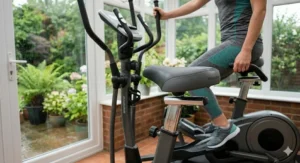
6. Opti 2 in 1 Air Cross Trainer and Exercise Bike
The air resistance variant from Opti takes a different approach to the resistance mechanism, offering a more traditional feel that some users prefer.
Key Specifications:
- Maximum user weight: 100kg (15st 10lb)
- Air resistance system
- Console displays: speed, distance, calories
- Free tension control
- 1.9kg flywheel
- Self-levelling pedals
- Weight: 25.5kg
- Includes transport wheels
Real UK Customer Feedback: Many second-hand listings on Gumtree testify to its durability, with sellers often noting it’s “hardly used” or “lightly used” even after years. The air resistance creates a cooling breeze during workouts, which users find refreshing.
Pros:
✅ Air resistance provides natural-feeling workout progression
✅ Self-levelling pedals accommodate natural foot positioning
✅ Lightweight at 25.5kg for easy relocation
✅ Simple, reliable mechanism with fewer electronic components
Cons:
❌ Lower maximum weight capacity at 100kg
❌ Fewer digital tracking features compared to LCD models
Price Range: £90-£110
7. RevXtreme Old Skool 2.0 Cross Trainer and Exercise Bike
The RevXtreme Old Skool 2.0 stands out with its retro aesthetic and unique features. Available in four colours (blue, red, pink, and yellow), it’s perfect for those who want their fitness equipment to make a statement.
Key Specifications:
- Maximum user weight: 110kg (estimated)
- High-momentum fan blades
- Vertically adjustable seat
- Adjustable tension knob
- Console tracks: time, speed, distance, calories
- Available in 4 vibrant colours
Real UK Customer Feedback: The aesthetic appeal coupled with functional performance makes this a popular choice for home gyms where design matters. The fan blades create a genuine cooling effect during workouts.
Pros:
✅ Unique colour options personalise your home gym
✅ Fan blades provide natural cooling during intense workouts
✅ Easily converts between cross trainer and exercise bik
✅ Adjustable tension suits various fitness levels
Cons:
❌ Fan noise may be louder than magnetic resistance models
❌ Less widely available than mainstream brands
Price Range: £140-£170
What Is a 2 in 1 Cross Trainer and Exercise Bike? Understanding the Hybrid Concept
A 2 in 1 cross trainer and exercise bike is a versatile cardio machine home solution that combines elliptical motion with seated cycling functionality. Unlike traditional single-purpose machines, these hybrid units switch between two distinct workout modes within seconds, delivering comprehensive cardiovascular training without requiring separate equipment.
The elliptical cross trainer component provides a standing, gliding motion that mimics natural walking or running whilst simultaneously engaging your upper body through moving handlebars. According to research from health experts, this low-impact exercise reduces stress on joints by up to 70% compared to running whilst still burning 270-400 calories per 30-minute session depending on intensity and body weight.
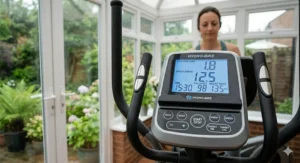
The exercise bike element transforms the same machine into a seated cardiovascular workout, targeting your lower body with adjustable resistance. This dual function exercise equipment eliminates the need for purchasing and storing two separate machines, making it ideal for UK homes where space comes at a premium. Most models feature adjustable seats, multiple resistance levels, and LCD monitors tracking essential metrics like heart rate, distance, and calories burned.
Benefits of Workout Variety: Why Dual-Function Machines Win 🏆
Comprehensive Muscle Engagement
One of the most compelling advantages of a 2 in 1 cross trainer and exercise bike lies in its ability to target different muscle groups through varied workout positions. The NHS recommends 150 minutes of moderate-intensity aerobic activity weekly, and these versatile cardio machine home options make hitting that target surprisingly achievable.
When you’re using the elliptical function, you’re engaging:
- Upper body: shoulders, biceps, triceps, chest, and back muscles
- Lower body: quadriceps, hamstrings, glutes, and calves
- Core: abdominal muscles and lower back for stability
Switch to bike mode, and you shift focus intensely to your lower body whilst giving your upper body a rest. This natural rotation prevents overuse injuries and keeps workouts mentally engaging.
Joint-Friendly Cardio for All Ages
The British Journal of Sports Medicine has extensively documented the benefits of low-impact cardiovascular exercise, particularly for individuals with joint concerns. A hybrid elliptical bike combo delivers this beautifully. The elliptical motion eliminates the jarring impact associated with running—your feet never leave the pedals, creating a smooth, circular movement that protects knees, hips, and ankles.
For those recovering from injuries, managing arthritis, or simply concerned about long-term joint health, this matters enormously. You can maintain cardiovascular fitness and muscle strength without aggravating existing conditions or creating new problems.
Calorie Burning Efficiency
Research indicates that 30 minutes on an elliptical can burn between 270-400 calories, whilst cycling typically burns 210-310 calories in the same timeframe (depending on intensity and individual factors). Having both options available means you can:
Target different energy systems: Alternate between steady-state cardio and high-intensity intervals Break through plateaus: When your body adapts to one motion, switch to the other Extend workout duration: Reduce monotony by changing modes mid-session
This workout variety benefits your results tremendously. Your body doesn’t get the chance to become overly efficient at one movement pattern, maintaining higher calorie burn throughout your fitness journey.
Space Saving Multi-Function Design: Maximising Your UK Home Gym 📐
The Reality of British Home Sizes
Let’s be honest—the average UK home isn’t exactly blessed with sprawling square footage. According to recent housing data, British homes are amongst the smallest in Europe, with the average new-build measuring just 76 square metres (818 square feet). This space saving multi-function equipment isn’t just convenient; it’s often essential.
A convertible exercise machine eliminates the need for:
- A separate elliptical trainer (typically 1.5-2 metres long)
- A standalone exercise bike (usually 1-1.3 metres long)
- Additional storage solutions for two pieces of equipment
Most 2 in 1 models have a footprint of approximately 90-110cm in length and 50-70cm in width—roughly the size of a small armchair. Many feature transport wheels, allowing you to roll them against a wall or into a cupboard when not in use.
Multi-Functional Value for Money
Consider the financial arithmetic: A decent standalone cross trainer costs £150-£300, whilst a quality exercise bike ranges from £120-£250. That’s £270-£550 for both machines separately. A combined unit delivering both functions typically costs £100-£200, representing a saving of up to 70% whilst also eliminating one lot of delivery charges.
Beyond the initial purchase, you’re also saving on:
- Maintenance costs: One machine to service rather than two
- Energy costs: Single LCD display rather than two electronic systems
- Time investment: Learning one machine’s features rather than two different systems
Practical Design Features
Modern space saving designs incorporate clever features specifically for compact living:
Transport Wheels: Most models include front-mounted wheels, allowing a single person to relocate the machine easily. Simply tilt the unit forward and roll it where needed.
Foldable or Compact Frames: Whilst not all 2 in 1 models fold completely, their unified design creates a more compact profile than separate machines would occupy.
Integrated Storage: Some models feature bottle holders, device trays, and towel hooks, eliminating the need for separate gym accessories cluttering your space.
How to Choose the Right 2 in 1 Cross Trainer and Exercise Bike: Your 7-Step Guide 🎯
Step 1: Assess Your Weight and Height Requirements
Start with the fundamentals. Check the maximum user weight capacity—most UK models range from 100kg to 150kg. Don’t cut it fine; ideally, select a machine rated at least 10-15kg above your current weight for safety and longevity.
Height matters too, particularly for the elliptical stride. Taller individuals (over 6ft/183cm) should seek models with longer stride lengths (ideally 40-45cm) to prevent an awkward, cramped motion. Conversely, shorter users (under 5’4″/163cm) may find some machines force an uncomfortably wide stride.
Step 2: Evaluate Your Space Constraints
Measure your intended workout space before shopping. Remember to account for:
- Clearance around the machine: Allow 60-90cm on all sides for safe mounting/dismounting
- Ceiling height: Some cross trainers extend over 150cm tall; ensure adequate headroom
- Storage location: If you’ll be moving it regularly, measure doorways and storage spaces
Most product listings include dimensions, but they’re often in different units. As a rule of thumb, a typical model occupies roughly 1 square metre of floor space.
Step 3: Define Your Resistance Preferences
Resistance mechanisms significantly impact your workout experience:
Magnetic Resistance: Whisper-quiet operation, smooth transitions between levels, minimal maintenance. Ideal for flats, apartments, or homes where noise matters. Typically offers 8-16 resistance levels.
Air Resistance: Creates natural progression—the harder you work, the more resistance you generate. Produces a slight whooshing sound and cooling breeze. Generally more affordable but louder than magnetic systems.
Manual Friction: The most basic option, using a tension knob to increase resistance. Very affordable but less smooth than other systems and requires occasional adjustment.
Step 4: Consider Your Fitness Tracking Needs
LCD monitors have evolved considerably. Basic models track:
- Time elapsed
- Distance covered
- Speed
- Estimated calories burned
More advanced units add:
- Heart rate monitoring via pulse sensors
- Scan mode cycling through all metrics
- Pre-set workout programmes
- Bluetooth connectivity to fitness apps
Decide what you’ll actually use. If you’re a data enthusiast who tracks everything via smartphone apps, you might not need elaborate onboard displays. Conversely, visual feedback can significantly boost motivation for some users.
Step 5: Examine Build Quality and Warranty
The adage “buy cheap, buy twice” certainly applies to fitness equipment. Look for:
Frame Material: Steel frames outlast aluminium or plastic constructions. Check user reviews for mentions of wobbling or instability—these indicate weak welds or thin tubing.
Flywheel Weight: Heavier flywheels (typically 3-6kg) create smoother, more natural motion. Lighter flywheels feel jerky, particularly at higher resistances.
Warranty Terms: Reputable manufacturers offer at least 12 months parts replacement. Longer warranties (2-3 years) suggest confidence in build quality.
Step 6: Research Assembly Requirements
Assembly complexity varies wildly. Some models arrive 90% pre-assembled, requiring just 20-30 minutes to complete. Others demand several hours and mechanical aptitude.
Check product reviews for assembly feedback. Red flags include frequent mentions of:
- Missing components
- Unclear instructions
- Requirements for tools not included
Many UK sellers now include assembly videos on product pages—watch these before purchasing to gauge whether you’re comfortable with the process.
Step 7: Calculate Total Cost of Ownership
Look beyond the sticker price. Factor in:
Delivery Charges: Some Amazon.co.uk listings include free Prime delivery; others add £20-50 for large item delivery. Retailers like Argos offer click-and-collect, potentially saving delivery fees.
Extended Warranties: Optional protection plans cost £15-40 but may provide peace of mind for electronic components.
Accessories: Budget for a protective floor mat (£15-30) to prevent floor damage and reduce noise transmission. Some users invest in padded seat covers (£10-20) for extended comfort.
Energy Costs: LCD displays use minimal power—typically under 50p yearly in electricity costs based on average UK usage.
Setting Up Your Home Gym: Installation and Safety Tips 🔧
Unboxing and Initial Assembly
When your 2 in 1 cross trainer and exercise bike arrives, resist the temptation to dive straight in. Take these preparatory steps:
Inspect the packaging: Before signing for delivery, check for obvious damage. UK retailers typically allow you to refuse damaged deliveries.
Inventory all components: Lay out every piece and cross-reference against the parts list. Contact the seller immediately if anything’s missing—it’s infinitely easier before assembly begins.
Prepare your tools: Most machines require basic tools (spanners, Allen keys) often included. Have a Phillips screwdriver, adjustable spanner, and possibly a rubber mallet handy regardless.
Choose your assembly location: Build the machine where it’ll live permanently. Moving a fully assembled cross trainer through narrow UK doorways can prove impossible.
Critical Safety Considerations
Floor Protection: Position a protective mat underneath. This serves multiple purposes:
- Prevents scratches on hardwood or tile
- Reduces vibration noise for downstairs neighbours
- Absorbs sweat preventing floor staining
- Provides grip preventing machine movement
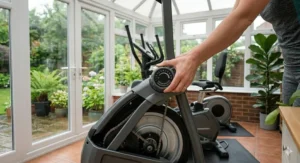
Levelling: Most UK homes have slightly uneven floors. Use the adjustable feet (present on most models) to ensure the machine sits rock-steady. A wobbly cross trainer isn’t just annoying—it’s dangerous.
Power Requirements: If your model has electronic features, ensure the power cable (if applicable) won’t create a tripping hazard. Battery-powered units require checking battery polarity before first use.
Ongoing Maintenance Schedule
Proper maintenance extends your machine’s lifespan considerably:
Weekly:
- Wipe down all surfaces with a damp cloth
- Check for unusual sounds or resistance changes
- Tighten any loose bolts (vibration gradually loosens connections)
Monthly:
- Inspect moving parts for wear
- Clean dust from LCD display
- Check resistance mechanism functions correctly across all settings
Quarterly:
- Lubricate moving joints with appropriate lubricant (check manual for specifications)
- Examine pedal straps for fraying
- Test all electronic functions thoroughly
Maximising Your Results: Workout Programmes and Training Tips 💪
Beginner’s 4-Week Foundation Programme
If you’re new to cardio training, start conservatively. This progressive programme builds cardiovascular endurance whilst allowing your body to adapt:
Week 1: Establishing Base Fitness
- 3 sessions of 15 minutes on elliptical mode
- Resistance: Level 1-2 (very light)
- Focus on maintaining steady, controlled motion
- Rest days: minimum 1 day between sessions
Week 2: Building Duration
- 3 sessions of 20 minutes alternating elliptical (10 min) and bike (10 min)
- Resistance: Level 2-3 (light)
- Aim for comfortable conversation pace
- Rest days: maintain 1 day between sessions
Week 3: Introducing Intensity
- 4 sessions of 25 minutes
- Split: 15 min elliptical, 10 min bike
- Resistance: Level 3-4 (moderate)
- Challenge yourself but maintain proper form
Week 4: Consolidation
- 4 sessions of 30 minutes
- Split: 15 min each mode
- Resistance: Level 4-5 (moderate)
- You should feel pleasantly tired but not exhausted
Intermediate Fat-Burning Circuit
Once you’ve established baseline fitness, this circuit maximises calorie burn through varied intensity:
Warm-up (5 minutes):
- Elliptical mode, resistance 2-3
- Gradually increase pace to comfortable rhythm
Circuit (repeat 3 times, total 30 minutes):
- Elliptical sprint: 2 minutes at resistance 6-7, maximum sustainable pace
- Active recovery: 2 minutes at resistance 2, slow pace
- Bike sprint: 2 minutes at resistance 7-8, high cadence
- Active recovery: 2 minutes at resistance 2, slow pace
- Elliptical intervals: 1 minute hard, 1 minute easy
Cool-down (5 minutes):
- Elliptical mode, resistance 1-2
- Gradually decrease pace to gentle motion
Advanced HIIT Protocol
For experienced users seeking maximum results in minimum time:
Total Duration: 20 minutes of pure intensity
Structure:
- 30 seconds maximum effort elliptical (resistance 8-9)
- 30 seconds active recovery bike (resistance 2-3)
- Repeat 20 times
This brutal protocol burns significantly more calories than steady-state cardio and elevates your metabolism for hours post-workout. However, it’s genuinely demanding—only attempt once you’re comfortable with intermediate programmes.
Tracking Progress Effectively
Quantitative Metrics:
- Distance covered per session
- Average heart rate during workouts
- Calories burned (noting this is approximate)
- Resistance levels used
Qualitative Indicators:
- How you feel during workouts (Rate of Perceived Exertion)
- Recovery speed between sessions
- Energy levels throughout the day
- Sleep quality improvements
Consider keeping a simple workout journal. Research shows people who track exercise consistency adhere to programmes 42% better than those who don’t.
Common Mistakes to Avoid When Using Your Machine ⚠️
Gripping the Handrails Too Tightly
Many users, particularly beginners, death-grip the handlebars throughout their workout. This seemingly innocent habit creates multiple problems:
Reduced Calorie Burn: Supporting your body weight through your arms means your legs work less intensively, potentially reducing calorie expenditure by 15-20%.
Poor Posture: Leaning heavily forward creates lower back strain and promotes rounded shoulders—precisely the opposite of what good exercise should achieve.
Inaccurate Heart Rate Readings: If your machine has pulse sensors in the handlebars, squeezing them too hard interferes with accurate readings.
Solution: Use the handlebars lightly for balance only. On elliptical mode, let go completely once you’ve found your rhythm (if comfortable doing so). Your core should stabilise your torso, not your arms.
Incorrect Seat Height (Bike Mode)
Seat positioning dramatically affects both comfort and workout effectiveness. Too low, and you’ll strain your knees; too high, and you’ll rock side-to-side, reducing power output and risking hip discomfort.
Proper Setup:
- Sit on the seat with one pedal at its lowest position
- Your knee should have a slight bend (approximately 25-30 degrees)
- Your hips should remain stable when pedalling—no rocking
Adjust height before every workout initially until you’ve marked your perfect position.
Momentum Over Muscle
On elliptical mode particularly, it’s tempting to use momentum rather than muscular control. You’ll recognise this if your motion feels bouncy or you’re practically throwing yourself forward with each stride.
Why It Matters: Momentum-driven movement:
- Reduces muscle engagement significantly
- Increases joint stress from jarring impacts
- Creates an inefficient workout burning fewer calories
- Often leads to loss of balance
Solution: Focus on smooth, controlled movement. Increase resistance rather than speed if you want to work harder. Your motion should feel gliding and deliberate, not frantic.
Neglecting Reverse Motion
Most 2 in 1 cross trainer and exercise bike models allow reverse pedalling. Many users never explore this feature, missing significant benefits:
Forward Motion: Emphasises quadriceps (front thighs) and hip flexors Reverse Motion: Targets hamstrings (back thighs) and glutes more intensely
Incorporating reverse intervals creates more balanced leg development and reduces overuse risk from repetitive forward-only movement.
Try This: Every 5-10 minutes, reverse direction for 2-3 minutes. You’ll immediately feel different muscles working.
Understanding UK Safety Standards and Certifications 🇬🇧
UKCA and CE Marking Explained
Post-Brexit, UK product safety regulations evolved. Understanding these markings helps you choose safe, compliant equipment:
UKCA (UK Conformity Assessed): This marking replaced CE for products sold in Great Britain (England, Scotland, Wales) from January 1, 2023. It indicates the product meets UK safety, health, and environmental requirements.
CE (Conformité Européenne): European Economic Area conformity marking. Still valid for products sold in Northern Ireland and may appear alongside UKCA for products sold in both markets.
For fitness equipment, relevant standards include:
- BS EN ISO 20957: Stationary training equipment safety standards
- BS EN 957-1: General safety requirements for cardiovascular training equipment
Reputable manufacturers display these certifications prominently. If they’re absent, that’s a red flag.
Weight Capacity and Structural Testing
UK and European standards mandate specific testing protocols:
Static Load Testing: Equipment must support 1.5 times the stated maximum user weight without structural failure. A machine rated for 100kg should withstand 150kg static load.
Dynamic Load Testing: More stringent tests simulate actual usage with repeated loading cycles. This explains why some cheaper models feel sturdy initially but develop wobbles after weeks of use—they pass static tests but fail under dynamic stress.
Always Respect Weight Limits: These aren’t mere suggestions. Exceeding rated capacity voids warranties and creates genuine safety risks. The frame might hold initially but will fatigue faster, potentially failing catastrophically during use.
Price vs Quality: Finding Your Sweet Spot 💷
Budget Tier (£80-£120): What to Expect
At this price point, you’re making compromises. That’s fine if you’re:
- Testing whether you’ll use equipment regularly
- Very occasional user (1-2 times weekly)
- Prioritising getting any cardio equipment over optimal features
Typical Characteristics:
- Air resistance rather than magnetic
- Basic LCD displays (3-4 functions)
- Lighter flywheels (1.5-2.5kg)
- Shorter warranties (6-12 months)
- More plastic components in construction
Best Budget Option: The Opti 2 in 1 Air Cross Trainer delivers surprising reliability for its £90-110 price tag. Available from Argos, it’s backed by a recognisable retailer’s customer service.
Mid-Range (£120-£180): The Value Zone
This bracket typically represents the best pound-for-pound value. You’re getting:
- Magnetic resistance systems
- Heavier flywheels (3-4kg)
- More comprehensive LCD displays with pulse sensors
- Sturdier frames with higher weight capacities
- 12-month warranties as standard
Standout Pick: The Neezee 2 in 1 Cross Trainer at £149.99-£199.99 dominates this category. UKCA certified with genuine engineering credibility (tested by 100 engineers and 2000 fitness experts according to the manufacturer), it’s the machine that appears most frequently in positive UK customer reviews.
Premium Tier (£180-£300+): Professional Features
Higher-end models justify their cost through:
- Heavier flywheels (5-8kg) creating ultra-smooth motion
- 16+ resistance levels
- Advanced LCD displays with multiple workout programmes
- Bluetooth connectivity and app integration
- Extended warranties (24-36 months)
- Commercial-grade components
Who Benefits: Regular users (4+ sessions weekly), heavier individuals needing robust construction, or anyone prioritising ultra-smooth, quiet operation.
Comparing 2 in 1 Models to Traditional Alternatives
| Feature | 2 in 1 Cross Trainer | Standalone Elliptical | Standalone Bike | Treadmill |
|---|---|---|---|---|
| Space Required | 1.0-1.2m² | 1.5-2.0m² | 1.0-1.5m² | 1.8-2.5m² |
| Joint Impact | Very Low | Very Low | Low | High |
| Upper Body Engagement | Yes (elliptical mode) | Yes | Minimal | Minimal |
| Calorie Burn (30 min) | 250-400 | 270-400 | 210-310 | 300-450 |
| Workout Variety | Excellent | Limited | Limited | Moderate |
| Typical UK Price | £100-£200 | £150-£400 | £120-£300 | £200-£800 |
| Noise Level | Low-Moderate | Low | Low | Moderate-High |
| Suitable for Flats | Yes | Yes | Yes | Often No |
Frequently Asked Questions
❓ How much space do I need for a 2 in 1 cross trainer and exercise bike in my UK home?
❓ Can I use a 2 in 1 cross trainer if I have knee problems or arthritis?
❓ How quiet are magnetic 2 in 1 cross trainers for use in UK flats and apartments?
❓ What's the difference between magnetic and air resistance on these machines?
❓ How long does a typical 2 in 1 cross trainer last with regular home use?
Conclusion: Making Your Final Decision
After examining seven top-rated 2 in 1 cross trainer and exercise bike options available in the UK market, the winner becomes clear. For most users, the Neezee 2 in 1 Cross Trainer offers the optimal balance of build quality, features, and value at £149.99-£199.99.
Its UKCA certification, 120kg weight capacity, and consistently positive feedback from UK customers across England, Scotland, and Wales make it the safe choice. The sturdy steel construction and ultra-quiet magnetic resistance suit British living conditions perfectly, whether you’re in a modern flat in Cardiff or a Victorian terrace in Leeds.
That said, your perfect machine depends on your specific circumstances. If budget is paramount, the Opti 2 in 1 Magnetic at £100-120 delivers remarkable value. For those wanting premium features and maximum durability, investing £180+ in the Pro XS Sports or upgraded Neezee models makes sense.
Remember—the best fitness equipment is the equipment you’ll actually use. A £150 machine gathering dust delivers zero benefit compared to an £80 model used regularly. Consider your genuine commitment level, available space, and fitness goals honestly before purchasing.
Whatever you choose, you’re investing in cardiovascular health, joint-friendly exercise, and the convenience of working out regardless of Britain’s unpredictable weather. That’s a decision your future self will thank you for.
Recommended for You 📚
- 7 Best Space Efficient Cross Trainer Small Flats (2026 UK Guide)
- 7 Best Quiet Rear Drive Elliptical for Apartment Living 2026
- 7 Best Premium Elliptical for Home Gym UK Under £1000 (2026)
Disclaimer: This article contains affiliate links. If you purchase products through these links, we may earn a small commission at no additional cost to you. Prices shown are approximate and may vary based on current promotions and availability on Amazon.co.uk and other UK retailers. Always verify current pricing before purchase.
✨ Found this helpful? Share it with your mates! 💬🤗
