
In This Article
Gym memberships have a funny way of becoming a monthly guilt trip. You pay, you mean to go, and somewhere around week three the direct debit starts to feel like a subscription to disappointment. A single stack multi gym is the sensible antidote: one compact machine, one stack of weight plates, and a genuine full-body workout without ever leaving the spare room. Search “home gym” on any UK retailer and you’ll be buried in options within seconds, which is exactly why this guide exists — to cut through the noise with real products, real specs and honest analysis rather than another rehashed spec sheet.

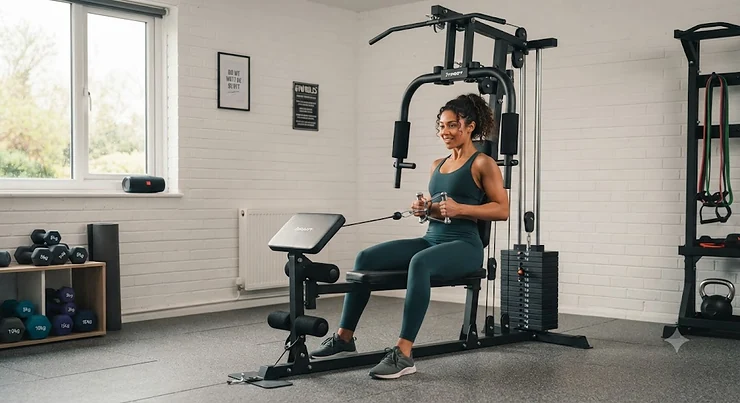
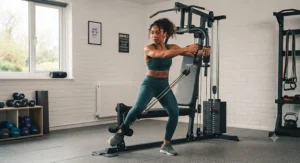
So, what is a single stack multi gym? It’s a strength training station built around one weight stack, moved through a pulley system by cables, letting you perform presses, pulldowns, rows, curls and leg exercises from a single seat. Unlike free weights, there’s no loading and unloading plates between sets, and unlike a multi-station gym, only one person trains at a time. This falls under the broader category of resistance and weight training equipment, and that single-user design is precisely what keeps the footprint — and the price — sensible for a British spare room, garage or converted box bedroom.
This article walks through seven genuine products currently sold in the UK, spanning honest budget picks through to serious premium kit, with the kind of practical detail Amazon listings tend to skip: what the weight stack actually feels like in practice, who each machine suits, and where the real trade-offs lie.
Quick Comparison Table
| Product | Weight Stack | Price Range | Best For |
|---|---|---|---|
| HOMCOM Multi Gym Equipment | 45kg | around £180-£260 | Absolute beginners on a tight budget |
| V-Fit Herculean CUG2 | 36kg (72kg resistance) | around £300-£400 | Smaller spaces, users under 6ft |
| Strongway Multi Gym | 72kg | around £350-£450 | Buyers wanting a heavier budget stack |
| Marcy Eclipse HG3000 | 68kg | around £350-£450 | Best-seller for compact rooms |
| DKN Studio 7400 | 80kg | around £500-£650 | Best build quality for the money |
| Marcy Eclipse HG5000 | 90kg | around £650-£750 | Intermediate to advanced lifters |
| Marcy Eclipse HG7000 | 72kg (180kg leg press) | around £750-£900+ | Serious home gyms wanting integrated leg press |
Reading across this table, the pattern is fairly predictable: weight stack size and price climb together, but not in a straight line. The DKN Studio 7400 punches noticeably above its price bracket with an 80kg stack, while the Marcy HG7000 justifies its premium tag less through raw stack weight and more through the built-in leg press mechanism, which most rivals simply don’t offer. If your priority is stack size alone, the HG5000 wins outright; if it’s engineering cleverness per pound spent, the DKN edges it.
💬 Just one click — help others make better buying decisions too!😊
Top 7 Single Stack Multi Gym Machines: Expert Analysis
1. HOMCOM Multi Gym Equipment — cheapest genuine entry point into cable training
The HOMCOM name won’t carry the heritage of Marcy or DKN, but it earns its place here as the honest budget option. Key specs with real-world meaning: the 45kg weight stack (built from nine 5kg plates) supports a maximum user load of 120kg, and the frame measures roughly 200cm tall by 180cm long by 108cm wide — compact enough for a box room but tall enough that low ceilings need checking first. Based on the spec comparison, 45kg won’t trouble an experienced lifter on a lat pulldown, but for beginners building a strength training habit, that ceiling is rarely the limiting factor in the first year. This is squarely a starter machine for someone who has never trained with cables before, or a second station for a family member easing into fitness alongside a more serious primary lifter. Reviewers consistently report that build quality feels solid for the price and that the machine represents genuinely good value, though several UK buyers flagged that assembly instructions are poorly translated and that boxes sometimes arrive damaged in transit, and at least one buyer noted the leg curl function was less complete than advertised.
Pros:
✅ Lowest realistic entry price into a real cable machine
✅ Compact footprint suits small UK box rooms
✅ Covers all major muscle groups despite the price
Cons:
❌ 45kg stack limits long-term progression for stronger users
❌ Assembly instructions widely reported as unclear
At around £180-£260, this is the machine to check current price on if your budget is the primary constraint — it’s not the machine to buy if you already lift seriously.
2. V-Fit Herculean CUG2 — best compact upright design for shorter users
The CUG2 takes a different structural approach: rather than a flat bench layout, you sit upright, pushing forward through a seated chest press. What most buyers overlook about this design is that the upright position actually saves floor depth compared with lay-flat rivals, making it a smart pick for narrow spare rooms. The stack itself is a clever 36kg cluster of weights engineered through the pulley ratio to deliver up to 72kg of usable resistance — effectively doubling the felt weight without doubling the physical bulk of plates you’re storing. Aggregated review sentiment consistently flags the double-up cable system as smooth and reliable, and the price point as excellent value against rivals with similar resistance. The trade-off, and it’s a genuine one, is height: several long-term users report the machine feeling cramped for anyone approaching or exceeding six feet tall, while shorter users report no such issue and praise the compact dimensions. This is a gym for someone under roughly 5’11” who wants a serious best-seller without a serious footprint.
Pros:
✅ 72kg effective resistance from a compact 36kg stack
✅ Upright seated design saves valuable floor depth
✅ Double-up cable system rated smooth by long-term owners
Cons:
❌ Cramped for users over roughly 6 feet tall
❌ Basic upholstery compared with pricier rivals
Typically found around £300-£400, this is a strong pick if your available floor space is the binding constraint rather than your target lifting weight.
3. Strongway Multi Gym — best for a heavier budget-tier stack
Strongway sits in that slightly less-documented tier of the market — a solid, functional 72kg dual-pulley multi gym without the decades of brand history that Marcy or DKN carry. Here’s what to weigh: the 72kg weight stack undercuts the DKN Studio 7400 by only 8kg while typically retailing well below it, making this the pick for buyers chasing stack size on a tighter budget. The dual pulley system means both a high and low cable point are available without reconfiguring the machine between exercises, a genuinely useful feature for supersetting a lat pulldown straight into a seated row. It’s worth being upfront here: independently verified long-term customer reviews are noticeably sparser for this brand than for the legacy names in this list, so buyers should treat the resistance figures as reliable but treat longevity claims with a touch more caution until a wider base of owner feedback accumulates.
Pros:
✅ 72kg weight stack is generous for the budget tier
✅ Dual pulley system enables quick exercise switching
✅ Competitive pricing against similarly specced rivals
Cons:
❌ Smaller pool of independent long-term reviews
❌ Less established after-sales reputation than Marcy or DKN
At around £350-£450, this is worth checking current price against the Marcy HG3000 directly, since the two frequently overlap in cost despite the Strongway’s heavier stack.
4. Marcy Eclipse HG3000 — best-selling compact home gym for the money
Marcy’s HG3000 is arguably the reference point every other budget-to-mid multi gym in this list gets measured against, and reviewers consistently note it as a fixture on best-seller charts for good reason. The 68kg solid vinyl weight stack, generating up to 90kg of pulley-assisted resistance, is paired with a 14-gauge steel frame and 2000lb tensile aircraft cables — the kind of spec that sounds like marketing until you realise it’s the reason the cable action stays smooth rather than jerky after months of use. On paper this means beginner and intermediate lifters both find headroom to progress before outgrowing the machine. The footprint is a genuinely compact 210cm tall, around 91-100cm wide and 172cm deep, making it one of the few units on this list that comfortably fits an actual UK box room corner rather than needing a dedicated garage. Independent review aggregators report roughly 89% of buyers awarding four or five stars, with recurring praise for value and quiet operation, though taller users (above roughly 6’2″) report the seated positions feeling snug, and assembly regularly takes four to six hours for a first-timer working alone.
Pros:
✅ 68kg stack with 90kg effective resistance via pulleys
✅ Smallest footprint of any mid-tier option in this list
✅ Strong, consistent four and five-star review pattern
Cons:
❌ Snug fit reported by users over roughly 6’2″
❌ Assembly is lengthy without a second pair of hands
Sitting around £350-£450, the HG3000 is the machine most UK buyers should check current price on first, simply as the benchmark to measure everything else against.
5. DKN Studio 7400 — best build quality relative to price
If there’s a single machine in this line-up that consistently surprises reviewers, it’s the DKN Studio 7400. The spec sheet won’t tell you this, but user reports suggest the double-pulley system with weight stack guide rods delivers a noticeably quieter, smoother action than machines costing considerably more — several long-term owners specifically compare the cable feel favourably against premium rivals. The 80kg weight stack, adjustable in 5kg increments across fifteen individual plates, sits inside a footprint of just 165cm by 105cm, genuinely compact given the resistance on offer. Reviewers consistently note assembly as the sticking point rather than the machine itself: the printed instructions are frequently described as confusing, though a well-regarded assembly video from independent users online has become something of an unofficial companion guide. More than 90% of aggregated reviews land at four or five stars, and the two-year warranty reflects a manufacturer confident in the components. This is the pick for someone who has outgrown a beginner machine but isn’t ready to spend premium money.
Pros:
✅ 80kg stack with genuinely smooth double-pulley action
✅ Compact 165cm x 105cm footprint for the resistance offered
✅ Over 90% of aggregated reviews rate four or five stars
Cons:
❌ Printed assembly instructions widely criticised as unclear
❌ At 144kg product weight, moving it once built is a two-person job
Expect a price range around £500-£650, positioning it as the natural upgrade step once a beginner machine’s ceiling starts to feel restrictive.

6. Marcy Eclipse HG5000 — best for intermediate to advanced home lifters
The HG5000 is Marcy’s answer to lifters who’ve outgrown the HG3000’s 68kg ceiling. Based on the spec comparison, the headline upgrade is the 90kg weight stack, lifted via genuine aircraft-tensile cables, but the more interesting engineering decision is the adjustable Chest Press Arm — a spring-loaded pin lets you switch between shoulder press, incline press and flat press angles from the same station, something that budget machines in this list simply don’t offer. Because the press arm can’t double as a combination pec dec in this configuration, Marcy fitted an independent pec dec station instead, which mimics a genuinely natural free-weight-style motion rather than a fixed arc. Aggregated owner sentiment is strongly positive: buyers who compared several rivals before purchasing specifically cite the built-in shoulder press and pec dec combination as the deciding factor, alongside praise for how quietly and smoothly the unit runs after assembly. The recurring criticism, consistent with the HG3000, is an instruction manual that assumes more prior knowledge than a first-time buyer typically has.
Pros:
✅ 90kg stack suits intermediate and advancing lifters
✅ Adjustable press arm covers shoulder, incline and flat press
✅ Independent pec dec adds a more natural chest-fly motion
Cons:
❌ Instruction manual criticised for missing parts lists
❌ Roughly five hours of assembly time reported by owners
Positioned around £650-£750, this is the machine to check current price on if the HG3000’s 68kg stack feels like it has an expiry date on your progress.
7. Marcy Eclipse HG7000 — best for a genuine built-in leg press
Most single stack multi gyms treat leg training as an afterthought — a basic extension pad and little else. The HG7000 is the exception, and it’s the reason it earns the premium slot in this list. What most buyers overlook about this machine is the clever mechanical trick behind its leg press: the preacher pad flips around to become a back support, the seat rotates on its axis, and the same 72kg weight stack — thanks to the pulley layout — generates up to 180kg of usable leg press resistance, without the machine growing any larger than a standard multi gym footprint. It was featured in The Sun’s roundup of the best leg press machines for its price bracket, a reasonable external validation of just how unusual this feature is at this size. Beyond the leg press party trick, it retains the high and low pulley systems, a dual chest press and pec dec combination, and a proper arm curl station, all built from 2000lb tensile aircraft cables and 14-gauge steel. Reviewers consistently rate the build as reliable and note the leg press mechanism, while requiring a moment to learn, works exactly as intended once understood.
Pros:
✅ Built-in leg press generates up to 180kg resistance
✅ Full upper-body station range retained alongside leg training
✅ Heavy-duty 2000lb aircraft cables and 14-gauge steel frame
Cons:
❌ Leg press mechanism has a learning curve on first use
❌ Highest price point of any machine in this comparison
Priced around £750-£900+, the HG7000 is worth its premium specifically for households that would otherwise need a separate leg press machine to cover the same ground.
Practical Usage Guide: Setting Up and Maintaining Your Single Stack Multi Gym
Getting a single stack multi gym home is only step one — how you set it up in those first thirty days shapes whether it becomes a genuine fixture or an expensive clothes horse. Start with the floor: most of these machines weigh well over 100kg once assembled, so a flat, level surface matters more than it seems. A cheap rubber gym mat underneath protects both your flooring and the machine’s feet from gradually working loose on carpet. During assembly, resist the temptation to skip the “dry fit” stage most manuals suggest — loosely bolting the frame together before final tightening makes it far easier to correct a misaligned upright than discovering the problem after everything is torqued down.
Once built, the single most common first-month mistake is neglecting cable tension checks. New cables stretch slightly as they bed in, and a cable that felt taut on day one can develop noticeable slack within a fortnight; most machines include a tension adjustment nut specifically for this. Wipe down guide rods every few sessions with a dry cloth to stop sweat and dust building into grit that accelerates wear, and apply a light silicone-based lubricant to the rods roughly every one to two months — never oil-based products, which attract more dust than they repel.
A genuinely underused optimisation trick: rotate which pulley height you use for similar exercises across the week. Using the same groove repeatedly wears an uneven channel into cable guides faster than alternating does. Finally, budget realistically for assembly time — most owners report four to six hours solo, roughly halved with a second pair of hands, so treating this as a weekend project rather than a Tuesday evening job avoids the frustration that leads some buyers to leave negative reviews about a machine that, once built correctly, performs exactly as intended.
Real-World Scenarios: Who Should Buy Which Single Stack Multi Gym
Picture three genuinely different UK households, because the “best” single stack multi gym genuinely depends on who’s asking. First, a 24-year-old renting a one-bedroom flat with a spare corner in the living room and roughly £250 to spend. Frequency of use: three sessions a week, mostly beginner-level full body circuits. For this buyer, the HOMCOM Multi Gym Equipment or V-Fit Herculean CUG2 make the most sense — modest weight ceilings that match a beginner’s actual strength curve for at least twelve to eighteen months, with a footprint that won’t dominate a small flat.
Second, a family of four in a semi-detached house with a converted garage, budget around £600, wanting something that will serve a fitness-keen parent for years while occasionally being used by a teenager. This is the DKN Studio 7400’s sweet spot: an 80kg stack with genuine longevity, a two-year warranty for peace of mind, and a compact enough footprint that the garage still has room for a car on cold mornings.
Third, an intermediate lifter who trained at a commercial gym for years, now working from home and wanting to replicate as much of that experience as realistically possible without a full free-weight rig, budget upwards of £800. The Marcy Eclipse HG7000 answers this directly — the integrated leg press means they’re not sourcing a second machine just to cover quads and hamstrings, and the 90kg-adjacent resistance ceiling on the HG5000 offers a comparable alternative if leg press specifically isn’t a priority.
How to Choose a Single Stack Multi Gym
Choosing between seven genuinely different machines gets easier with a structured process rather than gut instinct. Follow these criteria in order:
- Measure your space first, not last. Most single stack multi gyms need at least 2.1 metres of ceiling height and a footprint of roughly 1.7m by 1m — measure before falling in love with a spec sheet.
- Match the weight stack to your realistic one-year progression, not your ambition. A beginner rarely needs more than 60-70kg in year one; buying for an imagined future self often means overspending today.
- Check maximum user weight, not just stack weight. Several budget machines cap user weight around 100-120kg, which matters regardless of how much you intend to lift.
- Prioritise cable and pulley quality over cosmetic extras. Sealed bearings and tensile-rated cables affect how the machine feels in five years far more than seat colour ever will.
- Factor in assembly realistically. If you’re building solo, budget a full afternoon rather than an hour, and read owner reviews specifically about instruction clarity.
- Decide whether leg training needs to be built in. Only one machine in this comparison offers an integrated leg press — for everyone else, leg day means a dedicated extension pad only.
- Set a genuine ceiling budget before browsing, because it’s remarkably easy to creep from a £300 target to a £700 purchase one “just a bit more” upgrade at a time.
NHS guidance on improving strength and flexibility recommends muscle-strengthening activities that work all the major muscle groups on two or more days a week, which is worth keeping in mind when choosing stack size — a machine only needs to challenge you to the point where another repetition becomes genuinely difficult, not to match a commercial gym’s heaviest pin.
Single Stack Multi Gym vs One Weight Stack Gym Functional Trainers
It’s worth clarifying a point of confusion buyers regularly run into: a single stack multi gym and a one weight stack gym functional trainer are, in practice, the same category of equipment described with different marketing language, though the terms occasionally diverge at the margins. A true functional trainer typically features two independently adjustable pulley towers on a single stack shared between them, prioritising freedom of movement and unilateral exercises. A traditional single stack multi gym, by contrast, tends to route that same stack through fixed stations — a dedicated chest press arm, a leg developer, a preacher pad — trading some movement freedom for guided, beginner-friendly form. Every machine reviewed above falls into this second, fixed-station camp. What most buyers overlook is that fixed-station machines are generally easier to learn safely without supervision, since the movement path is largely predetermined, while functional trainers reward more training experience but punish poor form less predictably. For a first home gym, the fixed-station single stack design reviewed throughout this guide remains the safer, more beginner-friendly starting point.
Common Mistakes When Buying a Single Weight Stack Home Gym Machine
The single most expensive mistake buyers make is guessing dimensions instead of measuring, only to discover the assembled machine is 15cm too tall for a sloped garage ceiling — always measure the actual space, including door frames the machine needs to pass through during delivery. A close second is fixating on weight stack size alone while ignoring maximum user weight limits, which several budget machines cap surprisingly low. Buyers also regularly underestimate assembly time, treating a four-to-six-hour job as a quick Sunday-morning task and abandoning it half-built out of frustration. Another recurring pattern: choosing based on price alone and skipping the cable and pulley specification entirely, which is the single biggest factor separating a machine that still feels smooth after two years from one that starts jerking and squeaking within months. Finally, several reviewers across multiple products noted disappointment after skipping the manufacturer’s exercise chart, assuming intuitively they’d know how to use every station — a dedicated chart, usually included, prevents wasted weeks of guessing at correct form.
✨ Don’t Miss These Exclusive Deals!
🔍 Take your home training to the next level with these carefully selected products. Click on any highlighted item to check current pricing and availability. These machines will help you build the strength and consistency your future self will thank you for!
What to Expect: Real-World Performance of a Pin Select Multi Gym
Specs on a page rarely translate directly into how a machine actually feels under load, so here’s the honest transformation from numbers to sensation. A pin select multi gym, where you literally slide a metal pin into the weight stack to set resistance, feels almost instant to adjust between exercises — noticeably faster than swapping plates on a barbell, which matters more than it sounds once you’re mid-circuit and losing momentum. The first few sessions on any of these machines tend to feel oddly light relative to the number on the pin; that’s the pulley ratio at work, since most stations route the cable through more than one pulley, effectively multiplying the felt resistance beyond the raw stack weight. Reviewers consistently note that cheaper machines develop a slight jerk or catch in the cable path within the first few months, while better-built units like the DKN Studio 7400 or Marcy Eclipse range maintain a smoother pull for considerably longer. Expect a genuine learning curve of two to three sessions before each station’s optimal seat height and grip position feels natural — this is completely normal and not a sign of a faulty machine.
Best Single Stack Gym for Different Users
Choosing the best single stack gym genuinely depends on who’s training. For complete beginners, the HOMCOM Multi Gym Equipment or V-Fit Herculean CUG2 offer forgiving stack sizes that won’t be outgrown for well over a year of consistent training, at a price that doesn’t punish an unproven habit. For intermediate lifters returning to training after a break, or those transitioning from a commercial gym, the Marcy Eclipse HG3000 and DKN Studio 7400 strike the clearest balance between resistance headroom and manageable footprint. For seniors or those managing joint concerns, fixed-motion machines across this entire list offer a genuine safety advantage over free weights, since the guided path reduces the risk of a barbell tipping or a dumbbell being dropped — reviewers frequently cite this as their specific reason for choosing a multi gym over a home barbell setup. For families sharing one machine across different strength levels, the adjustable pin systems on the HG5000 and HG7000 accommodate a much wider spread of user ability from the same unit than smaller-stack budget machines can.
Long-Term Cost & Maintenance of a Single Weight Stack Home Gym
A single weight stack home gym is a genuine long-term investment, and the maths generally favours it over a sustained gym membership. A mid-range UK gym membership commonly runs somewhere in the region of £30-£50 a month, meaning a £450 machine effectively pays for itself against membership costs within roughly nine to fifteen months, with every session afterwards essentially free bar electricity and the occasional replacement cable. Maintenance costs are modest but real: expect to budget for a replacement cable roughly every three to five years on a well-used machine, typically £15-£40 depending on the model, plus occasional silicone lubricant, both trivial next to ongoing membership fees.
| Ownership Period | Multi Gym (one-off, mid-range) | Gym Membership (est. £40/month) |
|---|---|---|
| Year 1 | £450-£650 (purchase + minor maintenance) | £480 |
| Year 3 | £480-£700 (incl. one cable replacement) | £1,440 |
| Year 5 | £510-£750 (incl. maintenance) | £2,400 |
Looking at the numbers above, the crossover point where a home machine becomes cheaper than a membership typically lands somewhere in the first eighteen months, and the gap only widens from there. This doesn’t account for the time saved not commuting to a gym, which for many buyers is the more persuasive argument than the pounds and pence alone.
Features That Actually Matter (And Those That Don’t)
Marketing copy loves to list features, but not all of them affect your actual training. Features that genuinely matter: sealed bearing pulleys (reduce friction and noise over years, not months), tensile-rated steel cables (the single biggest factor in long-term reliability), adjustable seat height (affects whether every station actually fits your body correctly), and a clear laminated exercise chart (prevents months of guessing at form). Features that matter considerably less than the marketing suggests: cosmetic frame colour options, “35+ possible exercises” claims that count minor grip variations as separate exercises, and branded app integrations on budget machines, which frequently go unused after the first fortnight. If a listing leads with exercise count rather than cable and pulley specification, treat that as a mild red flag worth digging past rather than a genuine selling point.
Safety, Regulations and Compliance Guide
UK-sold gym equipment falls under general product safety law, and legitimate manufacturers will display conformity marking confirming the product has been assessed against relevant safety standards before being placed on the market. Products sold in Great Britain can carry either UKCA or CE marking where recognised EU requirements and conformity assessment processes have been met, so checking for this marking on the packaging or product listing is a reasonable due-diligence step before buying, particularly from lesser-known brands. Beyond conformity marking, sensible home safety practice matters just as much: always use the weight shroud or stack guard included with most machines, keep children away from the moving weight stack even when the machine isn’t in active use, and periodically check that the frame remains level and that no bolt has worked loose, particularly in the first month while everything beds in. If you’re returning to exercise after any injury, illness, or a long period of inactivity, it’s worth checking NHS physical activity guidelines for adults before loading a machine heavily — the NHS recommends performing strengthening exercises to the point where another repetition would be difficult without help, rather than training to complete failure every session, which is sound advice regardless of which machine you’re using.
Problem → Solution: Common Single Stack Multi Gym Issues
Even a well-built machine develops the occasional niggle, and most have straightforward fixes. Problem one: a squeaking or catching cable. Solution: apply a light silicone-based lubricant to the guide rods and pulley wheels, and re-check cable tension using the adjustment nut most machines include. Problem two: the weight stack feels lighter or heavier than expected between sessions. Solution: this is usually cable stretch settling in during the first month — re-tension once, and it typically stabilises permanently afterwards. Problem three: the frame wobbles slightly during heavier presses. Solution: check that all base bolts remain fully tightened, since vibration during use can gradually loosen fittings that felt secure at initial assembly. Problem four: seat or backrest padding compresses unevenly over time. Solution: rotating seating position slightly across sessions reduces localised wear, though on budget machines some compression is a normal, expected part of the product’s lifespan rather than a fault. Problem five: uncertainty over correct form on unfamiliar stations. Solution: consult the included exercise chart or, failing that, a reputable instructional video from the manufacturer directly, rather than guessing at a movement pattern that could strain a joint.
Buyer’s Decision Framework
If floor space is your binding constraint, choose a compact upright design like the V-Fit Herculean CUG2, because the seated forward-press layout genuinely saves depth that lay-flat machines can’t recover elsewhere. If budget is your binding constraint, choose the HOMCOM Multi Gym Equipment, because it delivers a genuine full-body cable station at the lowest realistic UK price point in this comparison. If long-term progression matters more than upfront cost, choose the Marcy Eclipse HG5000 or DKN Studio 7400, because both offer meaningfully more headroom before a stronger lifter outgrows the stack. If leg training is a genuine priority rather than an afterthought, choose the Marcy Eclipse HG7000, because it’s the only machine here that treats lower-body training as a built-in feature rather than a basic bolt-on pad.
FAQ
❓ Is a single stack multi gym good for beginners?
❓ How much space does a single stack multi gym need in the UK?
❓ Can a single stack multi gym replace a full gym membership?
❓ How heavy should the weight stack be on a home multi gym?
❓ Do I need professional assembly for a single stack multi gym?
Conclusion
Choosing between seven genuinely different single stack multi gym machines comes down to matching honest specifications to your actual space, budget and training stage, rather than chasing the highest weight stack number on the page. The HOMCOM Multi Gym Equipment and V-Fit Herculean CUG2 open the door affordably for genuine beginners; the Marcy Eclipse HG3000 remains the sensible benchmark for compact UK rooms; the DKN Studio 7400 rewards buyers wanting serious build quality without a premium price tag; and the Marcy Eclipse HG5000 and HG7000 cover intermediate and advanced lifters who need real headroom, with the HG7000’s integrated leg press standing genuinely apart from everything else in this comparison. Whichever machine fits your space and budget, the underlying principle from the research holds: consistency on a modest machine beats an ambitious machine gathering dust in the corner. Measure your room, set a realistic ceiling budget, and check current pricing before you commit — the right single stack multi gym is the one that actually gets used.
Recommended for You
- Best Compact Multi Gym UK 2026: 7 Top Picks for Small Spaces
- Best Home Multi Gym Machine UK 2026: 7 Top Picks Reviewed
- 7 Best Ankle Strap Gym Cable Attachment Picks (UK 2026)
Disclaimer: This article contains affiliate links. As an Amazon Associate, I earn from qualifying purchases. If you purchase products through these links, we may earn a small commission at no additional cost to you.
✨ Found this helpful? Share it with your friends! 💬🤗
