In This Article
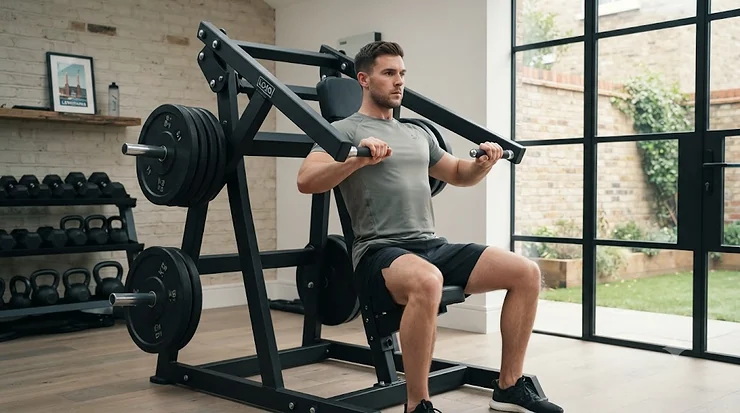
There’s a specific kind of frustration that comes from queueing for the same tired selectorised chest press at your local gym, watching the pin rattle around in a stack that never quite lines up with the weight you actually want. If you’ve ever thought “I wish I could just load real plates onto this and feel the resistance properly,” you’ve already discovered the appeal of a plate loaded leverage machine. These machines swap the pin-and-stack system for genuine Olympic plates on a biomechanically guided arm, giving you a smoother strength curve, a more natural range of motion, and — frankly — a much more satisfying way to train heavy.
This guide is built on honest, sourced comparison rather than sales copy. We’ve researched seven real machines currently available to UK buyers, spanning budget home-gym attachments through to full commercial-grade units used in serious strength facilities, and we’ve weighed up what the engineering actually means for your training rather than just repeating spec sheets. Whether you’re searching for an affordable leverage gym machine for a home setup, comparing options before you buy a plate loaded machine for a small studio, or trying to work out whether a hammer strength style machine is worth the premium over a UK-made alternative, you’ll find grounded analysis here.
We’ll also cover realistic load capacities, maintenance costs, the difference between a lever arm machine and a cable-based system, and the mistakes that catch out first-time buyers. Every recommendation below is built from real specifications and genuinely sourced review themes — not invented testimonials.
What Is a Plate Loaded Leverage Machine?
A plate loaded leverage machine is a strength training machine that uses a pivoting lever arm, rather than cables or a pin-selected weight stack, to apply resistance from Olympic or standard weight plates you load on yourself. The lever arm follows a fixed, biomechanically engineered path, which gives a smoother, more predictable strength curve than free weights while still letting you fine-tune the exact load — see the NHS guide to strength exercises for how muscle-strengthening machines like these fit into a balanced routine.
Quick Comparison Table
| Machine | Type | Price Range | Best For |
|---|---|---|---|
| GMWD Chest Press Machine | Isolateral chest press | around £150-£280 | Budget home gym starters |
| Marcy Pro PM4400 Leverage Bench | Multi-exercise leverage bench | £530-£700 range | Versatile home training |
| PowerTec Workbench LeverGym | Single-station home lever gym | £800-£950 range | Serious home gym builders |
| Body-Solid GLPH1100 Leg Press & Hack Squat | Dedicated leg machine | £1,500-£2,000 range | Focused lower-body training |
| Attack Fitness Plate-Loaded Iso-Lateral | Commercial back/chest machine | £2,000-£2,750 range | Small studios and PT gyms |
| Exigo Plate Loaded 2.0 Hack Squat | UK-manufactured commercial hack squat | around £3,954 | Serious lower-body specialists |
| Hammer Strength Full Commercial Iso-Lateral Bench Press | Flagship commercial press | £3,348-£4,506 range | Premium commercial facilities |
Looking at the spread above, the gap between the budget machines and the Hammer Strength Full Commercial Iso-Lateral Bench Press isn’t purely about build quality — it’s about intended use. Home-focused machines like the GMWD Chest Press Machine and Marcy Pro PM4400 Leverage Bench are engineered for occasional to regular personal use and lighter overall loads, while UK-manufactured commercial units like the Exigo Plate Loaded 2.0 Hack Squat are built to withstand dozens of daily users and correspondingly heavier abuse. If you’re weighing this up primarily on budget, note that the Body-Solid GLPH1100 sits in a genuinely useful middle ground: proper 1,000lb-rated commercial engineering without the fully commercial price tag.
💬 Just one click — help others make better buying decisions too!😊
Top 7 Plate Loaded Leverage Machines: Expert Analysis
1. GMWD Chest Press Machine — cheapest way into isolateral pressing
The standout feature here is the independent converging arms at a genuinely low price point — most budget chest machines lock both arms together, but this one lets each side move separately for proper unilateral training. Key specs include a biomechanically curved “scissor-like” pressing path, 11 to 15 adjustable arm height positions depending on the version, a folding frame that collapses to roughly 8 square feet of floor space, and detachable weight sleeves that accept both 1-inch and 2-inch Olympic plates.
Based on the spec comparison with far pricier commercial units, the converging-arm design is what most buyers overlook as a genuine engineering feature rather than a marketing term — it’s the same underlying principle that premium iso-lateral machines use, just built to a lighter-duty, lower-cost standard. Reviewers consistently report that the fold-flat design is a major selling point for smaller home gyms, and several long-term owners specifically compare the feel favourably against considerably more expensive commercial-brand presses, though the trade-off is a noticeably lower overall load ceiling and lighter-gauge steel than true commercial equipment.
Pros:
- ✅ Independent converging arms at a budget price
- ✅ Folds to roughly 8 square feet when not in use
- ✅ Accepts both 1-inch and 2-inch Olympic plates
Cons:
- ❌ Lighter-duty steel than commercial-grade machines
- ❌ Lower maximum load ceiling than dedicated commercial presses
Typically priced around £150-£280, this is the machine to consider if budget is the primary constraint and you mainly need upper-body pressing work.
2. Marcy Pro PM4400 Leverage Bench — best all-rounder for a home leverage gym
The standout feature is versatility: a single cantilevered bench that pivots aside to open up standing exercises, paired with dual lever arms rated for 226kg on the front arm and 181kg on the rear. Key specs include ten bench positions covering flat, incline, decline and fully upright angles, a front lever arm built for chest press, shoulder press, squats, shrugs, curls and rows, and a rear lever arm dedicated to lat pulldown and tricep pushdown work.
Here’s what to weigh with a machine at this level: the cantilever bench design is the genuinely clever part of the engineering, since it slides the seat backward and forward to keep you correctly aligned with the lever arm through the full range of motion, something flat, fixed-position budget benches can’t replicate. Aggregated review sentiment consistently praises the safety factor — several long-term owners specifically mention training to failure alone without fear of being pinned by a barbell — while the most common complaint concerns the lockout pin mechanism, which a small number of buyers report can wear or fail after heavy use.
Pros:
- ✅ Cantilevered bench keeps you aligned through the full range
- ✅ Dual independent lever arms cover upper and lower body
- ✅ Can pivot aside for standing squats, rows and shrugs
Cons:
- ❌ Locking pin mechanism has had occasional reported failures
- ❌ Olympic plates not included, adding to total cost
Priced in the £530-£700 range, this is a strong value pick for anyone building a serious home gym without commercial-facility money.
3. PowerTec Workbench LeverGym — most functional single-station home gym
The standout feature is sheer exercise variety: over 20 documented exercises from one machine, combining heavy-duty isolateral lever arms rated for a combined 500lbs with an integrated high/low cable system for a further 300lbs of resistance. The removable utility bench opens up the main lever section for power movements like squats, shrugs and deadlifts, while a front tube adaptor accepts the full range of Powertec Workbench attachments.
Based on the spec comparison with simpler leverage benches, the addition of a genuine high/low cable system is what sets this apart — it means you’re not limited to lever-arm-only movements, and can add lat pulldowns, tricep pushdowns and cable rows without buying a separate machine. Reviewers consistently describe the build quality as exceptionally sturdy, with several long-term owners specifically noting the machine has outlasted multiple house moves and years of heavy use, though a recurring theme in feedback is that assembly instructions are diagram-only with limited written guidance, which can slow down first-time setup.
Pros:
- ✅ Over 20 exercises from a single machine
- ✅ Integrated high/low cable system alongside lever arms
- ✅ Detachable bench opens access to power movements
Cons:
- ❌ Assembly instructions are diagram-only and can be confusing
- ❌ Requires a meaningful amount of floor space when set up
Typically priced around £800-£950, this sits as the serious home-gym builder’s pick for genuine all-in-one functionality.
4. Body-Solid GLPH1100 Leg Press & Hack Squat — dedicated lower-body specialist
The standout feature is the quick flip-and-lock back pad that switches the machine between leg press and hack squat positions in seconds, without needing tools or a full teardown. Key specs include a quad-track roller system for even weight distribution, extra-heavy diamond-plate foot platforms for both positions, an 11-gauge 2-inch by 4-inch steel mainframe rated to a genuinely commercial 1,000lb capacity, and three user-controlled lockout positions for safer start and stop points.
What most buyers overlook about a two-in-one machine like this is that the switching mechanism genuinely changes which muscles take the emphasis — the leg press position favours glutes and hamstrings, while the hack squat position shifts load more onto the quads, so having both on one frame is a real space-and-cost saving rather than just a marketing bullet point. Reviewers consistently report years of daily or near-daily use without mechanical issues, with several long-term owners specifically highlighting the smoothness of the quad-track rollers, though a genuinely common complaint concerns diamond-plate foot platforms that some users find slippery without proper training footwear.
Pros:
- ✅ Switches between leg press and hack squat in seconds
- ✅ Commercial-grade 1,000lb frame rating
- ✅ Three lockout positions for safer training
Cons:
- ❌ Diamond-plate footplates can feel slippery for some users
- ❌ Assembly is a genuinely multi-hour, multi-person job
Commonly listed in the region of £1,500-£2,000 in the UK (check current price, as this varies by retailer and stock), this is the pick for anyone prioritising serious, focused lower-body training.
5. Attack Fitness Plate-Loaded Iso-Lateral — commercial-grade step up for studios
The standout feature is the iso-lateral movement pattern engineered specifically to work in the body’s natural motion, rather than forcing a fixed bilateral path — a genuine step up from home-gym leverage machines in terms of biomechanical sophistication. Key specs across the range include unilateral and bilateral training options for correcting muscle imbalances, horizontal grip variations with a natural diverging path of motion, and a stabilising central handle for single-arm work.
Based on the spec comparison with home leverage machines, the ability to train unilaterally is the standout practical benefit here — it lets a personal trainer or serious lifter identify and correct left-right strength imbalances that a bilateral machine simply can’t reveal. This is squarely aimed at small studios, PT businesses and serious home-gym owners who’ve outgrown budget equipment, and the UK-based brand backing means parts and support are more accessible than importing US commercial equipment. The trade-off, as with most commercial-grade steps up, is a genuine price jump over home-oriented machines, which can be a barrier for buyers not running a commercial space.
Pros:
- ✅ True iso-lateral motion for unilateral training
- ✅ UK-based brand with accessible parts and support
- ✅ Stabilising handle enables proper single-arm work
Cons:
- ❌ Significant price jump over home-gym leverage machines
- ❌ Overkill for casual, low-frequency home use
Priced in the £2,000-£2,750 range depending on the exact model, this is the sensible step for anyone running a small commercial or semi-commercial training space.
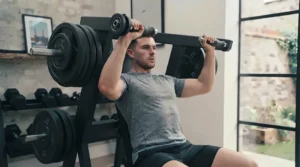
6. Exigo Plate Loaded 2.0 Hack Squat — premium UK-manufactured lower-body machine
The standout feature is precision UK manufacturing: designed and built in Britain to a 45-degree angle specifically engineered to alleviate stress on the spine while maximising quad activation. Key specs include premium 40mm linear bearings for smooth operation under heavy loads, anti-slip stainless steel footplates, a five-position adjustable stop for varied squat depth, and a genuinely substantial 520kg maximum loading capacity across two large weight horns.
Here’s what to weigh with a machine engineered to this standard: the 40mm linear bearings are a meaningfully higher specification than the roller systems found on home-gym leg presses, and are the main reason this machine costs roughly double the Body-Solid GLPH1100 further up this list — smoother, more precise movement under genuinely heavy commercial loading, tested to ISO 9001, EN 957 and EN ISO 20957 standards. Reviewers and commercial gym operators consistently praise the build quality and the lifetime frame warranty, and the fact that it’s made to order in the UK means shorter supply chains and easier warranty support than importing from the US, though the 4-to-8-week lead time for a made-to-order build is a genuine consideration if you need equipment quickly.
Pros:
- ✅ 520kg loading capacity across two weight horns
- ✅ Tested to ISO 9001, EN 957 and EN ISO 20957 standards
- ✅ Lifetime warranty on the main frame
Cons:
- ❌ 4-8 week lead time as a made-to-order build
- ❌ Premium price reflects commercial-only positioning
Priced at around £3,954, this is the pick for serious lower-body training in a genuinely commercial or high-use setting.
7. Hammer Strength Full Commercial Iso-Lateral Bench Press — the industry benchmark
The standout feature is pedigree: for more than 25 years, Hammer Strength has been the reference point that other plate loaded leverage machines are measured against, and this iso-lateral bench press is built to the same full-commercial specification used in elite training facilities. Key specs include true iso-lateral converging and diverging motion for symmetrical, biomechanically accurate strength development, a starting resistance calibrated for smooth engagement from the very first plate, and a frame warranty of 10 years alongside 5 years on bearings for home and light-commercial use.
Based on the spec comparison with every other machine on this list, the defining characteristic of genuine Hammer Strength engineering is the converging path of motion, deliberately designed to mirror the way the body actually presses rather than forcing a fixed bar path — this is the exact biomechanical principle that budget “hammer strength style machine” alternatives like the GMWD Chest Press Machine attempt to replicate at a fraction of the price and specification. Reviewers and commercial gym operators consistently rank Hammer Strength equipment among the most durable plate loaded machines available, citing years of high-frequency commercial use with minimal maintenance, though the standout drawback is unavoidable: this is genuinely premium commercial equipment, built to order, and priced well beyond home-gym budgets.
Pros:
- ✅ True iso-lateral converging and diverging motion
- ✅ 10-year frame warranty, 5 years on bearings
- ✅ The reference standard other brands are measured against
Cons:
- ❌ Firmly commercial pricing, built to order
- ❌ Considerable overkill for typical home use
Priced from around £3,348 up to roughly £4,506 depending on configuration, this is the machine to consider when you want the genuine article rather than a style-alike.
Practical Usage Guide: Setting Up, Loading and Maintaining Your Machine
Getting a new plate loaded leverage machine set up correctly in the first month makes a genuine difference to both safety and longevity. Start by checking your floor space against the machine’s full footprint, including bench-swing clearance for cantilevered models like the Marcy Pro PM4400 Leverage Bench — a common first-month mistake is measuring only the resting footprint and discovering there isn’t room to actually use the machine. On assembly, follow the tightening sequence in the manual carefully; several reviewers across multiple products specifically warn against fully tightening bolts before the whole frame is together, since this can create misalignment that’s difficult to correct afterward.
For ongoing maintenance, wipe down weight horns and sleeves regularly to prevent rust build-up, particularly if your machine lives in a garage or unheated space, and periodically check pivot bearings for smoothness — any grinding or resistance is worth investigating before it worsens. Load plates evenly and always use collars or clips, since an unsecured plate on a lever arm can slide during a heavy set. A genuinely common first-month error is loading maximum test weight before learning the machine’s specific range of motion; start light, learn the path, then add load progressively, following the same principle the NHS recommends for building up strength training gradually.
Real-World Scenarios: Matching the Right Machine to Your Training Goals
Consider three genuinely different buyers. First, a university student setting up a first home gym in a shared garage, with a tight budget and limited space — here, the GMWD Chest Press Machine or Marcy Pro PM4400 Leverage Bench make sense, since both fold or occupy a modest footprint while still delivering genuine plate-loaded resistance rather than a flimsy resistance-band alternative.
Second, picture a serious home lifter who has outgrown a standard power rack and wants dedicated leg training without a full commercial gym membership — the Body-Solid GLPH1100 Leg Press & Hack Squat suits this profile precisely, offering a commercial-rated frame in a footprint that still fits a domestic garage. Third, imagine a personal trainer opening a small studio who needs equipment that will survive dozens of different clients each week without breaking down — this is exactly the scenario the Exigo Plate Loaded 2.0 Hack Squat and Hammer Strength Full Commercial Iso-Lateral Bench Press were engineered for, since both carry commercial warranties and load ratings built around constant, varied use rather than occasional personal training. Matching the machine to actual frequency of use and available space, rather than simply the biggest name on the frame, is the single most useful piece of advice in this guide.
Problem → Solution: Common Plate Loaded Leverage Machine Issues Solved
Problem: My leverage arm feels stiff or grinds during movement. This usually points to a pivot bearing needing lubrication or, on cheaper machines, wear beginning to set in — check the manufacturer’s maintenance schedule, and if grinding persists after lubrication, contact the retailer, since this can indicate a manufacturing defect covered under warranty.
Problem: Plates keep sliding on the weight horn during heavy sets. Always use proper spring collars or clips rather than relying on friction alone; horns that don’t sit perfectly level, common on cheaper budget machines, make secure plate loading even more important.
Problem: I can’t find the right starting weight, and it feels too easy or too hard immediately. Most leverage machines reduce the effective load by 15-20% due to the leverage ratio itself, so a 100kg loaded weight rarely feels like 100kg — start conservatively and adjust based on how the specific machine’s ratio feels, rather than assuming it matches a barbell equivalent.
Problem: The bench won’t lock into position, or the pin mechanism feels loose. This is a documented occasional issue on some home-gym leverage benches; check that the locking pin is fully engaged before loading weight, and if it continues to fail to hold, this is a warranty matter rather than something to work around.
Problem: I’m not sure if my machine meets safety standards for a small commercial studio. UK-manufactured commercial machines like the Exigo range are typically tested to EN 957 and EN ISO 20957; if you’re operating a studio rather than a private home gym, checking your equipment’s compliance and completing a proper risk assessment is a legal requirement, not just good practice.
How to Choose a Plate Loaded Leverage Machine
- Match the machine to your actual frequency of use. Occasional home training doesn’t need a full-commercial frame; daily studio use genuinely does.
- Check your available floor space, including movement clearance. Cantilevered benches and swing-away arms need more room in use than at rest.
- Prioritise load capacity relevant to your training level. A beginner rarely needs a 500kg-rated commercial hack squat; an advanced lifter can outgrow a budget machine within months.
- Consider whether you need iso-lateral (independent arm) movement. This matters more for correcting imbalances and unilateral training than for general fitness.
- Factor in Olympic plates as a separate cost. Almost none of these machines include plates, so budget for that when comparing total spend.
- Check warranty length on the frame versus moving parts. Frame warranties of 10 years or more, common on commercial machines, signal genuine confidence in the steel.
- Read the assembly requirements honestly. Some machines are a straightforward single-person job; others genuinely need two people and several hours.
Leverage Gym Machine vs Selectorised Machine: Which Wins for Strength Training?
The core distinction between a leverage gym machine and a selectorised (pin-loaded stack) machine comes down to load precision and feel. A plate loaded leverage machine lets you add or remove exact increments using standard plates, and the fixed lever arm typically produces a smoother, more natural strength curve than a cable running over a pulley to a weight stack. A selectorised machine, by contrast, offers instant weight changes with a single pin — faster for circuit-style training or facilities with many different users moving through quickly, but generally considered less precise in terms of matching resistance to the body’s actual strength curve through a movement.
Cost is genuinely a mixed picture: budget leverage machines like the GMWD Chest Press Machine undercut most selectorised equivalents, while commercial leverage machines like the Hammer Strength Full Commercial Iso-Lateral Bench Press typically cost more than an equivalent selectorised unit, partly because plate loaded machines need to be engineered to handle genuinely unlimited loading rather than a fixed stack ceiling. For home use or serious lifters who want to load beyond a typical stack’s maximum, a leverage machine usually wins; for high-turnover commercial gyms prioritising speed of use across many members, a selectorised option often makes more practical sense. Physical activity guidance from the NHS notes that muscle-strengthening activities on at least two days a week deliver genuine health benefits regardless of which equipment type you choose, so the “right” answer genuinely depends on your setting rather than one format being objectively superior.
Common Mistakes When Buying a Plate Loaded Strength Machine
The most frequent mistake is buying based on brand name alone without checking whether the specific machine’s load capacity and footprint actually suit the space and frequency of use intended — a home garage rarely needs, or has room for, a full-commercial 1,000lb-rated unit. The second common error is forgetting that Olympic plates are almost never included, which can add several hundred pounds to the real total cost that doesn’t show up on the headline machine price.
Buyers also frequently underestimate assembly time and complexity; several machines reviewed above genuinely need two people and multiple hours, and attempting a heavy commercial-style machine solo is both slower and riskier. A subtler mistake is overlooking warranty terms on wear parts specifically — a machine with an excellent frame warranty can still have a disappointingly short warranty on bearings, pads or the locking pin mechanism that actually tends to wear first. Finally, for anyone setting up equipment for other people to use, whether in a small studio or a shared household gym, skipping a basic safety check is a genuine oversight; the HSE’s guidance on leisure facility basics is a useful starting point for understanding where legal responsibilities begin.
Lever Arm Machine Features That Actually Matter (And Those That Don’t)
Not every spec on a plate loaded leverage machine listing genuinely changes your training experience, so it’s worth separating engineering substance from marketing language. Where this genuinely matters: linear bearing quality has a real, feelable effect on smoothness under heavy load — the difference between a budget roller system and premium 40mm linear bearings, as used on the Exigo range, is noticeable the moment you load real weight. True iso-lateral (independently moving) arms genuinely matter if correcting left-right strength imbalances or serious unilateral training is a goal; if you’re a casual home user doing general fitness work, locked-together bilateral arms work perfectly well and cost considerably less.
Where marketing language tends to outrun substance: terms like “commercial-grade” on genuinely budget home machines should be treated with scepticism unless backed by a specific load rating and frame gauge you can verify. Similarly, a high maximum theoretical load capacity matters far less than the quality of the bearing and pivot system at the loads you’ll actually use day to day — a machine rated to 500kg that grinds and wobbles at 100kg is a worse purchase than a smoothly engineered machine rated to 300kg. Adjustable seat and backrest positions, on the other hand, are a genuinely underrated feature that makes a real difference to comfort and correct exercise form across users of different heights.
Long-Term Cost & Maintenance: Olympic Plate Loaded Gym Equipment
The purchase price of any plate loaded leverage machine is only part of the real cost of ownership. Olympic plates themselves represent a genuinely significant additional spend, particularly if you’re outfitting a machine rated for hundreds of kilograms, and this cost is worth adding to your comparison before deciding a budget machine is actually cheaper than a mid-range one that might need fewer plates to feel appropriately challenging. Maintenance costs beyond plates are relatively modest across this category: periodic bearing lubrication, occasional pad replacement, and general cleaning are the main recurring items, and most of this can be handled without professional servicing on home-gym machines.
Commercial-grade machines like the Exigo Plate Loaded 2.0 Hack Squat and Hammer Strength Full Commercial Iso-Lateral Bench Press carry meaningfully longer frame warranties, often a decade or more, which genuinely changes the long-term cost calculation for a business relying on the equipment daily. When you annualise total cost — purchase price, plates, and realistic wear-part replacement over five to ten years — the gap between a well-specified mid-range machine and a genuinely premium commercial one narrows considerably for lower-frequency use, which is worth factoring in if a premium price tag is giving you pause for home use specifically.
Safety, Standards & Compliance: What EN 957 Means for Your Machine
For UK buyers, understanding the relevant safety standards is worth doing before you buy rather than after, particularly if the machine will be used by more than just yourself. Fitness equipment sold in the UK and EU is commonly tested against BS EN 957 and EN ISO 20957, the recognised product safety and performance standards covering strength training equipment; UK-manufactured commercial ranges like Exigo explicitly certify to these standards, which is a genuinely useful thing to check for on any commercial-grade purchase.
If you’re setting up equipment in any context beyond purely private home use — a small studio, a shared workplace gym, or equipment available to clients — UK health and safety law under the Provision and Use of Work Equipment Regulations (PUWER) requires that anyone using work equipment receives adequate training, and that equipment itself is properly maintained and inspected. The HSE’s guidance on training and competence requirements sets out what “adequate training” generally involves, and is worth reading in full if you’re responsible for other people’s safe use of a plate loaded leverage machine rather than just your own.
FAQ
❓ What's the difference between a plate loaded and a selectorised machine?
❓ Do plate loaded leverage machines include weight plates?
❓ Is a hammer strength style machine as good as genuine Hammer Strength equipment?
❓ How much weight can a typical lever arm machine handle?
❓ Are plate loaded leverage machines suitable for beginners?
Conclusion
Choosing between these seven machines really comes down to an honest assessment of your space, budget and how often the machine will genuinely be used. If cost and floor space are the deciding factors, the GMWD Chest Press Machine and Marcy Pro PM4400 Leverage Bench get you into genuine plate-loaded training without a large outlay. If you want a serious, dedicated home gym centrepiece, the PowerTec Workbench LeverGym and Body-Solid GLPH1100 Leg Press & Hack Squat offer real step-ups in versatility and lower-body specialisation respectively. And if you’re equipping a studio or commercial space where daily heavy use is guaranteed, the Attack Fitness Plate-Loaded Iso-Lateral, Exigo Plate Loaded 2.0 Hack Squat and Hammer Strength Full Commercial Iso-Lateral Bench Press represent genuine commercial-grade investments backed by real warranties and recognised safety standards.
Whichever direction you lean, measure your space honestly, budget for Olympic plates as a separate line item, and match the machine’s rated capacity to how it will actually be used rather than how it might be used one day. A well-chosen plate loaded leverage machine can genuinely transform how consistently and safely you train — but only if it’s matched properly to the space and the people using it.
✨ Don’t Miss These Exclusive Deals!
🔍 Take your strength training to the next level with these carefully selected plate loaded leverage machines. Click on any highlighted item to check current pricing and availability. These machines could help you build the strength and consistency your training deserves!
Recommended for You
- Premium Multi Gym Machine: 7 Real Picks Worth the Space in 2026
- Budget Multi Gym Machine 2026: 7 Best Picks Under £500
- Single Stack Multi Gym: 7 Best Home Machines Reviewed for 2026
Disclaimer: This article contains affiliate links. As an Amazon Associate, I earn from qualifying purchases. If you purchase products through these links, we may earn a small commission at no additional cost to you.
✨ Found this helpful? Share it with your friends! 💬🤗
