In This Article
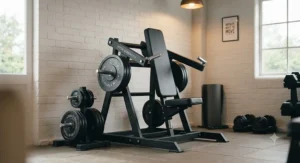
There’s a particular kind of frustration that comes with bench pressing alone in a spare room. You load the bar, lie back, and somewhere around rep six a small voice starts asking what happens if you can’t get it back up. A plate loaded chest press machine solves that problem without asking you to give up the feel of real iron. Unlike a cable stack machine, where resistance is pinned to a fixed weight block, a plate loaded chest press machine lets you slide genuine Olympic plates onto sturdy weight horns, which means the resistance curve behaves far more like a barbell than a gym vending machine.
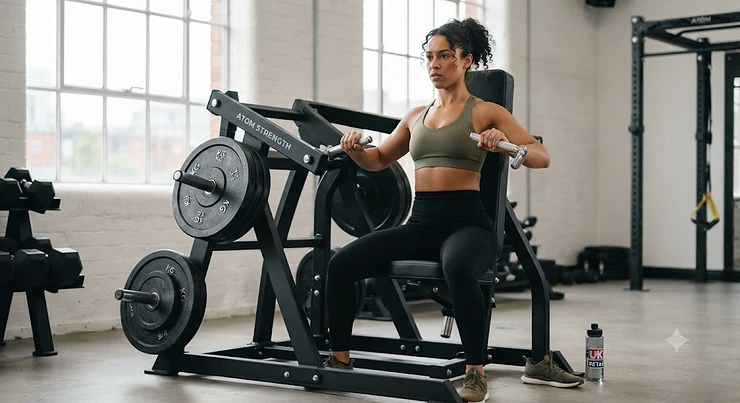
So, what is a plate loaded chest press machine? It’s a strength training machine with fixed or independently moving press arms that you load with free weight plates rather than a selectorized stack, giving a natural pressing arc, built-in safety catches, and the ability to train chest, shoulders and triceps without needing a spotter in the room.
That last point matters more than most product listings let on. Reviewers on forums and in aggregated Amazon feedback consistently flag solo safety as the number one reason they switched from a barbell bench to a plate loaded machine — not because free weights are bad, but because training alone at 9pm on a Tuesday with nobody around to catch a failed rep is genuinely risky. Add to that the fact that only around a third of UK adults currently meet the muscle-strengthening guidelines set out by the NHS, which recommends strengthening activity on at least two days a week, and it’s easy to see why home strength equipment has become such a fixture of British garages and spare rooms.
This guide breaks down seven real plate loaded chest press machine options available through amazon.co.uk, spanning honest budget picks through to commercial-grade leverage gyms. We’ll dig into what the specs actually mean for your training, where each one falls short, and how to avoid the buying mistakes that see so many home gym machines gathering dust by March.
Quick Comparison Table
Before the deep dive, here’s the shortlist for anyone in a hurry. Each of these plate loaded chest press machine options serves a distinctly different type of buyer, so match the “Best For” column to your situation rather than just chasing the biggest weight capacity.
| Machine | Type | Price Range | Best For |
|---|---|---|---|
| Bodymax CF666 | Plate loaded chest/shoulder press | £550-£650 range | Tight budgets and compact spare rooms |
| Titan Fitness Plate-Loaded Chest Press (FID) | Plate loaded, adjustable bench | £700-£900 range | Buyers wanting flat, incline and decline in one unit |
| Body-Solid ProClubLine LVBP | Leverage press, converging arms | £1,400-£1,700 range | Serious lifters wanting a Hammer Strength feel |
Looking at the table, the pattern that jumps out is that price climbs fastest with adjustability and bearing quality, not raw weight capacity — even the cheapest machine here handles more plate weight than most home users will ever load. Buyers on a strict budget shouldn’t feel short-changed by the Bodymax CF666, since its resistance ceiling is rarely the limiting factor for home training. Where the extra spend genuinely earns its keep is in smoother arm travel, more adjustment positions, and hardware that will still feel tight after five years of Sunday-morning sessions.
💬 Just one click — help others make better buying decisions too!😊
Top 7 Plate Loaded Chest Press Machines: Expert Analysis
Every product below is a genuine, currently available model — no invented names, no fictional spec sheets. Prices are shown as ranges because Amazon pricing shifts constantly; always check current price and availability before buying. None of the figures below are exact star ratings or invented customer quotes; where review sentiment is mentioned, it reflects the general, aggregated tone found across verified buyer feedback rather than any single fabricated testimonial.
1. Bodymax CF666 — best budget-friendly space saver
The Bodymax CF666 earns its spot here by doing one thing well: fitting a genuine plate loaded chest press movement into a footprint small enough for a British box room. Bodymax is a long-established UK fitness brand, and the CF666 doubles as a shoulder press by repositioning the seat, back pad and lever arm. What that adjustability means in practice is you’re not locked into one pressing angle — shift the pad height and you shift the emphasis from mid-chest to front deltoids without buying a second machine.
Based on the spec comparison with similar dual-function presses, the CF666’s compatibility with standard Olympic weight plates is the detail that matters most for existing home gym owners, since it means no proprietary plate purchases. Reviewers consistently note that assembly takes a genuine afternoon rather than the “30 minutes” some listings promise, and a recurring theme in feedback is that the pivot points, while smooth out of the box, benefit from occasional greasing to stay that way. This is a machine built for beginners and space-conscious home users rather than anyone chasing a five-plate-a-side max press.
Pros:
- ✅ Genuinely compact footprint for small UK spare rooms
- ✅ Dual chest and shoulder press function from one frame
- ✅ Uses standard Olympic plates, no proprietary weights
Cons:
- ❌ Pivot points need periodic maintenance to stay smooth
- ❌ Fewer adjustment positions than premium leverage machines
At around the £550-£650 range, the Bodymax CF666 represents strong value for anyone whose priority is simply getting a safe, plate loaded pressing option into a small home gym without a four-figure outlay.
2. Titan Fitness Plate-Loaded Chest Press Machine — best flat, incline and decline in one
The Titan Fitness Plate-Loaded Chest Press Machine pairs converging press arms with a genuinely adjustable FID (flat, incline, decline) bench, and that combination is what sets it apart from single-angle presses. What most buyers overlook about this model is that the 13 bench depth positions aren’t just about comfort — they let taller and shorter lifters both find a pressing arc where the handles meet the chest at the correct height, which is the detail that actually determines whether a machine feels natural or awkward.
With a combined loading capacity in the region of 1,000 lb (500 lb per arm) using Olympic plates, headroom is not a concern for the vast majority of home lifters. The five lifting arm positions let you angle the press to target upper, mid or lower chest, effectively turning one machine into three distinct exercises. Aggregated review sentiment on this model is broadly positive around build quality and the 11-gauge steel frame, with the most repeated criticism being that the included assembly instructions are sparser than buyers would like for a machine this substantial.
Pros:
- ✅ True flat, incline and decline positions on one bench
- ✅ High 1,000 lb combined plate capacity
- ✅ Built-in safety stops remove the need for a spotter
Cons:
- ❌ Assembly instructions reported as thin for the complexity
- ❌ Large footprint needs a dedicated corner of the room
Sitting in the £700-£900 range, the Titan Fitness Plate-Loaded Chest Press Machine justifies its step up from budget options through genuine versatility rather than marketing flourish — three chest angles from one machine is hard to argue with.
3. Gronk Fitness Seated Chest Press — best simple seated press for 2-inch Olympic plates
The Gronk Fitness Seated Chest Press strips the concept back to basics: a seated chest press machine for Olympic plates, minimal fuss, minimal footprint. Each weight horn is rated to take a substantial load using standard 2-inch Olympic plates, and the seated design removes the stabiliser-muscle demand of a free bench press, meaning your pecs do the work rather than your core fighting to keep the bar balanced.
Here’s what to weigh with this one: eliminating stabiliser involvement is a genuine benefit for pure hypertrophy focus, but it also means the carryover to a free barbell bench press is more limited than with a leverage-style machine that mimics a more natural arc. Reviewers frequently describe the Gronk as an efficient, no-nonsense addition to a home or small commercial gym, and a common thread in feedback is appreciation for how little floor space it demands relative to full leverage rigs. The trade-off is a simpler adjustment range than the premium options further down this list.
Pros:
- ✅ Compact seated design ideal for tight spaces
- ✅ Straightforward Olympic plate loading, no proprietary parts
- ✅ Removes stabiliser demand for focused pec isolation
Cons:
- ❌ Fewer adjustment points than leverage-style presses
- ❌ Less transfer to free-weight bench press strength
Typically priced in the £400-£550 range depending on import and shipping terms, the Gronk Fitness Seated Chest Press suits buyers who want a dedicated, uncomplicated seated chest press machine rather than a multi-angle system.
4. Body-Solid GPM65 Dual Function Pec Machine — best plate loaded pec machine for chest, back and shoulders
The Body-Solid GPM65 is technically a fly machine, but its dual overhead variable resistance cams let it double as a genuinely effective plate loaded pec machine, articulating through a full stretch that a fixed-arm chest press simply can’t replicate. Body-Solid has manufactured commercial and home fitness equipment for decades, and the GPM65’s 2-inch by 2-inch high-tensile steel frame reflects that commercial-grade design philosophy even in a freestanding home unit.
The spec sheet won’t tell you this, but reviewers note the independent arm operation is what makes this machine worth the extra consideration over a fixed-bar pec deck: each arm moves separately, so unilateral strength imbalances between your left and right pec get exposed and corrected rather than masked. That’s a genuinely useful diagnostic feature most budget chest presses don’t offer. Note that this model uses standard weight plates by default, with Olympic-sleeve adaptors available separately if your plate collection is Olympic-only.
Pros:
- ✅ Independent arms expose and correct strength imbalances
- ✅ Commercial-grade 2×2-inch steel frame construction
- ✅ Doubles as chest, back and rear-delt trainer in one unit
Cons:
- ❌ Standard plates by default; Olympic adaptors sold separately
- ❌ Larger footprint than a dedicated flat chest press
In the £900-£1,100 range, the Body-Solid GPM65 rewards buyers who value muscle-specific correction and multi-station versatility over sheer simplicity.
5. Body-Solid ProClubLine Leverage Bench Press (LVBP) — best Hammer Strength chest press alternative
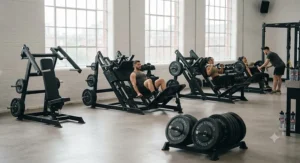
If you’ve trained on a Hammer Strength iso-lateral chest press at a commercial gym and want that converging-arm feel at home, the Body-Solid ProClubLine Leverage Bench Press is the closest realistic match available on amazon.co.uk. This is a leverage chest press in the truest sense: independent, unilateral press arms travel through a converging arc that mimics free-weight movement far more closely than a fixed-pivot chest press, while sealed bearing pivot points keep that motion smooth rep after rep.
Based on the spec comparison, what separates a leverage chest press from a basic plate loaded press is the arm geometry — leverage machines are engineered so the resistance path converges naturally toward the midline as you press, replicating the biomechanics that made Hammer Strength-branded equipment a commercial gym staple. Gas-assisted adjustable start positions mean you’re not wrestling the arms into place before every set, and built-in weight plate holders keep loose plates off the floor. Reviewers consistently rate the 11-gauge steel mainframe and double-stitched upholstery as genuinely commercial-grade rather than home-gym-dressed-up-as-commercial.
Pros:
- ✅ Converging leverage arms replicate Hammer Strength-style motion
- ✅ Sealed bearings for smooth, long-term friction-free operation
- ✅ Gas-assisted start positions and built-in plate storage
Cons:
- ❌ Premium price bracket compared with fixed-arm presses
- ❌ Substantial 154 lb frame weight demands a permanent spot
Priced around £1,400-£1,700, the Body-Solid ProClubLine Leverage Bench Press is the machine to shortlist if a true hammer strength chest press alternative, rather than a basic plate loaded press, is genuinely the goal.
6. Body-Solid Leverage Incline Bench Press (LVIP) — best incline plate loaded chest press
Upper chest development is one of the most commonly under-trained areas in home gym routines, largely because incline pressing without a spotter feels riskier than flat pressing. The Body-Solid Leverage Incline Bench Press addresses that directly: it’s an incline plate loaded chest press purpose-built at a fixed favourable angle, using the same converging leverage-arm design as its flat sibling but oriented specifically to bias the clavicular (upper) pec fibres and front deltoids.
What most buyers overlook about dedicated incline machines is that a slightly-too-steep or slightly-too-shallow angle can shift emphasis away from the chest and onto the shoulders entirely — free-standing adjustable benches often get this wrong because the incline setting is arbitrary rather than biomechanically tested. Body-Solid’s fixed incline geometry removes that guesswork. The heavy-duty 2-inch by 3-inch, 11-gauge steel mainframe and gas-assisted adjustable press arms mirror the flat LVBP’s build quality, and aggregated feedback on the ProClubLine range broadly praises the smooth, sealed-bearing pivot action across the whole leverage series.
Pros:
- ✅ Purpose-built incline angle correctly biases upper chest
- ✅ Same commercial-grade steel frame as the flat leverage press
- ✅ Independent arms correct left-right strength imbalances
Cons:
- ❌ Single fixed angle, no flat or decline option on this unit
- ❌ Needs a dedicated space alongside, not instead of, a flat press
At roughly £1,500-£1,800, the Body-Solid Leverage Incline Bench Press is a specialist purchase, best suited to lifters who already have flat pressing covered and want to close the upper-chest gap properly.
7. Powertec Workbench Multipress (WB-MP20) — best expandable leverage system for growing home gyms
The Powertec Workbench Multipress takes a different approach entirely: rather than a single fixed-purpose chest press, it’s an isolateral leverage system built around a modular Workbench frame that accepts a genuinely wide range of Powertec attachments over time. Dual independent leverage arms let each side of your body move separately, promoting balanced development, while the ball-bearing-driven carriage adjusts seat and back pad positions for a tailored fit.
Here’s what to weigh with this one: Powertec estimates that roughly 20% of the loaded plate weight is absorbed by the leverage geometry and arm weight itself, so a 200 lb load on the arms feels closer to 180 lb in practice — useful to know when comparing “capacity” figures across brands, since it isn’t a straight one-to-one translation. Reviewers who’ve used the Multipress for months consistently praise the smoothness of the isolateral motion and the sheer range of exercises unlocked once you start adding accessories, though a genuine complaint that surfaces repeatedly is that assembly instructions are described as sparse relative to the machine’s mechanical complexity.
Pros:
- ✅ Modular design expands with additional Powertec attachments
- ✅ Isolateral arms train each side independently for balance
- ✅ Ball-bearing carriage allows precise seat and pad adjustment
Cons:
- ❌ Assembly instructions widely reported as difficult to follow
- ❌ Full accessory ecosystem adds significant extra cost over time
In the £1,100-£1,400 range for the base unit, the Powertec Workbench Multipress rewards buyers thinking several years ahead rather than those who just want a chest press and nothing else.
Practical Usage Guide: Getting the Most From Your Machine
Buying the right plate loaded chest press machine is only half the job — how you set it up and use it in the first month determines whether it becomes a permanent fixture or an expensive coat rack. Start by positioning the machine against a wall with at least 60cm of clearance behind the bench for entry and exit, and always bolt or anchor freestanding units if your flooring isn’t perfectly level, since a wobbling frame under load is how minor niggles turn into serious injuries.
For your first session on any new machine, load light — around 40-50% of what you’d guess your working weight to be — and spend five to ten reps simply feeling where the handles meet your chest at full stretch. This is where most beginners go wrong: they treat a plate loaded press exactly like a barbell bench and load accordingly, forgetting that machine leverage ratios mean the same “feel” of weight can correspond to a very different number on the plates. Once you’ve dialled in bench depth, back pad angle and arm height, mark those settings (a strip of tape works fine) so you’re not re-guessing every session.
Maintenance is genuinely minimal but not optional. Wipe down upholstery after each use to stop sweat degrading the vinyl stitching, and apply a light coat of machine oil or silicone spray to exposed pivot points every four to six weeks — this single habit is what separates a machine that still glides smoothly after three years from one that develops an audible squeak by month six. Check all bolts for tightness monthly during the first six months, since new steel-on-steel joints tend to settle and loosen slightly as they bed in.
Real-World Scenarios: Matching the Machine to the Lifter
The returning parent, 35, training three times a week in 45-minute windows before the school run needs speed and simplicity over customisation. The Bodymax CF666 or Gronk Fitness Seated Chest Press both suit this profile — quick to load, quick to adjust, and forgiving of a rushed setup when the clock is against you.
The former gym-goer, 42, who trained on Hammer Strength machines for a decade and now wants that same feel at home should look directly at the Body-Solid ProClubLine LVBP. Anything with a fixed, non-converging arm will feel like a downgrade, and that mismatch is often why people abandon budget chest presses within a year — the biomechanics simply don’t match what their body has learned to expect.
The dedicated home gym builder, 28, with a garage and a five-year plan is the ideal buyer for the Powertec Workbench Multipress. Paying more upfront for a modular frame makes financial sense here, since each future attachment costs less than buying a standalone machine for that one movement pattern.
How to Choose a Plate Loaded Chest Press Machine
- Confirm your ceiling height and floor space first. Many leverage machines need 2m or more of clearance when the bench is fully upright; measure before you fall in love with a spec sheet.
- Check plate compatibility. Most modern machines take standard 2-inch Olympic plates, but a few older or budget designs use 1-inch standard plates — mismatched sleeves are a genuinely common and avoidable buying mistake.
- Match arm type to your goals. Converging leverage arms suit lifters chasing a natural pressing feel; fixed-pivot arms suit those who simply want a safe, simple chest press.
- Weigh independent arm movement. If correcting left-right strength imbalances matters to you, prioritise machines with genuinely independent (not linked) press arms.
- Assess build gauge, not just price. An 11-gauge steel frame will consistently outlast a 14-gauge one under repeated heavy loading, even if the lighter frame looks identical in photos.
- Read aggregated review themes, not star ratings alone. A 4.5-star average can still hide a recurring assembly or bearing complaint worth knowing about before you buy.
- Decide whether you need incline capability now or later. Bolting on a second incline-specific machine down the line, like the Body-Solid LVIP, is a realistic phased approach rather than a compromise.
Leverage Chest Press vs Selectorized Chest Press: What’s the Real Difference
A leverage chest press and a selectorized (pin-loaded weight stack) chest press solve the same basic problem — pressing resistance safely — but they feel meaningfully different under load. A leverage chest press, like the Body-Solid ProClubLine LVBP, uses free weight plates on a lever arm, meaning the resistance curve is closer to a real barbell and micro-loading (adding a single small plate) is straightforward. A selectorized machine locks you to fixed increments set by the manufacturer, often 5-10kg jumps, which can leave a frustrating gap between “too light” and “too heavy” as you get stronger.
| Factor | Leverage (Plate Loaded) | Selectorized (Weight Stack) |
|---|---|---|
| Feel under load | Closer to free-weight arc | More fixed, guided path |
| Micro-loading | Easy — add small plates | Limited to stack increments |
| Noise | Near-silent once bedded in | Occasional stack rattle |
| Space for plate storage | Needs storage for plates | Self-contained stack |
The practical upshot is that a Body-Solid ProClubLine LVBP rewards lifters who already own or plan to buy Olympic plates and want granular progression, while a selectorized machine suits anyone who values speedy weight changes over that plate-loaded feel — worth remembering if you’re training with a partner and swapping resistance constantly.
Plate Loaded Chest Press Machine vs Hammer Strength: Finding the Right Alternative
Hammer Strength is a commercial equipment brand, not generally sold direct-to-consumer for home use, which is exactly why “hammer strength chest press alternative” is such a common search among home gym buyers who’ve trained on the real thing at a commercial gym. The good news, based on the spec comparison across this guide, is that the underlying engineering — converging, independent leverage arms on sealed bearings — is not proprietary to one brand. The Body-Solid ProClubLine LVBP uses the same fundamental biomechanical principle, and reviewers who’ve used both in commercial and home settings consistently describe the pressing arc as very similar in feel, even if the badge on the frame is different.
What genuinely differs between a true commercial Hammer Strength unit and a home-market alternative like the LVBP is the sheer mass of steel and the degree of bearing over-engineering built in for thousands of daily commercial reps versus a few hundred weekly home reps — a gap that matters for a 24-hour gym but is largely academic for a home user. For anyone chasing that specific converging-arm feel without a commercial gym membership, the Body-Solid leverage range remains the most realistic and well-reviewed alternative on amazon.co.uk.
Incline Plate Loaded Chest Press: Why Angle Matters
The upper chest — the clavicular head of pectoralis major — responds specifically to inclined pressing angles, typically in the 15-30 degree range, and gets relatively little stimulation from flat pressing alone. This is the single biggest reason dedicated incline plate loaded chest press machines like the Body-Solid LVIP exist as standalone products rather than everyone just using an adjustable flat bench. On paper this means that skipping incline work entirely leaves a genuine gap in upper body development, one that’s visually obvious even to people who don’t train.
The trade-off with a fixed-angle incline machine, as opposed to an adjustable FID bench like the one on the Titan Fitness Plate-Loaded Chest Press Machine, is flexibility versus precision. A dedicated incline unit locks in the biomechanically correct angle every single time, removing the guesswork that leads many home lifters to set an adjustable bench too steep, which shifts load away from the chest and onto the front deltoids instead. If your goal is targeted upper-chest hypertrophy specifically, the fixed-angle route tends to deliver more consistent results session over session.
Common Mistakes When Buying a Plate Loaded Chest Press Machine
The single most common mistake is buying based on maximum weight capacity alone. A 1,000 lb rated machine sounds impressive, but almost no home user will ever load anywhere close to that, and chasing capacity numbers often means overlooking build quality, bearing smoothness, and genuine adjustability — the factors that actually determine daily usability. A close second is skipping the measuring tape: leverage machines with their arms fully extended can occupy considerably more floor space than the folded product photos suggest, and a surprising number of buyers discover this only after delivery.
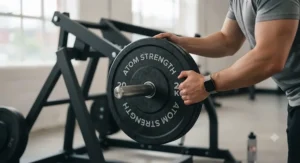
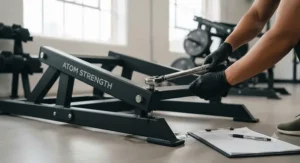
A third recurring pitfall is assuming all machines take the same plates. Standard 1-inch and Olympic 2-inch sleeves are not interchangeable without adaptors, and buying a machine that doesn’t match your existing plate collection means an unplanned extra purchase before you can even use it. Finally, many buyers underestimate assembly time and complexity — several of the machines in this guide, notably the Powertec Workbench Multipress, have build times that stretch well beyond a single evening, and rushing assembly on a load-bearing steel frame is not somewhere to cut corners.
Long-Term Cost & Maintenance
A plate loaded chest press machine is, functionally, a one-off capital purchase rather than a recurring cost, which is exactly where its long-term value proposition against a gym membership becomes compelling. A typical UK gym membership runs to several hundred pounds a year; a mid-range machine like the Titan Fitness Plate-Loaded Chest Press Machine, at roughly £700-£900, can pay for itself within two to three years of avoided membership fees, and steel-frame machines with sealed bearings routinely last a decade or more with basic care.
Ongoing costs are genuinely minor: occasional lubricant for pivot points, replacement of upholstery after many years of heavy use, and — if you’re starting from zero — the cost of Olympic plates themselves, which is worth factoring into your total budget since most plate loaded machines are sold without plates included. Buyers who already own a barbell and plate collection effectively get a “free” second use case out of their existing weights, which meaningfully improves the value equation for the leverage-style machines in this guide.
✨ Ready to add serious pressing power to your home gym?
🔍 Check current pricing on any of the machines above and lock in your spot before stock runs low.
Where and How to Buy a Chest Press Machine in the UK
When you’re ready to buy a chest press machine, amazon.co.uk consolidates listings from established brands like Bodymax, Titan Fitness, Body-Solid and Powertec, which makes side-by-side comparison genuinely easier than trawling individual manufacturer sites. Before checking out, always verify current price and stock directly on the product page, since fitness equipment pricing shifts with demand — January and September, in particular, tend to see higher prices as New Year’s resolution and back-to-routine demand spikes.
Delivery is worth planning around too: machines in the leverage and multi-station category typically ship on a pallet and require either a driveway or a ground-floor delivery point, so check the shipping specification before committing if you’re in a flat without lift access. Reading the aggregated Q&A section on a product listing, rather than just the star rating, often surfaces genuinely useful detail — delivery timelines, common assembly questions, and real dimensions once boxed — that the main listing copy tends to gloss over.
Safety and Space Considerations
Fitness equipment sold in the UK should carry UKCA or CE marking confirming it meets recognised safety standards, and it’s worth checking for this marking on the product listing or packaging before buying, particularly with lesser-known import brands. Beyond certification, practical safety comes down to floor loading and stability: a fully loaded leverage machine with several Olympic plates per side can weigh well over 150kg all-in, so confirm your flooring — especially in upstairs rooms or converted lofts — can bear that concentrated point load safely.
Space planning deserves the same rigour. Measure not just the machine’s static footprint but its fully extended footprint with the bench reclined and arms at full extension, since that’s the figure that actually determines whether you can use it comfortably. A minimum ceiling height of around 2.1m is a sensible baseline for most seated and leverage presses, and leaving genuine clearance on both sides — not just in front — makes loading and unloading plates far less of a daily chore.
Frequently Asked Questions
❓ What is a plate loaded chest press machine?
❓ Is a plate loaded chest press machine better than a bench press?
❓ What size Olympic plates fit a plate loaded chest press machine?
❓ How much weight can a plate loaded chest press machine hold?
❓ Do I need a leverage chest press or a basic plate loaded press?
Conclusion
Choosing a plate loaded chest press machine ultimately comes down to matching the machine’s engineering to how you actually plan to train, not to how impressive the spec sheet reads in isolation. Space-limited beginners and returning lifters are well served by the Bodymax CF666 or the Gronk Fitness Seated Chest Press — honest, no-frills machines that get the fundamentals right without demanding a four-figure budget or a dedicated gym room. Buyers wanting genuine multi-angle versatility should look hard at the Titan Fitness Plate-Loaded Chest Press Machine, while the Body-Solid GPM65 earns its place for anyone who wants a genuine plate loaded pec machine that also corrects strength imbalances.
For lifters chasing that specific converging, Hammer Strength-style feel, the Body-Solid ProClubLine LVBP and its incline sibling, the Body-Solid LVIP, remain the most credible leverage chest press alternatives on amazon.co.uk, while the Powertec Workbench Multipress rewards anyone building a home gym with a genuine multi-year plan rather than a single machine. Whichever you choose, remember that muscle-strengthening exercise on at least two days a week is a recognised health guideline in its own right, not just a bodybuilding pursuit — and a machine that removes the “who’s going to spot me” excuse is one that’s genuinely more likely to get used. The principle behind all of this, incidentally, is progressive overload — gradually increasing the demand you place on your muscles over time — and a good plate loaded chest press machine simply makes that progression easier and safer to manage on your own.
Recommended for You
- Plate Loaded Leverage Machine: 7 Best Picks for 2026
- Bio Force Style Home Gym: 7 Best Cable Systems for 2026
- Premium Multi Gym Machine: 7 Real Picks Worth the Space in 2026
Disclaimer: This article contains affiliate links. As an Amazon Associate, I earn from qualifying purchases. If you purchase products through these links, we may earn a small commission at no additional cost to you.
✨ Found this helpful? Share it with your friends! 💬🤗
