In This Article
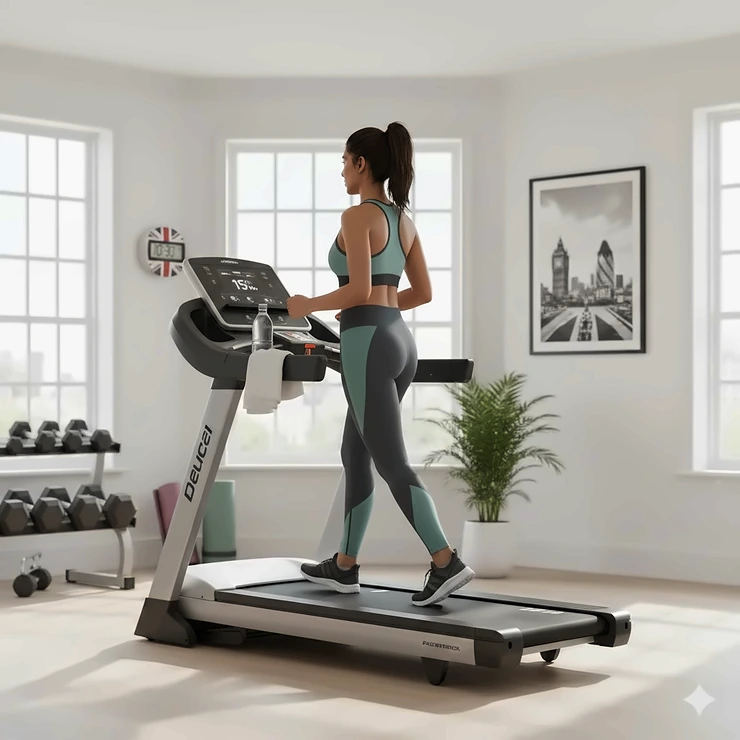
Right, let’s cut through the nonsense. If you’ve been slogging away on a flat treadmill wondering why the weight isn’t budging, here’s your answer: you need more hill. A treadmill with 15% incline for weight loss isn’t just a fancy feature—it’s a proper game-changer that transforms your boring cardio into a calorie-torching, muscle-building powerhouse.
Recent research published in the International Journal of Exercise Science found that incline walking at 12% grade burns significantly more fat than flat running, despite burning the same total calories. Even more impressively, studies show that walking at a 10% incline increases metabolic cost by 113% compared to flat walking. That means you’re working twice as hard without the joint-jarring impact of running.
In 2026, the UK market is flooded with treadmills claiming to help you lose weight, but a proper 15% incline capability separates the wheat from the chaff. Whether you’re a busy professional squeezing in morning workouts or someone who genuinely prefers walking to running, investing in the right machine could be the difference between sustainable fat loss and another abandoned New Year’s resolution.
This comprehensive guide examines seven brilliant treadmills available on Amazon.co.uk, ranging from budget-friendly options under £600 to semi-commercial beasts that’ll last decades. We’ve done the research, checked real UK customer reviews, and compared specifications so you don’t waste hours scrolling through endless product pages.
Quick Comparison Table
| Model | Max Incline | Motor Power | Weight Capacity | Price (£) | Best For |
|---|---|---|---|---|---|
| JTX Sprint-9 Pro | 15% | 4HP | 150kg | £1,799-£1,999 | Serious runners |
| NordicTrack Commercial 1750 | 15% | 3.6HP | 136kg | £1,599-£1,899 | iFit enthusiasts |
| Bowflex T16 | 15% | 3.5HP | 181kg | £1,699-£1,999 | Interval training |
| JTX Slimline Flat Folding | 12% | 1.75HP | 120kg | £499-£599 | Space-savers |
| Superun 3-in-1 Walking Pad | 15% | 3.0HP | 136kg | £349-£449 | Budget buyers |
| MERACH Walking Pad | 9% | 2.75HP | 120kg | £229-£299 | Beginners |
| Sole F63 | 15% | 3.0HP | 163kg | £899-£1,099 | Value seekers |
💬 Just one click – help others make better buying decisions too! 😊
Top 7 Treadmill with 15% Incline for Weight Loss: Expert Analysis
1. JTX Sprint-9 Pro – The UK Powerhouse for Serious Weight Loss
If you’re serious about shedding pounds and don’t mind investing in quality, the JTX Sprint-9 Pro is absolutely brilliant. This semi-commercial treadmill features a robust 4HP motor, genuine 15% automatic incline, and can handle users up to 150 kilograms (23.6 stone). The CushionStep Pro deck delivers that lovely gym-quality feel whilst protecting your joints from impact stress.
Key Specifications:
- Top speed: 22 kilometres per hour (13.7 mph)
- Running belt: 153cm × 55cm
- 42 pre-programmed workouts
- Zwift and Kinomap compatible
UK customers rave about its sturdy construction and whisper-quiet motor. One verified buyer mentioned running 80 kilometres monthly without any issues, praising how it handles heavier runners without wobbling. The Bluetooth connectivity syncs beautifully with fitness apps, though you’ll need to manually adjust settings during workouts.
✅ Pros:
- Commercial-grade build quality lasts years
- Exceptionally quiet brushless motor
- Generous 3-year in-home warranty with free engineer visits
❌ Cons:
- Heavy unit (115kg) requires two people for assembly
- Takes up considerable floor space when assembled
Price Range: £1,799-£1,999 | Where to Buy: Amazon.co.uk
2. NordicTrack Commercial 1750 – Premium iFit Integration
The NordicTrack Commercial 1750 combines 15% incline capability with 3% decline, creating versatile terrain for proper hill training. The 14-inch HD swivelling touchscreen transforms your workout space into virtual trails across Patagonia or Hawaiian beaches through iFit membership (£34/month or £408 annually after trial).
Key Specifications:
- Top speed: 19 kilometres per hour (12 mph)
- Running surface: 152cm × 55cm
- RunFlex cushioning with elastomer dampening
- AutoAdjust technology matches terrain automatically
The swivel screen is genuinely useful for off-treadmill yoga or strength sessions. UK reviewers appreciate the spacious running deck and responsive speed adjustments, though some note the narrower width compared to previous 1750 models. The machine feels premium throughout, justifying its higher price point.
✅ Pros:
- Immersive iFit workouts with global trainers
- Smooth automatic incline transitions
- Excellent cushioning reduces joint stress
❌ Cons:
- Requires ongoing iFit subscription for best features
- Assembly can take 2-3 hours
Price Range: £1,599-£1,899 | Where to Buy: Amazon.co.uk, NordicTrack.co.uk
3. Bowflex T16 – Interval Training Champion
The Bowflex T16 earns its spot through exceptional QuickDial controls that let you adjust speed and incline mid-stride without fumbling for tiny buttons. The extra-wide 56cm × 152cm running belt provides plenty of room for vigorous interval sessions, whilst the 16-inch HD touchscreen streams Netflix, Prime Video, or connects to Peloton and Zwift.
Key Specifications:
- Top speed: 19 kilometres per hour (12 mph)
- Motor: 3.5 continuous horsepower
- FlexZone cushioning
- Lifetime frame and motor warranty
British users love the dual-dial system for fast-paced HIIT workouts, though JRNY programming requires manual adjustments (no auto-adjust like iFit). One tester noted occasional abrupt stops during sessions, quickly resolved by unplugging and restarting. At around £1,800, it sits firmly in the serious-but-not-luxury bracket.
✅ Pros:
- Intuitive rotary dial controls perfect for intervals
- Wide belt accommodates all running styles
- Integrated fan adjusts to workout intensity
❌ Cons:
- JRNY app less sophisticated than competitors
- Occasional software glitches reported
Price Range: £1,699-£1,999 | Where to Buy: Bowflex UK authorised retailers
4. JTX Slimline Flat Folding – Best Space-Saving Option
Not everyone has space for a hulking treadmill. The JTX Slimline Flat Folding solves this brilliantly by folding completely flat—stash it under your bed or in a cupboard when not in use. Despite its compact design, it reaches 16 kilometres per hour and includes 40 pre-programmed workouts, making it surprisingly capable for home weight loss.
Key Specifications:
- Top speed: 16 kilometres per hour (10 mph)
- Motor: 1.75HP
- 6-point shock absorption system
- Arrives fully assembled
The lower 12% maximum incline still provides excellent calorie burn—remember, consistency beats intensity. UK customers praise its surprisingly quiet operation and straightforward controls. The 2-year in-home warranty offers peace of mind, though some wish programmes could be saved between sessions.
✅ Pros:
- Genuinely flat-folding design saves massive space
- Delivered ready to use (no assembly!)
- Under £600 makes it accessible
❌ Cons:
- Lower motor power limits to walking/light jogging
- Custom programmes don’t save
Price Range: £499-£599 | Where to Buy: Amazon.co.uk, JTXfitness.com
5. Superun 3-in-1 Walking Pad with 15% Incline – Budget Champion
For those wanting 15% incline without breaking the bank, the Superun 3-in-1 Walking Pad delivers remarkable value. This clever design transforms between under-desk walking, upright walking with handrail, and compact storage mode. The 15% automatic incline rivals machines costing three times more, whilst the 3.0HP motor handles speeds up to 10 kilometres per hour.
Key Specifications:
- Weight capacity: 136 kilograms
- Three operating modes (flat, raised, stored)
- LED display with remote control
- App connectivity for workout tracking
British buyers appreciate the straightforward setup and solid construction for the price. The narrower belt requires attention during faster speeds, but for dedicated incline walking sessions, it performs admirably. One reviewer noted using it daily for 12-3-30 workouts without issues.
✅ Pros:
- Exceptional value with genuine 15% incline
- Versatile 3-in-1 design suits multiple spaces
- Compact storage between workouts
❌ Cons:
- Narrower belt than full-sized treadmills
- Not suitable for running
Price Range: £349-£449 | Where to Buy: Amazon.co.uk
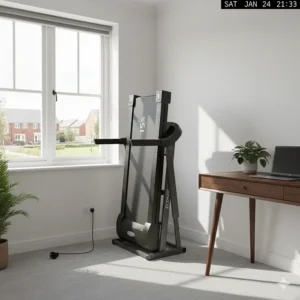
6. MERACH Walking Pad with Incline – Beginner-Friendly Introduction
The MERACH Walking Pad offers adjustable 0-9% incline, making it perfect for beginners building towards steeper angles. Whilst not quite reaching 15%, the 9% maximum still provides significant calorie-burning benefits—and the lower price point (£229-£299) removes financial barriers to starting your weight loss journey.
Key Specifications:
- Incline range: 0-9%
- Motor: 2.75HP
- Magnetic remote control
- One-piece moulded construction
UK customers highlight its whisper-quiet operation in flats and houses with thin walls. The space-saving design slides under sofas easily, encouraging consistent use. The magnetic remote attaches to clothing, letting you adjust speed without breaking stride.
✅ Pros:
- Incredibly quiet for shared living spaces
- Genuinely affordable entry point
- Intuitive controls encourage regular use
❌ Cons:
- Lower maximum incline than competitors
- Best suited for walking only
Price Range: £229-£299 | Where to Buy: Amazon.co.uk
7. Sole F63 – Mid-Range Value Leader
The Sole F63 strikes a lovely balance between quality and affordability. Its 15% incline, 3.0HP motor, and commercial-grade construction deliver performance rivalling machines costing £500 more. The folding design with hydraulic assistance makes storage surprisingly easy despite weighing 90 kilograms.
Key Specifications:
- Top speed: 19 kilometres per hour (12 mph)
- Running surface: 152cm × 51cm
- Lifetime frame and motor warranty
- 9 built-in programmes
American brand Sole has built a solid reputation for reliability, and UK buyers confirm this with glowing long-term reviews. The cushioned deck feels forgiving on knees whilst maintaining road-like responsiveness. Heart rate monitoring through handlebar grips provides instant feedback during fat-burning zones.
✅ Pros:
- Exceptional build quality for price point
- Lifetime warranty on major components
- Folding mechanism works smoothly
❌ Cons:
- No built-in entertainment screen
- Basic display compared to smart treadmills
Price Range: £899-£1,099 | Where to Buy: Amazon.co.uk, specialist fitness retailers
Understanding the Science: Why 15% Incline Accelerates Weight Loss
The Metabolic Advantage
Walking or running on an incline fundamentally changes how your body burns energy. According to research from the Journal of Biomechanics, walking at a 5% incline increases metabolic cost by 52%, whilst a 10% incline more than doubles energy expenditure at 113%. This means a 15% incline pushes your calorie burn even higher without the joint impact of faster speeds.
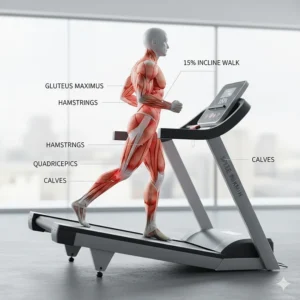
Your body recruits different muscle fibres during incline work. The soleus and vastus lateralis muscles—your calves and quadriceps—fire significantly harder when climbing. Studies using electromyography show these large muscles have high predictive value for metabolic cost during incline walking, explaining why hill work feels so much tougher than flat walking at the same speed.
Fat vs Carbohydrate Burning
Here’s where it gets interesting for weight loss. The viral 12-3-30 workout (12% incline, 3 mph, 30 minutes) gained popularity for good reason. Research published in the International Journal of Exercise Science comparing 12-3-30 to self-paced running found that incline walking sourced 67% of energy from fat compared to only 33% during running. If your primary goal is fat loss rather than overall fitness, incline walking at moderate intensity might actually be superior to running.
This matters because preserving glycogen stores whilst burning fat helps maintain energy levels throughout the day. Athletes and bodybuilders have known this for years—lower-intensity, longer-duration incline work taps into fat stores without depleting the carbohydrates needed for strength training.
Joint Protection Benefits
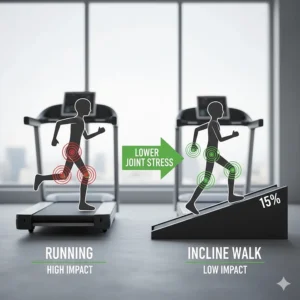
Unlike running, which creates impact forces of 2-3 times your body weight with each stride, incline walking keeps forces much lower. The NHS recommends low-impact exercise for sustainable long-term fitness, particularly for those carrying extra weight or recovering from injury. According to biomechanics research published in PMC, walking mechanics and muscle activation patterns during incline work can predict metabolic cost with 89% accuracy. A 15% incline lets you achieve heart rates comparable to jogging whilst protecting your knees, hips, and ankles from repetitive stress.
How to Choose Your Perfect Treadmill with 15% Incline
Motor Power: The Foundation of Performance
Motor power determines everything. For incline work, you need continuous horsepower (CHP) rather than peak horsepower ratings that manufacturers love inflating. Here’s the honest breakdown:
Under 2.0 CHP: Suitable only for walking at lower speeds. The motor will struggle with 15% incline, potentially overheating or wearing out quickly.
2.5-3.0 CHP: The sweet spot for dedicated walkers and light joggers. Handles 15% incline at walking speeds without strain. Ideal for 12-3-30 style workouts.
3.5-4.0+ CHP: Built for running at incline. If you plan interval training or running uphill, invest here. Motors in this range handle sustained high-intensity work without overheating.
Your JTX Sprint-9 Pro with 4HP falls into commercial-grade territory, explaining its £1,999 price tag. Meanwhile, the Superun Walking Pad’s 3.0HP motor proves perfectly adequate for its intended walking-focused use at under £450.
Running Belt Dimensions Matter
Belt size dramatically affects comfort and safety. For incline walking, you want:
Length: Minimum 130 centimetres for walking, 150+ centimetres for running. Shorter people might manage with less, but longer belts prevent that unnerving feeling of running out of space.
Width: 45-50 centimetres for walking, 50-56 centimetres for running. Wider belts accommodate natural arm swing and prevent stepping on edges during intense efforts.
The Bowflex T16’s generous 56cm width earns praise from testers precisely because it eliminates that claustrophobic feeling during sprint intervals.
Weight Capacity: Don’t Ignore This
Treadmill weight limits aren’t suggestions—they’re engineering limits. Exceeding capacity accelerates wear on motors, belts, and frames. More importantly, machines built for higher weight limits typically feature sturdier construction that benefits everyone.
Compare the JTX Sprint-9 Pro (150kg capacity) to the MERACH Walking Pad (120kg). The JTX’s heavy-duty frame and larger motor deliver superior stability even for lighter users. That rock-solid feel eliminates wobbling during aggressive workouts.
Smart Features: Useful or Gimmicks?
Genuinely Useful:
- App connectivity: Zwift, Kinomap, iFit transform monotonous sessions into engaging experiences
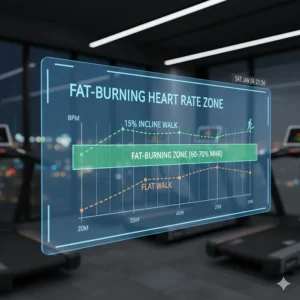
- Heart rate monitoring: Essential for staying in fat-burning zones
- Quick-adjust controls: QuickDial or handlebar buttons beat fumbling with console buttons
- Automatic incline: Programmes that adjust incline mid-workout increase variety
Often Overrated:
- Touchscreens: Unless you’re streaming workouts, a basic display suffices
- Bluetooth speakers: Your headphones probably sound better
- Cooling fans: Nice but not worth £200 premium
Focus on mechanical quality over flashy screens. The humble JTX Slimline lacks smart features but delivers reliable performance for years.
Comparison: Treadmill vs Outdoor Hill Training for Weight Loss
| Factor | Treadmill with 15% Incline | Outdoor Hills |
|---|---|---|
| Calorie Control | Precise incline and speed settings | Variable terrain hard to replicate |
| Weather | Rain, snow, darkness? No problem | British weather is… British weather |
| Joint Impact | Cushioned deck reduces stress | Hard pavements and uneven surfaces |
| Convenience | Ready whenever motivation strikes | Requires travel to suitable hills |
| Cost | £300-£2,000 initial investment | Free (after buying decent trainers) |
| Progress Tracking | Automatic logging and metrics | Manual tracking with apps |
For consistent weight loss, the treadmill wins on reliability. You can’t control British weather, but you can control your home workout space. That consistency matters more than occasional perfect outdoor sessions.
The 12-3-30 Workout: Does It Actually Work?
Let’s address the elephant in the room. The 12-3-30 workout—walking at 12% incline, 3 mph (4.8 kph), for 30 minutes—went viral on TikTok with claims of dramatic weight loss. Influencer Lauren Giraldo credited it with losing 30 pounds without dieting.
The Science Says:
Peer-reviewed research published in 2025 examined metabolic responses to 12-3-30 versus self-paced running, finding both burned similar total calories but 12-3-30 derived more energy from fat stores. However, running completed the same calorie burn in 23 minutes versus 30 minutes for incline walking.
For Weight Loss:
- Time-poor individuals: Running might be more efficient
- Fat loss focus: 12-3-30 optimises fat oxidation
- Joint concerns: Incline walking provides gentler option
- Sustainability: Whichever you’ll actually do consistently wins
The beauty of owning a 15% incline treadmill is you’re not locked into one approach. Some days you might smash out 12-3-30 sessions, other times run intervals at 8% incline. Variety prevents plateaus and boredom.
Maximising Fat Loss: Advanced Incline Training Techniques
Progressive Overload for Continuous Results
Your body adapts quickly. The 12-3-30 workout that felt brutal initially becomes routine within 4-6 weeks. Progressive overload—gradually increasing difficulty—prevents plateaus. Here’s how:
Week 1-2: Master 12% incline at 3 mph for 30 minutes
Week 3-4: Increase to 13% incline, maintain speed and duration
Week 5-6: Push to 14% incline or increase speed to 3.2 mph
Week 7-8: Attempt 15% incline or extend duration to 35 minutes
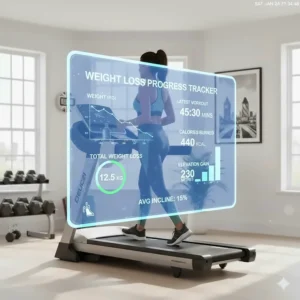
Track sessions in a notebook or fitness app. Seeing tangible progress—even small increments—fuels motivation when the scales don’t cooperate.
Interval Training on Inclines
Steady-state cardio works, but intervals amplify results. The post-exercise oxygen consumption (EPOC) effect—your body burning extra calories for hours after workout—increases dramatically with high-intensity intervals.
Sample Hill Interval Workout:
- Warm-up: 5 minutes at 2% incline, comfortable pace
- Work: 2 minutes at 15% incline, challenging but sustainable speed
- Recovery: 2 minutes at 5% incline, easy pace
- Repeat: 5-8 cycles
- Cool-down: 5 minutes at 0% incline, easy pace
This 30-40 minute session burns similar calories to an hour of steady walking whilst building significantly more leg strength.
The Decline Advantage
Some treadmills like the NordicTrack Commercial 1750 offer decline functionality. Walking downhill engages different muscle fibres—particularly your quadriceps eccentrically—and prepares you for varied outdoor terrain. Decline training can reach -6%, creating comprehensive hill simulation for ultra-runners and hikers.
✨ Don’t Miss These Exclusive Deals!
🔍 Take your weight loss journey to the next level with these carefully selected treadmills. Click on any highlighted item to check current pricing and availability on Amazon.co.uk. These machines will help you create authentic results your family will admire!
Price Range & Value Analysis
| Budget Range | What to Expect | Best Options |
|---|---|---|
| £200-£400 | Basic walking pads, limited incline (5-9%), suitable for beginners | MERACH Walking Pad, entry-level Superun models |
| £400-£700 | Decent motors (2-3HP), 12-15% incline, compact folding designs | JTX Slimline, Superun 3-in-1 with 15% |
| £700-£1,200 | Solid mid-range, good warranties, 15% incline standard, suitable for running | Sole F63, quality folding treadmills |
| £1,200-£2,000 | Premium features, touchscreens, app integration, commercial-grade components | NordicTrack 1750, Bowflex T16, JTX Sprint-9 Pro |
| £2,000+ | Professional-grade, extreme inclines (40%+), lifetime warranties | NordicTrack X-series, commercial gym equipment |
Value Sweet Spot: £800-£1,200 delivers the best balance of quality, features, and longevity for serious home users. Machines in this bracket should last 5-10 years with regular use.
Maintenance: Making Your Investment Last
Weekly Tasks (5 Minutes)
Vacuum beneath and around: Dust accumulation affects electronics and motors. A quick vacuum prevents costly repairs.
Wipe down belt and console: Sweat corrodes components over time. Use slightly damp microfibre cloth—avoid harsh chemicals.
Check belt alignment: If drifting left or right, use Allen key to adjust tension screws equally on both sides.
Monthly Tasks (15 Minutes)
Lubricate running belt: Most manufacturers recommend silicone-based lubricant every 30-40 hours of use. Lift belt edges and apply sparingly along entire length. Over-lubrication attracts dust, so less is more.
Inspect for loose bolts: Vibration gradually loosens fasteners. Tighten any wobbling connections—particularly handlebar and console mounts.
Clean motor cover ventilation: Blocked vents cause overheating. Compressed air or soft brush removes debris from grilles.
Annual Tasks (30 Minutes)
Professional inspection: If under warranty, schedule JTX’s free in-home service or contact manufacturer. They’ll check belt wear, motor performance, and electrical connections.
Replace worn belt: Running belts typically last 3,000-5,000 kilometres depending on usage intensity. Warning signs include fraying edges, visible wear patterns, or slipping during use.
Proper maintenance transforms a £1,000 investment into a decade of reliable service. Neglect costs far more in premature replacements.
Common Mistakes That Sabotage Weight Loss Results
Holding the Handrails
Research from Cybex and the University of Massachusetts found that using handrails at 10% incline reduces calorie burn to levels comparable with 5% incline without handrails. Leaning back shifts weight off your legs, defeating the entire purpose of incline training.
Solution: Start at a lower incline you can manage hands-free. Build up gradually. If balance is genuinely concerning, lightly touch handrails for stability without bearing weight.
Excessive Speed Before Adequate Incline
Many beginners increase speed rather than incline, believing faster equals better fat loss. Wrong. A brisk walk at 15% incline burns more calories with less joint stress than a flat run at 10 kph.
Solution: Master 15% incline at comfortable walking speed (4-5 kph) before worrying about faster paces. Your legs and cardiovascular system will strengthen naturally, then you can increase speed.
Neglecting Form
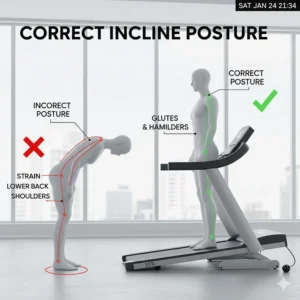
Poor posture—hunching forward, looking down at displays, or taking tiny shuffling steps—reduces effectiveness and risks injury.
Solution: Stand tall with shoulders back. Look forward, not down. Take natural strides. If you can’t maintain good form, reduce incline or speed until you can.
Training Too Hard, Too Often
Your body adapts during recovery, not during workouts. Pounding away at 15% incline seven days weekly leads to overtraining, poor sleep, and paradoxically slower fat loss due to elevated cortisol levels.
Solution: Three to four quality sessions weekly with rest days between. Use rest days for walking, yoga, or strength training. Quality beats quantity.
Nutrition: The Missing Piece
No treadmill, regardless of incline capability, compensates for poor nutrition. A 30-minute 12-3-30 session burns approximately 250-350 calories—easily negated by a couple of digestive biscuits and a cappuccino.
The 80/20 Rule
80% of weight loss happens in the kitchen. That treadmill with 15% incline creates the calorie deficit and builds leg strength, but consistent nutrition determines whether you’re burning fat or spinning your wheels.
20% is exercise. Yes, it matters enormously for health, fitness, and maintaining muscle mass during weight loss. But exercise alone rarely creates sufficient calorie deficit without dietary awareness.
Practical UK-Specific Advice
Protein priority: Aim for 1.6-2.2 grammes per kilogramme of body weight. For a 75kg person, that’s 120-165g daily. Protein preserves muscle mass during calorie restriction, essential for maintaining metabolic rate. The British Nutrition Foundation provides evidence-based guidance on protein requirements for active individuals.
Whole foods foundation: Base meals around lean proteins, vegetables, fruits, and wholegrains. Save processed foods for occasional treats, not daily staples.
Calorie awareness without obsession: Use tracking apps like MyFitnessPal for 2-3 weeks to understand portion sizes. Most people dramatically underestimate intake—awareness alone often sparks positive changes.
The UK Government’s Eatwell Guide provides sensible, non-faddy nutritional framework. Combine those principles with your consistent incline treadmill sessions, and results become inevitable rather than hopeful.
Frequently Asked Questions
❓ How much weight can you realistically lose using a treadmill with 15% incline?
❓ Is 15% incline too steep for beginners?
❓ Can I lose belly fat specifically using incline walking?
❓ How does a 15% treadmill incline compare to outdoor hill running?
❓ Should I buy a treadmill with automatic or manual incline adjustment?
Conclusion: Making the Smart Choice for Your Weight Loss Journey
Choosing the right treadmill with 15% incline for weight loss in 2026 depends entirely on your specific circumstances—budget, space, fitness level, and long-term commitment. But here’s the honest truth: the best treadmill is the one you’ll actually use consistently.
The JTX Sprint-9 Pro represents premium UK quality that’ll last decades. The NordicTrack Commercial 1750 delivers immersive iFit experiences for tech enthusiasts. The Bowflex T16’s QuickDial controls excel for interval training. Meanwhile, the JTX Slimline and Superun Walking Pad prove you don’t need thousands of pounds to access effective incline training.
Remember, research confirms that incline walking burns significantly more fat than flat running whilst protecting joints from impact stress. Whether you invest £300 or £2,000, that 15% incline capability transforms ordinary cardio into a powerful fat-burning tool.
Start with three weekly sessions—perhaps Monday, Wednesday, Friday—focusing on consistency over intensity. Build from 10 minutes to 30 minutes at sustainable paces. Track your progress, celebrate small wins, and remember that sustainable weight loss is a marathon, not a sprint.
The science supports incline training. The equipment exists at every price point. Your only job now is taking that first step—literally. Choose a treadmill from this guide, commit to showing up regularly, and six months from now, you’ll wonder why you waited so long.
Recommended for You
- 7 Best Home Running Treadmill for Marathon Training UK 2026
- 7 Best Heavy Duty Treadmill for Runners Over 20 Stone 2026
- 7 Best Manual Folding Treadmill for Elderly UK 2026
Disclaimer: This article contains affiliate links. If you purchase products through these links, we may earn a small commission at no additional cost to you. Prices shown are approximate and may vary. All products featured are independently selected based on research and UK customer reviews. We recommend consulting your GP before starting any new exercise programme, particularly if you have pre-existing health conditions or haven’t exercised regularly.
✨ Found this helpful? Share it with your mates! 💬🤗
