
In This Article
Picture the scene. Seven minutes into a packed evening session, the coach calls for the medium bell and twelve people freeze, squinting at a row of identical black lumps. One grabs 16kg instead of 12kg. Another lifts 8kg and wonders why the swing feels like carrying a handbag. The class stalls, the playlist plays on, and momentum drains away. That is the problem colour-coded kettlebells for studio training exist to solve.

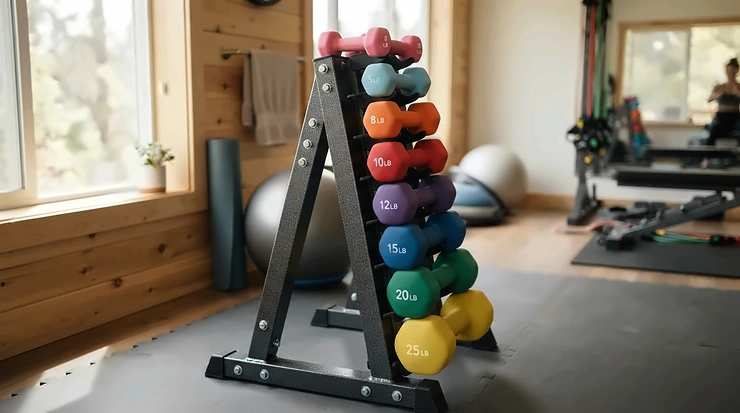
The idea is wonderfully simple. Every weight gets its own colour, usually with the number printed on the side too, so the right bell is found in a second rather than a squint. In group fitness classes that run on tight transitions, those saved seconds add up. They also protect your clients. NHS guidance recommends muscle-strengthening activity on at least two days a week, and a studio that makes strength work smooth and safe gives people a reason to keep coming back.
This guide covers seven real options listed on Amazon UK, from budget vinyl to competition-grade steel. I weighed the specs against aggregated rating data and explained what each number means on a studio floor. This is research-based analysis, not hands-on testing, because I haven’t lifted any of these bells. You’ll also find practical advice on building studio kettlebell sets that last. A pretty colour chart is no substitute for a bell that survives a Tuesday-night HIIT class, so the caveats are honest ones.
Quick Comparison: 7 Colour-Coded Kettlebells at a Glance
Short on time? Here’s the whole field in one table. Prices are ranges based on listings at the time of research, so check the current price before you buy.
| Product | Build | Weights | Price range | Best for |
|---|---|---|---|---|
| Core Balance Vinyl Kettlebell | Vinyl over cement core | Multiple weights (check listing) | Low £10s upward | Budget starter classes |
| KEFL Vinyl Coated Kettlebell | Vinyl over hard shell | 2–20kg | Mid-£10s upward | Fine-grained light-to-mid ladders |
| DKN Vinyl Kettlebell Set | Vinyl-coated trio | 2kg, 3kg, 4kg | Under £25 at last check | Gentle-strength and mobility work |
| KK Kettlebells Neoprene | Neoprene over cast iron | 2–24kg | £30–£55 range | Everyday core set |
| Yes4All Neoprene Kettlebell | Neoprene over cast iron | 2–20kg | Check current price | Floor-friendly colour ladders |
| KEFL Rubber Colour Coated Kettlebell | Rubber over cast iron, chrome handle | 4–24kg | Check current price | Heavy daily use |
| Jordan Fitness Competition Kettlebell | Hollow steel | 8–40kg | Around £45–£205 by weight | Technique-led classes |
Looking at the comparison above, the KK Kettlebells Neoprene range offers the best balance of floor protection, weight range and rating volume. The Core Balance Vinyl Kettlebell is the cheapest way to equip a first class. If your programme leans on snatches and cleans, the Jordan Fitness Competition Kettlebell‘s identical dimensions across weights justify the extra spend. Studios should also note that the DKN Vinyl Kettlebell Set carries a domestic-use warranty, which matters far more to a studio than to a home lifter.
💬 Just one click — help others make better buying decisions too!😊
Top 7 Colour-Coded Kettlebells for Studio Training: Expert Analysis
Every spec below comes from manufacturer or Amazon UK listings at the time of research. Ratings are aggregated figures, and where I couldn’t verify real review detail I say so instead of guessing.
1. Core Balance Vinyl Kettlebell — budget bell with the biggest crowd
Few budget bells attract as many ratings as the Core Balance Vinyl Kettlebell, which sat inside Amazon UK’s kettlebell bestseller chart at the time of research. The popularity makes sense once you read the spec sheet.
It has a vinyl-coated cement core, a wide ergonomic handle, a flat anti-slip base and colour-coded weights. Cement is less dense than cast iron, so each bell is physically bulkier for the same kilos. That suits two-handed swings and goblet squats, where a roomy handle calms nervous beginners. It also means a rack of them eats shelf space faster than iron would. The flat base stops the bell rolling away mid-set, which matters when twelve people move at once.
Based on the construction, this is a first-class bell rather than a forever bell. Cement-filled vinyl generally isn’t designed for repeated drops onto hard floors. It suits beginner strength sessions, circuits and boot-camp groups better than high-rep snatch work. A studio on a tight budget can use it to build the light-to-mid tiers cheaply.
Amazon UK showed a 4.4-star average from 728 ratings at the time of research, a solid high-volume signal. I couldn’t verify the detail behind those ratings, so treat it as headline sentiment only.
Pros:
- ✅ Wide handle suits beginners and two-handed work
- ✅ Flat anti-slip base stays put on studio floors
- ✅ Very low entry cost for building a first set
Cons:
- ❌ Cement core makes each bell bulkier per kilo
- ❌ Not built for repeated drops on hard floors
Price: low-£10s upward depending on weight. That is strong value for entry tiers, but check the current price.

2. KEFL Vinyl Coated Kettlebell — widest light-to-mid colour ladder
If your classes need fine-grained progression, the KEFL Vinyl Coated Kettlebell starts lower than most. It runs from 2kg up to 20kg, with a unique colour for each weight.
KEFL’s own site describes a hard polymer shell under a vinyl coat and a comfortable grip. Its Amazon listing pitches the range at circuits and HIIT. A 2kg starting point means you can run mobility flows, overhead presses and older-adult sessions in the same colour family as your swing bells. That gives one visual language from first rep to heavy day. The 20kg top end covers most mixed-ability swing work.
Because one brand covers the whole ladder, this is probably the cleanest route to weight-identifiable kettlebells in a lighter-duty set. You avoid the mixed-brand trap, where one maker’s 8kg is blue and another’s is red. For group fitness classes that serve several ability levels at once, that consistency does real work.
The honest caveat is evidence. The Amazon UK listing showed a 4.4-star average from only 10 ratings at the time of research, so the track record is thin. Judging by construction alone, a vinyl finish over a polymer shell is also likelier to scuff than neoprene or rubber.
Pros:
- ✅ Full 2–20kg ladder from a single brand
- ✅ Every weight gets its own distinct colour
- ✅ Light starter weights suit mobility work
Cons:
- ❌ Thin review base so far
- ❌ Vinyl finish may scuff sooner than rubber
Price: from the mid-£10s on Amazon depending on weight. Good value for lighter tiers, so check the current price.
3. DKN Vinyl Kettlebell Set — ready-made 2kg, 3kg and 4kg trio
Most kettlebell buying advice skips the featherweights. That is a mistake, and the DKN Vinyl Kettlebell Set is the cure. It bundles three vinyl-coated bells at 2kg, 3kg and 4kg, nine kilos in total, with a workout chart.
The moulded design has an ergonomic comfort handle and an anti-slip base, with each weight colour-coded. These are not swing bells. At 4kg and below they’re tools for halos, light presses, get-up practice and mobility drills. That is where beginners, returners and older participants benefit from weight-identifiable kettlebells without the intimidation of a 12kg lump.
Here is what the listing doesn’t shout about. The warranty is one year for domestic usage. A studio running four classes a day sits outside that cover on a strict reading. Treat the set as a cheap consumable tier you can replace, or ask DKN before relying on it. That reasoning comes from the listing wording, not a lab test.
I couldn’t verify enough genuine review text to summarise buyer sentiment responsibly, and I’d rather say so than invent any. Buy one set to trial in a gentle-strength session before scaling up.
Pros:
- ✅ Neat three-weight starter bundle
- ✅ Included workout chart helps new clients
- ✅ Light weights suit mobility and gentle strength work
Cons:
- ❌ Warranty covers domestic use only
- ❌ Too light for swings and snatches
Price: under £25 at last check for the full set. It is a low-risk accessory buy, but check the current price.
4. KK Kettlebells Neoprene — most-reviewed neoprene all-rounder
The KK Kettlebells Neoprene range is the quiet achiever here, with the strongest review volume of anything on this list. It is a cast iron core wrapped in neoprene, with a slightly textured handle and a flat bottom. Weights run from 2kg up to 24kg, sold individually, with some multi-colour trios available.
Neoprene dampens impact noise and protects flooring, which matters when your studio shares a ceiling with a café. The textured handle gives grip without the bite of knurling, a sensible compromise for high-rep work. KK’s own listing pairs 2kg with pink, 4kg yellow, 6kg purple, 8kg blue, 10kg red, 12kg green, 14kg grey, 16kg black and 20kg brown.
Here is what the spec sheet won’t tell you. KK’s heavier options reuse colours, with 18kg shown in blue like the 8kg and 22kg in grey like the 14kg. In a wide ladder, colour alone can become ambiguous. Always pair colour with the printed number, and keep duplicated shades on separate racks.
Amazon UK showed a 4.7-star average from more than 400 ratings, which reviewers appear to back with steady satisfaction. I haven’t read enough individual reviews to characterise their detail.
Pros:
- ✅ Neoprene quietens impacts and protects floors
- ✅ Wide 2–24kg range from one brand
- ✅ Strong rating volume at 4.7 stars
Cons:
- ❌ Some colours repeat across heavier weights
- ❌ Sold individually, so sets cost more to assemble
Price: £30–£55 range depending on weight. Good value for a daily-use workhorse, so check the current price.
5. Yes4All Neoprene Kettlebell — bright colour ladder from 2kg to 20kg
The Yes4All Neoprene Kettlebell offers a neoprene-coated cast iron bell in a rainbow that progresses logically. Pink is 2kg, yellow 4kg, orange 6kg, red 8kg, teal 10kg, dark green 12kg and dark blue 16kg, with a 20kg also listed.
Warm colours for light bells and cool, deeper colours for heavy ones is intuitive for new members. You can coach “go warm if you’re new, cool when you’re ready” without referring to a chart. Neoprene over cast iron brings the same floor-friendly, quieter-landing benefits as the KK Kettlebells Neoprene range, and the listing claims coverage from beginner to advanced.
My analytical reservation is the dark green and dark blue neighbours at 12kg and 16kg. In a dimly lit HIIT room with uplighting, two dark cool colours can blur together. Test them in your own lighting before ordering a full set, or rely on the printed weights as a second check. That concern is a reasoned observation from the colour list, not a reported fault.
I couldn’t confirm a reliable aggregated rating at the time of research, so I won’t quote one. Compare current ratings on the listing before committing.
Pros:
- ✅ Logical warm-to-cool colour progression
- ✅ Neoprene over cast iron protects floors
- ✅ Covers 2kg through 20kg
Cons:
- ❌ Dark green and dark blue may blur in dim rooms
- ❌ Rating data not verified at research time
Price: sits in the mid-range neoprene band. Check the current price.

6. KEFL Rubber Colour Coated Kettlebell — built with commercial gyms in mind
The KEFL Rubber Colour Coated Kettlebell is the only bell here whose listing is explicitly aimed at commercial gyms, fitness suites and sports clubs. It has a cast iron core, a rubber coating and a chrome handle.
Weights run through 4kg, 6kg, 8kg, 10kg, 12kg, 14kg, 16kg, 20kg and 24kg, sold individually or as a complete set. The top-end 24kg gives you a genuine heavy tier that many vinyl and neoprene ranges don’t reach. The listing also stresses that the bells are easy to wipe clean, a practical plus for gym studio equipment shared between back-to-back classes.
Chrome handles feel crisp and consistent but can turn slick with sweaty palms. Studios running high-rep swings may want chalk or a towel station nearby. Rubber coatings are generally more forgiving of knocks than thin vinyl, though I haven’t seen independent durability testing, so that stays a reasoned expectation.
I couldn’t verify meaningful rating or review data at the time of research. For a heavier-duty purchase, check the latest ratings and reviews on the listing before ordering in bulk.
Pros:
- ✅ Listing targets commercial gyms and clubs
- ✅ Wipe-clean rubber suits shared equipment
- ✅ Nine weights up to 24kg
Cons:
- ❌ Chrome handle can get slick when sweaty
- ❌ Review data not verified at research time
Price: sits in the mid-to-upper range for coated bells. Check the current price.
7. Jordan Fitness Competition Kettlebell — the standard-colour benchmark
The Jordan Fitness Competition Kettlebell is the benchmark for anyone who wants technique to travel from class to competition. It is a hollow steel bell with a 35mm handle, available from 8kg to 40kg in 4kg steps. Jordan states it is BSI approved.
Every weight shares the same dimensions, so a student’s grip and rack position don’t change as the load rises. That is gold for coaches teaching cleans and snatches. The colours follow the competition palette: 8kg pink, 12kg blue, 16kg yellow, 20kg purple, 24kg green, 28kg orange and 32kg red. Those hues carry over to other competition sets, such as Mirafit Colour Competition Kettlebells, which run from 8kg to 32kg and are calibrated to within 200g. A seven-bell set with rack costs around £700 direct from Mirafit, so check whether it is available on Amazon.
The trade-off is that there’s no coating. Steel on hard floors is loud and unforgiving, so you’ll want rubber flooring or lifting platforms. For beginner-heavy classes, that feels like overkill.
An Amazon UK listing exists for the 8kg bell, but I couldn’t verify a rating, so I won’t quote one. Reviews on Mirafit’s own site praise its competition range’s colour coding for avoiding weight surprises.
Pros:
- ✅ Identical dimensions at every weight
- ✅ Standard competition colours, 8–40kg range
- ✅ 35mm handle with a large flat base
Cons:
- ❌ Uncoated steel needs proper flooring
- ❌ Costs far more than coated alternatives
Price: around £45–£205 depending on weight. It is premium value for technique-led programmes, so check the current price.
Here is how the seven stack up on the details that matter in a class setting.
| Product | Coating | Handle | Amazon UK rating (at research) | Best for |
|---|---|---|---|---|
| Core Balance Vinyl Kettlebell | Vinyl over cement core | Wide ergonomic | 4.4 (728 ratings) | Budget beginner classes |
| KEFL Vinyl Coated Kettlebell | Vinyl over hard shell | Comfort grip | 4.4 (10 ratings) | Complete light-to-mid ladder |
| DKN Vinyl Kettlebell Set | Vinyl | Ergonomic comfort | Not verified | Mobility and gentle strength |
| KK Kettlebells Neoprene | Neoprene over cast iron | Slightly textured | 4.7 (400+ ratings) | Everyday core set |
| Yes4All Neoprene Kettlebell | Neoprene over cast iron | Not specified | Not verified | Colour-progression sets |
| KEFL Rubber Colour Coated Kettlebell | Rubber over cast iron | Chrome | Not verified | Heavy daily use |
| Jordan Fitness Competition Kettlebell | None, hollow steel | 35mm, smooth | Not verified | Technique-led classes |
The data points to a clear split. The KK Kettlebells Neoprene range has the most trustworthy rating evidence, while the Core Balance Vinyl Kettlebell has the biggest crowd for the lowest outlay. Three of the seven have no verified rating at all, which is worth remembering before you place a bulk order. Read the current reviews on each listing rather than trusting a headline figure from me.
What Are Colour-Coded Kettlebells for Studio Training?
Colour-coded kettlebells for studio training are kettlebells finished in a different colour for each weight, so instructors and participants can identify load at a glance during group sessions. Many also print the weight in kilograms, making them weight-identifiable kettlebells that speed up transitions, cut mis-lifts and simplify equipment set-up between classes.
Two families exist. Competition bells follow a loosely international palette, as the colour list under the Jordan Fitness Competition Kettlebell shows. Coated bells in vinyl, neoprene or rubber follow no universal system, so one brand’s 8kg may be another’s 12kg. That is why consistency inside your studio matters more than any specific hue.
Why do studios care? A class is a choreography of seconds. If clients have to read stamped numbers on black iron, the weakest link is a tired, slightly dizzy person at minute 40. A bell that announces its own weight is one less decision for them and one less accident waiting to happen.
How to Choose Colour-Coded Kettlebells for Studio Training
Choosing well comes down to six steps, in this order.
- Pick one colour system and stick with it. Mixing brands can put two different weights in the same colour, which defeats the purpose.
- Match the material to your floor. Vinyl, neoprene and rubber suit studios with softer flooring or neighbours below. Steel competition bells need platforms.
- Decide your weight ladder. Three tiers, light, medium and heavy, usually cover mixed-ability classes. Add a fourth for advanced groups.
- Check the printed weights. Colour alone can repeat at heavier weights, as with the KK Kettlebells Neoprene range, so insist on a number as backup.
- Read the warranty wording. “Domestic usage” cover, as on the DKN Vinyl Kettlebell Set, may not apply to a studio.
- Plan storage and quantities. Bulky cement-core bells need more shelf room than iron ones.
If you run beginner circuits on a budget, choose vinyl. If your studio runs daily classes, choose neoprene or rubber. If your coaches teach snatch technique or competition-style work, choose steel.
Colour-Coded vs Black Kettlebells: What Studios Gain
Black bells are not bad, and for many solo lifters they’re perfect. In a studio, though, you’re managing a room, not a person.
| Factor | Colour-coded | Traditional black |
|---|---|---|
| Weight identification | Instant, even from across the room | Relies on reading stamped numbers |
| Mis-lift risk | Lower when colours are consistent | Higher in dim light |
| Class transitions | Faster, as coaches can call by colour | Slower |
| Set-up rules | Needs one colour system | Any mix works |
| Cost | Can carry a small premium | Often cheapest |
| Best for | KK Kettlebells Neoprene, Jordan Fitness Competition Kettlebell | Solo lifters who know their bells |
The table shows colour-coding as an investment in flow rather than a cosmetic upgrade. A studio that calls “grab yellow” gets twelve people moving at once, while a studio of black bells spends the first thirty seconds of every block checking numbers. The only real catch is discipline: you must keep a single colour system or the advantage evaporates.
Features That Actually Matter (And Those That Don’t)
What matters:
- Printed weights. The best weight-identifiable kettlebells use both colour and a clear number, because colour alone can be ambiguous.
- Handle finish. A slightly textured handle, as on the KK Kettlebells Neoprene range, grips well without tearing skin. Chrome, as on the KEFL Rubber Colour Coated Kettlebell, feels crisp but may need chalk.
- Coating suited to your floor. This is the difference between a quiet studio and a complaint letter.
- A flat base. It stops bells rolling when dropped.
What doesn’t:
- Fancy shade names. Teal versus turquoise changes nothing on the floor.
- Generic “ergonomic” claims. Check actual handle dimensions instead.
- Bundled posters. A workout chart is nice but won’t make a bell last.
If a feature doesn’t help someone identify, hold or safely drop a bell, it’s marketing.
Practical Guide: Setting Up Studio Kettlebell Sets Class by Class
A great set isn’t bought, it’s built.
Start with three tiers
Pick a light, medium and heavy bell, such as the 6–8kg, 10–12kg and 16kg ranges that cover most mixed-ability classes. Treat those as a starting point rather than a rule. Buy enough that each participant gets a bell from one tier without sharing.
Put colours on the wall
Display a poster or wall chart with colours and weights. Teaching new members the code in their first session removes the biggest source of mix-ups.
Rack by colour, not by habit
Store bells in colour order, lightest to heaviest, so a quick scan tells you if a bell is missing. Duplicate colours, such as the repeats in KK Kettlebells Neoprene‘s heavier weights, should go on different shelves.
First-30-day mistakes to avoid
- Buying bells from three brands
- Skipping a chalk or towel station for sweaty handles
- Forgetting to wipe handles between back-to-back sessions
✨ Ready to Kit Out Your Studio?
🔍 Take your class-based training to the next level with these carefully selected bells. Click any highlighted product name to check current pricing and availability. The right set will help you create smoother, safer sessions your members will love!
Real-World Scenarios: Matching Kettlebells to Your Class
The boutique HIIT studio
Twelve people per class, four classes a day, rubber flooring, and a budget of about £400. A dozen mid-weight KK Kettlebells Neoprene bells at roughly £30–£40 each lands near £360–£480. Quiet landings keep neighbours happy, and the neoprene copes with daily drops better than vinyl would.
The community-hall strength class
Eight over-50s on a wooden floor, twice a week, low budget. Pair the KEFL Vinyl Coated Kettlebell in lighter weights with a DKN Vinyl Kettlebell Set for mobility days. Vinyl protects the floor, the 2kg starting point suits gentle progression, and twice-weekly use puts little stress on the coating. These are class-based training choices built around safety and comfort rather than raw load.
The performance studio
Six advanced lifters on rubber platforms, three sessions a week, focused on snatch and clean technique. The Jordan Fitness Competition Kettlebell in 12kg, 16kg and 24kg gives identical bell dimensions as the load rises. Competition palettes also match what athletes see at events. If budget allows, Mirafit Colour Competition Kettlebells are a worthwhile alternative to price up.
Problem → Solution: Fixing Common Class-Based Training Headaches
Problem: the wrong bell gets grabbed in dim light. Choose colours with strong contrast, test them in your own lighting, and keep printed numbers visible. Be wary of near-neighbours such as the Yes4All Neoprene Kettlebell‘s dark green and dark blue.
Problem: noise complaints from downstairs. Switch to neoprene or rubber, as with the KK Kettlebells Neoprene range, and lay rubber mats under the working area.
Problem: mixed-brand colour clashes. Standardise on one brand per weight tier. If you must mix, label weights with tape.
Problem: sweaty handles. Add a towel and chalk station. Chrome-handled bells like the KEFL Rubber Colour Coated Kettlebell especially benefit.
Problem: floor marks or chipped coatings. Use mats, teach controlled lowering, and retire bells with cracked finishes.
Colour-Coded Kettlebells for Group Fitness Classes: Tailored Advice
Group fitness classes are where colour-coding earns its keep, because the instructor can’t check every bell.
For beginners: start with lighter vinyl or neoprene bells so the room feels welcoming. The Core Balance Vinyl Kettlebell and DKN Vinyl Kettlebell Set suit this audience.
For instructors: teach the colour code in the first session and call weights by colour as well as number. It helps newcomers and speeds up transitions.
For older adults: lighter bells in the 2–6kg range suit gentle strengthening. The UK Chief Medical Officers’ guidelines say strengthening activity should happen on at least two days a week, and any strengthening activity beats none. A forgiving, easy-to-identify bell makes that habit easier to start.
For advanced members: standard competition colours and consistent dimensions help technique transfer. The Jordan Fitness Competition Kettlebell is the natural fit.
Long-Term Cost & Maintenance for Gym Studio Equipment
Price per bell is only half the story. Total cost of ownership includes replacement, floor repair and the time wasted on mix-ups.
| Tier | Examples | Price range per bell | Floor and noise | Best for |
|---|---|---|---|---|
| Budget vinyl | Core Balance Vinyl Kettlebell, KEFL Vinyl Coated Kettlebell, DKN Vinyl Kettlebell Set | Low £10s to around £30 | Quiet, light protection | Beginner classes |
| Mid neoprene/rubber | KK Kettlebells Neoprene, Yes4All Neoprene Kettlebell, KEFL Rubber Colour Coated Kettlebell | Roughly £30–£60, check current price | Quiet, more durable | Daily studio use |
| Premium competition | Jordan Fitness Competition Kettlebell, Mirafit Colour Competition Kettlebells | Around £45–£205 and up | Loud on hard floors, needs platforms | Technique-led programmes |
The table shows a classic buy-once-or-buy-twice trade-off. Budget vinyl is the cheapest to start with, but a studio swinging them daily may replace them sooner. A £40 neoprene bell used in four classes a day over 300 days is roughly 1,200 sessions, which works out at about 3p per use. Even if you must replace it eventually, the maths beats cheaper bells that chip early.
For maintenance, wipe handles after each class, check coatings monthly for cracks, and retire any bell with exposed iron. That simple routine protects both your gym studio equipment budget and your members.
Safety, Regulations and Compliance Guide for Studios
If you run classes as a business, kettlebells are work equipment, and your duty to keep it safe sits alongside your duty to keep members safe.
The Manual Handling Operations Regulations expect employers to avoid hazardous manual handling where possible, assess what can’t be avoided, and reduce the risk. For staff moving bells between racks and floor, that means keeping the load close to the body, adopting a stable stance, and avoiding twisting while lifting. UK law doesn’t set one maximum weight for everyone, so the assessment depends on the task, the person and the environment.
Check warranty wording before buying in bulk. As covered, the DKN Vinyl Kettlebell Set lists domestic-use cover, so a studio should confirm terms with the seller. Jordan states its competition bells are BSI approved. For any brand, ask the supplier for conformity documentation if your insurer requires it, because I couldn’t verify one specific standard that applies to all free weights.
Finally, check your public liability insurance covers kettlebell classes, and inspect bells and flooring regularly.

FAQ
❓ How many colour-coded kettlebells do I need for a 12-person studio class?
❓ Are vinyl or neoprene colour-coded kettlebells better for studio floors?
❓ Do colour-coded kettlebells follow a standard colour system?
❓ Can I use home-use kettlebell sets in a commercial studio?
❓ What weights should studio kettlebell sets include for mixed-ability classes?
Conclusion
Colour-coded kettlebells for studio training solve a small problem with a big payoff. They turn weight selection from a squint into a glance, keeping classes flowing and clients safer.
The research points to a clear pecking order. For most studios, the KK Kettlebells Neoprene range is the safest all-rounder, with floor-friendly neoprene, a wide 2–24kg ladder and the strongest verified rating evidence on this list. The Core Balance Vinyl Kettlebell and KEFL Vinyl Coated Kettlebell are smart budget choices for beginner tiers, with the DKN Vinyl Kettlebell Set as a gentle add-on. If your classes demand heavier daily use, the KEFL Rubber Colour Coated Kettlebell is worth a close look, and the Yes4All Neoprene Kettlebell offers a colourful alternative if your lighting suits it. For technique-focused programmes, the Jordan Fitness Competition Kettlebell sets the standard, as long as your flooring can handle uncoated steel.
Whatever you buy, stick to one colour system, insist on printed weights, and check warranty wording before ordering in bulk. Do that, and your studio kettlebell sets will quietly earn their keep session after session.
Recommended for You
- Vinyl Kettlebells For Beginners: 7 Best Buys For UK Homes (2026)
- Quick-Change Kettlebells: 7 Best Picks For UK Home Gyms (2026)
- Adjustable Kettlebells vs Fixed Weight Kettlebells: 7 Best Picks 2026
Disclaimer: This article contains affiliate links. As an Amazon Associate, I earn from qualifying purchases. If you purchase products through these links, we may earn a small commission at no additional cost to you.
✨ Found this helpful? Share it with your friends! 💬🤗
