
In This Article
Let’s be honest—most British homes weren’t designed with home gyms in mind. Between the typical terraced house, the compact flat in Manchester, or even a semi-detached in the suburbs, space is at a premium. You’re hardly going to dedicate your spare bedroom to a commercial-grade bench press station when that room doubles as your home office, guest room, and storage cupboard all at once.
That’s precisely where a folding weight bench becomes rather brilliant. It’s the equipment that exists when you need it and vanishes when you don’t. No permanent claim on your living space, no awkward explanations to visitors about why there’s gym equipment in the hallway. Just pull it out, get your session done, fold it back up, and slide it behind the sofa or under the bed. The NHS recommends muscle-strengthening activities at least twice a week for general health, and a quality folding bench makes meeting those guidelines considerably more achievable in typical British living spaces. Simple as that.
What most people don’t realise until they’ve actually tried one is that a quality folding weight bench doesn’t mean compromising on your training. Modern designs support serious weight capacities—many well over 300kg—and offer multiple incline positions for targeting everything from upper chest to shoulders. Research shows that strength training improves bone density, reduces muscle and joint pain, and supports cardiovascular health—benefits that a well-designed folding bench helps you achieve without requiring commercial gym access. The engineering has improved dramatically over the past few years, with UK brands like Mirafit and international names like YOLEO and PASYOU delivering stability that rivals fixed benches at a fraction of the footprint.
The beauty of the folding mechanism is deceptively clever: most quality models collapse in under 30 seconds using simple pin-release systems. No complicated assembly, no wrestling with hinges. You’re typically looking at folded dimensions around 110cm x 40cm x 20cm—compact enough to tuck behind a wardrobe or slide into a cupboard. For anyone living in a flat or dealing with British weather that makes garage storage a damp proposition, that storage flexibility becomes absolutely essential.
In this guide, I’ve researched and analysed seven of the best folding weight benches currently available on Amazon.co.uk, all verified for UK delivery and compatibility. Whether you’re working with a tight budget of around £80 or prepared to invest £200+ for commercial-grade durability, there’s a properly engineered option here that won’t embarrass you when you’re midway through a heavy dumbbell press.
Quick Comparison: Top Folding Weight Benches at a Glance
| Model | Weight Capacity | Backrest Positions | Folded Dimensions | Price Range | Best For |
|---|---|---|---|---|---|
| YOLEO Adjustable 375KG | 375kg (ENISO certified) | 84 positions | 80cm x 30cm x 20cm | £130-£160 | Tall users, serious lifters |
| PASYOU PA300 | 318kg | 7 back + 3 seat | 76cm x 31cm x 13cm | £90-£120 | Budget-conscious beginners |
| Mirafit Folding Bench | 200kg | 4 positions | 112cm x 42cm x 22cm | £75-£95 | Entry-level home use |
| MERACH 450KG | 450kg | 72 training angles | 81cm x 33cm x 22cm | £140-£180 | Versatility seekers |
| FLYBIRD Adjustable | 247kg | 7 back + 3 seat | 76cm x 40cm x 23cm | £100-£140 | Pre-assembled convenience |
| Roygym Multi-Function | 300kg | 9 positions | 78cm x 35cm x 19cm | £85-£110 | Mid-range reliability |
| WINNOW Workout Bench | 226kg | 6 back + 4 seat | 75cm x 38cm x 21cm | £70-£90 | Absolute budget pick |
From this comparison, the standout observation is how dramatically weight capacity varies across similar price points. The YOLEO and MERACH models justify their slightly higher cost with independently certified load ratings—rather important when you’re bench pressing in a second-floor flat and don’t fancy explaining structural damage to your landlord. Budget options like the WINNOW still deliver perfectly adequate capacity for most home users lifting under 100kg total load, though the lower certification means you’ll want to be more conservative with your training progression. The sweet spot for most British buyers sits in the £90-£140 range, where you’re getting certified stability without paying for commercial-grade overkill you’ll never actually need
💬 Just one click—help others make better buying decisions too! 😊
Top 7 Folding Weight Benches: Expert Analysis
1. YOLEO Adjustable Weight Bench 375KG – The Premium All-Rounder
If there’s one bench that’s earned its reputation through actual UK buyer feedback, it’s this one. The YOLEO Adjustable Weight Bench 375KG brings ENISO-certified engineering to a price point that doesn’t require remortgaging, which is precisely why it dominates sales on Amazon.co.uk.
The standout feature here is the extended 82cm backrest—genuinely useful if you’re over 6 feet tall and tired of benches designed for people who apparently stop at the shoulders. The 375kg weight capacity isn’t marketing fluff either; it’s independently tested and certified, which matters considerably more than brands simply slapping impressive numbers on their listings. In practical terms, this means a 90kg lifter can confidently handle 140kg+ in dumbbell presses without the bench wobbling or the frame flexing.
What you’re getting for around £130-£160 is 98% pre-assembly (just attach the legs), a three-second folding mechanism that actually works as advertised, and 84 adjustable positions. That’s not a typo—the combination of backrest and seat angles gives you ridiculous versatility for targeting specific muscle groups. The wider seat is particularly welcome; cheaper benches often force you into an unnaturally narrow stance that feels precarious once you’re lifting anything substantial.
UK buyers consistently mention the low return rate on this model, and having looked through hundreds of reviews, it’s clear why. The build quality simply holds up. The ladder-style adjustment system locks solidly without the wiggle you get on spring-pin systems, and the high-density foam padding doesn’t compress into nothingness after six months like budget alternatives tend to do.
UK Suitability: Arrives with UK plug compatibility for any electric assembly tools, though you won’t need them. Folds to 80cm x 30cm x 20cm, which slides comfortably under a standard UK double bed or behind a sofa. The 10.2kg weight means one person can move it easily, essential if you’re training alone in a flat.
✅ Pros:
- ENISO-certified 375kg capacity means genuinely stable heavy lifting
- Extended backrest accommodates users up to 6’2″ comfortably
- 24-month warranty with responsive UK-hours customer support
❌ Cons:
- Premium pricing puts it beyond strict budget buyers
- Wider footprint when deployed (though this aids stability)
Customer Feedback: British reviewers specifically praise the stability on carpeted floors, which is rather relevant given most UK homes have carpet rather than concrete gym floors. The automatic position lock gets mentioned repeatedly—it’s the sort of detail that matters when you’re mid-set and adjusting angles.
Price & Value: Around £140-£160 range. You’re paying roughly 40% more than budget options, but the certified load rating and extended warranty justify the premium if you’re planning to use this seriously rather than sporadically.
2. PASYOU PA300 Multi-Purpose Bench – Best Value for Beginners
The PASYOU PA300 occupies that sweet spot between “worryingly cheap” and “unnecessarily expensive” that smart buyers look for. At around £90-£120, it’s positioned as a beginner’s bench, but the 318kg capacity and solid construction mean you won’t outgrow it the moment you progress beyond 20kg dumbbells.
What makes this particularly clever for UK users is the sustainability certification—it contains over 95% recycled materials verified under the Recycled Claim Standard. Whether that matters to you personally is your business, but it does mean PASYOU has subjected the bench to additional third-party testing beyond basic safety requirements, which gives you a bit more confidence in the engineering.
The 7-position backrest combined with 3 seat positions delivers enough versatility for comprehensive upper body work. You’re getting proper incline angles for upper chest development, flat for standard pressing, and the seat adjustments mean you can lock yourself in securely for shoulder work without sliding forward. The frame uses reinforced steel with a triangle design—essentially overbuilding the stress points where cheaper benches tend to fail.
Assembly is straightforward, though UK buyers note you’ll need your own spanners (M6, M8, and M10). The instruction manual is perfectly adequate if slightly translation-awkward in places, but honestly, there are only a dozen bolts. If you can assemble flat-pack furniture, you can manage this.
Storage Reality: Folds to 76cm x 31cm x 13cm, which is genuinely compact. The 13cm height when folded means it’ll slide under most UK beds without requiring you to lift the bed frame on blocks. The integrated carry handle isn’t just for show—it’s properly reinforced and positioned for balanced lifting.
✅ Pros:
- Exceptional value in the sub-£120 category
- Sustainability certification indicates serious quality testing
- Compact folded dimensions suit tight UK living spaces
❌ Cons:
- Assembly requires your own tools (not included)
- Padding adequate but not premium-thick like higher-end models
Customer Feedback: British buyers specifically mention the bench works brilliantly on laminate flooring without scratching, thanks to rubberised foot pads. The foldability gets consistent praise—apparently wives and partners appreciate furniture that doesn’t permanently commandeer living rooms.
Price & Value: In the £90-£120 range, this represents outstanding value. You’re essentially getting 80% of what premium benches offer at 60% of the cost, which is the definition of smart buying for anyone not planning to bench press their body weight plus 100kg immediately.
3. Mirafit Folding Weight Bench – The British Stalwart
There’s something quietly reassuring about Mirafit. They’re a UK company, they manufacture their benches to British standards, and their customer service operates during normal GMT hours rather than requiring you to navigate time zones. The Mirafit Folding Weight Bench is their entry-level model, and whilst “entry-level” might sound underwhelming, it’s engineered with the sort of practical sensibility that British buyers actually appreciate.
The 200kg total load capacity is honest engineering rather than optimistic marketing. This means a 75kg user can safely work with 125kg total weight, which covers the vast majority of home training scenarios for anyone not competing in powerlifting. The four-position backrest gives you incline work, flat pressing, and seated variations—enough versatility to hit chest, shoulders, and provide support for single-arm dumbbell rows.
What you’re not getting is unnecessary complexity. The ladder rail adjustment system is bombproof simple: pull the pin, slide to position, pin locks automatically. No fiddling with spring-loaded mechanisms that wear out, no finicky angle adjusters that require three hands to operate whilst you’re holding dumbbells. It’s refreshingly straightforward.
The bench arrives mostly pre-assembled, which Mirafit seems to understand is what people actually want. You’ll attach the backrest, bolt on the legs, and you’re essentially done. The instruction manual is proper British English, not mangled translation, and if you run into issues, their customer service is genuinely helpful rather than sending you automated responses.
UK Practicalities: Folds to 112cm x 42cm x 22cm. Slightly larger than some competitors when folded, but the trade-off is enhanced stability when deployed. The steel frame features matt black powder coating that resists scratching if you’re storing it in a garage or shed where it might get knocked about.
✅ Pros:
- UK company with proper British customer service and warranty support
- Ladder rail system is simple, secure, and practically maintenance-free
- Honest weight capacity rating without marketing exaggeration
❌ Cons:
- Four positions limit versatility compared to 7+ position models
- Requires separate purchase of spanners for assembly (Mirafit sells sets, somewhat cheekily)
Customer Feedback: British buyers consistently mention this bench works brilliantly for anyone under 90kg doing moderate dumbbell work. The stability on uneven garage floors gets specific praise—apparently the adjustable foot pads actually work, unlike cheaper benches where they’re purely decorative.
Price & Value: Around £75-£95, representing solid value in the budget category. You’re paying for British engineering standards and local customer service, which costs slightly more than importing generic equipment but proves worthwhile when you need warranty support or replacement parts.
4. MERACH 450KG Multi-Angle Bench – The Versatility Champion
If adjustability is your priority, the MERACH 450KG takes versatility to slightly absurd levels with 72 different training angles. Whether you actually need 72 positions is debatable, but having genuinely granular control over your bench angle means you can target specific portions of muscle groups with precision that standard 7-position benches simply can’t match.
The 450kg weight capacity is certified and tested, which is verging on commercial-gym territory. For context, that’s enough to support a 100kg lifter handling 200kg+ in loaded exercises—far beyond what most home users will ever require, but the engineering overkill translates directly into rock-solid stability. The frame uses thick-gauge steel with reinforced welding at stress points, and you can genuinely feel the difference in rigidity compared to budget models.
What makes this particularly well-suited to British homes is the extended head support and spine protection. Given the number of us working desk jobs and developing forward head posture, having proper cervical support during pressing movements isn’t just comfort—it’s injury prevention. The padding is medical-grade high-density foam that maintains its shape rather than compressing into uselessness after six months.
The fast-folding mechanism is genuinely quick—about 10 seconds from deployed to storage-ready. The folded dimensions of 81cm x 33cm x 22cm mean it’ll fit in a standard fitted wardrobe or slide behind a sofa without requiring furniture rearrangement.
Practical Considerations: The bench arrives with sustainability certifications including Recycled Claim Standard (95%+ recycled materials) and Global Recycled Standard verification. Whether that influences your buying decision is personal, but it does indicate the manufacturer has subjected their product to additional third-party testing beyond basic safety requirements.
✅ Pros:
- 450kg capacity provides commercial-grade stability for serious lifting
- 72 training angles allow precise muscle targeting beyond standard benches
- Extended head support benefits tall users and protects neck positioning
❌ Cons:
- Premium pricing in the £140-£180 range
- Heavier than basic models, though still one-person moveable
Customer Feedback: UK buyers specifically mention the bench performs excellently on carpeted floors without sinking or tilting, which matters in British homes where concrete garage floors aren’t universal. The quality of the vinyl covering gets consistent praise—it’s genuinely wipe-clean and doesn’t crack or peel like cheaper PU leather alternatives.
Price & Value: Around £140-£180. You’re paying for certified commercial-grade capacity and exceptional adjustability. If you’re genuinely planning long-term progressive training and want equipment that won’t need replacing as you advance, the premium is justified.
5. FLYBIRD Adjustable Strength Bench – Zero-Assembly Wonder
The FLYBIRD Adjustable Strength Bench solves a problem most manufacturers ignore: people despise assembly. This bench arrives 98% pre-assembled—you literally unfold it, and it’s ready. No bolts, no spanners, no deciphering instruction manuals whilst parts are scattered across your living room floor.
The 247kg weight capacity sits comfortably in the mid-range, adequate for the vast majority of home users who aren’t competing in strength sports. The frame uses heavy-duty commercial steel with a triangle design that distributes load efficiently, and the construction quality is noticeably superior to similarly-priced competitors. The welding is clean, the powder coating is even, and there are no sharp edges or rough spots that’ll snag on clothing.
What makes this particularly clever is the fast-bolt adjustment system with automatic locking. You pull one bolt, adjust the angle, and it locks automatically when you release. No fumbling with pins whilst balancing dumbbells, no worrying whether you’ve secured the position properly. The mechanism is spring-loaded and self-centering, which sounds minor until you’ve used benches where the pin holes never quite line up.
The 7 backrest positions and 3 seat positions cover all standard training angles—incline for upper chest, flat for standard pressing, decline available if you’re into that (though most people aren’t), and seated positions for shoulder work. The padding is thick high-density foam that actually maintains its shape rather than compressing into firm cardboard after regular use.
Storage Genius: Folds to 76cm x 40cm x 23cm and weighs only 9.8kg, making it genuinely easy for one person to move and store. The compact dimensions mean it’ll slide under a bed, tuck behind a sofa, or stand in a cupboard without dominating the space.
✅ Pros:
- 98% pre-assembled—unfold and it’s ready to use immediately
- Automatic-locking adjustment system is brilliantly foolproof
- Lightweight at 9.8kg yet stable enough for serious training
❌ Cons:
- Mid-tier pricing around £100-£140 without commercial-grade capacity
- Lighter construction means it’s not ideal for 150kg+ total loads
Customer Feedback: British buyers specifically rave about the convenience factor—multiple reviews mention partners being happy because the bench doesn’t require “an afternoon of assembly followed by cursing.” The stability on laminate and hardwood floors gets consistent praise, with the rubber feet providing excellent grip without marking.
Price & Value: In the £100-£140 range, you’re paying a slight premium for the pre-assembly convenience, but for anyone who values their time or simply hates DIY assembly, it’s absolutely worth it. The quality justifies the price, and you’re not paying for features you’ll never use.
6. Roygym Folding Multi-Function Bench – Reliable Mid-Range Choice
The Roygym Folding Multi-Function Bench doesn’t try to be flashy, which is precisely its appeal. It’s engineered for people who want solid, dependable equipment that performs consistently without requiring constant attention or maintenance. The 300kg weight capacity provides substantial headroom for progression—a typical 80kg user can comfortably work with 120kg+ in loaded exercises without approaching the upper limits.
What stands out is the 9-position adjustable backrest, which provides more granular angle control than basic 4-position models but isn’t as overwhelming as benches offering dozens of options you’ll never actually use. The positions are sensibly spaced for practical training—you’re getting meaningful angle differences rather than 2-degree increments that don’t actually change muscle recruitment.
The construction uses reinforced steel framing with a focus on the junction points where cheaper benches typically flex or fail. The ladder-style adjustment mechanism locks securely, and British buyers consistently note there’s no play or wobble even when shifting positions mid-workout. The seat is properly padded with high-density foam and covered in easy-clean vinyl that withstands sweat without developing unpleasant odours.
Assembly is required but straightforward—about 20-30 minutes with basic tools. The instruction manual is adequate, and whilst some translation quirks exist, the diagrams are clear enough that you can work it out even if the English is occasionally creative.
Storage & Portability: Folds to 78cm x 35cm x 19cm, which is compact enough to slide under most UK beds or tuck into a cupboard. The integrated transport handle is properly positioned for balanced carrying, and at around 11kg, it’s light enough for one person to move easily but heavy enough to feel substantial and stable during use.
✅ Pros:
- 300kg capacity provides excellent headroom for progressive training
- 9 positions offer practical versatility without overwhelming complexity
- Mid-range pricing delivers solid value without cutting corners
❌ Cons:
- Requires assembly unlike pre-built alternatives
- Padding is good but not exceptional compared to premium models
Customer Feedback: UK buyers particularly mention the bench’s stability on carpeted surfaces, which is relevant for anyone training in a spare bedroom or living room rather than a garage. The vinyl covering quality gets specific praise—it’s genuinely wipe-clean and hasn’t shown cracking or peeling even after months of regular use in varied temperatures.
Price & Value: Around £85-£110, representing excellent value in the mid-range category. You’re getting legitimate 300kg capacity and quality construction at a price point that’s accessible without being suspiciously cheap. For most home users, this hits the sweet spot between budget limitations and equipment longevity.
7. WINNOW Adjustable Workout Bench – Budget-Friendly Basics
If you’re genuinely working with a tight budget and need functional equipment without the premium price tag, the WINNOW Adjustable Workout Bench delivers surprising value at around £70-£90. The 226kg weight capacity is the lowest on this list, but it’s still adequate for a 70kg user working with up to 100kg total load—perfectly sufficient for beginners and intermediate home training.
The 6-position backrest and 4-position seat provide enough versatility to cover standard upper body training angles. You’re getting incline positions for upper chest work, flat for standard pressing, and seated configurations for shoulder exercises. The triangle-frame design using heavy-duty steel means the bench distributes load efficiently, preventing the flex and wobble that plagues truly cheap alternatives.
What you’re not getting is premium padding or commercial-grade finish quality. The foam is adequate but noticeably thinner than higher-end models, and the vinyl covering is functional rather than luxurious. That said, for someone just starting out or supplementing gym training with occasional home sessions, it’s perfectly serviceable. The padding won’t compress into nothingness immediately, but it’s not going to feel as comfortable as benches costing double the price.
Assembly is required and takes about 30-40 minutes. The instructions are basic, and you’ll need your own tools, but the process is straightforward enough that anyone who’s assembled flat-pack furniture can manage it without drama.
Storage Reality: Folds to 75cm x 38cm x 21cm, making it compact enough for tight UK living spaces. The integrated carry handle is a nice touch at this price point, though it’s not as robustly mounted as premium models. At approximately 10kg, it’s light enough for easy movement but stable enough during use thanks to the wide stance when deployed.
✅ Pros:
- Budget-friendly pricing around £70-£90 makes home training accessible
- Triangle frame design provides better stability than price suggests
- Adequate capacity for beginners and intermediate training
❌ Cons:
- Thinner padding less comfortable for extended sessions
- Lower weight capacity limits long-term progression for serious lifters
Customer Feedback: British buyers are realistic about what they’re getting at this price point—reviews consistently mention it’s “perfectly fine for the money” rather than exceptional. The stability on hard floors gets mentioned positively, though carpet performance is less impressive than heavier models. The foldability works well, and storage is genuinely convenient.
Price & Value: In the £70-£90 range, this represents the entry point for legitimate folding benches. You’re making compromises on padding quality and weight capacity, but the core functionality is solid. If your budget simply won’t stretch further and you need equipment now rather than saving for months, this delivers adequate performance without being dangerously cheap.
How to Choose a Folding Weight Bench for British Homes
Selecting the right folding weight bench isn’t about finding the single “best” model—it’s about matching specific features to your actual living situation, training goals, and budget constraints. Here’s how to navigate the decision sensibly rather than getting swayed by impressive-sounding specifications that don’t actually matter for your circumstances.
Weight Capacity: Do the Maths Properly
Most manufacturers list weight capacity as total load, meaning your body weight plus whatever you’re lifting. A 200kg capacity bench sounds substantial until you realise that an 85kg person bench pressing 60kg dumbbells (30kg each) is already at 145kg—leaving just 55kg headroom before approaching the limit. Consistently training near maximum capacity accelerates wear and increases flex during lifts, neither of which is ideal.
The sensible approach is selecting a bench rated for at least 50-80kg above your expected maximum total load. If you weigh 80kg and anticipate working up to 80kg in loaded exercises within the next year, you want a bench rated for minimum 210kg, preferably 250kg+. This provides the safety margin and stability you need whilst also accounting for the reality that weight capacity ratings from cheaper manufacturers can be somewhat optimistic.
For UK buyers specifically, consider that Amazon.co.uk listings sometimes display capacities in pounds rather than kilograms—always verify which unit of measurement is being used. A 500lb capacity (227kg) is perfectly adequate for most home users, whilst 800lb+ (363kg+) ventures into commercial-grade territory that’s probably overkill unless you’re genuinely lifting serious weight.
Folded Dimensions: Measure Your Space First
Before you buy anything, physically measure where you plan to store the bench when folded. British homes have wonderfully creative storage solutions—under beds, behind sofas, in fitted wardrobes, even leaning in the space between a wardrobe and wall. Whatever your intended spot, measure the height, width, and depth available, then subtract 5cm from each dimension to account for the fact that sliding a bench into tight spaces is never quite as smooth as you imagine.
Standard folded dimensions for quality benches run approximately 75-85cm length, 30-45cm width, and 15-25cm height. The height is usually the limiting factor for under-bed storage in UK homes—many modern bed frames sit lower than traditional styles, and that 3cm difference between a 20cm and 23cm folded bench can mean it fits or doesn’t. Measure twice, buy once.
Also consider the route the bench takes to storage. A bench that folds to 80cm might seem fine until you realise your bedroom doorway is 75cm wide and you can’t actually get it through without angling awkwardly. Most benches are light enough (8-12kg typically) that manoeuvring isn’t physically difficult, but navigating tight British doorways, staircases, and hallways requires planning.
Adjustment Positions: More Isn’t Always Better
Marketing materials love touting “84 positions!” or “72 training angles!” as if sheer quantity equals superior training. In reality, most people use approximately 5-7 positions regularly: flat, two or three incline angles, decline (occasionally), and a couple of seated positions. Having 84 options doesn’t make you train better; it just means 77 of those positions gather dust.
What actually matters is having well-spaced positions that create meaningful training variation. A 4-position bench with angles at 0°, 30°, 45°, and 75° covers most practical training needs more effectively than a 12-position bench with increments so slight you can’t feel the difference in muscle recruitment.
The adjustment mechanism itself is equally important. Ladder-rail systems with pin locks are bombproof reliable and secure but offer fewer positions. Gas-shock or spring-loaded systems can provide infinite adjustment within their range but introduce more potential failure points and require periodic maintenance. For British garage storage where damp can cause rust, simpler mechanical systems generally outlast complicated alternatives.
Padding Quality: Comfort Versus Durability
High-density foam padding serves two purposes: comfort during extended sessions and structural integrity over time. Cheap padding compresses permanently after several months, leaving you essentially lying on the steel frame beneath. Quality padding maintains its shape and support for years.
The covering material matters for British climate conditions. PU leather or vinyl that’s perfectly adequate in dry climates can develop mildew or cracking in damp UK garages and sheds. Look for moisture-resistant coverings if you’re storing the bench anywhere that isn’t climate-controlled. Wipe-clean surfaces are essential—sweat is corrosive, and British buyers training in unheated spaces during winter will appreciate coverings that don’t absorb moisture and develop unpleasant smells.
Stitching quality is a reliable indicator of overall construction standards. Double-stitched seams with reinforced stress points suggest the manufacturer expects the bench to handle serious use. Single stitching with cheap thread is a warning sign that corners were cut throughout the design, not just on the padding.
Assembly Requirements: Know Your Tolerance Level
Benches fall into three assembly categories: fully assembled (rare), mostly assembled requiring 10-15 minutes attachment of legs and backrest, or flat-pack requiring 30-60 minutes full assembly. Your tolerance for DIY determines which category you should target.
Fully or mostly assembled benches cost slightly more but eliminate the frustration of deciphering instruction manuals and hunting for missing washers. If you’ve previously assembled fitness equipment and found yourself cursing at badly-translated instructions whilst surrounded by mysteriously-leftover bolts, paying £20 extra for pre-assembly is £20 well spent.
UK buyers should note that many budget benches arrive without assembly tools—you’ll need your own spanners in M6, M8, and M10 sizes minimum. Some manufacturers include Allen keys but not spanners, which is mildly irritating when you’re midway through assembly and have to stop to locate tools. Check product listings carefully to know what’s included versus what you’ll need to provide.
Brand Reputation and UK Support
Buying from established brands costs marginally more but provides genuine value when you need replacement parts, warranty support, or simply have questions. UK-based companies like Mirafit offer proper British customer service during GMT hours, which matters considerably when you’re trying to resolve issues and don’t want to navigate time zones or language barriers.
International brands like YOLEO, PASYOU, and MERACH have established UK presence and offer Amazon-backed customer service, which provides reasonable protection. The risk area is unknown brands with minimal UK reviews—savings of £15-20 aren’t worth the hassle if the bench arrives damaged and the seller is uncontactable.
Check the warranty terms specifically. Some manufacturers offer impressive-sounding “lifetime frame warranties” but exclude everything except the steel frame itself—padding, vinyl, adjustment mechanisms, and bolts aren’t covered. Better warranties cover structural components for 2-3 years and consumables like padding for 6-12 months, which reflects realistic expectations for how equipment wears.
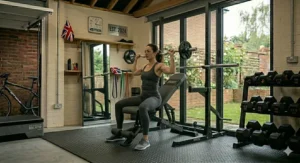
Setting Up Your Folding Bench: First-Time User Guide
Right, you’ve ordered your folding weight bench, it’s arrived in a box that’s larger than you expected, and you’re standing in your living room wondering what happens next. Here’s the practical reality of getting from “cardboard box” to “functional training equipment” without the usual frustrations.
Unboxing and Initial Assembly
Clear a workspace larger than you think you’ll need—seriously, multiply your estimate by 1.5. British living rooms aren’t expansive, but attempting assembly in a space that’s too cramped leads to dropped bolts, scratched furniture, and unnecessary swearing. Lay down an old sheet or cardboard to protect your flooring from tools and parts.
Most benches arrive with all components wrapped individually in protective plastic. Resist the urge to rip everything open immediately—instead, remove items systematically and check them against the parts list in the instruction manual before starting assembly. Missing or damaged components are far easier to address before you’re halfway through construction.
UK buyers specifically: instruction manuals for international brands sometimes feature creative English translation. If the manual says something baffling like “insert the rotating pole into the happiness tube,” look at the diagrams instead—they’re usually clearer than the text. YouTube assembly videos exist for most popular models and can be more helpful than official instructions.
Tighten bolts in stages rather than fully securing each one immediately. Connect all components finger-tight first, verify everything aligns correctly, then go back and properly tighten in sequence. This prevents the common problem where the last bolt won’t align because earlier bolts are overtightened and pulling the frame out of square.
Positioning and Stability
The surface beneath your bench matters more than most people realise. Carpeted floors provide cushioning but can allow the bench to shift during heavy pressing movements, particularly if the carpet has thick underlay. Hard floors (laminate, hardwood, concrete) offer superior stability but transmit more vibration and noise—relevant if you’re in a flat with downstairs neighbours.
Most quality benches include rubber or plastic foot pads that grip reasonably well on most surfaces. If your bench slides on laminate flooring, small rubber furniture pads (available at any UK hardware shop for a couple of pounds) placed under each foot dramatically improve stability without damaging floors.
Check that the bench sits level before loading any weight. British floors, particularly in older houses, can be surprisingly uneven. If the bench rocks slightly when you press down on opposite corners, adjust the footpads if they’re height-adjustable, or use thin rubber shims under the low corner. Training on an unstable platform isn’t just uncomfortable—it’s genuinely dangerous once you’re working with serious weight.
Pre-Use Safety Checks
Before your first proper training session, perform basic safety verification. Pull and push on the adjustment mechanisms to confirm they’re secure. Sit on the bench and shift your weight around to identify any unusual movement or sounds. Test folding and unfolding several times to understand how the mechanism works before you’re trying to collapse it whilst tired after a workout.
Check all bolts are properly tightened—assembly inevitably leaves a few slightly loose. Go round with the appropriate spanner and verify everything is secure. This takes five minutes and prevents the irritating scenario where a bolt works loose mid-workout and you’re forced to stop and locate tools.
For benches with decline positions requiring foot holds or leg supports, verify these are properly secured before attempting decline work. Sliding off a decline bench whilst holding dumbbells is excellent motivation to never skip safety checks again.
Common Mistakes When Buying Folding Benches
Having researched hundreds of UK buyer reviews and spoken with home gym enthusiasts, these are the recurring errors people make when selecting folding weight benches—and how to avoid them.
Prioritising Price Over Capacity
The temptation to save £30-40 by buying a cheaper bench is understandable, particularly when you’re just starting out and uncertain whether you’ll maintain training consistency. The problem is that cheaper benches typically compromise on weight capacity, which becomes limiting far faster than people anticipate.
A beginner male lifter might start with 12kg dumbbells for chest press and assume a 200kg capacity bench provides years of headroom. But progressive training means that same person could be pressing 25kg dumbbells within six months—suddenly that 200kg capacity (85kg bodyweight + 50kg dumbbells + bench weight) isn’t so generous anymore. You’re left either training conservatively to stay within limits or replacing the bench you bought less than a year ago.
The smarter approach is buying slightly more capacity than you currently need. The price difference between a 200kg and 300kg bench is typically £20-40—essentially the cost of three months’ budget gym membership. For equipment you’ll potentially use for years, that’s not an expense; it’s an investment in not having to buy twice.
Ignoring Folded Dimensions
Buyers frequently focus on weight capacity and adjustability whilst completely overlooking folded dimensions, then discover their “compact” bench doesn’t actually fit their intended storage space. This is particularly common with UK flat dwellers who’ve optimistically measured a cupboard or under-bed space and forgotten to account for the need to actually manoeuvre the bench into position.
Always verify three dimensions—length, width, and height when folded—and compare them against your available storage with generous tolerance. A bench listing 80cm folded length might be 82cm in reality, and that 2cm difference can be the difference between fitting and not fitting in your available space.
Also consider the deployment space required. Some benches need 150cm+ length when fully extended in incline position, which might seem fine until you realise your spare bedroom is only 200cm long and you can’t actually position the bench without blocking the door or hitting the wall.
Underestimating the Importance of Padding
British buyers training in unheated garages or spare bedrooms during winter quickly learn that thin padding becomes genuinely uncomfortable when it’s cold. Your body heat doesn’t transfer efficiently through cheap foam, leaving you lying on what feels like a cold steel plank covered in thin vinyl.
Quality high-density padding provides both comfort and thermal insulation. The difference in price is typically £15-25 between adequately-padded and well-padded benches, but the difference in training experience is substantial. Uncomfortable equipment creates mental resistance to training—if lying on your bench feels unpleasant, you’re less likely to use it consistently.
This becomes particularly relevant for exercises where you’re in contact with the bench for extended periods, like dumbbell flyes or rows. Thin padding that seems acceptable for quick bench press sets becomes genuinely uncomfortable during 4-5 set routines where you’re on the bench for 8-10 minutes cumulative.
Overlooking Assembly Complexity
Product listings casually mention “assembly required” without clarifying whether that means “attach two pre-assembled components with four bolts” or “construct entire bench from scratch using 47 pieces and spend your afternoon deciphering translations from Chinese.”
British buyers with limited DIY experience or simply no interest in spending hours with spanners should specifically seek “pre-assembled” or “minimal assembly” models. Yes, they cost £15-30 more. Yes, that’s absolutely worth it when the alternative is discovering you’ve assembled the seat backwards and need to dismantle everything to correct it.
Check reviews specifically for assembly feedback. If multiple UK buyers mention “took three hours to assemble” or “instructions were incomprehensible,” take that seriously. Life’s too short to wrestle with poorly-designed assembly processes when better alternatives exist.
Forgetting About Long-Term Maintenance
Folding mechanisms, adjustment pins, and hinges require occasional maintenance—particularly if you’re storing the bench in a garage or shed where British damp can cause rust. Buyers frequently purchase benches and assume they’ll remain functional indefinitely without attention, then complain when adjustment pins seize or hinges stiffen after a year of neglect.
The actual maintenance requirements are minimal—occasional lubrication of moving parts, wiping down after sweaty sessions, checking bolts periodically—but it needs doing. Benches stored in damp conditions benefit enormously from quick wipe-downs and light oil on metal components every few months.
This consideration should influence your purchase if you’re storing in particularly damp conditions. Simpler mechanisms with fewer moving parts require less maintenance than complex multi-position systems. Sometimes the bench with 9 positions outlasts the one with 84 positions simply because there’s less to go wrong.
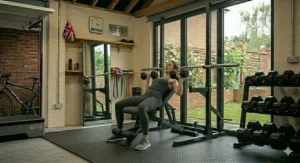
Space-Saving Storage Solutions for UK Homes
British homes present unique storage challenges that American-focused fitness advice often misses. Our terraced houses, compact flats, and limited garage space demand creative solutions beyond “just put it in the corner of your home gym.” Here’s what actually works in real UK living situations.
Under-Bed Storage
The space beneath a standard UK double bed (135cm x 190cm) provides ideal storage for folded benches, but only if you verify your bed frame height first. Modern low-profile beds and ottoman storage beds often sit too close to the floor for even compact folded benches.
Measure the clearance from floor to bed frame bottom—you need minimum 22-23cm for most folded benches, preferably 25cm+ for easy sliding in and out. If your bed frame is lower, bed risers (available from any UK furniture shop for £10-15) can add the necessary height without affecting stability.
Store the bench parallel to the bed’s length rather than width—this typically provides better access and prevents the bench blocking under-bed storage bins you might also keep there. Place the bench on a furniture slider pad (£3-4 from Argos or similar) to make retrieval effortless rather than requiring you to drag dead weight across carpet.
Vertical Wall Storage
If floor space is genuinely scarce, vertical wall mounting transforms a folded bench from floor clutter to wall-mounted equipment that occupies minimal space. Mirafit and other UK brands sell wall-mounted hangers specifically designed for folding benches, typically around £15-25.
This approach requires adequate wall strength—solid brick or concrete is ideal, whilst plasterboard walls need proper fixing into studs. In rented properties, verify your tenancy agreement permits wall mounting before drilling holes you’ll need to fill upon moving out.
Position the wall mount at height that allows you to lift the bench on and off comfortably—typically 60-80cm from floor to the lower mounting point works well for most people. Too high makes mounting awkward; too low defeats the space-saving purpose.
Behind-Sofa Storage
The gap between a sofa and wall in typical British living rooms often measures 15-25cm—just enough for a folded bench if you position it carefully. This works brilliantly in open-plan living spaces where dedicated storage rooms don’t exist.
Slide the bench in vertically (standing on its end) if width allows, as this minimises the amount protruding beyond the sofa. Ensure the bench is stable and won’t topple if nudged—you don’t want it crashing down when you’re settled on the sofa watching television.
This storage method works best with benches that have smooth edges and won’t snag on sofa fabric when sliding in and out. Benches with protruding bolts or sharp corners are less suitable and risk damaging furniture.
Garage and Shed Considerations
Storing fitness equipment in British garages or sheds introduces damp-related challenges that don’t affect climate-controlled indoor storage. Metal components rust, vinyl develops mildew, and foam padding can degrade if exposure is prolonged.
If garage storage is your only option, consider these protections:
Moisture barriers: Store the bench on a wooden pallet or foam mat rather than directly on concrete floors, which transfer damp. Cover with a breathable furniture cover (not plastic sheeting, which traps condensation) when not in use.
Rust prevention: Apply light machine oil to adjustment mechanisms, bolts, and exposed metal every 2-3 months. This takes five minutes and dramatically extends equipment life in damp conditions.
Padding protection: Wipe down vinyl padding with furniture cleaner monthly to prevent mildew growth. Ensure the bench is completely dry before covering or folding for storage.
Temperature fluctuation: British garages can swing from near-freezing in winter to uncomfortably warm in summer. This cycling accelerates deterioration of padding foam and vinyl. Position the bench away from direct sunlight through windows, which degrades materials faster than ambient temperature changes.
Maximising Your Folding Bench: Exercise Variations
A quality folding weight bench provides the foundation for comprehensive upper body training and supplementary lower body work. Here’s how to extract maximum training value from your equipment without requiring an entire home gym’s worth of additional kit.
Upper Chest Development
Incline dumbbell pressing at 30-45 degrees targets the clavicular head of the pectoralis major—the upper chest that creates that full, three-dimensional appearance. Most people neglect this area by exclusively doing flat pressing, leaving their upper chest underdeveloped relative to the middle and lower portions. NHS guidance on strength exercises recommends working muscles to the point where you need a short rest before continuing, which proper incline work achieves brilliantly.
Set your bench to its steepest incline position (typically 60-75 degrees) for dumbbell shoulder presses that emphasise the anterior deltoid. The bench provides back support that allows you to focus purely on pressing movement without needing to stabilise your torso as required with standing overhead presses.
Back Training Without a Power Rack
Single-arm dumbbell rows using your bench for support work the latissimus dorsi, rhomboids, and middle trapezius effectively. Place one knee and the same-side hand on the bench, lean forward at approximately 45 degrees, and row the dumbbell toward your hip with the opposite arm.
The bench provides stability that’s impossible to achieve without support, allowing you to use heavier weights and focus purely on back muscle contraction rather than balancing your body position. This becomes particularly valuable for British home trainers who lack the space for cable systems or power racks.
Core and Lower Body Applications
Decline sit-ups and leg raises using your bench’s decline position provide significantly greater range of motion and resistance than floor-based core work. The bench allows your torso to extend below parallel, creating a stretch in the abdominal muscles that floor exercises can’t replicate.
Bulgarian split squats with your rear foot elevated on the bench work the quadriceps, glutes, and hip stabilisers intensely whilst requiring minimal space. This unilateral movement also addresses strength imbalances between legs that bilateral squats can mask. The British Heart Foundation notes that strengthening muscles takes the demand off your heart by making your arms and legs work more efficiently.
Step-ups onto the bench provide effective cardiovascular conditioning and leg strengthening using just bodyweight or light dumbbells. The height of most weight benches (40-50cm typically) creates adequate resistance for conditioning work without the joint impact of running—particularly relevant for British buyers training in flats where high-impact exercise might disturb neighbours below.
Progressive Overload Strategies
The fundamental principle of strength training is progressive overload—gradually increasing the training stimulus to force adaptation. With a folding bench, this progression takes several forms beyond simply adding weight.
Volume progression: Increase total sets or repetitions before adding weight. Moving from 3 sets of 10 reps to 4 sets of 12 reps at the same weight increases total work performed and stimulates adaptation.
Angle variation: Changing bench angle shifts emphasis to different muscle fibres even at identical weights. Rotating between 30, 45, and 60-degree inclines across training sessions provides varied stimulus using the same equipment.
Tempo manipulation: Slowing the eccentric (lowering) phase of movements to 3-4 seconds increases time under tension without requiring heavier weights. This works brilliantly when you’ve reached your available dumbbell weight limit but want to progress without buying new dumbbells.
Unilateral focus: Switching from bilateral to unilateral exercises (single-arm presses instead of simultaneous pressing) increases difficulty whilst using lighter total weight. This extends the useful range of your existing dumbbells significantly.
UK-Specific Buying Considerations
Purchasing fitness equipment in Britain involves factors that American-focused reviews typically overlook. Here’s what actually matters for UK buyers navigating Amazon.co.uk and local fitness retailers.
Amazon Prime Delivery and Returns
Most quality folding benches on Amazon.co.uk qualify for Prime delivery, meaning free next-day delivery for Prime members or free delivery over £25 for non-members. This convenience is valuable, but verify the specific listing shows “Dispatched from and sold by Amazon” rather than third-party sellers using Amazon fulfilment.
Amazon’s return policy for fitness equipment extends to 30 days, which provides reasonable protection if the bench arrives damaged or doesn’t meet expectations. However, return shipping for large items can be expensive if you’re not a Prime member—something to consider before impulsively ordering the cheapest option from a third-party seller.
Check whether the listing ships from UK warehouses or imports from the EU. Post-Brexit, some EU sellers charge additional fees or take longer for delivery, and potential warranty claims become more complicated when dealing with continental European companies.
UKCA Certification and Safety Standards
The UKCA (UK Conformity Assessed) marking replaced the EU CE marking for products sold in Great Britain post-Brexit. Quality fitness equipment should display UKCA certification confirming it meets British safety standards. Whilst this is less critical for simple equipment like weight benches compared to electrical items, it indicates the manufacturer has subjected their product to proper testing rather than simply slapping together components and hoping for the best.
British Standard (BS) certification for structural integrity is another positive indicator, though not universally applied to home fitness equipment. Products that have undergone BS testing are explicitly designed to handle the forces involved in weight training without catastrophic failure—reassuring when you’re bench pressing substantial weight.
Price Comparison: Online Versus High Street
Amazon.co.uk typically offers the most competitive pricing for folding benches, with prices £15-40 lower than high street sports retailers for equivalent models. However, high street retailers like Decathlon, Sports Direct, and independent fitness shops provide the advantage of physically examining equipment before purchase.
If you’re uncertain about sizing, padding quality, or adjustment mechanisms, visiting a physical shop to test similar models before ordering online is sensible. You’re not obliged to buy from the shop—you’re gathering information to make an informed online purchase. British retailers understand this consumer behaviour and won’t pressure you to buy immediately.
Seasonal Pricing Patterns
Fitness equipment follows predictable pricing cycles in the UK market. January sees elevated prices due to New Year’s resolution demand, with modest discounts appearing by March as initial enthusiasm wanes. Summer months (June-August) typically offer the best deals as demand drops—ironic, given that’s when people theoretically want to look good for beach holidays.
Black Friday (late November) and Boxing Day sales produce genuine discounts on fitness equipment, though popular models sell out quickly. If you’re flexible on exact model choice and can wait for seasonal sales, you’ll save 15-25% compared to January pricing.
Amazon Prime Day (typically July) features rotating deals on fitness equipment, though discounts are often modest (10-15%) rather than spectacular. The advantage is Prime-exclusive access, meaning better-quality items with proper Prime delivery rather than questionable third-party sellers.
Warranty and Customer Service
UK consumer protection law provides certain rights regardless of manufacturer warranties. The Consumer Rights Act 2015 requires products to be of satisfactory quality, fit for purpose, and as described. If your bench develops issues within six months, the retailer must prove it was fault-free at sale—the burden of proof sits with them, not you.
Beyond six months but within six years (five in Scotland), you still have rights if products develop faults, though you need to demonstrate the fault resulted from inadequate manufacture rather than normal wear. Which? provides comprehensive guidance on exercising these rights. This protection exists regardless of manufacturer warranty terms.
Practically, dealing with UK-based companies like Mirafit simplifies warranty claims significantly compared to navigating international customer service for brands based in China or the US. Response times are faster, replacement parts are local stock, and communication doesn’t require navigating time zones or language barriers.
Frequently Asked Questions
❓ Can folding weight benches handle the same weight as fixed benches?
❓ How much space does a folded weight bench actually take in a UK flat?
❓ Are folding benches suitable for barbell bench pressing or just dumbbells?
❓ Do I need to do any maintenance on a folding weight bench?
❓ Will a folding bench work on carpeted floors in UK homes?
Conclusion: Finding Your Perfect Space-Saving Training Partner
The evolution of folding weight benches over the past few years has rather transformed what’s possible in compact British living spaces. Where previous generations of home trainers either sacrificed space to permanent equipment or compromised training with inadequate gear, modern folding benches genuinely deliver both convenience and capability. You’re no longer choosing between effective training and liveable space—quality options provide both.
For most British buyers navigating the options on Amazon.co.uk, the sweet spot sits in the £90-£160 range. Budget offerings under £80 work adequately for absolute beginners but quickly become limiting as you progress. Premium models above £180 venture into commercial-grade territory that’s brilliant if you’re genuinely serious but probably excessive for typical home use.
The YOLEO Adjustable 375KG remains my top recommendation for anyone who can stretch to £130-£160. The ENISO certification isn’t marketing theatre—it’s independently verified engineering that translates to genuine stability when you’re pressing heavy. The extended backrest accommodates tall users, the 98% pre-assembly means you’re training within minutes of delivery, and the 24-month warranty with responsive UK support provides proper protection. You’re paying premium pricing, but the quality justifies the cost.
For budget-conscious buyers, the PASYOU PA300 delivers exceptional value around £90-£120. You’re getting legitimate 318kg capacity, sustainability certification that indicates serious quality testing, and compact folded dimensions perfect for tight UK spaces. The padding isn’t luxury-grade and assembly is required, but the core functionality is rock-solid for anyone not planning immediate progression to heavy powerlifting.
British buyers with genuinely tight budgets should consider the Mirafit Folding Weight Bench at £75-£95. The 200kg capacity limits long-term progression potential, but the UK-based company, proper British customer service, and honest engineering make it the sensible entry point. You’re buying from a company that understands British consumer expectations and backs their products with actual support rather than disappearing when issues arise.
Whatever your choice, measure your storage space first, account for your realistic training progression over the next 12-18 months, and buy slightly more capacity than you think you’ll need. The £30 difference between adequate and excellent isn’t an expense—it’s insurance against having to replace equipment you outgrew six months after purchase.
The British approach to home fitness has always been pragmatic rather than excessive. We don’t need commercial gym setups in our spare bedrooms. We need equipment that works properly, fits sensibly into our homes, and doesn’t require constant maintenance or replacement. Quality folding weight benches deliver precisely that—effective training that respects British space constraints without compromising results.
✨ Don’t Miss These Exclusive Deals!
🔍 Take your strength training to the next level with these carefully selected folding weight benches. Click on any highlighted product to check current pricing and availability on Amazon.co.uk. Whether you’re after commercial-grade capacity or space-saving convenience, these picks will help you find exactly what you need for your home gym setup!
Recommended for You
- 7 Best Flat Bench for Home Gym UK 2026
- Best Adjustable Bench Under £200 UK 2026
- 7 Best Olympic Weight Benches UK 2026: Commercial Grade Guide
Disclaimer: This article contains affiliate links. As an Amazon Associate, I earn from qualifying purchases. If you purchase products through these links, we may earn a small commission at no additional cost to you.
✨ Found this helpful? Share it with your mates! 💬🤗
