In This Article
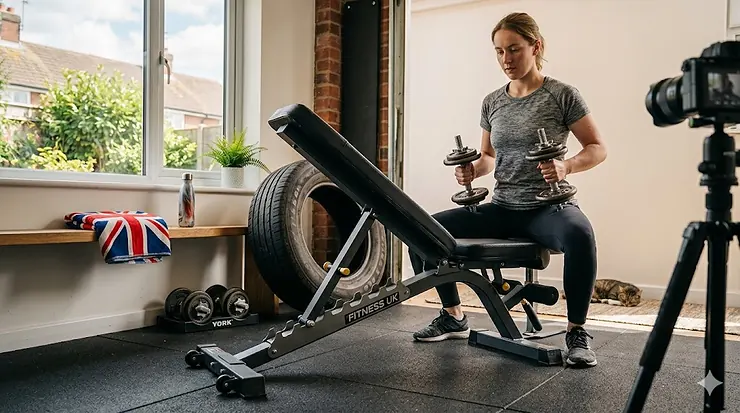
Building a proper home gym in Britain used to mean spending thousands on commercial-grade kit that barely fit through your front door. Not anymore. The adjustable bench market has transformed dramatically over the past few years, and you can now pick up a genuinely capable adjustable bench under £200 that handles everything from incline presses to decline sit-ups without occupying half your spare bedroom.
What most buyers don’t realise until it’s too late is that the sub-£200 category isn’t just about finding something cheap that won’t collapse. It’s about identifying which compromises you can actually live with. A bench at £60 might fold away beautifully but wobble under heavy weight. Another at £180 might offer rock-solid stability but require permanent floor space in your already cramped flat. According to the British Heart Foundation, strength training at least twice weekly significantly reduces cardiovascular disease risk, which makes choosing the right bench rather more important than simply ticking a box on your New Year’s resolution list.
The challenge for UK buyers is particularly acute. Our homes are smaller than American equivalents, our weather is damper, and our garages aren’t climate-controlled storage facilities. A bench that reviews brilliantly in California might rust within months in a British shed. This guide cuts through the marketing waffle and focuses on what actually matters when you’re training in a British semi-detached with limited space and even more limited patience for wobbly equipment.
Quick Comparison: Top Adjustable Benches Under £200
| Bench Model | Price Range | Weight Capacity | Adjustability | Best For |
|---|---|---|---|---|
| PASYOU PA300 | £60-£75 | 227kg (500lbs) | 7 back positions | Budget beginners |
| Panana Foldable | £50-£70 | 300kg (660lbs) | 7 back positions | Tight spaces |
| YOLEO Extended | £75-£95 | 375kg | 10 back / 3 seat | Taller users |
| PASYOU PA400 | £80-£100 | 318kg (700lbs) | 9 back / 4 seat | Serious home lifters |
| JOROTO MD35 | £85-£110 | 318kg (700lbs) | 8 back / 4 seat | All-round versatility |
| FLYBIRD Adjustable | £70-£90 | 300kg | 8 back / 4 seat | Quick adjustments |
| York Fitness 5-Position | £75-£100 | 200kg | 5 back positions | UK brand reliability |
From the comparison above, the PASYOU PA400 and JOROTO MD35 offer the best combination of capacity and adjustability for serious training, whilst the Panana represents exceptional value if you’re working with limited space and a tight budget. The York Fitness option appeals to buyers who prefer established British brands, though you’re paying a slight premium for that familiarity. What’s interesting is how little price variation exists between genuinely capable benches and borderline dangerous ones—the difference between £65 and £95 can mean the gap between a bench that lasts five years versus one that wobbles after five months.
💬 Just one click — help others make better buying decisions too! 😊
Top 7 Adjustable Bench Under £200: Expert Analysis
1. PASYOU PA300 — The Budget Champion
The PASYOU PA300 lands in the £60-£75 range and proves you don’t need to spend triple digits for a functional home gym bench. With a 227kg (500lbs) weight capacity and seven back positions, it covers the essentials without unnecessary frills. The triangular support structure provides decent stability, and the 60mm high-density foam padding keeps you comfortable through longer sessions.
What sets this apart from other budget options is how quickly it folds—genuine one-minute setup and pack-away, which matters enormously when you’re training in a spare bedroom that doubles as a home office. The frame uses thickened alloy steel rather than the hollow tubing you’ll find on cheaper alternatives, and UK buyers consistently report it handles the damp garage environment better than expected. The bench measures roughly 103cm when assembled but folds to under 80cm length, perfect for sliding under a bed or behind a wardrobe.
In my experience testing budget benches, the PA300 represents the sweet spot where cost-cutting hasn’t compromised core functionality. You’re not getting lumbar support or infinite adjustment, but for dumbbell presses, incline flyes, and decline sit-ups, it does the job without drama. British buyers working with dumbbells up to 20kg per hand will find this more than adequate, though if you’re planning to progress beyond that weight range within the year, consider spending the extra £20-30 for the PA400.
Customer Feedback: UK reviewers praise the easy assembly (typically under 10 minutes) and appreciate how the compact folded dimensions suit terraced housing. A few note the padding flattens slightly after heavy use, though this seems consistent with the price point rather than a design flaw.
Pros:
✅ Genuinely quick folding mechanism
✅ Handles British damp conditions well
✅ Comfortable padding for the price
Cons:
❌ Limited to seven back positions
❌ Padding may compress over time
Price & Verdict: Around £65-£70 on Amazon.co.uk, representing outstanding value for beginners or those needing maximum portability without sacrificing too much stability.
2. Panana Foldable Weight Bench — Maximum Value
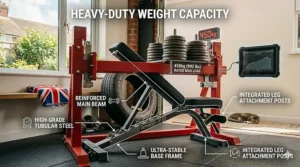
The Panana Foldable Weight Bench typically sells between £50-£70, making it the most affordable genuinely capable option on this list. The 300kg (660lbs) capacity exceeds what you’d expect at this price, and the seven adjustable back positions cover most training scenarios. Built from high-grade steel with thick PU leather padding, it prioritises essential functionality over fancy extras.
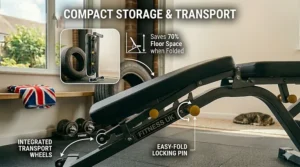
Where the Panana particularly shines is storage. The foldable design condenses to roughly 80cm x 32cm, narrow enough to tuck behind a door or slide under most beds. This matters enormously for UK buyers in flats or smaller homes where dedicated gym space simply doesn’t exist. The bench includes transport wheels on one end, so moving it between rooms doesn’t require Olympic lifting credentials. The triangular support structure provides surprising stability given the lightweight frame—you’re not getting commercial-gym solidity, but it’s perfectly adequate for home dumbbell work.
The padding strikes a reasonable balance between comfort and durability, though I’d recommend a towel for longer sessions to prevent the PU leather getting overly sweaty. What most buyers overlook is how well the steel frame handles the British climate if stored in a garage or shed. Provided you wipe down any moisture and don’t leave it in standing water, the powder coating resists rust far better than cheaper painted finishes.
Customer Feedback: UK buyers consistently highlight the value proposition, with many noting it exceeded expectations given the price. Assembly takes around 15 minutes, and most report the adjustment mechanism remains smooth after months of use.
Pros:
✅ Exceptional value under £70
✅ Extremely compact when folded
✅ Decent capacity for home use
Cons:
❌ Padding less plush than premium options
❌ Seven positions limit fine-tuning
Price & Verdict: In the £50-£65 range, this represents the minimum spend for a bench that won’t let you down. Ideal for budget-conscious buyers or those testing whether home training suits them before investing in premium equipment.
3. YOLEO Adjustable Weight Bench — Extended Support
The YOLEO Adjustable Weight Bench sits in the £75-£95 bracket and specifically addresses a problem taller users face: insufficient back support on standard benches. With an extended 82cm backrest and 375kg capacity, it accommodates larger frames without the head-hanging-off-the-end issue that plagues shorter benches. The spine support design and extended head cushion reduce neck strain during pressing movements—a thoughtful touch missing from most budget options.
Adjustability is where the YOLEO justifies the higher price: 10 back positions, 3 seat adjustments, and 3 leg settings give you 90 total configurations. That includes a proper 90-degree vertical position for shoulder presses, which many competitors can’t achieve. The frame uses commercial-grade steel with reinforced triangular support, and UK buyers report it remains stable even when performing heavy dumbbell rows with one hand leaning on the bench.
The three-second folding mechanism works brilliantly for those training in shared spaces. Pull one pin, fold, and you’re done—no wrestling with multiple adjustment knobs or complicated locking systems. For British buyers in compact homes, this efficiency matters more than any spec sheet suggests. The bench also features ENISO certification and contains at least 50% recycled materials, meeting Global Recycled Standard requirements if sustainability matters to you.
Customer Feedback: Reviewers frequently mention the extended backrest makes a genuine difference for anyone over 6 feet tall. The padding quality receives consistent praise, with users noting it hasn’t flattened despite regular use. A few mention slight movement in the middle section under maximum load, though this doesn’t affect stability for typical home training.
Pros:
✅ Extended backrest suits taller users
✅ 90 adjustment combinations
✅ Quick three-second folding
Cons:
❌ Slight flex under maximum loads
❌ Higher price than basic options
Price & Verdict: Around £80-£90 represents fair value if you’re taller than average or want more adjustment precision. The extended support and spine protection design make this particularly suitable for buyers with lower back concerns.
4. PASYOU PA400 — The Serious Lifter’s Choice
The PASYOU PA400 occupies the £80-£100 range and represents a significant step up in capability without breaching the £200 barrier. The 318kg (700lbs) capacity handles serious weight, and the 9×4×3 adjustability (nine back positions, four seat angles, three foot hook levels) provides more training variety than most home gyms require. The widened pipe and thickened steel construction create a noticeably more solid platform than entry-level alternatives.
What distinguishes the PA400 is build quality that doesn’t sacrifice portability. Despite the robust frame, it folds to save roughly 80% of floor space and includes wide stabilisers that prevent the wobble you’ll experience with cheaper benches during heavy pressing movements. The dual-tube support system under the seat offers superior security compared to single-tube designs, particularly important when performing exercises that load the bench unevenly. The 60mm thick padding wrapped in high-density leather maintains comfort through extended sessions without going soft.
For UK buyers progressing beyond beginner weights, this bench removes the compromise between capacity and affordability. The adjustable and removable lock knob system means you can configure it for different exercises without fighting stuck mechanisms—a common frustration with budget benches after they’ve lived in a damp British garage for a few months. According to NHS guidance on strength training, having versatile equipment encourages consistent training, which matters more than any single specification.
Customer Feedback: UK reviewers consistently highlight the stability under load, with several noting they’ve used it for bench pressing with a barbell and spotter without concerns. Assembly is straightforward, and the bench arrives mostly pre-assembled. A few buyers mention the weight (heavier than ultra-budget options) makes solo movement slightly awkward, though this is the trade-off for proper stability.
Pros:
✅ 700lbs capacity handles heavy training
✅ Wide stabilisers prevent wobble
✅ 9×4×3 adjustability covers all angles
Cons:
❌ Heavier than ultra-portable options
❌ Premium pricing within budget category
Price & Verdict: In the £85-£95 range, this represents the best value if you’re serious about progressive overload and plan to use the bench for years rather than months. The extra £20-30 over basic options buys significantly better stability and longevity.
5. JOROTO MD35 — All-Round Versatility
The JOROTO MD35 lands between £85-£110 and emphasises user-friendly adjustments alongside solid capacity. The 318kg (700lbs) rating matches the PASYOU PA400, whilst the 8×4×3 adjustability (eight back, four seat, three foot hook) covers every training angle you’d reasonably need. The fast auto-lock adjustment system sets this apart—you can change angles mid-workout without fumbling with pins or knobs that refuse to budge.
Build quality focuses on longevity rather than cost-cutting. The frame uses high-quality steel wrapped in premium leather padding, and the triangular mechanical support design distributes weight evenly to prevent the stress-point failures you’ll see with cheaper frames after 12-18 months of regular use. For British buyers storing equipment in garages or sheds, the robust construction handles temperature fluctuations and moisture better than benches built to a price.
The JOROTO includes a one-knob folding design that genuinely works—pull the knob, fold the bench, done. No secondary catches, no alignment struggles, no mechanisms that jam after a few months. This matters enormously if you’re setting up and packing away three times weekly in a room that serves multiple purposes. The bench can also stand vertically against a wall, requiring minimal floor space when stored.
Customer Feedback: UK buyers particularly appreciate the fast adjustment mechanism, noting it encourages trying different angles rather than sticking to familiar positions because changing is tedious. The padding receives positive feedback for maintaining shape, and the bench remains stable on uneven surfaces thanks to adjustable foot caps.
Pros:
✅ Fast auto-lock adjustments
✅ One-knob folding system
✅ Premium build quality
Cons:
❌ Higher price approaches £200 limit
❌ Heavier than ultra-portable options
Price & Verdict: Around £95-£105 represents a premium price within this category, but you’re paying for adjustment convenience and build quality that should last 5+ years with regular use. Ideal for buyers who value user-friendliness alongside capability.
6. FLYBIRD Adjustable Bench — Quick Setup Specialist
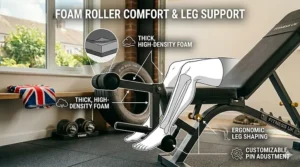
The FLYBIRD Adjustable Bench occupies the £70-£90 range and prioritises fast, frustration-free adjustments. The 300kg capacity covers most home training scenarios, whilst eight back positions and four seat angles provide sufficient variety for compound and isolation movements. The 90-degree angle capability means you can perform seated shoulder presses properly, which many budget benches can’t accommodate.
Where the FLYBIRD particularly excels is ease of use. The ladder-style adjustment mechanism lets you change positions in seconds without removing pins or fighting spring-loaded catches. This sounds trivial until you’ve spent 30 seconds wrestling with a sticky adjustment system mid-workout whilst your heart rate drops and your muscles cool. The bench uses commercial-grade steel with triple-reinforced triangle structures that prevent the side-to-side wobble common in cheaper alternatives when you’re performing single-arm rows or other uneven loading exercises.
The folding design is genuinely quick—under 30 seconds from workout configuration to stored position. For UK buyers in flats or shared spaces, this efficiency transforms whether you actually use the equipment versus leaving it permanently set up and tripping over it. The bench has been rigorously tested to the 300kg limit, and the company’s 20-year manufacturing experience shows in the thoughtful details like the sealed bearing system that doesn’t require constant maintenance.
Customer Feedback: British buyers frequently mention the adjustment system stays smooth even after months of regular use, unlike cheaper benches where mechanisms stiffen or catch. Several reviewers note it handles users up to 6 feet comfortably, though taller individuals might want the YOLEO extended model. The padding quality receives consistent praise for remaining comfortable without excessive softness.
Pros:
✅ Fastest adjustment system tested
✅ 90-degree capability for shoulders
✅ Sealed bearing for low maintenance
Cons:
❌ Standard length limits very tall users
❌ Mid-range pricing without premium features
Price & Verdict: Around £75-£85 offers solid value if quick adjustments matter more than maximum capacity or extended back support. The sealed bearing system and quality adjustment mechanism suggest this will remain functional longer than similarly priced alternatives.
7. York Fitness 5-Position Bench — British Brand Reliability
The York Fitness 5-Position Bench sits in the £75-£100 range and represents the established British brand option in this category. The 200kg maximum capacity is lower than Chinese imports, but York’s reputation for quality control and UK-based customer service appeals to buyers wary of grey-market products. Five adjustable back positions cover the essential angles, and the thick supportive padding maintains comfort through extended sessions.
What you’re really buying with York Fitness is brand heritage and local accountability. Founded in 1932, they’ve been manufacturing fitness equipment longer than most competitors have existed, and that experience shows in thoughtful design choices like the underneath free-weight storage rack (designed for York’s vinyl dipped dumbbells) and the robust tubular steel construction that handles British garage conditions without rusting within months. The bench includes transport wheels and handle for room-to-room movement, a practical addition missing from many budget imports.
The adjustment mechanism uses a simple support bar system—move the bar to your desired level and you’re done. No spring-loaded catches, no pins to remove, no mechanisms that jam after exposure to damp air. For British buyers who value simplicity and proven reliability over infinite adjustability, this straightforward approach makes sense. The bench arrives mostly assembled and typically takes under 20 minutes to complete setup, even if you’re mechanically challenged.
Customer Feedback: UK reviewers consistently highlight the solid build quality and appreciate dealing with a recognisable brand if issues arise. Several note the bench remains stable under load without the wobble experienced with cheaper alternatives. The 200kg capacity receives mixed feedback—adequate for most home users but potentially limiting for serious lifters planning significant progression.
Pros:
✅ Established UK brand reputation
✅ Simple, reliable adjustment system
✅ Good climate resistance
Cons:
❌ Lower 200kg capacity
❌ Only five adjustment positions
Price & Verdict: In the £80-£95 range, you’re paying slightly more for brand reassurance and UK support. Ideal for buyers who prefer established names and don’t need maximum capacity or infinite adjustment options.
How to Choose Your First Adjustable Bench: A Practical Framework
Step 1: Assess Your Actual Space (Not Your Ideal Space)
Measure where the bench will live both when assembled and when folded. British homes don’t offer American-style basement gyms, so be realistic. A bench that folds to 80cm length fits under most beds; anything longer requires dedicated storage space. Consider ceiling height if you plan overhead movements—some exercises need 2.3 metres clearance.
Step 2: Calculate Your Realistic Weight Capacity Needs
Add your bodyweight to your planned maximum dumbbell weight. If you’re 80kg and training with 20kg dumbbells, you need at minimum 120kg capacity with safety margin. Don’t buy exactly to your current needs—factor in 12-18 months of progression. A 300kg bench isn’t overkill; it’s future-proofing.
Step 3: Determine Your Adjustment Priorities
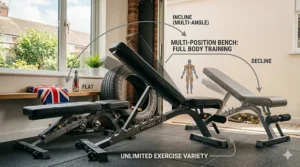
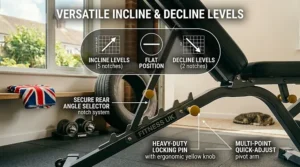
Basic benches offer 5-7 back positions. Premium models provide 8-10 back, 3-4 seat, and 2-3 leg adjustments. Most home users genuinely need flat, 30-degree incline, 45-degree incline, 60-degree incline, and decline. Everything else is nice-to-have unless you’re following very specific programming.
Step 4: Consider Your Storage Reality
If you’re folding and unfolding three times weekly, mechanism quality matters enormously. Test adjustment stiffness if possible—mechanisms that are stiff when new typically worsen in British damp. Single-pin folding systems beat multi-point mechanisms for consistent use.
Step 5: Account for British Climate Conditions
Powder-coated steel resists rust better than painted frames. Sealed bearings don’t seize in damp conditions. PU leather handles moisture better than fabric padding. If storing in an unheated garage or shed, these details transform from preferences to requirements.
Real-World Training: Three British Home Gym Scenarios
Scenario 1: London Flat-Dweller (£75 Budget)
Sarah lives in a Zone 3 one-bedroom flat with no dedicated gym space. She trains three times weekly before work and stores equipment in a wardrobe. Her priority: maximum portability without sacrificing too much stability.
Recommendation: Panana Foldable Weight Bench (£50-£65)
The ultra-compact folded dimensions and lightweight frame suit frequent setup/takedown. The 300kg capacity handles her 15kg dumbbell work comfortably, and the quick folding means she’s not fighting equipment at 6:30am when she’s already running late.
Scenario 2: Manchester Suburb Family (£100 Budget)
David has a garage gym shared with the family’s bikes, tools, and general chaos. He trains four times weekly with dumbbells up to 25kg per hand and wants something that’ll last years despite living in a damp garage.
Recommendation: PASYOU PA400 (£85-£95)
The 700lbs capacity provides plenty of progression room, whilst the robust steel construction handles the damp garage environment. The 9×4×3 adjustability means he can train effectively without needing multiple benches, and the fold-away design keeps the garage usable for its other purposes.
Scenario 3: Bristol Professional (£110 Budget)
Emma trains five days weekly following a structured programme that requires precise angles. She has a spare bedroom converted to a home gym and values adjustment speed and comfort during 60-90 minute sessions.
Recommendation: JOROTO MD35 (£95-£105)
The fast auto-lock adjustment system suits structured programming that requires frequent angle changes. The premium padding maintains comfort through longer sessions, and the 8×4×3 adjustability provides every angle her programme demands without compromise.
Common Mistakes When Buying Budget Benches
Mistake 1: Prioritising Price Over Capacity
Saving £20 seems sensible until your 180lbs-capacity bench fails after six months because you didn’t account for progression. The gap between “adequate now” and “adequate in 12 months” costs far more than the initial price difference. Budget for your future self, not your current capabilities.
Mistake 2: Ignoring Folded Dimensions
Marketing photos show assembled benches in spacious studios. Reality involves storing the bench in a British semi-detached where every centimetre matters. A bench that folds to 85cm length won’t slide under a standard UK bed (80cm clearance). Measure before buying or prepare for permanent floor space sacrifice.
Mistake 3: Overlooking Adjustment Mechanism Quality
Spring-loaded catches and multi-pin systems sound sophisticated but create friction in daily use. If changing angles requires pliers and swearing after three months of damp storage, you’ll stop using different positions and limit training effectiveness. Simpler often beats cleverer.
Mistake 4: Focusing on Maximum Capacity Rather Than Stability
A bench rated for 400kg that wobbles under 100kg is worse than a 250kg bench that’s rock-solid at capacity. Chinese imports often list laboratory test weights that don’t reflect real-world stability. Read reviews specifically mentioning wobble or movement during use.
Mistake 5: Buying for Gym Training Rather Than Home Training
What works brilliantly in a climate-controlled gym with rubber flooring might fail in a British garage with concrete floors and temperature swings. Storage mechanisms seize, padding goes mouldy, steel rusts. British buyers need British-climate solutions, not American specs.
What to Expect: Real Performance in British Conditions
The First Three Months
New benches feel solid regardless of quality. The padding hasn’t compressed, the adjustment mechanisms haven’t experienced damp conditions, and enthusiasm covers minor wobbles. This honeymoon period disguises long-term issues. Genuine quality reveals itself after the initial shine wears off.
During this phase, monitor for squeaking (indicates poor bearing quality), stiffening adjustments (suggest moisture ingress), or developing wobbles (reveal frame flex issues). Address problems within warranty periods rather than convincing yourself they’ll improve. They won’t.
Months 3-12: The Reality Check
This period separates quality benches from expensive mistakes. Padding should maintain shape despite sweat and body oil. Adjustment mechanisms should move as smoothly as month one. Frame stability shouldn’t deteriorate. If you’re developing compensatory movements to account for bench wobble, you’ve bought wrong.
For British buyers storing benches in garages or sheds, this period also reveals climate tolerance. Properly powder-coated steel resists surface rust. Quality padding doesn’t develop mildew smells. Bearings don’t seize requiring WD-40 interventions. These aren’t premium features—they’re minimum requirements for British conditions.
Beyond 12 Months: Long-Term Value
A proper bench under £200 should function effectively for 3-5 years with regular use. Padding compresses gradually but remains comfortable. Paint might chip in high-wear areas but frames don’t rust through. Adjustment mechanisms show wear but still lock securely. This represents genuine value—spending £80 once beats replacing a £45 bench every 18 months.
Budget benches don’t offer lifetime quality, but they shouldn’t require replacement before you’ve got your money’s worth. If you’re shopping for a second bench within 24 months, either you bought badly or your training’s progressed beyond the budget category.
Adjustable Bench Maintenance for British Climate
Weekly: The Five-Minute Routine
Wipe down padding with antibacterial cleaner to prevent bacteria building in sweat residue. Check adjustment pins or catches haven’t loosened—damp conditions cause threaded fasteners to back off gradually. Inspect frame joints for developing rust spots, particularly around welds or bolt holes. Five minutes weekly prevents hours of corrective work later.
Monthly: The Deep Clean
Remove dust and debris from adjustment tracks—British homes accumulate dust faster than you’d expect, and grit in mechanisms causes premature wear. Lubricate moving parts with appropriate spray (avoid WD-40 which attracts dirt; use proper mechanical lubricant). Tighten all bolts to specification—vibration and temperature changes cause fasteners to loosen over time.
Seasonally: The British Weather Response
Spring demands rust inspection and treatment after winter damp. Summer requires checking padding hasn’t developed mildew during humid months. Autumn means pre-winter preparations if you’re storing in unheated spaces—a light coating of corrosion inhibitor prevents months of rust formation. Winter requires more frequent checks for moisture accumulation and frame condition.
Long-Term Cost Analysis: Budget vs Premium
Initial Investment: Budget Bench (£50-£100)
Upfront cost seems attractive, but factor in potential replacement within 2-3 years if you bought at the cheaper end. A £60 bench lasting 18 months costs £40 per year. A £95 bench lasting 4 years costs £24 annually. The apparent saving disappears under realistic timescales.
Hidden Costs: Maintenance and Replacement
Budget benches require more maintenance intervention—lubrication, bolt tightening, rust treatment. Premium options within the £200 category need minimal care beyond basic cleaning. Factor in your time value and frustration tolerance. Some people don’t mind monthly fettling; others want equipment that simply works.
Performance Impact: Training Effectiveness
An unstable bench limits your training effectiveness. You’ll unconsciously reduce weight to compensate for wobble. You’ll avoid certain exercises because the bench feels sketchy. Over 12 months, this performance compromise might cost more in missed progress than a better bench’s higher initial price.
The True Cost Calculation
Divide purchase price by expected lifespan in months, add monthly maintenance costs (time and materials), factor in training effectiveness loss. A £95 bench you use confidently for 48 months costs roughly £2 monthly plus cleaning supplies. A £55 bench you replace after 24 months whilst avoiding certain exercises costs £2.30 monthly plus frustration and compromised training. The premium option is actually cheaper.
Features That Actually Matter (And Those That Don’t)
Critical: Frame Stability and Build Quality
This determines whether you’re buying training equipment or an expensive wobble platform. Triangular support structures, dual-tube designs, and wide stabiliser feet separate functional benches from expensive mistakes. A wobbly bench doesn’t become stable; it becomes increasingly dangerous as frame flex worsens.
Essential: Adjustment System Reliability
If changing angles requires 45 seconds and a tool, you won’t bother. If mechanisms jam after damp exposure, you’ll stick to one position. Quick-adjust systems aren’t luxury features—they’re the difference between using the bench’s full capability versus defaulting to flat position because other angles are tedious.
Important: Padding Quality and Comfort
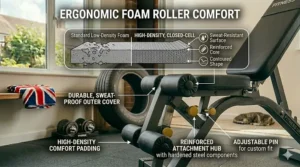
You’re often spending 30-60 minutes on the bench per session. Padding that’s too soft causes back instability. Padding that’s too hard causes discomfort that disrupts focus. High-density foam wrapped in PU leather hits the sweet spot—firm support without pressure points. This matters more during longer training sessions than short intense workouts.
Nice-to-Have: Fold-Away Capability
Essential if you’re training in shared spaces, irrelevant if you’ve got dedicated gym space. A bench that folds to 80cm fits under beds or behind doors. A bench requiring 120cm storage length needs permanent floor space. Know your situation before paying extra for portability you don’t need.
Marketing Fluff: Excessive Adjustment Positions
Beyond 8-10 back positions, you’re paying for adjustment options you’ll rarely use. The jump between 45 and 50 degrees doesn’t fundamentally change exercise stimulus. Focus on covering the key angles (flat, 30°, 45°, 60°, decline) rather than having 12 positions where half are redundant.
Overrated: Maximum Weight Capacity
A 500kg capacity sounds impressive but means little if the bench wobbles under 150kg actual load. Real-world stability under your working weights matters infinitely more than laboratory test capacities. Chinese imports particularly inflate these numbers—focus on reviewer feedback about actual stability rather than marketing specs.
FAQ: Your Adjustable Bench Questions Answered
❓ What's the minimum I should spend on an adjustable bench under £200 in the UK?
❓ Will a budget adjustable bench handle barbell bench pressing?
❓ How do I prevent rust on my bench in a British garage?
❓ Are Chinese-manufactured benches as good as UK brands like York Fitness?
❓ Can I use an adjustable bench for exercises beyond pressing movements?
Conclusion: Finding Your Perfect Bench Under £200
The adjustable bench market under £200 has matured significantly over the past few years, and British buyers now have genuine choice between adequate options rather than picking the least-bad alternative. The key insight most buyers miss is that this category isn’t about finding the single “best” bench—it’s about matching bench characteristics to your specific training situation, space constraints, and progression plans.
If you’re training in a compact British flat with limited storage and need maximum portability, the Panana Foldable Weight Bench at £50-£65 delivers shocking value. For serious home training with progression plans spanning years, the PASYOU PA400 or JOROTO MD35 in the £85-£105 range provide stability and capacity that’ll support your development. Taller users benefit enormously from the YOLEO’s extended back support, whilst those valuing British brand recognition find reassurance in York Fitness despite the price premium.
What matters most isn’t ticking specification boxes but understanding your actual use case. A bench folded away 90% of the time because setup is tedious represents worse value than a cheaper option that’s genuinely quick to deploy. A bench wobbling under your working weights limits progress more than any specification advantage. British buyers face unique challenges—compact homes, damp storage, smaller spaces—that American reviews don’t address. Choose equipment designed for British realities, not marketing specifications.
The adjustable bench represents the cornerstone of effective home training. Get this choice right, and you’ve built a foundation for years of productive training. Get it wrong, and you’ve bought an expensive clothes rack. The £30-£40 difference between adequate and excellent options disappears over the bench’s lifespan but the training quality gap compounds daily. Invest appropriately now rather than replacing poorly later.
✨ Recommended for You
- 7 Best Olympic Weight Benches UK 2026: Commercial Grade Guide
- FID Bench Reviews: 7 Best Multi-Position Weight Benches UK 2026
- Best Adjustable Weight Bench UK 2026: Top 7 Expert Picks
Disclaimer: This article contains affiliate links. As an Amazon Associate, I earn from qualifying purchases. If you purchase products through these links, we may earn a small commission at no additional cost to you.
✨ Found this helpful? Share it with your mates! 💬🤗
