In This Article
Let’s be blunt: most people training at home have a decent bench, a barbell, and maybe a squat rack. Their backs? Largely ignored — or beaten into shape with bent-over rows that demand so much core stabilisation they end up more about staying upright than actually building anything. Enter the plate loaded seated row machine. It changes everything.
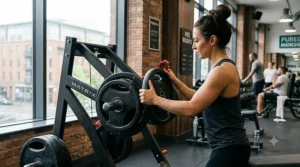
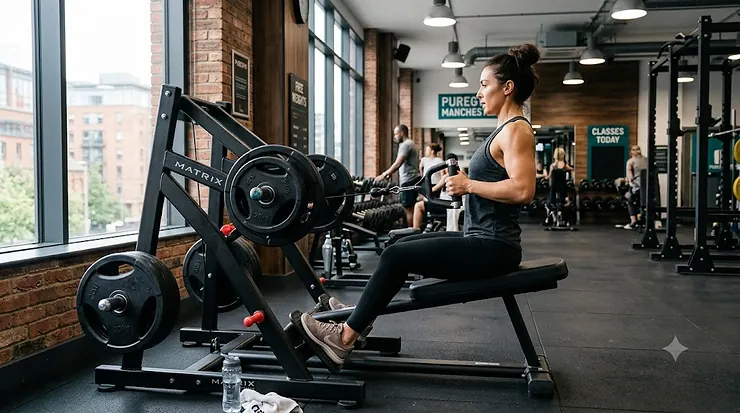
A plate loaded seated row machine is a purpose-built strength training station that allows you to perform horizontal pulling movements — the kind that build thickness and definition through your middle and upper back — in a fully supported, seated position. You load standard or Olympic weight plates onto the machine’s arms or sleeves, sit against a padded chest support, grip the handles, and pull. The chest pad absorbs the force you’d otherwise waste stabilising your torso, so 100% of your effort goes directly into your lats, rhomboids, trapezius, and biceps.
This matters enormously. According to research on pulling mechanics, the latissimus dorsi — the broad, wing-like muscle responsible for that coveted V-taper — responds powerfully to horizontal pulling patterns when the spine is braced and supported. Without the stabilisation burden of a free-weight bent-over row, you can go heavier, row cleaner, and genuinely feel the muscle working rather than fighting to keep your lower back from giving out. For anyone dealing with desk-related posture problems — and given the number of us who now work from home in cramped flats across London, Manchester, and Edinburgh, that’s rather a lot of people — a plate loaded low row machine is genuinely therapeutic.
In 2026, the home gym market in the UK has matured considerably. Space-efficient, well-engineered plate loaded back machines are now accessible at every price point on Amazon.co.uk, from sub-£200 starter options to near-commercial-grade kit for the serious enthusiast. This guide cuts through the noise and gives you the honest picture.
Quick Comparison: Top 7 Plate Loaded Seated Row Machines at a Glance
| Product | Weight Capacity | Independent Arms | Grip Options | Best For | Price Range (GBP) |
|---|---|---|---|---|---|
| ZERELEK Plate Loaded Seated Row Machine | 400 lbs (~181 kg) | ✅ Yes | Dual (swivel + fixed) | Budget home gym builders | £150–£230 |
| HVO Plate Loaded Seated Row Machine | 450 lbs (~204 kg) | ✅ Yes | Multi-grip + bicep bar | Intermediate lifters | £180–£260 |
| Body-Solid GSRM40 Seated Row Machine | 400 lbs (~181 kg) | Dependent arms | Four-way adjustable | Beginners & rehab users | £280–£380 |
| Mirafit Plate Loaded Seated Row Machine | ~180 kg | ❌ No | Dual handle (lat/trap focus) | UK compact home gyms | £220–£300 |
| Body-Solid LVSRB Pro Clubline Leverage Row | 400 lbs (~181 kg) | ✅ Yes | Multi-grip | Semi-commercial users | £450–£650 |
| Wolverson Colossus Plate Loaded Seated Row | Commercial grade | ✅ Yes | Multi-grip | Serious enthusiasts/small gyms | £700–£1,000+ |
| Valor Fitness CB-12 Plate Loaded Row Machine | 300 lbs (~136 kg) | ❌ No | Standard handle | Beginners / budget | £130–£200 |
Analysis: What this table reveals is a market that genuinely caters to every type of UK buyer. The sub-£250 bracket from ZERELEK and HVO offers independent arms — a feature you’d expect to pay significantly more for in previous years — while Mirafit sits in the sweet spot for anyone wanting a UK-relevant brand with solid after-sales support. At the premium end, the Wolverson Colossus is British-designed and built, which carries real weight if longevity and local warranty support matter to you. Budget buyers should note that the Valor CB-12 sacrifices independent arm function, which limits its unilateral training value, though the lower entry price makes it worth considering for those just starting out.
💬 Just one click — help others make better buying decisions too! 😊
✨ Don’t Miss These Exclusive Deals!
🔍 Take your back training to the next level with these carefully selected picks. Click on any highlighted product name to check current pricing and availability on Amazon.co.uk. These selections will help you find exactly the right plate loaded seated row machine for your space, budget, and goals.
Top 7 Plate Loaded Seated Row Machines UK 2026: Expert Analysis
1. ZERELEK Plate Loaded Seated Row Machine — Best Budget Independent Arm Option
The ZERELEK arrives as one of the most compelling budget entries in the UK market right now: a plate loaded seated row machine with fully independent diverging arms, available on Amazon.co.uk and typically eligible for Prime next-day delivery.
The machine supports up to 400 lbs (~181 kg) of combined load and accepts both 1-inch and 2-inch Olympic weight plates via included sleeve adapters — meaning you won’t need to buy a new plate set if you’re already equipped. The dual grip system is particularly noteworthy: one fully rotating handle allows natural forearm rotation through the pull, which reduces wrist strain over heavy sets; the second fixed handle mimics a T-bar row for a tighter, more isolated contraction. In practice, having both options on the same machine is like getting a T-bar row machine thrown in at no extra cost.
The chest pad and seat are both adjustable, which is essential if you’re sharing the machine with a training partner of different height — a very real consideration if your gym is actually a box bedroom in a terraced house in Leeds. The footprint of roughly 162 cm × 73 cm is manageable for most UK home setups, though you’ll want to measure carefully before ordering.
UK buyers report smooth assembly (typically under 90 minutes) and appreciate the stable feel under load. A few reviewers note the upholstery is on the firmer side — not uncomfortable, but don’t expect the padded luxury of a commercial gym.
✅ Independent arms for unilateral training
✅ Dual grip system (rotating + fixed) for exercise variety
✅ Compatible with 1″ and 2″ plates via adapters
❌ Upholstery firmer than premium competitors
❌ Plates not included (budget accordingly — expect to spend £50–£120 extra on a plate set)
Around £150–£230 on Amazon.co.uk — outstanding value for what you get. Check current price on Amazon.co.uk.

2. HVO Plate Loaded Seated Row Machine — Best for Intermediate Lifters Wanting Versatility
The HVO steps up the ante with a 450 lbs (~204 kg) capacity and a notably comprehensive grip system: multiple handle-width positions accommodate different shoulder widths and arm lengths, which is something a surprising number of cheaper machines get badly wrong. The swivel handles allow 360° rotation, removing the awkward wrist torque that can accumulate over high-rep back sessions.
What distinguishes the HVO from similar price-bracket competitors is the inclusion of a dedicated bicep curl attachment. Now, full disclosure: many UK reviewers are rather candid that the curl function is limited in its range of motion and feels somewhat awkward in practice. If you’re buying this machine for bicep curls specifically, keep looking. But if you’re buying it for seated rows — its primary function — the HVO delivers a smooth, well-controlled movement with excellent lat activation.
The 6-level seat height adjustment and 8-level chest pad positioning give this machine genuinely broad user compatibility. At 5’5″ to 6’2″, most UK users should find a comfortable setup without compromise. Rubber anti-slip foot pedals are a small but appreciated detail — sweaty training socks on smooth metal pedals is not an experience you want at maximum effort.
The NHS guidance on musculoskeletal health highlights the importance of structured resistance training for maintaining back strength and preventing injury — and the HVO‘s supported chest pad design is well-suited to users who need to protect a vulnerable lower back while still training productively.
✅ 450 lbs capacity — generous headroom for progressive overload
✅ 360° rotating handles reduce wrist strain
✅ Multiple seat and chest pad positions for varied body types
❌ Bicep curl attachment is largely decorative in practice
❌ Taller users (over 6’2″) may find the seat-to-pad alignment marginal
£180–£260 range on Amazon.co.uk — solid mid-range value with Prime delivery eligibility.
3. Body-Solid GSRM40 Plate Loaded Seated Row Machine — Best for Beginners & Rehab Users
Body-Solid has been making commercial-quality strength equipment since the early 1990s, and the GSRM40 carries three decades of refinement in its frame. This is not an independent-arm machine — both arms move together — but that’s actually a feature rather than a limitation for its target audience. Beginners and those training around back or shoulder injuries benefit from the synchronised movement path, which eliminates the bilateral compensation patterns that independent arms can sometimes encourage when form isn’t yet solid.
The signature DuraFirm™ upholstery deserves a mention. Unlike the foam padding on cheaper machines that compresses within six months of regular use, the DuraFirm pads maintain their firmness and shape over years of training. The oil-lite bronze bushings at every pivot point give the movement a genuinely smooth, almost silky feel — you’ll notice the difference immediately if you’ve been training on budget alternatives. Four-way handgrips (wide and narrow, both adjustable) allow enough exercise variety to keep training interesting without overwhelming a new user.
The GSRM40 is listed on Amazon.co.uk, and Body-Solid’s European distribution network means warranty support and spare parts are accessible to UK buyers — an important consideration that gets overlooked when everyone is chasing the lowest price. Post-Brexit, having a brand with genuine UK/EU distribution infrastructure matters for after-sales peace of mind.
✅ Smooth oil-lite bronze bushings for premium feel
✅ DuraFirm™ pads that won’t collapse within a year
✅ Ideal for beginners or rehab-focused training
❌ Dependent arms only — no unilateral training
❌ Uses 1″ standard plates as default (Olympic adapters sold separately)
£280–£380 range — a legitimate investment in a machine built to last.
4. Mirafit Plate Loaded Seated Row Machine — Best UK Brand for Compact Home Gyms
Mirafit is one of Britain’s best-regarded home gym equipment brands, and their Plate Loaded Seated Row Machine is a textbook example of why UK buyers sometimes find homegrown options genuinely superior to imported alternatives. It’s designed with the reality of British homes in mind: a small footprint, no-faff assembly, and a price point that doesn’t require a second mortgage.
The machine ships with two pairs of contoured handles — one targeting the lats with a narrower pull angle, one targeting the traps and rear delts with a wider position. Mirafit’s decision to offer angled plate horns (which prevent plates from sliding without needing collars) is a clever ergonomic touch that saves time between sets and reduces the minor-but-cumulative annoyance of fumbling with collar clips mid-session.
Six seat height adjustments and five chest pad positions make this suitable for users from around 5’2″ to 6’4″. Customer feedback from UK buyers is consistently warm — reviewers particularly praise the smooth motion and the intuitive setup guide. One British reviewer put it well: “It exceeded expectations — well-built, very adjustable, and the motion is smooth enough that I actually look forward to using it.”
The Sport England Active Lives data consistently shows that convenience and home accessibility are the primary drivers of sustained exercise habits in the UK. A machine that fits neatly into a converted garage in Sheffield or a back bedroom in Bristol removes the biggest barrier to consistency: not having to travel to a gym on a grey November morning when it’s raining sideways.
✅ Designed and sold by a trusted UK brand with UK customer support
✅ Angled plate horns — no collars needed
✅ Compact footprint ideal for UK homes
❌ Not available with independent arms (dependent movement only)
❌ Sold primarily direct from Mirafit and select UK Amazon marketplace sellers — less straightforward to return than Amazon-fulfilled products
£220–£300 range — outstanding value from a brand that understands British home gyms.
5. Body-Solid Pro Clubline LVSRB Leverage Seated Row Machine — Best Semi-Commercial Option
The Body-Solid LVSRB is where the home gym meets the commercial studio. This leverage row machine uses independent arms, accepts Olympic plates directly (no adapters needed), and is built to handle the kind of volume a dedicated lifter will throw at it over years of serious training.
The leverage mechanism on this machine provides a resistance curve that many users describe as more natural than standard plate-loaded designs — the resistance increases progressively through the pulling arc in a way that matches how your back muscles produce force. In practice, this means less of that “too light at lockout” feeling that flat-resistance machines sometimes deliver. If you’re the sort of person who programmes progressive overload seriously and tracks your training, the LVSRB’s mechanical nuance becomes genuinely meaningful over time.
The frame construction uses the same high-tensile steel tube gauging as Body-Solid’s commercial club equipment, which means this machine isn’t going anywhere regardless of how long or how heavy you train. Available through Amazon.co.uk and specialist UK gym equipment suppliers, the LVSRB represents the upper end of what most serious home gym users will need before crossing into commercial territory.
✅ Leverage system provides a superior resistance curve
✅ Olympic plate-compatible as standard
✅ Independent arms with genuine commercial-grade construction
❌ Considerably heavier than budget alternatives — factor in delivery and assembly effort
❌ Price point requires commitment
£450–£650 range — worth every pound for the serious, long-term home gym builder.
6. Wolverson Fitness Colossus Plate Loaded Seated Row — Best British-Made Premium Option
The Wolverson Colossus Plate Loaded Seated Row is a different proposition entirely. Designed, manufactured, and powder-coated in the UK by Wolverson Fitness, this machine is aimed squarely at small commercial gyms, PT studios, and the kind of home gym enthusiast who views their training space as a long-term investment rather than a purchase.
Every weld, every adjustment mechanism, and every upholstered pad has been engineered with genuine UK conditions in mind — including the understanding that a machine in a damp garden garage in the Peak District will face environmental stresses that an equivalent American product may not be designed for. The Colossus range also offers custom RAL powder-coat colours, which is either delightfully eccentric or professionally essential depending on whether you’re a home lifter or running a boutique gym.
Independent arms, multi-grip handle systems, and a construction specification that matches or exceeds most imports at twice the price make the Colossus the choice for anyone who wants to buy once and never replace. Wolverson operates from UK premises with UK-based customer support — parts availability is not a concern.
✅ Genuinely British-designed and manufactured
✅ Custom colour options for commercial branding
✅ Exceptional build quality with UK warranty support
❌ Higher price point than most home gym budgets
❌ Lead time of 4–6 weeks (made to order)
£700–£1,000+ — a machine you’ll still be training on in fifteen years.
7. Valor Fitness CB-12 Plate Loaded T-Bar Row Machine — Best Compact Budget Entry Point
The Valor Fitness CB-12 takes a slightly different approach to the plate loaded low row concept — it’s essentially a T-bar row machine with a seat, rather than a full leverage row station. That means a significantly smaller footprint (genuinely useful if your available space is measured in centimetres rather than square metres) and a correspondingly lower price point.
The trade-off is functional range: the CB-12 uses a single central lever arm with a T-bar handle rather than independent bilateral arms, which means no unilateral work. However, for a beginner establishing basic back movement patterns, or someone who simply needs a compact plate loaded back machine to complement a home training setup, the CB-12 does its job reliably. It accepts 2-inch Olympic plates and supports up to approximately 136 kg, which is sufficient for the majority of recreational lifters.
UK buyers note that assembly is straightforward — typically completed in 45–60 minutes — and the machine’s lightweight frame (around 36 kg) means it’s manageable for one person to position without help, a practical detail that matters if you’re setting up a home gym solo.
✅ Most compact footprint of any option on this list
✅ Simple, no-fuss entry into plate loaded rowing
✅ Lightweight and easy to reposition
❌ Single arm only — no unilateral or independent arm capability
❌ Lower weight capacity limits long-term progression ceiling
£130–£200 range — the pragmatic starting point for the budget-conscious UK beginner.
How to Set Up and Get the Most From Your Plate Loaded Seated Row Machine
Buying the machine is the easy part. Getting the most from it — consistently, safely, and without tweaking your lower back in week three — requires a bit more thought. Here’s what the spec sheet won’t tell you.
Step 1: Position the seat height first. Before loading a single plate, sit against the chest pad and set the seat so your elbows are roughly level with the handles at full extension. If your arms are reaching upward to grip the handles, the seat is too low. If you’re hunching downward, it’s too high. This alignment determines whether your lats do the work or your traps bear the brunt — and most beginners set it wrong.
Step 2: Start lighter than your ego suggests. The chest-supported position of a plate loaded seated row machine allows you to feel lat activation with a clarity that bent-over rows rarely offer. That clarity is also diagnostic: if you can’t feel your lats firing at all, you’re almost certainly pulling with your arms rather than initiating through shoulder retraction. Drop the weight, focus on squeezing your shoulder blades together at the peak of each rep, and build from there.
Step 3: UK storage considerations. Many UK homes store gym equipment in garages or garden sheds — environments that can be genuinely damp between October and April. Wipe down steel components after each session if your training space has poor ventilation. A light application of WD-40 or similar on exposed metal parts every couple of months will prevent surface rust on the frame without affecting the machine’s function.
Step 4: Progressive overload is the point. The plate loaded system exists precisely to enable systematic weight progression. Keep a simple training log — even a notepad — and aim to add small weight increments (1.25 kg or 2.5 kg) every two to three weeks once you can complete your target sets with clean form. The NHS physical activity guidelines recommend muscle-strengthening activities at least twice weekly for adults, and progressive overload is what makes those sessions actually deliver results over time.
Step 5: Maintenance schedule. Check all bolts and connection points monthly. The pivot bushings on most plate loaded machines are maintenance-free, but tightening any bolts that have vibrated loose during training takes two minutes and prevents the wobble that slowly degrades both the machine’s feel and your confidence under load.
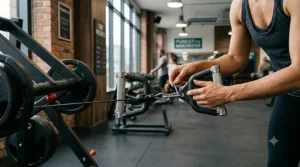
Which Type of UK Gym User Suits a Plate Loaded Seated Row Machine?
Not every machine suits every person. Here’s how three realistic UK buyer profiles match up to what’s available.
Profile 1 — The Flat-Dweller Home Gym Builder (London/Manchester/Birmingham) Tom works in finance, commutes five days a week, and has carved out a 3m × 2m training space in his second bedroom. He wants a machine that does serious back work without requiring planning permission. The ZERELEK or Mirafit plate loaded seated row machine fit this profile precisely: compact footprints, manageable delivery weights (most arrive in 2–3 boxes under 40 kg each), and a price that doesn’t make his accountant nervous. He should check Amazon Prime availability — next-day delivery to a flat with a narrow staircase is infinitely preferable to scheduling a specialist delivery.
Profile 2 — The Garage Gym Enthusiast (Suburban UK) Sarah has a converted single garage in Cheshire, a modest but growing collection of Olympic plates, and a genuine desire to train like she means it. The Body-Solid GSRM40 or the LVSRB leverage row serve her well — both accept standard Olympic plates, both are built to outlast fashion cycles in gym equipment, and the Body-Solid brand’s UK distribution network means she’s never far from a spare part or a warranty resolution. The garage location means she should be mindful of the damp-prevention tips outlined above.
Profile 3 — The PT Studio / Small Commercial Gym (UK-Wide) Khalid runs a small PT studio in Leeds and needs equipment that looks the part, handles multiple users daily, and comes with a warranty that actually means something locally. The Wolverson Colossus is the right answer here, and it’s one of the few plate loaded seated row machines on the market that can genuinely claim British provenance — a selling point that matters to some clients. The 4–6 week lead time requires planning, but the payoff is a machine built for the long haul.
How to Choose a Plate Loaded Seated Row Machine in the UK: 7 Key Criteria
- Independent vs. dependent arms. Independent arms allow unilateral rowing — training one side at a time — which is valuable for correcting left-right strength imbalances and adding exercise variety. If you’re a serious lifter or an athlete, prioritise independence. Beginners or rehab users may actually prefer the stability of dependent arms.
- Weight plate compatibility. Check whether the machine accepts 1-inch standard plates, 2-inch Olympic plates, or both. If you already own Olympic plates, buying a machine that only takes 1-inch plates means purchasing adapters or a second plate set. Most modern options accommodate both, but the details matter.
- Adjustability range. Count the number of seat height positions and chest pad positions. More positions mean a better fit for your body, and a better fit translates directly into better muscle engagement and less injury risk. Fewer than 5 positions in each is a red flag on anything above entry-level pricing.
- Footprint versus your available space. Measure your space in centimetres before ordering. Most plate loaded back machines measure between 140–180 cm in length and 70–110 cm in width. Add loading clearance at each side — you’ll need to walk around the machine when changing plates.
- Steel gauge and frame weight. Heavier machines are generally more stable under load. A frame under 30 kg will flex during heavy pulling sets; 40–50 kg and above provides the rigidity you want. Check the product spec or listing details.
- UK brand support and warranty. Post-Brexit, warranty resolution for products manufactured and distributed outside the UK can be slower and more complicated. Brands with UK or EU distribution (Body-Solid via their European arm, Mirafit, Wolverson) offer more straightforward support than parallel imports.
- Amazon.co.uk Prime eligibility. For heavy gym equipment, Prime delivery is less about speed and more about the ease of returns if something arrives damaged. Amazon’s Consumer Rights Act 2015-compliant returns process provides strong buyer protection — but only if the product ships from or is fulfilled by Amazon directly.
Plate Loaded Seated Row vs Cable Machine: Which Should You Buy?
This question divides the home gym community rather more than it should. The honest answer is: they do different things, and the better question is which suits your situation.
A cable row machine (lat pulldown tower with a low pulley) offers continuous variable resistance through a cable and weight stack or plate stack. The resistance is constant throughout the range of motion and adjusts in small increments via a pin — which makes it ideal for drop sets, high-rep endurance work, and users who train alone and need fast, easy weight changes. The downside is that cable machines are generally larger, significantly more expensive, and the cables require periodic replacement — a maintenance cost and logistics challenge that’s easier at a commercial gym than at home.
A plate loaded seated row machine delivers a distinctly different feel. Free weight-style resistance — the weight you load onto the plate sleeves — creates a more organic resistance curve that many serious lifters prefer for strength and hypertrophy training. You can load precisely the weight you want (in 1.25 kg increments if you own small plates) and the absence of cables, pulleys, and weight stacks means dramatically less maintenance. The machine is also typically more compact than a full cable station.
| Feature | Plate Loaded Seated Row | Cable Row Machine |
|---|---|---|
| Resistance type | Plate-loaded (free weight feel) | Cable & weight stack |
| Weight adjustment speed | Slower (manual plate changes) | Fast (pin selection) |
| Maintenance | Minimal | Cable replacement needed |
| Footprint | Compact | Larger |
| Price range (UK) | £130–£1,000+ | £300–£2,000+ |
| Best for | Strength/hypertrophy focus | Varied training, drop sets |
For most UK home gym owners working in limited space on a sensible budget, the plate loaded seated row machine wins on practicality, cost, and longevity. If you train alone, do a lot of drop sets, or value the speed of pin-adjustable resistance above all else, a cable machine may suit you better — but you’ll pay more for it and maintain it more frequently.
Common Mistakes When Buying a Plate Loaded Row Machine in the UK
Mistake 1: Buying a US-spec product without checking compatibility. This is less of an issue with plate loaded gym machines (they don’t have motors or electronics) than with, say, exercise bikes or ellipticals, but some products listed on Amazon.co.uk ship from US warehouses and may arrive with non-UK packaging, instructions in American English, or minor cosmetic differences. Always check the seller’s location and whether the listing is fulfilled by Amazon UK directly.
Mistake 2: Ignoring the weight plate situation. The machine is only part of the equation. A plate loaded seated row machine without plates is a rather expensive seat. If you’re buying from scratch, budget an additional £80–£150 for a basic Olympic plate set (a standard 20 kg Olympic barbell set from Amazon.co.uk typically runs in the £80–£130 range depending on brand and material). Don’t let this catch you off-guard on delivery day.
Mistake 3: Underestimating assembly time and complexity. Most of these machines arrive in two or three large boxes and require 60–120 minutes to assemble with two people. If you live in a flat with a narrow staircase, ordering a machine that weighs 70+ kg assembled requires logistical planning that some buyers simply don’t do. Check assembled dimensions, check delivery access, and if in doubt, consider paying for a professional assembly service (several Amazon partners offer this as an add-on at checkout).
Mistake 4: Buying on weight capacity alone. A machine rated to 400 lbs (~181 kg) sounds impressive, but if the frame flexes, the seat pad collapses after six months, or the pivot points develop a grinding noise within a year, that capacity rating is marketing rather than engineering. Look for steel gauge specifications (ideally 11–13 gauge tubing), pivot bushing type (oil-lite bronze is better than plain steel), and actual user reviews from people who have owned the machine for 12+ months.
Mistake 5: Ignoring the footprint with plates loaded. The machine’s listed dimensions don’t include the weight plates loaded onto the sleeve horns. A lever arm that extends 40 cm beyond the machine’s stated length when loaded can become a genuine hazard in a tight training space. Check this with the seller before buying if you’re working in a compact area.
Features That Actually Matter (And Those That Don’t)
The spec sheet on a plate loaded rowing machine is littered with selling points that range from genuinely important to essentially decorative. Here’s how to sort one from the other.
Actually matters — independent arms. The ability to row each arm independently isn’t just a nice-to-have; it’s a meaningful training tool that allows you to identify and correct bilateral strength imbalances, add unilateral exercise variations (single-arm rows, alternating rows), and maintain symmetrical development over time. Most back injuries develop gradually from asymmetrical loading patterns — having the option to address this on your machine is worth the premium.
Actually matters — chest pad adjustability. A fixed chest pad forces you to adapt to the machine rather than the machine adapting to you. Proper chest pad positioning determines how much pre-stretch you get at the start of each rep, and pre-stretch is one of the primary mechanisms for maximising lat activation. If a machine offers fewer than four chest pad positions, it’s compromising on this.
Largely irrelevant — weight capacity above 200 kg. Unless you’re a competitive powerlifter with a 200 kg+ barbell row to your name, a machine rated to 300 lbs (~136 kg) will serve the overwhelming majority of recreational lifters for the entirety of their training careers. A machine rated to 400 lbs won’t build your back any faster than one rated to 300 lbs if you’re working in the 50–120 kg loading range.
Worth noting but overstated — the number of grip positions. More grip positions mean more exercise variety, which is genuinely useful. But the difference between four and six grip width options is marginal in practice. What matters more is whether the grips feel ergonomically natural in your hand during an actual set — something no spec sheet will tell you but UK customer reviews often will.
Long-Term Cost and Maintenance in the UK
The purchase price is only part of the story. A plate loaded seated row machine bought wisely should last a decade or more with minimal additional cost, but it pays to understand what you’re signing up for.
Plates: If you don’t already own them, budget £80–£200 for a basic Olympic plate set. Cast iron plates from Amazon.co.uk or UK fitness equipment retailers are perfectly adequate; rubber-coated plates are kinder to flooring (worth considering if you’re training on a concrete garage floor or laminate flooring in a spare room). Expect to spend upward of £0.80–£1.50 per kilogram for decent quality iron plates.
Flooring: Gym flooring under your machine protects both the floor and the machine’s feet from moisture ingress — particularly relevant in the UK’s damp garage environments. Interlocking rubber tiles in the £30–£60 per sq metre range (available from Amazon.co.uk) are the practical choice.
Maintenance costs — almost nothing. This is the genuine advantage of a plate loaded machine over cable-and-stack alternatives. There are no cables to replace (typically £30–£80 for commercial cable replacements), no pulleys to service, and no weight stack guide rods to lubricate. A bottle of machine lubricant (under £10) and a set of Allen keys for bolt tightening are your total annual maintenance budget.
Resale value: Well-known brands (Body-Solid, Mirafit, Wolverson) hold resale value reasonably well on the UK second-hand market. Facebook Marketplace and Gumtree regularly list plate loaded back machines in the £100–£400 range, suggesting buyers in good condition can recoup 40–60% of their original cost when upgrading. Budget brands tend to depreciate more steeply.
✨ Upgrade Your Back Training Today!
🔍 These carefully selected plate loaded seated row machines are the real deal — built for serious training and available on Amazon.co.uk. Click any highlighted product to check current pricing, availability, and Prime delivery eligibility. Your back will thank you.
FAQ: Plate Loaded Seated Row Machine UK
❓ What muscles does a plate loaded seated row machine work?
❓ Is a plate loaded row machine suitable for people with lower back problems?
❓ Can I use my existing Olympic weight plates with these machines?
❓ How much space do I need for a plate loaded seated row machine in a UK home gym?
❓ Are plate loaded seated row machines delivered to UK home addresses, and what are the delivery terms?
Conclusion: Choose Your Plate Loaded Seated Row Machine and Start Building
The plate loaded seated row machine is, without much argument, one of the most underrated investments you can make in a home gym. While everyone obsesses over squats, bench press, and bicep curls, it’s the people quietly rowing with intention who tend to have the most impressive backs in the room — and the least trouble with posture, shoulder health, and spinal resilience.
For UK buyers in 2026, the options have never been better. If you’re working with a modest budget, the ZERELEK or HVO on Amazon.co.uk deliver independent arms and genuine training capability for well under £250. If you want the reassurance of a British brand with UK customer support, Mirafit earns its reputation consistently. Serious builders willing to invest should look hard at the Body-Solid LVSRB or the Wolverson Colossus — machines that will still be performing at their best when everything around them has been replaced twice.
Whatever you choose, the principle is the same: load it progressively, set it up correctly for your body, and pull with intention. A strong back isn’t just an aesthetic achievement — it’s the foundation of everything else you do under load, and it keeps you training pain-free for the long haul.
✨ Ready to Invest in Your Back Training?
🔍 Click any of the highlighted products in this guide to check current availability and pricing on Amazon.co.uk. Whether you’re a beginner setting up your first home gym or an experienced lifter upgrading your kit, there’s a plate loaded seated row machine on this list for you.
Recommended for You
- Best Seated Cable Row Machine UK 2026: 7 Top Picks Reviewed
- 7 Best Low Row Machine Home Gym: Honest 2026 Guide
- Best Plate Loaded Lat Pulldown Machine UK: 7 Top Picks 2026
Disclaimer: This article contains affiliate links. As an Amazon Associate, I earn from qualifying purchases. If you purchase products through these links, we may earn a small commission at no additional cost to you.
✨ Found this helpful? Share it with your mates! 💬🤗
