
In This Article
Let’s be blunt: most home gym setups in Britain are woefully incomplete when it comes to back training. You’ve got a bench, maybe a rack, a few dumbbells gathering dust in the corner — and somehow every pull day ends up being a vague collection of bent-over rows that wreck your lower back by the third set. Sound familiar?
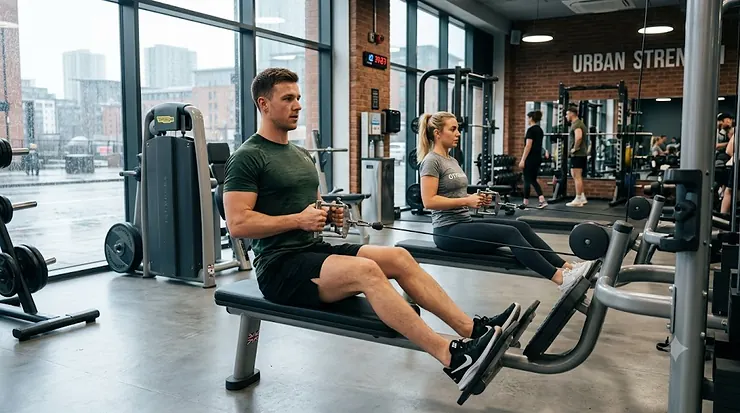
The seated cable row machine changes that entirely. It’s one of the most effective tools for building the kind of thick, well-developed mid-back that no amount of dumbbell rowing can fully replicate. The movement — pulling a cable horizontally toward your torso while seated, feet braced on a footplate — keeps constant tension through the entire range of motion, something free weights simply can’t offer at the bottom of the lift. According to a 2023 study published in the International Journal of Strength and Conditioning, grip angle significantly affects which back muscles fire during the seated cable row, with neutral and supinated grips producing the highest latissimus dorsi activation — which is exactly why having a machine with multiple attachment options matters.
In practical terms, a seated cable row machine primarily targets your latissimus dorsi, rhomboids, middle trapezius, and rear deltoids, with your biceps and core working hard as secondary movers. More than just aesthetics, that translated to better posture — something rather relevant when most of us spend eight hours a day hunched over a laptop. The NHS notes that poor posture and weak back muscles are among the leading contributors to back pain in adults, making consistent horizontal pulling genuinely important for long-term health.
In this guide, you’ll find seven real products available on Amazon.co.uk, detailed for British buyers — including price ranges in GBP, space requirements for our typically modest home gyms, and honest assessments of what each machine actually delivers beyond what the listing tells you.
Quick Comparison: Top 7 Seated Cable Row Machines on Amazon.co.uk
| Product | Type | Weight Stack/Capacity | Cable Stations | Best For | Price Range |
|---|---|---|---|---|---|
| Body-Solid GSRM40 | Plate-loaded seated row | Up to 181kg | Low row (dedicated) | Serious back training | £400–£550 |
| Marcy MKM-81010 Club | Multi-gym with row | 90kg stack | High + low | Beginners & all-rounders | £300–£450 |
| Marcy SM-6500 Functional Trainer | Dual cable trainer | 68kg per side | 34-position dual | Advanced home gym | £700–£900 |
| Marcy SM4500 Smith Machine | 3-in-1 combo | Plate-loaded | Cable crossover | Space-saving powerhouse | £500–£700 |
| Strongway Multi Gym 177KG | Smith + dual cable | 177kg total | Dual cable pulley | High-volume trainers | £600–£800 |
| Marcy MWM-1005 Multi-Gym | Stack multi-gym | 68kg (150lb) | High + low pulley | Compact home training | £250–£380 |
| Strongway Half Power Rack | Rack + cable combo | 88.5kg stack | Pulley system | Rack users wanting cable | £450–£650 |
The table above reveals something important: there’s no single “best” option — the right choice depends entirely on whether you want a dedicated seated cable row machine or a multi-station that includes the function. The Body-Solid GSRM40 is the purist’s choice, built specifically for the movement. The Marcy SM-6500 is where you go when budget allows for a proper dual-cable setup. Budget-conscious buyers will find the MWM-1005 surprisingly capable for its price range — though it does ask you to compromise on cable travel and stack weight.
💬 Just one click — help others make better buying decisions too! 😊
Top 7 Seated Cable Row Machines: Expert Analysis
1. Body-Solid GSRM40 Seated Row Machine
If you want one machine that does exactly one thing brilliantly, this is it. The Body-Solid GSRM40 is a dedicated plate-loaded seated cable row machine — no lat pulldown attachment, no Smith bar, no frills — just a robustly engineered station purpose-built for horizontal pulling.
The DuraFirm™ chest and seat pads are noticeably thicker than cheaper alternatives, and they matter more than you’d think. On a thin pad you’ll spend half the set resisting the urge to lean back; here, the chest support keeps your torso position honest. The four-way handgrip system is the standout feature: it lets you shift between narrow neutral, medium, wide, and supinated grips without swapping attachments — a genuinely useful detail confirmed by the research above on grip-angle muscle activation. The 181kg weight capacity means this won’t become a limiting factor unless you’re extraordinarily strong.
What most UK buyers overlook is the footprint: at 137cm long and 112cm wide, it’s compact by cable machine standards — manageable in a dedicated spare room or garage, though tight in a typical terraced-house box room. Assembly takes around 90 minutes and requires two people; the instructions are adequate if not particularly generous. Plate-loading means you’ll need to already own (or buy) Olympic plates, which adds to the effective cost.
UK buyers report that the machine arrives in good condition through Amazon, with Prime delivery available. Long-term durability feedback from verified UK purchasers is overwhelmingly positive, with the oil-lite bronze bushings keeping operation smooth for years.
✅ Purpose-built for seated row excellence
✅ Four-way grip positions for varied muscle targeting
✅ Very compact for a cable station
❌ Plate-loaded — requires separate weight purchase
❌ No lat pulldown or multi-exercise functionality
Price range: Around £400–£550. For pure row performance at home, this represents solid value.

2. Marcy MKM-81010 Club Home Gym
The Marcy MKM-81010 takes an entirely different approach. Rather than being a specialist, it’s a capable generalist — an all-in-one multi-gym with a 90kg (200lb) selectorized weight stack that includes a reverse seated row station alongside chest press, cable pulley, and leg developer functions.
The 90kg stack is broken into 13 plates at roughly 7kg each, so progression is sensible rather than punishing. The seated row function works via a converting chest press arm — one pin swap and you’re pulling horizontally. It’s a slightly different biomechanical feel compared to a dedicated low-pulley cable row, as the resistance path is constrained by the arm geometry rather than a pure cable run. That’s not a dealbreaker; it’s just worth understanding before you buy.
For UK buyers in a terraced house or flat without a dedicated gym room, this machine’s compact multi-station design is a genuine advantage. You’re essentially getting five or six exercise stations in one footprint, with a max user weight of 136kg. The 14-day cooling-off period under Consumer Contracts Regulations means you can return it if it doesn’t fit your space.
Customer feedback from UK purchasers highlights straightforward assembly and reliable quality at the price point, with a few noting the stack could go heavier for advanced lifters.
✅ Excellent value all-in-one option
✅ Selectorized stack for fast weight changes
✅ Compact footprint — suits UK homes
❌ Row motion is arm-constrained, not pure cable
❌ 90kg stack limiting for stronger lifters
Price range: £300–£450. The most practical option for beginners or those wanting a complete home gym in one purchase.
3. Marcy SM-6500 Functional Trainer
This is where things get serious. The Marcy SM-6500 is a full dual-cable functional trainer with independent 68kg-per-side weight stacks and a cable system adjustable across 34 positions. Seated cable rows, lat pulldowns, cable crossovers, face pulls, tricep pushdowns — essentially the entire cable menu of a commercial gym, housed in one unit.
The 34-position cable adjustment is the key differentiator here. Unlike machines where the cable is fixed at floor level, you can set the pulley to whatever height suits the exercise — which means proper low-pulley seated rows are just one option among dozens. The dual-stack design also allows single-arm cable rows (pulling with each arm independently), which many physios and trainers consider superior for addressing left-right strength imbalances. The squat rack and pull-up bar integration make this a near-complete gym in one structure.
The trade-off, as ever with UK home gyms, is space. This machine needs a room, not a corner — allow around 2.2m × 1.5m of clear floor space, plus ceiling height. It’s realistically suited to a garage conversion or a dedicated ground-floor room rather than a spare bedroom. Prime-eligible delivery on Amazon.co.uk is available, though you’ll want help assembling it.
UK buyers report the ball-bearing sealed pulleys feel genuinely smooth, with 2,000lb-rated aircraft cables that inspire confidence under load.
✅ True commercial-style dual cable functionality
✅ 34 cable positions for enormous exercise variety
✅ Includes squat rack and pull-up bar
❌ Large footprint — needs dedicated space
❌ Premium price tier
Price range: £700–£900. Expensive but genuinely equivalent to several separate pieces of kit.
4. Marcy SM4500 Smith Machine Power Rack
The SM4500 is clever British-home-gym thinking in hardware form: a Smith machine, power rack, and cable crossover compressed into a single unit designed for spaces where you can only justify one large piece of equipment. For seated cable rows specifically, the cable crossover station handles horizontal pulling with a clean, linear cable path.
The Smith machine guide rails make safe solo training genuinely achievable — no spotter needed for heavy bench press or squats, which matters when you’re training alone in a garage at 6am. The cable crossover adds the horizontal pulling dimension that Smith machines and racks alone can’t provide. It’s plate-loaded throughout, so you’ll need your own barbell and plates, but the upside is no stack-weight ceiling.
For UK buyers who already have plates and want to consolidate equipment, this is a wonderfully space-efficient option. The powder-coated finish holds up well to the kind of ambient damp you get in a typical British garage — not the same as a heated, climate-controlled facility, but more resilient than raw steel alternatives.
UK customers on Amazon.co.uk report solid build quality and a reasonably painless assembly process, noting the instruction manual is clearer than expected at this price tier.
✅ Three functions in one space-efficient structure
✅ Plate-loaded — no stack weight ceiling
✅ Garage-friendly powder-coated finish
❌ Cable crossover not dedicated to row — shared pulley
❌ Requires separate plates and barbell
Price range: £500–£700. Excellent value if you need Smith, rack, and cable in one investment.
5. Strongway Multi Gym Smith Machine (177KG Stack)
Strongway Gym Supplies is a Coventry-based UK company — which matters more than it might seem. Buying from a UK-based seller means customer support is accessible, warranty claims are processed under UK consumer law, and you benefit from the Consumer Rights Act 2015 without any post-Brexit import complications.
The headline figure is that 177KG total weight stack — one of the largest on Amazon.co.uk at this price bracket. The dual cable pulley system runs off those stacks, enabling proper high-resistance cable rows without hitting a ceiling. Add in the Smith machine, dip station, and pull-up bar, and this is a comprehensive strength setup rather than a feature-list machine with lightweight components.
The dual cable design means you can run both cables simultaneously for bilateral pulling rows, or independently for unilateral work. The reinforced framing and guided pulley system are consistently praised in UK buyer reviews for their stability under heavy loads — reassuring when you’re working at the upper end of the resistance range.
Space-wise, this machine is substantial. But for a garage gym or a dedicated fitness room, it earns its footprint by replacing four or five separate machines.
✅ UK-based seller — Consumer Rights Act protections
✅ 177KG total stack — high-resistance ceiling
✅ Comprehensive multi-function station
❌ Requires significant floor space
❌ Assembly is a two-person job (allow a full afternoon)
Price range: £600–£800. Justifiable for serious lifters who want volume and variety under one roof.
6. Marcy MWM-1005 Multi-Gym (150lb Stack)
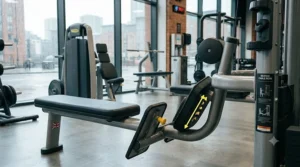
The MWM-1005 is the machine for the buyer who wants cable training at home without rearranging the furniture. With a 68kg (150lb) weight stack, high and low pulley stations, dual-function press arms, a lat station, and a preacher curl pad, it covers the essential exercises with a footprint that actually fits in a spare room.
The low pulley station is what’s relevant here: attach a D-handle or V-bar, sit on the included seat or position yourself on the floor, brace against the footplate, and you have a functional seated cable row. It’s not as pure an experience as a dedicated row machine — the cable height and geometry are optimised for general use rather than row-specific biomechanics — but for the price and space it occupies, the compromise is thoroughly reasonable.
The 68kg stack is adequate for most beginners and intermediate lifters, though advanced trainers will outgrow it. The selectorized design means fast weight changes — particularly useful during circuit training or supersets. Amazon.co.uk offers Prime-eligible delivery, and the standard 14-day return window applies under Consumer Contracts Regulations.
UK customers consistently mention the space-saving design as the deciding factor, with the cable system described as smooth and consistent for a machine in this price bracket.
✅ Genuinely compact — suits small UK homes
✅ Selectorized stack for quick weight adjustment
✅ Covers multiple exercise categories
❌ 68kg stack limits high-end progression
❌ Low pulley geometry less optimal than dedicated row machines
Price range: £250–£380. The most accessible entry point on this list — sensibly sized for a British spare room.
7. Strongway Half Power Rack with 88.5KG Pulley System
The final entry on this list represents a different kind of thinking. Rather than buying a machine that happens to include cable rowing, the Strongway Half Power Rack is primarily a squat rack — but one with an integrated 88.5KG weight stack and pulley system that enables proper cable rows without a separate cable station.
For buyers who already lift free weights and want to add cable work without acquiring a second large piece of equipment, this is a particularly elegant solution. The pulley system attaches directly to the rack structure, keeping the overall footprint comparable to a rack alone. The 88.5KG stack is meaningful — enough for most back training to be genuinely challenging — and the cable path allows both lat pulldown and low-row positions.
The half-rack design (as opposed to a full power rack) is also relevant for UK garages and spare rooms: it’s more compact vertically and requires less ceiling clearance. For those training in a converted garage with a standard 2.4m ceiling, that distinction matters.
Strongway’s UK base means returns and warranty support are straightforward, operating under familiar UK consumer law rather than international shipping logistics.
✅ Adds cable functionality to an existing free-weights setup
✅ Compact vertical profile — suits lower ceilings
✅ UK seller — clean warranty support
❌ 88.5KG stack may limit very advanced lifters
❌ Not a standalone cable machine — requires rack assembly first
Price range: £450–£650. Smart buy for committed lifters who want rack and cable without doubling their footprint.
✨ Don’t Miss These Exclusive Deals!
🔍 Ready to build a stronger back? Click on any highlighted product name to check current pricing and availability on Amazon.co.uk. Prices fluctuate, so it’s worth checking today — Prime members get next-day delivery on many of these machines.
How to Get the Most From Your Seated Cable Row Machine: A Practical Setup Guide
Buying the machine is the easy part. Getting it set up correctly — and using it properly from day one — is where most people either succeed or quietly abandon the thing after a fortnight.
First, sort your space. Even the “compact” options on this list need breathing room. A common mistake in UK home gyms is buying a machine for the footprint on paper, then discovering it can’t be used without standing at an angle because the cable pull direction is blocked by a wall. Measure the full working envelope: you need clear space behind you (roughly 1.2m for leg extension during the row) and enough room laterally to move freely. British terraced houses and semis typically have spare rooms in the 3m × 3m to 3.5m × 4m range — workable, but it requires planning.
Cable and pulley maintenance. This is what Amazon listings don’t mention. The cables on home gym machines — even good ones — should be inspected every three months for fraying, particularly at the end crimps where tension stress concentrates. UK garages are damp environments. A cable left in persistent moisture without protection will corrode at those metal end points long before the outer jacket shows wear. Lightly wiping pulleys and cable guides with a dry cloth after each session costs thirty seconds and extends component life significantly.
The first six weeks matter most. New cable machines often have slight pulley stiffness that smooths out with use — this is normal and not a defect. Start lighter than you think necessary for the first two weeks. This serves two purposes: it lets the machine bed in, and it lets you establish correct form without ego-lifting habits that are remarkably hard to unlearn once they’re ingrained. According to guidance from strength and conditioning specialists at Loughborough University, the seated row is one of the exercises most commonly performed with excessive lumbar flexion, which shifts load from the target muscles to the lower back — precisely the injury pattern the exercise is meant to prevent, not cause.
Common mistake to avoid in week one: pulling with your arms first. The elbows should drive back as the primary movement, with hands as passive hooks. If your biceps are burning more than your lats, you’re arm-rowing. Drive the elbows; the rest follows.

Who Should Buy What: Real-World UK Buyer Scenarios
Back training needs aren’t identical, and neither are UK living situations. Here are three specific profiles matched to the right machine.
Profile 1: The London flat dweller, training solo. Sarah, 34, rents a two-bedroom flat in Walthamstow. She has a 3m × 2.5m second bedroom she’s converted into a workout space. She wants to do cable rows, lat pulldowns, and some pressing work, but absolutely cannot have a machine that dominates the room. Best pick: Marcy MWM-1005. It fits her space, covers multiple exercises, and the selectorized stack means fast, quiet weight changes without clanging plates at 7am. She won’t max out the 68kg stack for at least two years of consistent training.
Profile 2: The serious home gym builder in a detached house. James, 42, has a double garage in Warrington converted to a full gym. He trains four days a week, lifts heavy, and wants commercial-quality results without a gym membership. Best pick: Marcy SM-6500 Functional Trainer or Strongway 177KG Multi Gym. Both give him the dual-cable freedom for unilateral rows, the resistance headroom for heavy work, and the build quality to last a decade of hard training. The Strongway option benefits from UK-based support; the SM-6500 edges ahead on cable versatility.
Profile 3: The free-weights enthusiast adding cable work. David, 29, already has a barbell, plates, and a squat rack in his garden shed in Bristol. He wants to add cable rows and lat pulldowns without buying a second large machine. Best pick: Strongway Half Power Rack with Pulley System. It integrates with his existing rack philosophy, adds the cable dimension he’s missing, and doesn’t require a separate footprint. The 88.5KG stack is more than adequate for his current training.
Seated Cable Row Machine vs. Free-Weight Rows: An Honest Comparison
This debate runs through every gym forum in Britain, and it deserves a straight answer rather than vague diplomacy.
| Factor | Seated Cable Row Machine | Free-Weight Rows (Barbell/Dumbbell) |
|---|---|---|
| Constant tension | ✅ Full range under load | ❌ Reduces at bottom of lift |
| Spinal loading | ✅ Lower — supported position | ❌ Higher — especially barbell rows |
| Isolation of back muscles | ✅ Easier to isolate | ❌ Easier to compensate |
| Grip variation | ✅ Multiple attachments | Limited without equipment |
| Skill requirement | ✅ Lower learning curve | Higher — balance and bracing |
| Equipment cost | ❌ Higher | Lower |
| Space requirement | ❌ More space | Minimal |
The table doesn’t tell the whole story. Cable machines offer constant tension throughout the movement — meaning the muscles are under load at the stretched position as well as the contracted position, which is biomechanically superior for hypertrophy. Free weights are cheaper, more portable, and develop greater stabiliser muscle activation. The real answer, as any NHS-aligned exercise physiologist would tell you, is that both have a place in a well-rounded programme — but if you’re only building one piece of cable equipment for your home, a seated cable row station gives you something free weights fundamentally cannot replicate.
The cable row also wins on injury risk profile. A 2025 HD-EMG study found that the seated cable row produces comparable overall back muscle activation to free-scapular rows, while the supported seated position dramatically reduces the lumbar loading associated with bent-over barbell rows — particularly relevant if you’re training without a spotter or returning from a back injury.
✨ Don’t Miss These Exclusive Deals!
🔍 Before prices change, check current availability on Amazon.co.uk for any of the machines listed above. Prime members: same-day or next-day delivery is available in many UK postcodes. Free standard delivery applies to orders over £25 for non-Prime customers.
How to Choose a Seated Cable Row Machine in the UK: 6 Things That Actually Matter
Skip the marketing copy. These are the factors that distinguish a machine you’ll still be using in 2030 from one that ends up on Facebook Marketplace by February.
1. Cable and pulley quality. The cable is what fails first on cheaper machines. Look for nylon-coated steel aircraft cable (not bare steel wire), rated to at least 1,000kg tensile strength. Ball-bearing sealed pulleys outlast nylon-bushing versions by years — worth specifically checking in the product specifications rather than assuming.
2. Weight capacity vs. weight stack. These are different numbers. Weight capacity refers to how much the frame can structurally handle (typically 136–181kg for home gym machines). Weight stack is the maximum resistance available. For beginners, 45–68kg is enough; serious lifters should look for 90kg or above, or choose a plate-loaded machine with no upper ceiling.
3. Footplate design. A proper seated cable row requires your feet to be braced firmly while you pull. Machines with flip-up or adjustable footplates accommodate different leg lengths — important if multiple family members will be using it. Fixed footplates work fine if the distance is right for your height; awkward if it isn’t.
4. Space and ceiling height. Don’t just measure the machine’s footprint. Account for the cable pull direction, your seated position, and the working space around the machine. Multi-station machines with lat pulldown bars also need adequate ceiling clearance — typically at least 2.3m, sometimes 2.6m for taller cable stations.
5. UK-specific compatibility. Most strength equipment doesn’t have the voltage concerns of electronics, but do confirm that any electronic features (digital weight selectors, connected apps) are compatible with UK 230V/50Hz supply. More practically, check that the seller is UK-based or has a clear UK returns process — the Consumer Rights Act 2015 gives you strong protections for faulty goods, but only if you can exercise them without international shipping headaches.
6. Warranty and parts availability in Britain. A five-year frame warranty means nothing if the UK seller has no spare parts. Which? consistently recommends checking whether the brand has a UK service centre or parts depot before purchasing premium fitness equipment. Marcy and Body-Solid both have established UK distribution; Strongway is UK-based. For lesser-known brands, ask the seller directly about parts availability before committing.
Common Mistakes When Buying a Seated Cable Row Machine in the UK
Buying based on weight stack size alone. A 100kg stack sounds impressive until you discover the pulleys run at a 2:1 ratio, halving the effective resistance to 50kg. Always check the pulley ratio — it’s usually in the small print of the specification sheet, not the headline.
Ignoring the pulley position. Many budget multi-gyms have a cable attachment point that’s set slightly too high or too low for a proper seated row position, forcing an upward or downward pull angle. This isn’t catastrophic, but it does compromise the exercise. A dedicated low-pulley station (as on the Body-Solid GSRM40) or a fully adjustable cable (as on the SM-6500) gives you the correct horizontal pull.
Underestimating assembly complexity. Most machines on this list require at least two people and 2–3 hours to assemble. One UK Amazon reviewer noted that attempting the Strongway 177KG alone was “an optimistic decision I regret.” Have help lined up before the delivery arrives.
Overlooking the returns process. Large gym equipment is notoriously awkward to return. Under the Consumer Contracts Regulations, you have 14 days to return an online purchase — but you are typically responsible for return shipping costs on large items unless the item is faulty. Read the seller’s returns policy before buying, not after.
Buying a US-spec machine without checking UK compatibility. Some fitness equipment sold on Amazon.co.uk listings originates from US inventory. While strength machines don’t have voltage issues, some electronic components (scales, digital displays, Bluetooth modules) may not be UK-optimised. More practically, US plate-loaded machines use 1-inch standard bars rather than the 2-inch Olympic bars standard in UK home gyms — worth verifying if you’re buying plate-loaded.

FAQ: Seated Cable Row Machines in the UK
❓ What muscles does a seated cable row machine work?
❓ Can I do seated cable rows at home without a dedicated machine?
❓ Are seated cable row machines available on Amazon.co.uk with free delivery?
❓ How much space do I need for a seated cable row machine in a UK home?
❓ What's the difference between a plate-loaded and weight-stack seated cable row machine?
Conclusion: The Right Machine Makes All the Difference
The seated cable row machine isn’t a luxury addition to a home gym — it’s one of the most functional investments you can make for sustainable, effective back training. Constant tension, reduced spinal loading, and the ability to vary grip positions make it superior to free weights for this specific movement pattern. The research backs it, the physios recommend it, and your posture will thank you for it in five years.
For most UK buyers, the choice comes down to three scenarios: buy a dedicated machine (Body-Solid GSRM40) for the purest experience; invest in a multi-function cable station (Marcy SM-6500 or Strongway 177KG) for gym-quality versatility; or opt for a compact multi-gym (Marcy MWM-1005 or MKM-81010) when space is the deciding factor. Any of these will deliver genuine results if you use them consistently.
Check availability and current pricing on Amazon.co.uk before committing — stock levels and prices shift regularly. Prime membership pays for itself quickly on large deliveries like these.
✨ Don’t Miss These Exclusive Deals!
🔍 Click on any product name in this guide to check current pricing and availability on Amazon.co.uk. Whether you’re looking for a dedicated seated row station or a full multi-gym with cable functionality, these picks represent the best options available to UK buyers in 2026.
Recommended for You
- 7 Best Low Row Machine Home Gym: Honest 2026 Guide
- Best Plate Loaded Lat Pulldown Machine UK: 7 Top Picks 2026
- Best Seated Lat Pulldown Home Gym Machines UK 2026 (Top 7 Picks)
Disclaimer: This article contains affiliate links. As an Amazon Associate, I earn from qualifying purchases. If you purchase products through these links, we may earn a small commission at no additional cost to you.
✨ Found this helpful? Share it with your mates! 💬🤗
