
In This Article
Setting up a proper home gym in Britain isn’t just about grabbing any old squat rack from the cheapest seller. A commercial grade power rack represents the difference between equipment that withstands years of punishment and something that’ll have you shopping for replacements before you’ve hit your first strength plateau.
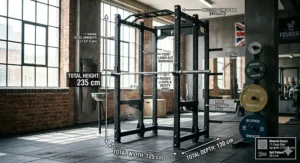
What most UK buyers overlook is that commercial-grade doesn’t necessarily mean “for gyms only.” Rather, it signifies construction standards designed for intensive daily use—precisely what serious home lifters need. The 50x70mm steel tubing you’ll find on proper commercial racks versus the flimsy 40x40mm on budget models might seem like marketing jargon, but that difference translates directly into stability when you’re loading 200kg+ onto the bar.
British homes present unique challenges too. Lower ceiling heights in older terraced properties, limited garage space, and the ever-present damp climate mean your power rack needs to fit compact British dimensions whilst resisting rust from our perpetually moist air. Commercial-grade powder coating isn’t just about looking smart—it’s essential protection against the condensation that forms in unheated garden gyms during our long, damp winters. Understanding proper strength training equipment fundamentals helps you distinguish marketing claims from genuine commercial-grade construction.
This guide examines seven commercial-grade options available on Amazon.co.uk, from budget-conscious models around £140 to professional-spec cages approaching £600. Each has been evaluated not just on specifications, but on real-world performance in British home gym conditions.
Quick Comparison: Top Commercial Power Racks at a Glance
| Model | Weight Capacity | Steel Gauge | Cable System | Price Range (GBP) | Best For |
|---|---|---|---|---|---|
| ZERELEK RSI-K3 | 680kg (1500lbs) | 50x70mm commercial | Dual cable crossover | £450-£550 | Serious lifters wanting gym-quality |
| SPORTNOW 3-in-1 Smith | 250kg | 50x50mm steel | Dual pulley system | £320-£400 | Multi-function training |
| Phoenix Fitness Power Rack | 250kg | Standard gauge | Cable pulley included | £200-£270 | All-round home use |
| Strongway Multi-Gym | 250kg | Heavy-duty steel | Dual cable pulley | £230-£300 | Value with versatility |
| SPORTNOW Cable Crossover | 300kg | Commercial steel | Full cable system | £280-£350 | Cable exercise enthusiasts |
| GYM MASTER GM1 | 260kg | Standard gauge | Optional dual pulley | £200-£260 | Budget commercial option |
| BodyTrain Professional | 250kg | Heavy-duty square | Cable system | £140-£180 | Tight budgets |
💬 Just one click — help others make better buying decisions too! 😊
Top 7 Commercial Grade Power Racks: Expert Analysis
1. ZERELEK RSI-K3 Power Cage
The ZERELEK RSI-K3 represents the pinnacle of home gym commercial equipment, constructed from 50x70mm steel tubing that’s notably thicker than the industry-standard 50x50mm. This translates to a 680kg (1500lbs) weight capacity that puts it firmly in professional gym territory. At 218cm tall, 173cm long, and 189cm wide, it demands space but rewards you with rock-solid stability even during explosive movements.
The dual cable crossover system isn’t an afterthought bolted onto a basic cage—it’s integrated into the design with upgraded sliding sleeves and a pulley system that handles both 25mm and 50mm Olympic plates. Most UK buyers underestimate how much versatility this adds. You’re not just getting a squat rack; you’re getting lat pulldowns, cable flyes, tricep extensions, and dozens of accessory movements that’d normally require separate machines.
For British home gyms, particularly in converted garages or garden rooms, the 116kg weight of this beast actually works in your favour. It won’t shift during heavy lifts, and whilst assembly takes patience, the result is genuinely commercial-grade stability. The powder coating has proven resilient against the condensation issues that plague unheated UK gym spaces during winter months.
UK reviewers consistently praise the value proposition—you’re paying £450-£550 for equipment that’d cost £800+ from traditional fitness retailers. The only real consideration is space; this isn’t for compact flats or small spare bedrooms.
Pros:
✅ Genuine commercial 680kg capacity handles serious powerlifting
✅ Integrated cable system saves buying separate machines
✅ 50x70mm tubing provides exceptional stability
Cons:
❌ Requires significant floor space (nearly 2 metres square)
❌ Assembly is time-consuming with numerous parts
Price verdict: Around the £450-£550 range—premium pricing justified by professional-grade construction and multi-functionality.

2. SPORTNOW 3-in-1 Smith Machine Power Cage
The SPORTNOW 3-in-1 combines a power cage, Smith machine, and cable station into one footprint-efficient unit. Built from 50x50mm steel tubing, it offers 250kg capacity which suits most home lifters perfectly—you’d need to be squatting Olympic-level weights before maxing this out.
What sets this apart is the Smith machine integration. Whilst purists debate Smith machines versus free weights, the reality for UK home gym owners is practical: when you’re training alone at 6am in a cold garage, the Smith machine’s fixed bar path lets you push harder on bench press without needing a spotter. The barbell height adjusts across 17 positions from 25cm to 185cm, accommodating everyone from teenagers to tall users comfortably.
The dual cable system accepts both 25mm and 50mm weight plates, loading up to 25kg per side for resistance training. This matters more than you’d think—being able to use your existing Olympic plates rather than buying separate weight stacks saves considerable money and space.
At 225cm tall, it fits standard UK ceiling heights with room to spare, though you’ll want to measure carefully if you’re in an older property with lower ceilings. The 165cm width means it’ll dominate a single garage bay, but that’s the trade-off for getting three pieces of equipment in one frame.
British buyers particularly appreciate that it ships from UK warehouses with Prime-eligible delivery, meaning you’re not waiting weeks for container shipments or paying import duties on EU/US equipment.
Pros:
✅ Smith machine adds safety for solo heavy lifting
✅ 17 height positions accommodate various user heights
✅ Dual-purpose Olympic plate compatibility saves money
Cons:
❌ Smith machine bar path restricts natural movement
❌ Takes considerable assembly time and patience
Price verdict: The £320-£400 range represents solid value for genuine 3-in-1 functionality rather than compromised multi-purpose equipment.
3. Phoenix Fitness Power Rack
Phoenix Fitness has established itself as Britain’s go-to brand for no-nonsense home gym equipment, and their power rack continues that tradition. With 250kg capacity across 13 adjustable levels, this rack handles everything from beginner bench pressing to intermediate powerlifting without pretending to be commercial gym equipment.
The included cable pulley system, straight bar, wide lat pulldown bar, J-cups, spotter arms, and multi-grip pull-up bars make this genuinely complete out of the box. You’re not discovering hidden costs for “essential accessories” after purchase—a refreshing change in the home gym market.
Dimensions of 110cm wide, 140cm deep, and 205-220cm tall make this one of the more compact commercial-grade options, fitting comfortably into typical UK garage bays or spare bedrooms. The adjustable height range means you won’t be doing half-squats because your ceiling’s too low—a real problem in older British homes.
What Phoenix gets right for the UK market is realistic pricing without sacrificing essentials. The powder coat finish resists rust reasonably well in damp conditions, though storing in a heated space obviously helps. The spotter arms inspire genuine confidence, which matters enormously when you’re grinding out that final rep without a training partner.
Customer feedback from UK buyers highlights solid build quality relative to price, though this isn’t the rack for someone planning to compete in powerlifting. It’s for serious home trainers who want commercial durability without commercial prices.
Pros:
✅ Complete accessory package included at purchase
✅ Compact footprint suits typical UK spaces
✅ 13 adjustment levels for precise positioning
Cons:
❌ 250kg capacity limits advanced powerlifters
❌ Cable system less sophisticated than premium models
Price verdict: The £200-£270 bracket offers exceptional value for intermediate lifters prioritising completeness over ultimate capacity.
4. Strongway Multi-Gym Power Cage
The Strongway Multi-Gym deserves attention for delivering commercial-gym features at decidedly non-commercial pricing. Standing 205cm tall and 140cm deep with a 250kg capacity, it occupies the sensible middle ground between budget compromises and premium extravagance.
The dual cable pulley system distinguishes itself by accepting both 25mm and 50mm Olympic weight plates up to 100kg load. This flexibility matters in practice—you’re not locked into one plate type, and you can progressively load the cables as your strength increases without buying new equipment.
Strongway’s steel J-cups include safety locks, a detail that sounds minor until you’ve experienced a loaded bar rolling forward during a failed squat. The rear weight plate storage pins add stability during bodyweight exercises whilst keeping your training area organised—valuable in British homes where space comes at a premium.
At 107cm width, this ranks among the narrower commercial racks, fitting into tighter spaces without sacrificing essential functionality. The footprint efficiency particularly suits terraced house conversions or single-garage setups where every centimetre counts.
UK delivery through Amazon Prime means next-day availability in most postcodes, removing the uncertainty of extended shipping times. Assembly requires patience but isn’t overly complicated, with clear instructions that don’t assume mechanical expertise.
Pros:
✅ Dual cable system with 100kg capacity per side
✅ Narrow 107cm width maximises floor space
✅ Built-in plate storage enhances stability
Cons:
❌ Some users report cable system requires break-in period
❌ Assembly instructions could be more detailed
Price verdict: Around £230-£300 positions this as outstanding value for multi-function training in space-limited UK homes.
5. SPORTNOW Cable Crossover Power Rack
This SPORTNOW variant prioritises cable training versatility over pure powerlifting capacity, though its 300kg rating still accommodates serious strength work. The full cable crossover system with lat pulldown, landmine attachment, and T-bar row capability transforms this into a complete commercial-style gym station.
Standing 220cm tall and spanning 168cm long by 165cm wide, it requires dedicated floor space but justifies that footprint with exceptional exercise variety. The cable system’s smooth operation—achieved through quality pulleys rather than cheap alternatives—makes the difference between equipment you’ll use daily and kit that gathers dust.
What British home gym owners appreciate most is the integrated plate storage that keeps Olympic discs organised whilst adding ballast to the frame. When you’re performing explosive cable movements, that extra stability prevents the wobble that undermines both safety and performance.
The multi-grip pull-up bar at the top isn’t decorative; it genuinely accommodates wide-grip, narrow-grip, and neutral-grip variations. For UK users tired of standard gyms’ limited pull-up options, this alone justifies consideration.
Assembly demands several hours and ideally two people, but the robust construction rewards that initial investment. The powder coating handles typical British garage conditions reasonably well, though as with any steel equipment, some preventative rust treatment makes sense in particularly damp environments.
Pros:
✅ Comprehensive cable system covers major muscle groups
✅ 300kg capacity exceeds most home training needs
✅ Integrated storage maintains training area organisation
Cons:
❌ Substantial footprint demands dedicated space
❌ Premium cable features increase price point
Price verdict: The £280-£350 range reflects genuine multi-gym capability without requiring separate cable machines.

6. GYM MASTER GM1 Power Rack
The GYM MASTER GM1 targets budget-conscious UK buyers who refuse to compromise on commercial-grade essentials. Its 260kg capacity sits comfortably above typical home rack specifications, whilst the 21 height adjustment positions provide exceptional positioning flexibility—more than many premium competitors.
This represents the minimum entry point for genuine commercial-grade construction without descending into fitness toy territory. The steel tubing withstands regular heavy use, though it’s visibly lighter gauge than the ZERELEK or premium SPORTNOW models.
The optional dual pulley cable system adds versatility without inflating the base price—smart for buyers uncertain whether they’ll use cable training extensively. Starting with the basic cage around £200-£260 lets you add the pulley system later if desired, spreading costs across time.
For British properties with standard ceiling heights, the dimensions accommodate typical garage conversions or spare bedroom gyms without requiring architectural compromises. The compact footprint particularly suits flats or terraced houses where dedicated gym space competes with other household needs.
UK customer feedback emphasises solid value for money, with realistic expectations about what £200-£260 delivers. This isn’t heirloom equipment you’ll pass to grandchildren, but it’s thoroughly adequate for years of progressive training before outgrowing its capacity.
Pros:
✅ 21 height positions offer exceptional adjustability
✅ Optional cable system provides upgrade path
✅ Budget-friendly entry to commercial-grade territory
Cons:
❌ Basic feature set lacks included accessories
❌ Lighter construction than premium competitors
Price verdict: Around £200-£260 represents the sweet spot for beginners to intermediate lifters prioritising essential functionality over comprehensive features.
7. BodyTrain Heavy Duty Professional Power Rack
The BodyTrain Professional occupies the crucial budget category without the usual compromises that plague cheap equipment. Its 250kg capacity matches racks costing twice the price, whilst the included cable system adds versatility that’d typically require separate purchases.
Heavy-duty square steel tubing provides stability that contradicts the modest price point. The chip-resistant black paint finish withstands typical British garage conditions better than you’d expect from budget equipment, though proper storage away from direct weather exposure obviously extends lifespan.
The extra-wide stance and non-slip feet deliver genuine stability during heavy lifts—no wobbling or shifting that destroys confidence mid-set. Adjustable barbell holders and safety spotter rails accommodate various user heights and exercises, making this suitable for household members of different sizes.
At £140-£180, this represents the absolute floor for legitimate commercial-grade equipment. You’re getting proper safety features and adequate capacity for years of progressive training, provided you’re realistic about your current and near-future strength levels.
British buyers particularly value the straightforward assembly and compact footprint that fits typical UK property constraints. This isn’t trying to be everything to everyone; it’s focused on delivering core power rack functionality at minimum viable cost.
Pros:
✅ Outstanding value at £140-£180 price point
✅ 250kg capacity exceeds entry-level alternatives
✅ Wide stance provides unexpected stability
Cons:
❌ Basic cable system lacks premium smoothness
❌ Limited accessories compared to mid-range options
Price verdict: The £140-£180 range makes commercial-grade training accessible to budget-conscious UK lifters willing to accept fewer frills.
✨ Don’t Miss These Exclusive Deals!
🔍 Take your strength training to the next level with these carefully selected products. Click on any highlighted item to check current pricing and availability on Amazon.co.uk. These picks will help you find exactly what you need!
Setting Up Your Commercial Power Rack: UK-Specific Considerations
Installing a commercial power rack in a British home demands different thinking than simply bolting together the frame. Our unique property constraints—lower ceiling heights in period homes, damp garage conditions, and compact floor space—require specific approaches.
Ceiling Height Calculations
Measure your actual ceiling height precisely, then subtract 15-20cm for overhead clearance during pull-ups and Olympic lifts. Most UK terraced houses built pre-1960 feature 230-240cm ceilings, whilst newer builds often exceed 250cm. Your power rack’s stated height doesn’t account for the bar extending above the frame during overhead presses.
Floor Protection and Noise Reduction
Concrete garage floors and upstairs bedroom installations benefit enormously from proper rubber flooring. Interlocking gym mats (available for around £30-£50 for 24 square feet) absorb impact, reduce noise transmission to neighbours, and protect flooring from dropped weights. This matters particularly in terraced housing or flats where noise complaints damage relationships. Understanding your obligations under UK health and safety regulations for fitness equipment helps prevent issues before they arise.
Rust Prevention in British Conditions
Our perpetually damp climate attacks unprotected steel relentlessly. Beyond the manufacturer’s powder coating, consider these preventative measures:
- Wipe down the rack weekly with a dry cloth to remove moisture
- Apply a thin coat of WD-40 or similar to moving parts monthly
- Store weight plates vertically rather than stacked to prevent rust transfer
- Use a dehumidifier in unheated spaces during winter months
Bolt-Down Considerations
Whilst most racks include floor bolting options, concrete drilling in rental properties raises complications. Freestanding operation works adequately for most home training, provided you add sufficient weight plate storage to the frame for ballast. If you own the property, bolting down dramatically improves stability for dynamic movements and heavy lifts.
Real-World Training Scenarios: Matching Racks to UK Lifters
The London Commuter Converting a Spare Bedroom
Sarah, a financial analyst in Zone 2, transformed her 3×3 metre spare bedroom into a functional gym. The Phoenix Fitness Power Rack fit perfectly with its 110cm width, leaving room for a bench and minimal weight storage. The 205cm height cleared her 240cm ceiling comfortably, whilst the included cable system eliminated needing separate machines. Total investment around £450 including bench and weights—equivalent to 8 months of London gym membership.
The Manchester Couple Sharing a Garage Gym
James and Rebecca needed equipment accommodating her 165cm height and his 190cm frame. The SPORTNOW 3-in-1 Smith Machine with 17 adjustment positions solved this perfectly. The Smith machine function let Rebecca bench press safely whilst James was at work, whilst both use the power cage for squats. The £380 investment splits between two users, and they’ve saved £120 monthly in combined gym fees.
The Peak District Powerlifter Training Rural
David’s converted barn gym needed serious capacity for his 180kg squat and 140kg bench press. The ZERELEK RSI-K3 with 680kg rating provides headroom for years of progression. Living 45 minutes from the nearest proper gym, the £520 investment paid back within months through saved petrol and gym fees. The robust construction withstands his barn’s temperature fluctuations and occasional dampness.
These examples illustrate how matching equipment to actual circumstances—not aspirational goals—produces better outcomes than simply buying the most expensive option.

How to Choose Commercial Grade Power Racks in the UK
Selecting commercial-grade equipment requires evaluating six critical factors beyond marketing claims and flashy features.
1. Weight Capacity Reality Check
Manufacturers rate capacity, but your practical needs differ. Calculate your heaviest planned lift (typically back squat), add 25% for progression over 2-3 years, then add another 20% safety margin. A 150kg squatter needs minimum 250kg capacity; a 200kg squatter genuinely requires 350kg+ rating.
2. Steel Tubing Gauge Assessment
Commercial-grade starts at 50x50mm steel tubing with 2.5mm wall thickness. Premium models use 50x70mm or even 75x75mm tubing. This isn’t just marketing—thicker tubing directly correlates with stability under load and longevity under repetitive stress.
3. British Property Dimension Matching
Measure your available space’s height, width, and depth, then subtract 20cm from each dimension for access and safety clearance. Power racks specified at 220cm tall need 240cm+ ceiling height for comfortable use. Remember that door frames, boiler placements, and electrical boxes reduce usable space beyond simple floor measurements.
4. Cable System Sophistication
Budget cable systems use basic pulleys that create friction and inconsistent resistance. Commercial systems employ bearing-based pulleys with industrial-grade cables. Test videos on Amazon product pages often reveal jerky budget cables versus smooth premium systems. This difference determines whether you’ll actually use cable functions or avoid them.
5. Accessory Completeness vs Modularity
Complete packages like the Phoenix Fitness include everything immediately, whilst modular systems like the GYM MASTER let you add features progressively. Complete suits buyers wanting functional gyms immediately; modular benefits those spreading costs across time or uncertain about long-term cable training commitment.
6. UK Warranty and Support Access
Commercial-grade equipment from Amazon.co.uk sellers typically offers 12-month minimum warranty, with premium brands extending to 24-36 months. Crucially, verify UK-based customer service rather than overseas support requiring international shipping for replacement parts. Strongway and Phoenix Fitness maintain UK operations; some brands redirect to EU or US service centres.
Common Mistakes When Buying Commercial Power Racks
Even experienced UK gym enthusiasts make predictable errors when transitioning from commercial gym memberships to home setups.
Underestimating Space Requirements
The rack’s dimensions don’t tell the full story. You need clearance for:
- Loading and unloading plates (50-60cm each side)
- Entering and exiting the cage (40cm front and back)
- Bench positioning for bench press (120cm+ front clearance)
- Olympic bar on the floor (220cm length when loaded)
That “compact” 110cm wide rack actually demands 220cm+ width for functional training. Measure twice, order once.
Ignoring Cable System Quality
Budget racks advertise “cable systems included!” but use £15 pulleys that’d feel rough in a budget hotel gym. Commercial cables glide smoothly through thousands of reps; cheap alternatives create friction, inconsistent resistance, and eventual cable fraying. This single component determines whether cable training becomes a core part of your routine or something you avoid.
Overlooking UK Voltage and Electrical Compatibility
Some imported equipment—particularly with electronic displays or motorised functions—arrives configured for 110V US power rather than UK 230V. Whilst rare on Amazon.co.uk listings, verify electrical specifications on any rack with powered features. Adapters introduce failure points; proper UK compatibility matters.
Neglecting UKCA Certification
Post-Brexit, fitness equipment sold in Britain should carry UKCA (UK Conformity Assessed) marking rather than just CE marking. This certification confirms compliance with UK safety standards. Most major brands on Amazon.co.uk maintain proper certification, but grey-market imports occasionally slip through. Check product specifications or contact sellers directly.
Assuming “Commercial Grade” Means Indestructible
Commercial-grade indicates construction standards, not immunity to misuse. Dropping loaded barbells directly onto J-cups from height, exceeding weight ratings, or storing equipment in directly weather-exposed locations degrades even premium equipment. Commercial-grade withstands proper heavy use; it’s not designed for abuse.
Buying Before Understanding Assembly Requirements
YouTube assembly videos reveal reality beyond instruction manuals. The ZERELEK takes 4-6 hours with two people; the BodyTrain manages in 2-3 hours solo. Some require specific tools beyond basic spanners. Investigate assembly complexity before ordering, particularly if you’re in a flat without convenient assembly space or tool access.
Long-Term Cost Analysis: Commercial Racks vs Gym Memberships in the UK
Running actual numbers demolishes the “gym membership is cheaper” myth that persists in British fitness discussions.
Five-Year Total Cost Comparison
Average UK gym membership: £40-£65 monthly (£480-£780 annually)
- Basic chain gym: £35-£45/month
- Mid-range facility: £50-£70/month
- Premium gym: £80-£120/month
Home Gym Investment (Commercial Power Rack Setup)
- Quality commercial rack: £250-£450
- Olympic barbell (20kg): £120-£180
- Weight plates (140kg): £180-£280
- Adjustable bench: £100-£200
- Rubber flooring: £60-£100
- Total initial investment: £710-£1,210
Break-Even Timeline
Against £50/month gym membership: 14-24 months payback Against £35/month budget gym: 20-35 months payback
Beyond break-even, you’re banking £420-£780 annually whilst maintaining 24/7 access without commute time.
Hidden Gym Membership Costs Often Ignored
- Petrol/transport: £20-£40 monthly (£240-£480 annually)
- Additional time value: 30-60 minutes travel per session
- Parking fees in city centres: £3-£5 per visit
- Forgotten direct debits during holidays/illness
Home Gym Ongoing Costs
- Electricity (lighting/heating): £10-£25 monthly
- Maintenance and replacement parts: £20-£50 annually
- Additional equipment purchases: £100-£300 over five years
Even accounting for ongoing costs, home gym ownership saves £1,500-£3,500 over five years compared to mid-range membership—more than enough to upgrade equipment or expand your setup. The commercial-grade rack purchases itself through avoided membership fees whilst appreciating in utility rather than depreciating.
UK Regulations, Safety Standards & Legal Requirements
Operating strength training equipment in UK properties involves specific legal and safety considerations beyond simply assembling a rack.
UKCA Marking Requirements
Since January 2023, fitness equipment sold in Great Britain must carry UKCA (UK Conformity Assessed) marking, replacing the EU’s CE mark. This certification confirms compliance with UK safety regulations regarding structural integrity, electrical safety (where applicable), and manufacturing standards. Understanding fitness equipment standards and certifications helps you verify that equipment meets legitimate safety requirements. Most Amazon.co.uk sellers handle compliance, but verify UKCA marking on product specifications.
Northern Ireland follows different rules under the Protocol, potentially requiring both UKCA and CE marking for equipment destined there. If ordering to NI addresses, confirm marking requirements with sellers.
BS EN 957 Safety Standard
British Standard EN 957 establishes safety requirements for stationary training equipment. Commercial power racks should meet Class S (studio/commercial use) specifications rather than Class H (home use only). The distinction affects structural load testing requirements, durability testing cycles, safety mechanism specifications, and instruction manual detail. The British Standards Institution maintains these standards, and reputable manufacturers reference BS EN 957 compliance in technical documentation, though budget equipment sometimes lacks proper testing certification. Additionally, ukactive standards provide guidance for fitness facility operators on equipment safety and quality benchmarks.
Home Insurance Implications
Installing commercial-grade gym equipment may trigger home insurance disclosure requirements. Whilst a single power rack rarely affects premiums, comprehensive home gyms potentially:
- Increase property value requiring coverage adjustment
- Create liability considerations if others use equipment
- Affect claims if floor damage occurs from equipment weight
Contact your insurer before major gym installations, particularly in flats or properties with special construction.
Structural Load Considerations
A loaded power rack with user can exceed 500kg concentrated on 1-2 square metres. Ground floor installations on concrete foundations pose no issues, but:
- First-floor bedroom gyms may require structural assessment
- Older properties with traditional floor joists need loading verification
- Flats in conversions must verify floor loading capacity
Building Regulations Part A (Structure) establishes minimum floor loading at 1.5kN/m² for residential use, but concentrated gym equipment loads may exceed this. Local Building Control can advise on specific property assessments.
Noise and Nuisance Regulations
Terraced housing and flats raise neighbour disturbance considerations under Environmental Protection Act 1990 provisions. Reasonable gym noise during daytime hours (07:00-23:00) rarely constitutes statutory nuisance, but dropping weights repeatedly creates actionable disturbance, early morning or late evening training (before 07:00, after 23:00) increases complaint risk, and flats with weak sound insulation may require extra floor dampening. Rubber gym flooring and considerate training hours prevent most issues, but understanding your legal position helps if disputes arise.
FAQ: Commercial Grade Power Racks UK
❓ Are commercial grade power racks worth the extra cost for home gyms?
❓ What weight capacity do I actually need for a home power rack in the UK?
❓ Will a commercial power rack fit in a standard UK garage?
❓ Do I need to bolt commercial power racks to the floor?
❓ How do UK power rack prices compare to buying from EU or US sellers?
Conclusion: Selecting Your Commercial Grade Power Rack
Choosing commercial grade equipment for a British home gym represents a significant investment that’ll shape your training for years. The distinction between genuine commercial-grade construction and marketing hyperbole determines whether you’re buying once or repeatedly replacing inadequate equipment.
For most UK home lifters, the sweet spot sits around £250-£350, where brands like Phoenix Fitness, SPORTNOW, and Strongway deliver legitimate commercial durability without premium pricing. These racks handle years of progressive training through intermediate and advanced strength levels, fitting typical British property constraints whilst resisting our challenging climate conditions.
Serious powerlifters planning decade-long training progressions benefit from investing £450-£550 in equipment like the ZERELEK RSI-K3, where the 680kg capacity and robust 50x70mm steel construction provide genuine commercial gym quality. The premium pays itself back through longevity and superior training experience.
Budget-conscious beginners can enter commercial-grade territory around £140-£180 with options like the BodyTrain Professional, provided expectations remain realistic about capacity and features. This tier offers tremendous value for intermediate strength levels, with upgrade paths available as training progresses.
The commercial grade designation matters beyond simple marketing. It signifies construction standards proven through intensive daily use, safety mechanisms tested to legitimate specifications, and durability that withstands British climate challenges. Choosing based on actual needs rather than aspirational goals—matching capacity to realistic strength progression, dimensions to available space, and features to training style—produces better outcomes than simply buying the most expensive or heavily marketed option.
Your power rack becomes the anchor of your home gym, the equipment you’ll use thousands of times over years of training. Investing in genuine commercial grade quality transforms this from a convenience purchase into a long-term training partner that supports your strength goals reliably day after day.
Recommended for You
- 7 Best Power Rack for Home Gym UK: Expert Reviews 2026
- 7 Best Heavy Duty Assault Bike for CrossFit at Home UK 2026
- 7 Best SkiErg Alternative Cheaper UK Home Gym Options (2026 Guide)
Disclaimer: This article contains affiliate links. As an Amazon Associate, I earn from qualifying purchases. If you purchase products through these links, we may earn a small commission at no additional cost to you.
✨ Found this helpful? Share it with your mates! 💬🤗
