In This Article
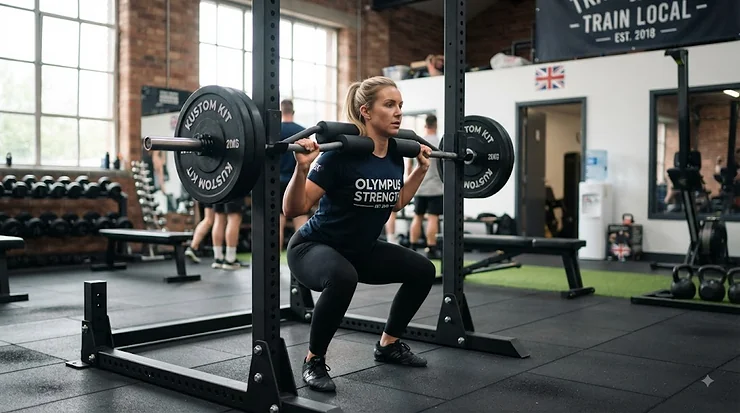
There’s a particular frustration familiar to any lifter with cranky shoulders: you love squatting, your legs are ready to work, but getting a straight barbell into a comfortable position across your back feels like negotiating with your own joints. A safety squat bar solves that problem in a genuinely clever way — instead of gripping a straight bar behind your neck, you rest your shoulders inside a padded yoke with forward-facing handles, so your wrists, elbows and shoulders never have to twist into an uncomfortable position at all.
So, what is a safety squat bar (SSB), exactly? It’s a specialty barbell with a U-shaped, cambered yoke that sits across the upper back and shoulders, paired with forward handles you hold in front of your chest rather than gripping behind you, shifting the load and squat mechanics compared with a standard straight bar.
This guide covers seven real, currently available safety squat bars sold in the UK, from genuinely affordable Olympic-spec bars through to premium options with interchangeable handles, plus honest, research-backed detail on camber, shoulder mobility, and whether an SSB is a real substitute for a yoke bar.
Quick Comparison Table
| Category | Example Bar | Price Range | Best For |
|---|---|---|---|
| Budget attachment-style | VEVOR Safety Squat Bar | around £150-£220 | testing the SSB feel on a tight budget |
| Entry-level Olympic | Mirafit SSB1 | around £180-£240 | beginners and intermediate lifters |
| UK-made mid-range | Bulldog Gear Safety Squat Bar | around £280-£340 | serious home-gym owners wanting a UK brand |
| Heavy-duty mid-range | Mirafit SSB2 | around £320-£380 | lifters loading heavier weights regularly |
| Premium rackable | Titan Fitness Rackable Safety Squat Bar | around £350-£420 | buyers wanting a deep camber and premium pads |
Looking at the spread above, the real dividing line between budget and premium safety squat bars isn’t whether they “work” — it’s shaft thickness, sleeve length, pad quality and camber depth. A thin, lightweight budget bar will get you squatting comfortably; a heavier-gauge premium bar holds up better under years of heavy, repeated loading.
💬 Just one click — help others make better buying decisions too!😊
Top 7 Safety Squat Bars: Expert Analysis
Below is a closer look at seven real safety squat bars currently available in the UK, spanning budget to premium, with honest analysis on who each one actually suits.
1. VEVOR Safety Squat Bar — the honest budget entry point
The VEVOR Safety Squat Bar is a straightforward attachment-style SSB, built from steel with a chrome finish and shoulder-and-arm pads over a cambered shaft, available in variants rated up to 700lb or 1,500lb depending on the listing. What stands out about this bar is simply that it delivers the basic safety-squat format — padded yoke, forward handles, cambered shape, 2-inch Olympic-compatible sleeves — at a genuinely low price point, letting new buyers test whether the SSB movement pattern suits them before committing to a pricier specialty bar. Based on the spec comparison with premium bars later in this guide, the trade-off here is shaft thickness and pad density rather than the fundamental mechanics, which remain broadly similar across the category. Reviewers consistently note that it’s “half the price of other SS bars” and adequate for general lifters, while flagging that padding thickness and finish quality sit below dedicated strength-equipment brands. This is a sensible pick for anyone unsure whether they’ll use an SSB regularly enough to justify a premium purchase.
Pros:
- ✅ Genuinely low entry price for testing the SSB movement
- ✅ Available in multiple load-rated variants
- ✅ Basic safety-squat format present: yoke, handles, camber
Cons:
- ❌ Padding and finish quality below dedicated strength brands
- ❌ Listing variants can differ significantly, so check specs carefully
Typically priced around £150-£220, the VEVOR Safety Squat Bar is the pick for buyers who want to try the SSB pattern without a big initial outlay.
2. Mirafit SSB1 — a genuine UK-brand entry-level Olympic bar
The Mirafit SSB1 is a 7ft Olympic safety squat bar from a UK-based strength equipment brand, designed to fit standard 2-inch Olympic weight plates and compatible with Mirafit’s full power rack range. What most buyers overlook about entry-level SSBs specifically is that fit and finish matter more than raw capacity for most home-gym lifters, since very few people are loading an SSB anywhere near a straight bar’s working weight in the first place. Based on the spec comparison with the heavier-duty Mirafit SSB2, the SSB1 suits beginners and intermediate lifters rather than those chasing maximal loads, given its lighter shaft construction. Reviewers consistently highlight the responsive UK-based customer service and describe the bar as “well-balanced” and “built to last” for the price, with some noting it as one of the first specialty bars they bought and finding it invaluable for training around shoulder or neck restrictions.
Pros:
- ✅ UK-based brand with responsive customer service
- ✅ Compatible with all Mirafit power racks and standard Olympic plates
- ✅ Genuinely useful for lifters with shoulder mobility restrictions
Cons:
- ❌ Lighter-duty shaft than the SSB2, less suited to very heavy loading
- ❌ Fixed sleeves on some variants limit compatibility with certain plate types
At around £180-£240, the Mirafit SSB1 offers a solid, UK-supported route into safety squat bar training.
3. Bulldog Gear Safety Squat Bar — a well-built mid-range UK option
The Bulldog Gear Safety Squat Bar is a 2.19m, 21kg chrome-finished bar rated to a 300kg maximum load, with a 325mm loadable sleeve length on each side compatible with standard Olympic 2-inch plates. Here’s what to weigh before buying: the chrome finish looks sharp out of the box but, based on customer feedback patterns, benefits from being kept dry and wiped down after sweaty sessions to avoid surface rust developing over time — a maintenance point worth knowing rather than a flaw unique to this bar. Reviewers consistently describe the bar spin and aggressive knurling as genuinely impressive for the price, alongside comfortable padding and handle positioning, with occasional reports of packaging arriving in rough condition. This is a strong pick for UK buyers who specifically want to support a domestic strength-equipment brand while getting genuinely serious specs.
Pros:
- ✅ Substantial 300kg rated load capacity
- ✅ Aggressive knurling and smooth bar spin noted by reviewers
- ✅ UK-based brand with fast dispatch reported by buyers
Cons:
- ❌ Chrome finish needs drying after sweaty sessions to avoid rust
- ❌ Some reports of rough handling in transit affecting packaging
Priced around £280-£340, the Bulldog Gear Safety Squat Bar rewards buyers who want genuine capacity from a UK-based specialty-bar maker.
4. Mirafit SSB2 — heavier-duty comfort for serious loading
The Mirafit SSB2 steps up from the SSB1 with a heavier-duty 38mm shaft, fixed sleeves, and noticeably thicker shoulder pads aimed at lifters loading meaningfully heavier weights on a regular basis. What most buyers overlook about pad thickness specifically is how much it affects comfort under load rather than just cushioning — a thin pad can dig in and shift under heavy weight, while a genuinely thick pad distributes pressure more evenly across the trapezius and shoulders throughout the full range of the squat. Based on the spec comparison with the standard SSB1, the SSB2’s heavier shaft also reduces flex under load, which matters more as weights increase. Reviewers consistently describe the balance as “perfect throughout the rep” with no feeling of being pulled forward unexpectedly, and several specifically mention returning to pain-free squatting after long-standing shoulder issues once switching to this bar.
Pros:
- ✅ Heavier-duty 38mm shaft reduces flex under load
- ✅ Noticeably thicker shoulder pads for comfort
- ✅ Reviewers report excellent balance throughout the rep
Cons:
- ❌ Fixed sleeves limit compatibility with some non-standard plates
- ❌ Heavier overall bar weight, less easy to manoeuvre solo
At roughly £320-£380, the Mirafit SSB2 suits lifters who’ve outgrown an entry-level bar and want genuine heavy-load comfort.
5. Titan Fitness Rackable Safety Squat Bar — a deep camber with premium pads
The Titan Fitness Rackable Safety Squat Bar features a cambered design with a 5-inch drop, Olympic weight sleeves rated to 1,500lb, HeftyGrip shoulder and arm pads, and 35mm easy-grip handles — a genuinely comprehensive spec sheet for its price bracket. On paper, this means you’re getting a deeper camber than several rivals in this guide, which shifts more of the load forward and increases the “fight to stay upright” training effect that builds upper-back and core strength. Based on the spec comparison with the entry-level bars earlier in this list, the rackable design is a genuinely practical addition, since not every SSB is built to sit securely in standard J-cups without shifting. Independent reviewers have specifically flagged this as a top rackable value pick within the current Amazon-available SSB category, citing the combination of camber, pad quality and sleeve capacity as standing out relative to price.
Pros:
- ✅ 5-inch camber drop, deeper than several rivals
- ✅ Rackable design sits securely in standard J-cups
- ✅ 1,500lb-rated Olympic sleeves, high headroom for capacity
Cons:
- ❌ Deeper camber can feel more demanding for complete beginners
- ❌ Pricier than the entry-level bars in this guide
Typically priced around £350-£420, the Titan Fitness Rackable Safety Squat Bar is the pick for buyers who want a genuinely deep camber training effect without stepping up to the most premium bars available.
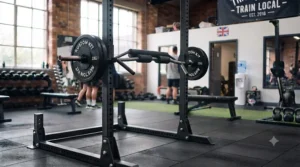
6. Gym Gear Olympic Safety Squat Bar — premium capacity for progressive strength work
The Gym Gear Olympic Safety Squat Bar is built around a substantial 450kg maximum load capacity, aimed at lifters who want serious headroom for long-term progressive strength training rather than a bar they’ll outgrow within a year or two. What most buyers overlook about high load ratings specifically is that the practical benefit isn’t just about lifting more weight — a bar rated well above your working weight also tends to feel stiffer and more stable under moderate loads, since it’s operating well within its structural limits rather than near them. Based on the spec comparison with the mid-range bars in this guide, the Gym Gear Olympic Safety Squat Bar is positioned squarely for serious lifters and small commercial or semi-commercial setups rather than casual users. The bar is designed to shift load toward the quads, glutes and back while reducing shoulder strain, consistent with the broader mechanical purpose of the SSB category as a whole.
Pros:
- ✅ Substantial 450kg maximum load capacity
- ✅ Suited to serious, long-term progressive training
- ✅ UK-based brand with standard delivery terms
Cons:
- ❌ Overkill capacity for casual or occasional users
- ❌ Premium capacity comes with a premium price tag
At around £380-£450, the Gym Gear Olympic Safety Squat Bar suits buyers planning years of progressively heavier training on the same bar.
7. CERBERUS Safety Squat Bar V2 — the most versatile premium option
The CERBERUS Safety Squat Bar V2 stands out from every other bar in this guide by including three interchangeable handle sets as standard — regular handles, spider handles and chain handles — letting you adjust hand position to suit your build, goals, or any tightness and injuries you’re working around. Its camber places the collar below the midline at an angle to the vertical axis, while the bar itself sits slightly higher on the traps than a typical SSB, positioning the load somewhere between a front squat and a high-bar back squat. Based on the spec comparison with single-handle-option bars earlier in this list, the interchangeable handle system is a genuinely meaningful upgrade for lifters who use the bar for multiple purposes beyond squatting, since different handle types suit squats, good mornings and assistance work differently. This design combination — higher shoulder position plus forward-pulling camber — deliberately forces you to fight to stay upright, which is exactly the training effect that builds upper-back and core strength that carries over to straight-bar squatting and deadlifting.
Pros:
- ✅ Three interchangeable handle sets included as standard
- ✅ Versatile beyond squats: assists straight-bar squat and deadlift training
- ✅ Higher shoulder position suits lifters wanting a front-squat-adjacent feel
Cons:
- ❌ Most expensive bar in this guide
- ❌ Handle-swapping adds setup time compared with fixed-handle bars
Priced around £400-£480, the CERBERUS Safety Squat Bar V2 is the splurge pick for lifters who want maximum versatility from a single specialty bar.
Full Spec, Price & Value Comparison
| Bar | Camber/Drop | Price Range | Review Sentiment | Best For |
|---|---|---|---|---|
| VEVOR Safety Squat Bar | Standard camber | around £150-£220 | Praised for low entry price | Testing the SSB movement |
| Mirafit SSB1 | Standard camber | around £180-£240 | Praised for UK support, balance | Beginners, intermediate lifters |
| Bulldog Gear Safety Squat Bar | Standard camber | around £280-£340 | Praised for knurling and spin | UK-brand buyers wanting capacity |
| Mirafit SSB2 | Standard camber, thicker pads | around £320-£380 | Praised for balance under load | Heavier, regular loading |
| Titan Fitness Rackable Safety Squat Bar | 5-inch drop | around £350-£420 | Praised for camber depth, pads | Deeper camber training effect |
| Gym Gear Olympic Safety Squat Bar | Standard camber | around £380-£450 | Praised for high capacity | Long-term progressive training |
| CERBERUS Safety Squat Bar V2 | Deep camber, raised shoulder position | around £400-£480 | Praised for versatility | Multi-purpose, assistance training |
Reading across this table, camber depth and handle versatility track price more closely than raw load capacity — most bars here comfortably exceed what the average home-gym lifter will ever load onto them. Buyers chasing a specific training effect, like the deeper forward lean of the Titan Fitness Rackable Safety Squat Bar or the multi-handle versatility of the CERBERUS Safety Squat Bar V2, should prioritise those design details over chasing the highest capacity number on the spec sheet.
✨ Don’t Miss These Exclusive Deals!
🔍 Take your squat training to the next level with these carefully selected safety squat bars. Click through to check current pricing and availability, and find the camber and capacity that fits your training goals.
Setting Up and Using Your Safety Squat Bar
Getting comfortable with a new safety squat bar takes a genuinely different adjustment period than switching between straight bars, because the yoke position and forward lean change your balance point entirely. Start with noticeably lighter weight than your straight-bar squat for the first few sessions — even experienced lifters typically need to reduce load meaningfully when trying an SSB for the first time, since research has found competitive powerlifters squatted around 11% less on a 3-rep max with a safety bar compared with a standard barbell.
A common mistake in the first 30 days is racking and unracking the bar exactly like a straight barbell. Because the camber shifts the centre of mass forward, it’s worth practising the walkout with an empty bar first, focusing on bracing your core and upper back before adding weight. For ongoing care, wipe chrome-finished bars like the Bulldog Gear Safety Squat Bar dry after sweaty sessions to prevent surface rust, and periodically check handle bolts on interchangeable-handle bars like the CERBERUS Safety Squat Bar V2, since repeated handle swaps can gradually loosen fixings if not retightened.
Who Actually Suits a Safety Squat Bar? Real-World Scenarios
The lifter with chronic shoulder discomfort: if straight-bar back squats consistently aggravate your shoulders, something like the Mirafit SSB2 or CERBERUS Safety Squat Bar V2 removes the need to twist your wrists and elbows into an uncomfortable rack position entirely.
The beginner testing whether specialty bars are worth the investment: the VEVOR Safety Squat Bar or Mirafit SSB1 offers a low-risk way to try the SSB movement pattern before committing to a premium purchase.
The lifter chasing more upper-back and core engagement: the deeper camber of the Titan Fitness Rackable Safety Squat Bar deliberately increases the “fight to stay upright” effect, building trunk strength that carries over to straight-bar work.
The versatile home-gym owner using one bar for multiple movements: the CERBERUS Safety Squat Bar V2‘s interchangeable handles suit squats, good mornings and assistance work equally well, making it genuinely useful beyond squat day alone.
Problem → Solution: Fixing Common Safety Squat Bar Issues
Problem: the bar feels like it’s pulling you forward unexpectedly. This is a normal characteristic of the camber design, not a fault. Reduce the weight significantly on your first few sessions and focus on bracing your core and upper back before the descent.
Problem: the shoulder pads feel uneven or shift during the lift. Check that the bar is centred before unracking — an off-centre yoke position is a common early mistake that makes the pads feel lopsided even when the padding itself is fine.
Problem: surface rust appears on a chrome-finished bar. Wipe the bar dry immediately after sweaty sessions, and consider a light coat of gun oil or bar wax on chrome-finished bars like the Bulldog Gear Safety Squat Bar if stored in a humid garage gym.
Problem: the handles feel loose after repeated use. On interchangeable-handle bars, periodically check and retighten the handle bolts, since repeated swapping between handle types can gradually loosen fixings over time.
Problem: the bar doesn’t sit securely on rack J-cups. Not every SSB is designed to rack cleanly — rackable-specific designs like the Titan Fitness Rackable Safety Squat Bar are built with this in mind, so check listings carefully if secure racking matters for your setup.
How to Choose a Safety Squat Bar
- Decide why you actually want an SSB. Shoulder pain relief, deeper camber training effect, or general squat variety all point toward slightly different bars within this guide.
- Check your rack’s J-cup compatibility. Not every SSB racks securely in every power rack — look for rackable-specific designs if this matters to you.
- Match load capacity to realistic long-term use, not just current weight. Most home-gym lifters never approach an SSB’s rated maximum, but buying meaningful headroom avoids needing to upgrade later.
- Consider handle style and count. Fixed-handle bars are simpler; interchangeable handle sets like those on the CERBERUS Safety Squat Bar V2 suit lifters using the bar for multiple movements.
- Factor in camber depth deliberately. A deeper camber, like the 5-inch drop on the Titan Fitness Rackable Safety Squat Bar, increases the forward-lean training effect — worth knowing before your first heavy session.
- Check shaft thickness and pad quality if loading heavy. Heavier-duty shafts and thicker pads, like those on the Mirafit SSB2, matter more as working weight increases.
- Buy from a brand with UK-based support if possible. Specialty bars occasionally need warranty support, and UK-based brands like Mirafit and Bulldog Gear tend to resolve issues faster than overseas-only sellers.
Safety Squat Bar vs Straight Barbell
| Feature | Safety Squat Bar | Straight Barbell |
|---|---|---|
| Shoulder/wrist stress | Minimal, forward handles | Requires external or internal rotation |
| Trunk lean | More upright, less forward lean | Greater forward lean, especially low-bar |
| Load on 3RM (research) | Around 11% lower than barbell | Baseline |
| Best For | Mirafit SSB2, CERBERUS Safety Squat Bar V2 | Competition-specific barbell squat training |
The comparison above reflects genuine peer-reviewed findings: a controlled biomechanical study comparing safety-bar, high-bar and low-bar squats found the safety bar’s forward camber and shifted centre of mass placed greater demands on balancing the load, which likely explains the reduced 3-rep max typically seen when switching to an SSB. This isn’t a downside so much as a different training stimulus — the SSB trades some raw loading capacity for reduced joint stress and increased upper-back and core engagement.
SSB Squat Bar Basics: What Actually Makes It “Safety”?
The “safety” in safety squat bar refers specifically to the shoulder and wrist mechanics, not to the load itself — you can still injure yourself training carelessly with any bar. What makes an SSB squat bar distinct is the combination of a padded yoke that distributes weight across the shoulders and upper back, plus forward-facing handles that eliminate the need to externally rotate your shoulders and wrists into a straight-bar rack position. For lifters with existing shoulder restrictions, this design removes an entire category of joint stress from the equation before the actual squatting even begins, which is precisely why physiotherapists and strength coaches so often recommend the SSB as a training tool for lifters working around upper-body limitations.
Safety Squat Bar for Shoulder Pain: Does It Actually Help?
For lifters specifically searching out a safety squat bar for shoulder pain, the honest answer is nuanced: the SSB removes the need for external shoulder rotation during the lift itself, which is genuinely helpful if your pain is specifically triggered by the straight-bar rack position. However, an SSB doesn’t address the underlying cause of shoulder pain, whether that’s rotator cuff irritation, impingement or general stiffness — it simply avoids aggravating it during squats. According to NHS guidance on rotator cuff related shoulder pain, this type of shoulder pain is very common and typically responds to a combination of activity modification, targeted exercise and, where needed, professional assessment — an SSB can sensibly form part of the “activity modification” piece of that puzzle, but it isn’t a substitute for addressing the pain’s root cause. Anyone experiencing ongoing or worsening shoulder pain should speak with a GP or physiotherapist rather than relying on equipment changes alone.
Squat Bar Camber Explained: How the Bend Changes the Lift
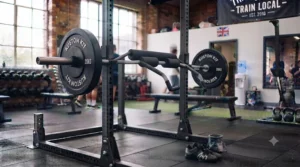
Camber, in the context of a safety squat bar, refers to the forward bend and drop built into the yoke section that sits across your shoulders. This bend shifts the effective centre of mass forward and slightly lower than a straight bar’s position, which is the mechanical reason SSB squats feel meaningfully different from straight-bar squats even at the same working weight. Research comparing squat variations found the safety bar’s camber and shifted centre of mass created greater demands on balance and produced a more upright torso position with less forward trunk lean than a straight barbell, alongside increased lower trapezius activation.
Camber depth varies meaningfully between bars — the standard camber found on entry-level bars like the Mirafit SSB1 creates a moderate forward-lean training effect, while the deeper 5-inch drop on the Titan Fitness Rackable Safety Squat Bar intensifies that effect considerably. Deeper camber generally means more upper-back and core engagement fighting to stay upright, but it also typically means reducing your working weight further compared with a shallower-camber bar, particularly when you’re still adapting to the movement.
Shoulder Mobility Training: Why the Bar Isn’t a Fix for the Root Problem
It’s worth being genuinely honest here: a safety squat bar sidesteps the shoulder mobility demands of a straight-bar squat rather than improving your shoulder mobility itself. If your goal is long-term shoulder mobility training rather than simply avoiding discomfort during squats, dedicated mobility and strengthening work — the kind of graded exercise programmes physiotherapists typically prescribe for shoulder stiffness and rotator cuff-related pain — remains the more direct route to genuine improvement. Using an SSB to keep training squats consistently while you work through a separate shoulder mobility programme is a genuinely sensible combined approach, rather than treating the bar itself as the solution. Several reviewers across the bars in this guide specifically describe returning to pain-free squat training after long-standing shoulder issues once switching to an SSB, which reflects the bar removing an aggravating factor — not the underlying mobility restriction resolving on its own.
Is the Safety Squat Bar a Real Yoke Bar Alternative?
The safety squat bar is sometimes described interchangeably with the term “yoke bar,” and functionally there’s real overlap — both describe a bar that rests across the shoulders inside a padded, U-shaped cradle rather than gripped directly with the hands behind the head. As a yoke bar alternative, the SSB genuinely delivers the core benefit most lifters are after: reduced shoulder and wrist strain from a supported, forward-handle position. Where it differs from some dedicated yoke-carry equipment is in the presence of forward handles at all — the SSB is specifically built for squatting and related barbell movements, while some equipment marketed purely as a “yoke” is designed primarily for loaded carries rather than squats. For home-gym buyers specifically wanting shoulder-friendly squatting rather than strongman-style yoke carries, every bar in this guide functions as a genuine, purpose-built alternative.
Common Mistakes When Buying a Safety Squat Bar
The single most common mistake is assuming every SSB racks the same way in a power rack. Some bars, particularly non-rackable designs, can shift or feel unstable in standard J-cups — checking for a rackable-specific design, like the Titan Fitness Rackable Safety Squat Bar, avoids this frustration entirely.
A second frequent error is buying based on load capacity alone without considering camber depth or pad quality. As covered earlier in this guide, most home-gym lifters never approach an SSB’s rated maximum, so prioritising the wrong spec can mean overpaying for headroom you’ll never use while under-specifying comfort features you’ll notice every single session.
Buyers also commonly underestimate the adjustment period needed when switching from a straight bar, expecting to load similar working weights immediately rather than reducing load for the first few sessions. Finally, many overlook shaft diameter and sleeve length, which affects both grip feel and plate compatibility — worth checking against your existing weight plates before ordering.
Long-Term Cost & Maintenance
Safety squat bars are, on the whole, genuinely low-maintenance pieces of equipment — there are no moving parts beyond rotating sleeves, and most maintenance simply involves keeping chrome finishes dry and periodically checking bolt tightness on interchangeable-handle designs. Independent strength-training analysis of safety-bar research consistently notes that the reduced forward lean and altered muscle activation pattern make the SSB a genuinely useful long-term training tool for reducing lower-back stress, rather than a short-term novelty that gets set aside after a few sessions.
The genuine long-term cost consideration is less about repairs and more about capacity headroom. A budget bar that feels sufficiently challenging now may start to feel limiting as your straight-bar squat strength improves and you naturally load the SSB heavier too — a detail worth factoring into the initial buying decision if you’re already lifting seriously or improving quickly, since stepping up from an entry-level bar to a heavier-duty one like the Mirafit SSB2 or Gym Gear Olympic Safety Squat Bar later effectively means paying twice.
Frequently Asked Questions
❓ Is a safety squat bar good for shoulder pain?
❓ What's the difference between a safety squat bar and a yoke bar?
❓ How much does a decent safety squat bar cost in the UK?
❓ Do I need special handles for a safety squat bar?
❓ Can beginners use a safety squat bar?
Conclusion
Safety squat bars earn their popularity honestly — they solve a genuine, common problem for lifters whose shoulders simply can’t tolerate a straight-bar rack position, while also offering a distinct training stimulus that builds upper-back and core strength in a way straight-bar squats don’t emphasise as directly. Whether you land on the accessible entry point of the Mirafit SSB1, the UK-brand capacity of the Bulldog Gear Safety Squat Bar, or the maximum versatility of the CERBERUS Safety Squat Bar V2, the real decision comes down to why you want an SSB and how heavily you plan to load it over time.
There’s no single “correct” answer among the seven bars covered here — a lifter testing the SSB movement for the first time and a serious trainee chasing years of progressive loading have genuinely different priorities, and this guide has tried to be honest about which bar suits which situation rather than pushing one “best overall” pick. What matters most is matching camber depth, capacity and handle style to your actual training goals, rather than assuming every SSB delivers an identical experience.
Whichever bar you choose, start lighter than your straight-bar squat, practise the walkout with an empty bar first, and give your body a few sessions to adapt to the different balance point before judging the movement.
✨ Ready to Squat Pain-Free?
🔍 Check current pricing and availability on any of the seven safety squat bars covered in this guide, and find the camber, capacity and handle style that actually fits your training.
Recommended for You
- EZ Curl Bar for Home Gym: 7 Best Wrist-Friendly Picks (2026)
- Olympic Barbell 2026: 7 Best Bars for a UK Home Gym
- Barbell Under £150: 7 Brilliant Buys for UK Home Gyms (2026)
Disclaimer: This article contains affiliate links. As an Amazon Associate, I earn from qualifying purchases. If you purchase products through these links, we may earn a small commission at no additional cost to you.
✨ Found this helpful? Share it with your friends! 💬🤗
