

In This Article
Picture it. You hurl a ball at the garage floor with every ounce of Monday-morning frustration, and it rockets straight back at your face like a grudge. That’s a medicine ball doing exactly what it was built to do. A dead bounce slam ball for home gym training does the opposite. It hits the floor with a dull thud and stays put. No chasing, no rebound, no broken light fittings.

The family tree is old. Wikipedia’s medicine ball entry traces the first known US photograph of one to 1866, and the weighted ball has been knocking around gyms, barracks and school halls ever since. The slam ball is its louder, sand-stuffed descendant, made to be thrown down hard rather than passed politely between partners.
So which one deserves your money in 2026? This guide ranks seven real slam balls you can find in the UK, from lightweight starters to heavyweights that could double as doorstops. Everything here rests on spec sheets and aggregated reviewer sentiment. I haven’t swung these balls myself, and I won’t pretend otherwise.
Along the way you’ll get the medicine ball vs slam ball showdown and a frank look at sand-filled vs gel-filled slam balls. You’ll also get advice on garage and concrete floor suitability, plus a ready-made set of HIIT slam ball workouts.
Quick Comparison: 7 Dead Bounce Slam Ball for Home Gym Options
Before the deep dive, here’s the whole field on one screen. Weights and fills come from manufacturer and retailer listings. Prices are ranges only, because they shift constantly, so check the current price before you buy.
| Product | Weights | Shell & Fill | Price Range | Best For |
|---|---|---|---|---|
| Mirafit Tyre Tread Slam Ball | 2–75kg | PVC tyre tread, sand | Budget-to-mid; check current price | Building a graded set |
| REP Fitness Slam Ball | 2–30kg | Thick rubber, sand | Around £20 (2kg) to mid-£60s (30kg) | Long-term durability |
| Fitness-Mad Slam Ball | 4–10kg | Textured PVC, sand | Around £20–£28 (8kg) | Beginners on a budget |
| BodyMax Slam Balls | 3–20kg | Sand-filled | Check current price | Circuit and PT sessions |
| Sveltus Slam Ball | 2–30kg | Rubber, sand | Roughly £25–£35 (10kg) | Compact, tidy storage |
| Yes4All Slam Ball | About 4.5–18kg (10–40lb) | Grooved PVC, sand | Check current price; UK listings vary | Value all-rounder |
| ProsourceFit Tread Slam Ball | About 2.3–23kg (5–50lb) | Tread PVC, sand | Check current price; UK listings vary | Sweaty-hands grip |
Looking at the table, Mirafit Tyre Tread Slam Ball and Sveltus Slam Ball are the only options that run from featherweight up to 30kg or beyond. That makes them the sensible choice if you expect to progress. Fitness-Mad Slam Ball wins on entry price but tops out at 10kg, so strong lifters will outgrow it quickly. Buyers who care most about grip should look at the tread-surfaced ProsourceFit Tread Slam Ball and Mirafit Tyre Tread Slam Ball first.
💬 Just one click — help others make better buying decisions too!😊
Top 7 Dead Bounce Slam Ball for Home Gym Picks: Expert Analysis
1. Mirafit Tyre Tread Slam Ball — widest weight range, 2kg to 75kg
Few ranges climb this high: from a gentle 2kg all the way up to a 75kg monster that one reviewer bought for strongman prep.
The shell is PVC with a tyre-tread pattern, and the sand filling keeps the ball from bouncing or rolling between reps. Mirafit lists the 2kg to 10kg balls at 22cm across, the 12kg to 30kg balls at 30cm, and the 50kg and 75kg versions at 37cm and 39cm. In practice, the jump from 10kg to 12kg isn’t a small step. You’re moving to a visibly bigger ball, so the grip and the overhead feel change.
Based on the spec comparison, this is the pick for people who expect to progress over years. A matched, graded set is easier to build when one brand offers sixteen weights.
Aggregated reviews on Mirafit’s own site average 4.8 out of 5. Buyers praise the no-bounce landing, the tread grip and the toughness. The criticisms are worth reading too. One reviewer found the ball slippery without handles, and another reported a 25kg ball bursting after a year, along with disappointing support. Brand-site reviews also skew positive, so weigh them accordingly.
Pros:
- ✅ Sixteen weights from 2kg to 75kg
- ✅ Tread pattern gives dependable grip
- ✅ Dead landing with no rolling
Cons:
- ❌ Some users find it slippery when sweaty
- ❌ One heavy-ball burst reported after a year
Pricing sits in the budget-to-mid bracket and rises with weight, so check the current price. It’s strong value if you want a graded set.
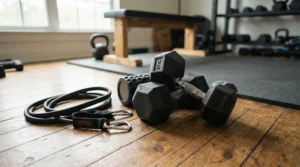
2. REP Fitness Slam Ball — thick rubber shell built to outlast the rest
When reviewers talk about slam balls that survive years of abuse, this is the name that keeps coming up.
REP’s UK range runs from 2kg to 30kg. BarBend named it its best overall pick, praising the heavy-duty double-thick rubber shell. Slam balls of this style generally include a valve that releases internal pressure, which helps prevent the shell splitting under repeated impacts. Practically, that means fewer worries about a leak after a few hundred slams. REP also advertises UK dispatch from its own warehouses in one to five business days and a 30-day return window.
My read is that this is the “buy once” ball. It suits people who’d rather pay a little more than replace a split shell in eighteen months.
On REP’s UK page, 255 of 271 reviews are five-star, for a 4.9 average. Reviewers mention a solid build, good grip and strong durability, and one reports nine months of use on a heavy ball with no problems. As with any brand-site rating, treat it as encouraging rather than independent proof.
Pros:
- ✅ Thick rubber shell with a pressure valve
- ✅ Consistently strong durability feedback
- ✅ Quick UK dispatch and a returns window
Cons:
- ❌ Mainly sold direct, so check Amazon availability
- ❌ Heavier sizes cost noticeably more
Expect around £20 for 2kg, the mid-£20s for 10kg and the mid-£60s for 30kg. That’s good value for heavy-duty durability, less so if you only want a casual 4kg ball.
3. Fitness-Mad Slam Ball — the cheapest sensible way to start slamming
If you’re not sure slam work will stick, this is the low-risk experiment.
It’s a PVC shell filled with sand, with a textured surface for easier handling. It comes in black with white text and in 4kg, 6kg, 8kg and 10kg sizes. Fitness Superstore describes it as reliable for regular home and light commercial use, which is an honest ceiling. Fitness-Mad’s own advice is to throw it against suitable gym floors, such as rubber or EVA, rather than bare, abrasive surfaces.
Here’s what to weigh: four weights cover most beginners and HIIT users, but anyone chasing heavy power work will want something that goes higher.
I couldn’t find enough product-specific reviews to summarise sentiment fairly, so I won’t invent any. The trust signals I found relate to the retailer rather than the ball. Treat this one as spec-led and read current listing reviews before buying.
Pros:
- ✅ Very low entry price
- ✅ Textured surface helps with handling
- ✅ Four sensible beginner weights
Cons:
- ❌ Tops out at 10kg
- ❌ Rated for light commercial use only
Pricing runs roughly £20–£28 for the 8kg size, depending on the retailer’s list or sale price. For beginners it’s excellent value.
4. BodyMax Slam Balls — circuit-class staple from an established UK brand
BodyMax suits the sort of workout where one ball does squats, lunges, sit-ups and slams in the same circuit.
The range runs from 3kg to 20kg. It’s designed for throwing at a wall or floor, and also works as a carried load. That matters in a home gym, where one tool doing two jobs saves space.
Based on the specs, it’s a strong match for personal-training-style sessions and mixed circuits. You get enough weight range to progress without paying for a 50kg ball you’ll never lift.
Reviewers on a UK retailer’s page describe the filling as even and predictable, and one says they use a 6kg ball daily. Predictable filling is a real selling point, because lumpy sand ruins slam rhythm. One caution: the listing I found showed the item as unavailable at the time, so stock appears patchy.
Pros:
- ✅ Reviewers report even, predictable filling
- ✅ Handy 3kg to 20kg range
- ✅ Works for slams and carried circuit work
Cons:
- ❌ Stock can be patchy at some retailers
- ❌ Heaviest option stops at 20kg
I couldn’t confirm a live price, so check the current price. Value looks solid if you can find stock.
5. Sveltus Slam Ball — compact rubber shell with nine weight steps
This one trades PVC for a rubber shell and keeps the diameter tidy.
The listings show a sand-weighted rubber ball in nine weights (2, 4, 6, 8, 10, 15, 20, 25 and 30kg). The 10kg version measures about 23cm across. That compactness is genuinely useful. A smaller ball is easier to palm for overhead slams and stores neatly in a corner or under a bench.
My read is that it suits tidy, space-conscious home gyms. If the garage doubles as a car park, a compact ball is easier to live with.
I couldn’t verify enough UK reviews to summarise sentiment, and I’d rather say so than fake it. Grip texture details weren’t confirmed in the listings either, so check the product photos before you commit.
Pros:
- ✅ Rubber shell with sand fill
- ✅ Compact diameter for its weight
- ✅ Nine weights from 2kg to 30kg
Cons:
- ❌ Few verified UK reviews found
- ❌ Grip texture details unconfirmed
European retailer listings put a 10kg ball at roughly £25–£35, depending on seller. That’s fair value for a rubber-shelled ball.

6. Yes4All Slam Ball — popular value all-rounder with a grooved grip
This is the ball US review roundups keep shortlisting for budget-minded home gyms.
It uses a sand-filled PVC shell with a grooved, textured surface, and the high-density sand fill is meant to prevent bounce and rolling. The sizing is the main quirk. The brand’s range is in pounds (about 10lb to 40lb), so UK listings may show lb or kg depending on the seller.
On the spec comparison, it’s a decent mid-weight workhorse. One US testing site scored it a little lower for dead feel than REP’s ball, which is worth knowing if you’re fussy about rebound.
BarBend names it the best slam ball on Amazon, and other roundups praise its grip and value. Those are mostly US publications, so check current UK reviews for your size.
Pros:
- ✅ Grooved shell helps grip
- ✅ Sand fill keeps landings dead
- ✅ Frequently shortlisted for value
Cons:
- ❌ Weights often listed in pounds
- ❌ Scored lower on dead feel than premium rivals
I couldn’t pin down a reliable UK price, so check the current price. Value is typically good for the bracket.
7. ProsourceFit Tread Slam Ball — grip-first design for sweaty sessions
If your hands turn to butter mid-HIIT, this is the ball roundups recommend.
It’s a tread-textured, sand-filled slam ball in a range of about 5lb to 50lb. Review roundups repeatedly highlight its grip coverage, and one mentions a limited lifetime warranty. Treat that warranty claim as unverified until you’ve read the seller’s terms.
A tread pattern is a gift on slippery days. The trade-off is wear: on rough, abrasive floors, tread wears down faster than a smooth shell, which is why surface choice matters (more on that in the garage section).
Reviewers are generally positive about grip and construction. Most of that feedback comes from US review sites, so UK buyers should check seller-specific reviews and returns.
Pros:
- ✅ Tread coverage helps with sweaty hands
- ✅ Wide weight spread for progression
- ✅ Sand fill keeps it dead on landing
Cons:
- ❌ UK availability varies by seller
- ❌ Tread can wear on abrasive surfaces
Pricing varies widely by weight, so check the current price. It’s good value if grip is your priority.
What Is a Dead Bounce Slam Ball for Home Gym Use?
A dead bounce slam ball for home gym use is a weighted, rubber- or PVC-shelled ball filled with sand or similar granules so it lands with almost no rebound. Built to be thrown hard at the floor or a wall, it trains power, core strength and conditioning without bouncing back at you or rolling across the garage.
The word “dead” is the whole point. Energy that would send a bouncy ball ricocheting around the room is absorbed by the shifting fill instead. That makes high-rep work safer and keeps your tempo intact, because you’re not stopping every few seconds to retrieve a runaway ball.
Reviewers and roundups also point out that the sand shifts slightly as you accelerate the ball, so a slam ball feels different from a dumbbell of the same weight. It’s a little unruly, which is part of the charm. Your core has to stabilise something that moves in your hands.
It works your shoulders, back, core and legs in one movement. That makes it popular for conditioning circuits and anyone short on space. It also suits beginners, provided they start light and respect technique.
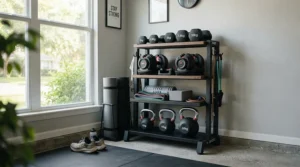
HIIT Slam Ball Workouts: A 22-Minute Plan for a Small Garage
High-intensity interval training alternates short bursts of near-maximal effort with brief recovery. Slam balls suit that rhythm because each rep is explosive and the dead landing keeps you moving.
Here’s a plan you can run in the space of one parking bay. You’ll need a mat or suitable floor and a ball you can lift overhead comfortably.
Warm-up (3 minutes): arm circles, bodyweight squats and light hip hinges, then a few half-effort slams.
Main set (16 minutes): four moves, 40 seconds on and 20 seconds off, for four rounds.
- Overhead slams: reach tall, then slam through your hips.
- Squat-to-press: hold the ball at your chest, squat, then press overhead.
- Side slams: rotate, slam beside your foot, and alternate sides.
- Burpee to slam: finish each burpee with an overhead slam.
Cool-down (3 minutes): gentle walking, calf stretches and chest openers.
For weight, a sensible starting point for most beginners is around 4–6kg while you learn the movement. Move up to 8–10kg once your form stays crisp when you’re tired. That is a common coaching rule of thumb rather than a hard standard, so adjust for your own strength.
If you have a heart, joint or back condition, speak to your GP before starting very vigorous intervals. Stop if you feel dizzy or sharp pain.
Garage and Concrete Floor Suitability: How to Set Up Safely
Concrete is the hardest, grittiest surface a slam ball can meet, and it’s where most garage gyms start. Whether garage and concrete floor suitability is a problem depends on the ball and what’s underneath it.
The honest picture is this. A dead bounce slam ball for home gym use will happily land on concrete without bouncing. But repeated impacts on rough, abrasive concrete can scuff or wear the shell, tread and seams. Retailer guidance points the same way. Fitness-Mad’s advice is to throw its balls against suitable gym floors such as rubber or EVA.
Here’s a practical setup:
- Use a rubber mat under the landing zone. Heavy-duty rubber flooring protects the ball and your slab.
- Sweep first. Loose grit acts like sandpaper, so a quick brush before every session is cheap insurance.
- Slam away from the valve. Where a ball has an air valve, hold it so the valve faces up and avoid hitting it on the valve side.
- Check for damp. Unheated UK garages can be clammy, so wipe the shell dry and store the ball off bare, wet concrete.
- Mind the neighbours. Dead balls are quieter than bouncy ones, but heavy slams still thud through a floor.
Based on all that, rubber-shelled options such as Sveltus Slam Ball and REP Fitness Slam Ball make sense for rough floors. A tread-surfaced PVC ball such as ProsourceFit Tread Slam Ball is great for grip but best kept on a mat.
Buyer’s Decision Framework: If You’re This, Choose That
Choosing is easier when you start with your situation rather than the spec sheet. Use this as a quick priority checklist.
- If you’re a beginner on a tight budget, choose Fitness-Mad Slam Ball because the weights cover most starter needs and the outlay is low.
- If you expect to progress for years, choose Mirafit Tyre Tread Slam Ball because a sixteen-weight range lets you build a matched set.
- If durability is your top priority, choose REP Fitness Slam Ball because the thick rubber shell and valve design earn the best durability feedback.
- If you run mixed circuits with squats and carries, choose BodyMax Slam Balls because the 3kg to 20kg range suits both throwing and loaded movements.
- If storage space is tight, choose Sveltus Slam Ball because the compact rubber ball takes less room.
- If you sweat heavily, choose ProsourceFit Tread Slam Ball or Yes4All Slam Ball because the textured shells help you hold on.
Three questions help you narrow it down further. Where will you slam, on a mat or on bare concrete? How often will you train? And how heavy can you go while keeping good form? Answer those, and your shortlist usually shrinks to two.
How to Choose a Dead Bounce Slam Ball for Home Gym Training
Here are six steps to buying the right ball for your space.
- Start lighter than your ego suggests. Slam work is explosive, so a ball that feels easy in your hands can feel punishing overhead for 40 seconds. Beginners often do well in the 4–6kg range.
- Check the fill. Sand-filled balls are the standard dead-bounce design. Confirm the listing says no-bounce and sand or granule filled.
- Look at the shell. Rubber tends to feel tougher, while PVC is common at lower prices. Neither is automatically better, but thick walls and a pressure valve are good signs.
- Prioritise grip. Tread or grooves help when your hands are sweaty. Smooth shells can slip mid-slam.
- Check diameter. A bigger ball at the same weight can be harder to palm. Some ranges change diameter at certain weights, as Mirafit’s listings show.
- Read the returns policy. Split shells and leaks do happen, so know how the seller treats them.
If you’re stuck, buy two weights. A lighter ball for fast HIIT work and a heavier one for slow power work will cover most of what a home gym needs.
Medicine Ball vs Slam Ball: What’s the Real Difference?
The medicine ball vs slam ball debate causes more bruised shins than it should. They look similar, but they’re built for different jobs.
Medicine balls are usually stitched or moulded and are made for throwing and catching. TOGU’s guide notes that typical medicine balls weigh around 0.5 to 5kg and come either as full balls with little bounce or air-filled versions with a strong bounce. Slam balls, by contrast, are made from thick rubber or PVC, filled with sand, and often include a valve to release pressure so they don’t burst.
| Feature | Medicine Ball | Slam Ball |
|---|---|---|
| Bounce | Some to strong | Almost none |
| Best use | Throws, catches, passes | Slams into floor |
| Typical weight | About 0.5–5kg | About 2–30kg+ |
| Best For | Partner drills, wall throws | Solo power work, HIIT |
The table tells the story: a medicine ball wants to come back to you, a slam ball wants to stay down. If you slam a bouncy medicine ball into the floor, you’ll get a face full of rebound at best and a ruptured seam at worst. For a dead bounce slam ball for home gym training, pick the ball designed for the job. The only real crossover is carrying and pressing, where either works.
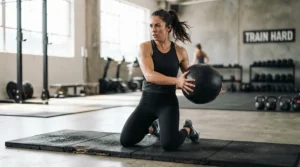
Sand-Filled vs Gel-Filled Slam Balls: What the Fill Really Changes
Here’s a reality check on sand-filled vs gel-filled slam balls. Across the UK listings I reviewed, sand or similar granules is the overwhelming standard. I couldn’t verify a mainstream gel-filled slam ball with documented specs, so I won’t pretend the market is evenly split.
Sand does a few useful things. It shifts under impact so the ball lands dead, and it feels slightly unstable in your hands, which makes your core work harder. Some brands use finer or denser sand, and a few mention iron sand for balance.
If you do come across a gel- or liquid-filled option, the reasoning differs. A fluid fill tends to slosh rather than settle, and a leak would be messier than a sand spill. I’d want clear no-bounce claims, a weight tolerance and a returns policy before buying one.
| Feature | Sand-filled | Gel- or liquid-filled (rare) |
|---|---|---|
| Landing | Dead, settles quickly | Unverified; may slosh |
| Availability | Standard across UK ranges | Hard to find with documented specs |
| Leak risk | Sand can escape from splits | Likely messier |
| Best For | Almost every home gym | Only if specs are clearly documented |
For nearly everyone, sand is the safe, proven answer. Unless a listing clearly documents its gel-filled design, you’ll likely do better with the sand-filled balls reviewed above.
Heavy Duty Slam Ball for Outdoor Use: What Actually Survives the Weather
A heavy duty slam ball for outdoor use faces a different enemy than a garage ball: sun, rain, grit and uneven ground.
Start with the shell. Thick rubber with a pressure valve, as seen on REP Fitness Slam Ball, is the construction most associated with durability. Treat heavy-duty claims on cheaper listings with some scepticism. BarBend’s roundup named a different brand, Fringe Sport, as its most durable pick, so even the experts disagree about who’s toughest.
A few practical points for outdoor slamming:
- Slam on a mat or firm lawn, not paving. Dead balls land softly on grass, but hard paving can scuff the shell quickly.
- Keep it out of prolonged sun. Most polymers degrade with heat and UV over time. I couldn’t find a maker publishing a UV rating, so treat that as general reasoning rather than a spec.
- Wipe it dry. Wet tread plus slippery hands is how you get dropped slams.
- Store it indoors. A ball left on a patio all winter is a ball with a shorter life.
Matching that to the field, Mirafit Tyre Tread Slam Ball offers tread grip and a huge weight range for backyard training, while ZIPRO Slam Ball is marketed at Decathlon for outdoor training too, though I couldn’t verify detailed outdoor specs. If you’re serious about outdoor sessions, prioritise shell thickness and store it properly.
Common Mistakes When Buying a Dead Bounce Slam Ball for Home Gym Use
Most slam ball regrets come from a handful of avoidable errors.
Buying too heavy. A 15kg ball looks heroic on the listing and humbling overhead. Start lighter, and add weight only when your form holds up when tired.
Ignoring the fill. If a listing doesn’t clearly say no-bounce and sand-filled, it may be a medicine ball in disguise. Check before you order.
Choosing by weight alone. Diameter, shell and grip all change how a ball feels. A 10kg ball can be compact and grippy or bulky and slippery.
Slamming on the valve. If the ball has a valve, keep it facing up so the impact doesn’t land on it.
Forgetting the floor. A premium ball on bare concrete is a faster route to a worn shell than a cheaper ball on a rubber mat.
Skipping the returns policy. Split shells and leaks do occur. A reviewer reported a heavy Mirafit ball bursting after a year, so know how the seller handles warranty claims.
Expecting one ball to do everything. Slam, press, carry and throw-and-catch work best with the right tool. A single ball can cover most of the list, but it won’t cover all of it well.
Long-Term Cost & Maintenance: What a Slam Ball Really Costs
A slam ball isn’t an expense. It’s a very cheap tool spread over a lot of sessions. The NHS guidance for adults aged 19 to 64 suggests strength exercises on two or more days a week, plus 75 minutes of vigorous activity or 150 minutes of moderate activity. Train twice a week with your ball and you’ll log about 200 sessions over two years.
| Tier | Example | Typical Outlay | Approx. Cost per Session (2 Years) | Best For |
|---|---|---|---|---|
| Entry | Fitness-Mad Slam Ball | Around £20–£28 (8kg) | Roughly 10–14p | Trying slams cheaply |
| Mid | Sveltus Slam Ball | Roughly £25–£35 (10kg) | Roughly 13–18p | Compact rubber build |
| Heavy | REP Fitness Slam Ball | Mid-£60s (30kg) | Roughly 30–35p | Heavy power work |
Even the heavy option works out at pennies per session. The real cost risk isn’t the sticker price but a ball that splits early, which is why durability is worth a few pounds more.
Maintenance is gloriously dull. Wipe the shell, sweep the landing zone, store it away from heat and sun, and glance over the seams occasionally. If you spot a split or sand escaping, stop using it. A ball that’s lost fill no longer lands dead, and the weight becomes unpredictable.
FAQ
❓ How heavy should my first dead bounce slam ball for home gym use be?
❓ Can I slam a slam ball on concrete?
❓ Is a slam ball better than a medicine ball for HIIT?
❓ How long does a slam ball last?
❓ What's the best slam ball weight range for a small garage gym?
Conclusion
A good slam ball is the most honest piece of kit in a home gym. You pick it up, you throw it down, and it stays where it lands. No batteries, no subscription, no excuses.
Here’s the short version. If you’re new and watching your budget, Fitness-Mad Slam Ball is the low-risk starter. If you want to progress over years, Mirafit Tyre Tread Slam Ball offers the broadest weight ladder. If durability matters most, REP Fitness Slam Ball is the standout in reviewer feedback. BodyMax Slam Balls suit circuit work, Sveltus Slam Ball suits tight spaces, and Yes4All Slam Ball and ProsourceFit Tread Slam Ball are worth a look if grip and value come first.
Whatever you choose, mind the floor, start light and keep the valve facing up. Treat the ball like a tool you’ll use hundreds of times, not a gadget you’ll abandon by February.
✨ Ready to Start Slamming?
🔍 Pick the ball that matches your floor, your budget and your goals, then click any highlighted product name to check current pricing and availability. Your garage is about to get a lot more interesting!
Recommended for You
- Rubber Medicine Ball: 7 Best Picks For UK Home Gyms (2026)
- Kettlebell Set For Progressive Overload: 7 Proven Picks (2026)
- Kettlebell Set with Rack: 7 Best Amazon UK Picks (2026)
Disclaimer: This article contains affiliate links. As an Amazon Associate, I earn from qualifying purchases. If you purchase products through these links, we may earn a small commission at no additional cost to you.
✨ Found this helpful? Share it with your friends! 💬🤗
