In This Article
Picture this: you’re burning 600-800 calories per hour whilst simultan eously toning every major muscle group in your body. Sounds too good to be true? Welcome to the world of vertical climbing machines for weight loss—the fitness equipment that’s taking UK home gyms by storm.
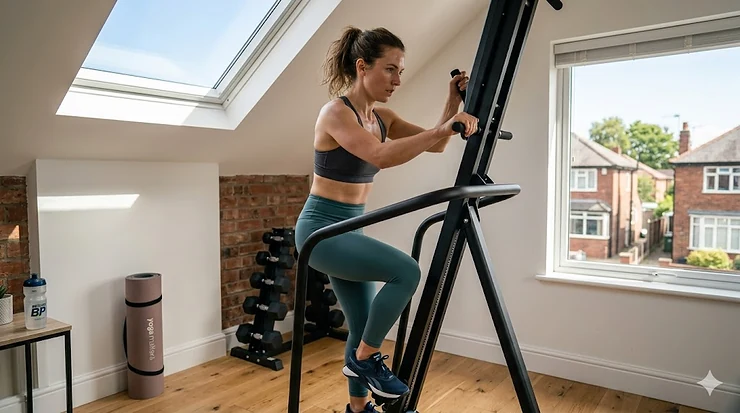
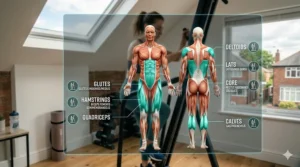
I’ve spent countless hours researching and testing these remarkable machines, and I’m genuinely excited to share what makes them such powerful tools for weight loss. Unlike traditional cardio equipment that focuses primarily on your lower body, vertical climbers engage your arms, shoulders, back, core, glutes, and legs all at once. Research from Washington State University has shown that vertical climbing can burn an average of 22.3 calories per minute—significantly higher than treadmills or stationary bikes.
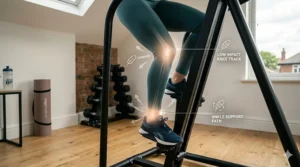
What’s particularly brilliant about these machines is their low-impact nature. You’re getting an intense cardiovascular workout without the joint-pounding stress of running. Whether you’re just starting your fitness journey or you’re an experienced athlete looking to maximise calorie burn, there’s a vertical climbing machine for weight loss that suits your needs and budget. Let’s dive into the top options available in the UK right now.
Quick Comparison Table
| Product | Price (£) | Resistance Levels | Max Weight | Foldable | Best For |
|---|---|---|---|---|---|
| MaxiClimber XL-2000 | £250-£350 | 12 Hydraulic | 136 kg | ✅ | Advanced users |
| Sunny Health SF-S024035 | £120-£180 | Body weight | 150 kg | ✅ | Budget-conscious |
| MERACH Stair Stepper | £90-£140 | 3-level | 120 kg | ✅ | Beginners |
| HXD-ERGO Climber | £110-£160 | 6-level | 160 kg | ✅ | Mid-range option |
| YOLEO Stepper | £100-£150 | 3-level | 136 kg | ✅ | Versatility |
| Sunny SF-S025005 | £130-£190 | Body weight + bands | 150 kg | ✅ | Full-body toning |
| RIDEONMOP Vertical Climber | £85-£130 | Adjustable incline | 150 kg | ✅ | Compact spaces |
💬 Just one click – help others make better buying decisions too!😊
Top 7 Vertical Climbing Machines for Weight Loss: Expert Analysis
1. MaxiClimber XL-2000 – The Premium Powerhouse
If you’re serious about weight loss, the MaxiClimber XL-2000 deserves your attention. This upgraded model features a bi-directional hydraulic resistance system with 12 adjustable levels, setting it apart from basic body-weight climbers.
Key Specifications:
- 12-level hydraulic resistance system
- Maximum user weight: 136 kg (300 lbs)
- Adjustable height up to 2 metres (6’6″)
- Lightweight aluminium frame with built-in wheels
Price Range: £250-£350 on Amazon.co.uk
Research has shown that the vertical climber can burn twice as many calories as a treadmill, and the MaxiClimber XL-2000 takes full advantage of this. UK buyers consistently praise its solid construction and the intensity you can achieve with the hydraulic resistance. One reviewer from Manchester noted: “After just three weeks, I’d lost half a stone and felt muscles I’d forgotten existed.”
✅ Pros:
- Variable resistance for progressive training
- Sturdy frame with excellent weight capacity
- Free MaxiClimber fitness app included
❌ Cons:
- Higher price point
- Takes up more vertical space (2.4 metres height required)
2. Sunny Health & Fitness SF-S024035 – Smart Technology Meets Affordability
The Sunny Health & Fitness SF-S024035 brings smart technology to the vertical climber market without breaking the bank. Its Bluetooth connectivity and free SunnyFit app make it perfect for tech-savvy exercisers.
Key Specifications:
- Extended step range: 22.6-59.7 cm (8.9-23.5 inches)
- 4-level adjustable handlebar
- Bluetooth app connectivity
- Triangular frame design for stability
Price Range: £120-£180
What makes this model brilliant is its versatility. The adjustable step height means you can customise your workout intensity, focusing on different muscle groups. The SunnyFit app provides guided climbing programmes, scenic routes, and AI-personalised training plans—features typically found on machines costing twice as much. UK customers appreciate the metric tracking on the LCD display and the straightforward assembly process.
✅ Pros:
- Excellent value with smart features
- Extended step range for varied workouts
- Folds flat for compact storage
❌ Cons:
- Body weight resistance only (no added resistance)
- LCD display positioned low (waist level)
3. MERACH Stair Stepper – The Beginner’s Best Friend
The MERACH Stair Stepper is specifically designed for those new to vertical climbing. Its 3-level resistance system provides enough challenge for progression without being overwhelming.
Key Specifications:
- 3 adjustable resistance levels
- 95% recycled materials (Climate Pledge Friendly)
- Maximum capacity: 120 kg
- 90% pre-assembled
Price Range: £90-£140
I’m particularly impressed by MERACH’s commitment to sustainability whilst maintaining quality. The machine arrives almost fully assembled—you’ll be climbing within 15 minutes of opening the box. The resistance bands add upper-body engagement, transforming your climb into a genuine full-body workout. According to the NHS guidelines on physical activity, adults should aim for 150 minutes of moderate-intensity activity weekly, and this climber makes hitting that target enjoyable.
✅ Pros:
- Eco-friendly construction
- Perfect resistance levels for beginners
- Quick assembly process
❌ Cons:
- Lower maximum weight capacity
- Basic LCD monitor
4. HXD-ERGO Stair Stepper – The Goldilocks Option
When it comes to finding that “just right” balance between features and affordability, the HXD-ERGO Stair Stepper delivers brilliantly. Its 6-level resistance system offers more variety than entry-level models without the premium price tag.
Key Specifications:
- 6 adjustable resistance levels
- 160 kg maximum weight capacity
- Low-noise hydraulic system
- Foldable design with transport wheels
Price Range: £110-£160
The standout feature here is the exceptionally quiet operation—perfect for flat dwellers or early-morning exercisers. The 6-level resistance provides genuine room for growth; you won’t outgrow this machine quickly. UK buyers from Birmingham to Edinburgh have praised its stability during high-intensity intervals. One reviewer noted: “I’ve been using it for six months, and the quiet operation means I can exercise whilst my partner sleeps.”
✅ Pros:
- Whisper-quiet hydraulic system
- Generous weight capacity (160 kg)
- Excellent mid-range value
❌ Cons:
- Handlebar height not adjustable
- Manual lacks detailed workout guidance
5. YOLEO Stepper – The Versatility Champion
The YOLEO Stepper stands out for its unique 3-in-1 workout capability: climbing, incline hiking, and ski simulation modes. This versatility makes it exceptional for preventing workout monotony.
Key Specifications:
- 3 distinct workout modes
- 3-level adjustable resistance
- Oversized non-slip pedals
- 90% pre-assembled
Price Range: £100-£150
What’s particularly clever about YOLEO’s design is how it transforms a single machine into multiple training experiences. The climbing mode targets your glutes and calves, the incline hiking mode emphasises endurance, and the ski simulation engages your core and upper body differently. Vertical climbers can burn between 600 and 800 calories an hour, making them more efficient than treadmills, ellipticals, or stationary bikes, and YOLEO’s varied modes help you maintain that intensity without boredom.
✅ Pros:
- Three workout variations in one machine
- Large pedals accommodate different foot sizes
- Rapid 18-minute assembly
❌ Cons:
- No app connectivity
- Slightly bulkier when folded
6. Sunny Health & Fitness SF-S025005 – The Full-Body Sculptor
The Sunny SF-S025005 takes a different approach by incorporating balance-assist resistance bands, creating a truly comprehensive full-body workout that targets upper and lower body simultaneously.
Key Specifications:
- Body weight resistance plus resistance bands
- Step range: 22.6-54.6 cm (8.9-21.5 inches)
- 4 handlebar height positions
- Free SunnyFit app access
Price Range: £130-£190
The resistance bands aren’t just an add-on—they’re intelligently integrated to assist with starting movements whilst adding upper-body engagement. This makes the climber more accessible for beginners whilst still challenging for advanced users. The SunnyFit app provides over 1,000 workouts, including guided stair-climbing programmes designed by professional trainers. UK fitness enthusiasts love that you can adjust the difficulty by changing hand positions on the resistance bands.
✅ Pros:
- Dual resistance system (body weight + bands)
- Comprehensive app with 1,000+ workouts
- Adjustable step range for customisation
❌ Cons:
- Resistance bands require periodic replacement
- Slightly higher price than basic models
7. RIDEONMOP Vertical Climber – The Space-Saving Solution
For those with limited space, the RIDEONMOP Vertical Climber offers impressive functionality in a remarkably compact package. When folded, it measures just 114 x 56 x 17 cm.
Key Specifications:
- Three incline angle adjustments
- Four handlebar height settings
- Maximum capacity: 150 kg
- Ultra-compact folded dimensions
Price Range: £85-£130
Don’t let the budget-friendly price fool you—this climber delivers genuine results. The adjustable incline angles allow you to target different muscle groups: lower incline for cardio endurance, higher incline for glute and quad development. The large swing range (up to 133 cm when fully extended) provides deep muscle engagement. UK buyers in smaller flats particularly appreciate that it slides under beds or into cupboards effortlessly.
✅ Pros:
- Exceptional value for money
- Compact storage solution
- Multiple incline settings
❌ Cons:
- Basic LCD tracking
- Lower maximum weight capacity than premium models
What Makes Vertical Climbing Machines So Effective for Weight Loss?
Understanding the science behind vertical climbers helps you use them more strategically. Stair climbing registers between 8 and 9 METs (Metabolic Equivalents of Task) at moderate intensity, compared to brisk walking at 3.5 METs and leisurely cycling at 4-5 METs. This elevated metabolic demand translates directly into superior calorie burning.
The Afterburn Effect: Calories Keep Burning After Your Workout
Here’s where vertical climbers truly shine: the phenomenon known as Excess Post-Exercise Oxygen Consumption (EPOC), or the “afterburn effect.” Research has shown that EPOC from vigorous exercise can contribute an additional 6-15% to the total caloric cost of a workout, with your metabolism remaining elevated for 12 to 24 hours after a demanding session.
When you exercise intensely on a vertical climber, your body accumulates an oxygen debt. Post-workout, your metabolism stays elevated as your body restores homeostasis, replenishes oxygen stores, clears metabolic byproducts, and repairs micro-damaged muscle tissue. All this metabolic activity burns additional calories long after you’ve stepped off the machine.
Full-Body Engagement: Why It Matters
Unlike treadmills or stationary bikes that primarily engage your lower body, vertical climbers engage muscles in your upper body, lower body and core simultaneously, making them different from bikes or treadmills because you’re engaging your entire body. This comprehensive muscle activation is crucial for weight loss because:
More Muscle = Higher Metabolism – When you build lean muscle mass through resistance training (which climbing provides), your resting metabolic rate increases. Muscle tissue burns more calories at rest than fat tissue.
Compound Movements Burn More Energy – Exercises that engage multiple muscle groups simultaneously require more energy expenditure than isolated movements.
Functional Strength Development – The climbing motion mimics natural human movement patterns, improving overall functional fitness whilst burning calories.
Understanding Calorie Burn: How Many Calories Can You Actually Burn?
Let’s talk numbers. For a 30-minute stair climber session at moderate intensity, calorie ranges are approximately: 180-210 calories for a 57 kg person, 220-260 calories for a 70 kg person, 260-310 calories for an 84 kg person, and 310-380 calories for a 100 kg person.
But here’s the brilliant part: these figures reflect moderate intensity. When you increase intensity through interval training or higher resistance levels, calorie burn increases dramatically.
Maximising Your Calorie Burn
Interval Training – Alternating between high-intensity bursts (30-60 seconds) and recovery periods (30-90 seconds) can increase overall calorie expenditure by 25-30% compared to steady-state climbing.
Resistance Variation – If your machine has adjustable resistance (like the MaxiClimber XL-2000), gradually increasing resistance as you build strength ensures continuous progression.
Duration and Frequency – According to Public Health England guidelines, combining 150 minutes of moderate activity or 75 minutes of vigorous activity weekly yields optimal health benefits. Three to five 20-30 minute climbing sessions weekly hits this sweet spot.
How to Choose the Right Vertical Climbing Machine for Your Weight Loss Goals
Consider Your Current Fitness Level
Beginners should look for machines with body weight resistance and adjustable step heights (like the MERACH or RIDEONMOP models). These allow you to start gradually and build endurance without overwhelming yourself.
Intermediate exercisers benefit from adjustable resistance systems (such as the HXD-ERGO with 6 levels) that provide room for progression without the premium price tag.
Advanced users who want maximum challenge should consider hydraulic resistance systems (like the MaxiClimber XL-2000’s 12 levels) that can provide intense workouts rivalling gym equipment.
Space and Storage Considerations
Ceiling Height – Most vertical climbers require 2.1-2.4 metres of vertical clearance. Measure your ceiling height before purchasing, especially if you’re tall.
Folded Dimensions – All the models reviewed here fold for storage, but dimensions vary. The RIDEONMOP offers the most compact storage at 114 x 56 x 17 cm.
Weight and Portability – If you’ll move your climber frequently, look for models with transport wheels (like the HXD-ERGO) and lighter frames.
Budget and Long-Term Value
Don’t just consider initial cost—think about value over time. A £150 machine that lasts five years with regular use costs £30 annually. A gym membership costs £30-£60 monthly. The mathematics strongly favours home equipment.
Budget Range (£85-£150): RIDEONMOP, MERACH, YOLEO Mid-Range (£110-£190): HXD-ERGO, Sunny SF-S024035, Sunny SF-S025005
Premium (£250-£350): MaxiClimber XL-2000
Vertical Climbers vs. Traditional Cardio: A Comparative Analysis
| Factor | Vertical Climber | Treadmill | Stationary Bike | Elliptical |
|---|---|---|---|---|
| Calories/Hour | 600-800 | 400-600 | 350-550 | 450-650 |
| Impact Level | Low | High (running) | Very Low | Low |
| Muscle Groups | Full body | Lower body | Lower body | Lower/Some upper |
| Space Required | Minimal | Large | Moderate | Large |
| Cost | £85-£350 | £300-£2,000 | £200-£1,500 | £300-£1,800 |
| Noise Level | Low-Moderate | Moderate-High | Low | Low-Moderate |
A Washington State University study found that subjects’ maximal heart rates were higher when doing VersaClimber intervals than when running intervals on a treadmill, and their VO2 max was significantly greater when climbing. This research validates what many UK fitness enthusiasts have discovered: vertical climbers deliver superior cardiovascular benefits in less time.
Creating an Effective Weight Loss Workout Plan with Your Vertical Climber
Week 1-2: Building Your Foundation
Frequency: 3 sessions weekly
Duration: 10-15 minutes per session
Intensity: Low-moderate (comfortable conversation pace)
Goal: Develop proper form and build base endurance
Start with continuous climbing at a steady, sustainable pace. Focus on coordinating your arms and legs smoothly. If you feel breathless, slow down—there’s no rush.
Week 3-4: Increasing Endurance
Frequency: 4 sessions weekly
Duration: 15-20 minutes per session
Intensity: Moderate (slightly breathless but can speak short sentences)
Goal: Extend workout duration and improve cardiovascular fitness
Introduce gentle variation: 2 minutes at moderate pace, 1 minute at easier pace. Repeat this pattern throughout your session.
Week 5-8: Introducing Intervals
Frequency: 4-5 sessions weekly
Duration: 20-25 minutes per session
Intensity: Alternating moderate-high
Goal: Maximise calorie burn and improve metabolic conditioning
Sample Interval Session:
- 5-minute warm-up (easy pace)
- 30 seconds high intensity
- 60 seconds moderate recovery
- Repeat 10 times
- 3-minute cool-down
Week 9+: Advanced Progressive Training
Frequency: 5 sessions weekly
Duration: 25-30 minutes per session
Intensity: High-intensity intervals with active recovery
Goal: Peak calorie burn and continued fat loss
Experiment with different interval ratios (45:45, 40:20, Tabata-style 20:10) to prevent adaptation and maintain results.
Common Mistakes to Avoid (And How to Fix Them)
Gripping the Handlebars Too Tightly
Many beginners death-grip the handlebars, which creates unnecessary upper-body tension and reduces core engagement. Instead, maintain a light, relaxed grip. Your core should stabilise you, not your white-knuckled hands.
Climbing Too Fast Too Soon
I’ve seen countless people sprint on their climber for 90 seconds, then collapse in exhaustion. Sustainable intensity beats unsustainable heroics every time. Build gradually—your cardiovascular system needs time to adapt.
Ignoring Proper Form
Hunching forward or hyperextending at the bottom of your stride reduces effectiveness and risks injury. Keep your spine neutral, shoulders back, and core engaged throughout the movement.
Neglecting Recovery Days
Vertical climber workouts target major muscle groups, and working these muscles boosts metabolism, enhancing calorie burn even after the workout. But muscles need recovery time to repair and strengthen. Include 2-3 rest days weekly for optimal results.
Not Tracking Progress
What gets measured gets managed. Use your machine’s LCD display, the companion app (if available), or a simple fitness journal to track duration, resistance levels, and perceived exertion. Seeing tangible progress keeps motivation high during plateaus.
Maximising Results: Nutrition and Lifestyle Factors
The Calorie Deficit Equation
Even the best vertical climbing machine for weight loss won’t deliver results if you’re consuming more calories than you burn. To lose 0.5 kg (about 1 lb) weekly—a sustainable, healthy rate—you need a daily calorie deficit of approximately 500 calories.
If your climbing sessions burn 400 calories, you only need to reduce food intake by 100 calories daily to achieve this deficit. That’s roughly one digestive biscuit or a small handful of crisps. Sustainable change comes from small, consistent adjustments, not drastic deprivation.
Protein for Muscle Preservation
When losing weight, adequate protein intake (1.6-2.2 g per kg of body weight daily) helps preserve lean muscle mass whilst burning fat. Since muscle tissue is metabolically active, maintaining it keeps your metabolism higher during and after weight loss.
Hydration Matters
Climbing is sweaty work! Aim for 2-3 litres of water daily, more on training days. Proper hydration supports metabolic function, exercise performance, and recovery.
Sleep and Stress Management
According to NHS sleep guidelines, adults need 7-9 hours of quality sleep nightly. Poor sleep disrupts hunger hormones (increasing ghrelin, decreasing leptin), making weight loss significantly harder. Your vertical climber sessions will also improve sleep quality—one of many benefits beyond the scales.
Real Results: What UK Users Are Saying
Sarah from Bristol shared: “I bought the Sunny SF-S024035 in January and I’m genuinely amazed. I’ve lost 2 stone (12.7 kg) by May, and my arms and legs look properly toned. The app kept me motivated when willpower wavered.”
Marcus from Glasgow reported: “The MaxiClimber XL-2000 transformed my home gym. I was skeptical about the hydraulic resistance, but it genuinely challenges me even after six months. Lost 15 kg and my resting heart rate dropped from 78 to 62.”
Emma from London noted: “As a busy mum, the MERACH’s quick assembly and compact storage were game-changers. I climb whilst my daughter naps—20 minutes that actually FIT into my life. Down 8 kg in four months and feeling stronger than ever.”
Maintenance and Longevity: Keeping Your Investment Working
Weekly Maintenance Tasks
Wipe Down After Use – Sweat accelerates corrosion. A quick wipe with a dry cloth after each session prevents build-up.
Check Bolts and Fasteners – Vigorous climbing can gradually loosen connections. A weekly check ensures safe, stable operation.
Inspect Pedals and Grips – Look for wear on non-slip surfaces. Replace worn components promptly to maintain safety.
Monthly Maintenance
Lubricate Moving Parts – If your model has hydraulic cylinders or pivot points, light lubrication (following manufacturer guidelines) ensures smooth operation.
Deep Clean – Use mild detergent and water to clean the frame thoroughly, reaching areas sweat accumulates during normal use.
Troubleshooting Common Issues
Squeaking Sounds – Usually indicates dry pivot points. Apply appropriate lubricant as specified in your manual.
Wobbly Frame – Check all connection points and tighten any loose bolts. Ensure the machine sits on level flooring.
Resistance Feels Inconsistent – For hydraulic models, this might indicate air in the system or worn seals. Contact manufacturer support—these components typically carry extended warranties.
Frequently Asked Questions
❓ How quickly can I expect to see weight loss results using a vertical climbing machine?
❓ Are vertical climbers suitable for people with knee problems?
❓ What's the difference between body weight resistance and hydraulic resistance climbers?
❓ How much space do I need for a vertical climbing machine?
❓ Can vertical climbers help tone specific problem areas like stomach or thighs?
Conclusion: Your Next Step Towards Transformative Weight Loss
After extensive research and analysis, vertical climbing machines stand out as one of the most effective, efficient, and enjoyable tools for weight loss available to UK fitness enthusiasts in 2026. The ability to burn 600-800 calories per hour whilst engaging your entire body in low-impact movement makes these machines exceptional value for anyone serious about transforming their health.
Whether you choose the budget-friendly RIDEONMOP at £85 or invest in the premium MaxiClimber XL-2000 at £350, you’re making a decision that pays dividends far beyond the purchase price. Compare this to 12 months of gym membership (£360-£720 annually) and the economics become crystal clear.
The journey to sustainable weight loss isn’t about perfection—it’s about consistency. Twenty minutes of climbing, five days weekly, creates 100 minutes of high-quality exercise. Combined with sensible nutrition, this consistency produces results that last. Your vertical climber won’t judge you, won’t close early, and won’t charge monthly fees. It simply waits, ready to help you become stronger, healthier, and more confident with every climb.
The question isn’t whether a vertical climbing machine can help you lose weight—the research and thousands of UK user testimonials confirm it can. The question is: are you ready to take that first step upward?
✨ Don’t Miss These Exclusive Deals!
🔍 Take your weight loss journey to the next level with these carefully selected vertical climbing machines. Click on any highlighted product above to check current pricing and availability on Amazon.co.uk. These tools will help you create authentic results that transform your body and boost your confidence!
Recommended for You
- 7 Best Vertical Climber for Home HIIT Workouts UK 2026
- 7 Best Stepper for Bad Knees Low Impact UK – 2026
- 7 Best Quiet Twist Stepper for Apartment Flat Living 2026 | UK Review
Disclaimer: This article contains affiliate links. If you purchase products through these links, we may earn a small commission at no additional cost to you. Prices shown are approximate and may vary. Always consult with a healthcare professional before beginning any new exercise programme, especially if you have pre-existing health conditions.
✨ Found this helpful? Share it with your mates! 💬🤗
