In This Article
Stand in front of a barbell wall at any decent UK gym and you’ll notice something odd: the bars aren’t all the same. Pick up the wrong one and a lift that should feel controlled suddenly feels like wrestling a fence post. That’s the whole story behind 20kg Olympic bar vs 15kg Olympic bar — two barbells that look nearly identical from six feet away but behave completely differently in your hands. A 20kg Olympic bar is the men’s standard: 28mm shaft, 7ft long, built to handle heavy squats and power lifts. A 15kg Olympic bar is the women’s standard: 25mm shaft, slightly shorter loadable sleeve, designed for a smaller grip and faster bar speed on Olympic lifts. Neither is “better” — they’re built for different hands, different lifts, and different training goals, and getting that wrong is one of the most common (and most expensive) mistakes in home gym building.
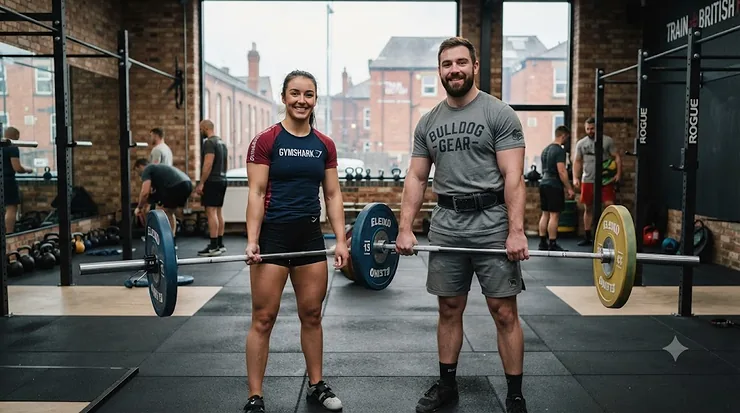
This guide breaks down exactly what separates these two bar weights — not just the headline numbers, but the diameter, the knurling, the bearing systems, and the real-world implications for your lifting. We’ll walk through seven genuine barbells sold in the UK, spanning budget picks under £100 through to competition-grade steel that costs as much as a decent second-hand car. Whether you’re kitting out a garage gym on a shoestring or trying to decide which bar your local box should be racking, you’ll leave this page knowing exactly which bar belongs in your hands.
What Is a 20kg Olympic Bar vs 15kg Olympic Bar?
A 20kg Olympic bar (the men’s ba 20kg, measures roughly 2.2m, and has a 28-29mm shaft diameter — the standard used in men’s Olympic weightlifting and powerlifting. A 15kg Olympic bar (the women’s bar) weighs 15kg, is around 2.01m long, and has a thinner 25mm shaft, giving smaller hands a more secure grip on fast overhead lifts.
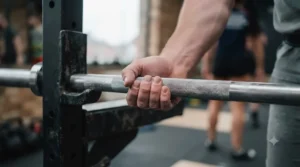
The confusion usually starts because both bars share the same 50mm sleeve diameter, meaning both take standard 2-inch Olympic plates. So from a distance, on a rack, they’re near-twins. Pick either one up, though, and the difference in shaft thickness is immediately obvious — it’s the equivalent of gripping a broom handle versus gripping a rolling pin. That 3-4mm gap doesn’t sound like much on paper. In practice, over a training session of heavy pulls or a snatch-heavy programme, it changes everything from your hook grip comfort to how much “whip” the bar has during a clean.
Quick Comparison Table
| Spec | 20kg Olympic Bar (Men’s) | 15kg Olympic Bar (Women’s) |
|---|---|---|
| Total weight | 20kg (44lb) | 15kg (33lb) |
| Shaft diameter | 28-29mm | 25mm |
| Length | ~2.2m (7ft) | ~2.01m (6.6ft) |
| Loadable sleeve length | ~415mm per side | ~330mm per side |
| Typical tensile strength | 190,000-205,000 PSI | 190,000-200,000 PSI |
| Best For | Squats, deadlifts, powerlifting, men’s Olympic lifts | Snatch/clean & jerk, smaller hands, women’s competition, beginners of any gender who prefer a lighter bar |
Looking at the table, the headline gap isn’t really the 5kg weight difference — it’s the 3-4mm of shaft diameter, because that’s what your hands, not your programme, actually notice. A shorter loadable sleeve on the 15kg bar also means it maxes out its practical plate capacity sooner than a 20kg bar of the same tensile rating, which matters if you’re chasing four-plate deadlifts. For most home gyms serving more than one lifter, this is exactly why the “his and hers” pairing exists rather than everyone just defaulting to the heavier bar.
💬 Just one click — help others make better buying decisions too!😊
Top 7 Olympic Bars: Expert Analysis
We’ve picked seven real, currently available bars that span the full spectrum — from sub-£80 starter bars to Rogue’s competition-grade steel — covering both 20kg and 15kg specifications, budget through premium, and a couple of clever in-between options for anyone still deciding which camp they belong in.
1. METIS 15kg 6ft Olympic Barbell — best budget women’s bar for a first home gym
The METIS 15kg Olympic Barbell is the bar most UK beginners stumble onto first, and it’s not hard to see why. Built to a 25mm grip diameter with 1.2mm hill-style knurling, it’s a genuine full-size women’s Olympic barbell rather than a scaled-down toy — a distinction plenty of budget bars quietly fudge.
Under the chrome finish sits a Q235 steel shaft rated to a 220kg maximum static load, with four HK stainless steel needle bearings for the sleeve rotation. On paper that’s a modest load rating next to the premium bars further down this list, but it’s more than enough for anyone doing bodyweight-plus-plate training rather than max-effort powerlifting. Based on the spec sheet, this is a bar for CrossFit-style circuits, technique work, and general strength training — not a bar you’ll be loading to four plates a side.
Reviewers consistently note the chrome finish holds up well against rust in home garage conditions, and several buyers specifically mention it as their first “proper” bar after outgrowing a cheap threaded set. A recurring theme in aggregated feedback is that the knurling, while comfortable, is on the milder side — good news for high-rep training, less good if you’re chasing an aggressive competition grip.
Pros:
- ✅ Genuine 25mm women’s-spec diameter, not a scaled-down men’s bar
- ✅ Chrome finish resists rust well in unheated garages
- ✅ Can be bought bundled with matching Olympic plates
Cons:
- ❌ 220kg load rating limits it for serious powerlifting progression
- ❌ Milder knurling than competition-focused bars
At around £70-£90 depending on whether you bundle plates, the METIS 15kg Olympic Barbell is hard to fault as a starter women’s bar — the value verdict here is straightforward: buy it to learn on, and upgrade the shaft (not the plates) once your numbers start pushing past what a training bar’s designed for.
2. PhysKcal Olympic Barbell — best swap-weight starter bar for undecided households
Can’t decide between the 20kg Olympic bar vs 15kg Olympic bar question because two different people will be using it? The PhysKcal Olympic Barbell range solves that by offering the same 2-inch sleeve barbell in both 15kg and 20kg versions, at nearly identical price points, so you pick your spec rather than settle for whatever’s in stock.
Both versions carry a 220kg maximum static load rating and use the standard 50mm sleeve for 2-inch Olympic plates, meaning your plate collection works regardless of which shaft you choose. What most buyers overlook about this pairing is that it lets a household with mixed lifting needs — say, a partner training for a powerlifting meet and another doing CrossFit technique work — buy two bars that share every accessory, collar, and rack slot, rather than running two incompatible systems.
Because this is a newer entrant with a smaller review pool than the established brands on this list, we can’t verify a deep bank of long-term durability reports the way we can for Mirafit or BodyMax; what we can confirm is the published spec sheet and its consistency across the size range, which at least removes any guesswork about compatibility.
Pros:
- ✅ Same design available in both 15kg and 20kg specs
- ✅ Standard 2-inch sleeves match any Olympic plate set
- ✅ Competitively priced against comparable single-spec bars
Cons:
- ❌ Smaller, newer brand with a thinner independent review history
- ❌ 220kg load rating rules out serious max-effort powerlifting
Priced in the under-£100 range for either spec, this is less a stand-out bar and more a stand-out decision-avoider — genuinely useful if two lifters in one house can’t agree, and honestly, a smart pick even if you’re solo but simply unsure which shaft diameter suits your hands yet.
3. BRAINGAIN Olympic Bar — best UK-brand value pick with size flexibility
BRAINGAIN, a UK-founded home gym brand, sells its BRAINGAIN Olympic Bar across both 20kg 7ft and 15kg 6ft specifications with a chrome finish, aiming squarely at the home-gym crowd rather than commercial facilities.
Reviewers consistently flag build quality as solid for the price point, with one recurring theme being that buyers appreciate the bar’s compatibility with standard 2-inch Olympic plates straight out of the box — no adaptor sleeves, no fuss. Based on the spec comparison against similarly priced imports, the chrome coating and the bushing-style sleeve rotation put this bar squarely in “serious hobbyist” territory rather than “gym-class leftover” territory, which is a meaningful step up from the very cheapest barbells on general marketplaces.
One aggregated review theme worth flagging honestly: a handful of buyers have reported receiving the wrong size variant (a 6ft bar when a 7ft was ordered), which points to a listing-clarity issue rather than a manufacturing flaw — worth double-checking your exact size and weight selection before you click buy.
Pros:
- ✅ Available in both 20kg and 15kg specs from one trusted UK brand
- ✅ Works with standard 2-inch Olympic plates immediately
- ✅ Strong reputation for home gym equipment more broadly
Cons:
- ❌ Some buyers report size-variant mix-ups at checkout
- ❌ Bushing rotation is smooth but not premium-bearing smooth
At a price typically in the £80-£120 range depending on spec, the BRAINGAIN Olympic Bar offers real value — just triple-check the listing variant for weight and length before you order, because the one recurring complaint in reviews is entirely avoidable at the point of purchase.
4. Mirafit M3 — best mid-range women’s bar for serious home training
The Mirafit M3 is where the women’s bar conversation gets genuinely competitive. Built to a 25mm centre diameter with eight-piece needle bearings and bronze bushings, it’s engineered specifically to International Weightlifting Federation-style dimensions rather than simply being a lighter men’s bar with a different sticker.
The bar is tested to a 680kg static load — more than three times the rating of the budget bars above — with 210,000 PSI tensile strength steel and a hybrid knurl pattern featuring dual knurl marks but no centre knurling, which makes front-rack positions noticeably more comfortable against the collarbone. Here’s what the spec sheet won’t tell you, but reviewers note repeatedly: the needle bearing sleeve rotation makes a genuine difference on fast lifts like the snatch, where a bushing-only bar can drag against your wrist timing at the top of the pull.
Aggregated customer sentiment is strongly positive, with numerous reviewers specifically praising the fit for smaller hands and describing it as a noticeable upgrade from older cast-iron or 1-inch bars. The most common minor complaint concerns the branded rubber end caps, with a small number of buyers reporting they can work loose or break over time under heavy use — a cosmetic issue rather than a structural one.
Pros:
- ✅ 680kg load rating suitable for serious progressive strength training
- ✅ Needle bearings deliver noticeably smoother rotation on fast lifts
- ✅ Hybrid knurl comfortable for both front-rack and pulling work
Cons:
- ❌ Not competition-certified, so unsuitable for official IWF meets
- ❌ Rubber end caps can work loose with heavy daily use
Sitting in the low-to-mid £200s range, the Mirafit M3 represents the sweet spot for anyone who’s outgrown a starter bar and wants genuine needle-bearing performance without paying competition-bar money — arguably the best value-per-pound on this entire list.
5. BodyMax Competition Bar — best mid-range men’s bar for serious lifters
Where the Mirafit M3 covers the women’s mid-range, the BodyMax Competition Bar — full name the BodyMax Competition Olympic Functional Training Barbell — does the same job on the 20kg side. It’s built from heat-treated alloy steel with a hardened chrome sleeve and a 28mm grip diameter, sitting right on the men’s Olympic weightlifting standard.
Ten-piece needle bearings paired with copper bushings give this bar a rotation quality that punches well above bars at this price bracket, and the 680kg maximum user-weight rating puts it comfortably ahead of anything budget-tier. Based on the spec comparison with true competition bars like the Rogue Ohio further down this list, the trade-off is tensile strength headroom rather than day-to-day usability — this bar will comfortably outlast most home training programmes long before it approaches its structural limits.
A common thread in aggregated feedback is praise for how the bar fits standard power racks and squat racks without any awkward sleeve-length surprises, and several reviewers highlight the knurling as “aggressive enough to trust on deadlifts without being torn up.” One point of honest caution: as with most needle-bearing bars in this bracket, occasional buyers mention wanting to hear the bearings “settle” over the first few sessions before the spin feels fully smooth.
Pros:
- ✅ 10-piece needle bearings for genuinely smooth sleeve rotation
- ✅ 680kg rating comfortably covers advanced home training loads
- ✅ Fits standard power racks without sleeve-length issues
Cons:
- ❌ Not IWF competition-certified
- ❌ Bearings can need a short “bedding in” period before feeling optimal
With an RRP around the £300-£350 mark (frequently discounted below that), the BodyMax Competition Bar is the bar we’d point most serious home-gym lifters toward if a full competition bar feels like overkill for their current numbers.
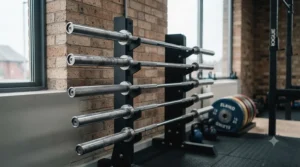
6. Rogue Ohio Bar — best premium men’s all-rounder
If there’s one bar that home-gym forums argue about the most, it’s the Rogue Ohio Bar. Machined and assembled in Rogue’s Columbus, Ohio factory, the 20kg version splits the difference between weightlifting and powerlifting standards with a 28.5mm shaft diameter — deliberately positioned between the 28mm Olympic norm and the 29mm powerlifting norm.
The stainless steel version carries a 200,000 PSI tensile strength shaft with dual knurl marks for both Olympic and powerlifting grip references, and Rogue’s proprietary work-hardening process pushes its corrosion and durability score to one of the highest ratings the company publishes. What most buyers overlook about the Ohio Bar is that its appeal isn’t really about outright strength numbers — plenty of cheaper bars have comparable tensile ratings on paper — it’s about consistency of manufacturing tolerance, batch after batch, which is exactly what serious lifters are paying for.
Independent reviewers who’ve used the bar for years consistently describe it as the industry benchmark multi-purpose barbell, praising its balance of “whip” for dynamic lifts against stiffness for heavy grinds. The most frequently cited criticism, even from fans, is that the black zinc coating (on the cheaper of the two finish options) wears down to bare steel faster than the stainless variant under heavy chalk-and-sweat use — a fair trade-off given the price gap between finishes.
Pros:
- ✅ Industry-benchmark manufacturing consistency and tolerances
- ✅ Balanced whip and stiffness suited to both power and Olympic lifts
- ✅ Backed by a lifetime warranty from an established manufacturer
Cons:
- ❌ Black zinc finish wears faster than stainless under heavy use
- ❌ Premium price relative to mid-range alternatives
Expect to pay well into the £300-£450 range depending on finish, with stainless commanding the top end. For lifters who’ve outgrown mid-range bars and want a shaft they’ll never think about replacing, the Rogue Ohio Bar earns its reputation as close to the gold standard.
7. Rogue Bella Bar — best premium women’s competition-style bar
The women’s equivalent from the same stable, the Rogue Bella Bar (officially the Bella Bar 2.0) is built to the 25mm shaft diameter standard for women’s Olympic weightlifting and women’s CrossFit competition, with 190,000 PSI tensile strength steel — 200,000 PSI on the stainless option.
Where this bar earns its premium positioning is the shorter, 13-inch loadable sleeve engineered specifically to keep total bar weight at 15kg without simply scaling down a men’s bar design, alongside dual knurl marks and a deliberate absence of centre knurling, which independent reviewers consistently highlight as ideal for front squats but slightly less grippy across the upper back during heavy back squats. Reviewers with years of use — including gym owners running it in commercial settings — consistently describe the sleeve rotation and durability as matching the men’s Ohio Bar’s reputation almost exactly, which is a meaningful claim given how few women’s bars get that level of long-term scrutiny.
The most-repeated critique in aggregated feedback concerns the black zinc coating’s tendency to show wear over roughly a year of heavy commercial use, echoing the same pattern seen on the men’s Ohio Bar — a coating durability trade-off rather than a structural one, and stainless or Cerakote finishes largely sidestep it.
Pros:
- ✅ True 25mm women’s-spec shaft with 190-200K PSI tensile steel
- ✅ Sleeve design purpose-built for 15kg rather than scaled down
- ✅ Commercial-grade durability trusted by gyms, not just home users
Cons:
- ❌ Black zinc finish shows wear faster than stainless/Cerakote options
- ❌ No centre knurl means less back-squat grip than some rivals
Priced similarly to its male counterpart, in the £300-£450 range depending on finish, the Rogue Bella Bar is the bar we’d recommend to any woman serious enough about weightlifting or CrossFit to want a bar that will outlast several training cycles without a second thought.
Practical Usage Guide: Setting Up and Maintaining Your Olympic Bar
Getting a new bar out of the box is the easy part — keeping it performing like new is where most home gym owners drop the ball. Start by wiping down any factory oil coating with a dry cloth before first use; skipping this step is the single most common reason new bars feel “sticky” out of the gate. Once installed on a rack, spin-test both sleeves by hand before your first loaded session — smooth, even rotation on both ends tells you the bearings or bushings survived shipping intact.
For the first 30 days, resist the urge to chalk up heavily every session. New knurling is sharper than it will ever be again, and heavy chalk plus aggressive knurl can actually accelerate surface wear on cheaper finishes before the coating has had a chance to settle. A light wipe with a 3-in-1 oil or dedicated barbell oil every few sessions during this bedding-in period keeps bushings and bearings running smoothly and prevents the early-stage squeaking that new owners often mistake for a fault.
Longer term, a monthly maintenance routine pays for itself many times over: wipe the shaft after every session to remove sweat and chalk residue (both accelerate corrosion), apply a light oil coat to bare or lightly coated finishes every four to six weeks, and check collar tightness and sleeve rotation for any developing grinding noise, which usually signals bearing contamination rather than failure. Store the bar horizontally on dedicated bar holders rather than resting it against a wall — bent bars are almost always the result of improper storage under load, not lifting accidents.
Real-World Scenarios: Which Lifter Needs Which Bar?
If you’re a first-year university student training in a shared house with limited space and a budget that doesn’t stretch past £150, the METIS 15kg Olympic Barbell or the equivalent 20kg BRAINGAIN option makes more sense than anything premium — you need a bar that works, not a bar that impresses a spotter who doesn’t exist yet. Buy plates before you upgrade the shaft; a beginner’s numbers rarely outpace a budget bar’s rating in the first year or two of consistent training.
If you’re a woman training seriously for CrossFit competitions or Olympic weightlifting meets three-plus times a week, the calculation flips entirely. The Rogue Bella Bar or Mirafit M3 stop being luxuries and start being training tools that directly affect your technique — a bar with the wrong diameter or sluggish rotation genuinely limits how fast and clean your turnover can get on the snatch, no amount of programming fixes that.
And if you’re a couple or houseshare setting up a garage gym together, splitting between a men’s and women’s bar (rather than making everyone share one 20kg bar) tends to be the choice people wish they’d made sooner — the BodyMax Competition Bar paired with the Mirafit M3 covers both grip needs without either person compromising on technique, for a combined spend that’s still well under a single top-tier competition bar.
Common Problems With Olympic Bars (And How to Fix Them)
Problem: The bar feels sticky or “grabby” during pulls. This is almost always factory coating residue rather than a fault — a thorough wipe-down with a dry cloth followed by light oiling typically resolves it within the first two or three sessions.
Problem: Sleeves aren’t spinning smoothly. On bushing bars, this often means the bushings need bedding in through use; on needle bearing bars like the Mirafit M3 or BodyMax Competition Bar, persistent grinding usually points to chalk or debris contamination that needs cleaning out rather than a mechanical failure.
Problem: Knurling feels too sharp on the hands. This is common on premium competition bars in the first few weeks — a light session or two without chalk, plus natural hand conditioning, softens the sensation without needing to alter the bar itself.
Problem: Coating is wearing through on the shaft. Chrome and black zinc finishes both wear with heavy chalk-and-sweat use over time; wiping down after every session slows this dramatically, and if you’re specifically worried about it, a stainless steel finish (like the stainless Rogue Ohio Bar) sidesteps the issue entirely.
Problem: Bar doesn’t fit my rack or collars properly. Always verify sleeve diameter (virtually always 50mm on genuine Olympic bars) against your rack’s J-cups and your existing collars before ordering — the small handful of “wrong size” complaints across these products trace back to listing mix-ups rather than manufacturing errors.
How to Choose Between a 20kg and 15kg Olympic Bar
- Start with hand size, not gender labels. Despite the “men’s” and “women’s” naming convention, plenty of smaller-handed men prefer a 25mm bar and plenty of larger-handed women prefer 28mm — grip a few in person if you can before assuming the label applies to you.
- Consider your primary lift type. Snatch-heavy programming benefits from the thinner, faster-spinning 15kg bar; max-effort squats and deadlifts favour the stiffer 20kg bar’s reduced whip under heavy static loads.
- Check your rack and collar compatibility. Both bar weights share the same 50mm sleeve, so this is rarely a blocker — but always confirm before buying to avoid an awkward return.
- Match load rating to your realistic five-year numbers, not just where you are today — a bar rated to 220kg is fine for most beginners but will need replacing sooner if your lifts progress quickly.
- Decide whether competition certification matters. If you’re chasing sanctioned meets, you’ll eventually need an IWF or federation-approved bar; if you’re training for general strength or CrossFit, a well-reviewed training bar covers you comfortably.
- Budget for the shaft, not the plates. It’s tempting to spend big on colourful bumper plates and skimp on the bar itself — but the bar is what your hands and joints interact with every single rep, so British Weight Lifting’s own beginner’s guide is worth a read before you commit either way.
- Buy once, buy for where you’re heading, not just where you are — a mid-range bar like the Mirafit M3 or BodyMax Competition Bar often costs less over five years than upgrading twice from a budget bar.
Common Mistakes When Buying an Olympic Bar
The single most common mistake is buying based on weight alone, without checking shaft diameter — two bars both listed as “20kg Olympic barbell” can still feel completely different in the hand depending on grip diameter and knurl aggressiveness. A close second is assuming any bar labelled “Olympic” is competition-certified; most home and training bars explicitly aren’t, which is fine for general use but matters enormously if you’re planning to compete.
Buyers also frequently underestimate load ratings, picking a budget bar rated to 220kg and then wondering why it develops a permanent bend after eighteen months of serious progressive overload — the fix here isn’t buying the heaviest-rated bar available “just in case,” it’s honestly assessing your training trajectory and buying accordingly. Finally, plenty of first-time buyers ignore sleeve rotation type entirely, not realising that bushings versus needle bearings genuinely changes how a bar feels on fast Olympic lifts versus slow grinding powerlifts.
20kg vs 15kg: Diameter, Grip and Real-World Performance Compared
| Factor | 20kg Bar (28-29mm) | 15kg Bar (25mm) |
|---|---|---|
| Hook grip comfort | Harder for small hands | Easier, especially for smaller grips |
| Bar speed on Olympic lifts | Slightly slower turnover | Faster turnover, less wrist strain |
| Stiffness under heavy static load | Stiffer, less whip on max squats | More flex, less ideal for max deadlifts |
| Typical user | Men’s competition, powerlifting, larger hands | Women’s competition, beginners, smaller hands |
| Best For | Rogue Ohio Bar, BodyMax Competition Bar | Rogue Bella Bar, Mirafit M3 |
The table above captures why this genuinely isn’t a “which is objectively better” question — it’s a “which matches your hands and your primary lift” question. On paper, a 20kg bar’s extra stiffness sounds like a universal advantage, but that same stiffness becomes a disadvantage on fast Olympic lifts where a bit of controlled whip actually helps the bar’s momentum work with you rather than against you. Reviewers who’ve trained on both consistently describe switching from 20kg to 15kg as feeling like the difference between a rigid pole and a slightly springier one — subtle on paper, obvious the moment you’re mid-snatch.
Olympic Bars for Beginners vs Experienced Lifters
New lifters often assume they need to start with whichever bar their programme technically specifies, when in reality the most important early decision is simply getting comfortable under a bar at all. For absolute beginners, a budget bar like the METIS 15kg Olympic Barbell or PhysKcal Olympic Barbell removes the intimidation factor of an expensive purchase while you figure out whether you actually enjoy barbell training three times a week — there’s no shame in “starting cheap and upgrading later” as a strategy, and honestly, it’s the financially sensible one.
Experienced lifters chasing specific numbers — a 140kg back squat, a competitive snatch total — benefit far more from investing in bar quality, because at that level, inconsistent whip or sluggish rotation genuinely costs you kilos on the platform. This is where bars like the Rogue Ohio Bar and Rogue Bella Bar stop being “nice to have” and start functioning as training equipment that directly influences performance outcomes, not just comfort.
Long-Term Cost & Maintenance
Run the numbers over five years and the picture shifts noticeably from the sticker price alone. A £75 budget bar that needs replacing after two years of serious training effectively costs you £150+ across that five-year window, plus the hassle and downtime of sourcing a replacement mid-programme. A £320 BodyMax Competition Bar, by contrast, is likely to still be performing well at year five, working out to roughly £64 a year — cheaper in the long run despite the higher upfront cost, assuming your training volume justifies it.
Maintenance costs are modest regardless of bar tier: a bottle of barbell-specific oil runs a few pounds and lasts most home users well over a year, and a decent wire brush for knurling upkeep is a one-off purchase. The real long-term cost driver isn’t oil or brushes — it’s how well the bar’s coating and bearing system tolerate your actual training frequency, which is exactly why NHS guidelines on muscle-strengthening activity recommending at least twice-weekly strength sessions are worth factoring into your bar-buying maths: someone training consistently at that frequency puts meaningfully more cumulative wear through a bar over a year than someone training occasionally, and it’s worth budgeting your bar quality accordingly.
Safety, Regulations and Compliance Guide
Olympic barbells aren’t subject to consumer product regulation in the same way as, say, electrical goods, but reputable UK sellers still voluntarily publish load ratings and material specifications that responsible buyers should actually check rather than skim past. Never load a bar beyond its stated maximum static or user-weight rating — doing so risks a permanent bend that compromises the bar’s straightness (and therefore its safety) even if it doesn’t snap outright.
If you’re training toward sanctioned competition, note that training bars — including every bar on this list except bars specifically marketed as competition-certified — are not automatically approved for official meets. British Weight Lifting, the sport’s national governing body in Great Britain, sets the standards that competition equipment must meet, and it’s worth checking current requirements directly before assuming your home bar would pass muster on a competition platform. For general home and gym safety, always train with collars fitted to prevent plates sliding during dynamic lifts, inspect welds and sleeves periodically for cracking, and never attempt a max-effort lift without a spotter or safety pins set at an appropriate height.
Frequently Asked Questions
❓ Is a 15kg bar easier to lift than a 20kg bar?
❓ Can men use a 15kg women's Olympic bar?
❓ What's the difference between a training bar and a competition bar?
❓ Do 20kg and 15kg bars use the same weight plates?
❓ How often should I oil my Olympic bar?
Conclusion
The 20kg Olympic bar vs 15kg Olympic bar debate ultimately isn’t a debate at all once you strip away the marketing — it’s a fitting exercise, not a ranking exercise. A 28mm shaft rewards bigger hands and heavier static lifts; a 25mm shaft rewards smaller hands and faster Olympic-style turnover. Budget bars like the METIS 15kg Olympic Barbell, PhysKcal Olympic Barbell, and BRAINGAIN Olympic Bar get new lifters training properly without a scary price tag, while the Mirafit M3 and BodyMax Competition Bar carry serious home gyms through years of progressive training. At the top, the Rogue Ohio Bar and Rogue Bella Bar exist for lifters whose numbers, or ambitions, have genuinely outgrown anything else on this list.
Whichever spec you land on, the real lesson from researching seven bars across every price bracket is this: diameter and bearing quality matter more to your day-to-day training experience than the number stamped on the sleeve. Grip a few if you possibly can before buying, check the load rating against where your training is actually heading, and don’t be afraid to start cheap and upgrade once you know exactly what you need from a bar.
Recommended for You
- Weightlifting Barbell for Beginners: 7 Best Bars for 2026
- 7 Best Barbell Collars for Home Gym in 2026 (Tested Picks)
- Multi-Grip Barbell for Bench Press: 7 Best Bars Compared (2026)
Disclaimer: This article contains affiliate links. As an Amazon Associate, I earn from qualifying purchases. If you purchase products through these links, we may earn a small commission at no additional cost to you.
✨ Found this helpful? Share it with your friends! 💬🤗
