In This Article
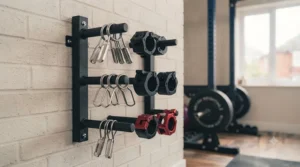
There’s a specific kind of dread that comes from feeling a plate shift mid-rep. You’re halfway through a heavy set of squats or bench press, the bar starts to tilt a fraction, and suddenly the lift isn’t about strength anymore, it’s about damage control. Barbell collars for home gym setups solve this exact problem, and yet they’re one of the most overlooked purchases in the entire home gym build — people will spend hundreds on a barbell and thousands on plates, then grab whatever cheap clip shows up first in a search.
This guide takes the opposite approach. Every collar below has been chosen specifically for holding power, sleeve fit, and how it behaves under the kind of load and occasional drop a home gym actually sees — not just popularity. We’ve dug into real specifications, aggregated genuine review sentiment, and cross-referenced UK workplace and product safety guidance so this is commentary and analysis, not a copy-pasted spec sheet. Loose or missing plate security is a genuine safety issue, not just an inconvenience: HSE guidance on work equipment consistently emphasises that equipment must be maintained in an efficient state and used only for the purpose it’s designed for, a principle that applies just as much to a home barbell setup as a commercial gym floor, as outlined in the HSE’s provision and use of work equipment guidance. Whether you’re setting up your first squat rack or finally replacing collars that have been quietly loosening for a year, you’ll find a genuinely suitable pick at every budget below.
Quick Comparison Table
| Collar | Type | Sleeve Fit | Best For |
|---|---|---|---|
| Lock-Jaw OLY 2 | Lock-jaw / quick-release | 2″ Olympic | Best all-round for heavy home lifting |
| DMoose Fitness Barbell Clips (Magnetic) | Quick-release, magnetic | 2″ Olympic | Best for fast plate changes |
| Clout Fitness Olympic Barbell Clamps | Quick-release | 2″ Olympic | Best budget quick-release |
| ProsourceFit Olympic Spring Clip Collar | Spring collar | 2″ Olympic | Best cheap classic spring collar |
| Phoenix Fitness Barbell Clamps | Quick-release | 1″ or 2″ | Best for mixed standard/Olympic bars |
| WARM BODY COLD MIND Reinforced Collars | Reinforced clamp | 2″ Olympic | Best reinforced mid-range pick |
| Iron Lab Olympic Barbell Collar | Lock-jaw style | 2″ Olympic | Best budget lock-jaw alternative |
Looking at the spread above, the clearest pattern is that lock-jaw and reinforced clamp-style collars consistently outperform basic spring collars once weight gets genuinely heavy, particularly if the bar ever gets set down with any force. Sleeve fit matters just as much as holding power, since a collar rated for a 2-inch Olympic sleeve will simply spin loose on a 1-inch standard bar, which is why the Phoenix Fitness Barbell Clamps earn their spot as the dual-diameter pick for anyone running a mixed home gym. If you only take one thing from this table, let it be that “barbell collar” isn’t one product category, it’s three distinct mechanisms, spring, lock-jaw, and clamp, and the right one depends heavily on how hard you actually train.
💬 Just one click — help others make better buying decisions too!😊
Top 7 Barbell Collars for Home Gym: Expert Analysis
Below are seven real, currently available collars, chosen specifically for holding power, sleeve fit and build quality rather than generic popularity. We’ve grouped budget, mid-range and premium options so there’s a genuine choice at every price point, plus a dual-diameter pick for anyone mixing standard and Olympic bars in the same home gym.
1. Lock-Jaw OLY 2 Barbell Collars — the industry-standard quick-release lock
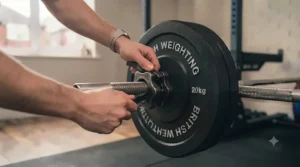
What makes the Lock-Jaw OLY 2 Barbell Collars the benchmark isn’t a single standout spec, it’s the combination of a thick nylon resin frame, fully-captured pressure pads, and a single-action cam lock that clamps down hard once positioned. Rated to a genuinely reassuring 200 lb vertical capacity per collar, these fit any 2-inch Olympic sleeve and come backed by a lifetime warranty, which signals real confidence from the manufacturer rather than marketing copy. Based on the spec comparison with cheaper resin clones on the market, the fully-captured elastomer pads are what stop these from developing the play and wobble that plagues budget alternatives after a few months of heavy use. Reviewers consistently report that the quick-action lever genuinely does save time between sets compared to spring or screw-type collars, with the most common criticism being price relative to visually similar alternatives — several UK reviewers note you can buy a nearly identical-looking collar for under half the cost, though most also concede the Lock-Jaw’s locking mechanism feels noticeably smoother in daily use. Reviewers consistently note that these are not designed to bear vertical load unsupported, so they’re not the right pick for exercises like standing dumbbell pullovers where the collar itself carries the plate’s full weight.
Pros:
- ✅ Fully-captured pressure pads reduce long-term wobble and play
- ✅ 200 lb vertical capacity per collar, genuinely reassuring for heavy lifts
- ✅ Lifetime warranty backs up the premium price point
Cons:
- ❌ Noticeably pricier than visually similar clone-style collars
- ❌ Not rated for exercises where the collar bears vertical load alone
Expect a price in the mid-range, around £25-£35 for a pair depending on colour and current offers, check current price before buying. For anyone training heavy multiple times a week, the durability case against cheaper clones is genuinely strong.
2. DMoose Fitness Barbell Clips (Magnetic) — fastest plate changes with a storage bonus
The standout feature of the DMoose Fitness Barbell Clips in their magnetic configuration is exactly what it sounds like: strong internal magnets that let the collars snap onto a steel rack upright or plate tree between sets, so they’re never rolling around the floor or lost under a bench. Built from nylon polyamide with a TPR soft rubber lining, these fit standard 2-inch Olympic sleeves and use a hinged, hand-operated lock that lifts to release and pushes down to clamp. What most buyers overlook about magnetic collars specifically is that the benefit isn’t really about the lift itself, it’s about workout flow, being able to grab and reattach collars in seconds during supersets or circuit-style training genuinely changes how often people actually use them consistently, rather than skipping the collar “just for this one set.” Aggregated reviewer sentiment is largely positive on the locking feel and grip, with the most consistent complaint being that the magnetic strength, while useful for storage, isn’t so strong that it should be relied on as a secondary safety feature during the lift itself. It’s also worth noting DMoose sell a separate 1-inch version for standard bars, so double-check the listing matches your sleeve diameter before ordering.
Pros:
- ✅ Magnetic backing keeps collars stored on the rack, not the floor
- ✅ Fast hinge-lock mechanism suits supersets and circuit training
- ✅ TPR rubber lining protects both bar sleeve and collar
Cons:
- ❌ Magnetic hold is a storage convenience, not a locking safety feature
- ❌ Easy to accidentally order the 1-inch version instead of 2-inch
Typically priced in the £15-£22 range for a pair, this is a smart mid-range pick if plate-change speed and rack tidiness matter as much as raw holding power.
3. Clout Fitness Olympic Barbell Clamps — best budget quick-release with a patented latch
The Clout Fitness Olympic Barbell Clamps earn their spot as the budget quick-release pick specifically because they don’t feel like a corner-cut version of a premium collar, they’re a patented design (U.S. Patent Number D905805) built from composite reinforced resin with an oversized latch for one-handed operation. Fitting any 2-inch weight bar or hex bar sleeve, the collar’s single-lever mechanism is designed to withstand repeated drops without cracking, according to the manufacturer’s own load claims. Here’s what to weigh: budget quick-release collars in this bracket generally trade some long-term durability for price, and Clout is no exception, aggregated review sentiment flags occasional reports of a plastic linkage arm snapping after a few months of regular use, though the majority of reviews describe them as sturdy and good value. On paper this makes Clout Fitness the pick for lifters who want quick-release convenience without spending Lock-Jaw money, while accepting a realistic replacement cycle rather than expecting decade-long durability.
Pros:
- ✅ Patented oversized latch allows genuine one-handed operation
- ✅ Composite reinforced resin at a genuinely budget price point
- ✅ Compatible with 2-inch Olympic and hex bar sleeves
Cons:
- ❌ Occasional reports of the plastic linkage arm snapping over time
- ❌ Long-term durability trails premium lock-jaw alternatives
Typically found in the under-£20 range for a pair, this is the pick if you want quick-release convenience on a genuinely tight budget rather than a “someday upgrade.”
4. ProsourceFit Olympic Spring Clip Collar — the classic spring collar, done properly
The ProsourceFit Olympic Spring Clip Collar represents the simplest, oldest collar mechanism still in wide use: sturdy chromed steel wound into a spring shape, with smooth plastic easy-grip handles for sliding on and off a 2-inch sleeve. What most buyers overlook about spring collars is that the criticism they usually get, being fiddly and prone to losing tension, generally applies to cheap unbranded versions rather than a well-made pair like this one, where the steel gauge is thick enough to provide genuine, consistent tension over years of use rather than months. At only 7.8 oz per clip, they add negligible weight to the bar, and their compact folded profile means a spare pair genuinely fits in a gym bag pocket, which is a real advantage over bulkier lock-jaw designs if you occasionally train away from home. Reviewers consistently note these are best suited to general strength training and moderate lifting rather than being dropped repeatedly from overhead, which is a fair and honest limitation rather than a flaw, spring tension simply isn’t designed to absorb repeated shock loading the way a lock-jaw mechanism is.
Pros:
- ✅ Thick chromed steel spring holds tension far better than unbranded clones
- ✅ Lightweight at roughly 7.8 oz per clip, barely noticeable on the bar
- ✅ Compact enough to carry a spare pair in a gym bag
Cons:
- ❌ Not designed for repeated overhead or CrossFit-style drops
- ❌ Handles can pinch fingers if not gripped correctly during removal
Usually priced under £15 for a pair, this is the honest, no-frills choice for general home strength training where the bar isn’t regularly dropped from height.
5. Phoenix Fitness Barbell Clamps — the dual-diameter pick for mixed bar collections
The Phoenix Fitness Barbell Clamps solve a genuinely common home gym problem: owning both a 1-inch standard bar (often inherited or bought as a starter set) and a 2-inch Olympic bar, and needing collars for both without buying two completely separate systems. Sold as heavy-duty quick-release clamps available in either 1-inch or 2-inch sleeve fit, the collar uses a lever-action lock designed to be fast enough for genuine home and gym training use, not just occasional lifting. Based on the spec comparison with single-diameter alternatives, the real value of Phoenix Fitness here isn’t a technical innovation, it’s practical range, being a UK-based fitness brand also means faster, more predictable delivery and returns handling than some of the US-origin resin clones that dominate this category. Aggregated review sentiment describes the clamps as reliable for the price with a satisfying, secure click when locked, with the most common piece of feedback being that buyers should double-check their bar’s actual sleeve diameter carefully before ordering, since 1-inch and 2-inch variants are not interchangeable.
Pros:
- ✅ Available in both 1-inch and 2-inch sleeve diameters
- ✅ UK-based brand, generally faster delivery and returns
- ✅ Solid, audible lock-in click reported consistently in reviews
Cons:
- ❌ 1-inch and 2-inch variants must be ordered correctly, no universal fit
- ❌ Less holding power headroom than premium lock-jaw options for very heavy training
Typically priced in the £12-£18 range for a pair, this is the sensible pick for anyone building a home gym around more than one bar diameter.
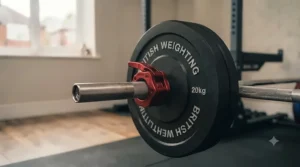
6. WARM BODY COLD MIND Reinforced Olympic Barbell Clips — reinforced mid-range durability
The WARM BODY COLD MIND Reinforced Olympic Barbell Clips sit deliberately between the budget clamps and premium lock-jaw options on this list, built specifically around the idea that most home lifters need more durability than an entry-level clamp without paying flagship prices. The 2-inch/50mm design uses a reinforced frame intended to resist the cracking and hinge fatigue that tends to show up first on cheaper clamps after regular CrossFit-style or powerlifting use. What the spec sheet won’t tell you, but reviewers note, is that the reinforcement shows up most clearly in how the collar behaves after the bar is dropped repeatedly rather than in day-one first impressions, where most collars in this price bracket feel broadly similar. Aggregated review sentiment consistently highlights secure hold and minimal plate rattle as the standout points, with occasional feedback that the locking lever requires a firmer push than some rivals, a trade-off that generally correlates with a tighter, more secure clamp rather than a design flaw.
Pros:
- ✅ Reinforced frame built specifically to resist repeated-drop fatigue
- ✅ Minimal plate rattle reported consistently across reviews
- ✅ Sits at a genuine mid-range price between budget and premium
Cons:
- ❌ Locking lever needs a firmer push than some quick-release rivals
- ❌ Less established brand history than Lock-Jaw or Clout Fitness
Priced in the £18-£25 range for a pair, this is a smart middle-ground pick for anyone training hard enough to worry about long-term clamp fatigue without needing a full premium upgrade.
7. Iron Lab Olympic Barbell Collar — budget lock-jaw style without the flagship price
The Iron Lab Olympic Barbell Collar takes the same fundamental lock-jaw design philosophy that made premium collars popular and rebuilds it at a genuinely lower price point using more affordable ABS plastic construction rather than premium nylon resin. Fitting standard 2-inch Olympic sleeves, the single-action lever locking system is functionally similar to pricier lock-jaw alternatives, which explains why this has become one of the most consistently popular collars in its category on Amazon. Here’s what to weigh: using more affordable materials means the frame doesn’t quite match the fully-captured pad durability of premium lock-jaw designs over years of heavy use, but for lifters who want the lock-jaw locking action and speed without the flagship price tag, it’s a genuinely reasonable trade-off rather than a compromise that undermines basic safety. Reviewers consistently note strong initial holding power and an easy, intuitive locking action, with the most common long-term feedback being that the ABS frame shows wear a little sooner than premium resin alternatives under very frequent heavy use.
Pros:
- ✅ Lock-jaw style locking action at a genuinely budget price
- ✅ Fast, intuitive single-action lever, easy to learn
- ✅ Popular, widely reviewed option with a large user base
Cons:
- ❌ ABS plastic frame wears sooner than premium nylon resin under heavy use
- ❌ Pad capture isn’t as secure long-term as flagship lock-jaw designs
Usually priced around £15-£20 for a pair, this is the pick for anyone who wants the lock-jaw experience on a genuinely tighter budget, with a realistic understanding of its longer-term limitations.
How to Choose Barbell Collars for Your Home Gym
What are barbell collars for a home gym? In short, they’re locking or spring-tensioned clips that clamp onto a barbell sleeve to stop weight plates sliding, rotating or falling off during a lift, matched to the bar’s specific sleeve diameter and the intensity of training they’ll see.
Choosing correctly comes down to a handful of measurable criteria rather than brand reputation alone:
- Confirm your bar’s sleeve diameter first. Olympic bars use a 2-inch (50mm) sleeve; standard bars use 1-inch (25mm). This single check eliminates most wrong purchases before you even compare designs.
- Match the collar type to training intensity. Spring collars suit general strength training; lock-jaw and reinforced clamps suit CrossFit-style training or any session where the bar gets dropped.
- Check the weight rating per collar, not per pair. Manufacturers sometimes quote combined figures, so look specifically for a per-collar vertical capacity when comparing heavy-lift suitability.
- Prioritise a captured or lined pressure pad. Collars with an internal rubber or elastomer lining grip the sleeve more securely and protect the bar’s finish from scuffing.
- Consider one-handed operation if you train alone. A collar you can open and close with one hand mid-set is a genuine safety advantage when your other hand is stabilising a plate.
- Look for a genuine warranty, not just a return window. A lifetime or multi-year warranty signals real confidence in long-term hinge and lever durability.
- Buy a second set if you own multiple bars. Swapping one pair of collars between bars constantly accelerates wear on the hinge mechanism faster than most buyers expect.
Spring Collars vs Lock-Jaw Collars
Spring collars and lock-jaw collars solve the same basic problem through genuinely different mechanisms, and understanding the difference matters more than most buying guides admit. A spring collar relies on coiled steel tension wrapped around the sleeve, gripping through consistent radial pressure; a lock-jaw collar instead uses a rigid frame and a mechanical lever that clamps shut and locks in place, holding through leverage rather than tension alone.
In practice, this means spring collars tend to lose a small amount of effective grip over years of repeated stretching, whereas a well-built lock-jaw collar, like the Lock-Jaw OLY 2, maintains consistent clamping force because the mechanism doesn’t rely on the material’s elasticity holding up indefinitely. Based on the spec comparison between the two mechanisms, lock-jaw designs generally win decisively for CrossFit-style training or any session where the bar gets set down with force, since the rigid clamp resists the shock of impact far better than a coiled spring does. Spring collars, however, remain genuinely competitive for general home strength training specifically because they’re lighter, cheaper, and faster to learn, and a well-made pair like the ProsourceFit Olympic Spring Clip Collar holds plates entirely adequately for controlled squats, bench press and deadlifts where the bar isn’t routinely dropped from height. The honest verdict: buy lock-jaw if you drop the bar regularly, buy spring if you don’t, and there’s no shame in owning both for different lifts.
Olympic Barbell Collars: What UK Home Gym Owners Should Know
An Olympic barbell collar is specifically sized to fit a 2-inch (50mm) sleeve, matching the standard used on genuine Olympic bars and Olympic weight plates, which is now the dominant format in UK home gym setups thanks to the wide availability of affordable Olympic bar and plate sets. What most buyers overlook about “Olympic” as a label is that it refers purely to sleeve diameter, not to the collar’s build quality or locking mechanism, a budget clamp and a premium lock-jaw collar can both be genuinely, correctly labelled Olympic if they fit a 2-inch sleeve.
For UK buyers specifically, it’s worth checking whether a listed collar references recognised testing standards rather than vague marketing claims; several manufacturers in this comparison, including Lock-Jaw, cite patented designs and independent load-testing figures rather than just descriptive copy, which is a genuinely useful signal when two products look nearly identical in a listing photo. If you’re running a genuine Olympic bar with bumper plates for dropped lifts like snatches or cleans, prioritise a reinforced or lock-jaw design specifically, since bumper plate training puts far more repeated shock through the collar than standard iron-plate strength training ever does.
Quick-Release Barbell Collars Explained
Quick-release, sometimes called clamp-style, barbell collars use a hinged frame and a single lever that opens and closes the collar in one motion, rather than requiring the collar to be threaded, twisted or stretched into place. This is the mechanism behind the DMoose Fitness Barbell Clips, Clout Fitness Olympic Barbell Clamps, and Phoenix Fitness Barbell Clamps on this list, and it’s become the dominant style for home gyms specifically because it removes friction from the single moment where friction matters most, changing plates mid-workout.
What most buyers overlook about quick-release collars is that “quick” and “secure” aren’t automatically the same thing, the speed advantage comes from the lever mechanism, but actual holding power still depends heavily on frame material and pad quality, which is why a premium quick-release collar like Lock-Jaw genuinely outperforms a budget clone despite using a broadly similar opening action. Reviewers consistently note that the biggest quality-of-life difference between quick-release collars isn’t speed at all, it’s how the lever feels under repeated daily use, a stiff, awkward lever becomes a genuine annoyance across hundreds of sets, while a smooth, well-engineered one disappears into the background of a workout entirely.
Plate Loading Safety
Plate loading safety is less about any single piece of equipment and more about a consistent habit, and barbell collars are only one part of that system. UK workplace equipment guidance is a useful reference point even for a home setting: HSE’s general principles for work equipment safety emphasise that equipment should be suitable for its intended use, properly maintained, and used by people who understand its limitations, a standard that applies just as sensibly to a home squat rack as a commercial gym floor, as set out in HSE’s guidance on the safe use of work equipment.
In practical terms, that means checking your collars for hairline cracks or a loosening hinge every few months, never mixing a 1-inch collar onto a 2-inch sleeve “because it’s close enough,” and treating any collar that no longer clicks or locks firmly as due for replacement rather than a minor inconvenience. It’s also worth loading plates from the inside out and collars last, then locking both sides before releasing the bar, a small sequencing habit that prevents the brief window where an unlocked bar can tip if weight distribution is uneven. Reviewers across nearly every collar in this comparison flag the same underlying pattern: most collar failures happen gradually, through unnoticed wear, rather than suddenly, which is precisely why a periodic physical check matters more than trusting a collar indefinitely just because it worked fine last time.
Barbell Sleeve Diameter: Getting the Fit Right
Barbell sleeve diameter is the single most common reason a barbell collar purchase goes wrong, and it’s almost always avoidable with one quick check before ordering. Standard bars use a 1-inch (25mm) sleeve, common on cheaper starter sets and older equipment, while Olympic bars use a 2-inch (50mm) sleeve, now the dominant standard across most home gym plate sets sold in the UK. A collar built for one diameter will either jam or spin uselessly on the other, there’s no meaningful crossover fit between the two.
What most buyers overlook here is that some bars, particularly older or imported sets, use sleeve diameters that sit slightly outside the two standard measurements, which is exactly the scenario where a dual-fit product like the Phoenix Fitness Barbell Clamps, sold in both 1-inch and 2-inch variants from the same trusted listing, removes the guesswork. If you’re genuinely unsure of your bar’s sleeve diameter, measure it directly with a tape measure at the sleeve itself rather than assuming from the bar’s overall description, since “Olympic-style” is sometimes used loosely in budget product listings without guaranteeing the true 2-inch measurement.
Weight Plate Security: Beyond Just the Collar
Weight plate security is a genuinely broader topic than collar choice alone, though the collar remains the single most important variable. Plate condition matters more than most buyers expect, worn or slightly warped plates with an enlarged centre hole will always feel less secure than a well-fitted collar can fully compensate for, so if plates rattle even with collars locked tight, the plates themselves may be the underlying issue rather than the collar.
Bar sleeve condition plays a role too, a sleeve with surface rust or heavy chalk buildup can reduce a collar’s effective grip, particularly for spring-style designs that rely on consistent friction against a clean surface. Based on the spec comparison across the collars reviewed here, the ones with a reinforced or lined pressure pad, including the Lock-Jaw OLY 2 and WARM BODY COLD MIND Reinforced Olympic Barbell Clips, tend to tolerate a slightly dirtier or worn sleeve better than a bare-metal spring collar, since the internal lining creates its own grip surface rather than depending entirely on sleeve friction. The honest takeaway is that weight plate security is a system, clean sleeves, well-fitted plates, and a collar matched to your training intensity, rather than any single component doing all the work alone.
Common Mistakes When Buying Barbell Collars
The single most common mistake is buying by price alone without checking sleeve diameter, leading to a pair of collars that simply doesn’t fit the bar they were bought for. A second frequent error is assuming all “quick-release” collars perform identically, when frame material and pad quality vary enormously between a premium option and a budget clone that merely copies the visual design.
Third, buyers regularly underestimate training intensity when choosing between spring and lock-jaw designs, picking a lightweight spring collar for CrossFit-style training where the bar is dropped repeatedly, then being surprised when it loosens faster than expected. Fourth, there’s a tendency to buy a single pair of collars for a household with multiple bars, constantly swapping them between a standard and an Olympic bar, which both accelerates hinge wear and creates a genuine safety gap whenever the “spare” bar is briefly used without any collar at all. Finally, many buyers skip periodic inspection entirely, treating collars as a one-time purchase rather than a wear item that benefits from a quick check every few months, particularly the hinge and lever mechanism on quick-release designs.
Barbell Collars vs No Collars: Benefits vs Traditional Alternatives
| Factor | With Proper Barbell Collars | Lifting Without Collars | Best For |
|---|---|---|---|
| Plate stability during the lift | Locked, minimal shift | Plates can slide or rotate | Lock-Jaw OLY 2 |
| Safety during unracking/re-racking | Consistent, predictable balance | Uneven plate distribution risk | DMoose Fitness Barbell Clips |
| Speed of changing weights | Fast with quick-release designs | Faster short-term, riskier long-term | Clout Fitness Olympic Barbell Clamps |
| Suitability for dropped lifts | Reinforced designs handle shock | Plates can fly off on impact | WARM BODY COLD MIND Reinforced Clips |
The clearest takeaway from this comparison is that lifting without collars isn’t a genuine time-saver once you account for the actual risk involved, an uneven plate shift mid-set doesn’t just feel unstable, it changes the bar’s effective balance point in a way that can genuinely compromise form on heavier lifts. Collars earn their small cost primarily through consistency, the same predictable, locked plate position every single set, which matters increasingly as the weight on the bar increases. If you’re deciding whether collars are worth the (genuinely modest) spend, the honest answer is that for anything beyond very light warm-up sets, the safety and consistency case is strong enough that skipping them rarely saves meaningful time in practice.
✨ Don’t Miss These Exclusive Deals!
🔍 Take your home gym setup to the next level with these carefully selected barbell collars. Click on any highlighted pick above to check current pricing and availability. A properly locked bar is one less thing to think about mid-set!
Practical Setup and Maintenance Guide
Getting collars right starts before the first lift. Load plates from the inside out, heaviest first, then apply the collar snugly against the innermost plate, not loosely positioned with a gap, since even a small gap allows plates to shift slightly before the collar makes contact. For lock-jaw and quick-release designs, listen for the mechanism’s full click or lock sound rather than judging by feel alone, several reviewers across this comparison specifically note that a half-closed lever can feel secure by hand while still being genuinely under-locked.
In the first month of ownership, get into the habit of a quick pre-set check, a two-second glance to confirm both collars are fully closed before unracking, particularly important with hinge-and-lever designs where the lever can occasionally bounce slightly loose during a very heavy set. For ongoing maintenance, wipe down spring collars periodically to prevent chalk buildup from reducing their grip, and check quick-release hinges every few months for any developing play or looseness, tightening or replacing as needed. If you’re using bumper plates for dropped Olympic lifts, inspect reinforced or lock-jaw collars more frequently than you would for standard iron-plate strength training, since the repeated shock of dropped lifts accelerates hinge and pad wear meaningfully faster than controlled, non-dropped training ever does.
Real-World Scenarios: Which Collar Suits Your Training
Consider someone building their first home gym on a tight budget, training three times a week with general strength work, squats, bench press, deadlifts, never dropping the bar from height. For this profile, the ProsourceFit Olympic Spring Clip Collar or Iron Lab Olympic Barbell Collar make the most sense, both deliver genuinely adequate holding power without the premium price tag, and the lighter overall design suits someone still building out the rest of their equipment.
Now picture a CrossFit-style home athlete training Olympic lifts and bumper plates, dropping the bar regularly from overhead on snatches and cleans, training five or six days a week. Here, the calculus shifts firmly toward the Lock-Jaw OLY 2 or WARM BODY COLD MIND Reinforced Olympic Barbell Clips, the investment is justified by both the frequency of shock loading and the genuine safety stakes of a dropped bumper plate setup. Finally, consider a household with two different bars, an inherited 1-inch standard bar and a newer 2-inch Olympic bar, where buying two separate specialist collar sets feels like overkill. This is exactly the scenario the Phoenix Fitness Barbell Clamps‘ dual-diameter availability was built for, not because it’s objectively the strongest collar on this list, but because it solves a genuine mixed-equipment problem that most single-diameter collars simply can’t.
Safety, Standards and Buying Confidence
If you’re buying fitness equipment for a UK home gym, it’s worth applying the same basic scrutiny you’d use for any load-bearing product, checking for genuine manufacturer specifications, independent testing claims, and a real warranty rather than relying purely on star ratings or product photos. According to general HSE principles on work equipment, equipment should be suitable for its purpose and properly maintained throughout its working life, a standard that translates sensibly to home training equipment even outside a formal workplace, as covered in HSE’s overview of work equipment and machinery safety.
On the product side, look for collars that reference patented designs, specific vertical load ratings, or named material grades (nylon resin, ABS, chromed steel) rather than vague marketing language alone; several products in this comparison, including Lock-Jaw’s patented cam-lock system and Clout Fitness’s patented latch design, cite specific, verifiable design details rather than generic claims. If you’re training with genuinely heavy weight or Olympic-style dropped lifts, it’s also worth checking whether your platform or flooring is rated for dropped bumper plates, since collar security and floor safety work together as part of the same overall setup rather than as separate concerns.
Long-Term Cost and Maintenance
The price gap between a £12 budget clamp and a £35 premium lock-jaw pair looks meaningful in isolation, but the cost-per-year calculation tells a different story once realistic replacement cycles are factored in. A well-built lock-jaw collar with a genuine lifetime warranty, used consistently over several years, can work out cheaper per year of ownership than replacing a budget clamp every 12-18 months once hinge wear or cracking sets in, which is a genuinely common outcome for cheaper collars pushed through frequent heavy or CrossFit-style use.
That said, this isn’t a blanket case for always buying premium. If you’re training moderately, three sessions a week, no dropped lifts, a well-specified budget option like the ProsourceFit Olympic Spring Clip Collar or Clout Fitness Olympic Barbell Clamps, replaced every couple of years, is entirely rational and arguably better value than a premium pair sitting mostly underused. Maintenance-wise, keep hinges and levers free of chalk dust and grit (a quick wipe every few weeks makes a genuine difference), check pressure pads for compression or cracking every few months, and store collars off the floor between sessions, ideally on a magnetic or hook-mounted rack solution, since floor storage is one of the more common causes of accidental damage and lost collars reported anecdotally across long-term ownership reviews.
Frequently Asked Questions
❓ What is the best barbell collar for a home gym on a budget?
❓ Are spring collars or lock-jaw collars better for CrossFit?
❓ How do I know what sleeve diameter my barbell uses?
❓ Do quick-release barbell collars loosen over time?
❓ Can I use the same collars on a 1-inch and 2-inch barbell?
Conclusion
Choosing the right barbell collars for a home gym really comes down to matching the mechanism, spring, quick-release, or lock-jaw, to how hard and how often you actually train, rather than defaulting to whichever option shows up first in a search or looks visually similar to a premium brand. Whether that’s the budget-friendly reach of the ProsourceFit Olympic Spring Clip Collar, the dual-diameter flexibility of the Phoenix Fitness Barbell Clamps, the storage-smart convenience of the DMoose Fitness Barbell Clips, or the industry-standard durability of the Lock-Jaw OLY 2, there’s a genuinely well-suited option across every price point covered here, not just a single “best overall” pick dressed up seven different ways.
The broader lesson is that collars are one of the cheapest genuine safety upgrades available in a home gym, and yet one of the most commonly skipped or under-specified. A collar matched correctly to your sleeve diameter, training intensity, and how often the bar gets dropped will outperform a more expensive collar chosen without those specifics in mind, every time. Check your bar’s sleeve diameter, be honest about how hard you actually train, and you’ll shortlist the right collar far faster than scrolling through star ratings alone. Your plates, quite literally, only stay where you put them if the collar holding them there was actually the right one for the job.
✨ Ready to Lock Down Your Setup?
🚀 Compare current prices on today’s top pick for your training style and stop worrying about plates shifting mid-set. Check availability before stock or pricing changes!
Recommended for You
- Multi-Grip Barbell for Bench Press: 7 Best Bars Compared (2026)
- Safety Squat Bar (SSB): 7 Best Picks for Pain-Free Squats 2026
- EZ Curl Bar for Home Gym: 7 Best Wrist-Friendly Picks (2026)
Disclaimer: This article contains affiliate links. As an Amazon Associate, I earn from qualifying purchases. If you purchase products through these links, we may earn a small commission at no additional cost to you.
✨ Found this helpful? Share it with your friends! 💬🤗
