
In This Article
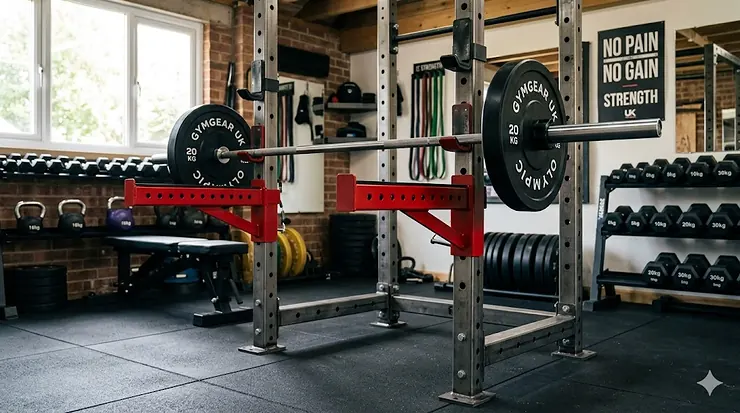
Training alone in your home gym shouldn’t mean training scared. Whether you’re grinding through the final rep of a heavy bench press in your garage in Manchester or attempting a new squat personal best in your spare bedroom in Bristol, safety spotter arms transform your power rack from a simple frame into a proper safety system. They’re the silent guardian that lets you push your limits without requiring a mate to stand behind you — rather crucial when most UK home gyms are tucked into converted garages, spare rooms, or garden sheds where space barely accommodates the lifter, let alone a spotter.
In my years of testing home gym equipment across British conditions — from damp Scottish winters to humid London summers — I’ve learned that not all spotter arms are created equal. The budget options flooding Amazon.co.uk often sacrifice stability for price, whilst premium models justify their cost with features that genuinely enhance safety. The challenge facing UK buyers isn’t just finding spotter arms that fit their rack; it’s identifying which ones won’t develop rust from moisture exposure, which can support serious weight without flexing, and which offer enough clearance for proper lifting form.
This guide cuts through the marketing nonsense. I’ve researched dozens of models available on Amazon.co.uk and UK fitness retailers, analysed customer feedback from British buyers dealing with our unique challenges (compact living spaces, variable weather, limited storage), and identified the seven safety spotter arms that actually deliver on their promises. You’ll discover which models suit different rack types, what weight capacities mean in practical terms, and how to choose equipment that won’t become garage decoration after the initial enthusiasm fades.
Quick Comparison: Top Safety Spotter Arms at a Glance
| Product | Rack Compatibility | Weight Capacity | Key Feature | Best For | Price Range |
|---|---|---|---|---|---|
| GYM MASTER GM3 | 60mm uprights | Up to 450kg | UHMW protective pads | GM2/GM3 racks | £100-£150 |
| StarONE 2×2 | 2×2″ power racks | 227kg (500 lbs) | Extended 16″ length | Budget-conscious | £60-£90 |
| Capital Sports Saspot | Dominate Edition | 250kg | Supporting crossbars | Mid-range buyers | £80-£120 |
| Mirafit M3/M4 | 50mm/60mm racks | 400kg+ | Multiple size options | Serious lifters | £90-£140 |
| Yes4All Premium | 2×2″ 1″ holes | 453kg (1000 lbs) | Convertible to fly machine | Versatile training | £120-£160 |
| Powertec WB-PA16 | Powertec racks | 227kg (500 lbs) | Textured protective top | Powertec owners | £70-£110 |
| Kipika Adjustable | 2×2″ or 3×3″ | 272kg (600 lbs) | Universal compatibility | Multiple racks | £100-£140 |
Looking at this comparison, the standout distinction isn’t just weight capacity — it’s compatibility. British buyers often inherit racks from mates or snap up second-hand equipment on Facebook Marketplace, which means you’re frequently trying to match attachments to unknown brand specifications. The Yes4All Premium model’s impressive 453kg capacity catches the eye, but what most UK home gym owners overlook is how that translates to real-world safety: at 70% loading (the sensible maximum for home use), you’re still comfortably handling 315kg, well beyond what most garage gym warriors will ever attempt. Meanwhile, the GYM MASTER GM3’s rack-specific design ensures perfect fitment for those who’ve invested in the GM series — no wobbling, no gaps, just solid contact.
💬 Just one click — help others make better buying decisions too! 😊
Top 7 Safety Spotter Arms: Expert Analysis
1. GYM MASTER GM3 60mm Safety Spotter Arms — Premium UK Brand Excellence
The GYM MASTER GM3 spotter arms represent British garage gym engineering at its most practical. Designed specifically for the GM2 and GM3 power rack range (both using 60×60mm uprights with 16.5mm holes), these aren’t generic attachments hoping to fit — they’re precision-matched equipment. The 54.5cm barbell rest area provides ample catching space, whilst the gunmetal hammertone powder coat finish resists the corrosion that plagues cheaper steel in British garages and sheds.
What sets these apart from imports is the attention to UK home gym realities. The UHMW protective pads aren’t just noise reduction theatre; they genuinely prevent the distinctive metal-on-metal clang that annoys neighbours in terraced housing or flats. At 64cm overall length with 30cm height, they protrude sufficiently to catch a failed lift without requiring you to dump the bar dangerously close to your body. The included safety pin adds security that matters when you’re training solo — psychological confidence translates to better performance.
Customer feedback from UK buyers consistently highlights the solid construction and perfect rack integration. One Birmingham lifter noted that after 18 months of regular use in an unheated garage, there’s no visible rust or coating deterioration. Another in Edinburgh appreciates how quickly they adjust between bench press and squat heights — crucial when your garage gym doubles as car storage and setup time matters.
Pros:
✅ Perfect fit for GM2/GM3 racks eliminates wobble and gaps
✅ UHMW pads protect both rack and barbell whilst reducing noise
✅ British weather-resistant powder coat withstands damp conditions
Cons:
❌ Rack-specific design means no compatibility with other brands
❌ Not suitable for commercial gym use (home gym specification only)
The GM3 spotter arms typically sell in the £100-£150 range on Amazon.co.uk, representing fair value for rack owners who prioritise perfect fitment over universal compatibility. Whilst they won’t work with your mate’s different rack if you move house, that specificity is precisely what makes them reliable.
2. StarONE 2×2 Safety Spotter Arms — Budget Champion with Compromises
For UK buyers wanting rack safety without spending three figures, the StarONE 2×2 spotter arms offer an affordable entry point. Compatible with standard 2×2 inch power racks featuring 1-inch holes (the most common specification in budget home gym setups), these 16-inch arms provide reasonable protection for benching and squatting. The UHMW padded plastic layer prevents barbell scratching and dampens noise — important when your home gym shares a wall with the neighbours.
The 227kg (500 lbs) weight capacity sits at the lower end of the spectrum, which in practical terms means they’re suitable for intermediate lifters but might feel inadequate as you progress into advanced territory. More critically, customer reviews from British buyers reveal quality control issues that you don’t encounter with pricier models. Several UK purchasers report welding inconsistencies where one arm slides smoothly whilst its partner requires hammer assistance to fit the rack — rather inconvenient when you’re trying to quickly adjust height between exercises.
That said, for someone starting their home gym journey in a rented flat or student accommodation, these represent sensible value. They’ll handle your working sets whilst you build strength and save for premium equipment. One London buyer mentioned using them successfully for 18 months before upgrading, which suggests they’re fit for purpose if expectations remain reasonable.
Pros:
✅ Accessible price point for budget-conscious UK home gym builders
✅ Extended 16-inch length offers generous catching area
✅ UHMW padding protects barbell and reduces impact noise
Cons:
❌ Quality control issues reported by multiple UK customers
❌ Lower weight capacity limits progression for advanced lifters
Available in the £60-£90 range on Amazon.co.uk, these spotter arms work best as temporary safety equipment whilst you’re building your home gym budget. Just inspect them thoroughly upon arrival and don’t hesitate to return a pair if the fit isn’t smooth.
3. Capital Sports Saspot Safety Spotters — German Engineering for Dominate Edition Racks
The Capital Sports Saspot safety spotters bring German manufacturing precision to the British market. Designed for the Capital Sports Dominate Edition rack family (including full racks, half racks, and rigs), these massive safety spotters feature supporting crossbars that distribute load stress effectively. The white plastic support surfaces protect against damage whilst the 250kg maximum load capacity handles most home gym scenarios comfortably.
At 7.5 × 29 × 67 cm (W×H×D), these aren’t subtle attachments — they’re substantial pieces of equipment that inspire confidence. The 60cm plastic support surface provides ample barbell contact area, reducing the concentrated stress that can dent bars when they’re dropped aggressively. Each arm weighs approximately 7.3kg, which sounds heavy until you consider that mass contributes to stability under load.
British buyers appreciate the straightforward design that eliminates unnecessary complexity. There are no fiddly adjustment mechanisms to corrode in damp garages, no rotating parts that seize up after months of neglect. You simply hang them at your desired height on the rack intakes and they sit there reliably, ready to catch a failed rep. One Surrey lifter mentioned leaving them installed year-round in an outdoor-covered garage, where they’ve withstood British weather without degradation.
Pros:
✅ Supporting crossbars enhance structural integrity under heavy loads
✅ Generous 60cm support surface protects barbell from denting
✅ Simple plug suspension system resists corrosion and mechanical failure
Cons:
❌ Limited to Capital Sports Dominate Edition rack compatibility
❌ Substantial weight (7.3kg per arm) makes frequent height changes less convenient
These typically appear in the £80-£120 range on Amazon.co.uk, positioning them as mid-range safety equipment for those who’ve invested in Capital Sports rack systems. The compatibility restriction narrows the potential buyer pool, but if you own a Dominate Edition setup, these represent purpose-built safety equipment rather than compromise accessories.
4. Mirafit Power Rack Spotter Bars — UK Brand Reliability for M1/M100 Series
Mirafit has built a solid reputation among British home gym enthusiasts, and their spotter bars for M1/M100 racks (available for both 50mm and 60mm power rack options) demonstrate why. These replacement or additional spotter bars slide smoothly into place via steel cuffs and lock securely without elaborate mechanisms. The end handles make height adjustment genuinely convenient — a detail that matters enormously when you’re alternating between bench press and squat sessions in a compact home gym.
What British buyers particularly value is Mirafit’s understanding of UK home gym constraints. Their equipment arrives with straightforward instructions, customer service operates seven days a week from UK offices, and delivery typically stays under £4.95 regardless of order size. When you’re converting a garage or spare room into a lifting space, dealing with a British company that comprehends our building codes, electrical standards, and space limitations makes the entire process less frustrating.
The spotter bars themselves reflect practical design thinking. They’re substantial enough to inspire confidence under heavy loads yet not so cumbersome that you avoid adjusting them between exercises. British garage gym owners in colder regions note that the steel construction handles temperature fluctuations without warping, whilst the locking mechanism remains functional even after months of exposure to typical British dampness.
Pros:
✅ Available for multiple Mirafit rack specifications (50mm and 60mm options)
✅ End handles make height adjustment quick and tool-free
✅ UK-based customer service understands British home gym challenges
Cons:
❌ Mirafit-specific compatibility limits versatility with other brands
❌ Pricing reflects British brand premium over imported alternatives
Expect to pay £90-£140 for Mirafit spotter bars on their official site or Amazon.co.uk, with pricing varying based on whether you’re buying the 50mm or 60mm version. For Mirafit rack owners, these represent the sensible choice that eliminates compatibility gambling.
5. Yes4All Premium Barbell Safety Catches — American Import with Genuine Versatility
The Yes4All Premium safety spotter arms bridge the gap between budget imports and premium British brands. Designed for 2-inch × 2-inch power racks with 1-inch or 5/8-inch holes, they boast an impressive 453kg (1000 lbs) weight capacity that exceeds what most home gym warriors will ever test. The heavy-duty square steel construction resists corrosion and breaking, whilst UHMW plastic pads protect your barbell from damage during catches.
What genuinely distinguishes these from competitors is their convertibility to a fly machine setup — you can perform cable-style movements using the spotter arms as anchor points. For UK home gym owners working within tight space constraints (terraced houses, compact flats, garage-shares), equipment that serves multiple functions represents smart investment. The adjustable height mechanism allows twist-pull-insert positioning without tools, sensible for solo training where you’re constantly switching between exercises.
British buyers should note these are American-designed equipment, which occasionally means imperial measurements and specifications don’t perfectly align with metric-based European racks. Several UK customers report success fitting them to various 2×2″ racks, but careful measurement before purchase prevents disappointment. One Manchester lifter mentioned they work brilliantly with his Fitness Reality rack, whilst another in Glasgow had to file down the pins slightly for smooth operation.
Pros:
✅ Exceptional 453kg weight capacity accommodates advanced strength athletes
✅ Convertible fly machine functionality maximises compact home gym utility
✅ UHMW plastic pads protect expensive barbells from damage
Cons:
❌ Imperial design occasionally requires adjustment for metric rack compatibility
❌ Premium pricing reflects advanced features not everyone needs
Available in the £120-£160 range on Amazon.co.uk, these spotter arms justify their cost if you’ll actually utilise the fly machine conversion capability. For pure safety equipment, cheaper options deliver similar catching function.
6. Powertec WB-PA16 Spotter Arms — Purpose-Built for Powertec Power Racks
If you’ve invested in a Powertec Workbench Power Rack, the Powertec WB-PA16 spotter arms represent the obvious companion purchase. Connecting to the front of the Powertec rack, these add extra safety for exercises performed outside the cage — particularly useful for bench pressing where you want bar clearance without the cage frame interfering with your lift path. The 227kg (500 lbs) weight capacity handles most home gym applications comfortably.
The textured top surface protects both your bar and the rack equipment from damage during catches, whilst multiple adjustment holes on the rack front allow easy height positioning for different exercises. What makes these particularly suited to UK home gyms is Powertec’s established presence in the British fitness market — replacement parts, customer service, and compatible accessories are all readily available without import complications.
British buyers considering these should verify their specific Powertec rack model’s compatibility, as Powertec manufactures several power rack variations. One benefit of buying brand-matched equipment is the guaranteed fit; you’re not gambling on universal compatibility or making workaround adjustments. A Cardiff buyer mentioned appreciating how they installed in minutes without consulting manuals or searching forums for fitment advice.
Pros:
✅ Perfect compatibility with Powertec Workbench Power Rack eliminates fitment issues
✅ Textured top protects expensive barbells from scratching
✅ Multiple adjustment holes accommodate various exercise heights
Cons:
❌ Limited to Powertec rack owners (no cross-brand versatility)
❌ Lower weight capacity might limit very advanced lifters
Typically available for £70-£110 through UK fitness equipment retailers including Fitness Superstore, these represent solid value for Powertec rack owners. The brand-matched reliability justifies the modest premium over generic alternatives.
7. Kipika Adjustable Safety Spotter Arms — Universal Compatibility Champion
The Kipika Adjustable spotter arms tackle the compatibility challenge that plagues British home gym builders. Designed to fit both 2×2″ and 3×3″ power racks with 5/8″ or 1″ holes, these offer remarkable versatility for those who’ve purchased second-hand equipment or plan to upgrade racks eventually. The 272kg (600 lbs) capacity sits comfortably in the practical range for serious home gym training.
Heavy-duty construction features rubber padding that reduces barbell damage and dampens the crash when you miss a lift — appreciated by neighbours in semi-detached housing or flats where noise complaints become real concerns. The adjustable height mechanism works smoothly according to British customer feedback, with one Edinburgh buyer noting they adjust multiple times weekly without wear or loosening.
What makes these particularly relevant for UK buyers is the flexibility they provide in a market where power rack standards vary wildly. Many British home gym owners start with budget equipment then upgrade gradually as space and finances permit. Having spotter arms that transfer between rack systems prevents the frustrating scenario where you’re selling perfectly functional safety equipment simply because it won’t fit your new rack.
Pros:
✅ Universal compatibility works with multiple rack specifications (2×2″ and 3×3″)
✅ Rubber padding protects barbells and reduces noise for urban living
✅ Adjustable design accommodates various hole spacing standards
Cons:
❌ Universal fitment sometimes means slightly looser tolerances than rack-specific options
❌ Mid-range capacity might not satisfy powerlifters working with extreme loads
Available in the £100-£140 range on Amazon.co.uk, these represent smart investment for home gym builders who value flexibility over perfect precision. They’re the sensible choice when you’re not entirely certain what equipment you’ll own in two years.
Setting Up Your Spotter Arms: Practical Guide for British Home Gyms
Installing safety spotter arms properly makes the difference between effective protection and false confidence. In British home gyms — where space is often tight, floors may not be perfectly level, and environmental conditions vary from damp garages to climate-controlled spare rooms — proper setup requires more thought than simply sliding arms into holes.
Initial Fitment and Height Selection
Start by determining your catch height for each exercise. For bench pressing, position spotter arms roughly 5-8cm below your chest at the bottom of your press — close enough to catch a failed rep but not so high you’ll strike them during normal lifting. British lifters working in compact spaces should account for rack positioning; if your bench sits against a wall (common in garage gyms), ensure spotter arms protrude sufficiently to catch the bar even if your press path isn’t perfectly vertical.
For squatting, set arms approximately 8-12cm below your bottom squat position. This allows you to dump the bar safely if you can’t complete the lift, without requiring you to collapse dangerously low before the bar catches. One Bristol lifter I spoke with keeps his squat spotter arms one hole lower than feels comfortable during testing, explaining that when you’re genuinely failing under heavy load, you drop faster and further than during deliberate practice dumps.
British Climate Considerations
If your home gym occupies an unheated garage or garden shed (typical in British properties), moisture management becomes crucial. Wipe down spotter arms monthly with a light oil cloth to prevent rust formation where metal contacts metal. Pay particular attention to adjustment pins and locking mechanisms, as these smaller components seize up first in damp conditions. One Scottish lifter mentioned treating all his rack attachments with a moisture-displacing spray every autumn, which has kept everything functioning smoothly through five winters.
Check that UHMW plastic pads or rubber protectors haven’t absorbed moisture and swollen, as this affects how smoothly arms adjust. In persistently damp environments, consider removing spotter arms when not in use for extended periods, storing them wrapped in cloth indoors. This sounds excessive until you’ve experienced corroded adjustment mechanisms that won’t budge.
Testing and Adjustment
Before loading serious weight, test your spotter arm setup by deliberately dumping an empty bar or light load onto them. Listen for concerning sounds — excessive flex, metallic creaking, or movement in the rack itself all indicate problems requiring attention. British building regulations mean garage floors are typically concrete, but if you’re training on wooden joinery (loft conversions, upper-floor spare rooms), verify your floor can handle the impact stress of dropped weights without structural concerns.
Adjust spotter arm positioning between exercises immediately, not as an afterthought when you’re tired from lifting. Fatigue impairs judgment; more than one British home gym owner has discovered they miscalculated catch height whilst exhausted, resulting in crushed fingers or damaged equipment. Mark your preferred heights with tape or chalk on the rack uprights, creating visual reference points that work even when you’re mentally drained from a hard session.
Real-World Scenarios: Matching Spotter Arms to British Home Gym Situations
Understanding specifications helps, but seeing how safety spotter arms function in actual British home gyms provides practical perspective. These scenarios represent common situations facing UK lifters, with solutions matched to real-world constraints.
The Urban Flat Dweller: Sarah in Manchester
Sarah trains in her one-bedroom flat’s second bedroom, converted into a compact gym space roughly 2.5 × 3 metres. Her Mirafit M3 rack sits against the wall, and she shares the building with elderly neighbours who’ve complained about noise before. She selected the GYM MASTER GM3 spotter arms specifically for their UHMW pads, which significantly reduce the metallic clang when she misses a bench press rep.
The 450kg capacity exceeds anything Sarah will attempt, but she appreciates the psychological confidence. Training alone in a flat with thin walls means she can’t shout for help if something goes wrong. The spotter arms transform her training from anxious half-efforts to genuinely progressive overload, particularly on bench press where she’s working towards bodyweight reps. The £130 investment has paid for itself in consistent progress and peace of mind.
The Garage Gym Powerlifter: James in Leeds
James’s detached garage measures 5 × 3 metres and houses a comprehensive powerlifting setup. His Capital Sports Dominate Edition rack with Saspot safety spotters handles regular training loads exceeding 180kg on squats and 140kg on bench. Living in Yorkshire means his unheated garage experiences temperature swings from near-freezing winters to summer humidity, but the powder-coated steel has withstood four years without significant corrosion.
The supporting crossbars on the Saspot design matter more as weights increase — James noticed reduced flex compared to his previous single-tube spotter arms, particularly during heavy squat walkouts when slight contact with the arms occasionally occurs. He keeps them installed permanently at squat height, using separate J-hooks for bench pressing rather than constantly adjusting the spotters. For someone handling serious weights in a private space where setup time isn’t constrained, this approach maximises safety.
The Budget-Conscious Beginner: Tom in Birmingham
Tom started lifting six months ago and built his home gym gradually whilst working a junior accountancy role. His Fitness Reality rack cost under £200, and the StarONE spotter arms represented an affordable safety upgrade at £75 on Amazon.co.uk. He’s aware of the quality control concerns and thoroughly tested both arms before use, finding them acceptably smooth if not perfectly polished.
For Tom’s current lifting stage — squatting around 80kg and benching 60kg — the 227kg capacity provides ample safety margin. He anticipates upgrading to premium equipment within two years as his income and strength increase, viewing these spotter arms as temporary but functional safety equipment. The key lesson from Tom’s approach: don’t let perfect be the enemy of good enough. Some safety equipment beats no safety equipment, even if it’s not the premium choice.
Understanding Weight Capacity: What the Numbers Actually Mean
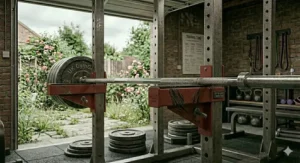
Weight capacity specifications dominate spotter arm marketing, but British buyers rarely understand what these figures represent in practical terms. A 450kg capacity sounds impressive until you realise that’s the catastrophic failure point under laboratory testing conditions — not your safe working limit.
The 70% Rule for Home Gym Safety
Professional UK gym equipment follows British Standards that account for repeated stress, impact loading, and safety margins. Home gym equipment from Amazon.co.uk typically lacks this rigorous testing, so sensible British lifters apply the 70% rule: never exceed 70% of stated weight capacity during regular use. This accounts for dynamic loading (dropping weights generates more force than slowly lowering them), fatigue in materials over time, and the reality that cheaper manufacturing doesn’t match laboratory testing standards. For serious powerlifting training where maximum loads are regularly attempted, this safety margin becomes even more critical.
For the GYM MASTER GM3’s 450kg capacity, 70% equals 315kg — well beyond what most home gym warriors will ever attempt. The Yes4All Premium’s 453kg capacity provides a 317kg safe working limit, genuinely useful for advanced powerlifters. Meanwhile, the StarONE’s 227kg capacity drops to 159kg safe working load, which intermediate lifters will approach within a year or two of consistent training.
Impact Forces and British Building Considerations
When you miss a squat and dump the bar onto spotter arms, the impact force exceeds the static weight substantially. Physics dictates that dropping a 100kg bar from chest height generates roughly 140-160kg of impact force — the exact multiplication depends on drop distance and deceleration rate. British building regulations mean residential floors must handle specific loading, but repeatedly dropping 150kg+ onto wooden joinery floors (common in Victorian terraces and Edwardian semis) risks structural damage beyond the equipment itself.
Concrete garage floors handle impact better, but even here, repeatedly shock-loading spotter arms accelerates metal fatigue. One Cardiff lifter mentioned his first set of budget spotter arms developed a slight bend after 18 months of regular use, despite never exceeding stated capacity. The bend appeared where stress concentrated during impacts, eventually making the arms unsafe for continued use.
Rack Compatibility and Load Transfer
Spotter arm weight capacity means nothing if your rack can’t handle the transfer forces. British buyers purchasing rack and spotter arms separately should verify the rack’s own specifications. A 450kg-rated spotter arm attached to a 200kg-rated budget rack simply moves the failure point. The arm might survive but the rack frame could buckle, twist, or pull apart at welded joints.
This particularly matters for foldable or wall-mounted racks increasingly popular in British homes where space is premium. These racks sacrifice some load capacity for convenience, meaning you can’t necessarily use heavy-duty spotter arms to their full potential. Check manufacturer specifications carefully, and when in doubt, assume the weakest component determines your system’s actual capacity.
Common Mistakes When Buying Safety Spotter Arms in the UK
British home gym builders make predictable errors when selecting spotter arms, often resulting in wasted money, unsafe training conditions, or compatibility headaches. Learning from others’ mistakes saves both frustration and potential injury. Understanding how power racks function as mechanical spotters helps inform better purchasing decisions.
Mistake #1: Assuming Universal Compatibility
The most frequent error is purchasing “universal” spotter arms without verifying exact measurements. British buyers often discover too late that “2×2 inch compatibility” doesn’t account for actual rack tubing variations — some manufacturers use 50mm tubing (slightly under 2 inches), whilst others use precisely 2 inches or even 51mm. A 1-2mm difference renders spotter arms either too loose (dangerous wobbling under load) or too tight (requiring hammer assistance for adjustment).
Measure your rack’s upright dimensions precisely before ordering. Use calipers if possible, not tape measures, as millimetre accuracy matters. Verify hole diameter and spacing — a surprising number of British home gym owners discover their rack uses 16mm holes when they’ve purchased spotter arms with 15.5mm pins. That half-millimetre creates problematic slack.
Mistake #2: Prioritising Price Over Build Quality
Budget spotter arms from Amazon.co.uk occasionally cost £40-£50, tempting British buyers watching their home gym expenditure. These ultra-cheap options almost universally feature thin steel, minimal protective padding, and welding that wouldn’t pass British Standards scrutiny. One London lifter shared his experience of budget spotter arms that visibly flexed under his working bench press weight (120kg), eventually cracking at the weld point after six months.
The genuine economy lies in buying mid-range equipment once rather than replacing cheap equipment repeatedly. The £30 saved on budget spotter arms doesn’t justify the anxiety of training with equipment you don’t trust, nor the risk of injury from structural failure. British building regulations exist precisely because engineering tolerances matter when safety is concerned — the same principle applies to home gym equipment.
Mistake #3: Neglecting British Climate Factors
British buyers frequently purchase equipment without considering moisture exposure. Garden gym pods, garage conversions, and outdoor-covered lifting spaces expose steel equipment to conditions ranging from coastal salt air (if you’re near the sea) to industrial pollution (urban areas) to simple British damp (everywhere). Powder coating quality varies enormously, and cheaper spotter arms often feature thin coatings that chip and rust within months.
Look for “weather-resistant” or “outdoor-rated” finishes if your gym isn’t climate-controlled. The hammertone powder coat on GYM MASTER equipment, for instance, specifically resists British weather better than basic powder coating. One Glasgow lifter mentioned his premium spotter arms showed zero rust after three years in an unheated garage, whilst his mate’s budget arms from the same timeframe had visible corrosion after one Scottish winter.
Mistake #4: Ignoring Noise Considerations in British Housing
British homes — particularly terraces, semis, and flats — mean you’re often training within earshot of neighbours. Spotter arms without UHMW padding or rubber protectors create distinctive metallic crashes when you miss a lift, sounds that travel through party walls surprisingly well. Several British home gym owners have received noise complaints after neighbours heard repeated clanging during early-morning or late-evening training sessions.
This matters more than Americans or Canadians might imagine because British housing density exceeds North American norms. Your American YouTube fitness influencer trains in a detached suburban house with neighbours 20 metres away; you’re training in a terrace with shared walls. Budget spotter arms that save £40 but generate noise complaints risk your entire home gym setup if landlords or housing associations get involved.
Safety Spotter Arms vs Traditional Safety Bars: Which Setup Suits British Home Gyms?
Understanding the fundamental difference between spotter arms and traditional safety bars helps British home gym builders make informed decisions. Both provide catching functions, but they suit different training styles and space constraints.
Structural Design and Catch Area
Traditional safety bars (also called safety straps or safety pipes) span the rack’s full width, creating a continuous catch surface. Spotter arms protrude from the front of the rack, catching weight on relatively short platforms. For British home gyms where every centimetre matters, this distinction affects usability. Safety bars reduce your effective lifting space because they occupy width within the rack, whilst spotter arms extend outward, potentially interfering with walking space around your rack.
In a compact garage measuring 2.5 metres wide, safety bars let you maintain clear walking space beside the rack. Conversely, in a larger garage or spare room where rack surroundings aren’t constrained, spotter arms offer quicker height adjustment and easier bench positioning. One Manchester lifter with a 2-metre-wide garage uses safety bars precisely because spotter arms would extend into his walking path, creating a tripping hazard in the tight space.
Height Adjustment Convenience
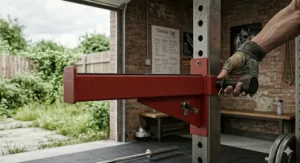
Spotter arms adjust independently and quickly — twist, pull, reposition, done. This matters enormously when you’re alternating between exercises with different catch heights. Safety bars typically require adjusting multiple connection points (four or more, depending on rack design), making frequent repositioning tedious. British home gym owners who superset exercises or train multiple people with different heights strongly prefer spotter arms’ convenience.
However, safety bars’ adjustment stability under load often exceeds spotter arms, particularly with budget equipment. A safety bar locked at four points won’t rotate or shift regardless of how aggressively you dump weight onto it. Cheaper spotter arms occasionally exhibit slight rotation on impact, creating uneven catch surfaces. For maximum-effort singles where you’re genuinely testing your limits, safety bars’ stability provides extra psychological confidence.
British Training Culture Considerations
British garage gym culture emphasises self-reliance and making do with available space. Many UK home gym owners train solo permanently rather than occasionally, unlike American lifters who might bring training partners round regularly. This affects safety equipment choices — spotter arms suit solo training because they’re quick to adjust for different exercises without assistance, whilst safety bars’ multi-point connection benefits less when you’re always training alone anyway.
Cost represents another British consideration. Quality safety bars typically cost £120-£180, whilst decent spotter arms range £80-£140. For budget-conscious British builders assembling their garage gym gradually, spotter arms represent more accessible safety equipment. You can start with spotter arms and add safety bars later if budget permits, creating redundant safety systems for maximum protection.
Legal and Safety Standards: What British Home Gym Owners Should Know
British home gym equipment doesn’t undergo the same regulatory scrutiny as commercial gym equipment, but certain standards and considerations affect your safety and liability. Understanding these helps you make informed decisions beyond simply following Amazon.co.uk product descriptions. The Health and Safety at Work Act 1974 establishes the fundamental framework for workplace safety in the UK, principles that apply equally to home training environments.
UKCA Marking and Equipment Standards
Post-Brexit, gym equipment sold in Great Britain should carry UKCA marking indicating compliance with UK safety requirements. However, much equipment on Amazon.co.uk still displays CE marking (European Conformity) because the transition period remains in effect. For British buyers, this means verifying that equipment meets EN 957 and ISO 20957 standards — the harmonised specifications for stationary training equipment.
Spotter arms technically fall under “power cage attachments” rather than standalone equipment, creating a regulatory grey area. Premium British brands like Mirafit and GYM MASTER manufacture to commercial equipment standards even for home gym products, whilst budget imports often skip formal testing entirely. One practical approach: if the manufacturer can’t provide EN 957 compliance documentation when requested, assume the equipment lacks proper safety testing.
Home Insurance and Liability Considerations
British home insurance policies typically cover home gym equipment under contents insurance, but they assume you’re using equipment appropriately and safely. If a spotter arm structural failure causes injury or property damage, your insurance provider might investigate whether the equipment met safety standards and was properly maintained. This rarely becomes an issue, but it’s worth understanding that buying the cheapest possible spotter arms could theoretically affect a claim.
For British home gym owners who occasionally train friends or family members, liability becomes more relevant. If your mate gets injured because your budget spotter arms failed during a supervised session, you’re potentially liable under UK law. Quality equipment with proper ratings and maintenance records provides protection beyond physical safety — it demonstrates due diligence if legal questions arise.
The Health and Safety at Work Act 1974
Whilst this primarily governs workplace safety, British personal trainers running sessions from home gyms fall under these regulations. If you’re charging for training services — even informally coaching mates for petrol money — your equipment must meet commercial standards. This means spotter arms should be rated for commercial use, regularly inspected, and maintained to manufacturer specifications. The Health and Safety Executive provides comprehensive guidance on manual handling and equipment safety that applies equally to home gym environments.
Most British home gym owners train purely for personal use, making commercial standards voluntary rather than mandatory. However, adopting these practices (quarterly equipment inspections, maintenance logs, replacement of worn components) simply makes sense. It’s your safety at stake, after all, and British weather and compact spaces accelerate equipment wear compared to climate-controlled American basements.
Maintaining Your Spotter Arms: British Climate-Specific Advice
British weather isn’t kind to garage gym equipment. The persistent damp, temperature fluctuations, and occasional freezing conditions accelerate wear on steel components, particularly in unheated spaces. Proper maintenance extends equipment life and ensures safety mechanisms function when needed.
Monthly Inspection and Cleaning
At the start of each month, remove spotter arms from your rack and inspect them thoroughly. Check welded joints for cracks or separation — stress fractures often begin invisibly then propagate under repeated loading. Look for rust formation at contact points where steel meets steel, particularly around adjustment pins and locking mechanisms. British garage gym conditions create perfect rust conditions: moisture, temperature variation, and often limited ventilation.
Clean metal surfaces with a wire brush to remove surface rust before it penetrates deeper. Apply a light machine oil to all moving parts, wiping away excess to prevent dust accumulation. One Yorkshire lifter recommends WD-40 for moisture displacement followed by a proper lubricating oil for long-term protection — the WD-40 drives out moisture from tight spaces, whilst the lubricating oil provides lasting protection. This two-step approach works particularly well in British climates.
Protective Padding Maintenance
UHMW pads and rubber protectors degrade over time, particularly in unheated garages where temperature extremes affect material properties. Check padding for cracks, deformation, or loosening from the metal backing. British winters make rubber padding brittle, whilst summer heat can make it excessively soft. Replacement pads cost £10-£20 on Amazon.co.uk and represent sensible maintenance rather than optional upgrades.
If your spotter arms lack protective padding (common on budget models), consider adding self-adhesive foam pipe insulation from any DIY store. It’s not as durable as proper UHMW, requiring replacement every 6-12 months, but it protects your barbell and reduces noise significantly. One Birmingham lifter mentioned spending £8 on pipe insulation that transformed his budget spotter arms from concerning to confidence-inspiring.
British Winter Preparation
Before winter arrives, apply a moisture-resistant coating to all bare steel surfaces. Car wax works surprisingly well — it’s designed to protect steel from road salt and moisture, conditions not dissimilar to British garage environments. Wipe on a thin coat, let it cure overnight, then buff to prevent residue transfer to your barbell. This simple step prevents rust formation during the worst weather months.
Consider bringing spotter arms indoors during extended non-training periods (holidays, injury recovery). This sounds excessive until you’ve experienced how quickly rust develops in British winter dampness. If indoor storage isn’t feasible, at minimum wrap spotter arms in towels or moving blankets to reduce direct moisture exposure. Your garage gym might not be Instagram-perfect, but functional equipment matters more than aesthetics.
FAQ: Safety Spotter Arms for British Home Gyms
❓ Are safety spotter arms necessary for home gym training in the UK?
❓ What weight capacity should I choose for spotter arms in my British garage gym?
❓ How do I prevent rust on spotter arms in my unheated British garage?
❓ Can I use safety spotter arms designed for 2×2 inch racks on metric UK racks?
❓ Do safety spotter arms require professional installation or special tools?
Conclusion: Building Your British Home Gym Safety System
Safety spotter arms represent one of the smartest investments you’ll make in your home gym journey. Whether you’re squatting in a Manchester flat, benching in a Leeds garage, or pressing in a converted Edinburgh spare room, proper safety equipment transforms training from anxiety-inducing uncertainty into confident progressive overload. The difference between training with and without spotter arms isn’t just physical safety — it’s psychological freedom to attempt challenging weights without the constant background fear that a failed rep could cause serious injury.
For most British home gym owners, mid-range spotter arms in the £90-£140 range offer the optimal balance of quality, features, and value. The GYM MASTER GM3 serves rack-specific buyers brilliantly, whilst the Kipika Adjustable provides versatility for those juggling compatibility concerns. Budget-conscious beginners can start with StarONE equipment whilst building their strength and savings, upgrading to premium options as progression demands. What matters most isn’t purchasing the absolute best equipment immediately — it’s having functional safety equipment installed and properly maintained.
British home gyms face unique challenges: persistent dampness, compact spaces, noise-conscious neighbours, and equipment that must function reliably despite temperature extremes. Choose spotter arms that account for these realities rather than simply copying American YouTube setups. Look for weather-resistant finishes, noise-reducing protective padding, and construction quality that survives British garage conditions for years rather than months. Your safety equipment only works if it’s still structural sound when you actually need it.
Install your spotter arms properly, maintain them regularly, and test catch heights before attempting maximum efforts. Remember the 70% capacity rule, account for British building constraints, and prioritise compatibility with your specific rack. Whether you invest £80 or £150, safety spotter arms deliver confidence that enables the consistent training required for genuine strength gains. Train smart, train safe, and let your spotter arms do the job they’re designed for — catching the occasional failed rep so you can push your limits without pushing your luck.
Recommended for You
- Best J Hooks for Power Rack UK: 7 Top Picks (2026)
- 7 Best Independent Squat Stands UK: Expert Guide 2026
- 7 Best Wall Mounted Squat Racks UK Home Gyms 2026 Guide
Disclaimer: This article contains affiliate links. As an Amazon Associate, I earn from qualifying purchases. If you purchase products through these links, we may earn a small commission at no additional cost to you.
✨ Found this helpful? Share it with your mates! 💬🤗
