
In This Article
Transforming your power rack into a complete upper body training station doesn’t require a fortune or a second mortgage on your semi-detached. A quality dip attachment for power rack can turn those £400-£800 you spent on your cage into a genuinely versatile gym setup. What most British home gym owners overlook, though, is that not all dip bars are created equal—especially when you’re working within the confines of a spare bedroom or garage in Manchester where every centimetre of floor space counts.
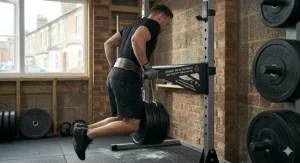
The right power rack dip station does more than just facilitate dips. It becomes your go-to for tricep work, chest development, core exercises like L-sits, and even inverted rows when you flip the positioning. Dips are considered one of the most effective bodyweight strength training exercises for upper body development, targeting multiple muscle groups simultaneously. For UK buyers specifically, compatibility matters enormously. That American-style 3×3 inch rack you ordered might need different hole spacing than the European 60x60mm models popular with brands like BodyMax and Mirafit. Get this wrong, and you’ll be staring at £50-£100 worth of steel that doesn’t actually fit your setup.
In this guide, I’ll walk you through seven genuine dip attachment options available on Amazon.co.uk and UK fitness retailers, ranging from budget-friendly parallel dip bars rack mount options around £40 to premium matador dip attachment setups that’ll set you back closer to £150. Each recommendation is based on real-world compatibility with UK market power racks, actual customer experiences from British buyers, and whether they’re worth the investment when you’re training in a damp garage through six months of drizzle.
Understanding proper upper body exercise techniques helps you maximise the benefits of dip training whilst minimising injury risk.
Quick Comparison: Top Dip Attachments at a Glance
| Product | Rack Compatibility | Grip Options | Weight Capacity | Price Range (£) | Best For |
|---|---|---|---|---|---|
| BodyMax CF470D | CF470/CF475 racks | Dual-width fixed | 130kg | £45-£65 | BodyMax rack owners |
| Mirafit M4 Dip Handle | M4 Power Rack series | Angled variable | ~150kg | £60-£80 | M4 rack users |
| Yes4All Multi-Grip | 2×2″ with 1″ holes | 3-position adjustable | 227kg (500lbs) | £50-£70 | Budget versatility |
| Titan T-2 Y-Dip | 2×2″ uprights | Y-shaped angled | ~180kg | £55-£75 | Compact spaces |
| GROM Heavy Duty | 60x60mm or 80x60mm | Fixed parallel | 200kg+ | £70-£95 | British-made quality |
| ATX 600-Series | ATX PRX-610/620/650 | Angled 60-72cm | Commercial-rated | £85-£115 | ATX rack owners |
| Generic Universal Set | Most 2×2″ or 2×3″ | Basic parallel | 130-150kg | £35-£50 | Tight budgets |
From the table above, the sweet spot for most UK home gym owners sits between £50-£80, where you’ll find attachments that balance build quality with genuine versatility. The BodyMax CF470D offers exceptional value if you already own compatible BodyMax equipment, whilst the Yes4All multi-grip provides the best flexibility for those who want narrow, parallel, and wide grip options without spending premium prices. British buyers should note that the GROM option, manufactured in Berkshire, often ships faster than imported alternatives and supports local manufacturing—something worth considering if you need your attachment within days rather than weeks.
💬 Just one click — help others make better buying decisions too!😊
Top 7 Dip Attachment for Power Rack: Expert Analysis
1. BodyMax CF470D Dip Attachment
If you’re running a BodyMax CF470 Heavy Half Rack or CF475 Heavy Duty Power Rack, this attachment slots in like it was always meant to be there—because it quite literally was. The CF470D features dual-width positioning, letting you choose between narrower tricep-focused dips or wider chest-emphasised movements. The handles themselves are thick enough (around 32mm diameter) to feel secure without causing wrist discomfort, and the electro-static powder coating holds up remarkably well against the damp conditions in British garages.
What the spec sheet won’t tell you is how quickly these attach and detach. Two pins, ten seconds, and you’re ready. For home gym owners in flats or terraced houses where you might need to partially dismantle equipment between sessions, this convenience factor cannot be overstated. Customer feedback from UK buyers consistently praises the solid construction and minimal wobble, even during weighted dips with a 20kg dip belt.
Pros:
✅ Perfect compatibility with BodyMax racks eliminates fitment concerns
✅ Dual-width positioning suits various shoulder widths and exercise goals
✅ Stores neatly on top rack rungs when not in use—critical for compact spaces
Cons:
❌ Only fits BodyMax CF470/CF475 models—useless if you switch rack brands later
❌ Fixed positions mean less customisation than fully adjustable alternatives
Around £45-£65 depending on retailer promotions, the CF470D represents solid value for BodyMax rack owners. It won’t win awards for innovation, but it does exactly what it promises without drama or disappointment.
2. Mirafit M4 Dip Handle Attachment
The Mirafit M4 series has quietly become one of Britain’s most popular home gym ecosystems, and their dip handle attachment maintains that reputation for thoughtful design. Featuring 50mm thick angled handles and a simple pin attachment system, this dip bar attachment prioritises ergonomics and ease of use. The angled design allows variable grip widths from approximately 48cm to 61cm, accommodating everyone from narrow-shouldered beginners to broader-framed powerlifters.
British customers particularly appreciate Mirafit’s flat-rate £4.95 UK delivery policy and 30-day money-back guarantee—important when you’re taking a £60-£80 punt on whether an attachment will suit your training style. Reviews from M4 rack owners emphasise the attachment’s stability during heavy weighted dips and its comfortable grip that doesn’t require additional padding or wraps, even during high-volume sessions.
For those training in unheated garages during British winters, the powder-coated finish remains grippy without becoming painfully cold to touch—a small detail that matters enormously at 6am on a January morning in Leeds.
Pros:
✅ Angled handles provide excellent grip width versatility
✅ Quick pin system makes installation literally a five-second job
✅ Mirafit’s customer service and UK-based support inspires confidence
Cons:
❌ M4-specific compatibility limits future rack upgrade flexibility
❌ Premium pricing compared to universal alternatives
At £60-£80, you’re paying for the Mirafit ecosystem’s reliability and customer support as much as the physical product. For M4 rack owners, it’s an investment that removes compatibility worries entirely.
3. Yes4All Multi-Grip Dip Bars for 2×2 Power Racks
Here’s where things get interesting for value-conscious buyers. The Yes4All multi-grip dip attachment offers three distinct grip positions—angled, parallel, and linear—within a single attachment designed for standard 2×2 inch power racks with 1-inch hole spacing. This versatility means you can target triceps with a narrow grip, shift to parallel for balanced development, or go wide for chest emphasis, all without owning multiple attachments.
The 227kg (500lbs) weight capacity comfortably exceeds what most home gym users will ever load, even during heavy weighted dips. Rubber padding on the inner contact points protects your rack’s powder coating from scratches—particularly valuable if you’ve invested in a quality cage. What stands out in UK customer reviews is the attachment’s stability despite being a universal-fit design. Provided your rack genuinely has 2×2 inch uprights with 1-inch holes, fitment is solid with minimal play.
The catch? Yes4All is an American brand, and whilst their products are available on Amazon.co.uk, delivery times can vary. Stock fluctuations mean you might wait anywhere from next-day Prime delivery to 2-3 weeks for restock. For patient buyers, though, the multi-grip functionality at around £50-£70 represents exceptional value.
Pros:
✅ Three grip positions eliminate the need for multiple dip attachments
✅ Rubber padding prevents rack damage during installation and removal
✅ 500lbs capacity supports serious weighted dip progressions
Cons:
❌ Universal fit means slightly more play than brand-specific options
❌ Availability can be inconsistent on Amazon.co.uk
For around £50-£70, you’re getting functionality that would cost £120+ if purchased as separate attachments. Budget-conscious buyers with standard 2×2 inch racks should consider this carefully.
4. Titan T-2 Y-Dip Attachment
The Titan Fitness Y-shaped dip bar has developed a cult following amongst space-conscious gym owners, and it’s easy to see why. Rather than protruding forward from your rack like traditional dip stations, the Y-design angles the handles out from a single mounting point. This saves roughly 15-20cm of forward space—absolutely crucial when you’re training in a garage that also needs to house a car, bikes, and the garden furniture that won’t fit in the shed.
Designed for 2×2 inch uprights, the T-2 version slots into racks with standard hole spacing and provides grip widths from roughly 45cm at the narrow end to 63cm at the wide end. Build quality exceeds expectations for the £55-£75 price bracket, with solid welds and a powder coat that’s held up well for UK users dealing with damp garage environments. Customer reviews note minimal wobble during use, though bolting your rack down (or adding weight plate storage) improves stability during explosive dip variations.
One consideration: the Y-shaped design means you’re dipping with the rack directly behind you. For some users, this creates a psychological barrier or genuine clearance concern with pull-up bars. Test your rack’s dimensions before committing.
Pros:
✅ Y-design saves significant forward space compared to traditional dip bars
✅ Angled handles suit various shoulder widths and dip styles
✅ Solid construction at a competitive price point
Cons:
❌ Rack position directly behind you may feel restrictive for some users
❌ Availability on Amazon.co.uk can be spotty—often ships from US warehouse
At £55-£75, the Titan T-2 Y-Dip solves the space problem elegantly. If your garage gym is measured in centimetres rather than metres, this design deserves serious consideration.
5. GROM Heavy Duty Dip Bars
Manufactured in Berkshire, the GROM Heavy Duty Dip Bars represent British engineering applied to gym equipment. Available in 60x60mm or 80x60mm box section options to match your specific rack dimensions, these attachments prioritise durability and straightforward functionality. The handles are substantial without being uncomfortably thick, and the laser-cut mounting holes ensure precise fitment with GROM power racks and compatible cages.
What sets GROM apart is their manufacturing location and customer service. Ordering from a British company means faster delivery, easier returns, and support from people who understand UK market expectations. Reviews from GROM customers emphasise the attachment’s rock-solid stability and commercial-grade build quality that justifies the £70-£95 price premium over imported alternatives.
The trade-off is compatibility specificity. These are designed for GROM racks first and foremost, with compatibility for other 60mm or 80mm box section racks being a secondary consideration. Measure your rack uprights carefully and verify hole spacing before ordering.
Pros:
✅ British-manufactured quality supports local business and faster UK delivery
✅ Commercial-grade construction built for serious weighted dips
✅ Laser-cut precision ensures excellent fitment with compatible racks
Cons:
❌ Higher price point than imported alternatives
❌ Compatibility limited to specific box section dimensions
For £70-£95, you’re investing in longevity and supporting British manufacturing. If you own a GROM rack or compatible European-style cage, the quality justifies the premium.
6. ATX 600-Series Plug-in Dip Bars
The ATX brand has built a reputation for no-nonsense commercial-quality equipment, and their 600-series dip bars continue that tradition. Designed specifically for ATX PRX-610, PRX-620, and PRX-650 power racks, these plug-in attachments feature 45mm diameter angled handles that provide variable-width positioning from 60cm to 72cm apart. The plug-in design means no pins or bolts—just slide into the upright holes and you’re ready.
This simplicity translates to incredibly quick setup and removal, which matters when you’re programming dips as a finisher after squats but need to reinstall safety bars immediately afterward. The commercial-rated construction handles heavy weighted dips without flexing or creaking, and the angled handles accommodate different shoulder widths naturally.
UK buyers shopping through The Gym Revolution or similar ATX stockists benefit from knowledgeable customer service and fast delivery. The £85-£115 price range reflects commercial build quality—this isn’t bargain-bin equipment, but it won’t let you down halfway through a workout either.
Pros:
✅ Plug-in design offers fastest installation and removal among all options
✅ Commercial-rated construction handles serious training volume
✅ Variable 60-72cm width suits most users comfortably
Cons:
❌ ATX-specific compatibility limits rack flexibility
❌ Premium pricing requires commitment to the ATX ecosystem
At £85-£115, the ATX 600-series dip bars are an investment in training consistency. If you own compatible ATX equipment and value commercial durability, the price makes sense.
7. Generic Universal Dip Bar Set (Budget Option)
Let’s be honest: not everyone needs bells and whistles. If you’re starting out, testing whether you’ll actually use dips regularly, or simply need a functional attachment whilst saving for other equipment, generic universal dip bar sets available on Amazon.co.uk for £35-£50 deserve consideration. These typically fit standard 2×2 inch or 2×3 inch racks with common hole spacing and provide basic parallel grip positioning.
Build quality varies between sellers, but customer reviews provide reasonable guidance. Look for sets with welded (not bolted) construction, powder-coated finish, and weight capacities of at least 130kg. Avoid anything that doesn’t specify exact rack compatibility dimensions—”universal” should mean specific measurements, not vague promises.
UK buyers report reasonable success with budget options, particularly for bodyweight-only dipping. The wobble factor increases compared to premium attachments, and longevity is questionable if you’re planning heavy weighted progressions. Think of these as entry points rather than lifetime solutions.
Pros:
✅ Ultra-low price point removes financial barrier to trying dips
✅ Basic functionality sufficient for bodyweight training
✅ Easy to justify as temporary equipment whilst saving for upgrades
Cons:
❌ Build quality inconsistent between sellers and batches
❌ Limited weight capacity makes heavy weighted dips risky
❌ More wobble and flex than premium alternatives
For £35-£50, generic dip bars work as starter equipment or temporary solutions. Set realistic expectations about longevity and weight capacity, and they’ll serve their purpose adequately.
Setting Up Your Dip Attachment: Avoiding Common UK Home Gym Mistakes
Most dip attachment failures aren’t product defects—they’re installation errors that create wobble, instability, or outright safety hazards. British home gym owners face specific challenges that American YouTube tutorials often ignore: working in compact spaces, managing equipment in damp environments, and balancing training needs against domestic harmony when your garage gym doubles as storage for the Christmas decorations.
Step 1: Verify Actual Rack Dimensions (Don’t Trust Product Descriptions)
Measure your power rack uprights with callipers or a precise tape measure. That “2×2 inch” rack might actually be 50x50mm with slight tolerance variations. Hole spacing matters enormously—standard 2-inch spacing on American racks doesn’t always match European 50mm spacing perfectly. A 1mm difference per hole compounds over multiple holes, potentially leaving your dip attachment hanging at an odd angle.
Step 2: Check Weight Distribution and Floor Loading
Your rack might handle 300kg during squats, but dipping creates different leverage forces. If your rack isn’t bolted to the floor (and let’s face it, most British home gym owners rent or don’t want to drill into their garage concrete), adding weight plates to the base becomes essential. Store a couple of 20kg plates on the rack’s base crossbar to prevent forward tipping during explosive dip movements.
Step 3: Account for British Weather Effects
Powder coating in damp garages develops surface moisture that affects grip. Keep a microfibre cloth near your rack specifically for wiping down handles before use. In winter, cold steel handles benefit from a quick warm-up set with gloves before gripping bare-handed for working sets. Minor rust spots will appear on cheaper attachments within 6-12 months in unheated garages—hit them with WD-40 and a wire brush every few months to prevent progression.
Step 4: Plan Your Dip Height Strategically
Position dip bars at a height where your feet clear the floor by 15-20cm at the bottom position. Too low, and you’ll bang your feet or knees against the ground. Too high, and mounting becomes awkward. Most UK garage ceilings sit around 2.1-2.4 metres, which comfortably accommodates dip stations positioned at mid-rack height.
Step 5: Test Stability Before Loading Weight
Perform 10 bodyweight dips with deliberate testing for wobble. Check mounting pins are fully engaged, handles are locked at equal heights, and the attachment doesn’t shift during use. Only after confirming stability should you add weighted dip progressions. Following proper exercise equipment safety guidelines from the Health and Safety Executive reduces injury risk significantly.
Common mistakes include assuming “universal fit” means your specific rack, neglecting to tighten pin clips fully, and positioning dip bars too close to other equipment. Take 10 minutes to set up properly rather than spending weeks nursing a shoulder injury from unstable equipment.
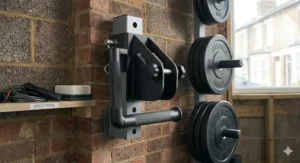
How to Choose Dip Attachment for Power Rack in the UK: 6 Expert Criteria
Selecting the right dip attachment isn’t about finding the “best” product—it’s about matching specifications to your specific rack, training goals, and British home gym constraints. Here’s how to cut through marketing fluff and make a decision you won’t regret.
1. Measure Your Rack Upright Dimensions (Not Guesses—Actual Measurements)
Grab a set of digital callipers or a precise tape measure. Record your rack’s upright dimensions (2×2″, 2×3″, 3×3″, 60x60mm, etc.), hole diameter (1 inch, 5/8 inch, 16.5mm), and hole spacing (2 inches, 50mm). Don’t approximate—0.5mm differences matter when you’re trying to fit steel pins into precision-cut holes. If your rack is a mix-and-match setup or a secondhand purchase, the original product description might be wrong.
2. Prioritise Compatibility Over Features
A £150 premium matador dip attachment with five grip positions is worthless if it doesn’t fit your rack. Start with compatibility, then evaluate features within that constraint. Brand-specific attachments (BodyMax CF470D, Mirafit M4, ATX 600) guarantee fitment for their respective racks. Universal options work across multiple racks but may have slightly more play in the connection.
3. Assess Your Actual Training Goals (Not Instagram Aspirations)
Be honest: will you actually use variable grip widths, or do you just want solid parallel bars for straightforward dips? Multiple grip options cost more and add complexity. If your primary goal is tricep development with occasional chest dips, fixed-position parallel bars suffice. If you’re training for gymnastics strength or want maximum versatility, invest in adjustable or multi-grip designs.
4. Calculate Total Cost Including Modifications
That £40 budget dip attachment might need £15 worth of grip tape, £20 for additional weight plates to stabilise your rack, and £10 for anti-slip pads to protect powder coating. Suddenly the £70 option with included padding and better stability looks more economical. Factor in realistic total investment rather than sticker price alone.
5. Consider British Weather and Storage Realities
Unheated garages in Birmingham endure months of dampness. Will your chosen attachment rust within a year, or does the powder coating actually resist corrosion? Can you easily detach and store it when you need garage space for other purposes? Bolt-on designs are stable but permanent; pin-mounted options balance security with flexibility. According to UK climate data, some regions experience over 150 rainy days annually, making corrosion resistance a practical consideration rather than luxury feature.
6. Verify Weight Capacity Matches Your Progression Plans
Most dip attachments claim 130-150kg capacity. That sounds ample until you realise your bodyweight plus a 25kg dip belt already approaches 100kg for some users. If you’re serious about weighted dip progressions, prioritise attachments rated for 180kg+ (like the Yes4All or GROM options). Commercial-grade equipment costs more upfront but supports years of progressive overload.
Following these criteria eliminates 80% of poor purchasing decisions. The remaining 20% comes down to brand preference, budget constraints, and whether you value British manufacturing enough to pay the GROM premium.
Common Mistakes When Buying Dip Bars for Squat Rack
British home gym owners make predictable errors when adding dip attachments to their setups. Learning from others’ expensive mistakes costs nothing.
Mistake 1: Assuming “Universal Fit” Means Your Rack
“Universal” in gym equipment marketing translates to “fits the most common American rack dimensions.” If you own a European-manufactured rack with metric measurements or a niche brand with proprietary hole spacing, that “universal” attachment might sit in your garage as £50 worth of unusable steel. Always verify exact compatibility before purchasing. Check rack manufacturer forums or contact sellers directly with your specific rack model.
Mistake 2: Neglecting Rack Stability When Adding Cantilevered Loads
Dipping creates leverage forces your rack wasn’t necessarily designed to handle, particularly if it’s a budget half-rack or squat stand. The attachment extends 40-60cm forward from the uprights, and your bodyweight (plus added weight) acts as a lever trying to tip the entire structure. British buyers often train in garages or spare bedrooms where floor bolting isn’t possible. The solution involves loading weight plates onto the rack base, but budget buyers frequently skip this, discover instability mid-workout, and end up injured or equipment-damaged.
Mistake 3: Buying Based on Price Alone (False Economy)
That £35 generic dip attachment saves £30 compared to the £65 BodyMax option. But when the welds crack after six months, the powder coating flakes off leaving rust spots, and the wobble makes heavy dipping feel genuinely dangerous, you’ve saved nothing. You’ll replace it with proper equipment anyway, effectively paying £100 total instead of £65 once. British consumer culture favours value over bargain-basement prices—apply that wisdom here.
Mistake 4: Ignoring Grip Width for Your Shoulder Anatomy
Not all shoulders are created equal. Wider-shouldered individuals need grip options that exceed 65cm apart to maintain healthy shoulder positioning during dips. Narrow-shouldered users might find fixed 65cm positioning uncomfortably wide, forcing elbow flare and potential injury. Test grip widths on gym equipment or friends’ setups before committing to fixed-position attachments. Adjustable or multi-grip designs cost more but prevent expensive shoulder rehabilitation later.
Mistake 5: Overlooking Storage and Removal Requirements
Your power rack lives in a garage that also stores bikes, tools, lawn equipment, and the garden furniture that won’t survive British winters outdoors. Can you actually remove the dip attachment in under a minute when you need that space back? Pin-mounted designs win here. Bolt-on options might offer slightly better stability, but they become semi-permanent fixtures that reduce overall garage flexibility. For compact British homes, flexibility often outweighs marginal stability improvements.
Mistake 6: Forgetting About Progressive Overload Paths
You’ll get stronger. Today’s challenging bodyweight dips become warm-up sets within 6-12 months of consistent training. If your chosen attachment maxes out at 130kg capacity, you might hit that ceiling whilst still weighing 80kg but adding 50kg via dip belt. Suddenly you need new equipment. Buying attachments rated for 180-200kg+ costs perhaps £20-£30 more upfront but eliminates this upgrade cycle entirely.
Avoiding these mistakes separates satisfied buyers who use their equipment for years from frustrated ones browsing Amazon for replacements within months.
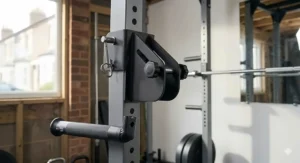
Dip Attachment vs Standalone Dip Station: What Actually Works in British Homes
The dip station debate deserves honest discussion rather than sales-influenced recommendations. Here’s the practical reality for UK home gym owners.
Floor Space: The British Home Gym’s Limiting Factor
Standalone dip stations occupy roughly 60cm × 90cm of floor space permanently. In a standard British single garage (roughly 3m × 5.5m), that represents 9% of your total area consumed by equipment that serves exactly one exercise function. Power rack dip attachments occupy zero additional floor space because they’re mounted to existing equipment. For London flat dwellers training in spare bedrooms or Manchester terraced house owners with converted cellars, this difference determines feasibility, not preference.
Stability Comparison: Not What You’d Expect
Counterintuitively, quality rack-mounted dip bars often provide superior stability compared to standalone stations. A £400-£600 bolted power rack weighs 80-120kg and sits on a solid base. Attach dip bars, and you’re working within that stable system. Budget standalone dip stations (£60-£150) tend to wobble during use unless you weigh 65kg or less. Premium standalone stations (£200+) solve the wobble problem but cost more than rack attachments whilst still consuming precious floor space.
Versatility: The Rack Attachment Wins Decisively
Rack-mounted dip attachments unlock additional exercises beyond dips. Position them low for inverted rows. Use them for L-sit holds, hanging knee raises, and even makeshift parallettes for floor work. Standalone stations do dips and perhaps basic knee raises if they include back padding. The versatility gap widens dramatically when you factor in overhead clearance—British garage ceiling heights (2.1-2.4m typically) often prevent comfortable dip station use for taller athletes, whilst rack-mounted attachments position precisely where needed.
Cost Reality Check (British Market Pricing)
Quality rack dip attachments: £45-£115 Decent standalone dip stations: £80-£200 Premium standalone stations: £200-£400
For most UK home gym owners, £45-£115 represents better value allocation. That £100-£285 saved by choosing rack attachments buys plates, a quality barbell upgrade, or proper rubber gym flooring to protect your garage concrete from dropped weights.
The Standalone Station Makes Sense When…
If you train exclusively bodyweight exercises, don’t own a power rack, and have abundant floor space (perhaps a converted garage gym with no storage needs), standalone stations offer ease of use without setup. They’re also preferable if multiple household members train simultaneously—someone can squat whilst another dips, rather than competing for rack access.
For the typical British home gym scenario—limited space, budget constraints, rack already purchased, and desire for training variety—rack-mounted dip attachments win on every practical measure.
Frequently Asked Questions
❓ Are dip attachments compatible across different power rack brands?
❓ Can I use dip attachments for exercises other than dips?
❓ What weight capacity do I actually need for weighted dips?
❓ Do dip attachments damage power rack powder coating?
❓ How do I prevent dip attachment instability in an unbolted rack?
Final Verdict: Which Dip Attachment Suits Your British Home Gym?
After reviewing real products available to UK buyers and considering the constraints of British home gyms, the right choice depends entirely on your existing rack and priorities.
If you own a BodyMax CF470 or CF475 rack, the CF470D attachment at £45-£65 represents no-brainer value with guaranteed compatibility. For Mirafit M4 owners, their £60-£80 dip handle delivers quality and Mirafit’s excellent UK customer service. Budget-conscious buyers with standard 2×2 inch racks should seriously consider the Yes4All multi-grip option at £50-£70, accepting potential wait times for the exceptional versatility gained.
British manufacturing enthusiasts or those wanting commercial-grade durability will find the GROM Heavy Duty Dip Bars justify their £70-£95 price through build quality and faster UK delivery. ATX rack owners benefit from the 600-series plug-in design despite the £85-£115 premium, whilst absolute budget buyers can start with generic £35-£50 options understanding they’re temporary solutions.
The key insight? Stop chasing the “perfect” dip attachment and instead match specifications to your actual rack, training goals, and British home constraints. Measure twice, order once, and you’ll transform your power rack into a complete upper body training station without regret or buyer’s remorse.
✨ Don’t Miss These Exclusive Deals!
🔍 Take your power rack training to the next level with these carefully selected dip attachments and complementary equipment. Click on any highlighted item to check current pricing and availability on Amazon.co.uk. These picks will help you find exactly what you need for building serious upper body strength in your British home gym!
Recommended for You
- 7 Best Safety Spotter Arms UK 2026: Expert Power Rack Guide
- Best J Hooks for Power Rack UK: 7 Top Picks (2026)
- 7 Best Independent Squat Stands UK: Expert Guide 2026
Disclaimer: This article contains affiliate links. As an Amazon Associate, I earn from qualifying purchases. If you purchase products through these links, we may earn a small commission at no additional cost to you.
✨ Found this helpful? Share it with your mates! 💬🤗
