In This Article
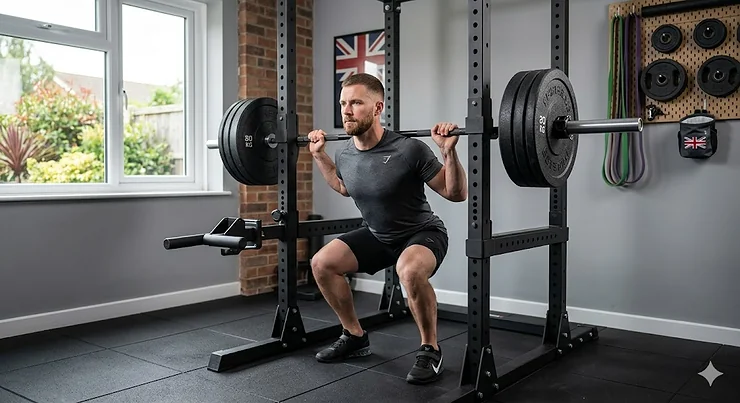
J hooks for power rack equipment might seem like a minor detail, but they’re the unsung heroes of your home gym setup. A power rack (also known as a power cage or squat cage) functions as a mechanical spotter for free weight barbell exercises, and the j hooks are your primary interface with this essential piece of equipment. These deceptively simple attachments are the difference between a barbell that rattles like a loose shopping trolley and a rock-solid racking system that instils confidence during heavy lifts. In my experience equipping home gyms across the UK, I’ve seen too many lifters struggle with the basic j cups that come bundled with budget racks — thin rubber padding that compresses after a few months, inadequate protection that slowly destroys precious barbell knurling, and unstable mounting that makes you second-guess every re-rack.
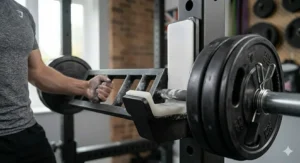
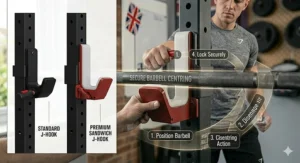
What most UK buyers overlook is that j hooks for power rack systems are not all created equal. The difference between standard hooks and upgraded j hooks for power rack attachments goes beyond aesthetics. Premium options incorporate UHMW (ultra high molecular weight) plastic protection, sandwich construction that eliminates metal-on-metal contact, and roller mechanisms that make centring your barbell effortless. For British home gym enthusiasts working in converted garages or spare bedrooms where space is at a premium, investing in quality j hooks means protecting your £300-£500 barbell whilst reducing noise — rather important when your gym shares a wall with the neighbour’s living room.
The j hooks for power rack market has evolved considerably in recent years. British manufacturers like Gym Master and Mirafit now compete alongside American brands available through Amazon.co.uk, offering everything from budget-friendly basic models around £40 to premium roller j hooks in the £80-£120 range. Understanding which features actually matter for UK conditions — where damp garages can accelerate corrosion and compact spaces demand efficient equipment — is essential before you click that “Add to basket” button.
Quick Comparison Table: Top 7 J Hooks for Power Rack
| Product | Type | Rack Compatibility | Weight Capacity | Price Range (GBP) | Best For |
|---|---|---|---|---|---|
| Yes4All J-Hooks 2×2″ | Standard with rubber pad | 2×2″ racks, 1″ holes | 450kg (1000 lbs) | £35-£50 | Budget-conscious beginners |
| Yes4All J-Hooks 2×3″ | Standard with UHMW | 2×3″ racks, 5/8″ holes | 450kg (1000 lbs) | £40-£55 | Mid-range value |
| Gym Master GM3 Standard | Standard with UHMW | 60x60mm, 16.5mm holes | 400kg | £50-£70 | UK rack owners |
| Gym Master GM3 Sandwich | Sandwich construction | 60x60mm, 16.5mm holes | 400kg | £70-£95 | Barbell protection priority |
| Gym Master GM3 Roller | Roller with UHMW | 60x60mm, 16.5mm holes | 400kg | £95-£120 | Serious lifters |
| Mirafit M3 Sandwich | Sandwich with UHMW core | M3 racks, 75x75mm | Not specified | £60-£85 | M3 rack compatibility |
| Rival T-Series Sandwich | Sandwich 2.0 design | 50x50mm, 26mm holes | High capacity | £55-£75 | T-Series racks |
From the comparison above, budget buyers will find the Yes4All 2×2″ offers exceptional value under £50, but serious lifters should note that the Gym Master GM3 Roller justifies the extra £70-£80 with its self-centring mechanism and comprehensive UHMW protection. What’s particularly interesting for UK buyers is that British-manufactured options like Gym Master often ship faster from UK warehouses compared to imported alternatives, though Amazon.co.uk Prime-eligible options can arrive next-day regardless of origin.
💬 Just one click — help others make better buying decisions too! 😊
Top 7 J Hooks for Power Rack: Expert Analysis
1. Yes4All Steel J-Hooks for 2×2″ Power Rack
The Yes4All 2×2″ j hooks represent the sweet spot between affordability and functionality for UK home gym owners. Constructed from 6mm thick steel with a black powder-coat finish, these hooks include an 8mm rubber pad that provides basic barbell protection whilst keeping costs around £35-£50. The 1-inch mounting pin fits most standard 2×2″ racks with 1″ holes, though UK buyers should verify their specific rack dimensions before ordering.
In practice, these hooks perform admirably for intermediate lifters who aren’t regularly throwing around 180kg+ on squats. The shortened front design makes bar placement easier than some longer alternatives, and the rubber padding does reduce noise — helpful when training in a British semi-detached where the walls are thinner than you’d like. That said, the rubber is exactly that — rubber, not UHMW plastic — so expect some compression and potential barbell knurling wear after 12-18 months of regular use.
What surprised me most about these hooks is their stability once locked in place. The 1-inch pin creates minimal wobble on quality racks, and the 450kg (1000 lbs) combined capacity provides reassurance for most home lifters. UK reviewers consistently praise the straightforward installation and the manufacturer’s responsive customer service team, which matters when you need quick replacements or have compatibility questions.
✅ Budget-friendly entry point (£35-£50 range)
✅ Adequate 450kg capacity for home training
✅ Straightforward installation with 1-inch pin
❌ Rubber padding degrades faster than UHMW
❌ Limited barbell knurling protection long-term
Price: Around £40-£45 on Amazon.co.uk | Value verdict: Excellent starter option for budget-conscious UK lifters building their first home gym.
2. Yes4All J-Hooks for 2×3″ Power Rack with UHMW
For those with 2×3″ power racks, the Yes4All 2×3″ model represents a meaningful upgrade over the 2×2″ version. The key differentiator is the inclusion of genuine UHMW plastic padding rather than basic rubber, plus the addition of a lock knob that prevents hook slippage during use. At around £40-£55, these hooks punch well above their price class.
The 0.25-inch thick gauge steel construction and UHMW protection mean your barbell’s knurling will last considerably longer than with rubber-padded alternatives. UHMW is the same material used in commercial gym equipment — it’s incredibly hard-wearing and doesn’t compress like rubber, which matters when you’re re-racking 140kg bench presses twice weekly. British home gym enthusiasts report these hooks lasting 3+ years without meaningful degradation, even in damp garage conditions.
Compatibility is the primary consideration here. These hooks are specifically designed for 2×3″ racks with 5/8″ holes or larger. UK buyers with European-made racks should verify their dimensions, as some metric equivalents don’t quite match imperial sizing despite appearing similar. The lock knob is particularly valuable — it provides extra security and prevents the hooks from rotating when you forcefully rack the bar after a grinding squat.
✅ UHMW protection at budget pricing
✅ Lock knob prevents hook rotation
✅ 450kg capacity suitable for serious training
❌ Compatibility limited to 2×3″ racks only
❌ Some UK buyers report 5/8″ pin slightly loose on metric racks
Price: Around £45-£55 on Amazon.co.uk | Value verdict: Best value upgrade for 2×3″ rack owners who want UHMW protection without premium pricing.
3. Gym Master GM3 Standard J-Cup Hooks with UHMW
British-manufactured Gym Master GM3 Standard hooks are purpose-built for the GM2 and GM3 rack range, which are popular choices amongst UK home gym owners. The 15.5mm pin diameter fits 60x60mm racks with 16.5mm holes, and the gunmetal powder-coated finish is rather attractive if aesthetics matter to you. At around £50-£70, these represent solid British engineering at mid-range pricing.
The UHMW inserts protect both your barbell and your rack’s uprights — a dual-protection approach that extends the life of your entire setup. The bar rest depth is 5cm with a 5cm width, providing ample landing area for re-racking without excessive projection from the rack face. In practice, this means you won’t be constantly banging your knees on protruding hooks whilst moving around your compact British garage gym.
What sets Gym Master apart is their understanding of the UK market. These hooks are designed for our climate (the powder coating resists rust better than cheaper painted finishes) and our living situations (shorter projection for tight spaces). The 400kg max load is lower than some American alternatives, but perfectly adequate for home training — you’re unlikely to exceed that capacity unless you’re in the advanced powerlifting category.
✅ British-manufactured with UK-appropriate design
✅ Dual UHMW protection (bar and rack)
✅ Compact 11.5cm projection suits tight spaces
❌ 400kg capacity lower than some alternatives
❌ GM2/GM3-specific compatibility limits options
Price: Around £55-£65 typically | Value verdict: Ideal for GM2/GM3 rack owners who value British manufacturing and thoughtful design.
4. Gym Master GM3 Sandwich J-Cup Hooks with UHMW
The GM3 Sandwich hooks elevate protection to the next level with a 25mm UHMW filling sandwiched between steel plates. This design eliminates virtually all metal-to-metal contact between your barbell and the hooks, preserving your bar’s knurling indefinitely. Priced around £70-£95, these represent a worthwhile investment for anyone with a quality barbell worth £250+.
The sandwich construction means there’s a thick layer of UHMW plastic that cushions the bar across its entire contact area. Unlike standard hooks where only the top surface has protection, sandwich j cups wrap your barbell in plastic, reducing noise dramatically and protecting against accidental mis-racks that would normally scar a basic hook. In a British terraced house where gym noise travels through party walls, this noise reduction isn’t trivial — it’s the difference between training freely and tip-toeing around your equipment.
These hooks are 17cm tall with a 17cm projection from the rack face, making them taller and deeper than the standard GM3 hooks. That extra height creates a larger landing zone, which is genuinely helpful during fatigued re-racks after heavy squat sets. The increased depth does mean they protrude further, so measure your available space before ordering — particularly important in British garages where you’re often working within 2-2.5 metres of clearance.
✅ Comprehensive 25mm UHMW protection
✅ Significantly quieter than standard hooks
✅ Larger landing zone (17cm height) aids re-racking
❌ Deeper 17cm projection requires more space
❌ Higher cost than standard hooks
Price: Around £75-£90 depending on retailer | Value verdict: Worth every pound for quality barbell owners who train in noise-sensitive environments.
5. Gym Master GM3 Roller J-Cup Hooks with UHMW
For serious home gym enthusiasts, the GM3 Roller hooks represent the pinnacle of j hook technology available in the UK. The integrated roller mechanism allows your barbell to glide sideways with minimal effort, making perfect centring effortless before each lift. At around £95-£120, these are premium-priced but transform the lifting experience.
The roller is where these hooks justify their cost. After unracking a heavy squat or bench press, your barbell often ends up slightly off-centre. With standard hooks, you’d drag the bar across the padding, potentially damaging knurling and creating noise. The GM3 Roller eliminates this problem — the bar sits on a UHMW-covered roller that spins freely, letting you nudge the bar into perfect position without friction. This feature alone saves minutes across a training session and preserves your barbell’s condition.
These hooks stand 24cm tall — the tallest in the GM3 range — which creates an exceptionally forgiving re-rack zone. Particularly valuable during max-effort singles or AMRAP sets when precision racking isn’t your top priority. The quick-release adjustment knobs are another thoughtful touch, providing extra peace of mind that these hooks won’t shift mid-lift. At 400kg capacity, they’ll handle anything a home lifter throws at them.
✅ Roller mechanism makes bar centring effortless
✅ Maximum height (24cm) creates large landing zone
✅ Quick-release knobs provide extra security
❌ Premium pricing (£95-£120)
❌ Tallest projection may not suit very compact spaces
Price: Around £100-£115 from UK retailers | Value verdict: The best j hooks for power rack available in the UK if budget allows — a genuine game-changer for serious lifters.
6. Mirafit M3 UHMW Sandwich J-Cups
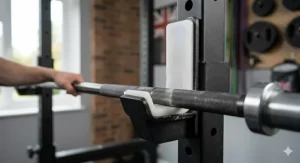
Mirafit’s M3 Sandwich J-Cups are engineered specifically for the popular M3 Power Cage and M3 Strongman Yoke, which many UK lifters own. The UHMW plastic inserts protect barbell knurling comprehensively, and the increased depth compared to standard M3 j-cups creates a safer, more forgiving re-rack zone. Priced around £60-£85, these represent excellent value for M3 ecosystem users.
What UK buyers particularly appreciate about these hooks is the significantly larger landing area compared to Mirafit’s standard j-cups. After heavy bench presses when your arms are trembling, that extra depth means you’re far less likely to miss the cup entirely — a genuine safety concern that standard hooks don’t address adequately. The UHMW liners prevent scratching to both the M3 rack’s orange powder coat finish and your barbell, keeping everything looking pristine for years.
Mirafit’s UK-based customer service and warehouse network mean these typically arrive within 2-3 days, and their 30-day money-back guarantee provides reassurance if compatibility becomes an issue. The cups sit on the “inside” of most users’ M3 racks during bench pressing and squatting, whilst standard cups live on the front outside for barbell storage and bent-over rows — a common dual-setup approach amongst experienced lifters.
✅ Perfect fit for M3 Power Cage owners
✅ Larger landing area improves safety
✅ Fast UK delivery and excellent return policy
❌ M3-specific compatibility only
❌ Takes adjustment period to adapt to increased depth
Price: Around £65-£80 typically | Value verdict: Essential upgrade for M3 rack owners — the improved safety and barbell protection justify the cost immediately.
7. Rival T-Series Sandwich J-Cups 2.0
The Rival T-Series Sandwich J-Cups 2.0 cater specifically to Rival’s T-Series rack range with 50x50mm box section uprights and 1-inch (26mm) holes. At around £55-£75, these represent competitive pricing for sandwich-style construction from a British manufacturer. The thicker steel construction compared to standard j-cups provides superior strength and longevity.
These hooks incorporate the lessons learned from earlier designs, with side-mounted hardware that keeps bolts away from your barbell and hands. The UHMW filling protects your bar’s knurling whilst the protective backing safeguards your rack’s powder coat finish. For British buyers, Rival’s commitment to UK manufacturing and local customer support provides reassurance that replacement parts and service will remain accessible long-term.
The T-Series compatibility is both a strength and limitation. If you own a Rival T-Series rack, these hooks are precision-engineered to fit perfectly with minimal wobble. However, they won’t suit other rack brands due to the specific 50x50mm and 26mm hole sizing. Rival frequently runs promotional codes (like “RIVAL5” for 5% off) that bring these hooks into even more competitive territory against imported alternatives.
✅ British-manufactured for T-Series racks
✅ Thicker steel than many alternatives
✅ Side-mounted hardware protects hands and bar
❌ T-Series specific — won’t fit other brands
❌ Limited independent reviews compared to Yes4All
Price: Around £60-£70 with promotional codes | Value verdict: Excellent choice for Rival T-Series owners who want guaranteed compatibility and British manufacturing.
How J Hooks Actually Work: Understanding the Mechanics
J hooks for power rack systems function through elegant simplicity, but understanding their mechanics helps you appreciate why quality matters. The basic design comprises a steel hook shaped like the letter ‘J’, with a mounting pin or tube that slides into your power rack’s upright holes. When you swing the hook down after insertion, gravity and the hook’s weight create a secure lock against the upright. The barbell rests on the horizontal portion of the ‘J’, protected by whatever padding material the manufacturer has specified.
The critical failure points in cheap j hooks typically occur at three locations. First, the mounting pin diameter — if it’s too small for your rack’s holes, the hooks wobble and eventually wear the hole larger. Second, the weld between the hook and mounting assembly — poor welding can crack under repeated heavy loads. Third, the padding material, which either compresses (basic rubber), remains stable (UHMW plastic), or deteriorates (cheap foam that disintegrates after months). Understanding these potential failures explains why spending £60-£100 on quality hooks prevents the £30 false economy of budget alternatives that fail within a year.
Modern j hooks for power rack equipment incorporate several clever design improvements over basic models. UHMW plastic liners eliminate the squeaking and scratching that occurs when steel contacts steel. Sandwich construction wraps the entire bar-contact area in plastic, distributing load evenly and preventing the localised wear that standard hooks experience. Roller mechanisms introduce a third element — rather than padding alone, a spinning roller lets the bar move laterally without friction, which matters significantly for precise setup before heavy lifts.
British buyers should pay particular attention to pin diameter and upright spacing. UK and European manufacturers often use metric measurements (60mm uprights, 16mm holes) whilst American brands use imperial (2×3″, 5/8″ holes). A 5/8″ pin is approximately 15.875mm — close to 16mm but not identical. This minor discrepancy can mean a slightly loose fit that develops into annoying rattling over time. Always verify compatibility rather than assuming “close enough” will suffice, particularly when purchasing imported equipment through Amazon.co.uk.
Transformation Guide: Upgrading Your Power Rack Experience
Upgrading your j hooks for power rack setup transforms training in ways that extend beyond simple barbell protection. The first immediate change you’ll notice is noise reduction — particularly valuable in British home gyms where you’re sharing walls with neighbours or family. Standard steel-on-steel contact creates a sharp metallic clang that travels through walls; UHMW padding reduces this to a muffled thud that rarely disturbs anyone beyond your immediate training space.
The second transformation involves bar centring precision. With standard hooks, centring your barbell after un-racking requires awkward shuffling whilst holding hundreds of kilograms. This wastes energy and concentration before the actual lift begins. Roller j hooks eliminate this friction entirely — a gentle nudge centres the bar perfectly, letting you focus mental energy on the lift rather than equipment positioning. For UK lifters training alone in home gyms without spotters, this improved control reduces injury risk during fatigued sets.
The long-term transformation appears in your equipment condition. A quality Olympic barbell costs £250-£500 in the UK market. Standard j hooks will slowly destroy that bar’s knurling through repeated metal-on-metal contact, reducing its lifespan and resale value. Premium j hooks with comprehensive UHMW protection preserve your barbell investment indefinitely. Calculate the economics: spending £80 on quality hooks protects a £400 barbell, whilst saving £40 by using basic hooks potentially costs you £200+ in premature barbell replacement. The mathematics favour quality overwhelmingly.
For British lifters dealing with damp garage conditions, upgraded j hooks offer corrosion resistance benefits. Quality powder coat finishes shed moisture better than basic painted surfaces, and UHMW plastic doesn’t absorb water like cheaper foam padding. This weather resistance isn’t trivial — British garages are notoriously damp environments where cheaper gym equipment develops surface rust within months. Investing in properly finished j hooks means your upgrade lasts years rather than requiring replacement after one British winter.
Standard vs Sandwich vs Roller: Real-World Performance
Standard j hooks with basic padding represent the entry-level option, typically featuring a steel hook with rubber or thin UHMW padding on the top surface only. These perform adequately for beginners who aren’t lifting heavy weights frequently, but develop several issues over time. The padding compresses, creating a progressively harder landing surface that accelerates barbell wear. The lack of side protection means your bar contacts metal every time you slightly mis-rack, creating scratches and knurling damage. In UK garages where temperature fluctuations are common, rubber padding can harden in winter cold and soften in summer warmth, providing inconsistent performance year-round.
Sandwich j hooks eliminate the metal-contact problem through comprehensive UHMW protection. The entire bar-contact zone is wrapped in high-quality plastic, creating a cushioned landing regardless of your racking precision. This design significantly reduces noise — rather important when your garage gym shares a wall with your neighbour’s living room in a British semi-detached. The increased thickness of sandwich construction creates a larger landing zone, which improves safety during fatigued re-racks when precision suffers. The trade-off is increased projection from the rack face — sandwich hooks typically extend 15-18cm rather than the 11-12cm of standard hooks, which matters in compact British garage gyms.
Roller j hooks introduce a mechanical advantage that standard and sandwich designs cannot match. The spinning roller mechanism allows lateral bar movement without friction, making perfect centring effortless. This feature particularly benefits movements like bench press and overhead press where even minor bar imbalance affects performance and safety. The roller eliminates the need to drag your bar sideways across padding, which preserves knurling and reduces noise further. However, roller hooks cost £95-£120 compared to £40-£50 for standard hooks — a significant premium that only serious lifters fully utilise.
For most UK home gym owners, sandwich j hooks represent the sweet spot between protection and cost. They provide comprehensive barbell protection, significant noise reduction, and improved landing zones whilst costing £60-£90 rather than £100+. Standard hooks suffice for casual lifters who train infrequently with moderate weights. Roller hooks justify their premium pricing for dedicated lifters training 4+ times weekly with quality barbells worth protecting. Consider your training frequency, barbell investment, and noise sensitivity when choosing — there’s no universal “best” option, only the best option for your specific situation.
The UHMW Difference: Why Material Matters
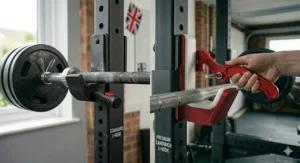
UHMW (ultra high molecular weight) polyethylene represents a significant material upgrade over basic rubber padding, though many UK buyers don’t appreciate the practical differences. According to materials science research, UHMW plastic is exceptionally hard-wearing — it’s the same material used in artificial joint replacements and commercial gym equipment designed to withstand thousands of uses weekly. Unlike rubber, which compresses and degrades over time, UHMW maintains its shape and protective properties indefinitely. In practice, this means j hooks with UHMW protection will perform identically in year five as they did on day one, whilst rubber-padded alternatives gradually deteriorate.
The friction characteristics of UHMW matter significantly for barbell longevity. When you rack a barbell, it doesn’t land perfectly centred — it bounces slightly, slides a few millimetres, and settles into position. With rubber padding, this sliding motion creates friction that slowly grinds away your barbell’s knurling. UHMW’s molecular structure provides a slippery surface that allows the bar to slide into position with minimal friction, preserving knurling integrity. For British lifters who’ve invested £300+ in a quality power bar, this knurling preservation alone justifies UHMW’s higher cost.
Temperature stability is another UHMW advantage particularly relevant for UK garage gyms. British garages experience temperature swings from near-freezing winter mornings to 25-30°C summer afternoons. Rubber padding hardens in cold and softens in warmth, providing inconsistent cushioning across seasons. UHMW maintains consistent properties from -40°C to +80°C, meaning your j hooks perform identically whether you’re training in January’s damp chill or August’s rare heatwaves. This consistency matters for lift confidence — you don’t want to second-guess equipment behaviour when unracking 150kg.
The noise reduction properties of UHMW exceed rubber alternatives substantially. Metal-on-metal contact creates sharp, high-frequency sounds that travel through walls effectively. Rubber dampens this somewhat, but UHMW’s density absorbs impact energy better, creating a deeper, quieter thud that dissipates quickly. In British housing where walls are often surprisingly thin, this improved sound dampening lets you train early mornings or late evenings without disturbing neighbours or family. For home gym owners, this noise reduction might be UHMW’s most valuable practical benefit.
Common Mistakes When Buying J Hooks for Power Rack
The most frequent mistake UK buyers make is assuming “close enough” compatibility will work adequately. A 2×2″ rack with 1″ holes is not the same as a 50x50mm rack with 25mm holes, despite appearing similar. Those few millimetres of difference create wobble, rattle, and premature wear. British racks often use metric specifications whilst American imports use imperial, creating confusion. The British Standards Institution sets standards for equipment dimensions, but power rack accessories aren’t universally standardised. Always verify your rack’s actual measurements rather than relying on product descriptions that might simplify dimensions. Measure your rack’s upright size and hole diameter before ordering — a £5 digital calliper from Amazon.co.uk prevents £60 worth of incompatible j hooks.
Another common error involves prioritising initial cost over long-term value. £35 j hooks with basic rubber padding seem economical compared to £75 UHMW sandwich hooks, but the economics reverse over time. Budget hooks require replacement within 12-24 months as padding degrades and barbell knurling damage accelerates. Premium hooks last indefinitely whilst protecting your £300-£500 barbell investment. For UK lifters building long-term home gyms, spending an extra £40 on quality j hooks saves £200+ in barbell replacement and hook re-purchase over 5-10 years.
Many British buyers overlook projection depth when selecting j hooks, focusing solely on protection and capacity. Sandwich and roller hooks typically project 15-18cm from your rack face, whilst standard hooks extend 11-12cm. In a British garage where you’re working within 2-2.5 metres of usable width, those extra 5-6cm per side effectively reduce your training space by 10-12cm total. This matters when performing exercises like bench press where you need clearance for your head and hands. Measure your available space and consider how much projection you can accommodate before selecting deeper hooks.
The final mistake involves ignoring British-specific environmental factors. UK garage gyms face challenges that American or Australian setups don’t encounter — persistent dampness, temperature swings, and compact spaces. Choosing j hooks based purely on American YouTube reviews misses these British considerations. Powder coat finishes resist UK moisture better than basic paint. Compact projection suits British garage dimensions better than American-sized equipment. British manufacturers like Gym Master and Mirafit understand these requirements and design accordingly, whilst imported alternatives might not consider UK conditions during development.
Compatibility Guide: Matching Hooks to Your Rack
Power rack compatibility centres on three critical measurements: upright size, hole diameter, and hole spacing. Upright size determines which hooks physically fit around your rack’s posts. Common sizes include 2×2″ (approximately 50x50mm), 2×3″ (approximately 50x75mm), and 3×3″ (approximately 75x75mm). British and European racks often use precise metric sizing whilst American brands use imperial, creating potential mismatches. A 60x60mm upright is slightly larger than 2×2″ (50.8mm exact), which can mean hooks designed for 2×2″ fit loosely on 60mm uprights.
Hole diameter matters because your j hook’s mounting pin must slide through these holes and lock securely. Standard sizes include 1″ (25.4mm), 5/8″ (15.875mm), and 16mm — which is close to 5/8″ but not identical. A 5/8″ pin in a 16mm hole creates approximately 0.125mm of clearance, potentially resulting in slight wobble. British buyers should verify their rack’s actual hole diameter rather than assuming standard sizing, particularly with imported racks where manufacturing tolerances might vary from specifications.
Hole spacing determines how precisely you can adjust hook height. Most modern racks use 2″ (50mm) spacing between holes, though some budget racks use 3″ (75mm) spacing and premium racks offer Westside spacing (alternating between 2″ and 1″ spacing for fine adjustment). This spacing doesn’t affect hook compatibility — j hooks work at any height — but it influences how precisely you can position hooks for different exercises. British lifters of varying heights particularly appreciate closer spacing, which allows exact positioning for comfortable rack heights during squats and bench pressing.
For UK buyers, the safest approach involves purchasing hooks from your rack’s manufacturer or verifying compatibility with the manufacturer before ordering third-party alternatives. Gym Master hooks fit GM2 and GM3 racks perfectly. Mirafit M3 hooks suit M3 cages precisely. Yes4All offers multiple sizing options (2×2″, 2×3″, 3×3″) that fit most racks, but verify your specific model before ordering. If your rack uses uncommon sizing, contact the seller through Amazon.co.uk’s messaging system to confirm compatibility before purchase — most reputable sellers respond within 24 hours with specific fitment information.
Weight Capacity: How Much Do You Really Need?
Most quality j hooks for power rack equipment advertise capacities between 400-500kg (approximately 880-1100 lbs) per pair, which exceeds requirements for the vast majority of UK home lifters. Consider that an elite-level powerlifter’s competition squat might reach 300kg, and that’s at the extreme end of strength training. Most serious home gym enthusiasts work with 140-200kg during heavy squat sessions, well within even the most conservatively rated j hooks’ capabilities.
The capacity ratings manufacturers provide include significant safety margins. When Gym Master rates their hooks at 400kg capacity, they’ve tested significantly beyond that threshold to ensure reliable performance under stress. This engineering conservatism means you’re unlikely to approach true failure limits during normal training. However, capacity ratings do reflect construction quality — hooks rated at 400kg typically use thicker steel and better welds than alternatives rated at 300kg, even if both safely handle your 160kg squat.
British buyers should consider dynamic loading rather than just static weight. When you re-rack a heavy barbell after a grinding squat, you’re not gently placing it down — you’re often dropping it from several centimetres height, creating impact forces that momentarily exceed the bar’s static weight. Quality j hooks account for this dynamic loading in their capacity ratings. Budget hooks might technically support your weight when carefully placed but fail under the shock loading of aggressive re-racks common in hard training.
For most UK home gym owners, 400kg capacity represents ample headroom for any realistic training progression. If you’re currently squatting 100kg, you’d need to triple your strength to approach 300kg — a progression that takes years of dedicated training. Unless you’re already an advanced powerlifter working with 200kg+ regularly, capacity shouldn’t drive your j hook selection. Focus instead on compatibility, protection quality, and noise reduction — these factors affect daily training experience far more than whether hooks are rated at 400kg versus 500kg.
Installation and Adjustment: Getting It Right
Installing j hooks for power rack equipment appears straightforward, but several details separate secure installation from problematic setup. The basic process involves sliding the mounting pin through your rack’s hole, then swinging the hook down until it locks against the upright. However, the security of this lock depends on proper fit — if the pin is too small for the hole, the hook wobbles; if it’s too large, it won’t slide through easily, making height adjustments frustrating.
Before your first installation, inspect the mounting pin for any manufacturing defects or sharp edges that might scratch your rack’s powder coat finish. Quality manufacturers deburr all edges, but budget alternatives sometimes skip this step. A quick pass with fine sandpaper smooths any rough spots, protecting your rack’s finish from scratches during height adjustments. For British garage gyms where surface corrosion can develop from dampness, preventing powder coat damage maintains your equipment’s weather resistance.
The hook’s orientation matters more than many realise. J hooks are typically “handed” — designed to be installed as left and right pairs that oppose each other. This opposing arrangement prevents your barbell from rolling sideways during exercises. If you install both hooks facing the same direction, your bar might slowly roll off during rest periods between sets. Check that your hooks mirror each other before loading weight — a quick visual inspection prevents the embarrassing situation of having your bar roll off whilst you’re adjusting plates.
Height adjustment frequency varies by training style. If you’re the sole user performing the same exercises consistently, you might adjust hooks weekly or less. Multi-user households require frequent adjustments to accommodate different heights and exercises. This is where quality mounting mechanisms prove their worth — premium hooks adjust smoothly and lock securely after hundreds of cycles, whilst budget alternatives develop play in the mounting mechanism, creating annoying rattling. For UK families sharing home gym equipment, investing in quality hooks that maintain smooth adjustment pays dividends over years of use.
Noise Reduction Techniques for British Home Gyms
British housing construction — particularly semi-detached and terraced properties — creates acoustic challenges for home gym enthusiasts. Party walls between properties often lack meaningful sound insulation, and traditional construction transmits impact noise effectively. Standard j hooks for power rack equipment create sharp metallic clangs when racking weight, a sound that travels through walls and annoys neighbours rapidly. Implementing noise reduction techniques maintains neighbourly relations whilst preserving training freedom.
The primary noise reduction method involves upgrading to UHMW-padded or sandwich j hooks that eliminate metal-on-metal contact. The difference between steel-on-steel racking and UHMW-cushioned racking is genuinely dramatic — the former creates a sharp ring that penetrates walls, whilst the latter produces a muffled thud that dissipates within your immediate training space. For British lifters in noise-sensitive environments, this upgrade alone justifies premium j hooks’ cost. Combine quality hooks with controlled bar placement rather than aggressive slamming, and your racking noise becomes negligible.
Secondary noise reduction comes from strategic training schedules. British building regulations generally permit reasonable noise until 22:00-23:00 on weekdays, but neighbourly courtesy suggests avoiding heavy lifting before 08:00 or after 21:00. If your work schedule demands early-morning or late-evening training, invest in maximum noise reduction equipment — sandwich or roller j hooks, plus rubber flooring under your rack to dampen vibrations. This investment costs £150-£200 total but prevents neighbour complaints that could jeopardise your entire home gym setup.
For extreme noise sensitivity — ground-floor flats with downstairs neighbours, or attached properties with thin party walls — consider supplementary dampening. Horse stall mats (available from agricultural suppliers around £40-£60 per mat) provide excellent vibration dampening when placed under your power rack. Combined with sandwich j hooks and controlled lifting technique, this creates a remarkably quiet training environment. Some British lifters even install acoustic foam panels on garage walls for additional sound absorption, though this level of investment suits only the most dedicated home gym enthusiasts.
The often-overlooked noise source involves plate collars striking together when racking weight. Olympic plates bounce and shift during aggressive re-racks, creating metallic clanging as plates settle. Using bumper plates instead of metal plates reduces this noise dramatically — rubber-on-rubber contact is far quieter than metal-on-metal. If metal plates are your only option, ensure collars are tightened properly to minimise plate movement, and consider adding thin rubber washers between plates to dampen impact sounds. These small refinements compound with quality j hooks to create genuinely quiet training conditions.
Long-Term Maintenance and Care
Quality j hooks for power rack equipment require minimal maintenance but benefit from occasional attention that extends lifespan and performance. The primary maintenance task involves inspecting mounting pins for wear or deformation. After hundreds of installation cycles, pins can develop wear patterns that affect fit security. Every 3-6 months, remove your j hooks and inspect the pins under good lighting — look for flattening, scoring, or metal fatigue. If wear appears significant, contact the manufacturer about replacement pins before the problem affects safety.
UHMW padding requires periodic inspection for compression or damage. Unlike rubber that obviously degrades, UHMW maintains appearance whilst potentially developing microscopic cracks or compression under repeated heavy loads. Every few months, run your hand across the padding surface feeling for any hardened spots or surface cracks. Visible damage to UHMW is rare with quality hooks, but if you notice any deterioration, replacement padding is typically available from manufacturers. Gym Master, Mirafit, and other British brands maintain spare parts stock for their popular models.
British garage environments accelerate corrosion on unprotected metal surfaces. Whilst quality powder coat finishes resist rust effectively, check welded joints and mounting hardware periodically for any surface corrosion developing. If you notice orange rust spots beginning, address them immediately before they spread. A light wire brushing followed by touch-up paint (available from automotive suppliers in colours matching common powder coat finishes) prevents corrosion from compromising structural integrity. This maintenance matters particularly for coastal regions where salt air accelerates metal degradation.
Roller j hooks require specific maintenance attention to the rolling mechanism. Every 2-3 months, inspect the roller for free movement — it should spin easily with minimal resistance. If you notice any stiffness or grinding sensation, clean the roller bearing area with degreaser and apply a light lubricant (white lithium grease works excellently). British garage dampness can introduce moisture into roller mechanisms, so this periodic lubrication prevents seizure and maintains the smooth rolling action that justifies these hooks’ premium cost. Proper roller maintenance ensures these hooks perform flawlessly for a decade or more.
FAQ: Your J Hooks for Power Rack Questions Answered
❓ Do j hooks fit all power racks universally?
❓ How often should I replace j hooks for power rack equipment?
❓ Are roller j hooks worth the extra cost for home gyms?
❓ Can I use American j hooks on UK metric racks?
❓ Do j hooks damage barbell knurling over time?
Conclusion: Choosing Your Perfect J Hooks
Selecting the right j hooks for power rack equipment represents a deceptively important decision that affects every single training session for years to come. The £40 difference between budget standard hooks and premium sandwich or roller alternatives seems significant initially but becomes negligible when spread across hundreds of workouts and the extended lifespan of your protected barbell. For British home gym owners, prioritising UHMW protection, proper compatibility, and noise reduction creates a training environment that functions smoothly regardless of your living situation.
The sweet spot for most UK lifters sits in the £60-£90 range with sandwich j hooks from manufacturers like Gym Master, Mirafit, or quality imported brands available through Amazon.co.uk. These provide comprehensive barbell protection, significant noise dampening, and long-term durability that justify their modest premium over basic hooks. Budget-conscious beginners can start with Yes4All’s UHMW-padded standard hooks around £40-£55, then upgrade to sandwich or roller hooks as training progresses and barbell investment increases.
Whatever you choose, verify compatibility meticulously before ordering. Measure your rack’s upright dimensions and hole diameter rather than assuming standard sizing applies. Consider your specific situation — noise sensitivity demands better padding, serious training frequency justifies roller mechanisms, and compact British garages favour hooks with minimal projection. The perfect j hooks for your neighbour’s setup might be completely wrong for yours, so prioritise your individual requirements over generic recommendations.
Your j hooks support literally every barbell movement you perform in your power rack. They’re the interface between hundreds of kilograms of weight and your rack’s structure, the component that determines whether racking is smooth or stressful, quiet or disruptive. Investing wisely in quality j hooks transforms daily training from merely functional to genuinely enjoyable — and in home gym environments where training consistency determines results, that improvement in experience matters considerably.
✨ Don’t Miss These Exclusive Deals!
🔍 Take your home gym setup to the next level with these carefully selected products. Click on any highlighted item to check current pricing and availability on Amazon.co.uk. These picks will help you find exactly what you need for your power rack!
Recommended for You
- 7 Best Independent Squat Stands UK: Expert Guide 2026
- 7 Best Wall Mounted Squat Racks UK Home Gyms 2026 Guide
- 7 Best Half Rack for Home Gym UK: Save Space & Money 2026
Disclaimer: This article contains affiliate links. As an Amazon Associate, I earn from qualifying purchases. If you purchase products through these links, we may earn a small commission at no additional cost to you.
✨ Found this helpful? Share it with your mates! 💬🤗
