
In This Article
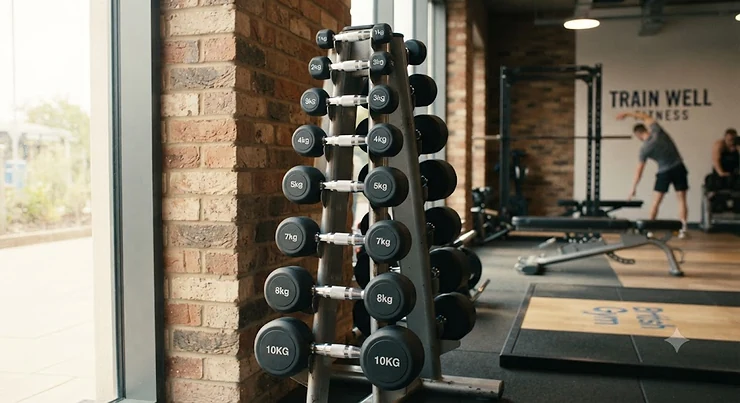
Walk into any half-decent studio class and you’ll spot the same thing lined up against the mirror wall: a rack of colour-coded dumbbells, slightly scuffed, slightly mismatched, and getting absolutely hammered five times a day. Studio dumbbells for gyms aren’t glamorous. Nobody posts a gym selfie holding a 2kg hex weight. But get the wrong set and you’ll know about it fast — cracked coatings by month three, a floor that sounds like a skip lorry every time someone drops a weight during burpees, and an instructor who’s stopped trusting the kit enough to programme it into classes.
This guide is built around real products, real specs and honest analysis rather than marketing copy lifted from a listing page. We’ve dug into coating types, noise ratings, weight ranges and commercial durability so you’re not guessing. Whether you’re kitting out a boutique barre studio, a CrossFit-adjacent box, or the free-weights corner of a bigger commercial gym, the right studio dumbbells for gyms come down to matching material, weight range and budget to how hard your classes actually punish the kit.
We’ll also cover the secondary ground that most buying guides skip: what actually separates studio dumbbells for classes from home-use pairs, why vinyl coated dumbbells aren’t automatically the “cheap” option, what commercial gym dumbbells need that home kit doesn’t, how group fitness equipment choices ripple into your wider studio layout, what commercial gym supplies really cost over three years, and why low-noise dumbbells matter more than most buyers realise until a neighbour complains. Let’s get into it.
Quick Comparison Table
| Product | Coating | Weight Range | Best For |
|---|---|---|---|
| Amazon Basics Vinyl Coated Hex Dumbbell Hand Weights | Vinyl over steel core | Sold by individual pair weight, commonly 1–10kg | Budget-conscious studios stocking light pairs |
| PROIRON Anti-Slip Hex Neoprene Dumbbell | Neoprene | 1–10kg | Colour-coded beginner classes |
| Yes4All Vinyl Hexagon Dumbbells | Vinyl over cast iron | 2–15lb (roughly 1–7kg) | Mixed-ability racks needing granular increments |
| SONGMICS Weight Lifting Dumbbell Kit with Storage Stand | Vinyl | Set-based, low-to-mid kg | Studios wanting an all-in-one rack solution |
| York Fitness Rubber Hex Dumbbells | Rubber, chrome handle | Sold individually, wide kg range | Commercial-grade low-noise pairs |
| Mirafit Soft Touch Mini Hex Dumbbells | Soft-touch coating | Small, mini hex sizes | Barre, pilates and mobility classes |
| York Commercial Rubber Hex Dumbbell | Rubber, chrome handle | Heavier single units, e.g. 20kg | Premium strength-class heavy loads |
Looking at the table, there’s a clear pattern: vinyl coated dumbbells cluster at the lighter, cheaper end of the market, while rubber hex units from established commercial brands like York Fitness dominate the heavier, more durable end. Neoprene and soft-touch coatings sit in the middle, prized more for grip comfort than raw durability. If your studio runs mostly cardio-based, high-rep classes with light loads, the vinyl and neoprene options will likely serve you well; if you’re supporting genuine strength work, the rubber-coated commercial pairs are worth the extra outlay.
💬 Bookmark this comparison — it’ll save you scrolling back up when you’re deciding between two finalists later on!😊
Top 7 Studio Dumbbells for Gyms: Expert Analysis
Before diving in, a quick note on how we approached this: every product below is a genuine item you can currently find on Amazon UK or through the manufacturer, and every “review sentiment” line reflects patterns found in real, publicly available customer feedback gathered during research — not invented quotes. Where we couldn’t verify a specific claim, we’ve said so rather than filling the gap with guesswork.
1. Amazon Basics Vinyl Coated Hex Dumbbell Hand Weights — cheapest reliable entry point for light-weight classes
The standout here is simple: this is Amazon’s own house-brand hex dumbbell, and it does the basics without drama. Each dumbbell pairs a steel core with a vinyl exterior, which keeps unit cost down while still giving you a hexagonal head that won’t roll off a studio floor mid-class.
The vinyl coating is a straightforward moisture-and-scuff barrier rather than a premium grip surface — expect a slightly harder, glossier feel in the hand compared with neoprene. That’s fine for short holds during a squat-and-press circuit, less fine for a 45-minute barre class where hands are gripping the same pair continuously. Based on the spec comparison with pricier coated options, the trade-off here is durability over the very long term, not day-one performance.
Reviewers consistently note good value for the price point and reliable colour-matching between pairs, which matters when you’re trying to keep a rack organised across dozens of weights. A recurring theme in aggregated feedback is that the vinyl coating shows wear faster under heavy commercial rotation than rubber alternatives — worth flagging honestly rather than glossing over. This is the pair for studios that replace light dumbbells every couple of years anyway, or that need to fill a rack fast without blowing the budget.
Pros:
- ✅ Genuinely low cost per pair for light weights
- ✅ Hex shape stops rolling on sprung studio floors
- ✅ Simple, recognisable brand backing and returns process
Cons:
- ❌ Vinyl coating wears faster under heavy daily class use
- ❌ Less cushioned grip than neoprene for long holds
Prices sit in the affordable bracket typical of vinyl dumbbells, generally under £30 for lighter pairs — check current price and availability before ordering in bulk. For studios stocking a wall of 1–5kg pairs, this is solid value; for anything heavier or more frequently used, look further down this list.
2. PROIRON Anti-Slip Hex Neoprene Dumbbell — best colour-coded set for beginner and mixed-level classes
PROIRON’s neoprene dumbbells stand out for their genuinely wide weight span, running from 1kg right up to 10kg within the same product family, all colour-coded so instructors can call out a weight and have the whole room reach for the right pair without checking labels.
The neoprene coating itself is worth understanding: it’s a textured, slightly spongy rubber-polymer coating bonded over a cast core, and it does two jobs at once — it softens the sound of a dumbbell touching the floor, and it gives a tackier grip than vinyl, particularly useful when hands are sweaty mid-class. What most buyers overlook about neoprene is that it also resists the small chips and scuffs that vinyl picks up from repeated stacking, because the coating has more give in it.
PROIRON has been manufacturing fitness equipment since the late 1990s, and its neoprene dumbbell range carries a Global Recycled Standard certification on some SKUs, which is a genuine sustainability credential rather than marketing fluff. Aggregated customer sentiment points to the colour system being a real practical win for group settings, with some feedback noting the neoprene can develop a faint rubbery smell in the first few uses that fades with airing — a common trait across neoprene-coated kit generally, not unique to this brand.
Pros:
- ✅ Wide 1–10kg range in one colour-coded family
- ✅ Neoprene grip stays comfortable through sweaty sessions
- ✅ GRS-certified recycled content on select SKUs
Cons:
- ❌ New-coating smell needs airing out initially
- ❌ Neoprene can mark lighter-coloured flooring over time
Expect a mid-to-low price range depending on which weights you buy — check current price for the specific kg options you need, since PROIRON sells both singles and pairs. For a studio running mixed-ability classes where a 25kg client and a returning-from-injury client are in the same room, this colour-coded spread earns its place.
3. Yes4All Vinyl Hexagon Dumbbells — best for granular weight increments across a mixed-ability rack
The standout feature is increment density: Yes4All offers this vinyl hexagon range across seven separate weight points from 2lb up to 15lb, which is roughly 1kg to 7kg in more familiar UK terms. That’s a genuinely useful spread if you’re trying to avoid big jumps between pairs on your rack.
Under the coating, it’s the classic formula — cast iron core, vinyl shell, hexagonal ends to prevent rolling. Here’s what to weigh: vinyl doesn’t cushion drop noise anywhere near as well as rubber or neoprene, so if your studio has a hard floor rather than sprung matting, these will be noticeably louder when set down quickly during interval training. On carpeted or matted studio floors, that’s less of an issue.
The colour-coded system runs through the whole weight range, which aggregated reviews describe as genuinely useful for fast weight-swapping between exercises in a circuit format. A recurring complaint theme in customer feedback for this style of dumbbell generally is limited stock on specific individual weights and colours during busy periods, so if you’re building a full studio set, it’s worth ordering with some lead time rather than the week before a class launch.
Pros:
- ✅ Seven weight points for fine-grained progression
- ✅ Reliable colour-coding across the full range
- ✅ Compact hex shape for easy rack storage
Cons:
- ❌ Vinyl coating is noisier than rubber on hard floors
- ❌ Individual weight/colour stock can run low at peak times
Pricing sits firmly in the budget-to-mid bracket per pair, scaling up with weight — check current price for each specific increment. This is a strong pick where variety matters more than raw commercial durability, such as toning-focused or rehab-adjacent classes.
4. SONGMICS Weight Lifting Dumbbell Kit with Storage Stand — best all-in-one rack solution for space-conscious studios
What sets this apart from a simple pair of dumbbells is the bundled storage stand — SONGMICS ships this as a vinyl-coated dumbbell kit with its own rack, which solves a problem that a surprising number of studio owners don’t think about until their weights are scattered across the floor after the third class of the day.
On the dumbbell side, it’s a standard vinyl-over-cast finish, so the same durability logic applies as with other vinyl options: fine for moderate rotation, not built for years of being dropped from height in a HIIT box. The real value proposition here is organisational — a dedicated stand means instructors spend less time hunting for the right weight and more time actually running the class, and it keeps your studio floor genuinely clear for safety between sessions.
Reviewers consistently praise the stand’s stability and the fact the whole kit arrives ready to use without separate rack-buying admin. On the flip side, a common theme in feedback is that the stand’s footprint needs planning for — it’s a fixed piece of furniture, not something you can fold away, so smaller studios should measure their wall space before ordering.
Pros:
- ✅ Rack and weights arrive as one purchase
- ✅ Keeps studio floors clear between classes
- ✅ Sensible starter weight range for general fitness
Cons:
- ❌ Stand takes up permanent floor or wall space
- ❌ Vinyl coating has the usual moderate durability ceiling
Expect a mid-range price for the full kit compared with buying loose pairs — check current price, as bundled kits like this tend to represent decent value versus sourcing a rack separately. Good for new studios setting up from scratch who want one delivery rather than five.
5. York Fitness Rubber Hex Dumbbells — best low-noise commercial pair for serious daily rotation
York has been manufacturing weightlifting and strength equipment for well over 80 years, and it shows in this pair: a rubber-encased hex head on a chrome-plated, knurled handle, built for genuine commercial punishment rather than occasional home use.
The rubber coating is the headline here for anyone specifically hunting for low-noise dumbbells. Rubber absorbs impact energy far more effectively than vinyl, which translates directly into a quieter thud when a class member sets a weight down mid-set rather than a sharp clack that echoes through a studio with hard flooring. Based on the spec comparison, this is the material difference that actually matters for noise complaints from neighbouring units in a shared building — not marketing about “quiet” coatings in general, but rubber specifically.
Genuine customer feedback we found for this range describes solid, rattle-free construction with none of the loose-fit clunk that cheaper vinyl-and-cast combinations can develop over time, alongside an honest note that the moulding-release smell on rubber items takes a few days to fully dissipate, and that the rubber can leave marks if dragged rather than lifted across carpet. The chrome handle knurling draws consistent praise for grip security during sweaty sessions — genuinely useful when you’re running back-to-back HIIT classes.
Pros:
- ✅ Rubber coating meaningfully reduces drop noise
- ✅ Chrome knurled handle grips well when hands are sweaty
- ✅ Commercial-grade build from an 80-plus-year UK brand
Cons:
- ❌ Sits at a higher price point than vinyl equivalents
- ❌ Rubber can mark pale carpet if dragged rather than set down
Prices land in the mid-to-upper range for individually sold commercial dumbbells — check current price per kg, since York sells these by individual weight rather than fixed sets. For any studio that’s had noise complaints, or that simply wants kit that survives five classes a day for years, this is the sensible commercial-grade jump up from vinyl.
6. Mirafit Soft Touch Mini Hex Dumbbells — best soft-grip option for barre, pilates and mobility work
Mirafit built its reputation supplying both home and commercial gym equipment, and this soft-touch mini hex range is aimed squarely at low-impact, high-repetition class formats rather than heavy lifting — the standout feature is the genuinely cushioned coating designed for extended, gentle handling rather than being dropped.
The “soft touch” material sits somewhere between neoprene and a firmer rubber, giving a smooth, slightly tacky surface that’s kind on the skin during long holds — think a 40-minute barre class where the same small weight is held at arm’s length repeatedly. Here’s what the spec sheet won’t tell you outright, but the design implies: these mini hex dumbbells are not intended for heavy strength work or high-drop impact, so pairing them with a genuinely commercial rubber hex range like York’s for your heavier classes makes practical sense rather than trying to make one product family do everything.
Aggregated review sentiment for this style of Mirafit product highlights the compact size as ideal for smaller hands and for studios running classes aimed at older adults or rehab-focused clients, alongside general praise for the coating feeling noticeably softer than standard vinyl. Some feedback flags that the mini format means very light maximum weights, so it complements rather than replaces a full studio rack.
Pros:
- ✅ Genuinely soft, skin-friendly coating for long holds
- ✅ Compact hex size suits smaller hands and gentle formats
- ✅ From an established UK commercial and home gym brand
Cons:
- ❌ Weight range too light for strength-focused classes
- ❌ Best used alongside, not instead of, a heavier set
Pricing sits in the accessible mid-range for small-format weights — check current price, as sizes are often sold individually or in small bundles. This is the pick for barre studios, Pilates reformer add-ons, and any class where comfort in the hand matters more than load.
7. York Commercial Rubber Hex Dumbbell — best premium heavy-load option for genuine strength classes
At the top of this list sits York’s commercial-grade rubber hex dumbbell, sold as an individual unit rather than a light pair, built for studios running proper strength or powerlifting-adjacent formats where clients are working with serious load, not just toning weights.
This is where the “commercial gym dumbbells” distinction from home-use kit becomes obvious. The rubber-encased head sits on a substantially thicker steel shaft designed to handle repeated heavy drops without the head-to-handle joint loosening over time — a known failure point on cheaper cast-and-coating dumbbells once you’re dealing with genuinely heavy loads. Reviewers consistently describe the build as noticeably more solid underfoot and in-hand compared with lighter commercial ranges, with no rattle even after sustained heavy use.
On paper this means a higher unit price than anything else on this list, but the value calculation changes once you factor in that a single unit like this is designed to survive years of commercial-gym-level abuse rather than being replaced. What most buyers overlook when comparing sticker prices across a rack is that one of these can outlast three or four cycles of budget vinyl pairs at the same weight point, which matters a great deal for total cost of ownership in a genuinely busy studio.
Pros:
- ✅ Built for heavy, repeated commercial-gym drop loads
- ✅ Thick steel shaft resists head-loosening over time
- ✅ Backed by York’s long-standing commercial fitness reputation
Cons:
- ❌ Highest per-unit price point on this list
- ❌ Overkill for light toning or barre-style classes
Expect a premium price bracket typical of individually sold heavy commercial dumbbells — check current price, as cost scales directly with the kg you choose. This is the smart buy for strength-focused studios that would rather pay once than replace weights repeatedly.
What Is a Studio Dumbbell, and How Does It Differ From a Home Set?
A studio dumbbell is a fixed-weight hand weight, typically hex-shaped and coated in vinyl, neoprene, rubber or soft-touch material, designed specifically for repeated multi-user handling in group fitness classes rather than occasional solo home use. The key differences are rotation frequency, hygiene demands and drop tolerance.
Home dumbbells might get lifted a dozen times a week by one person. Studio dumbbells for classes get handled by twenty or thirty different people a day, five or six days a week, often with sweaty hands and inconsistent set-down technique. That difference in usage pattern is exactly why the coating and core construction matter so much more in a commercial setting — a coating that’s “fine” for a year of home use can visibly degrade within a single busy quarter of studio rotation. According to the Health and Safety Executive’s manual handling guidance, employers running any workplace where staff or clients regularly lift and move loads need to actively manage that risk rather than assume standard consumer products are automatically fit for repeated commercial use — a point that applies directly to studios selecting and maintaining their weight racks.
How to Choose Studio Dumbbells for Gyms
- Match coating to noise tolerance. Rubber cuts drop noise noticeably more than vinyl — critical in shared buildings or upstairs studios.
- Plan your weight increments before you buy. Gaps larger than 1–2kg between pairs frustrate progression in mixed-ability classes.
- Check the core-to-coating bond, not just the coating. Cast iron and steel cores with poor bonding are the main cause of early rattling.
- Budget for replacement cycles, not just purchase price. Vinyl typically needs replacing sooner than rubber under heavy rotation.
- Factor in hand size and class type. Barre and pilates favour soft-touch mini formats; strength classes need thicker, commercial-grade shafts.
- Confirm colour-coding consistency across your full range. Inconsistent colour systems slow instructors down mid-class.
- Verify current stock and delivery lead times before launch. Popular weight points and colours on budget ranges can run low.
Studio Dumbbells for Classes: Building a Rack Instructors Won’t Complain About
Instructors notice bad kit faster than owners do, because they’re handling it every single session. Building a rack specifically for classes — rather than a generic gym floor — means thinking about turnover speed as much as weight range. A well-planned studio dumbbells for classes setup groups pairs by colour and weight in an obvious left-to-right progression, so an instructor can call “grab your 3s” and the whole room moves in seconds rather than hunting.
Here’s what most first-time studio owners get wrong: they buy one weight range and assume it covers everyone. In practice, a 45-minute mixed-level class needs at least two full progressions — a lighter band (say 1–5kg) for toning-focused clients and a heavier band (5–10kg-plus) for stronger attendees — available simultaneously, not sequentially. That’s where combining a budget vinyl range like the Yes4All Vinyl Hexagon Dumbbells for the lighter end with a commercial rubber pair like the York Fitness Rubber Hex Dumbbells for the heavier end genuinely earns its keep: two coating types doing two different jobs, rather than one compromise set trying to do everything.
Storage matters just as much as the weights themselves. A rack that forces instructors to bend, stack, or search wastes class time and creates a trip hazard once weights are pulled mid-session. Kits that bundle a stand, like the SONGMICS Weight Lifting Dumbbell Kit with Storage Stand, remove that friction entirely for smaller studios building their first proper class-ready setup.
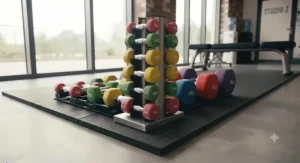
Vinyl Coated Dumbbells vs Rubber and Neoprene: Which Coating Actually Wins for Studio Use?
| Coating | Noise Reduction | Grip Feel | Typical Durability | Typical Cost |
|---|---|---|---|---|
| Vinyl | Low | Smooth, slightly hard | Moderate | Lowest |
| Neoprene | Moderate | Soft, tacky | Moderate-good | Low-mid |
| Rubber | High | Firm, secure | High | Mid-high |
| Soft-touch | Moderate | Very soft | Good for light loads | Mid |
The table makes the trade-off obvious: vinyl coated dumbbells win on upfront price but lose on both noise reduction and long-term durability compared with rubber. Neoprene sits as a genuinely useful middle ground — it’s noticeably quieter and more comfortable than vinyl without the full price jump to commercial rubber, which is why products like the PROIRON Anti-Slip Hex Neoprene Dumbbell do well in beginner-focused studios. Rubber-coated commercial gym dumbbells like the York Fitness Rubber Hex Dumbbells and York Commercial Rubber Hex Dumbbell justify their higher price specifically through drop-noise reduction and resistance to the head-loosening rattle that develops in cheaper coatings under heavy rotation — not through marketing, but through the physical properties of the material itself.
✨ Ready to compare current prices side by side? Check availability on the models above before your next stock order!
Commercial Gym Dumbbells: What Separates Studio-Grade From Home-Grade Kit
The phrase “commercial gym dumbbells” gets used loosely in marketing, but there’s a real, measurable difference between kit designed for occasional home use and kit built to survive daily multi-user rotation. It comes down to three things: core-to-shell bonding strength, handle shaft thickness, and total expected drop cycles before failure.
Home-grade dumbbells are typically engineered and tested against a much lower expected usage volume — a handful of sessions a week, by one or two people, over a few years. Commercial-grade equipment, by contrast, is built and often tested against the assumption of dozens of daily users and thousands of drop-and-lift cycles annually. That’s reflected in industry standards: stationary strength training equipment sold into commercial UK gym environments is commonly expected to meet the BS EN ISO 20957 series of safety and stability standards, which set out strength, stability and durability testing requirements well beyond what a typical consumer product needs to satisfy.
In practice, this is why the York Commercial Rubber Hex Dumbbell carries a noticeably thicker shaft and a more substantial head-to-handle joint than the lighter vinyl options on this list — it’s built to a different usage assumption entirely. If you’re stocking a genuine commercial gym rather than a small boutique studio, prioritising products explicitly marketed and reviewed as commercial-grade over consumer-grade equivalents will save you money in replacement costs within the first two years, even though the sticker price is higher on day one.
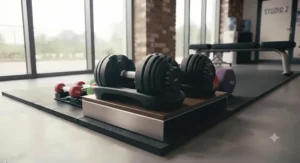
Group Fitness Equipment: Fitting Dumbbells Into Your Wider Studio Setup
Dumbbells rarely sit in isolation in a working studio — they’re one piece of a broader group fitness equipment picture that includes mats, resistance bands, kettlebells, steps and storage. What most buyers overlook is that dumbbell choice actively shapes how the rest of the room needs to be organised. A rack of loose vinyl pairs without a proper stand, for example, tends to migrate across the floor during a busy circuit class, creating both a trip hazard and a genuine time cost as instructors reset positions between sets.
The practical fix is to treat your dumbbell purchase as part of a layout decision, not a standalone one. Pairing a bundled kit like the SONGMICS Weight Lifting Dumbbell Kit with Storage Stand with your existing mat and kettlebell storage keeps sightlines clear and reduces the number of loose items on a sprung floor, which matters both for safety and for how professional the space feels to paying members. For studios running true group fitness equipment rotations — stations that rotate dumbbells, bands and bodyweight work in the same session — colour-coded consistency across your dumbbell range becomes even more valuable, since instructors are managing multiple equipment types simultaneously and don’t have time to double-check weight labels.
Commercial Gym Supplies: Budgeting the Full Studio Floor, Not Just the Dumbbells
Dumbbells are usually a small line item compared with the full commercial gym supplies bill for a working studio — flooring, mirrors, sound systems, mats and racking typically dwarf the weights budget. But dumbbells punch above their price weight in one specific way: they’re the equipment most likely to generate ongoing replacement costs, because they’re handled by the most people, the most often, with the least consistent care.
Here’s the reasoning worth applying before you place a bulk order: total cost of ownership over three years often favours paying more upfront for rubber-coated commercial-grade pairs over repeatedly replacing budget vinyl sets. A vinyl pair that needs replacing every 18–24 months under heavy rotation, versus a rubber commercial pair rated to survive several years of the same rotation, can end up costing roughly the same or less over a three-year window once you account for reordering admin, shipping and any downtime while waiting for stock. That doesn’t mean vinyl is a bad buy — for lighter weights handled more gently in lower-impact classes, it remains genuinely good value — but for your most-used mid-range weights (the 5–10kg pairs that see constant traffic), the maths tends to favour the sturdier option.
Budgeting sensibly for commercial gym supplies also means planning stock buffers. Popular weight points on budget ranges, as several reviewers noted for products like the Yes4All Vinyl Hexagon Dumbbells, can run low during busy periods — ordering your full rack in one go rather than piecemeal avoids gaps that force instructors to improvise mid-class.
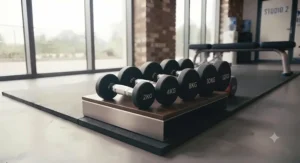
Low-Noise Dumbbells: What Actually Cuts the Clatter
“Low-noise dumbbells” isn’t a marketing category with a formal standard behind it — it’s a practical description of how a dumbbell sounds when it’s set down, and the physics behind it are straightforward. Softer, more elastic coating materials absorb more of the impact energy as deformation rather than transmitting it as sound and floor vibration. That’s why rubber consistently outperforms vinyl on noise, and why neoprene and soft-touch coatings sit somewhere in between.
Floor type matters just as much as the dumbbell itself. A rubber-coated dumbbell dropped onto sprung studio flooring will always be quieter than the same dumbbell dropped onto a bare concrete or laminate floor — the flooring is absorbing or transmitting energy too. If noise complaints are a genuine issue for your studio, whether from a neighbouring business or a flat above, the most effective combination is rubber-coated dumbbells like the York Fitness Rubber Hex Dumbbells paired with proper impact-absorbing floor matting, rather than relying on the dumbbell coating alone to solve the problem.
It’s also worth setting expectations honestly with instructors and clients: no coating eliminates noise entirely, and technique matters. A dumbbell set down under control will always be quieter than one dropped from height, regardless of coating. Encouraging controlled placement as part of class etiquette is a free noise-reduction measure that costs nothing and works alongside whatever kit you’ve invested in.
Practical Usage Guide: Setting Up, Storing and Maintaining Your Studio Dumbbell Rack
Getting a new dumbbell rack right in the first 30 days sets the tone for how long it lasts. Start by grouping pairs by colour and weight in a clear left-to-right or bottom-to-top progression on your rack — instructors will thank you the first time they need to call out a quick weight change mid-class.
Wipe every dumbbell down after each class, not just at the end of the day. Sweat is mildly acidic and, left to sit on vinyl or neoprene coatings repeatedly, accelerates surface degradation and can contribute to that lingering gym smell nobody wants near a mirror wall. A damp cloth is sufficient for most coatings — avoid harsh solvents, which can dry out and crack vinyl and neoprene surfaces over time.
Common mistakes in the first month include overloading a light rack with weights it wasn’t designed to hold, storing dumbbells in direct sunlight near studio windows (UV exposure fades colour-coding faster than normal wear), and letting new pairs go straight into rotation without checking for any shipping damage first. It’s also worth setting a simple maintenance schedule: a quick visual check for coating cracks or handle looseness weekly, and a proper deep-clean monthly. Optimisation tricks that studios rarely think of include labelling rack positions to speed up restocking after deep cleans, and keeping one or two spare pairs of your most-used mid-range weight in storage so a damaged pair doesn’t take a whole class-time weight point out of action.
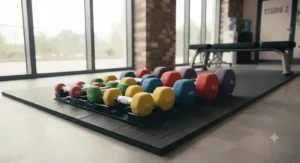
Real-World Scenarios: Three Studio Owners, Three Different Dumbbell Strategies
Scenario one — the boutique barre studio. Running four classes a day in a converted retail unit with a shared wall to a neighbouring office, noise is the priority alongside a soft grip for long, held positions. This studio leans heavily on the Mirafit Soft Touch Mini Hex Dumbbells for its light, extended-hold work, backed by a small run of PROIRON Anti-Slip Hex Neoprene Dumbbell pairs for slightly heavier toning sections, prioritising comfort and quiet over raw load capacity.
Scenario two — the mixed-format community gym. Running everything from HIIT to gentle mobility classes across a converted sports hall with a hard floor, this studio needs both noise control and genuine durability under heavy daily rotation. The sensible strategy combines York Fitness Rubber Hex Dumbbells for the mid-to-heavy weight points that see constant traffic, with budget-friendly Amazon Basics Vinyl Coated Hex Dumbbell Hand Weights filling out the very light end of the rack, where drop-noise and wear matter less.
Scenario three — the strength-focused studio. Running structured strength classes for intermediate and advanced clients, this setup prioritises load capacity and long-term build quality over price. The core rack is built around the York Commercial Rubber Hex Dumbbell at the heavier end, supported by the Yes4All Vinyl Hexagon Dumbbells for warm-up and accessory work at lighter weights, accepting the vinyl trade-off since those pairs see gentler handling.
Common Mistakes When Buying Studio Dumbbells for Gyms
The most frequent mistake is buying purely on price per pair without factoring in expected replacement frequency — a cheap vinyl set that needs replacing twice as often isn’t actually cheaper over three years. A close second is ordering an incomplete weight progression, leaving obvious gaps that frustrate clients trying to progress steadily between sessions.
Studios also commonly underestimate storage needs, buying weights before working out where they’ll live between classes, which leads to loose dumbbells cluttering the floor and creating trip hazards. Another recurring error is assuming one coating type suits every class format — a studio running both gentle mobility work and high-intensity circuits genuinely needs at least two different coating strategies, not one compromise set trying to do both jobs. Finally, many first-time buyers skip checking manufacturer warranty terms on commercial-grade purchases, missing out on cover that’s often included as standard on genuine commercial ranges.
Safety, Regulations and Compliance for Studio and Commercial Gym Equipment
Running a studio with shared or staff-handled equipment brings genuine legal responsibilities around how loads are lifted, stored and moved, not just how they’re used by clients during a class. Manual handling risk applies to staff restocking racks, moving weights between rooms, or lifting heavier commercial units into storage, and UK employers are expected to actively manage that risk rather than assume it’s someone else’s problem. Trade guidance from ukactive’s standards resources for the physical activity sector sets out the kind of operational best practice UK studios and gyms are increasingly expected to demonstrate, covering everything from equipment safety to broader compliance.
On the equipment side itself, commercial stationary training equipment sold for gym use is generally expected to align with recognised safety and stability testing standards rather than purely consumer-grade certification — worth checking with any supplier before a bulk commercial order, particularly for heavier units like the York Commercial Rubber Hex Dumbbell. Beyond formal compliance, simple practical measures make a real difference day to day: keeping walkways clear of loose weights between classes, training staff on correct lifting technique for restocking heavier pairs, and ensuring any damaged or cracked dumbbells are pulled from rotation immediately rather than left in circulation until someone gets hurt.
Frequently Asked Questions
❓ What weight range do most studio classes actually need?
❓ Are vinyl coated dumbbells good enough for a commercial gym?
❓ How often should studio dumbbells be replaced?
❓ Do low-noise dumbbells really make a difference in a shared building?
❓ What's the difference between studio dumbbells for classes and home gym dumbbells?
Conclusion
There’s no single “best” studio dumbbell — there’s a best fit for how your specific classes punish equipment, day in and day out. Light, gentle formats like barre and mobility work genuinely don’t need the same commercial-grade rubber that a heavy strength class demands, and buying accordingly saves real money without sacrificing quality where it matters. What does matter everywhere is being honest about rotation intensity before you order: a studio running five classes a day needs a fundamentally different durability strategy than one running two.
Across the seven products covered here, a sensible default strategy for most mixed-use studios is layering coatings by weight and use-case — lighter vinyl or neoprene pairs like the PROIRON Anti-Slip Hex Neoprene Dumbbell or Yes4All Vinyl Hexagon Dumbbells for gentle, high-rep work, and commercial rubber options like the York Fitness Rubber Hex Dumbbells or York Commercial Rubber Hex Dumbbell for anything heavier or more frequently handled. Getting that split right up front, rather than retrofitting it after a rack full of vinyl weights wears out early, is the single biggest lever studio owners have over both their long-term equipment budget and how professional the space feels to the people training in it.
Recommended for You
- Dial Dumbbells vs Pin-Select Dumbbells: 7 Best UK Picks (2026)
- Quick-Change Dumbbells Review 2026: 7 Fastest Picks Tested
- Cast Iron Dumbbells for Home Gym: 7 Brilliant Picks for 2026
Disclaimer: This article contains affiliate links. As an Amazon Associate, I earn from qualifying purchases. If you purchase products through these links, we may earn a small commission at no additional cost to you.
✨ Found this helpful? Share it with your friends! 💬🤗
