In This Article
Picture this: you’re three plates into loading the bar for your last deadlift set, your grip is already fried from the previous set, and you’re wrestling a smooth, flat disc that keeps slipping half an inch from where you want it. That five-second fumble doesn’t sound like much, but multiply it across every session for a year and you’ve spent hours fighting your own equipment instead of training. This is precisely the gap that tri-grip plates for deadlifts were built to close.

Tri-grip plates for deadlifts are Olympic or standard weight plates cast with three moulded handles around the rim, letting you carry, rack, and load them one-handed without pinching the smooth edge. For anyone building a home gym, or anyone who’s ever dropped a 20kg disc on their toe trying to peel it off the bottom of a stack, the difference is immediate. Below, we’ve pulled together seven genuinely available UK options — cast iron and rubber-coated, budget through premium — and given each one an honest look at what the spec sheet says versus what real buyers report once the plates are actually in their garage.
We’ve researched actual products, actual aggregated review sentiment, and actual specifications so you’re not just reading a rehashed listing. Where a detail couldn’t be verified, we’ve said so rather than inventing it. Along the way we’ll also dig into easy-grip olympic plates as a category, how plate design affects barbell loading speed, why grip strength matters well beyond the gym, and where these fit as sensible powerlifting accessories for home training.
What Is a Tri-Grip Plate?
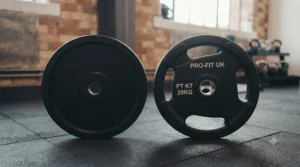
A tri-grip plate is a weight disc — usually cast iron or a rubber-coated cast iron core — with three recessed handle cut-outs moulded into its face, spaced evenly around the centre hole. Unlike a traditional flat plate, which you have to pinch or scoop from the floor, a tri-grip design gives you a natural finger-hold from any angle, which speeds up loading and reduces strain on your hands during heavy deadlift sessions.
Quick Comparison Table
| Product | Type | Hole Size | Weight Range | Best For |
|---|---|---|---|---|
| Chase Fitness TRI-GRIP | Cast iron | 2″ / 50mm | 2.5kg-20kg | Budget starter set |
| SPORTNOW Tri Grip | Rubber-coated cast iron | 2″ / 50mm (5cm) | 5kg-15kg (pairs) | Quietest budget option |
| MAXSTRENGTH Tri-Grip | Enamel cast iron | 2″ / 50mm | 7.5kg-15kg | Heavier singles |
| Strongway Tri-Grip | Rubber-coated cast iron | 1″ or 2″ | 2.5kg-100kg sets | Best bundled with a barbell |
| Body Revolution Tri-Grip | Rubber-coated cast iron | 2″ / 50mm | 1.25kg-25kg | IWF colour-coded progression |
| BodyMax Tri-Grip | Cast iron, hammertone | 2″ / 50mm | 1.25kg-25kg | Long-term durability |
| FK Sports Tri-Grip | Rubber-finish cast iron | 2″ / 50mm | 2.5kg-25kg | Lesser-known budget pick |
Looking at the spread above, there’s a clear split between plates sold as fixed small sets (Chase Fitness, SPORTNOW, MAXSTRENGTH) aimed at people topping up an existing rack, and full-range systems (Body Revolution, BodyMax, FK Sports) that let you build a complete 1.25kg-25kg collection over time. Strongway sits apart as the only one of the seven regularly bundled with a barbell, which matters if you’re starting completely from scratch rather than adding to kit you already own.
💬 Just one click — help others make better buying decisions too!😊
Top 7 Tri-Grip Plates for Deadlifts: Expert Analysis
1. Chase Fitness TRI-GRIP Cast Iron 2″ Olympic Disc Weight Plates — best low-cost entry point
The standout here is simplicity: solid cast iron, no rubber coating to wear through, and a 2-inch bore that fits any Olympic bar you’re likely to own. That stripped-back construction is exactly why it’s cheap to make and cheap to buy. Weighing in from 2.5kg right up to 20kg per plate, the cast body means there’s very little that can go wrong mechanically — no bonded rubber to delaminate, no paint to chip and jam your sleeve.
On paper this suits anyone assembling their first proper deadlift set-up on a tight budget, particularly if your training space is a garage floor rather than a padded studio, since bare cast iron shrugs off scrapes that would mark a coated plate. Aggregated buyer sentiment for the Chase Fitness range skews positive, with reviewers commonly praising accurate weight labelling and a snug sleeve fit, though the review pool for some individual weight variants is still small, so treat any single rating with a pinch of caution rather than gospel.
Pros:
- ✅ Genuinely uncoated cast iron — nothing to peel or crack
- ✅ Wide weight range from 2.5kg to 20kg per plate
- ✅ Accurately labelled, easy to read mid-set
Cons:
- ❌ No rubber means noisier drops on hard flooring
- ❌ Bare iron can mark wooden or vinyl gym flooring over time
Expect to pay somewhere in the £30-£50 range depending on which individual weight you’re buying, and for the price, it’s a sound value pick if you already have flooring that can take bare metal.
2. SPORTNOW Tri Grip Rubber Coated Barbell Weights Set — quietest budget rubber option
What jumps out about the SPORTNOW Tri Grip set is the rubber coating over a cast iron core, sold as a ready-made 2x5kg, 2x10kg, 2x15kg bundle — 60kg of usable plates straight out of the box. That coating is the whole story here: it absorbs the clang of a dropped plate and cushions the floor beneath it, which matters enormously if you’re training in a converted spare room above someone else’s ceiling.
Based on the spec comparison with bare iron alternatives, this set trades a small amount of durability against impact damage for a significantly quieter and more floor-friendly training session — a fair swap for most home lifters, though competitive powerlifters chasing maximal loading density might find the rubber shell adds slightly more bulk per kilo than cast iron. Reviewers consistently report the set arrives well packaged with clearly stamped weights, and the aggregated rating currently sits around 4.8 out of 5 from a modest but respectable spread of buyers.
Pros:
- ✅ Rubber coating cuts noise and protects flooring
- ✅ Ready-made 60kg set covers early progression
- ✅ 5cm/2″ holes fit standard Olympic barbells
Cons:
- ❌ Fixed set sizes mean no standalone light plates
- ❌ Rubber adds bulk versus an equivalent bare-iron plate
At around £50-£55 for the full set, this is one of the stronger value plays if quiet training matters to you as much as raw cost per kilo.
3. MAXSTRENGTH Tri-Grip Cast Iron Olympic Plates — best for heavier singles-only buyers
MAXSTRENGTH sells its tri-grip range in 7.5kg, 10kg and 15kg denominations, finished with a baked enamel coat rather than rubber, which the brand markets as rust and corrosion resistant. What that means in practice is a plate that’s better suited to a slightly damp garage or outbuilding than an uncoated iron plate would be, since enamel forms a harder, thinner barrier than paint without the bulk of a rubber shell.
Here’s what to weigh up: because MAXSTRENGTH only offers these mid-to-heavy denominations rather than a full 1.25kg-25kg spread, this is a poor first purchase but a smart top-up once you already own lighter plates and just need to add serious loading capacity for deadlifts specifically. The three large moulded grip holes are noticeably generous compared with some tighter tri-grip cut-outs on rival plates, which reviewers frequently mention makes single-hand carrying easier even at 15kg. Aggregated sentiment sits at roughly 4.5 out of 5 across a modest review count, with the enamel finish singled out favourably more than once.
Pros:
- ✅ Enamel coat resists rust better than bare iron
- ✅ Wide, generous grip cut-outs even at heavier weights
- ✅ Solid steel core built for repeated heavy loading
Cons:
- ❌ No plates below 7.5kg, so unsuitable as a sole starter set
- ❌ Smaller review pool than more established competitors
Priced around £55-£65 for the mixed weight set, it’s best viewed as a heavy-end add-on rather than your only tri-grip purchase.
4. Strongway Olympic Tri-Grip Weight Plates — best bundled with a barbell
The defining feature of the Strongway range is flexibility: rubber-coated cast iron tri-grip plates available in 1-inch and 2-inch bore options, sold individually, in matched pairs, or as complete 50kg/70kg/100kg sets bundled with a 6ft or 7ft barbell. That last option is what makes Strongway worth calling out separately — if you’re building a deadlift station from absolutely nothing, buying the bar and plates as one bundle avoids the guesswork of matching sleeve diameters yourself.
What most buyers overlook about bundled sets like this is the inner steel ring built into the plate’s centre bore, which keeps the hole from wearing oval-shaped over years of sliding on and off a knurled sleeve — a detail that directly affects long-term barbell loading speed, since a worn, sloppy bore is what causes plates to snag and stick during a fast-paced session. Strongway’s own published customer review data shows roughly 97% positive feedback across nearly seventy reviews, with buyers repeatedly flagging responsive customer service and accurate delivery windows alongside the plates themselves — genuinely useful context if you’re nervous about ordering a large, heavy item online.
Pros:
- ✅ Bundled barbell-plus-plates sets remove sleeve-fit guesswork
- ✅ Inner steel ring resists bore wear over years of use
- ✅ Strong, well-documented positive review percentage
Cons:
- ❌ Bundled sets are a bigger single outlay than plates alone
- ❌ 1-inch bore variants aren’t compatible with Olympic bars
Full bundled sets typically land in the low-to-mid hundreds of pounds depending on total weight, while standalone pairs sit closer to the £40-£90 range — check the current price for your chosen configuration before buying.
5. Body Revolution Olympic Tri-Grip Rubber Weight Plates — best IWF colour-coded progression
Body Revolution stands out for colour-coding its plates according to International Weightlifting Federation conventions, so a 15kg plate reads yellow and a 20kg reads blue at a glance — genuinely handy once you’re loading four or five plates a side and don’t want to squint at stamped numbers mid-set. The rubber-coated cast iron core spans a full 1.25kg to 25kg range, letting you build out a complete deadlift progression from a single brand rather than mixing suppliers.
Reviewers consistently note the ergonomically shaped finger grips as more comfortable than flatter tri-grip cut-outs on cheaper plates, particularly for anyone with smaller hands who’s historically found generic cast iron handles awkward. Based on the spec comparison, Body Revolution’s inclusion of a 12-month warranty is a genuine differentiator among UK tri-grip sellers at this price point, most of which offer standard 30-day return windows and nothing more. Aggregated review scores for the wider range run from roughly 4.2 up to 4.6 out of 5 depending on the specific weight and pack size, put together from well over a hundred verified ratings in total — a comfortably larger sample than most rivals on this list.
Pros:
- ✅ IWF colour coding speeds up weight identification mid-set
- ✅ Full 1.25kg-25kg range from one consistent brand
- ✅ 12-month warranty, longer than most UK competitors
Cons:
- ❌ Colour-coded stock can sell out faster in popular sizes
- ❌ Rubber coating adds a touch more bulk per kilo than bare iron
Prices vary by denomination but generally sit in the £25-£75 range per pair, with the heavier 20-25kg pairs naturally commanding the top of that band.
6. BodyMax Olympic Cast Iron Tri-Grip Weight Plates — best for long-term durability
BodyMax is a long-established UK strength equipment brand, and its tri-grip plates are finished in a distinctive hammertone coat rather than gloss paint or rubber — a texture designed to disguise the inevitable scuffs of years of garage-gym use rather than show every mark. What most buyers overlook here is that hammertone isn’t just cosmetic: the slightly textured surface also improves hand purchase when you’re gripping the plate itself rather than the tri-grip cut-out, useful during plate-only carries or loaded stretches.
Independently sourced customer feedback for the BodyMax range is unusually long-term in nature, with several buyers reporting five-plus years of regular use without the paint issues, odour, or stacking problems they’d experienced on cheaper tri-grip alternatives — genuinely useful aggregated sentiment rather than a marketing claim, since it reflects sustained ownership rather than a first-week impression. The trade-off is price: BodyMax sits toward the premium end of this list, and the brand currently only stocks the hammertone finish in the darker grey colourway as older light grey stock runs down.
Pros:
- ✅ Hammertone finish disguises scuffs better than gloss coatings
- ✅ Strong track record of multi-year durability from real owners
- ✅ Established UK brand with consistent stock availability
Cons:
- ❌ Sits at the premium end of the price bracket
- ❌ Light grey colourway availability is currently limited
Expect to pay toward the upper end of the market — typically £350-£450+ for a full multi-plate set — reflecting its position as the buy-once, long-term option on this list.
7. FK Sports Olympic Tri-Grip Weight Plates — best lesser-known budget alternative
FK Sports is the least famous name here, but that’s partly the point of including it — not every good tri-grip plate comes from a brand you’ve already heard of. The construction follows the same formula as most mid-market UK sellers: a cast iron core with a rubber finish, a 2-inch bore, and denominations running from 2.5kg through to 25kg, sold in pairs.
What the spec sheet won’t tell you, but the product’s own listing photography makes clear, is that the tri-grip cut-outs on FK Sports plates are moulded slightly shallower than on the Body Revolution or BodyMax ranges, meaning larger hands may find the hold marginally tighter, particularly on the smaller 2.5kg and 5kg denominations where there’s less rim to work with. For lifters with average-to-smaller hands, or anyone mainly using these loaded onto a bar rather than carrying them solo, this is unlikely to matter day-to-day. As a newer entrant to the market, FK Sports currently has a thinner base of aggregated customer reviews than the more established names on this list, so we’d say the verifiable evidence here leans more on spec comparison than on a deep pool of long-term owner feedback.
Pros:
- ✅ Full 2.5kg-25kg range at a competitive price point
- ✅ Standard 2″ bore fits all common Olympic barbells
- ✅ Rubber finish reduces noise versus bare cast iron
Cons:
- ❌ Shallower grip cut-outs may suit smaller hands better
- ❌ Limited long-term review history compared with established brands
Pricing generally runs in the £25-£70 range depending on the pair weight chosen, making it a reasonable shout if you want tri-grip handling without paying for brand recognition.
Full Spec & Value Comparison
| Product | Coating | Warranty/Support | Approx. Price Range | Best For |
|---|---|---|---|---|
| Chase Fitness TRI-GRIP | None (bare iron) | Standard returns | £30-£50 | Bare-bones budget |
| SPORTNOW Tri Grip | Rubber | Standard returns | £50-£55 (set) | Noise reduction |
| MAXSTRENGTH Tri-Grip | Enamel | Standard returns | £55-£65 (set) | Heavy top-up |
| Strongway Tri-Grip | Rubber | Strong customer service record | £40-£300+ | Starting from scratch |
| Body Revolution Tri-Grip | Rubber | 12-month warranty | £25-£75/pair | Colour-coded progression |
| BodyMax Tri-Grip | Hammertone paint | Established UK brand support | £350-£450+ | Buy-once durability |
| FK Sports Tri-Grip | Rubber | Standard returns | £25-£70/pair | Budget with full range |
Read across this table and the pattern is clear: warranty length and brand support scale roughly with price, with Body Revolution’s 12-month cover standing out as the best middle-ground protection for the money. If total cost of ownership matters more to you than sticker price, BodyMax’s premium outlay is offset by a genuinely documented multi-year lifespan, while Chase Fitness and FK Sports suit anyone happy to accept shorter support windows in exchange for a lower entry cost.
Practical Usage Guide: Loading, Storing and Maintaining Your Plates
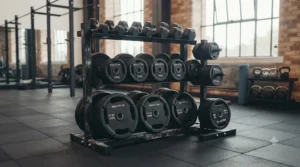
Getting the most from tri-grip weight plates isn’t just about buying the right set — it’s about handling them correctly from day one. When your plates first arrive, wipe down any rubber-coated pairs with a dry cloth to remove manufacturing residue before their first loading session; this also gives you a chance to check the bore for any casting burrs that could scrape your sleeve. Load heaviest plates first, closest to the collar, and lightest plates last — not just for stability, but because it keeps your most-used denominations accessible at the front of your storage rack.
A common first-30-days mistake is leaving plates loaded on the bar between sessions “to save time.” Beyond bending a cheaper bar under sustained load, this also concentrates wear on one section of the bore rather than distributing it evenly, shortening plate lifespan. Instead, store plates on a vertical tree rack or flat against a wall using rubber matting underneath — bare cast iron plates in particular benefit from a barrier between metal and flooring, since damp concrete can encourage surface rust over time even on enamel-coated products.
For maintenance, a light wipe with a lightly oiled cloth every few months keeps uncoated cast iron plates like the Chase Fitness TRI-GRIP rust-free, while rubber-coated options such as the Body Revolution Tri-Grip or SPORTNOW Tri Grip mainly need an occasional check for coating splits near the bore, where repeated sleeve friction does most of its damage. One genuine optimisation trick many buyers miss: rotating which side of a pair you load first across sessions evens out grip-notch wear, extending the useful life of the tri-grip handles themselves.
Real-World Scenarios: Who Should Buy Which Plates
The first-time home gym builder. If you’re starting completely from zero — no bar, no rack, nothing — a bundled option like the Strongway Tri-Grip set with an included barbell removes the compatibility guesswork entirely. You’ll spend more upfront, but you avoid the classic beginner mistake of buying a 1-inch bore plate set for a 2-inch Olympic bar.
The renter in a flat above someone else. Noise and floor protection dominate this decision. The rubber-coated SPORTNOW Tri Grip set, paired with a dedicated lifting mat, is the sensible pick here — bare cast iron like the Chase Fitness TRI-GRIP will simply transmit too much impact noise through a shared floor.
The intermediate lifter chasing a serious deadlift progression. Someone already pulling 100kg-plus and adding weight regularly needs a full, granular denomination range rather than a fixed set. The Body Revolution Tri-Grip range’s 1.25kg-25kg spread, combined with IWF colour coding for rapid loading, suits this lifter best — they can add small increments without needing to buy an entirely separate micro-plate set.
The long-term garage gym owner. If you’re planning to train in the same space for the next five-plus years and cost-per-year matters more than cost-per-purchase, the BodyMax Tri-Grip range’s documented long-term durability justifies its higher upfront price, particularly given the well-known reputation of the brand within UK strength training circles.
How to Choose Tri-Grip Plates for Deadlifts
- Check your bar’s sleeve diameter first. Olympic bars use a 2-inch (50mm) sleeve; standard bars use 1-inch (25mm). Buying the wrong bore is the single most common — and most easily avoided — purchase mistake.
- Decide between bare iron and rubber-coated. Bare cast iron like the Chase Fitness TRI-GRIP is cheaper and more durable against impact, while rubber-coated options protect flooring and reduce noise.
- Map out your total target weight before buying. Working backwards from your eventual deadlift goal prevents buying a set that tops out too low, a mistake that often means a second purchase within months.
- Weigh rubber-coated against bare cast iron for your space. Shared or upstairs living spaces benefit most from rubber coatings that dampen impact noise.
- Prioritise denomination spread over total kilos for progression. A full 1.25kg-25kg range, as offered by Body Revolution Tri-Grip or BodyMax Tri-Grip, lets you add small increments as you get stronger rather than jumping in large, frustrating steps.
- Factor in your flooring. Concrete garages can generally handle bare iron; wooden or laminate floors are safer paired with rubber-coated plates and a mat underneath.
- Weigh warranty against price. A longer warranty, like Body Revolution’s 12-month cover, is worth paying slightly more for if you’re planning years of heavy, repeated use.
Easy-Grip Olympic Plates vs Traditional Flat Plates
The core distinction between easy-grip olympic plates and traditional flat plates comes down to a single design choice: moulded handles versus a smooth, unbroken rim. Traditional flat plates rely on you pinching the outer edge between your fingers and palm, which works fine at lighter weights but becomes genuinely difficult — and occasionally dangerous — once you’re handling 20kg or 25kg discs solo, particularly when your hands are already fatigued from the working set itself. According to the Wikipedia entry on weight plates, Olympic-sized plates are built around a 50mm centre bore specifically to fit full-size barbell sleeves, and it’s this same generously sized plate body that easy-grip designs exploit by moulding handles directly into the extra material around that bore.
What most buyers overlook is that easy-grip olympic plates aren’t purely a convenience feature — they measurably reduce the awkward, twisting grip position that flat plates force onto your wrist during loading, which matters for anyone managing existing wrist or forearm discomfort. On the other hand, flat plates typically stack marginally tighter on a barbell sleeve since there’s no raised handle material taking up sleeve space, a small but real consideration if you’re regularly loading close to a bar’s maximum plate capacity. For the vast majority of home lifters, though, the loading-speed and safety benefits of a tri-grip or easy-grip design comfortably outweigh that minor stacking trade-off.
Tri-Grip Plates vs Bumper Plates for Deadlifts
| Factor | Tri-Grip Plates | Bumper Plates |
|---|---|---|
| Loading speed | Fast, one-handed handling | Slower, bulkier to grip |
| Drop-safe | No — not designed for dropping | Yes — designed for dropping |
| Floor noise | Lower with rubber coating | Higher unless matted |
| Typical price | Lower per kilo | Higher per kilo |
| Best For | Controlled deadlift lockouts and loading speed | Olympic lifts and dead-drops |
The practical difference between these two categories comes down to how you actually finish your set. Tri-grip plates like the Body Revolution Tri-Grip or Strongway Tri-Grip are built for controlled lowering — you deadlift the bar up, then set it back down under control — which is exactly how the vast majority of home deadlift training is performed. Bumper plates, by contrast, are engineered with a thick rubber shell specifically to survive being dropped from full lockout or overhead, a feature that’s essential for Olympic weightlifting but largely wasted on a standard deadlift programme. Because tri-grip plates don’t need that extra rubber depth, they’re also considerably cheaper per kilo, which is a meaningful saving once you’re buying 100kg-plus of total plate weight for a serious home set-up.
Grip Strength and Why Your Plates Matter
Grip strength isn’t just a gym vanity metric — it’s increasingly used as a broader marker of physical health. Research drawing on data from nearly half a million UK Biobank participants has linked handgrip strength to cognitive performance across the general population, suggesting your hands can offer a surprisingly useful window into overall physiological condition, not just how much you can pull off the floor. Separately, cohort research using the same dataset has found that low grip strength was associated with meaningfully higher odds of depression and anxiety over a seven-year follow-up period, a finding that adds real weight to grip training as more than just a powerlifting accessory. You can read more detail in the original UK Biobank grip strength study.
Where does plate design fit into this? Tri-grip plates let you use the plates themselves as standalone grip and carry implements — farmer’s walks, plate pinches, overhead carries — without needing a barbell at all, which is a genuine bonus over flat plates that are awkward to hold on their own. Based on the spec comparison across this list, plates with deeper, wider grip cut-outs (Body Revolution and MAXSTRENGTH stood out here) suit dedicated grip work best, while shallower cut-outs like those on the FK Sports range are perfectly fine loaded on a bar but less comfortable for extended solo carrying.
Tri-Grip Plates as Powerlifting Accessories
It’s worth being upfront here: none of the seven products on this list are competition-legal equipment. Regulated powerlifting meets require calibrated steel plates from an approved manufacturer list — British Powerlifting’s own FAQ page confirms that anything used above novice or divisional level must appear on the IPF-approved equipment list, and standard commercial tri-grip plates simply aren’t on it. That’s not a knock against these products; it just means they belong firmly in the “training” category of powerlifting accessories rather than the “competition” category.
For everyday programming, though, tri-grip plates are genuinely well suited to powerlifting-style deadlift, squat, and bench progressions. Their lower cost per kilo compared with calibrated competition steel means you can accumulate a far larger total training load for the same budget, and the handle design speeds up the frequent plate changes that accompany a structured strength programme with multiple working sets. If you do eventually compete, treat your home tri-grip set as what it’s for — volume training between meets — and budget separately for meet-legal kit closer to competition day.
Common Mistakes When Buying Tri-Grip Plates
The single most frequent error is buying plates before confirming bar compatibility — a 1-inch bore plate simply will not fit a 2-inch Olympic sleeve, and vice versa, so always check your existing or planned barbell first. A close second is underestimating total future weight needs: buyers commonly purchase a starter set, hit a strength plateau within a few months, then have to buy a second, mismatched set from a different brand because their original range didn’t extend far enough.
Another commonly overlooked pitfall is ignoring flooring compatibility. Bare cast iron on a laminate or engineered wood floor will eventually leave marks or crack tiles under repeated heavy drops, even from a controlled lowering rather than a genuine drop. Buyers also frequently skip checking a listing’s actual weight tolerance — cheaper, unbranded plates can occasionally run 2-3% light or heavy of their stated weight, which matters far more for calibrated progressive overload tracking than most people expect going in.
Long-Term Cost & Maintenance
Thinking in cost-per-kilo rather than sticker price reshapes this whole comparison. A £350-450+ BodyMax Tri-Grip set spread across a genuinely documented five-plus year lifespan works out considerably cheaper per year of use than repeatedly replacing a £30 bare iron plate that’s cracked its enamel or seized in its bore within eighteen months of heavy garage use. That said, for anyone unsure whether home training will stick long-term, the lower upfront cost of the Chase Fitness TRI-GRIP or FK Sports Tri-Grip ranges is the more sensible risk to take.
Maintenance costs across this category are genuinely low regardless of brand — an occasional wipe-down and correct storage account for nearly all the upkeep tri-grip plates need. The main variable cost to plan for is replacement rubber matting under bare iron plates, which typically needs refreshing every few years depending on how heavily it’s used, and is a cheap addition worth budgeting alongside your plate purchase rather than an afterthought.
Safety and Home Gym Floor Protection
The NHS recommends that adults do strengthening activities that work all the major muscle groups on at least two days a week, and deadlifting with a well-loaded barbell is one of the most efficient ways to meet that guidance in a single compound movement — full detail is available on the NHS physical activity guidelines page. Getting the safety basics right around your plates matters just as much as the training itself, though. Always use a collar to lock plates in place on the bar — an unsecured tri-grip plate can shift mid-lift, throwing your balance at exactly the wrong moment during a heavy pull.
Flooring deserves equal attention. A dedicated rubber gym mat, laid beneath your entire lifting area rather than just under the bar, protects both bare cast iron plates and the floor structure underneath from repeated impact, and it meaningfully reduces noise transfer if you’re training in a shared or upstairs space. Finally, always load plates symmetrically on both sides of the bar before lifting — an unevenly loaded bar is a genuinely common cause of avoidable strain injuries, particularly during the initial pull off the floor where a deadlift places the most demand on stabilising muscles.
Frequently Asked Questions
❓ What size tri-grip plates do I need for deadlifts?
❓ Are tri-grip plates the same as bumper plates?
❓ Can I use tri-grip plates for deadlifts on a standard 1-inch bar?
❓ Do tri-grip plates damage flooring?
❓ Are cheaper tri-grip plates worth buying for beginners?
Conclusion
Choosing the right tri-grip plates for deadlifts really comes down to matching the product to your actual situation rather than chasing the single “best” option in isolation. If you’re starting from nothing, a bundled set like Strongway’s removes compatibility headaches entirely. If noise and flooring are your priority, rubber-coated options such as SPORTNOW or Body Revolution earn their slightly higher price. And if you’re committing to years of serious training, BodyMax’s documented long-term durability is worth the premium outlay.
What unites all seven picks on this list is the same underlying benefit: faster, safer, more comfortable loading during exactly the moments — heavy, fatigued, end-of-session — when good grip and reliable handling matter most. Whichever set you land on, checking bore size, flooring compatibility, and your realistic long-term weight target before buying will save you from the most common and easily avoidable mistakes covered above.
Recommended for You
- Rubber Olympic Plates: 7 Best Low-Odour UK Picks (2026)
- Cast Iron Weight Plates for Beginners: 7 Best UK Picks (2026)
- Bumper Plates for Home Gym: 7 Best UK Picks (2026)
Disclaimer: This article contains affiliate links. As an Amazon Associate, I earn from qualifying purchases. If you purchase products through these links, we may earn a small commission at no additional cost to you.
✨ Found this helpful? Share it with your friends! 💬🤗
