In This Article
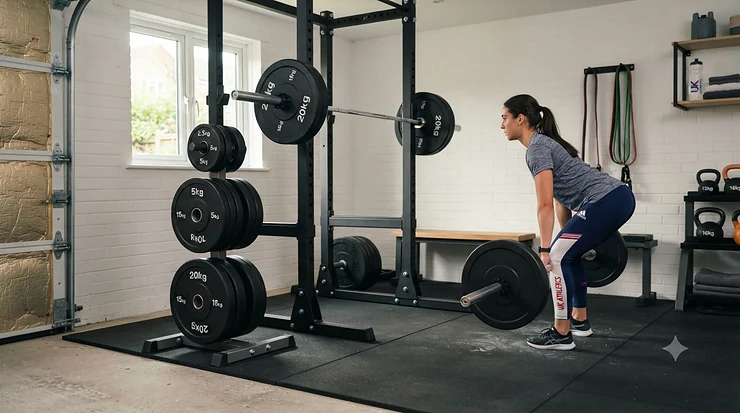
Here’s an inconvenient truth nobody tells you when you’re standing in your garage, spare room, or that oddly-shaped bit of the loft you’ve decided is now “the gym”: the bar is the easy decision. The plates are where people overspend, under-buy, or accidentally end up with a Frankenstein collection of mismatched discs that don’t stack properly and clang like a scrapyard. A weight plate set for home gym use is, quite simply, the piece of kit you’ll touch every single session — so getting it right the first time saves you money, space, and a fair bit of dignity.
So, what is a weight plate set for home gym training? In short: it’s a matched collection of loadable discs — usually 1.25kg to 25kg — designed to slide onto a barbell or dumbbell bar sleeve, letting you add resistance gradually as you get stronger. Simple concept, surprisingly easy to get wrong.
There’s also a wider health case for owning one. The NHS physical activity guidelines for adults recommend strengthening exercises covering all the major muscle groups on at least two days a week, and for most people that means some form of resistance training — plates included. This guide walks you through seven genuinely good options on the UK market in 2026, how to choose between Olympic and standard, and how to avoid the classic beginner mistakes that see plates gathering dust by February.
Quick Comparison Table
| Weight Plate Set | Bore Type | Material | Best For | Price Range |
|---|---|---|---|---|
| Mirafit Cast Iron 2″ Olympic Tri-Grip | Olympic (2″) | Cast iron | All-round home gym use | £90-£320 |
| York Fitness ISO-Grip Rubber Olympic | Olympic (2″) | Rubber-coated | Quiet flats/upstairs rooms | £30-£45 per plate |
| GORILLA SPORTS Tri-Grip Olympic | Olympic (2″) | Rubber-coated cast iron | Tight budgets | £27-£90 |
| Bulldog Gear Home Gym Black Bumper | Olympic (2″) | Virgin rubber bumper | Dropping lifts overhead | £150-£550 |
| BodyMax 1″ Standard Starter Set | Standard (1″) | Cast iron | Total beginners | £100-£180 |
| Wolverson Foundation Bundle Builder | Olympic (2″) | Bar + bumper plates | Buying bar and plates together | £330-£650+ |
| Mirafit IWF Fractional Change Plates | Olympic (2″) | Coated steel/iron | Fine-tuning progressive overload | £17-£23 |
Look at that spread and a pattern jumps out fast: bore size (1-inch “standard” versus 2-inch “Olympic”) splits this market cleanly in two, and it dictates everything else you’ll ever buy for that bar. The Mirafit Cast Iron 2″ Olympic Tri-Grip plates sit in the middle as the sensible all-rounder, while the Bulldog Gear Home Gym Black Bumper set costs more because rubber compounds and drop-testing aren’t cheap to engineer properly. If you’re not sure which bore you need yet, skip ahead to the how-to-choose section before you spend a penny.
💬 Just one click — help others make better buying decisions too!😊
Top 7 Weight Plate Sets for a Home Gym: Expert Analysis
1. Mirafit Cast Iron 2″ Olympic Tri-Grip Weight Plates — best balanced all-rounder
Mirafit built its reputation as a UK garage-gym staple, and this Olympic tri-grip set is the reason why. Straight out of the box, the three-handle design means you’re not fumbling to peel a 20kg disc off the floor with fingertips alone — you get an actual grip. The plates come in individual sizes from 1.25kg up to 25kg, with the larger discs sitting at roughly 40cm diameter, so they fit standard 2-inch Olympic sleeves without the wobble you get on cheaper unbranded imports. Based on the spec comparison, the tri-grip cutouts matter more than they sound: they’re the difference between a smooth changeover mid-set and standing there swearing at a stuck plate. This is the set for someone who wants one purchase that covers squats, deadlifts, and bench for years, rather than several small top-ups. Aggregated review sentiment sits around 4.7-4.9 stars across hundreds of ratings, with buyers consistently praising build quality and fast UK delivery — though a recurring complaint is that the painted coating can chip if plates are dropped repeatedly onto hard concrete, exposing bare iron underneath.
Pros:
- ✅ Tri-grip handles make loading and unloading genuinely quick
- ✅ Sold in individual sizes so you can build exactly the set you need
- ✅ Strong UK brand reputation with responsive customer service
Cons:
- ❌ Paint coating can chip with repeated hard drops
- ❌ Not designed for dropping from overhead like bumper plates
Expect to pay somewhere in the £90-£320 range depending on total kg — solid value for a set you’ll likely never need to replace.
2. York Fitness ISO-Grip Rubber Olympic Weight Plates — quietest option for flats and shared houses
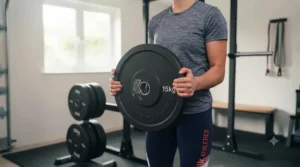
If you live above someone (or below someone who complains), this is the plate set that keeps the peace. York’s ISO-Grip rubber coating wraps a steel or iron core, and what most buyers overlook about rubber-coated plates is that the benefit isn’t really about protecting your floor — it’s about protecting your relationship with your downstairs neighbour. Set the plate down normally and the sound is a dull thud rather than a metallic clang. The rubber layer also means less risk of chipped paint or exposed metal over time, since there’s no coating to flake off in the first place. Reviewers consistently note that these feel noticeably more premium in the hand than budget cast iron equivalents, with a smooth, consistent finish. On the spec sheet, York states an interlocking design intended to maximise how much plate you can fit on a bar sleeve — useful if you’re working toward heavier lifts and running out of sleeve length. The trade-off is that you’re buying individual plates rather than a pre-bundled set, so building up a full 100kg+ collection takes a few separate purchases.
Pros:
- ✅ Rubber coating keeps noise and vibration down significantly
- ✅ Space-saving interlocking design fits more weight per sleeve
- ✅ Reviewers rate finish quality highly at 4.8 out of 5
Cons:
- ❌ Sold as individual plates, so building a full set costs more upfront
- ❌ Some sizes have shown patchy stock availability
Prices typically run £30-£45 per plate, so a modest starter pair will land somewhere under £100.
3. GORILLA SPORTS Tri-Grip Rubber Coated Olympic Weight Plates — best for tight budgets
Gorilla Sports has built a genuinely huge catalogue of budget strength kit, and this tri-grip rubber-coated Olympic set is their volume seller for good reason. The core is cast iron for stability, wrapped in a rubber layer that’s noticeably thinner than premium bumper compounds — which keeps the price down but also means these aren’t built for overhead dropping. What most buyers overlook here is that “budget” doesn’t automatically mean “flimsy”: the tri-grip handle cutouts are present across the range, and the 30/31mm bore variant caters to a wider spread of budget barbells than some competitors. Aggregated review sentiment is mixed but leans positive, averaging around 4.0-4.4 stars across different size variants, with UK buyers frequently mentioning fast delivery and reasonable finish quality for the price point. A recurring theme in negative reviews, however, is weight tolerance — a handful of reviewers have reported plates running slightly under or over their stated kg, something worth bearing in mind if you’re training for a specific numbers-based goal like a powerlifting total.
Pros:
- ✅ Genuinely low entry price for a complete Olympic-bore set
- ✅ Tri-grip handles included even at the budget end
- ✅ Wide range of individual sizes and colour options
Cons:
- ❌ Some reviewers report minor weight inconsistencies between plates
- ❌ Rubber layer is thinner, so not suited to overhead drops
Full sets range from roughly £27 for a small single pair up to around £90 for a heavier multi-plate bundle.
4. Bulldog Gear Home Gym Black Rubber Bumper Plates — best for serious, drop-friendly training
Bulldog Gear is a UK-based manufacturer, and this bumper set is where the category properly earns the word “premium.” These are IWF-standard 450mm diameter virgin rubber bumpers with a stainless steel centre sleeve, built with what’s known in the industry as “dead bounce” — drop them from a snatch or clean and they land flat rather than bouncing across your garage floor. Here’s what the spec sheet won’t tell you outright: thickness varies meaningfully by weight (roughly 26mm for a 5kg plate up to 72mm for a 20kg plate), so if your bar sleeve is on the shorter side, check your total loadout before committing to the heaviest set. Reviewers consistently praise the dead bounce performance and describe the build as holding up well over years of hard use with minimal wear. This is squarely aimed at buyers doing Olympic lifting, CrossFit-style training, or anyone who occasionally has to bail a rep — cast iron plates simply aren’t designed to survive that kind of impact repeatedly.
Pros:
- ✅ Genuine dead-bounce performance for safe overhead dropping
- ✅ Stainless steel centre sleeve resists corrosion long-term
- ✅ Consistently strong review scores across hundreds of buyers
Cons:
- ❌ Noticeably pricier per kilo than cast iron alternatives
- ❌ Bulkier plates mean less total weight fits on a standard sleeve
Expect roughly £150 for a small starter combination rising to £550+ for a full multi-plate set — a genuine investment, but one that should outlast several cheaper sets.
5. BodyMax 1″ Standard Starter Weight Set — best for complete beginners
Not everyone needs Olympic bore on day one, and BodyMax’s standard bundle — a spinlock barbell paired with a starter set of 1-inch cast iron plates — is honestly the sensible entry point for someone who’s never owned a barbell before. The spinlock collar system threads directly onto the bar ends, meaning plates stay locked in place without the faff of clip collars slipping mid-set (a common complaint with cheaper unbranded bars). Based on the spec comparison against Olympic-bore alternatives, standard bore kit tends to be lighter overall and considerably cheaper, which matters if you’re not yet sure whether barbell training is going to stick as a habit. Reviewers frequently mention that the bar itself feels sturdy for the price, though a genuine limitation worth flagging honestly: standard bars typically have a lower maximum safe load (often around 80-115kg total) than Olympic bars, so this is a starter kit, not a forever kit, for anyone planning to chase serious powerlifting numbers.
Pros:
- ✅ Complete bar-and-plates bundle — nothing extra to buy on day one
- ✅ Spinlock collars keep plates secure without constant re-tightening
- ✅ Considerably cheaper than any Olympic-bore starter option
Cons:
- ❌ Lower maximum load ceiling than Olympic-bore equivalents
- ❌ You’ll likely outgrow it and need to upgrade within a year or two of consistent training
Full bundles typically sit in the £100-£180 range, making this one of the most accessible entry points on this list.
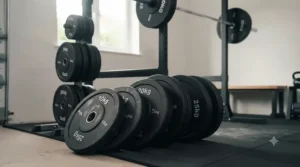
6. Wolverson Foundation Barbell + Bumper Plate Bundle Builder — best barbell and plate bundle
If picking a bar and separately hunting for matching plates sounds like a headache, Wolverson’s bundle builder solves it in one purchase. You choose your bar (Foundation, Ultra, Power, or Infinity, depending on whip and use case) and pair it with a bumper plate set ranging from 60kg to 150kg+, all shipped as a single coordinated order. What most buyers overlook about buying bar and plates separately is compatibility risk — sleeve diameter, collar fit, and loadable length can all catch out a first-time buyer mixing and matching brands. A pre-built bundle removes that guesswork entirely. On the spec side, the Foundation bar uses needle bearings for smooth sleeve rotation, which matters more for Olympic-style lifts than for straight bench or squat work. This is genuinely a “sort it once and forget it” purchase, and it suits someone setting up a garage gym from scratch rather than someone incrementally upgrading an existing setup.
Pros:
- ✅ Bar and plates guaranteed compatible — zero mix-and-match risk
- ✅ Multiple bar whip options depending on training style
- ✅ Scales from a modest 60kg set up to 150kg+
Cons:
- ❌ Highest total outlay on this list for a single purchase
- ❌ Less flexibility to mix plate brands later without recalculating your loadout
Bundles range roughly £330 for the smallest bar-and-plate combination up to £650+ for the largest, positioning it firmly as a considered, one-time investment rather than an impulse buy.
7. Mirafit IWF Coloured Fractional Weight Lifting Change Plates — best for progressive overload
This one isn’t a standalone set so much as the unsung hero every serious lifter eventually adds to their collection. Fractional plates come in small increments — typically 0.25kg to 2.5kg — designed to slot onto an Olympic sleeve alongside your main plates when a standard 2.5kg jump becomes too much. Here’s what the spec sheet won’t tell you, but reviewers note repeatedly: once your bench or overhead press stalls on the usual jumps, these tiny plates are often the only thing standing between you and months of frustrating plateaus. The colour-coding follows IWF conventions, so identifying weights at a glance becomes second nature quickly, even mid-set when you’re not thinking clearly about much beyond finishing the rep. Aggregated reviews sit around 4.7 stars, with buyers specifically calling out how much smoother strength progression feels once fractionals are in the mix, rather than being stuck choosing between “too easy” and “too hard” jumps.
Pros:
- ✅ Enables genuinely small load increases for stalled lifts
- ✅ Colour-coded for quick identification during training
- ✅ Inexpensive addition that extends the life of any existing set
Cons:
- ❌ Not a standalone set — needs an existing barbell and main plates
- ❌ Easy to lose track of small plates in a busy home gym
Priced around £17-£23 depending on the size combination, this is the cheapest item on the list and arguably the one with the biggest impact on long-term progress.
Practical Usage Guide: Setting Up Your Plates Properly
Getting your weight plate set for home gym use out of the box is the easy part; setting it up so it lasts is where most people cut corners. Start with flooring — rubber gym tiles (roughly £25-£40 per square metre) aren’t just about protecting concrete, they also dampen noise and stop cast iron edges chipping on impact. Lay your bar horizontally across a rack or stands rather than leaning it against a wall, which bends the shaft over time.
The British Heart Foundation’s guidance on strength training notes that building muscle this way also slows age-related bone and muscle loss and supports heart health — a decent bit of motivation on the days you’d rather not bother. In the first 30 days, resist the urge to load up fast. New lifters consistently make the same mistake: adding 10kg jumps because the numbers “feel small,” then wondering why form breaks down. Small, controlled increases let your joints and connective tissue catch up with your muscles, which adapt faster. For maintenance, wipe cast iron plates down monthly to prevent surface rust, especially in garages prone to damp — a light coat of machine oil on any exposed metal edges works well. Check collar tightness every session; loose collars are the single most common cause of plates shifting mid-lift. Finally, store plates on a vertical rack rather than stacked flat on the floor — it’s kinder to your back when loading, and it stops the bottom plate in a stack from developing a permanent dust ring nobody wants to deal with later.
Real-World Scenarios: Which Set Actually Matches Your Life
The Garage Beginner: Someone starting from zero, unsure if the habit will stick, with roughly £150 to spend and a concrete garage floor they don’t mind marking slightly. The BodyMax 1″ Standard Starter Weight Set makes sense here — low cost, complete bundle, nothing wasted if the New Year’s resolution fizzles by March.
The Upstairs Flat Lifter: Training in a second-floor flat with genuinely concerned neighbours below. Noise matters more than price. The York Fitness ISO-Grip Rubber Olympic plates, loaded gently rather than dropped, are the sensible pick — rubber coating plus a habit of controlled lowering solves most of the noise complaint before it starts.
The Committed CrossFit-Style Lifter: Training Olympic lifts three-plus times a week, occasionally bailing reps overhead, budget around £400-£600 for a proper long-term setup. The Bulldog Gear Home Gym Black Rubber Bumper plates are built for exactly this — dead bounce performance isn’t a luxury here, it’s a safety feature.
The From-Scratch Garage Gym Builder: No bar, no plates, no patience for compatibility research, budget flexible. The Wolverson Foundation Barbell + Bumper Plate Bundle Builder removes the guesswork entirely in a single coordinated order.
Home Gym Budgeting: What You’re Actually Paying For
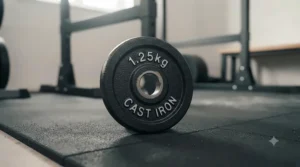
A home gym budgeting mistake almost everyone makes is treating the plates as one line item, when really they’re a per-kilo purchase disguised as a single product. Cast iron typically runs £1.20-£2.00 per kilo, rubber-coated cast iron sits a little higher at £1.50-£2.50 per kilo, and genuine bumper plates command £1.80-£3.50 per kilo depending on brand and rubber quality. That difference compounds fast — a 100kg set can swing from roughly £150 to £350 purely based on coating and construction.
| Plate Type | Typical Cost per Kilo | Best Suited To |
|---|---|---|
| Cast Iron (uncoated) | £1.00-£1.80 | Budget-first buyers, careful handling |
| Rubber-Coated Cast Iron | £1.50-£2.50 | Noise-sensitive homes, general use |
| Bumper Plates | £1.80-£3.50 | Overhead lifts, dropped reps |
The maths here matters more than the sticker price of any single set. If you know you’ll never drop a bar from overhead, paying bumper-plate prices is money spent on a feature you won’t use — cast iron or rubber-coated cast iron gets you the same strength gains for considerably less outlay.
How to Choose a Weight Plate Set for Home Gym Training
- Check your bar’s sleeve diameter first. Olympic bars take 2-inch plates, standard bars take 1-inch — buying the wrong bore is the single most common (and expensive) mistake beginners make.
- Work out your realistic end goal in kilograms. Buying incrementally is fine, but knowing roughly where you’re heading (say, 140kg total for squats) avoids repeat postage costs on small top-up orders.
- Decide whether you’ll ever drop weight from overhead. If yes, budget for bumper plates. If no, cast iron or rubber-coated cast iron will save you real money.
- Factor in your flooring. Concrete garages can handle cast iron; wooden upstairs floors strongly favour rubber-coated or bumper options regardless of drop habits.
- Consider fractional plates from day one. They’re cheap, and buying them alongside your main set avoids a second delivery once your lifts inevitably stall on standard jumps.
- Check tri-grip versus flat-edge design. Tri-grip plates cost marginally more but save genuine hassle during changeovers, especially once you’re loading multiple plates per side.
- Read aggregated review sentiment on weight tolerance, not just star ratings — a 4.5-star set with consistent complaints about inaccurate kg markings isn’t the bargain it first appears.
Progressive Overload: Why Plate Selection Matters More Than You Think
Progressive overload is a core training principle behind continued strength gains, and it works by gradually increasing the stress placed on your muscles and joints over time. In plain English: to keep getting stronger, you have to keep asking slightly more of your body, session after session, week after week.
Here’s where plate selection quietly becomes a training variable rather than just a shopping decision. A set that only jumps in 2.5kg or 5kg increments per side works brilliantly early on, when almost any added weight produces progress. But six months in, that same 5kg jump can represent a genuinely unmanageable leap on an upper-body lift like overhead press — the difference between completing all your reps and grinding to a failed set. This is precisely the gap fractional plates exist to close, letting you add 0.5kg-1kg per side instead of forcing an all-or-nothing jump. Buyers who skip fractionals often report hitting a plateau and assuming it’s a programming or recovery issue, when in reality it’s simply that their available jumps are too coarse for where their strength currently sits.
Olympic Plate Set vs Standard Plate Set
The Olympic-versus-standard debate isn’t really a debate once you understand what each bore size is optimised for. An Olympic plate set uses a 2-inch (50mm) centre hole, matched to Olympic barbell sleeves that rotate independently on bearings or bushings — this reduces wrist and elbow strain during dynamic lifts and allows for genuinely heavy total loads, often 200kg-300kg+ depending on the bar. A standard plate set uses a 1-inch (25mm) hole on a fixed, non-rotating sleeve, with lower typical maximum loads and a noticeably cheaper buy-in cost.
| Factor | Olympic Plate Set | Standard Plate Set |
|---|---|---|
| Bore diameter | 2 inches (50mm) | 1 inch (25mm) |
| Typical max load | 200kg-300kg+ | 80kg-150kg |
| Sleeve rotation | Bearings/bushings | Usually fixed |
| Entry cost | Higher | Lower |
For anyone planning to train seriously beyond the first year, Olympic is almost always the better long-term investment — the rotating sleeve alone reduces joint strain meaningfully during cleans, snatches, and even standard bench pressing. Standard bore remains a genuinely sensible choice for casual users or absolute beginners testing the waters before committing to a full Olympic setup.
Common Mistakes When Buying a Weight Plate Set
Buyers repeatedly fall into the same handful of traps, and expert commentary from UK garage-gym communities keeps circling back to the same culprits. First: buying plates before confirming bar compatibility, resulting in a costly bore-size mismatch that means returning or reselling one half of the purchase. Second: chasing the cheapest possible price per kilo without checking aggregated weight-tolerance complaints, only to discover plates running 5-10% light or heavy once they’re on the bar. Third: under-buying total kilograms to save money upfront, then paying more overall in repeated small top-up deliveries with their own shipping costs. Fourth: ignoring flooring entirely and assuming any surface can handle repeated plate drops — a mistake that gets expensive fast once concrete starts cracking or floorboards start creaking. Fifth: skipping fractional plates, then hitting an early plateau and blaming training rather than equipment.
✨ Don’t Miss These Exclusive Deals!
🔍 Take your home gym build to the next level with these carefully selected sets. Click on any highlighted product to check current pricing and availability. The right plates now save you a costly re-buy later!
Starter Plate Set for Home Gym: What Beginners Actually Need
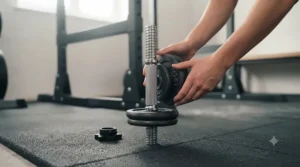
New buyers consistently overbuy or underbuy, and both mistakes are expensive in different ways. A genuinely sensible starter plate set for home gym use covers roughly 40kg-80kg total, split across manageable increments (1.25kg, 2.5kg, 5kg, 10kg), paired with either an Olympic or standard bar depending on long-term ambitions. The problem most beginners run into isn’t strength — it’s technique confidence, so starting lighter than you think you need is almost always the right call.
A common pain point: buying a huge set upfront, then realising half the plates go unused for months while form is still developing. The fix is straightforward — start with the BodyMax 1″ Standard Starter Weight Set or a small Olympic bundle from the GORILLA SPORTS Tri-Grip Olympic range, and top up with fractional plates once specific lifts start stalling. Another common problem is buying plates without a bar at all, assuming “I’ll sort the bar later” — this almost always results in a bore-size mismatch, since the temptation is to grab whatever’s cheapest when the bar purchase finally happens.
Barbell and Plate Bundle vs Buying Separately
Buying a barbell and plate bundle together solves the compatibility question outright, but it’s worth weighing against buying components separately with open eyes. A bundle guarantees matched sleeve diameter, appropriate collar type, and — usually — a small saving versus buying each piece at full individual price. Buying separately gives more control over brand mixing (say, a premium bar paired with budget cast iron plates to save money where it matters least), but it demands more research upfront to avoid a mismatch.
If you’re a first-time buyer with no existing equipment, a bundle like the Wolverson Foundation Barbell + Bumper Plate Bundle Builder removes nearly all the risk in one transaction. If you already own a bar and simply need plates, buying separately from any of the standalone sets above — Mirafit, York Fitness, or GORILLA SPORTS — makes more financial sense than paying bundle pricing for a bar you don’t need.
Safety, Flooring and Manual Handling for Home Gym Plates
Lifting and loading plates is manual handling, full stop, and the same basic principles that apply in a warehouse apply just as much in your garage. HSE’s good handling technique guidance advises keeping any load close to your body for as long as possible while lifting, rather than reaching forward to grab a plate off a low rack with a rounded back. It sounds obvious until you’re rushing to finish a session and grab a 20kg plate one-handed from an awkward angle.
Flooring deserves equal attention. Rubber gym tiles reduce both impact noise and the risk of a dropped plate bouncing unpredictably across a hard surface — a genuine hazard if there’s anyone else nearby, including pets or small children wandering into a garage gym unsupervised. Store heavier plates on lower rack positions to reduce lifting height and strain, and always check a plate’s collar is fully tightened before starting a heavy set — a loose collar shifting mid-lift is one of the more common causes of home gym accidents, and entirely preventable with a five-second check.
Long-Term Cost & Maintenance of Weight Plates
Weight plates are, refreshingly, one of the lowest-maintenance items in any home gym — there’s no motor to service, no belt to replace, no app subscription lurking in the small print. The main ongoing cost is simply topping up your set as you get stronger, and buying incrementally in 10kg-20kg chunks tends to work out similarly priced to one large upfront purchase, provided you’re not paying repeated postage on very small orders.
Total cost of ownership over five years genuinely favours plates over most other home gym equipment categories. A quality set bought once, maintained with occasional rust prevention and the odd re-tightened collar, will comfortably outlast several generations of cheaper cardio machines. The only real “wear” cost is cosmetic — chipped paint on cast iron, or scuffed rubber on bumper plates — neither of which affects function meaningfully for years of regular use.
Frequently Asked Questions
❓ What's the difference between Olympic and standard weight plates?
❓ How many kg should a beginner weight plate set for home gym use include?
❓ Are bumper plates worth it for a home gym?
❓ Can I mix plate brands on the same barbell?
❓ How do I stop my weight plates from rusting?
Conclusion
Choosing a weight plate set for home gym training really comes down to three honest questions: what bore size does your bar take, will you ever drop weight from overhead, and how much are you realistically going to lift in twelve months’ time? Get those three answers right and almost any of the seven sets above will serve you well for years. The Mirafit Cast Iron 2″ Olympic Tri-Grip set remains the sensible middle-ground pick for most UK buyers, the BodyMax 1″ Standard Starter Weight Set is hard to beat for a genuine first purchase, and the Bulldog Gear Home Gym Black Rubber Bumper plates earn their higher price tag the moment you start dropping bars from overhead rather than lowering them.
Don’t overthink the brand names too much, either — cast iron is cast iron, and the differences between reputable UK sellers are smaller than marketing copy suggests. What matters far more is matching bore size to your bar, buying enough total kilos to avoid repeat top-up orders, and adding fractional plates early so progressive overload never has to wait on a delivery van.
Recommended for You
- Calibrated Plates vs Standard Plates: 7 Picks Compared (2026)
- Tri-Grip Plates for Deadlifts: 7 Best UK Picks (2026)
- Rubber Olympic Plates: 7 Best Low-Odour UK Picks (2026)
Disclaimer: This article contains affiliate links. As an Amazon Associate, I earn from qualifying purchases. If you purchase products through these links, we may earn a small commission at no additional cost to you.
✨ Found this helpful? Share it with your friends! 💬🤗
