
In This Article
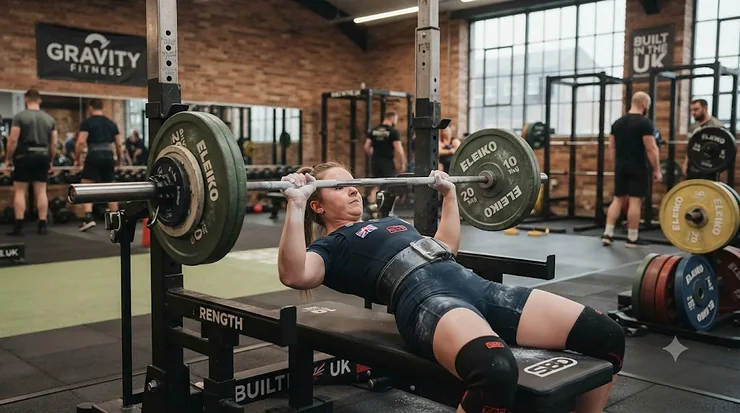
Somewhere between “I’ve stalled on this lift for six weeks” and “maybe I should just switch programmes again,” there’s a much smaller, much cheaper fix that most lifters overlook entirely: the humble half-kilo. Fractional plates for powerlifting exist precisely for this moment — the point where the standard 2.5kg jump is too greedy for your nervous system to handle, but standing still isn’t an option either. Instead of grinding through another failed attempt at 100kg, you load 100.5kg, then 101kg, then 101.5kg, and suddenly a “stuck” lift is moving again.
This matters more than it sounds like it should. Most commercial gyms — and most home setups — jump in 2.5kg or 5kg increments once you’re past the coloured bumper plates, which is a huge percentage leap when you’re working near a true one-rep max. A study from Chaves et al. (2024), discussed at length by the well-regarded strength research outlet Stronger by Science, found that both load-based and rep-based progression reliably drive strength gains — but only when the progression itself is small enough to actually be achievable week to week. Fractional plates are the mechanical tool that makes that small, achievable jump possible on a barbell, rather than forcing you to leap straight to the next “proper” plate.
If you’re only strength training occasionally, this level of precision probably isn’t worth the drawer space. But if you’re one of the growing number of UK adults taking the NHS physical activity guidelines on muscle-strengthening seriously — training twice a week or more, working toward specific numbers — micro-loading stops being a novelty and starts being infrastructure. This guide covers seven genuinely good options sold on amazon.co.uk, what the numbers on the box actually mean for your training, and how to build barbell micro-loading into a proper programme rather than just chucking odd plates in a bag.
Quick Comparison Table: Fractional Plates for Powerlifting at a Glance
| Plate Set | Material | Increment Range | Best For |
|---|---|---|---|
| GYM MASTER Precision Steel Discs | Chrome-plated steel | 0.25kg–1kg | Best budget entry point |
| MUSCLE MAD IWF Colours | Steel | 0.25kg–2.5kg | Best budget IWF colour set |
| Mirafit Olympic Fractional Weight Plate Set | Chrome-plated steel | 0.25kg–1kg | Best all-round travel set |
| GYM MASTER Coloured Rubber Plates | Solid rubber | 0.5kg–2.5kg | Best quiet, floor-friendly option |
| Mirafit IWF Coloured Change Plates | Steel/rubber, IWF colours | 0.5kg–2kg | Best competition-style colour system |
| Rival Strength Micro Add-On Plates | Flexible rubber | 0.5kg–2.5kg | Best for dumbbells and kettlebells |
| Rogue KG Fractional & Change Plates | Steel, rubber-coated | 0.125kg–5kg | Best premium, competition-grade set |
Looking across the table, the split isn’t really “cheap versus expensive” so much as “chrome steel versus rubber versus clip-on” — and each solves a slightly different annoyance. The steel sets from GYM MASTER, MUSCLE MAD and Mirafit are the thinnest and most precise, which matters if you’re already stacking four or five plates a side. The rubber options trade a little bit of precision for a much quieter drop and friendlier floors, while Rival Strength‘s clip-on design solves a completely different problem: what to do when there’s no spare collar space on a dumbbell handle at all.
Just one click — help others make better buying decisions too!😊
Top 7 Fractional Plates for Powerlifting: Expert Analysis
Picking fractional plates isn’t like picking a barbell — you’re not going to ruin a lift with the wrong choice. But you can absolutely waste money on tolerances you don’t need, or end up with a set that’s too thick to fit alongside your existing bumpers. Here’s where each of these seven actually earns its place on the bar.
1. GYM MASTER Precision Steel Discs — cheapest true 0.25kg increment on the market
These are about as no-frills as fractional plates get, and that’s exactly the point. Each pair is laser-engraved, chrome-plated steel, sold individually from 0.25kg up to 1kg, or as a full set with a travel bag.
The 0.25kg plate measures just 10.5cm across and 0.5cm thick — thin enough that even four of them stacked on a sleeve barely eats into your collar space. Calibration is quoted at plus or minus 10 grams, which is tight enough for genuine competition-adjacent micro-loading rather than a rough approximation. Where the GYM MASTER set genuinely earns its keep is for lifters chasing a stalled bench press or overhead press, where even a 1kg jump can be the difference between a clean lockout and a grinding miss.
Based on the spec comparison with pricier steel sets, the trade-off here is aesthetics rather than function — there’s no coloured coding, just a plain chrome finish and a printed weight label. Reviewers on Amazon UK rate the range around 4.6 out of 5 from roughly 40 ratings, with feedback consistently describing the plates as good value for straightforward micro loading rather than a premium product. A handful of reviews mention the finish marking slightly with heavy use, which tracks with the budget positioning.
Pros:
- ✅ True 0.25kg increments at a genuinely low price point
- ✅ Slim profile leaves plenty of room on a loaded sleeve
- ✅ Calibrated to +/- 10g, tighter than most budget rivals
Cons:
- ❌ No colour coding, so quick visual ID is harder
- ❌ Chrome finish can show wear with frequent heavy use
Prices sit in the under-£40 range depending on which individual size or the full set you choose — at the time of research, this was among the cheapest genuine fractional steel sets on amazon.co.uk, and for a first foray into micro-loading it’s difficult to argue with.
2. MUSCLE MAD IWF Colours Steel Incremental Weights — best budget IWF colour-coded set
Here’s the thing most lifters don’t realise until they’re three plates deep into a session: grabbing the right fraction by eye is genuinely annoying when everything’s the same dull grey. MUSCLE MAD solves that at a budget price by colour-coding each increment to the IWF standard — white for 0.25kg, yellow for 0.5kg, all the way through to black for 2.5kg.
Specs-wise, these are steel discs with a consistent 108mm diameter across the range, with thickness scaling from 5mm at the 0.25kg end up to 46mm for the 2.5kg plate. That diameter consistency matters more than it sounds — it means the plates stack flush against each other rather than at odd angles, which keeps the load centred and stable through a heavy pull. What most buyers overlook about a set like this is that it doubles as a technique tool: the colour system makes it trivially easy to load exact percentages for programmed work, not just PR attempts.
Amazon UK listings for individual pairs (such as the 0.5kg) currently show a near-perfect rating, though the review count on some individual size listings is still small, so treat that figure as an early signal rather than a settled verdict — the full seven-pair set has a longer track record on the brand’s own site. The spec sheet won’t tell you this, but colour-coded steel plates like these are genuinely popular with lifters who train in a shared gym environment, since a training partner can identify the right plate at a glance without reading tiny stamped numbers.
Pros:
- ✅ Full IWF colour-coding across all seven increments
- ✅ Consistent 108mm diameter keeps loaded plates flush
- ✅ Competitive pricing for a complete micro-loading range
Cons:
- ❌ Some individual size listings have a limited review history
- ❌ Steel construction means a louder drop than rubber rivals
Individual pairs typically sit in the mid-teens in pounds, with the full seven-pair set landing around £30-£40 depending on the retailer — a fair spread for buyers who want the whole increment ladder from day one rather than building it up piece by piece.
3. Mirafit Olympic Fractional Weight Plate Set — best all-round set with a proper carry bag
Mirafit has built a genuinely strong reputation in the UK home-gym space, and this set is a good example of why. It ships as a complete 0.25kg-to-1kg range, chrome-plated steel, in a dedicated travel bag — a small detail that matters more than it should once you’ve spent five minutes fishing loose fractional plates out of the bottom of a gym bag.
Each plate is calibrated to plus or minus 10 grams, and the diameter scales sensibly from 10.5cm at the smallest size up to the same 10.5cm at 1kg but with greater thickness (2cm), keeping the footprint compact even at the top of the range. Based on the spec comparison with cheaper unbranded steel sets, the finish and machining tolerance here are noticeably tighter, which is reflected in the price gap. For lifters using these to fine-tune load between commercial bumper plate jumps — a very common use case — that tighter tolerance is exactly what you’re paying for.
Aggregated review sentiment on Amazon UK is strong, sitting around 4.9 out of 5 from roughly 42 ratings at the time of research. Reviewers commonly describe the set as good value for closing the gap between standard plate increments and note that it pairs well with heavier bumper sets for genuine progressive overload — sentiment that lines up closely with feedback left directly on Mirafit’s own site for the same product line. A smaller number of reviews mention that the bag, while a nice inclusion, isn’t the most durable component of the package.
Pros:
- ✅ Complete 0.25kg–1kg range with a dedicated travel bag
- ✅ Tight +/- 10g calibration across the whole set
- ✅ Consistently high UK customer ratings
Cons:
- ❌ Premium pricing versus unbranded steel alternatives
- ❌ Included bag is a nice-to-have rather than heavy-duty gear
Expect to pay in the £40-£55 range for the full set — check current price, as Mirafit periodically runs its own site promotions that undercut the Amazon listing.
4. GYM MASTER Coloured Rubber Fractional Change Plates — best quiet, floor-friendly micro-loading
If you train in a garage, a converted spare room, or anywhere with downstairs neighbours who have opinions about 6am deadlift sessions, steel fractional plates dropped from height are not your friend. GYM MASTER‘s rubber-coated range covers 0.5kg through 2.5kg, and the solid rubber construction noticeably softens both the sound and the impact compared with the brand’s own chrome steel line.
Dimensions scale from a 13.5cm diameter at 0.5kg up to 23cm at 2.5kg, with thickness increasing proportionally — meaning the top of the range starts to look and feel closer to a genuine mini bumper plate than a token fractional add-on. What most buyers overlook about rubber fractional plates specifically is that they also protect your barbell sleeves from the chrome-on-chrome clatter that steel discs cause when you’re loading and unloading quickly between sets. Calibration is again quoted at plus or minus 10 grams, so you’re not sacrificing precision for the quieter drop.
Amazon UK reviewers rate this range around 4.7 to 4.8 out of 5 from roughly 30 to 37 ratings depending on the specific size listing, with feedback consistently praising the plates for exactly the use case they’re designed for: fine-tuning loads where a lifter is genuinely struggling to progress. A recurring theme in the reviews is that the rubber coating holds up well even with frequent floor drops, which is precisely the stress test this product needs to pass.
Pros:
- ✅ Solid rubber build is significantly quieter than steel rivals
- ✅ Protects barbell sleeves from repeated metal-on-metal contact
- ✅ Strong, consistent UK review scores across the size range
Cons:
- ❌ Bulkier per kilo than the equivalent chrome steel plates
- ❌ Manufacturer notes these aren’t intended for commercial gym use
Individual pairs range from around £12 up to the mid-£30s for larger increments or full sets — check current price, since GYM MASTER sells a wide spread of individual sizes separately.
5. Mirafit IWF Coloured Fractional Weight Lifting Change Plates — best competition-style colour system
Where the standard Mirafit set focuses on the smallest fractions, this range picks up further up the scale — 0.5kg, 1kg, 1.5kg and 2kg — using the same official IWF colour coding found on competition bumper plates: white, green, yellow and blue respectively. That consistency is genuinely useful if you already train on colour-coded competition-style equipment, since these change plates slot into the same visual language rather than introducing a second system to remember.
Here’s what the spec sheet won’t tell you, but user reports suggest: colour-matched change plates like these are particularly popular for closing the gap on deadlift and squat work, where lifters are typically stepping up in 5kg or 10kg jumps on bumper plates and need something in between that doesn’t require guesswork under fatigue. On paper, that’s a bigger relative jump than the fractional plates covered elsewhere in this list — think of this range less as “micro-loading” and more as “mid-loading,” bridging chunkier increments than the 0.25kg-1kg sets above.
Review sentiment on Amazon UK sits around 4.7 to 4.8 out of 5 across roughly 36 to 41 ratings depending on size, echoing genuine feedback captured on Mirafit’s own site, where one recent reviewer described the plates as great value for sitting between two standard weights to keep progressive overload consistent. That’s a fair summary of the core use case.
Pros:
- ✅ Matches official IWF colour coding for instant recognition
- ✅ Bridges the larger 5kg-10kg bumper plate jumps effectively
- ✅ Strong, consistent aggregated review scores
Cons:
- ❌ Not a substitute for true 0.25kg-0.5kg micro-loading
- ❌ Full multi-size set pricing climbs quickly versus individual pairs
Individual pairs start around £17, climbing toward the £45-£60 range for the fullest multi-size sets — buy only the increments you’ll actually use rather than the whole range by default.
6. Rival Strength Micro Add-On Plates — best for dumbbells, kettlebells and machine stacks
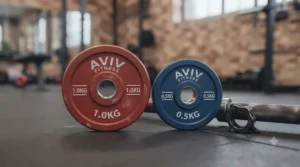
Every fractional plate covered so far assumes you’ve got a free barbell sleeve and a collar to hold everything in place. Rival Strength‘s Micro Add-On range throws that assumption out entirely. The rubber body is designed to flex open, letting you clip it directly onto anything with a handle diameter between 22mm and 35mm — a fixed dumbbell, a kettlebell handle, even certain cable machine stacks.
Available in 0.5kg, 1kg and 2.5kg pairs, the slim profile — as little as 0.9 inches thick for the smaller sizes — means it doesn’t meaningfully change your grip even on a dumbbell that’s already close to full hand-width. Reviewers consistently note this is less about competition-legal precision and more about squeezing extra progressive overload out of equipment you already own, particularly fixed-weight dumbbells where you’d otherwise need to buy an entirely new, heavier pair just to add half a kilo per hand.
Aggregated Amazon UK sentiment is more mixed than the barbell-specific options on this list, sitting around 4.2 to 4.6 out of 5 from a relatively small sample of 6 to 11 ratings depending on the listing — worth noting honestly rather than glossing over. Where feedback does converge, it’s on the flexibility of the clip mechanism and the practicality of using the same plates across multiple pieces of equipment, which is a genuinely different value proposition from anything else on this list.
Pros:
- ✅ Fits barbells, dumbbells, kettlebells and some machine stacks
- ✅ Flexible clip design needs no separate collar
- ✅ Solves micro-loading for fixed-weight equipment specifically
Cons:
- ❌ Smaller review sample than the more established barbell sets
- ❌ Not IWF colour-coded, so less suited to competition prep
Pricing sits around £25-£30 per pair depending on size, which is toward the higher end per kilo — you’re paying for the flexible clip mechanism rather than raw steel, so weigh that against how often you’d actually use it beyond the barbell.
7. Rogue KG Fractional & Change Plates — best premium, competition-grade micro-loading
If you’re training toward a federation-sanctioned total rather than a home-gym PR, Rogue‘s fractional and change plate ranges are the closest thing to a genuine industry standard. The fractional line covers the smallest increments — 0.125kg and 0.25kg — while the separate IWF-approved change plate line runs from 0.5kg all the way to 5kg, all sharing a consistent 50.40mm collar opening built to fit any standard Olympic barbell.
What most buyers overlook about the Rogue range specifically is the tolerance: plus or minus 10 grams across every single increment, matched with an IWF-approved certification on the change plate line that makes these legitimately competition-eligible in federations that permit external fractional loading, unlike several budget alternatives on this list. Based on the spec comparison with the rest of this list, the Rogue set is also the only one offering a genuine 0.125kg increment — half the smallest jump available anywhere else here — which matters if you’re a lifter whose total is measured in fractions of a kilo at national or international level.
Rogue’s own customer feedback on the change plate line runs close to 4.9 out of 5 from over 60 reviews, with reviewers repeatedly highlighting the practical benefit of stacking small increments onto existing plate pairs to reach an exact competition total rather than being stuck between two round numbers. That’s about as directly relevant a piece of aggregated sentiment as you’ll find for this specific use case.
Pros:
- ✅ IWF-approved change plates, genuinely competition-eligible
- ✅ Smallest true increment on this list at 0.125kg
- ✅ Consistent 50.40mm collar opening across the entire range
Cons:
- ❌ Priced well above every other set covered here
- ❌ Full 25kg change plate set is a significant one-off outlay
Individual pairs range from roughly £25 at the small end up to the high double figures for the heavier change plates, with a full set running into the low hundreds — a serious investment, but one aimed squarely at competitive lifters rather than casual home training.
Practical Usage Guide: Setting Up Micro-Loading in Your Programme
Buying fractional plates and actually using them well are two different things. Start by auditing your current programme’s jump size: if your main lifts are progressing in 2.5kg increments and you’re missing more attempts than you’re completing, that’s your signal to introduce fractionals rather than waiting for a total plateau. A sensible first step is dropping your weekly top-set jump to 1kg or even 0.5kg total (0.25-0.5kg per side) once you’re within roughly 5% of a genuine one-rep max.
Storage is the most commonly ignored setup detail. Fractional plates are small enough to vanish into a gym bag, a drawer, or — worst of all — the bottom of a plate tree where they get buried under 20kg bumpers. A dedicated pouch, magnetic tray, or the travel bag several of the sets above include isn’t a luxury; it’s what stops you loading a session late because you spent five minutes hunting for a 0.5kg plate. In the first 30 days, the single most common mistake is treating fractionals as an occasional novelty rather than a standing part of your loading kit — keep them on the bar setup checklist from day one, not just for PR attempts.
Maintenance is minimal but not zero. Steel fractional plates benefit from an occasional wipe-down to prevent surface rust, particularly if you train somewhere with fluctuating humidity, such as an unheated garage gym. Rubber-coated plates should be checked periodically for splitting at the collar opening, since that’s the first point of wear under repeated barbell insertion. Neither task takes more than a minute a month, but skipping it entirely does shorten the working life of budget steel sets specifically.
Real-World Scenario: Who Actually Needs Fractional Plates
Picture three different lifters, all stuck on the same problem in different ways. First, there’s the intermediate lifter training three times a week in a home garage gym, squatting 120kg and missing the jump to 122.5kg for the third week running. For them, the answer is straightforward: a budget steel set like the GYM MASTER or MUSCLE MAD range lets them load 121kg, then 121.5kg, turning one demoralising miss into two manageable, winnable sessions.
Second, consider the competitive powerlifter six weeks out from a federation meet, needing to hit an exact qualifying total rather than just “a bit more than last time.” Here, precision and eligibility both matter — this is where a set like Rogue‘s IWF-approved change plates earns its higher price tag, because loading has to be both accurate and legal under competition rules, not just close enough for training purposes.
Third, there’s the budget-conscious beginner training mostly with a pair of fixed dumbbells at home, three or four times a week, who simply can’t justify buying an entirely new dumbbell set every time they outgrow the current one. For this lifter, Rival Strength‘s clip-on Micro Add-On Plates solve a genuinely different problem — squeezing another six to twelve months of progression out of equipment already sitting in the corner of a bedroom, without a four-figure adjustable dumbbell purchase.
Problem → Solution: Fixing Common Sticking Points with Barbell Micro-Loading
Problem: You’ve missed the same weight three sessions running. Rather than repeating the attempt a fourth time, drop the jump to a fractional increment — 0.5kg to 1kg total — for the next two to three sessions, then reassess whether you can resume standard 2.5kg jumps.
Problem: Your training partner keeps grabbing the wrong plate. Switch to an IWF colour-coded set like MUSCLE MAD or Mirafit‘s change plates, so the correct fraction is identifiable at a glance rather than by squinting at stamped numbers mid-set.
Problem: You’re training on fixed dumbbells and have hit a wall. This is precisely the gap Rival Strength‘s Micro Add-On Plates were built for — clip-on loading that doesn’t require a full adjustable dumbbell system.
Problem: Steel plates are too loud for your training space. Swap to a rubber-coated fractional set, such as GYM MASTER‘s coloured rubber range, which noticeably softens both drop noise and floor impact versus chrome steel.
Problem: You’re prepping for a sanctioned meet and need certainty your plates are legal. Only a genuinely IWF-approved line, such as Rogue‘s KG Change Plates, removes the guesswork — check your specific federation’s approved equipment list before relying on any fractional set in competition.
How to Choose Fractional Plates for Powerlifting
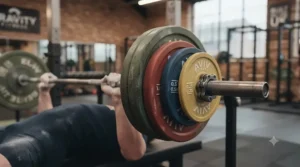
What is fractional plates for powerlifting, in the simplest terms? They’re small-denomination weight plates — typically 0.125kg to 2.5kg — used to increase barbell load in increments finer than a standard 2.5kg or 5kg jump, letting lifters progress steadily rather than stalling between round numbers.
- Check your collar diameter first. Almost every option here fits a standard 50.4mm Olympic sleeve, but confirm before buying if you’re using a non-standard bar.
- Decide how fine an increment you actually need. Bench and overhead press stalls often respond to 0.25kg-0.5kg jumps; squat and deadlift can usually tolerate slightly larger 1kg-2kg fractional steps.
- Match material to your training environment. Steel is thinner and cheaper; rubber is quieter and gentler on floors and sleeves.
- Consider colour coding if you share equipment. A consumer buying guide from Which? notes that ease of identification is a genuine practical factor in home-gym equipment choices, not just an aesthetic one.
- Verify competition legality if it matters to you. Only IWF-approved lines are safe to assume as meet-legal; everything else should be treated as training-only unless your federation confirms otherwise.
- Buy the smallest set that solves your actual problem. A full 15kg range of colour-coded change plates is overkill if what you actually need is a 0.25kg-1kg micro-loading set for one stalled lift.
- Factor in storage before you buy in bulk. A set with a carry bag or tray, like Mirafit’s, avoids the classic problem of tiny plates disappearing into a kit bag.
Fractional Plates vs Traditional Weight Jumps
| Factor | Traditional 2.5kg/5kg Jumps | Fractional Plates (0.25kg-1kg) |
|---|---|---|
| Typical relative increase near 1RM | 2-5% | 0.2-1% |
| Risk of repeated missed attempts | Higher | Lower |
| Cost to add | None (already owned) | £12-£90 depending on set |
| Best suited to | Early-stage linear progression | Intermediate/advanced stalls |
The table makes the trade-off obvious: traditional jumps cost nothing because you already own the plates, but they get proportionally more brutal the closer you sit to a genuine maximum. Fractional plates shift a 2.5kg jump at 100kg — a 2.5% increase — down to something closer to 0.5-1%, which is a far more realistic ask of your nervous system week to week. That said, a true beginner still making rapid linear progress every session doesn’t need fractionals yet; they’re a tool for the plateau phase, not the honeymoon phase of a lifting career.
✨ Don’t Miss These Exclusive Deals!
🔍 Take your fractional plates for powerlifting shopping to the next level with these carefully selected products. Click on any highlighted item to check current pricing and availability. These tools will help you build genuine, steady strength progression your future PRs will thank you for!
What to Expect: Real-World Performance of Small Increment Weight Plates
On paper, adding a 0.5kg fractional plate sounds almost too small to matter. In practice, the psychological effect is arguably bigger than the physiological one. A bar that’s been sitting at a “stuck” number for weeks suddenly moves to a new number, and that alone changes how a lifter approaches the attempt — less bracing for failure, more expectation of success. The research summarised by Stronger by Science on progressive overload backs this up structurally: both load-based and rep-based progression drive comparable strength adaptations, provided the increment is genuinely achievable rather than aspirational.
Expect the smallest fractional plates — 0.125kg to 0.5kg — to be functionally invisible in terms of bar feel; you won’t notice the difference in the hole of a squat or off the chest in a bench press. What you will notice is the compounding effect over a training block: five consecutive 0.5kg jumps add up to the same 2.5kg total progress as a single traditional jump, just spread across a timeline your body can actually adapt to without repeated failed attempts eroding confidence and technique.
Fractional Plates for Different Types of Lifters
Beginners rarely need fractional plates in their first six to twelve months — linear progression on standard increments is usually still working, and introducing fractionals too early just adds unnecessary complexity to a simple system. Intermediate lifters, typically once squat, bench and deadlift progress has slowed to session-by-session rather than week-by-week gains, are the core audience for everything covered in this guide. Advanced and competitive lifters need to think slightly differently: precision and, where relevant, competition legality outweigh cost as the primary buying factor, which is where a set like Rogue’s genuinely justifies its price. Budget-conscious lifters training at home on a tight kit list should prioritise a single small steel set covering 0.25kg-1kg over a full multi-size colour-coded range — you can always add increments later as specific lifts demand them.
Long-Term Cost & Maintenance of Micro-Loading Plates
Fractional plates are, kilo for kilo, one of the most expensive types of weight plate you can buy — a 0.25kg steel disc can cost more per kilo than an entire 20kg bumper plate. That’s not poor value; it’s the price of precision manufacturing on a tiny object. Viewed over a multi-year lifting career, though, the total cost of ownership is genuinely low: a one-off £15-£50 spend on a core fractional set typically lasts years, since these plates see far less mechanical stress than full-size bumpers dropped from overhead.
Total cost of ownership favours steel sets for barbell-only training, since there’s essentially nothing to wear out beyond surface finish. Rubber-coated sets carry a slightly higher long-term risk of the coating splitting at the collar opening with very heavy daily use, though this is a multi-year timeline for home-gym volumes, not a near-term concern. Either way, replacing a single worn fractional plate is a low double-figure cost at most — nowhere near the expense of replacing a full plate set, and rarely necessary at all for anyone training a handful of sessions per week.
Common Mistakes When Buying Fractional Plates
The most common mistake is buying a full colour-coded set when only one or two increments are actually needed — an understandable instinct, but one that inflates cost for no real training benefit. A close second is ignoring collar diameter compatibility, particularly for lifters mixing barbells from different manufacturers, where a fractional plate that fits one sleeve snugly might sit loose on another. The Which? weights and weight bench buying guide makes a similar point about home-gym equipment more broadly: matching the purchase to your actual training setup matters more than chasing the most feature-rich option available.
A third mistake is assuming any fractional plate is automatically competition-legal — it isn’t, and turning up to a sanctioned meet expecting to use a budget training set is a genuinely avoidable disappointment. Finally, plenty of buyers skip storage planning entirely, then find their smallest, most useful plates are also the ones that get lost first. A £5 pouch solves a problem that a £50 plate set otherwise creates for itself.
Safety, Calibration & Competition Compliance Guide
Calibration tolerance is the number that actually matters here, and most of the sets in this guide quote plus or minus 10 grams — tight enough for serious training purposes, though genuine competition equipment is held to considerably stricter federation standards. If you compete, British Powerlifting — operating under IPF Technical Rules — confirms that any equipment used at English National level or higher must be IPF-approved specifically, with some leniency only at novice or divisional level. In practical terms, that means training-grade fractional plates are excellent for building strength but shouldn’t be assumed meet-legal without checking your federation’s approved list first.
From a pure safety standpoint, fractional plates carry lower risk than full-size plates simply because of their weight, but the same basic rules apply: check collars are fully secured before lifting, inspect rubber-coated plates periodically for splitting near the collar opening, and never mix plate diameters in a way that leaves a barbell sleeve unevenly loaded. None of this is complicated, but it’s worth building into a habit rather than an afterthought, particularly as your working loads increase.
FAQ
❓ What are fractional plates used for in powerlifting?
❓ Are fractional plates worth it for beginners?
❓ Do fractional plates fit all barbells?
❓ Are fractional plates competition legal?
❓ What's the smallest fractional plate increment available?
Conclusion
Fractional plates for powerlifting aren’t glamorous — nobody’s Instagram highlight reel features a 0.5kg jump — but they solve a genuinely common problem with almost no downside. Whether you go for a budget chrome steel set to fix one stubborn bench press stall, a full IWF colour-coded range to match your training environment, or a premium competition-grade set because your federation demands precision, the underlying logic is the same: smaller, achievable jumps beat repeated failed attempts at a jump that’s simply too big. Start with the smallest set that solves your actual sticking point, store it properly, and treat it as a standing part of your kit rather than an emergency measure reserved for PR day.
Recommended for You
- Weight Plate Set for Home Gym: 7 Best UK Picks (2026)
- Calibrated Plates vs Standard Plates: 7 Picks Compared (2026)
- Tri-Grip Plates for Deadlifts: 7 Best UK Picks (2026)
Disclaimer: This article contains affiliate links. As an Amazon Associate, I earn from qualifying purchases. If you purchase products through these links, we may earn a small commission at no additional cost to you.
✨ Found this helpful? Share it with your friends! 💬🤗
