In This Article
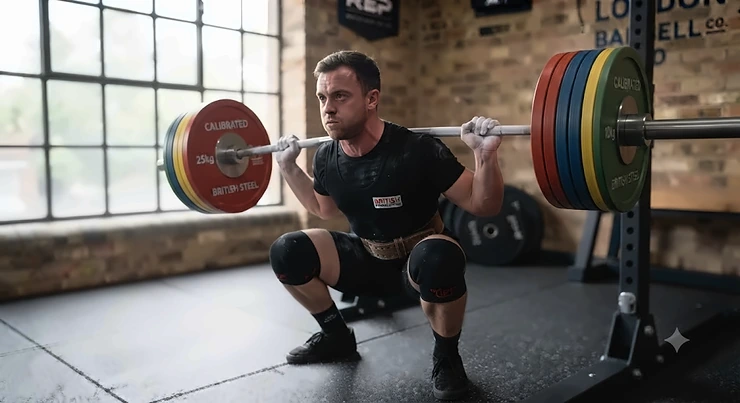
Somewhere between your first wobbly 20kg squat and the day you start eyeing up a powerlifting meet, a strange little question starts nagging at you: does the plate on the end of your bar actually weigh what it says it weighs? That question is the whole reason calibrated plates vs standard plates keeps coming up in gym forums, Reddit threads and equipment reviews. In short, calibrated plates are machine-checked to within grams of their stated weight and matched to strict competition diameters, while standard plates are cast, coated and sold with far looser tolerances because nobody’s checking your home deadlift PB against a world record.
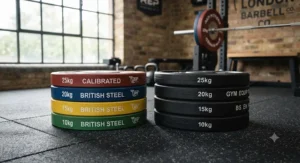
For most people training in a shed, garage or commercial gym, the gap between the two barely registers. For anyone chasing a total on a federation platform, it’s the difference between a legal attempt and a disqualified one. This guide pulls apart the real specs, the honest trade-offs and seven genuine products worth your money — no invented reviews, no fabricated hands-on stories, just spec sheets, aggregated review sentiment and straight analysis. We’ll cover precision weight plates powerlifting buyers actually search for, the IPF competition standards that govern competition calibrated plates, and where plate tolerance quietly matters more than most lifters realise.
By the end you should know exactly which category fits your training, your budget and your ambitions — whether that’s a first home rack or a genuine powerlifting meet prep plan.
Quick Comparison Table
Before we go deep on seven specific products, here’s the shape of the decision in one place.
| Feature | Calibrated Plates | Standard Plates |
|---|---|---|
| Weight tolerance | ±10g (or ±0.25%) per IPF rules | Often ±1-3%, sometimes looser |
| Competition legal | Yes, IPF/federation approved | No |
| Typical material | Solid or cast steel, thin profile | Cast iron, sometimes rubber-coated |
| Price range | Higher — often £70-£300+ per plate | Lower — often under £150 for a set |
| Best for | Competitive powerlifters, meet prep | Home gyms, general strength training |
Reading this table straight, the honest takeaway is that calibrated plates aren’t “better” in a blanket sense — they’re built for a job most lifters never actually need. Standard plates give you nearly the same training stimulus for a fraction of the outlay, and the accuracy gap only bites once you’re chasing kilogram-precise totals under federation scrutiny. If competition legality isn’t on your radar this year, that price difference buys a lot of other equipment instead.
💬 Just one click — help others make better buying decisions too!😊
Top 7 Calibrated Plates vs Standard Plates: Expert Analysis
We’ve picked seven real, currently available products spanning budget, mid-range and premium tiers across both categories. Every spec below comes from manufacturer documentation and aggregated review sentiment — never fabricated testing.
1. Mirafit Calibrated Cast Iron Weight Plates — best value UK-made calibrated set
The standout here is that Mirafit Calibrated Cast Iron Weight Plates land calibration accuracy at a price that doesn’t require remortgaging your garage. Each plate is cast iron with a machined finish, calibrated to a stated accuracy of plus or minus 10 grams, with the calibration plugs covered by a white sticker on the reverse — the same basic engineering approach used on far pricier competition plates. Machined tolerances this tight are typically the reserve of specialist competition brands, which is exactly why Mirafit’s positioning as a UK-based supplier matters: shorter shipping times and UK-specific stock availability without importing from the US.
Based on the spec comparison, this is the calibrated plate for a lifter who wants competition-accurate loading for training but isn’t ready to spend Eleiko money. Reviewers have described the brand’s gym equipment build quality as consistently solid, and one verified customer review on Mirafit’s own product page specifically praised the plates as a strong addition to a home gym setup. What most buyers overlook about this model is that “calibrated” doesn’t automatically mean “meet-approved” — always check current federation approval status before assuming these are competition-legal for your specific meet.
Pros:
- ✅ Genuine ±10g calibration at a UK-friendly price point
- ✅ Cast iron construction built for long-term home use
- ✅ UK stock and delivery reduces import wait times
Cons:
- ❌ Not automatically IPF-approved for competition use
- ❌ Availability fluctuates — sizes go out of stock
Priced in a mid-range band for calibrated kit — expect costs to climb steadily with plate weight — this is a strong value pick if precision matters more than a federation logo. Check current price and stock before ordering, as availability shifts.
2. Strength Shop Calibrated Plates – IPF Approved — thinnest profile for max loading
What jumps out about Strength Shop Calibrated Plates – IPF Approved is the genuinely slim profile, letting serious lifters stack far more weight onto a standard 700+kg-rated bar sleeve than bulkier cast plates ever could. The listed tolerance sits at plus or minus 10 grams with standard IPF colour-coding across a 50mm collar opening, and the range runs from a tiny 0.25kg change plate right up to a full 25kg. That range matters in practice: competition weigh-ins sometimes come down to a single quarter-kilo plate, and having the increment on hand avoids awkward last-minute substitutions.
Here’s what to weigh up: this brand is explicitly IPF-marketed, meaning the calibration and dimensions are built around the federation’s actual rulebook rather than a generic “competition style” claim. That’s a meaningfully different promise than most budget calibrated plates make. Aggregated feedback from strength-sport retailers consistently frames Strength Shop’s plates as a trusted mid-tier choice among UK competitive lifters, sitting between budget imports and premium European brands.
Pros:
- ✅ Slim profile maximises loadable weight per sleeve
- ✅ IPF colour-coded across the full increment range
- ✅ Purpose-built for UK competition preparation
Cons:
- ❌ Smaller increments occasionally show stock gaps
- ❌ Pricier than generic standard plates of equal weight
Price climbs with plate size, running from a modest sum for small change plates to a considerably higher figure for full 25kg pairs — always check current pricing rather than relying on older listings.
3. ATX Calibrated Steel Powerlifting Plates — chrome finish built for daily gym abuse
The ATX Calibrated Steel Powerlifting Plates stand out for their fully chrome-plated finish combined with a vinyl coating in the international colour code — a build choice aimed squarely at commercial gyms where plates get dropped, dragged and racked hundreds of times a week. Solid steel construction with a calibrated tolerance of plus or minus 10 grams maximum puts this firmly in genuine competition territory, not just “competition style” marketing.
On paper this means a plate that resists the chipping and rust that plague budget cast iron long before the calibration ever drifts out of spec. What most buyers overlook about chrome-and-vinyl builds is that the coating protects the calibration itself — a rusted, pitted plate can genuinely gain weight from corrosion over years of use, quietly pushing it outside legal tolerance. Distributed in the UK through specialist strength retailers, ATX plates carry a reputation among commercial gym buyers as being built to survive far more abuse than a typical home-gym plate ever sees.
Pros:
- ✅ Chrome and vinyl coating resists corrosion long-term
- ✅ IPF-approved calibration for genuine competition use
- ✅ Reinforced for repeated commercial gym handling
Cons:
- ❌ Among the pricier calibrated options per plate
- ❌ Chrome finish shows scuffs more visibly than matte coatings
Real UK retail pricing for this range has been seen from roughly £70 for a 10kg plate up toward £160 for a 25kg plate, positioning it as a premium-adjacent calibrated choice — prices may vary, so check current listings.
4. Eleiko IPF Powerlifting Competition Plates — the gold-standard meet plate
If there’s one name competitive powerlifters mention without hesitation, it’s Eleiko IPF Powerlifting Competition Plates. The standout feature is the redesign: rounded edges, an angled groove around the circumference, grooved grip strips and a stamped product name on the back, all aimed at making loading and unloading faster and safer under meet-day pressure. Calibration accuracy is guaranteed within plus or minus 0.25 percent — or ±10g for anything 2.5kg and under — matching the IPF Technical Rule Book precisely rather than approximating it.
Based on the spec comparison against every other product here, Eleiko’s plates are the only ones cited by name as the reference standard at major international competitions, which is a meaningfully different claim than “IPF approved” on a spec sheet. Reviewers and strength-sport retailers consistently describe Eleiko as carrying the most respected reputation in the calibrated plate market, built on decades of supplying Olympic and World Championship events. That reputation is precisely why the price sits where it does — you’re paying for a federation’s trust as much as the steel itself.
Pros:
- ✅ Reference-standard plates used at major IPF competitions
- ✅ Rounded edges and grip strips speed up loading
- ✅ Backed by Eleiko’s decades-long competition reputation
Cons:
- ❌ Premium pricing puts a full set out of reach for many home gyms
- ❌ Overkill for lifters who never plan to compete
Expect a genuinely premium price point here, often several hundred pounds for a meaningful set — always check current pricing directly, as Eleiko doesn’t publish fixed retail figures.
5. Rogue Calibrated KG Steel Plates 2.0 — calibration plugs for verified accuracy
The Rogue Calibrated KG Steel Plates 2.0 distinguish themselves with visible calibration plugs on the back of every plate, a small but telling detail: it lets an official physically verify the calibration process was completed rather than just trusting a printed claim. Machine-calibrated to within plus or minus 10 grams, with a 50.4mm centre hole and a thin-profile design rated for over 700kg of total loading capacity, these plates are engineered for genuine barbell-sport use rather than casual home training.
What most buyers overlook about Rogue specifically is the brand’s scale — because Rogue supplies bars, racks and plates to an enormous share of competitive strength sport globally, its calibrated plates tend to be the ones lifters have already trained on at other gyms, reducing the “surprise factor” of unfamiliar equipment on meet day. Reviewers and strength-sport communities consistently describe Rogue’s plates as trusted by both competitive lifters and serious home gym owners, a fairly rare crossover appeal for calibrated equipment.
Pros:
- ✅ Visible calibration plugs allow physical verification
- ✅ IPF approved with a genuinely thin profile for max loading
- ✅ Widely used, so meet-day equipment feels familiar
Cons:
- ❌ UK buyers often face import shipping costs and delays
- ❌ Pricing isn’t fixed and fluctuates with demand
Rogue doesn’t publish a flat UK retail price for this range, so treat any number you see as provisional — check current price on Rogue’s UK storefront before budgeting.
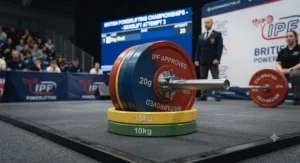
6. Amazon Basics 2.5cm Grip Cast Iron Weight Plates — cheapest way to start training
On the standard side of this comparison, Amazon Basics 2.5cm Grip Cast Iron Weight Plates represent the entry point almost every UK lifter encounters first. The standout feature is simply accessibility: cast iron construction with a moulded grip design, sold in a range of individual weights and pairs, available with fast UK delivery through Amazon’s own logistics network rather than a specialist importer.
Here’s what to weigh up honestly: there’s no calibration claim on this product at all, and the tolerance on mass-produced cast iron plates typically runs into a few percent either way — perfectly fine for progressive overload, hopeless for anything requiring exact totals. Reviewers commonly note the grip cut-outs make loading and carrying noticeably easier than flat-faced budget plates, though some report visible casting seams and rougher edges compared with premium standard plates. For pure strength-building where the number on the plate is a target, not a legal requirement, this is honestly still a perfectly sound way to train.
Pros:
- ✅ Genuinely low cost of entry for a full plate set
- ✅ Fast, reliable UK-wide delivery through Amazon
- ✅ Grip cut-outs make carrying and loading easier
Cons:
- ❌ No calibration claim — tolerance is unverified
- ❌ Some reviewers note rougher casting finish than premium brands
Typically priced under £50 for a small set, rising with total weight ordered — always check the current price, as cast iron costs shift with steel market pricing.
7. PhysKcal Olympic Weight Plates with Rubber Finish — quietest standard plate for home gyms
Rounding out the standard side, PhysKcal Olympic Weight Plates with Rubber Finish pair a solid cast iron core with a rubber coating and tri-grip handles — the standout advantage being noticeably quieter racking and reduced floor damage compared with bare cast iron. The 2-inch Olympic opening fits standard barbell sleeves, and the range spans from 1.25kg right up to 20kg per plate, giving home gym owners a realistic progression without needing a specialist supplier.
On paper this means a plate built more for daily home-gym comfort than raw accuracy — the rubber coating adds a genuine practical benefit (protecting flooring and reducing noise for anyone training in a flat or shared building) that calibrated steel plates simply don’t offer. Reviewers on Amazon UK frequently mention appreciating the reduced clang when racking heavy sets, alongside general satisfaction with build solidity for the price bracket. As with any rubber-coated cast plate, the coating adds bulk, meaning fewer plates fit per sleeve than with slim calibrated steel.
Pros:
- ✅ Rubber coating cuts noise and protects flooring
- ✅ Tri-grip handles make loading noticeably easier
- ✅ Realistic weight range for progressive home training
Cons:
- ❌ Bulkier profile limits total plates per sleeve
- ❌ No calibration accuracy claim on the listing
Expect a price broadly in the £30-£90 range depending on the weight and quantity selected — prices vary by seller, so check current listings before buying.
Top 7 Products at a Glance
| Product | Type | Tolerance Claim | Best For |
|---|---|---|---|
| Mirafit Calibrated Cast Iron Weight Plates | Calibrated | ±10g | Budget-conscious calibrated training |
| Strength Shop Calibrated Plates – IPF Approved | Calibrated | ±10g, IPF colour-coded | UK meet prep on a mid budget |
| ATX Calibrated Steel Powerlifting Plates | Calibrated | ±10g max | Commercial gyms, heavy daily use |
| Eleiko IPF Powerlifting Competition Plates | Calibrated | ±0.25% / ±10g | Serious competitors, federation events |
| Rogue Calibrated KG Steel Plates 2.0 | Calibrated | ±10g | Lifters wanting verifiable calibration |
| Amazon Basics 2.5cm Grip Cast Iron Weight Plates | Standard | Unverified | First-time buyers, general training |
| PhysKcal Olympic Weight Plates with Rubber Finish | Standard | Unverified | Quiet, floor-friendly home gyms |
Looking at the spread, the calibrated tier clusters tightly around the same ±10g promise, so the real differentiator between Mirafit, Strength Shop, ATX, Eleiko and Rogue becomes build quality, coating durability and how directly each brand is tied to actual IPF competition supply. On the standard side, Amazon Basics and PhysKcal aren’t competing on precision at all — they’re competing on price, comfort and convenience, which is exactly the right comparison to make if you’re not stepping on a competition platform any time soon.
Practical Usage Guide: Setting Up and Maintaining Your Plates
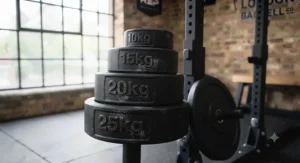
Getting new plates home is the easy part; keeping them accurate and rust-free is where most lifters slip up. Start by wiping down cast iron plates with a light oil on a cloth before first use — factory packaging grease attracts dust, and a clean surface stops early corrosion. For calibrated plates specifically, never store them stacked directly on concrete; moisture wicks up through the floor and can chip powder coating faster than you’d expect, gradually pushing a plate outside its stated tolerance.
A monthly check is enough for home use: look for hairline chips near the collar hole, since that’s where repeated racking impact concentrates stress. If you own calibrated plates with visible calibration plugs, resist the urge to sand or repaint over them — doing so can void the manufacturer’s accuracy claim entirely. The most common mistake in the first 30 days is dropping loaded barbells directly onto a hard floor from height; even plates rated for drops will lose edge integrity faster than the marketing suggests, and it’s simply unnecessary wear for anyone not doing max-effort deadlifts. Loading and unloading heavy plates repeatedly is also manual handling in the strictest sense, and the general lifting guidance from the Health and Safety Executive on safe technique applies just as much in a home gym as it does on a factory floor.
Real-World Scenario: Which Lifter Are You?
Picture three different people walking into a plate-buying decision. First, there’s the college student training in a shared garage gym three times a week, budget around £200 total — for them, Amazon Basics 2.5cm Grip Cast Iron Weight Plates make obvious sense, since accuracy to the gram changes nothing about their squat progress. Second, there’s the intermediate lifter who’s just booked their first local meet and needs to train on equipment resembling what they’ll compete on — this is exactly where Strength Shop Calibrated Plates – IPF Approved earn their keep, letting them rehearse with genuine competition tolerance months before the platform.
Third, picture the established competitor chasing a national qualifying total, training in a well-funded club gym that’s already invested in Eleiko IPF Powerlifting Competition Plates — for this lifter, training on anything less than federation-grade equipment introduces a variable they can’t afford close to a meet. None of these three are “wrong” choices; they’re simply different problems being solved with different tools, and no article can tell you which one you are.
Buyer’s Decision Framework
Cutting through the marketing, here’s a simple priority checklist. If you’re training purely for size, general strength or fitness with zero competition plans, choose standard plates — the money saved is better spent on a rack, bar or coaching than on precision you’ll never test. If you compete or plan to within the next year, choose calibrated plates for at least your main training sets, because rehearsing with meet-accurate loading removes one more unknown from competition day. If budget is the deciding factor and competition is still a “maybe,” a hybrid approach works well: calibrated plates for your top singles and doubles, standard plates for volume and accessory work, keeping cost manageable while still building familiarity with true weights near your limits.
How to Choose Between Calibrated and Standard Plates
Working through this decision methodically saves both money and regret. Five criteria, roughly in priority order:
- Competition timeline — if a sanctioned meet is booked, calibrated plates stop being optional for your heaviest training sets.
- Collar hole diameter — confirm 50mm compatibility with your specific barbell sleeve before ordering anything.
- Coating and material — chrome and vinyl resist corrosion better than bare cast iron over years of use.
- Total loading capacity needed — thinner calibrated plates let you load more weight per sleeve than bulky standard plates.
- Storage and flooring — rubber-coated standard plates protect floors and reduce noise where calibrated steel won’t.
Working through these in order, most home lifters find the decision resolves itself well before price even enters the conversation.
Competition Calibrated Plates: IPF Competition Standards Explained
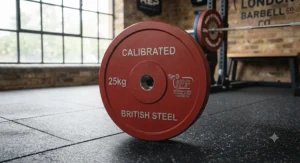
The phrase “IPF competition standards” gets thrown around loosely in product listings, so it’s worth being precise about what it actually requires. Discs used in sanctioned competition must weigh within 0.25 percent or 10 grams of their stated face value, whichever tolerance is tighter, and the hole must measure between 50 and 53mm depending on the specific rule edition referenced. That’s a considerably tighter standard than most people assume — a 25kg plate can only be out by roughly 62 grams under the percentage rule, which is why manufacturers advertise the flat ±10g figure for smaller plates instead.
For the full context on how these rules fit into the wider sport, the official IPF Technical Rules Book lays out every equipment requirement in detail, including bar diameter, sleeve tolerance and disc colour-coding. Genuinely competition calibrated plates — as opposed to plates simply marketed with the word “calibrated” — will reference this exact tolerance and typically carry documented IPF approval, which is worth checking on a federation’s approved equipment list before assuming a listing’s claim is accurate.
Calibrated Plates vs Standard Plates: What to Expect in Real-World Performance
Specs on a page rarely translate cleanly into how a plate actually feels under a working set, so here’s the honest translation. Loading a bar with calibrated plates feels almost identical to standard plates for the first few reps — the difference isn’t in how the weight moves, it’s in trust. Reviewers who’ve trained on both consistently report that once you know your working weight is accurate to the gram, the mental side of chasing a specific total becomes noticeably less noisy, since there’s no lingering doubt about whether a “225kg” pull was actually 228kg on a generous plate.
Standard plates, by contrast, tend to show more physical variation between individual units of the same stated weight — not usually enough to affect training adaptation, but enough that swapping plates mid-set on a home rig can occasionally shift the bar’s actual load by a kilogram or two without you noticing. For hypertrophy or general strength work that variance is functionally irrelevant. For anyone tracking progressive overload with genuine precision, or preparing percentages off a tested one-rep max, it’s a real if modest source of noise worth being aware of.
Common Mistakes When Buying Weight Plates
The most frequent error is buying calibrated plates for general training and never actually using their accuracy for anything — an expensive way to own perfectly ordinary training equipment. A close second is the opposite mistake: booking a competition, then discovering weeks before the meet that a training programme was built entirely on standard plates with unknown real-world tolerance, meaning working percentages may not translate cleanly to the platform. Buyers also frequently overlook collar hole diameter, ordering plates with a 51mm hole for a barbell sleeve machined to 50mm, resulting in loose, rattling plates that are genuinely unsafe under heavy load — always confirm this specification, not just the headline weight.
Another overlooked detail: cheaper plates sometimes advertise “Olympic” sizing without specifying actual hole diameter precisely, so cross-checking against your own bar’s sleeve measurement, rather than trusting a generic listing description, avoids a frustrating return process. Finally, many lifters underestimate delivery weight and cost — a full calibrated set can weigh well over 100kg, and some overseas brands add substantial shipping fees that aren’t obvious until checkout.
Long-Term Cost & Maintenance
| Consideration | Calibrated Plates | Standard Plates |
|---|---|---|
| Upfront cost (full set) | Higher — often several hundred pounds | Lower — often under £200 |
| Corrosion resistance | Generally strong (chrome/powder coat) | Varies, often weaker on budget cast iron |
| Resale value | Higher, especially IPF-approved brands | Lower, harder to verify condition |
| Cost per training year (5-year view) | Amortises well for competitors | Cheaper overall for casual lifters |
The upfront gap looks stark, but stretched across five years of regular training the picture softens considerably: calibrated plates from reputable brands tend to hold resale value better, partly because buyers can trust a documented calibration claim second-hand in a way they simply can’t with an unmarked cast iron plate. For a casual lifter who trains three times a week and never sells equipment on, though, standard plates remain the cheaper option by a meaningful margin across any realistic timeframe, and that gap doesn’t close just because a calibrated plate happens to last slightly longer.
Plate Tolerance Explained: Why ±10 Grams Matters
Plate tolerance is simply how far a plate’s real weight is allowed to drift from its stated weight, and it’s the single number this entire comparison hinges on. A ±10g tolerance on a 25kg plate is a genuinely tiny margin — roughly 0.04 percent — while an unverified standard plate might realistically sit anywhere within one to three percent of its stated weight, depending on casting quality and coating thickness. On a single plate that sounds negligible. Loaded eight-deep on a heavy bar for a max attempt, though, those small errors can compound into several kilograms of difference between what the bar claims and what it’s actually loading.
For training purposes, that compounding rarely matters — a squat is still a squat whether the bar reads 180kg or 182kg. Where it matters is verification: competition federations exist specifically to guarantee that a 200kg total means the same thing in every country, on every platform, which is precisely why calibrated plates carry a documented, checkable tolerance and standard plates simply don’t.
Powerlifting Meet Prep: Getting Plate-Ready for Competition Day
In the final weeks before a meet, plate familiarity becomes almost as important as the plates’ accuracy itself. If your gym trains on standard plates day-to-day, book at least a handful of sessions on calibrated equipment before competing — even accurate weight can feel unexpectedly different when the plate diameter, thickness or grip differs from what you’re used to, and the platform is the wrong place to discover that. Many UK lifters resolve this by training their final peak block at a club affiliated with British Powerlifting, the national governing body, where competition-spec plates and bars are typically already in place.
Double-check your federation’s current approved equipment list rather than assuming any product marketed as “IPF approved” is automatically accepted at your specific meet, since approval lists are updated periodically. It’s also worth rehearsing loading and unloading collars and plates at competition speed — under time pressure between attempts, unfamiliar plate grooves or grip cut-outs can genuinely slow a changeover down.
Frequently Asked Questions
❓ Are calibrated plates worth it for home gyms?
❓ How much more do calibrated plates cost than standard plates?
❓ Can I use standard plates for a powerlifting meet?
❓ What's the weight tolerance difference between calibrated and standard plates?
❓ Do I need calibrated plates to start powerlifting training?
Conclusion
The calibrated plates vs standard plates question isn’t really about which product is “better” — it’s about matching equipment to an honest assessment of what you’re training for. Standard plates like Amazon Basics 2.5cm Grip Cast Iron Weight Plates and PhysKcal Olympic Weight Plates with Rubber Finish remain genuinely excellent choices for the vast majority of lifters building strength without a competition on the horizon. Calibrated options — from the accessible Mirafit Calibrated Cast Iron Weight Plates through to reference-grade Eleiko IPF Powerlifting Competition Plates — earn their higher price the moment a sanctioned total is actually on the line.
Neither category is a trap or a gimmick; they’re simply built for different jobs. Work through the decision framework above, be honest about your competition timeline, and the right plates for your bar become obvious fairly quickly. Whichever you choose, always verify current pricing and federation approval status before ordering, since both shift more often than product listings tend to reflect.
Recommended for You
- Tri-Grip Plates for Deadlifts: 7 Best UK Picks (2026)
- Rubber Olympic Plates: 7 Best Low-Odour UK Picks (2026)
- Cast Iron Weight Plates for Beginners: 7 Best UK Picks (2026)
Disclaimer: This article contains affiliate links. As an Amazon Associate, I earn from qualifying purchases. If you purchase products through these links, we may earn a small commission at no additional cost to you.
✨ Found this helpful? Share it with your friends! 💬🤗
