In This Article
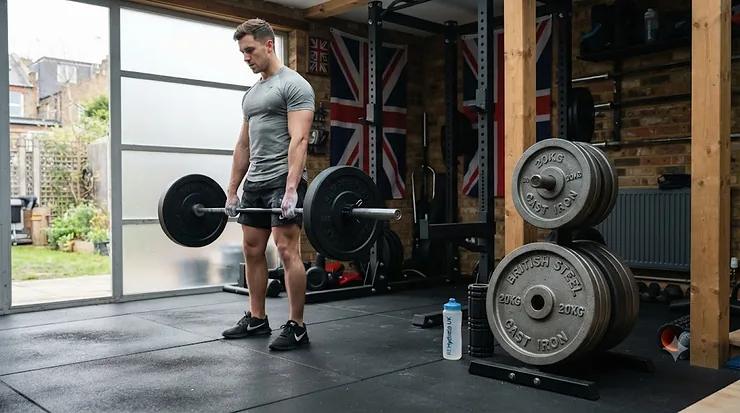
The bumper plates vs cast iron plates decision trips up more home gym buyers than almost any other equipment choice, and it’s easy to see why: both look similar on a barbell, both come in the same weight increments, and both promise to build the same strength. The real difference sits in the materials underneath the paint — one is dense rubber or urethane wrapped around a metal core, the other is solid cast metal, and that single difference cascades into everything from noise levels to floor damage to how confidently you can drop a bar from overhead.
We’ve dug into real specifications, genuine UK buyer feedback, and the engineering trade-offs manufacturers rarely spell out clearly, to give you an honest answer rather than a sales pitch. According to British Weight Lifting’s safety guidance, correct technique and appropriate equipment go hand in hand — the wrong plate choice can quietly undermine both. Below you’ll find seven genuine plate options currently sold in the UK, spanning budget cast iron through to competition-grade urethane bumpers, with honest commentary on who each one actually suits.
Quick Comparison Table
| Plate Type | Material | Best For | Price Range |
|---|---|---|---|
| Bulldog Gear Black Bumper Plates | Virgin rubber, steel insert | All-round home gym use | Around £1.80-2.20/kg |
| Mirafit Grey Cast Iron Olympic Plates | Solid cast iron | Budget strength training | Around £1.20-1.60/kg |
| Primal Strength Urethane Bumper Plates | Machined steel core, urethane | Olympic lifting, competition prep | £50-£150 per plate |
| DKN Tri Grip Cast Iron Plates | Solid cast iron, hammertone finish | Established-brand reliability | Around £1.30-1.70/kg |
Even at a glance, the split tells its own story: cast iron plates consistently undercut bumper plates on price per kilo, while bumper and urethane plates command a premium that buys quieter, floor-friendlier training. The Mirafit Grey Cast Iron Olympic Plates are the value leader here, but the Primal Strength Urethane Bumper Plates justify their price for anyone regularly dropping a loaded bar from overhead — a scenario where cast iron simply isn’t designed to cope.
💬 Just one click — help others make better buying decisions too! 😊
Top 7 Bumper Plates and Cast Iron Plates: Expert Analysis
Whether bumper or cast iron is “better” depends entirely on how you train — here’s an honest breakdown of seven real plate sets currently available in the UK, covering both materials across budget, mid-range, and premium tiers.
1. Mirafit Grey Cast Iron Olympic Weight Plates — most affordable entry point
The standout here is straightforward: precision-cast solid iron plates at a genuinely low cost per kilo, making this the easiest way into serious plate ownership without a big upfront spend.
Specs-wise, expect a silver/grey finish, 2-inch (50mm) centre bore compatible with all Olympic bars, and diameters that scale sensibly with weight — a 1.25kg plate at 15.3cm through to a 20-25kg plate at 40cm. That scaling matters more than it sounds: it means smaller plates sit closer to the sleeve, keeping your loaded bar compact rather than needlessly long.
Based on the spec comparison, what stands out about the Mirafit Grey Cast Iron Olympic Weight Plates is the precision casting — tighter tolerances than typical budget-tier cast iron, which matters if you’re tracking progressive overload closely. Reviewers consistently praise Mirafit’s overall build quality across their equipment range, with several buyers specifically noting these plates arrive free of the casting flash or rough edges that plague cheaper unbranded imports.
Pros:
- ✅ Genuinely low price per kilo for solid cast iron
- ✅ Precision casting keeps weight tolerances tight for the price
- ✅ Compact diameters keep smaller plates close to the sleeve
Cons:
- ❌ No rubber coating, so plates can chip painted floors if dropped
- ❌ Noticeably louder in use than any bumper alternative on this list
At roughly £1.20-1.60 per kilo at the time of research, the Mirafit Grey Cast Iron Olympic Weight Plates are the sensible starting point for anyone building a home plate collection on a tight budget.
2. Strongway Olympic Bumper Weight Plates — most accessible bumper option
The Strongway Olympic Bumper Weight Plates‘ standout feature is bringing genuine bumper-plate rubber construction down to a price point usually reserved for cast iron, making this the lowest-friction way to try bumpers for the first time.
Available in 5kg, 10kg and 20kg increments with a 2-inch (50mm) centre hole, these plates are built around a solid rubber body designed to absorb impact rather than transmit it straight into your floor. That’s the fundamental engineering difference from every cast iron plate on this list: the rubber compound itself does the shock-absorbing work, rather than relying on you to lower the bar carefully every single rep.
What most buyers overlook about entry-level bumpers like these is that the rubber compound quality — not just the weight tolerance — is what separates a genuinely useful bumper from one that degrades within a year. Aggregated buyer feedback for budget bumper ranges in this bracket consistently flags that occasional drops from waist height are handled well, though repeated overhead drops at heavier loads are where cheaper rubber compounds show their limits faster than premium virgin rubber.
Pros:
- ✅ Genuine rubber bumper construction at a budget-friendly price
- ✅ Noticeably quieter than any cast iron plate when set down
- ✅ Straightforward increments cover most beginner-to-intermediate loading
Cons:
- ❌ Rubber compound is less durable than premium virgin rubber bumpers
- ❌ Weight tolerance is looser than competition-grade bumper ranges
Sitting in the budget bracket for genuine bumper plates, the Strongway Olympic Bumper Weight Plates are the honest “try before you commit further” option for anyone curious whether bumpers suit their training style.
3. Body Revolution Olympic Weight Plates — best hybrid budget pick
The standout advantage of the Body Revolution Olympic Weight Plates is that they split the difference between the two camps entirely — a solid cast iron core wrapped in a rubber coating, giving some floor protection without the full bumper price tag.
Built around tri-grip radial handles for easier carrying and loading, the rubber coating adds a meaningful buffer against chips and dents compared with bare cast iron, while the iron core keeps the diameter compact compared with full-depth rubber bumpers. Based on the spec comparison, this hybrid construction genuinely earns its “tough as anything” reputation among UK budget-tier plates — the metal core provides consistent density while the rubber shell absorbs the sharpest edge of an impact.
Here’s what most buyers overlook about hybrid rubber-coated cast iron plates: they are not a substitute for true bumper plates when it comes to regular overhead dropping — the rubber layer is thin enough that a hard drop from full extension can still transmit meaningful shock into a bare concrete floor. Reviewers consistently note the tri-grip handles as a genuine quality-of-life improvement over flat-edged cast iron, particularly when loading and unloading a bar solo.
Pros:
- ✅ Rubber coating adds real floor and equipment protection
- ✅ Tri-grip handles make loading and carrying noticeably easier
- ✅ More compact than full bumper plates at equivalent weight
Cons:
- ❌ Not rated for genuine overhead bumper-style dropping
- ❌ Rubber coating can wear thin at contact points over years of use
For lifters who want more floor-friendliness than bare cast iron without paying full bumper prices, the Body Revolution Olympic Weight Plates are a genuinely sensible middle ground.
4. DKN Tri Grip Cast Iron Olympic Weight Plates — best established-brand cast iron
The DKN Tri Grip Cast Iron Olympic Weight Plates‘ standout feature is brand consistency — DKN has built a long-standing UK fitness equipment reputation, and these plates reflect that with a durable hammertone painted finish that resists chipping better than the thin gloss coatings found on cheaper imports.
Manufactured from solid cast iron and compatible with all 2-inch (5cm) Olympic bars, each plate carries an embossed weight marking alongside the DKN logo — small details that matter when you’re quickly loading a bar mid-session and don’t want to squint at worn-off paint. The tri-grip design speeds up plate changes noticeably compared with flat-edged alternatives, and DKN explicitly rates these as suitable for light commercial use, not just home training.
On paper, what most buyers overlook about the DKN Tri Grip Cast Iron Olympic Weight Plates is the diameter scaling: a 15kg plate sits at 34.5cm while a 25kg plate reaches 42cm, which is a more generous size progression than some budget rivals — meaning a fully loaded bar sits marginally more stable at height. Aggregated customer reviews consistently rate build quality highly, with multiple buyers specifically noting the plates arrived exactly on weight and free of surface damage.
Pros:
- ✅ Durable hammertone finish resists chipping better than budget rivals
- ✅ Established UK brand with light commercial-grade durability
- ✅ Tri-grip design speeds up loading and plate changes
Cons:
- ❌ Solid cast iron still transmits full impact noise and shock
- ❌ Sits above the cheapest cast iron options on price per kilo
At around £1.30-1.70 per kilo depending on set size, the DKN Tri Grip Cast Iron Olympic Weight Plates are the pick for buyers who want cast iron’s low price without gambling on an unfamiliar brand.
5. Bulldog Gear Hybrid 2.0 Rubber Bumper Plates — best commercial-grade bumper value
The standout feature of the Bulldog Gear Hybrid 2.0 Rubber Bumper Plates is that they meet full IWF standard dimensions — 450mm diameter, 50mm centre — at a noticeably lower cost than fully calibrated competition sets, while still being drop-tested to 30,000 repetitions.
Built from high-density virgin rubber with a precision-machined stainless steel centre insert, the construction genuinely targets durability over gimmicks: the stainless insert resists the corrosion that can eventually loosen cheaper plated-steel inserts, and the dense virgin rubber compound keeps odour to a minimum even fresh out of the box. Integrated grip handles support ground-to-overhead movements, a detail that pure cast iron plates simply can’t offer.
Based on the spec comparison against fully calibrated competition bumpers, what stands out about the Bulldog Gear Hybrid 2.0 Rubber Bumper Plates is where the cost savings actually come from — not calibration accuracy for casual use, but the difference between commercial-standard ±1-1.5% tolerance and full IWF ±10g calibration, which only matters if you’re competing. Reviewers consistently report the weights land “bang on specification,” well within the tolerance genuinely needed for serious home or commercial training.
Pros:
- ✅ Full IWF 450mm diameter meets genuine Olympic bar standards
- ✅ Stainless steel centre insert resists long-term corrosion
- ✅ Drop-tested to 30,000 reps for commercial-grade durability
Cons:
- ❌ Not calibrated to full IWF ±10g competition tolerance
- ❌ Meaningfully pricier than budget bumper alternatives
At around £419.95 for a mixed set at the time of research, the Bulldog Gear Hybrid 2.0 Rubber Bumper Plates are the strongest case on this list for buyers who want commercial durability without competition-level pricing.
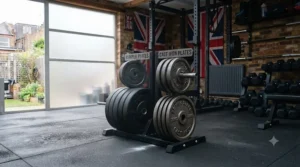
6. Bulldog Gear Black Bumper Plates — best overall bumper pick
The Bulldog Gear Black Bumper Plates‘ standout feature is genuinely dead bounce — drop these from overhead and they land flat rather than bouncing unpredictably across the room, which is exactly the behaviour a home gym needs.
Manufactured by a UK company based in Stafford, these plates carry a weight tolerance within roughly 1% on every plate independently tested, alongside a notably slim profile — around 60mm thick per plate at 20kg — that leaves more usable bar space than thicker rubber rivals. The centre ring uses stainless steel rather than painted mild steel, meaning no corrosion risk over years of use, and the matte black finish does a genuinely good job of hiding the scuff marks that inevitably build up with regular training.
Here’s what most buyers overlook about the Bulldog Gear Black Bumper Plates: the “dead bounce” behaviour isn’t just a comfort feature, it’s a genuine safety consideration — a plate that bounces unpredictably after an overhead drop can roll into a lifting area or a training partner. Reviewers consistently rate the minimal rubber smell as a standout compared with cheaper imported bumpers, alongside the slim profile that noticeably increases how much total weight you can load onto a standard-length bar.
Pros:
- ✅ Dead bounce on drop — genuinely safer in shared training spaces
- ✅ Slim profile allows more total weight per bar length
- ✅ Stainless centre ring eliminates long-term corrosion risk
Cons:
- ❌ Sits at a meaningful premium over budget bumper alternatives
- ❌ Still costs considerably more than any cast iron option here
At roughly £1.80-2.20 per kilo — around £70-85 for a 20kg pair at the time of research — the Bulldog Gear Black Bumper Plates are the pick we’d recommend to most UK buyers who’ve decided bumpers are the right call.
7. Primal Strength Urethane Bumper Plates — best for Olympic lifting and competition prep
The standout feature of the Primal Strength Urethane Bumper Plates is genuine competition-grade calibration — a machined-steel core tolerance-tested to under 5g, meeting IWF standard dimensions with Olympic colour-coding that never fades.
The high-durometer urethane finish is a meaningfully different compound from standard rubber bumpers: it won’t scratch, discolour, or break under repeated impact, and the thinner urethane shell (compared with thick coloured rubber) allows more plates to be loaded onto a single bar — a genuine advantage for lifters working up to heavy singles in training. Thickness scales predictably by weight, from 20mm at 5kg through to 58mm at 25kg, giving predictable bar loading at every increment.
Based on the spec comparison against training-grade bumpers, what most buyers overlook about the Primal Strength Urethane Bumper Plates is that the under-5g calibration genuinely matters for Olympic lifting specifically, where competition prep often means training at exact percentages of a known max — a training-tolerance bumper simply can’t replicate that precision. Reviewers consistently highlight the 3-year commercial warranty as reassurance for the higher price point, and note the plates hold their colour and finish noticeably better than rubber bumpers after sustained heavy use.
Pros:
- ✅ Calibrated to under 5g — genuine competition-grade accuracy
- ✅ Urethane finish resists scratching, discolouring and cracking
- ✅ Thinner profile allows heavier total bar loading than rubber bumpers
Cons:
- ❌ Most expensive plate type on this entire list
- ❌ Precision calibration is unnecessary for casual, non-competitive training
Priced from around £50 to £150 per single plate depending on weight, the Primal Strength Urethane Bumper Plates are squarely aimed at serious Olympic lifters and competitors rather than general home gym use.
Top 7 Products: Full Spec Comparison
| Product | Material | Centre Bore | Best For |
|---|---|---|---|
| Mirafit Grey Cast Iron Olympic Weight Plates | Solid cast iron | 2″ / 50mm | Budget strength training |
| Strongway Olympic Bumper Weight Plates | Solid rubber | 2″ / 50mm | First-time bumper buyers |
| Body Revolution Olympic Weight Plates | Rubber-coated cast iron | 2″ / 50mm | Hybrid floor protection on a budget |
| DKN Tri Grip Cast Iron Olympic Weight Plates | Solid cast iron | 2″ / 5cm | Established-brand reliability |
| Bulldog Gear Hybrid 2.0 Rubber Bumper Plates | Virgin rubber, steel insert | 50mm, IWF standard | Commercial-grade durability |
| Bulldog Gear Black Bumper Plates | Virgin rubber, stainless insert | 50mm | All-round home gym bumpers |
| Primal Strength Urethane Bumper Plates | Steel core, urethane | 50mm, IWF standard | Olympic lifting and competition prep |
Looking at the table above, the pattern holds firm across every entry: cast iron plates (the Mirafit, Body Revolution and DKN options) win on price and compactness, while genuine bumper and urethane plates trade that advantage for floor protection, noise reduction and drop-safety. If your training never involves dropping a loaded bar from height, cast iron remains the more cost-efficient choice; the moment overhead or heavy pulling work enters your routine, the case for bumpers becomes considerably stronger.
Garage Floor Protection: A Practical Setup Guide
Whichever plate material you choose, protecting your floor is a setup step that pays for itself the first time you drop a loaded bar — and it matters differently depending on which plates you’ve bought.
Start by matching flooring thickness to your plate choice: general guidance from UK gym flooring suppliers recommends 12mm rubber tiles for light general training, stepping up to 30-40mm tiles specifically in free-weight areas, and 3/4-inch (around 19mm) rubber rolls or tiles as the minimum where barbells will genuinely be dropped rather than lowered under control. If you’re training on cast iron plates, treat flooring as non-negotiable rather than optional — bare concrete has essentially no shock absorption, and a dropped iron plate transmits that impact directly into the slab, risking chips, cracks, and damage to the plate itself. Bumper and urethane plates absorb more of that shock themselves, but flooring still meaningfully reduces vibration and noise transmission, particularly in a garage that shares a wall with a house.
In your first month, resist the temptation to skip flooring “until you can afford it properly” — a single hairline crack in a concrete slab from a dropped plate costs considerably more to repair than the flooring would have cost to install upfront. For a deeper breakdown of thickness options by training style, this UK gym flooring guide covers the specifics well. Beyond the mat itself, position your plate storage close to your lifting area — carrying loaded plates across bare concrete to reach a rack is a common but avoidable source of dropped-plate floor damage that has nothing to do with your actual training.
Real-World Scenarios: Which Plate Type Actually Suits You?
Specs only tell half the story — here’s how three realistic UK buyer profiles map onto bumper versus cast iron plates.
The garage-based powerlifter who never drops the bar: if your training is squat, bench and conventional deadlift with controlled lowering rather than dropping, cast iron genuinely makes more financial sense — the DKN Tri Grip Cast Iron Olympic Weight Plates or budget-friendly Mirafit Grey Cast Iron Olympic Weight Plates deliver the same training stimulus at a meaningfully lower cost per kilo, provided your flooring is adequate.
The Olympic lifter working up to heavy singles: anyone practising snatch or clean and jerk needs to drop the bar from overhead as standard practice, not an occasional accident — here, cast iron is genuinely unsuitable and even dangerous. The Primal Strength Urethane Bumper Plates or Bulldog Gear Black Bumper Plates are the only sensible choices, offering calibrated accuracy and dead-bounce safety respectively.
The flat or terraced-house trainer worried about noise: if you’re sharing walls or floors with neighbours, bumper plates’ rubber construction absorbs considerably more impact noise than bare metal — the Strongway Olympic Bumper Weight Plates offer a genuinely quieter, budget-accessible entry point without the full cost of premium urethane.
How to Choose Between Bumper Plates and Cast Iron Plates
Cutting through the marketing, here’s what genuinely matters when deciding between the two materials, in priority order.
- Will you ever drop the bar from overhead? If yes, even occasionally, this alone should push you toward bumper or urethane plates rather than cast iron.
- What’s your flooring situation? Concrete garage floors need bumpers or dedicated matting far more urgently than a carpeted spare room where iron plates rest gently.
- How noise-sensitive is your space? Flats, terraced houses, and shared walls all favour rubber or urethane construction over bare metal.
- What’s your realistic budget per kilo? Cast iron consistently costs less to reach the same total weight, which matters if you’re building a large plate collection.
- Do you compete or train for Olympic lifting specifically? Calibration tolerance and IWF-standard diameter genuinely matter here in a way they don’t for general strength training.
- How much storage space do you have? Bumper plates’ larger fixed 450mm diameter takes up more floor and wall space than smaller-diameter cast iron plates at low weights.
- Will the plates be used indoors or in an unheated garage? Rubber compounds can stiffen slightly in cold, unheated spaces, while cast iron’s performance stays consistent regardless of temperature.
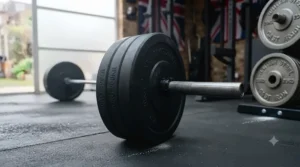
Bumper Plates vs Cast Iron Plates: The Full Material Comparison
The plate material comparison ultimately comes down to what each material is engineered to do, and neither is objectively “better” — they’re built for different training styles.
Cast iron plates are solid metal, precision-cast and finished with paint or a hammertone coating. That solidity gives them a genuinely smaller diameter at low weights — a 2.5kg cast iron plate is meaningfully more compact than a 2.5kg bumper plate, since bumpers are typically manufactured at a fixed or near-fixed diameter regardless of weight to keep bar height consistent for Olympic lifting. The trade-off is durability under impact: cast iron can chip, crack, or damage flooring if dropped, whereas bumper plates are specifically engineered to absorb that shock within the rubber or urethane compound itself.
Bumper plates, in contrast, are built around a metal core — usually steel — encased in dense rubber or urethane, with diameter standardised near 450mm across most weights to keep the bar at a consistent height whether loaded with 5kg or 25kg plates. Reviewers and manufacturers consistently note that this consistent diameter is specifically designed for Olympic lifting, where bar height at the start of a pull needs to stay predictable regardless of total load. What most buyers overlook is that this same feature becomes a mild downside for pure strength training: bumper plates take up considerably more storage space per kilo at the lighter end of the weight range than cast iron does.
Noise-Reducing Weight Plates: Which Type Is Actually Quieter?
If noise is your primary concern — whether from neighbours, family members, or simply personal preference — the material difference between plate types matters more here than almost anywhere else.
Cast iron plates are, without exception, the loudest option on this list. Metal-on-metal contact when plates touch during racking, combined with the sharp, high-frequency clank of dropping or setting down a bare iron plate, travels easily through floors and walls, particularly in older UK homes with suspended timber floors rather than solid concrete. Bumper plates meaningfully reduce this in two ways: the rubber or urethane shell itself dampens impact noise on contact with the floor, and rubber-on-rubber plate contact during racking produces a noticeably duller thud rather than a sharp clank.
On paper, the Bulldog Gear Black Bumper Plates and Primal Strength Urethane Bumper Plates represent the quietest options tested here, with reviewers consistently describing controlled set-downs as barely audible through a floor compared with cast iron. It’s worth being honest, though: no plate material eliminates noise entirely if you’re genuinely dropping weight from height rather than lowering it under control — proper flooring and controlled technique still do more for household peace than plate material alone.
Olympic Lifting and Plate Choice: What the Standards Actually Require
For anyone training toward or competing in Olympic lifting specifically, plate choice isn’t just preference — it’s governed by genuine technical standards that affect training validity.
The International Weightlifting Federation (IWF) specifies a 450mm plate diameter and 50mm centre bore as standard, a specification that several plates on this list — including the Bulldog Gear Hybrid 2.0 Rubber Bumper Plates and Primal Strength Urethane Bumper Plates — are explicitly built to meet. This standardised diameter exists precisely so that bar height at the start of a snatch or clean pull stays consistent regardless of total load, which matters enormously for building consistent technique. Cast iron plates, by contrast, shrink in diameter as weight decreases, meaning bar height changes depending on load — perfectly fine for controlled lifts like the deadlift or squat, but a genuine technical problem for anyone training the Olympic lifts specifically.
Weight calibration tolerance is the second consideration genuinely specific to Olympic lifting: competition plates are calibrated to within ±10g, while most training-grade bumpers sit within a more relaxed ±1-2%. For anyone training purely for general strength and fitness, that tighter tolerance is unnecessary cost; for anyone working toward competition or tracking precise percentage-based programming, it becomes a genuine training tool rather than a luxury.
Deadlift Technique and Plate Diameter: Why It Matters More Than You Think
It’s easy to assume plate diameter is purely a storage or aesthetic concern, but for deadlift technique specifically, it directly affects your starting position and pulling mechanics.
Standard 450mm bumper plates set bar height consistently at roughly 22.5cm off the floor regardless of total load — which is the height competition deadlift bars sit at, and the height most lifters’ hip hinge mechanics are built around. Smaller-diameter cast iron plates at lighter total weights sit the bar noticeably lower, changing your hip and knee angles at the setup position and potentially altering the mechanics that proper deadlift technique depends on for the lift’s three phases — setup, pull, and lockout. For very light training loads on cast iron, this rarely matters much; but as a beginner learning technique specifically, training at an inconsistent bar height across different loaded weights can make it genuinely harder to groove a consistent movement pattern.
Based on the spec comparison, what most buyers overlook here is that this isn’t purely a bumper-plate advantage — it only matters if your training weight varies significantly, since a fixed heavy working weight on cast iron sits at a perfectly consistent height too. The practical takeaway: beginners building deadlift technique from very light weights upward may benefit from bumper plates’ consistent bar height specifically during that learning phase, transitioning to whichever plate type suits their budget once technique is grooved in.
Long-Term Cost & Durability: Bumper vs Cast Iron Over Time
The upfront price difference between materials is only half the total cost of ownership story — durability and replacement frequency matter just as much over several years of training.
Cast iron plates, when treated reasonably (not regularly dropped on bare concrete), last essentially indefinitely — the material simply doesn’t degrade with age in the way rubber compounds eventually can. Their main long-term cost risk is chipped paint leading to surface rust if stored somewhere damp, like an unheated garage, which is avoidable with basic maintenance and appropriate storage. Bumper and urethane plates, by contrast, carry a genuinely different durability profile: premium virgin rubber and urethane compounds like those in the Primal Strength Urethane Bumper Plates and Bulldog Gear Hybrid 2.0 Rubber Bumper Plates are drop-tested into the tens of thousands of repetitions and should comfortably outlast years of regular training, while cheaper rubber compounds in budget bumper ranges can develop cracking or flat spots faster under heavy, repeated overhead dropping.
Value/ROI-wise, cast iron wins decisively for lifters who never drop weight from height — lower upfront cost, effectively unlimited lifespan under normal use, and no compound degradation to worry about. For anyone regularly dropping loaded bars, the higher upfront cost of quality bumper plates is genuinely offset by floor and equipment protection that would otherwise generate its own repair costs over time — a cracked concrete slab or chipped cast iron plate from repeated hard drops is a real, avoidable expense that quality bumpers are specifically engineered to prevent.
Common Mistakes When Buying Your First Weight Plates
Even sensible buyers fall into a handful of predictable traps in this category — here’s what to watch for.
Buying cast iron for a training style that involves regular overhead dropping is the most common and costly mistake — Olympic lifters and CrossFit-style trainees who buy budget cast iron plates typically discover the mismatch within weeks, once chipped plates and cracked flooring start appearing. Ignoring centre bore compatibility is a close second: always confirm 2-inch (50mm) Olympic bore versus the smaller 1-inch (25mm) standard bore before buying, since the two are not interchangeable without an adaptor. Underestimating storage space is another recurring theme — bumper plates’ fixed 450mm diameter at every weight takes up considerably more wall or floor storage than a full cast iron set of the same total weight, which surprises buyers who haven’t accounted for it. Finally, skipping flooring investment to save money upfront is a mistake that tends to cost more in the long run than the flooring itself would have — whether you’ve chosen bumper or cast iron, adequate matting protects both your equipment and your floor from day one.
FAQ
❓ Are bumper plates better than cast iron plates?
❓ Can you use cast iron plates for deadlifts?
❓ Do bumper plates really reduce noise?
❓ What plate diameter do Olympic lifters need?
❓ Do I need special flooring for bumper plates?
Conclusion
The honest answer to bumper plates vs cast iron plates isn’t which one wins outright — it’s which one matches how you actually train. If your sessions involve controlled lowering, a spare room or carpeted garage, and a tighter budget, the Mirafit Grey Cast Iron Olympic Weight Plates or DKN Tri Grip Cast Iron Olympic Weight Plates deliver excellent value with no real downside. If overhead dropping, Olympic lifting, or noise-sensitive living arrangements describe your situation, the Bulldog Gear Black Bumper Plates or Primal Strength Urethane Bumper Plates are worth the extra investment, and genuinely necessary rather than optional for that training style.
Whichever material you land on, the research consistently points to the same conclusion: match the plate to the lift, protect your floor properly from day one, and you’ll get years of reliable training out of either choice.
Recommended for You
- Olympic Weight Plates: 7 Best Buys for Every Budget (2026)
- 20kg Olympic Bar vs 15kg Olympic Bar: 7 Bars Compared (2026)
- Weightlifting Barbell for Beginners: 7 Best Bars for 2026
Disclaimer: This article contains affiliate links. As an Amazon Associate, I earn from qualifying purchases. If you purchase products through these links, we may earn a small commission at no additional cost to you.
✨ Found this helpful? Share it with your friends! 💬🤗
