In This Article
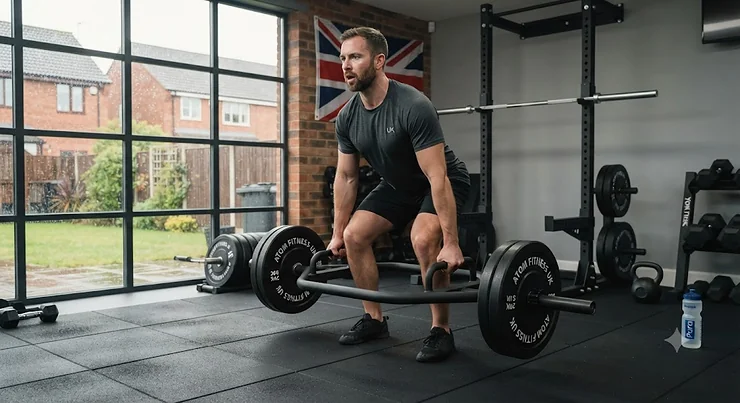
There’s a specific kind of dread that comes with googling “deadlift bar” at 11pm and landing on forty tabs of near-identical hexagons. You just want to know which one won’t rust by March. A trap bar (also called a hex bar) is a hexagon-shaped barbell you step inside of, so the weight sits level with your hips instead of out in front of your shins — it’s what lets most people pull heavier with noticeably less strain on the lower back. If you’re trying to buy trap bar equipment for the first time, the honest truth is that the differences between a £90 bar and a £250 bar are real, but they’re not always the ones the listings shout about.
This guide skips the copy-pasted spec sheets. We’ve dug into real product listings, aggregated genuine customer feedback, and cross-referenced UK strength-training guidance to work out which trap bars actually earn their price tag in 2026 — and which ones are just prettier versions of the same steel tube. Whether you’re chasing a trap bar deadlift PB, kitting out a garage for the first time, or replacing a wobbly bar that’s seen better days, you’ll find a genuine recommendation here rather than a rewritten product page.
We’ll cover seven real trap bars spanning budget, mid-range, and premium territory, work through the actual mechanics of the trap bar deadlift benefits, compare deadlift variations you can do with one bar, and answer the questions people type into Google at midnight — including what a fair trap bar price actually looks like once you strip out the marketing. NHS guidance on strength and flexibility recommends adults work all the major muscle groups on at least two days a week, and a hex bar happens to be one of the friendlier tools for doing exactly that without wrecking your lower back in the process.
Quick Comparison Table
Short on time? Here’s the snapshot before we get into the detail.
| Trap Bar | Frame Type | Best For | Price Range |
|---|---|---|---|
| Mirafit Olympic 2″ Trap Bar | Closed hex | All-round home gym reliability | £130-£170 range |
| PROIRON Olympic Trap Bar 2″ | Closed hex | Cheapest genuine entry point | £100-£130 range |
| GORILLA SPORTS Trap Bar | Closed hex | Heaviest load rating on a budget | £110-£150 range |
| JX FITNESS Olympic Trap Bar 2″ | Closed hex | Absolute lowest cost of entry | £90-£110 range |
| HulkFit Olympic Hex Trap Bar | Closed hex | Finish options (chrome or black) | £140-£180 range |
| Mirafit Olympic Open Trap Bar | Open hex with jack | Loading convenience & versatility | £220-£280 range |
| Eleiko Öppen Deadlift Bar | Open hex, rackable | Long-term, commercial-grade investment | premium (£800+ range) |
Looking at the spread, there’s no bad option on this list — the difference is really about what you’re optimising for. Budget buyers get a genuinely usable bar for well under £150, while the Mirafit Olympic Open Trap Bar and Eleiko Öppen Deadlift Bar justify their higher trap bar price with loading convenience and long-term durability that a closed frame simply can’t match. If you’re only ever pulling from the floor and never touching lunges or carries, a closed hex bar covers 90% of what most home lifters need.
💬 Just one click — help others make better buying decisions too!😊
Top 7 Trap Bars: Expert Analysis
We’ve deliberately mixed closed and open frames, UK-based brands and international ones, and budget-to-premium pricing so there’s a genuine option here whatever your garage looks like.
1. Mirafit Olympic 2″ Trap Bar — best all-round reliability for a home gym
The standout here is consistency: this is a UK-designed bar built specifically with home and light-commercial use in mind, not a generic import with a UK sticker slapped on. It’s a closed-hex design compatible with standard 2″ Olympic plates, comes with two spring collars in the box, and uses multi-grip knurled handles so you’re not stuck with a single hand position. Based on the spec comparison against cheaper imports, the tubing gauge and weld quality are noticeably heavier-duty, which is exactly what you want on a bar that’s going to eat hundreds of kilos over its lifetime. What most buyers overlook about a closed-frame bar like this is that the tighter tolerances mean less rattle when you’re loading iron plates, something the open-frame bars on this list can’t always claim. Reviewers consistently report that the bar feels heavier and sturdier than expected, with a handful noting that narrower plate sleeves can cause slight rattling with certain plate brands until they’re broken in or taped.
Pros:
- ✅ UK-designed with home and light-commercial use in mind
- ✅ Multi-grip knurled handles for varied hand positions
- ✅ Comes complete with two spring collars included
Cons:
- ❌ No built-in jack, so loading is manual
- ❌ Some reviewers note narrow sleeves rattle with certain plates
Sitting in the £130-£170 range, this is the bar we’d point most first-time buyers towards — it’s the safest “buy once” choice without stretching into premium territory.
2. PROIRON Olympic Trap Bar 2″ — cheapest genuine entry point that still holds real weight
The standout feature is the sheer value: a 250kg-rated closed hex bar with 5mm-thick steel construction and 30cm extra-long loadable sleeves, priced squarely at the budget end. The extra sleeve length matters more than it sounds — shorter sleeves on cheaper bars run out of loading space embarrassingly fast once you’re stacking 20kg plates, so PROIRON’s extended sleeves genuinely extend the bar’s useful lifespan as you get stronger. Here’s what to weigh: this bar only comes with a single (high) handle position, so if squats or split-stance work are on your radar, you’ll feel the limitation quickly. Reviewers consistently note the build feels far sturdier than the price suggests, with several longtime PROIRON customers saying the brand “never disappoints,” though a recurring theme in the same reviews is that anyone wanting to use the bar for squats should look elsewhere given the lack of a lower handle.
Pros:
- ✅ 250kg capacity is genuinely high for this price bracket
- ✅ Extra-long 30cm sleeves delay running out of loading space
- ✅ 5mm-thick steel feels solid rather than flimsy
Cons:
- ❌ Only one handle height, limiting squat-style use
- ❌ No collars or locks included in the box
At around £100-£130, this is the bar to buy if your only goal is deadlifts, shrugs, and farmer’s carries and you don’t want to spend more than necessary finding that out.
3. GORILLA SPORTS Trap Bar — heaviest load rating on a modest budget
The standout advantage is the 340kg maximum load rating, which is genuinely unusual at this price point and puts it ahead of several pricier rivals on paper. It’s a closed 2″ Olympic hex frame with knurled grip surfaces and two spring fasteners for securing plates, plus two inner handle positions offering both deep and high grips — useful if you want a bit of variety without paying open-frame prices. On paper this means intermediate lifters chasing genuine strength numbers won’t outgrow the bar for years, which is more than can be said for some budget hex bars rated to a modest 200-250kg. Reviewers consistently praise the build quality and describe it as feeling “professional” relative to price, with the ergonomic knurling and secure spring collars coming up repeatedly as highlights in aggregated feedback.
Pros:
- ✅ 340kg rated capacity, unusually high for the price
- ✅ Two handle positions (deep and high grip)
- ✅ Established European brand with wide UK availability
Cons:
- ❌ Closed frame limits use for lunges and carries
- ❌ Heavier starting bar weight than some closed rivals
Priced around £110-£150, this is arguably the best value-per-kilo-of-capacity bar on this entire list.
4. JX FITNESS Olympic Trap Bar 2″ — the lowest genuine cost of entry
The standout feature is simply the price floor: a 200kg-capacity closed hex bar compatible with 2″ Olympic plates at the very bottom of what a real trap bar costs on Amazon UK. It’s built for general home gym workouts covering squats, push-ups, shoulder exercises, and farmer’s walks alongside the core deadlift and shrug movements. What most buyers overlook is that a 200kg capacity is still plenty for the overwhelming majority of home lifters — unless you’re pulling well over double bodyweight, you’re unlikely to hit that ceiling for years of consistent training. Based on the spec comparison against other entry-level bars, the compact 48.6″ length keeps it manageable in tighter garage spaces, though that same compactness means slightly less loadable sleeve length than the longer PROIRON bar above.
Pros:
- ✅ Genuinely the cheapest real trap bar available
- ✅ Compact 48.6″ footprint suits smaller spaces
- ✅ Versatile enough for squats, presses, and carries
Cons:
- ❌ 200kg capacity is the lowest on this list
- ❌ Shorter sleeves than several rivals in this bracket
At around £90-£110, this is a sensible pick if you genuinely just want to try trap bar training before committing further.
5. HulkFit Olympic Hex Trap Bar — the finish-and-feel upgrade
The standout feature is choice: HulkFit offers this bar in either a powder-coated black finish or a chrome high-gloss option, which matters more than it sounds if your home gym doubles as a living space you’d rather not fill with rust-prone steel. It follows the traditional closed hexagonal shape with heavy-duty steel construction. Based on the spec comparison with cheaper alternatives, the finish options here signal a manufacturer paying attention to longevity in humid UK garages, where a cheap paint job can start flaking within a season. What the spec sheet won’t tell you, but aggregated buyer feedback suggests, is that the chrome option in particular holds up well against the kind of plate-slam wear that dulls black coatings faster. It’s worth noting independent reviewers have flagged that ordering specialty bars from general marketplaces can be hit-or-miss on packaging quality, so it’s worth checking recent reviews before ordering.
Pros:
- ✅ Choice of black powder coat or chrome finish
- ✅ Traditional closed hex shape suits deadlift-focused lifters
- ✅ Heavy-duty steel construction throughout
Cons:
- ❌ Published load capacity is less generous than GORILLA SPORTS
- ❌ Marketplace-only availability means no direct brand support route
At roughly £140-£180, this sits in the “want it to look as good as it lifts” category of buyer.
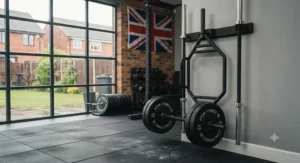
6. Mirafit Olympic Open Trap Bar — the loading-convenience upgrade
The standout feature is the built-in bar jack: tip the 25kg open-sided frame onto its jack feet and you can load plates without crouching and wrestling a closed hex bar off the floor every single set. The open-sided hex design also frees up space for exercises a closed frame simply can’t do comfortably, like unilateral carries and step-through movements. Based on the spec comparison against closed-frame bars, the open side is the real differentiator — it turns a single-purpose deadlift bar into something closer to a multi-tool for shrugs, carries, and split-stance work. Reviewers consistently describe it as “very versatile” and note the two handle-height options make loading progressively heavier weight genuinely easier, though a few taller or stronger lifters mention running low on sleeve space once bumper plates are stacked high.
Pros:
- ✅ Built-in bar jack makes loading dramatically easier
- ✅ Open-sided frame enables carries and unilateral work
- ✅ Two handle heights for varied grip and range of motion
Cons:
- ❌ Can run out of sleeve space with bulky bumper plates
- ❌ Heavier starting bar weight increases minimum load
At around £220-£280, this is the bar for anyone who’s used a closed hex bar before and found the loading process genuinely annoying.
7. Eleiko Öppen Deadlift Bar — the long-term, buy-it-once investment
The standout feature is craftsmanship most trap bars simply don’t attempt: Swedish steel construction, knurling that mirrors Eleiko’s competition weightlifting barbells, and a rated capacity north of 500kg that will outlast several cheaper bars bought in succession. It’s an open-ended, rackable design with a built-in bar jack and rounded framing that also supports cambered squat variations, backed by a five-year warranty. Here’s what to weigh: the handles aren’t removable, which does create some interference during cambered squat work, and the price is genuinely double the average premium bar — this is typically purchased direct from Eleiko or specialist UK strength retailers rather than a standard Amazon-style checkout. Reviewers consistently rate the knurling and overall feel as exceptional, with commentary describing it as blurring the line between gym equipment and genuinely well-made engineering, though nearly everyone agrees the price is the one honest drawback.
Pros:
- ✅ Exceptionally high weight capacity for serious long-term lifters
- ✅ Five-year warranty reflects genuine build confidence
- ✅ Rackable open frame with premium knurling quality
Cons:
- ❌ Significantly more expensive than every other bar on this list
- ❌ Fixed handles limit cambered squat variations slightly
Sitting at a premium (£800+ range), this is the bar for someone who’s already worn out a budget hex bar and knows exactly what they want from the upgrade.
Practical Usage Guide: Setup, Storage & Maintenance
Getting a trap bar out of the box is the easy part; keeping it useful for years is where most home gym owners drop the ball. Most closed hex bars arrive part-assembled — you’ll typically just need to fit handle clamps or spring collars, which takes five to ten minutes with basic tools. Before your first pull, wipe the sleeves down; manufacturing oil residue is common and it makes plates slide on unevenly for the first few sessions.
A common mistake in the first month of ownership is neglecting the sleeves entirely. Cast iron and rubber-coated plates both leave grit and dust behind, and if that’s left to sit, it accelerates surface wear on cheaper coatings noticeably faster than a proper wipe-down after each session would. Every few weeks, run a dry cloth over the handles and sleeves, and check that spring collars are still gripping tightly — worn springs are cheap to replace and prevent plates shifting mid-set.
On home gym bar storage: a trap bar’s awkward hexagonal shape is the single biggest reason people end up tripping over it in a corner. Vertical barbell holders designed for Olympic bars work for most closed hex bars if you stand them on end, though open-frame bars with built-in jacks are actually easier to store since the jack feet double as a stable resting base — you can often just lean them upright against a wall without extra hardware. If floor space is tight, a wall-mounted horizontal bar rack keeps the hex shape off the ground entirely and stops it becoming a trip hazard in a shared garage.
✨ Don’t Miss These Exclusive Deals!
🔍 Take your home gym to the next level with these carefully selected trap bars. Click through to check current pricing and availability before stock runs low on the best-value options above.
Real-World Scenarios: Who Should Buy Which Trap Bar
If you’re a university student sharing a small garage flat and lifting three times a week on a tight budget, the JX FITNESS Olympic Trap Bar or PROIRON Olympic Trap Bar make the most sense — both are compact, genuinely affordable, and more than capable of handling the loads a beginner-to-intermediate lifter will hit within the first year or two of training.
If you’re an intermediate lifter who’s already deadlifting well past 100kg and training four or five times a week in a dedicated garage gym, the higher load ceiling of the GORILLA SPORTS Trap Bar or the loading convenience of the Mirafit Olympic Open Trap Bar becomes genuinely worth paying for — you’ll notice the difference in sleeve length and jack functionality within weeks, not months.
If you’re an experienced lifter, coach, or someone running a small home-based training business who needs equipment that will handle years of heavy daily use without complaint, the Eleiko Öppen Deadlift Bar or the durability profile of the Mirafit Olympic 2″ Trap Bar are the sensible long-game picks — the extra spend upfront works out cheaper per year of use than replacing a budget bar every eighteen months.
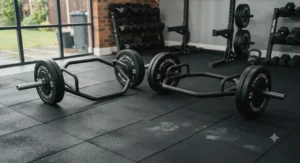
Trap Bar Problems & How to Solve Them
Problem: plates rattle loudly on the sleeves. This is almost always down to sleeve diameter tolerance on budget bars. The fix is either taping the sleeve with a few wraps of gaffer tape to tighten the fit, or upgrading to a bar like the GORILLA SPORTS Trap Bar with tighter tolerances from the factory.
Problem: running out of loadable sleeve space. Short sleeves are the single most common complaint on cheaper bars once you’re using thicker bumper plates. The PROIRON Olympic Trap Bar‘s extra-long sleeves solve this directly; alternatively, switching to thinner calibrated plates buys you more room on any bar.
Problem: struggling to load and unload heavy plates alone. This is exactly what a built-in jack solves. If you’re training solo and loading 100kg+ regularly, the Mirafit Olympic Open Trap Bar removes the awkward crouch-and-lift loading process entirely.
Problem: the bar only has one handle height, limiting exercise variety. Bars like the PROIRON Olympic Trap Bar and JX FITNESS Olympic Trap Bar are deadlift-and-shrug specialists rather than all-rounders. If squats and varied grip positions matter to you, prioritise a dual-handle bar like the Mirafit Olympic 2″ Trap Bar or GORILLA SPORTS Trap Bar from the outset.
Problem: rust appearing after a few months in an unheated garage. Damp UK garages are brutal on unfinished steel. Wipe the bar dry after humid sessions, and if you’re buying new, the chrome finish option on the HulkFit Olympic Hex Trap Bar resists this better than standard black oxide coatings.
How to Choose a Trap Bar
- Decide open or closed frame first. Closed frames like the PROIRON Olympic Trap Bar are cheaper and more rigid; open frames like the Mirafit Olympic Open Trap Bar cost more but add carries, lunges, and easier loading.
- Check the weight capacity against your realistic goals. If you’re nowhere near 200kg pulls yet, don’t overspend on a 500kg-rated bar — the JX FITNESS Olympic Trap Bar‘s 200kg ceiling covers most beginners comfortably.
- Measure your loading sleeves against your plates. Bumper plates are thicker than cast iron; if you own bumpers, prioritise longer sleeves like those on the PROIRON Olympic Trap Bar.
- Count the handle positions you actually need. One handle height is fine for pure deadlifting; two positions (as on the Mirafit Olympic 2″ Trap Bar) add squat and shrug variety.
- Factor in your garage’s climate. Damp, unheated spaces favour chrome or heavier powder coats, like the finish options on the HulkFit Olympic Hex Trap Bar.
- Think about storage before you buy, not after. An open-frame bar with a jack is often easier to store upright than a closed hex bar with no flat resting edge.
- Set a genuine trap bar price ceiling and stick to it. More expensive doesn’t always mean better for your specific training goals — a £100 bar used consistently beats an £800 bar gathering dust.
Trap Bar Deadlift vs Conventional Deadlift
This is the comparison most people are secretly trying to settle before they buy trap bar equipment at all. The trap bar deadlift lets you stand inside a hexagonal frame with the load centred at your sides, which shortens the lever arm between the weight and your spine. Because the lifter takes a more upright posture, the bar travels closer to the body’s centre of mass, which shortens the moment arm and reduces shear force on the spine compared with a conventional straight-bar pull. That’s the biomechanical reason so many coaches recommend it for beginners and anyone managing a cranky lower back.
The trade-off runs the other way for raw posterior-chain development. Studies comparing the two lifts found the conventional deadlift produces higher activation of the hamstrings and spinal erectors, while the trap bar deadlift favours the quadriceps instead. Neither lift is objectively “better” — the conventional deadlift builds a stronger hip hinge and posterior chain, which matters if you’re training for powerlifting where only the straight bar counts. The trap bar deadlift is friendlier to learn, generally allows heavier loads with less technical risk, and produces more explosive power output, which is why so many athletes and general lifters gravitate toward it as their primary pulling movement rather than a supplementary one.
For most home gym owners without competition ambitions, the practical answer is simple: a trap bar deadlift lets you train the same muscle groups with a lower technical barrier and less spinal loading risk, which usually means more consistent training over the years — and consistency beats theoretical optimisation every time.
Deadlift Variations You Can Do With a Trap Bar
A trap bar isn’t a one-trick tool, even though most buyers only ever picture the straight-up deadlift. High-handle deadlifts reduce range of motion and spinal load further still, making them a smart regression for anyone easing back from injury. Low-handle deadlifts, available on dual-handle bars like the Mirafit Olympic 2″ Trap Bar, restore full range of motion and closely mimic a conventional pull’s demand once you’re ready for it.
Trap bar shrugs are the movement the bar was originally invented for, and they remain one of the most direct ways to build trap and upper-back thickness without grip fatigue limiting the set early. Trap bar farmer’s carries — walking with the loaded bar held at your sides — are arguably underused; they build grip, core bracing, and general work capacity simultaneously, and open-frame bars like the Mirafit Olympic Open Trap Bar make stepping in and out for carries genuinely comfortable. Rackable open bars, including the Eleiko Öppen Deadlift Bar, also open up rack pulls and even trap bar overhead presses for lifters wanting more variety from a single piece of equipment.
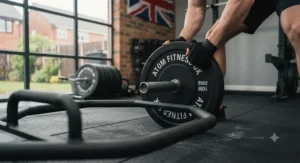
Hex Bar for Home Gym: What Actually Changes
Buying a hex bar for home gym use changes your training in ways spec sheets rarely mention. The most immediate shift is confidence: because the load sits centred rather than out in front, first-time deadlifters tend to pull with noticeably better form far sooner than they would learning a conventional deadlift from scratch, simply because the movement pattern is more intuitive.
The second shift is programming flexibility. A single trap bar effectively replaces several pieces of equipment — deadlifts, shrugs, carries, and (on dual-handle bars) squats can all come from one tool, which matters enormously when garage space is limited. What most buyers overlook until they own one is how much floor space a trap bar actually takes up mid-set compared with a straight barbell, since you’re standing inside the frame rather than beside it — worth measuring your available space before committing to a longer bar like the PROIRON Olympic Trap Bar. The third shift is simply psychological: several reviewers across the products above independently mention feeling more willing to push heavier loads with a trap bar than they ever did with a straight bar, likely down to that reduced strain on the lower back translating into genuine confidence under the bar.
Trap Bar Price: What You’re Actually Paying For
The gap between a £90 trap bar and an £800 one isn’t marketing fluff — though some of it is — it’s genuinely down to four things: steel gauge and weight capacity, sleeve length and finish quality, handle configuration, and whether the frame is open or closed with a built-in jack.
At the bottom of the market, bars like the JX FITNESS Olympic Trap Bar and PROIRON Olympic Trap Bar deliver real, usable steel at a genuine entry price — you’re paying almost entirely for the core function and very little for extras. Step up to the GORILLA SPORTS Trap Bar or Mirafit Olympic 2″ Trap Bar and the trap bar price increase buys you higher load ratings, tighter tolerances, and dual handle positions. Move into open-frame territory with the Mirafit Olympic Open Trap Bar and you’re now paying specifically for the built-in jack mechanism and the versatility of stepping through the open side. At the top, the Eleiko Öppen Deadlift Bar‘s premium price reflects Swedish manufacturing standards, a five-year warranty, and knurling quality closer to competition weightlifting barbells than anything else on this list.
As a value framework: cost-per-year of realistic use tends to favour the mid-range options for most buyers, since a £150 bar used for eight years works out cheaper annually than three £90 bars replaced every two to three years due to wear.
Home Gym Bar Storage: Keeping It Tidy
A trap bar’s hexagonal shape doesn’t lean neatly against a wall the way a straight barbell does, which is why storage becomes a genuine planning problem rather than an afterthought. Vertical Olympic bar holders, the kind designed to accept multiple barbells in a small footprint, generally accommodate closed hex bars standing on end, though you’ll want to check the sleeve diameter fits the holder’s tube before buying one.
Open-frame bars with a built-in jack, like the Mirafit Olympic Open Trap Bar, have a genuine storage advantage here — the jack feet are designed to let the bar stand upright on its own, meaning it can often lean flush against a wall without any additional rack at all. For closed bars without that feature, a horizontal wall-mounted rack keeps the awkward hexagon off the floor entirely, which matters more than it sounds in a shared garage where a trap bar left lying flat is a genuine trip hazard, particularly around children or pets.
Common Mistakes When You Buy a Trap Bar
The most frequent mistake is buying based on price alone and ignoring load capacity relative to realistic training goals — a 200kg-rated bar is fine for most beginners, but an intermediate lifter closing in on that ceiling within a year has effectively bought a bar they’ll need to replace sooner than expected. The second common mistake is ignoring sleeve length entirely; buyers who own bumper plates and purchase a short-sleeved budget bar frequently find themselves unable to load their full plate set within months.
A third mistake is overlooking handle configuration — buying a single-handle bar like the base PROIRON Olympic Trap Bar and then discovering you actually wanted squat variations is a common regret in aggregated review feedback. Finally, many first-time buyers skip checking their garage’s storage reality before ordering, only realising afterward that a closed hex bar has nowhere sensible to live between sessions. The British Heart Foundation’s strength training guidance is a useful sanity check here too — it recommends spacing strength sessions with at least a full day’s recovery between them, which matters as much as which bar you choose.
Hex Bar Deadlift Benefits by Goal
If your goal is pure strength with minimal injury risk, the trap bar’s reduced spinal shear makes it the safer long-term choice, particularly for lifters returning from lower-back issues or those newer to heavy pulling. Research summarised by Stronger By Science shows the peak spinal flexion moment runs roughly 9% higher for the conventional deadlift than the trap bar version, which is a meaningful difference over months of consistent training volume.
If your goal is athletic power output — sprinting, jumping, or general explosiveness — the trap bar deadlift edges ahead again, with studies finding lifters produce more peak force, velocity, and power, along with a measurably higher one-rep max, using a trap bar compared with a conventional bar. If your goal is general home gym fitness without a specific sport in mind, the trap bar’s lower technical demand simply means more consistent training over years, and consistency is what actually drives results for the vast majority of people training outside of competitive powerlifting.
FAQ
❓ What's the difference between a trap bar and a hex bar?
❓ What weight capacity do I actually need to buy trap bar equipment safely?
❓ Can beginners use a trap bar safely without a coach?
❓ How much does it typically cost to buy trap bar equipment in the UK?
❓ Do I need a power rack to use a trap bar at home?
Conclusion
If you’ve read this far trying to decide whether to buy trap bar equipment at all, here’s the honest summary: almost every home lifter benefits from owning one, because it lowers the technical barrier to heavy pulling without sacrificing much in the way of results. For a genuinely reliable all-rounder without overspending, the Mirafit Olympic 2″ Trap Bar remains our top recommendation — solid UK design, sensible pricing, and dual handle positions that keep it useful as you progress.
If your budget is tighter, the PROIRON Olympic Trap Bar or JX FITNESS Olympic Trap Bar genuinely deliver on the fundamentals without pretending to be something they’re not. If loading convenience and versatility matter more than saving £100, the Mirafit Olympic Open Trap Bar‘s built-in jack is worth the upgrade. And if you’ve already worn through a budget bar and know exactly what you’re after, the Eleiko Öppen Deadlift Bar is as close to a lifetime purchase as this category gets.
Whichever you choose, remember that consistency beats the spec sheet every time — the best trap bar is the one that actually gets used, week after week, for years.
Recommended for You
- Adjustable Dumbbells vs Fixed Dumbbells: 7 Picks Ranked (2026)
- Studio Dumbbells for Gyms: 7 Best Picks
- Dial Dumbbells vs Pin-Select Dumbbells: 7 Best UK Picks (2026)
Disclaimer: This article contains affiliate links. As an Amazon Associate, I earn from qualifying purchases. If you purchase products through these links, we may earn a small commission at no additional cost to you.
✨ Found this helpful? Share it with your friends! 💬🤗
