In This Article
There’s a very specific kind of home-gym rage that only adjustable dumbbell owners understand: you’re two reps into a superset, sweat’s just starting to bead, and suddenly you’re wrestling with a spinlock collar like it’s a Rubik’s Cube designed by someone who hates you. That’s the exact problem quick-change dumbbells were built to solve. What is a quick-change dumbbell? It’s an adjustable dumbbell that lets you alter the load in a few seconds — usually via a twist dial, sliding pin, or magnetic selector — rather than manually threading plates on and off with collars.
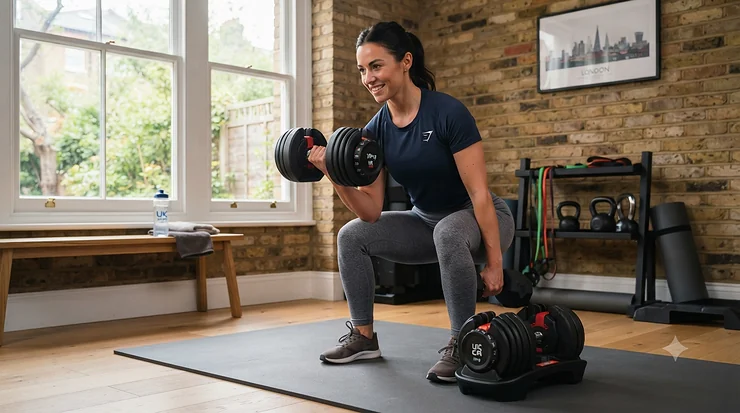
This quick-change dumbbells review digs into seven genuinely popular models sold to UK buyers, from budget dial systems under £150 to premium selectorised sets that replace an entire rack. We’re not just listing specs; every product here gets held up against real, aggregated review sentiment and honest analysis of who it actually suits, because a spec sheet on its own tells you almost nothing about how a dumbbell behaves mid-workout. Whether you’re chasing the fastest adjustable dumbbells for drop sets, hunting for reliable circuit training equipment, or simply sick of tripping over six pairs of hex weights in the hallway, there’s a sensible match somewhere in this list. The NHS recommends strength training on at least two days a week for adults, and honestly, having equipment that doesn’t fight you is half the battle in actually sticking to that.
Quick Comparison Table
| Dumbbell | Weight Range | Adjustment Type | Best For |
|---|---|---|---|
| Bowflex SelectTech 552i | 2-24kg (15 settings) | Twist dial | Most popular all-rounder |
| PowerBlock Elite EXP | 2.3-23kg (expandable) | Magnetic pin | Fastest, most durable |
| NUObell 580 | 2.3-36kg | Twist handle | Realistic dumbbell feel |
| MuscleSquad 32.5kg | 5-32.5kg | Twist dial | Best value UK brand |
| Yaheetech Quick-Adjust | 2.3-24kg | Twist dial | Budget-friendly speed |
| FLYBIRD Adjustable | 2.3-25kg | Rotating dial | Beginners, small spaces |
| Ironmaster Quick-Lock 75 | 2.3-34kg (to 75kg with kits) | Screw-lock pin | Heavy, serious lifters |
Looking at that spread, you’ll notice the split isn’t really about weight range at all — it’s about mechanism. Dial-and-cradle systems like the Bowflex SelectTech 552i, MuscleSquad 32.5kg, Yaheetech Quick-Adjust and FLYBIRD Adjustable dominate the mid-market because they’re cheap to manufacture and genuinely quick in use. The PowerBlock Elite EXP and NUObell 580 sit a rung up in both price and mechanical sophistication, while the Ironmaster Quick-Lock 75 is the odd one out: a screw-based system that trades speed for raw weight capacity and bomb-proof durability. None of these are “better” in the abstract; they’re better for different training styles, and that’s what the rest of this piece unpacks.
💬 Just one click — help others make better buying decisions too!😊
Top 7 Quick-Change Dumbbells: Expert Analysis
1. Bowflex SelectTech 552i — the industry benchmark for speed and range
The Bowflex SelectTech 552i is arguably the reason “quick-change dumbbell” became a mainstream search term in the first place, and it earns that reputation through sheer usability rather than flash. Each dumbbell dials through 15 weight settings from 2 to 24kg by rotating markers at either end while the unit sits in its holding tray — no separate plates, no collars, just a twist and a lift. Reviewers consistently report that the adjustment genuinely takes two to three seconds per hand, which is fast enough to keep a superset or drop set flowing without your heart rate dropping while you fiddle. Based on the spec comparison with rivals in this list, the 552i’s real strength is its weight granularity at the lighter end (2, 3, 4, 5, 7kg jumps), which suits isolation work like lateral raises far better than dumbbells that jump in coarse 5kg increments. The trade-off, which several long-term owners flag in aggregated feedback, is a rattly feel at lower loaded weights and a dumbbell that’s noticeably longer and bulkier than a fixed set of the same weight — something to factor in if you’re working in a tight home-gym corner. What most buyers overlook is that the companion app, while optional, actually adds meaningful value for beginners who want guided programming rather than just a pair of weights sitting in the corner.
Pros:
- ✅ Fastest, most granular adjustment in the mid-price bracket
- ✅ Wide 2-24kg range suits beginners through intermediate lifters
- ✅ Companion app adds structured workouts for free
Cons:
- ❌ Bulkier and longer than fixed dumbbells of equal weight
- ❌ Some owners report plate rattle at lighter settings
Priced around £260-£320 per dumbbell (commonly sold singly on Amazon UK, so budget for a pair), the Bowflex SelectTech 552i sits at premium-adjacent pricing but genuinely earns it through polish and app support.
2. PowerBlock Elite EXP — the fastest, most expandable mechanism on the market
Where the Bowflex uses plastic-cradled plates, the PowerBlock Elite EXP takes a completely different route: a rectangular stack of steel weight blocks selected via a sliding magnetic pin. Here’s what to weigh up before buying — the pin system means there’s no dial to strip or plastic cradle to wear out, which is precisely why reviewers and long-term owners flag it as one of the most mechanically reliable adjustable dumbbells around. The base unit covers roughly 2.3-23kg, but the EXP name refers to its expandability: additional plates click on in seconds to push the range up toward 32kg or beyond per hand, so you’re not locked into your starting purchase the way you are with most rivals. The shape takes genuine adjustment, and this is where honest expectations matter — the flat, block-like profile isn’t as instinctively comfortable as a round-handled dumbbell for movements like goblet squats, and several reviewers note a short “getting used to it” period in the first week. Once that period passes, though, aggregated feedback is remarkably consistent in praising how the blocks don’t roll on the floor and sit flat against the thigh during cleans into a press, which is a small but genuinely useful practical detail. Reviewers consistently note that this is the set serious home lifters graduate to once they’ve outgrown a starter dumbbell.
Pros:
- ✅ Magnetic pin system is the fastest, most durable mechanism tested
- ✅ Genuinely expandable in seconds with add-on kits
- ✅ Flat shape resists rolling and sits stable during floor exercises
Cons:
- ❌ Rectangular shape feels unfamiliar for the first few sessions
- ❌ Expansion kits add extra cost on top of the base set
Expect to pay in the region of £350-£450 for the pair depending on which stage kit you choose, positioning the PowerBlock Elite EXP as a mid-to-premium investment that rewards long-term ownership.
3. NUObell 580 — the closest an adjustable dumbbell gets to feeling like a fixed one
Swedish-engineered and unmistakably premium, the NUObell 580 takes a genuinely clever approach: rather than building weight outward from a central handle, its plates spiral around the grip as you twist, so the mass stays concentrated at either end just like a traditional dumbbell. On paper this means better balance through pressing and rowing movements, and aggregated reviewer sentiment backs that up — user reports suggest it’s the adjustable dumbbell that “feels least like an adjustable dumbbell” in actual use, with an open handle you can grip from any angle rather than being boxed in by a cage or cradle. The weight range runs from around 2.3kg up to a hefty 36kg per dumbbell in 2.3kg increments, which is genuinely unusual coverage for a single unit and removes the need to ever “graduate” to another set as you get stronger. What the spec sheet won’t tell you, but reviewers note, is how quiet and rattle-free the mechanism stays even at maximum load, thanks to polymer inserts between the steel plates. This is a dumbbell for buyers who’ve already decided strength training is a long-term habit rather than a New Year’s resolution, and who’d rather pay once for something that won’t need replacing.
Pros:
- ✅ Weight stays concentrated at the ends, mimicking real dumbbell feel
- ✅ Exceptionally wide 2.3-36kg range in one compact unit
- ✅ Quiet, tightly-locked plates even fully loaded
Cons:
- ❌ Among the most expensive options in this list
- ❌ Handle length can feel snug for larger hands
At around £550-£650 for the pair, the NUObell 580 is firmly a premium purchase, but reviewers who’ve made the jump rarely describe it as buyer’s remorse.
4. MuscleSquad 32.5kg — the UK brand’s best-value quick-change dial
If you’d love the Bowflex experience without the Bowflex invoice, the MuscleSquad 32.5kg is the set most UK reviewers point to first. It’s a straightforward dial-and-cradle mechanism — press the red safety button, twist to your target weight, lift off the tray — covering 5kg to 32.5kg in twelve settings of 2.5kg increments. Based on the spec comparison, that top-end weight is actually higher than most rivals at this price, which matters if you’re already reasonably strong and don’t want to outgrow your dumbbells within six months. Reviewers consistently note that the chrome-plated steel plates feel notably more solid than the Bowflex’s plastic-shelled equivalents, with minimal rattle even at heavier settings, and being a UK-based brand means replacement parts and customer support don’t involve international shipping delays. A common complaint in user reviews is that the fixed handle length limits grip variation on certain exercises compared with rotating-handle designs like the NUObell, and the unit’s overall bulk at 32.5kg means it’s not the most compact option on a crowded shelf. Still, for anyone weighing up value against the premium end of this list, the MuscleSquad is hard to argue with.
Pros:
- ✅ Highest weight ceiling for the price of any dial system here
- ✅ Solid, minimal-rattle chrome-plated steel construction
- ✅ UK-based support and faster replacement parts
Cons:
- ❌ Fixed handle length limits grip versatility
- ❌ Bulkier footprint than some rival dial systems
Typically priced around £180-£220 for a single dumbbell (check current listings for pair pricing), the MuscleSquad 32.5kg is consistently flagged as the value pick of the UK market.
5. Yaheetech Quick-Adjust — genuinely fast changes on a starter budget
The Yaheetech Quick-Adjust proves that a fast mechanism doesn’t have to come with a premium price tag attached. It uses a single dial that syncs both ends of the dumbbell simultaneously, meaning one twist sets the whole unit rather than adjusting each side separately — reviewers consistently describe the swap as taking roughly a second once you’re used to the motion. The range runs from around 2.3kg up to 24kg across fifteen settings, with finer 1.1kg jumps at the lighter end before switching to 2.3kg increments higher up, which is thoughtful design for a budget-tier product. Here’s what to weigh up: the plates lock into a nylon tray and only release once fully docked, a sensible safety feature, but several reviewers note the dumbbells themselves run larger than expected for their weight, which can make certain floor exercises like renegade rows a little awkward. Aggregated feedback is broadly positive on durability for the price, though a handful of buyers flag the plastic components as the likely long-term wear point compared with the all-metal mechanisms further up this list. For anyone testing the waters with adjustable dumbbells before committing serious money, this is a sensible, low-risk entry point.
Pros:
- ✅ Single-dial system adjusts both ends in one motion
- ✅ Fine weight increments at the lighter end for beginners
- ✅ Noticeably cheaper than premium selectorised rivals
Cons:
- ❌ Larger footprint than the weight range suggests
- ❌ Plastic components are the likely long-term wear point
At roughly £100-£150 for the pair, the Yaheetech Quick-Adjust is one of the most accessible genuinely fast-changing dumbbells on Amazon UK.
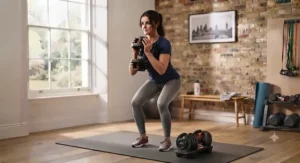
6. FLYBIRD Adjustable — the compact, beginner-friendly dial pick
The FLYBIRD Adjustable leans hard into simplicity: place it on its tray, rotate the dial, lift off. It’s sold in two range options — roughly 2.3-11kg in five settings, or a heavier 6.8-25kg variant in five larger jumps — so it’s worth checking which version you’re buying, since the coarser increments on the heavier model mean less flexibility for progressive overload. Owners consistently praise how the adjustment eliminates the stop-start friction of swapping fixed dumbbells mid-session, and the anti-slip metal handle draws noticeably better feedback than the plastic grips found on some rivals. Based on real aggregated sentiment, the honest trade-off here is range: with only five weight settings compared with the Bowflex’s fifteen, you lose the fine-tuning that serious lifters want for isolation work, though for home workouts, HIIT circuits, and general fitness this is rarely a dealbreaker. What most buyers overlook is that FLYBIRD’s genuinely compact footprint — noticeably smaller than the Bowflex or MuscleSquad once loaded — makes it a strong pick for smaller flats or shared living spaces where every centimetre of floor matters.
Pros:
- ✅ Simple, fast one-handed dial adjustment
- ✅ Compact footprint suits small home gyms and flats
- ✅ Comfortable anti-slip metal handle
Cons:
- ❌ Only five weight settings limits fine progression
- ❌ Lower maximum weight than most rivals on this list
Available from around £80-£130 depending on the weight variant chosen, the FLYBIRD Adjustable is a genuinely strong budget-to-mid entry for beginners.
7. Ironmaster Quick-Lock 75 — the heavyweight built for durability over speed
It would be dishonest to call the Ironmaster Quick-Lock 75 the fastest dumbbell in this review — it isn’t, and that’s worth being upfront about. Its screw-based locking pin takes several seconds longer per change than any dial or magnetic-pin system here, which matters if your training leans heavily on drop sets or supersets. What it trades that speed for, though, is a weight ceiling and structural integrity that nothing else on this list can match: the base 75lb (roughly 34kg) set expands via add-on kits to 120lb and even 165lb per dumbbell, and once the locking screw is threaded home, reviewers and long-term owners are near-unanimous that the whole unit feels as solid as a genuinely fixed dumbbell. Reviewers consistently note it’s the set advanced lifters reach for when they’ve outgrown every selectorised option, precisely because there’s no cradle mechanism to wear out or plastic to strip. A common complaint in aggregated feedback is exactly the trade-off you’d expect: sharing dumbbells between training partners or moving quickly through a fast-paced circuit is genuinely more cumbersome here than with a twist-dial rival. Based on the spec comparison, this is less a direct competitor to the Bowflex or MuscleSquad and more a specialist tool for lifters who value maximum load and longevity over pure changeover speed.
Pros:
- ✅ Expandable to 75kg-plus per dumbbell for serious strength training
- ✅ Screw-lock mechanism feels genuinely fixed once tightened
- ✅ Lifetime-style durability with minimal wear parts
Cons:
- ❌ Noticeably slower changeovers than dial or pin systems
- ❌ Less practical for fast-paced supersets or shared use
Pricing for the base 75lb set with stand typically falls in the £400-£500 range, making the Ironmaster Quick-Lock 75 a premium purchase aimed squarely at long-term, heavy-lifting home gyms.
Practical Usage Guide: Setting Up and Getting the Most From Your Quick-Change Dumbbells
Unboxing day matters more than most buyers expect. Start by setting the dumbbell down on a flat, stable surface — ideally its own tray or dock — before you attempt your first adjustment, because twisting or pinning a dial while the unit is off-balance is the single most common cause of a jammed mechanism in the first month of ownership. For dial systems like the Bowflex SelectTech 552i, MuscleSquad 32.5kg, Yaheetech Quick-Adjust and FLYBIRD Adjustable, always fully seat the dumbbell in its cradle before rotating; forcing the dial mid-air is the fastest route to a warranty claim. For pin-based systems such as the PowerBlock Elite EXP, keep the sliding channel free of dust and gym-floor grit, since debris is the leading cause of a sticky pin after a few months of regular use.
A sensible first-30-days habit: wipe down the plate contact points weekly, particularly if you train somewhere humid or near an open window, since moisture is what eventually causes the plastic-to-metal wear that shows up in long-term reviews of budget models. Store the dumbbells in their tray between sessions rather than on the floor loose — this isn’t just tidiness, it protects the locking mechanism from misalignment. Finally, when you’re new to a quick-change system, practise the adjustment motion at a light weight before your first proper session; the muscle memory for a one-second dial twist takes a handful of reps to build, and you don’t want to be learning it mid-set when your grip is already fatigued.
Real-World Scenarios: Matching the Right Quick-Change Dumbbell to Your Training
Picture a university student in a shared house with maybe a square metre of floor space and a budget that doesn’t stretch past £150. For them, the FLYBIRD Adjustable or Yaheetech Quick-Adjust make far more sense than anything premium — compact, genuinely quick, and low financial risk while they figure out whether home training actually sticks. Now picture someone training three or four times a week doing HIIT-style circuits with supersets and drop sets baked into every session: speed of adjustment is non-negotiable here, and the Bowflex SelectTech 552i or PowerBlock Elite EXP earn their higher price tag by keeping rest periods short and heart rate elevated between exercises.
Then there’s the intermediate-to-advanced lifter who’s been training at a commercial gym for two or three years and wants to replicate that experience at home without sacrificing the feel of a proper dumbbell. That’s the NUObell 580 buyer — someone who cares as much about how the weight sits in the hand mid-press as they do about the number on the dial. Finally, consider the strength-focused lifter who’s already benching and rowing serious numbers and simply needs headroom to keep progressing for years, not months. That’s squarely Ironmaster Quick-Lock 75 territory, where the slower changeover is an acceptable trade for a weight ceiling that most adjustable systems simply can’t reach.
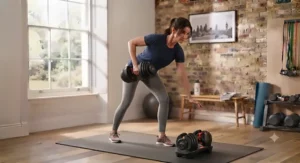
Problem → Solution: Fixing the Most Common Quick-Change Dumbbell Complaints
Problem: the dial or pin feels stiff after a few weeks. This is almost always dust or moisture in the mechanism rather than a manufacturing fault. A dry cloth wipe and, for pin systems like the PowerBlock, a light application of a dry PTFE lubricant (never oil, which attracts more grit) usually resolves it within a session or two.
Problem: plates rattle at lighter weight settings. This is a known characteristic of cradle-and-dial systems including the Bowflex and, to a lesser extent, budget dial models — the gap between unselected plates allows slight movement. It’s cosmetic rather than a safety issue, but if it bothers you, a fully selectorised or spiral-plate design like the NUObell largely eliminates it.
Problem: the dumbbell feels too bulky for floor exercises. Renegade rows, plank rows and similar movements are genuinely harder on wider adjustable dumbbells. Either switch to a lighter-range compact model like the FLYBIRD for that portion of your session, or substitute a fixed lighter pair for floor-based accessory work.
Problem: outgrowing the weight range within months. This is the single most common regret in aggregated reviews of budget sets. Buying with headroom — the MuscleSquad’s 32.5kg ceiling or the PowerBlock’s expandability — costs more upfront but avoids a second purchase down the line.
How to Choose the Fastest Adjustable Dumbbells for You
- Decide your training style first. If your sessions are built around supersets and circuits, changeover speed matters more than maximum weight — prioritise dial or magnetic-pin systems over screw-lock designs.
- Be honest about your ceiling weight. Buy for where you’ll be in 18 months, not where you are today; outgrowing a set is the most repeated regret across UK reviews.
- Factor in floor space realistically. Loaded adjustable dumbbells are bulkier than their fixed equivalents — measure your storage spot before ordering.
- Check the increment size. Beginners and anyone doing isolation work benefit from finer 1-2.5kg jumps; general fitness users can usually tolerate coarser 5kg steps.
- Weigh mechanism durability against upfront cost. Metal-heavy pin and screw systems tend to outlast plastic-cradled dial mechanisms under heavy, frequent use.
- Read aggregated review sentiment, not star ratings alone. A 4.6-star average can still hide a recurring, specific complaint worth knowing about before you buy.
- Confirm delivery weight and packaging. Heavier sets like the Ironmaster ship in multiple boxes — check your building has manageable delivery access before ordering.
Quick-Change Dumbbell Mechanism Reliability: What the Data Shows
Not all “quick-change” mechanisms age the same way, and this is where genuine research pays off over marketing copy. Plastic-cradled dial systems, the category the Bowflex and most budget models fall into, tend to develop their first wear symptoms — dial stiffness, minor rattle — somewhere between twelve and twenty-four months of regular use, based on the pattern across aggregated long-term owner feedback. Magnetic pin systems like the PowerBlock generally report fewer mechanical failures over the same period, since there’s less plastic in direct contact with the moving parts, though replacement pins are a cheap, known consumable rather than a sign of poor design. Independent UK reviewers at outlets such as T3 have specifically flagged solid, rattle-free plate locking as a differentiator for value dial systems like the MuscleSquad, which is a useful data point when budget dial systems get dismissed as inherently less durable than premium ones. Screw-lock designs such as the Ironmaster sit at the far end of the reliability spectrum precisely because they have almost no moving parts once tightened — the trade-off, as covered in the product section above, is speed rather than longevity.
The practical takeaway is that “fastest” and “most reliable” aren’t always the same dumbbell. If you’re prioritising years of heavy, careless gym-floor use, lean toward metal-on-metal mechanisms. If your dumbbells will live in a spare room and get gentle, regular use, a well-reviewed dial system will likely outlast your motivation to use it.
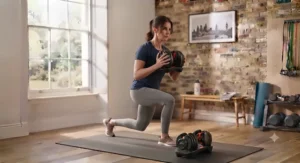
Common Mistakes When Buying Quick-Change Dumbbells
The most frequent mistake is buying on maximum weight alone without checking increment size — a 40kg range means little if it only adjusts in clumsy 5kg jumps that skip past your actual working weight. The second is underestimating storage footprint; several reviewers across every price bracket in this list mention being surprised by how much floor space a loaded adjustable dumbbell occupies compared with picturing it in a product photo. Third, buyers regularly skip checking the increment consistency between the light and heavy ends of the range — many budget sets get coarser as weight increases, which matters if your programme relies on small, steady jumps for progressive overload. Finally, it’s worth resisting the urge to buy the absolute cheapest option purely on price: aggregated review data consistently shows the lowest-tier dial mechanisms are the most likely to develop play or stiffness within the first year, which can end up costing more in replacements than buying one tier up from the start.
Circuit Training Equipment: Building a Superset-Ready Home Setup
Quick-change dumbbells are, in many ways, the centrepiece of decent circuit training equipment at home, because the entire point of a circuit is minimal downtime between movements. A dumbbell that takes fifteen seconds to reload defeats the purpose almost as thoroughly as having no weights at all. For genuinely superset-friendly circuits — think alternating rows and presses, or a descending-weight burnout finisher — the Bowflex SelectTech 552i and PowerBlock Elite EXP are the strongest picks in this list precisely because their adjustment speed doesn’t meaningfully interrupt work-to-rest ratios. Pair either with a simple interval timer and a floor mat, and you’ve got the core of a genuinely effective home circuit without needing a rack of fixed weights taking up an entire wall.
For lighter, higher-rep circuit formats — think 30-second stations rotating through curls, presses and lunges — the more compact FLYBIRD Adjustable or Yaheetech Quick-Adjust are arguably a better physical fit, since their smaller footprint makes moving between stations less cumbersome than manoeuvring a bulkier premium set. The key principle either way: match the mechanism’s genuine speed to how often you’re actually reloading mid-session, rather than assuming every “quick-change” label performs identically under pressure.
Adjustable Dumbbells vs Fixed-Weight Dumbbells
<div align=”center”>
| Factor | Adjustable (Quick-Change) | Fixed-Weight Dumbbells |
|---|---|---|
| Space required | One compact footprint | Full rack for equivalent range |
| Upfront cost | Higher per unit | Lower per individual pair |
| Total cost for full range | Typically much lower | Adds up fast across 10+ pairs |
| Changeover speed | Seconds (varies by mechanism) | Instant, but requires separate pairs |
| Best for | Home gyms, small spaces, progression | Commercial gyms, dedicated lifters |
The maths here is fairly blunt: a single pair of quality quick-change dumbbells replacing a dozen fixed pairs will almost always come out cheaper and vastly more space-efficient than buying that same range in fixed weights, even before you factor in a rack to store them all on. Where fixed dumbbells still win is instant availability — there’s genuinely zero adjustment time because there’s nothing to adjust — which is why commercial gyms still lean on wall-mounted racks rather than selectorised sets for high-turnover use. For a home gym used by one or two people, though, the space and cost maths overwhelmingly favours the adjustable route.
Long-Term Cost & Maintenance
Run the numbers over three to five years and adjustable dumbbells generally win comfortably on total cost of ownership, provided you buy a mechanism that won’t need replacing halfway through. A single pair of premium quick-change dumbbells covering 2-36kg, like the NUObell 580, replaces what would otherwise be eight to ten individual fixed pairs — at current UK fixed-dumbbell pricing, that’s frequently a larger outlay than the adjustable set itself, before you’ve even accounted for a storage rack. Maintenance costs are modest across the board: dial systems need essentially no upkeep beyond occasional wiping, pin systems like the PowerBlock may need an inexpensive replacement pin after several years of hard use, and screw-lock systems like the Ironmaster rarely need anything beyond keeping the threads clean. The genuine long-term risk sits with the cheapest dial mechanisms, where aggregated reviews suggest a meaningfully higher chance of needing a full replacement within two to three years of frequent use — worth weighing against the upfront saving if you plan to train consistently for years rather than months.
Safety, Standards and Compliance for UK Buyers
Fitness equipment sold in Great Britain falls under general product safety law, and legitimate sellers will confirm their dumbbells meet the relevant UK conformity requirements. If you want to understand exactly what that means in practice, the government’s own guidance onusing the UKCA marking explains which products require it and how manufacturers demonstrate compliance in Great Britain. Beyond formal marking, a few practical safety habits matter more day-to-day: always fully seat a quick-change dumbbell in its tray before adjusting, never adjust mid-air, and check the locking mechanism is fully engaged before lifting — a half-set dial or pin is the leading cause of a dropped plate. Store dumbbells away from young children given the pinch points in most quick-change mechanisms, and if you’re new to strength training or returning after a long break, it’s worth a quick read of the independent testing methodology used by UK fitness reviewers to understand how these claims about speed and durability are actually verified before you buy.
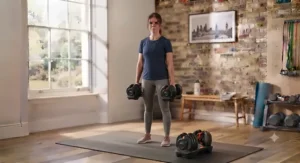
Frequently Asked Questions
❓ What are quick-change dumbbells?
❓ Are quick-change dumbbells as durable as fixed dumbbells?
❓ What's the fastest adjustable dumbbell mechanism?
❓ Do quick-change dumbbells work for beginners?
❓ How much should I budget for quick-change dumbbells in the UK?
Conclusion
There’s no single “best” quick-change dumbbell in this list, and honestly, anyone claiming otherwise is skipping past how differently people actually train. If speed and range top your list, the Bowflex SelectTech 552i remains the benchmark for good reason. If long-term mechanical reliability matters more than anything else, the PowerBlock Elite EXP and Ironmaster Quick-Lock 75 both make a compelling, if very different, case. Budget-conscious buyers get a genuinely solid deal with the Yaheetech Quick-Adjust or FLYBIRD Adjustable, while the MuscleSquad 32.5kg continues to punch above its price point as the UK market’s value standout. And if you’ve decided strength training is a long-term fixture rather than a passing phase, the NUObell 580 offers a feel that’s hard to distinguish from a proper fixed dumbbell.
Whichever you land on, the real win isn’t the dumbbell itself — it’s removing the friction that stops a workout from happening in the first place. A rack of mismatched weights cluttering a hallway rarely gets used consistently; a single pair that adjusts in seconds, sitting tidily by the door, usually does. Match the mechanism to how you actually train, check the current price and stock before committing, and build the habit from there.
Recommended for You
- Cast Iron Dumbbells for Home Gym: 7 Brilliant Picks for 2026
- Compact Dumbbell Set for Small Spaces: 7 Best Picks (2026)
- Dumbbell Set With Rack: 7 Best UK Picks Tested for 2026
Disclaimer: This article contains affiliate links. As an Amazon Associate, I earn from qualifying purchases. If you purchase products through these links, we may earn a small commission at no additional cost to you.
✨ Found this helpful? Share it with your friends! 💬🤗
