In This Article
A weightlifting barbell for beginners is any Olympic-specification bar — typically 20kg for men and 15kg for women, 2.2 metres long, with rotating sleeves — built to let a new lifter learn the snatch and the clean and jerk without the bar fighting them. That’s the textbook definition, but it doesn’t tell you much about which actual bar to buy, or why the one gathering dust in your mate’s garage cost three times what the one on the shop floor at your local Pure Gym did.
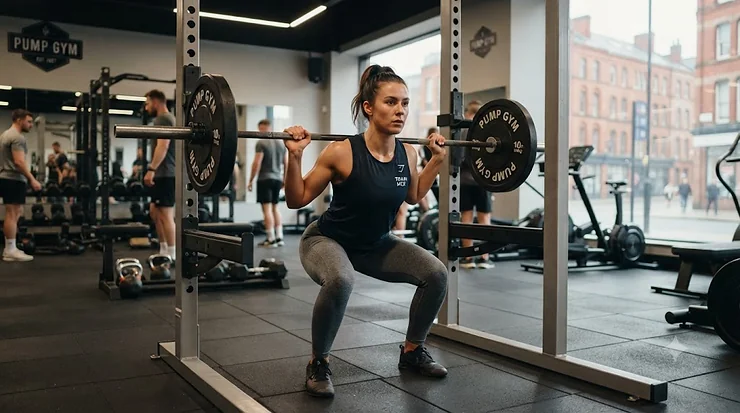
Here’s the thing nobody tells you before you start googling spec sheets at 11pm: a barbell isn’t just a metal stick. It’s the one piece of kit that touches every single lift you’ll ever do, and the difference between a decent one and a bad one shows up exactly when you need it least — mid-snatch, bar spinning unevenly, weight suddenly feeling like it’s fighting you rather than working with you. Get the sleeve rotation wrong, or the knurl too aggressive for someone still building calluses, and technique work becomes a fight against the equipment rather than a fight against the weight.
This guide walks through seven real, currently available bars spanning genuine budget options through to competition-grade steel, explains what actually matters when you’re new to Olympic lifting (as opposed to what the marketing copy wants you to think matters), and gives you a proper framework for choosing. According to a rapid evidence review commissioned for the UK Chief Medical Officers’ update of the physical activity guidelines, muscle and bone strengthening activity carries genuine, well-evidenced health benefits for adults of every age — so getting your first barbell right isn’t just about performance, it’s about building a habit that sticks.
Quick Comparison Table
| Bar | Best For | Rotation System | Weight | Price Range |
|---|---|---|---|---|
| RITFIT Olympic Barbell | Absolute beginners on a tight budget | Bushings | 20kg (7ft) | under £160 |
| PhysKcal 7ft Olympic Barbell | Multi-purpose WODs plus lifting | Bushings | 20kg | £150–£200 range |
| XPRT Fitness 20KG Olympic Bar | First-time lifters who want a proper spin | Needle bearings + bushings | 20kg | £180–£230 range |
| Wolverson Stainless Olympic Bar | UK buyers, damp garages, corrosion resistance | Needle bearings | 20kg | £220–£280 range |
| York Barbell Olympic Training Bar | Lifters who want heritage engineering | Needle bearings | 20kg | £250–£320 range |
| Bells of Steel Olympic Weightlifting Barbell 2.0 | Serious beginners planning to compete eventually | Needle bearings | 20kg (15kg women’s) | £300–£380 range |
| Eleiko IWF Weightlifting Training Bar | Buyers who never want to upgrade again | Needle bearings, competition-certified | 20kg / 15kg | in the £700+ range |
Looking at the spread above, the jump from a bushing bar to a needle-bearing bar is really the line that separates a general-purpose home gym bar from a proper weightlifting bar for beginners. The RITFIT Olympic Barbell and PhysKcal 7ft Olympic Barbell will get you through your first year of technique work without complaint, but if you already know you want to chase the snatch and clean and jerk specifically, spending a bit more on bearings from day one will save you a bar swap down the line. Budget shouldn’t be the only lens here, either — where you’ll store the bar and how humid your garage gets matters just as much, which is why a stainless option like the Wolverson Stainless Olympic Bar earns its place despite costing more than a basic steel bar.
💬 Just one click — help others make better buying decisions too! 😊
Top 7 Weightlifting Barbells for Beginners: Expert Analysis
Before the individual breakdowns, here’s how the seven stack up on the numbers that actually change how a bar feels under load
1. RITFIT Olympic Barbell — best true budget starter bar
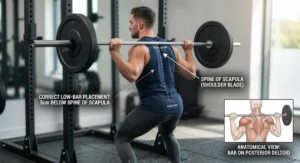
The standout here is simple: it’s a real 2-inch Olympic bar, not a standard bar dressed up in marketing language, for a price that won’t make you flinch before you’ve even decided if Olympic lifting is for you. The RITFIT Olympic Barbell comes in 4ft and 6ft versions with a 350lb to 500lb load capacity depending on the length you pick, built around a 28mm shaft that fits standard hook-grip technique work.
For a beginner, what this bar’s rating actually means in practice is that you won’t outgrow the plates it holds for at least a year or two of consistent training — 350–500lbs of loadable capacity is well beyond what a new lifter’s working sets will hit on the snatch or clean and jerk. Based on the spec comparison against pricier alternatives, the trade-off is in the sleeve hardware: bushings rather than needle bearings, so the spin is functional rather than fast, which is honestly fine while you’re still learning bar path and haven’t developed the turnover speed where a slower spin becomes a limiting factor.
Reviewers on comparable budget Olympic bars in this category consistently flag the same two things: solid value for straightforward lifting, and a knurl pattern that’s noticeably gentler than premium bars, which some new lifters actually prefer while their grip calluses are still forming.
Pros:
- ✅ Genuine 2-inch Olympic sleeve fits standard plates
- ✅ Load capacity well beyond beginner working weights
- ✅ Gentle knurl suits hands still building calluses
Cons:
- ❌ Bushing rotation is functional, not fast-spinning
- ❌ Shorter 4ft option unsuitable for full-width stance work
At a price typically under £160, this is one of the lowest-risk ways to find out whether you actually enjoy Olympic-style lifting before committing serious money — check current price and availability before buying, as with any bar in this guide.
2. PhysKcal 7ft Olympic Barbell — best for WOD-to-lifting crossover
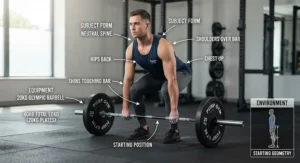
What stands out about the PhysKcal 7ft Olympic Barbell is the dual knurling marks, a small detail that solves a genuinely common beginner problem: not knowing where your hands should sit for a snatch-width grip versus a clean-width grip. Built to IWF-standard dimensions at 20kg for the 7ft version (with a 15kg/6.6ft option also available), it’s aimed squarely at lifters who want one bar that handles both structured Olympic lifting and general strength and conditioning work.
The dual knurl marks mean you can find your grip width consistently without measuring or guessing every session — something that sounds minor until you’re three weeks into learning the snatch and inconsistent hand placement is quietly sabotaging your bar path. On paper, this makes the PhysKcal 7ft Olympic Barbell a stronger pick than a single-purpose bar for anyone whose training will mix Olympic lifts with general WOD-style conditioning work, since it’s built to be multipurpose from the ground up rather than adapted from a powerlifting design.
Aggregated feedback on comparable multipurpose bars in this price bracket tends to praise the versatility while noting that the finish is more workmanlike than polished — expected at this price point, and not something that affects performance.
Pros:
- ✅ Dual knurl marks aid snatch and clean grip consistency
- ✅ True IWF-standard dimensions, not an approximation
- ✅ Doubles as a general strength and conditioning bar
Cons:
- ❌ Bushing sleeves rather than needle bearings
- ❌ Finish is functional rather than premium-looking
Priced in the £150–£200 range at the time of research, it sits just above the absolute entry level while staying accessible for someone still deciding how serious this hobby is going to get.
3. XPRT Fitness 20KG Olympic Weightlifting Bar — best first real spin
The headline feature on the XPRT Fitness 20KG Olympic Weightlifting Bar is its sleeve construction: three needles and two bushings per sleeve, which is a genuine hybrid rotation system rather than a pure bushing bar dressed up as something fancier. That combination is worth expanding on, because it’s the first bar on this list where a beginner will actually feel the difference in how the plates spin relative to the shaft during a turnover.
In practical terms, that hybrid bearing setup means less rotational friction transferring into your wrists during the catch phase of a clean or snatch — the plates keep spinning smoothly for a moment after the bar itself has stopped moving, which is exactly the behaviour you want as you start developing faster turnover. Here’s what the spec sheet won’t spell out clearly: a black zinc coating (used instead of chrome) genuinely does reduce the maintenance burden, since zinc resists the surface rust that chrome-plated budget bars are prone to in an unheated garage.
Buyer feedback on this bar and its close relatives repeatedly highlights the smoothness of the spin relative to the price as the standout feature, with the medium-depth knurling coming in for praise from lifters who found more aggressive competition knurl too harsh early on.
Pros:
- ✅ Hybrid needle-and-bushing sleeves genuinely spin
- ✅ Black zinc coating resists rust better than chrome
- ✅ Medium knurl comfortable for developing grip
Cons:
- ❌ Not independently tensile-rated to competition standard
- ❌ Import/shipping availability varies by retailer
Expect this one to sit in the £180–£230 range depending on retailer, making it arguably the best value jump-up for anyone who’s decided Olympic lifting is a keeper.
4. Wolverson Stainless Olympic Weightlifting Bar — best for UK damp garages
Wolverson is a UK-based strength equipment brand, and the standout feature of their Stainless Olympic Weightlifting Bar is exactly what it sounds like: a full stainless-steel build rather than a coated finish, at 20kg and 28mm across the standard 7ft length. For anyone training in a British garage, shed, or unheated home gym, that’s a bigger deal than it first appears.
What stainless steel actually buys you in practice is corrosion resistance that a chrome or zinc coating can’t match once the coating itself gets scratched or chipped — and coatings do get scratched, from dropped plates, chalk residue, and years of loading and unloading. Based on the spec comparison with coated alternatives, a genuinely stainless shaft means the surface underneath is the same rust-resistant material all the way through, not just a thin protective layer sitting on ordinary steel. Needle bearing sleeves round out the package, giving a noticeably freer spin than the bushing-only bars earlier on this list.
Reviewers of Wolverson’s barbell range consistently note the build quality and UK-based customer support as standout strengths, with the main point of comparison being that stainless bars generally command a price premium over coated steel equivalents of similar spec.
Pros:
- ✅ Full stainless build resists British garage damp
- ✅ Needle bearing sleeves give a genuinely free spin
- ✅ UK brand with domestic customer support
Cons:
- ❌ Costs more than coated steel bars of similar spec
- ❌ Heavier feel reported by some first-time buyers
At a typical price in the £220–£280 range, it’s a sensible mid-tier pick specifically for anyone whose storage situation isn’t climate-controlled — which, if you’re training at home in the UK, is most of us.
5. York Barbell Olympic Training Bar — best heritage engineering pick
York Barbell has been manufacturing strength equipment since the 1930s, and their Olympic Training Bar leans on that heritage: a 20kg, 28mm bar built from steel rated to roughly 190,000 PSI tensile strength, with ferrous bushings lubricated for consistent rotation across the sleeve.
That tensile strength figure matters more than most beginners assume — it’s a measure of how much the bar can flex and still return to true, rather than developing a permanent bend. In practice, a 190,000 PSI rating means the bar will comfortably outlast years of loading well beyond anything a beginner or intermediate lifter will put through it, which is exactly the kind of long-term durability a “buy once” mindset is looking for. What most buyers overlook about heritage brands like York is that the engineering tolerances tend to be tighter and more consistent than newer budget manufacturers, precisely because the company has been refining the same basic design for the better part of a century.
Aggregated sentiment around York’s training bar range tends to describe it as dependable and accurately calibrated to Olympic specifications, with occasional notes that the sleeve rotation, while smooth, isn’t quite as fast as the needle-bearing-only bars further up the price scale.
Pros:
- ✅ Century-old manufacturer with proven engineering
- ✅ 190,000 PSI tensile rating built for longevity
- ✅ Ferrous bushings calibrated to true Olympic spec
Cons:
- ❌ Rotation slightly slower than pure needle-bearing bars
- ❌ Premium heritage pricing versus newer competitors
Typically priced in the £250–£320 range, this is the bar for someone who values proven, decades-tested engineering over the newest hybrid bearing tech.
6. Bells of Steel Olympic Weightlifting Barbell 2.0 — best for future competitors
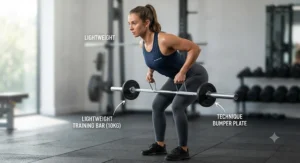
The Bells of Steel Olympic Weightlifting Barbell 2.0 is built with a clear standout feature: it’s designed to feel like a genuine competition bar without the genuine competition price tag, offered in both 20kg men’s and 15kg women’s specifications with needle bearing sleeves throughout.
What separates this from the bars earlier on this list is whip — the slight, controlled flex in the shaft during a heavy pull that experienced lifters use to help time the second pull in a snatch or clean. Based on the spec comparison, the alloy steel used here is tuned specifically for that competition-style whip rather than the stiffer feel of a general-purpose bar, meaning it behaves more like the bars a lifter would train on at a British Weight Lifting-affiliated club. That’s a genuinely useful thing to get used to early if the goal is eventually competing, rather than learning technique on one bar feel and then having to relearn it on a stiffer or looser competition bar later.
Reviewer sentiment on this model and its predecessor consistently centres on value relative to genuine competition bars costing two or three times as much, with the needle bearing spin frequently singled out as punching above the bar’s price bracket.
Pros:
- ✅ Competition-style whip aids second-pull timing
- ✅ Needle bearings across both men’s and women’s specs
- ✅ Strong value against genuine competition-grade bars
Cons:
- ❌ Aggressive knurl may be sharp for total beginners
- ❌ Availability and shipping times vary by UK stockist
Sitting in the £300–£380 range at the time of research, this is the bar for a beginner who already knows Olympic weightlifting isn’t a passing phase.
7. Eleiko IWF Weightlifting Training Bar — the no-upgrade buy
Eleiko is the bar you’ll see on the platform at the actual Olympic Games, and their IWF Weightlifting Training Bar is the closest a home gym buyer can get to literally the same equipment used in international competition, built to full IWF certification in both 20kg and 15kg specifications.
Here’s what that certification actually means in real terms: every dimension, from sleeve length to shaft diameter to whip characteristics, is manufactured to the exact tolerances required for official competition use, tested and approved by the sport’s own governing body. For a beginner, spending this much on a first bar is a genuinely defensible choice if you know with certainty that you’re not just trying Olympic lifting, but committing to it for years — the logic being that you’ll never need to upgrade, ever, because there’s nowhere higher to upgrade to. Reviewers and long-term owners across the strength training community consistently describe the spin, whip, and knurl as the benchmark against which every other bar on this list is ultimately judged, which tracks with Eleiko’s status as the official bar of multiple World Championships and Olympic Games cycles.
Pros:
- ✅ Full IWF competition certification and tolerances
- ✅ Benchmark spin, whip and knurl feel
- ✅ Genuinely a lifetime, no-upgrade purchase
Cons:
- ❌ Significant upfront cost for a first barbell
- ❌ Overkill if you’re still deciding whether lifting suits you
Priced in the £700+ range, this isn’t a beginner bar in the budget sense — it’s a bar for a beginner who has already decided this is a long-term pursuit and wants to buy the ceiling, not the floor.
Setting Up and Maintaining Your First Barbell
Getting the bar delivered is the easy part — what happens in the first thirty days determines whether it still spins smoothly in year three. Start by giving any new bar a proper inspection before first use: check the sleeves rotate freely by hand with no grinding, confirm the collars or clips seat securely, and wipe down any protective oil coating with a clean cloth so it doesn’t transfer onto your hands or clothing during your first sessions.
Maintenance is genuinely low-effort but easy to neglect. A light coat of 3-in-1 oil or dedicated barbell oil on the sleeves every few months keeps bushings and bearings running freely, particularly important in the UK where garage humidity swings between damp winters and warmer summers. Wipe the knurl down with a dry brush after chalky sessions rather than letting chalk build up and fill the grooves, which blunts grip over time. The single most common first-30-days mistake beginners make is storing a bar loaded with plates on the sleeves permanently — this bends the shaft over time, even on high-tensile bars, because the load sits unevenly rather than centred. Unload the bar after every session, and if you’re using a rack, store it on the J-cups or a dedicated bar holder rather than leaning it in a corner where the shaft can warp.
Real-World Scenarios: Which Bar Suits Your Situation
Picture three genuinely common starting points. First, the total newcomer — someone who’s watched Olympic weightlifting at a major championship, felt inspired, and wants to try it without committing serious money before knowing if it clicks. That’s the RITFIT Olympic Barbell or PhysKcal 7ft Olympic Barbell territory: low financial risk, real Olympic dimensions, enough capacity to learn technique properly.
Second, the crossover athlete — someone already doing general strength and conditioning who wants to add proper snatch and clean and jerk work without buying a second bar for every session. The XPRT Fitness 20KG Olympic Weightlifting Bar or Wolverson Stainless Olympic Bar suit this profile well, offering genuine spin quality that rewards developing technique without the competition-grade price tag.
Third, the committed beginner — someone who’s joined a local weightlifting club, trained on proper competition bars there, and now wants matching quality at home so training feels consistent between locations. That’s where the Bells of Steel Olympic Weightlifting Barbell 2.0 or, budget permitting, the Eleiko IWF Weightlifting Training Bar earn their keep — bars that won’t feel like a downgrade from club training sessions.
Bar Rotation and Bearings Explained: Why Spin Matters for Beginners
If there’s one spec that beginners underestimate and experienced lifters obsess over, it’s sleeve rotation — often shortened to “bar spin” in gym conversation. Every Olympic bar on this list uses one of two systems: bushings, which are simple metal sleeves that allow the plates to rotate around the shaft with moderate friction, or needle bearings, which use small cylindrical rollers to let the sleeve spin with dramatically less resistance.
Why does this matter for the snatch and clean and jerk specifically, rather than for something like a bench press or a squat? Because during the turnover phase of both lifts — the moment you’re pulling the bar under yourself to catch it overhead or at the shoulders — the plates need to keep rotating independently of your hands as you flip your grip. A bar with poor rotation transfers that rotational resistance straight into your wrists and forearms, which at best feels clunky and at worst contributes to wrist strain as you’re learning the movement. This is precisely why bar spin for cleans and snatches gets discussed so much more than it does for other lifts: the technical demand on the sleeves is genuinely higher.
For a genuine beginner, bushings are not a compromise you need to feel bad about — bar rotation and bearings only become a limiting factor once your turnover speed increases with practice, and by that point many lifters have already decided whether they want to invest in a needle-bearing upgrade. Start on whatever rotation system fits your budget; you’ll feel the ceiling before it becomes a real problem.
Snatch Technique and Clean & Jerk Training: How Your Bar Affects Your Lifts
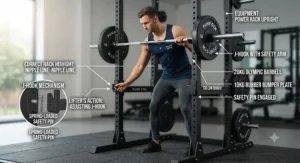
Snatch technique and clean and jerk training both live and die on consistency, and a bar that behaves the same way every single rep is worth more to a beginner than a bar with marginally better bearings that varies session to session. This is honestly the most overlooked factor in barbell buying: not the top-line spec, but repeatability.
When you’re first learning the snatch, your hands will find their groove through repetition — grip width, hook grip pressure, the timing of the second pull. A bar with clearly marked knurl rings, like the PhysKcal 7ft Olympic Barbell, removes one variable from that equation by giving you a visual and tactile reference point every single rep. For clean and jerk training specifically, the front-rack position depends on shaft diameter and knurl depth feeling consistent against the collarbones and wrists — which is exactly why sticking with the same 28mm bar throughout your learning phase, rather than switching between a home bar and a different gym bar, speeds up how quickly good habits set in.
Current NHS guidance suggests adults include strength-building activities at least two days a week as part of a balanced routine, and for someone specifically working snatch and clean and jerk technique, that frequency is close to ideal — enough repetition to build motor patterns, with enough recovery between sessions that technique work doesn’t degrade under fatigue.
How to Choose a Weightlifting Barbell for Beginners
Cut through the spec-sheet noise with these seven criteria, in order of what actually matters for a first bar:
- Confirm it’s a genuine Olympic bar. Look for a 28mm shaft (25mm for women’s-spec bars), 2-inch sleeve diameter, and roughly 2.2 metre length — anything shorter or with a smaller sleeve diameter is a standard bar, not an Olympic one, and won’t fit Olympic plates.
- Check the rotation system. Bushings are fine for true beginners; needle bearings matter more once your turnover speed increases.
- Match knurl depth to your stage. Lighter knurl suits developing calluses; aggressive competition knurl can tear inexperienced hands.
- Verify the tensile strength rating. Anything above roughly 150,000 PSI will comfortably outlast a beginner’s training load for years.
- Consider your storage environment. Damp UK garages favour stainless or well-coated bars over bare chrome that’s prone to surface rust.
- Think about long-term goals, not just this year. If competing is even a distant possibility, a bar with competition-style whip will make the eventual transition smoother.
- Set a realistic budget band and stick to it. The jump from £150 to £300 buys real improvements in rotation and durability; the jump from £300 to £700+ mostly buys certification and marginal feel refinement.
Common Mistakes When Buying Your First Olympic Bar
The most common error is buying a standard bar by accident — many budget “weightlifting bars” sold online are actually 1-inch or 30mm standard bars marketed loosely, which won’t accept Olympic plates at all. Always confirm the 2-inch sleeve diameter explicitly before purchasing.
The second mistake is chasing needle bearings before you need them. A total beginner spending an extra £150 for bearing rotation they can’t yet feel the benefit of is money better spent on coaching, chalk, and lifting shoes. The third is ignoring shaft length relative to your own build — a 7ft bar is standard, but shorter lifters occasionally find the sleeve-to-sleeve width awkward for very narrow snatch grips, worth checking against a tape measure and your own grip width before buying. Finally, plenty of beginners underestimate storage: buying a bar without a rack or wall-mounted holder plan leads to it living loaded and leaning in a corner, which is exactly the scenario that warps a shaft over time.
Olympic Weightlifting Bar vs Powerlifting Bar vs Multipurpose Bar
| Feature | Olympic Weightlifting Bar | Powerlifting Bar | Multipurpose Bar |
|---|---|---|---|
| Whip | High — aids second pull | Minimal — stability focused | Low-moderate |
| Rotation | Fast, needle bearings common | Slower, stiffer bushings | Bushings, moderate |
| Knurl | Medium depth, no centre knurl | Aggressive, centre knurl | Light-medium |
| Best For | Snatch, clean & jerk | Squat, bench, deadlift | General home gym use |
The core difference comes down to what each bar is engineered to do under load: a weightlifting bar wants to flex and spin to help you move the bar dynamically overhead, while a powerlifting bar is built stiff and grippy because stability under a static heavy squat or deadlift matters more than whip. A multipurpose bar — which describes several entries on this list including the PhysKcal 7ft Olympic Barbell — splits the difference, and for a genuine beginner who isn’t yet specialising, that compromise is usually the smarter starting point than a highly specialised bar in either direction.
What to Expect: Real-World Performance of a Beginner Barbell
Specs on paper only tell part of the story — here’s what actually changes session to session as you use one of these bars regularly. In week one, expect the knurl to feel more aggressive than it will in month three, simply because your hands haven’t built the calluses that make a proper grip comfortable. The rotation on bushing bars will feel entirely adequate for the first several months; you genuinely won’t notice a limitation until your turnover speed on the snatch increases with practice, at which point a needle-bearing bar starts to feel noticeably freer by comparison.
Whip is the performance characteristic beginners most consistently underestimate before they feel it and most consistently obsess over afterwards — on a bar with genuine whip like the Bells of Steel Olympic Weightlifting Barbell 2.0 or Eleiko IWF Weightlifting Training Bar, you’ll feel the shaft load and unload slightly during a heavy pull, which experienced lifters time deliberately but which feels unusual and slightly unnerving the first few times you notice it. That’s normal, not a fault.
Long-Term Cost and Maintenance
| Bar Category | Typical Price Range | Expected Lifespan | Maintenance Need |
|---|---|---|---|
| Budget (bushings) | under £200 | 5–10 years, home use | Low — periodic oiling |
| Mid-range (hybrid/needle) | £200–£380 | 10–15+ years | Low-moderate |
| Premium (IWF-certified) | £700+ | Decades, competition-grade | Low — built for durability |
Looking at cost per year of use rather than upfront price changes the picture considerably: a £150 bushing bar used for eight years works out to roughly £19 a year, while a £750 Eleiko used for twenty-five years works out to £30 a year — genuinely comparable once you account for realistic lifespan rather than sticker price alone. The real long-term cost driver isn’t the bar itself but neglect: a bar left loaded and unmaintained will need replacing regardless of how much it cost, while a modestly priced bar that’s oiled twice a year and unloaded after every session will comfortably outlast its expected bracket.
Features That Actually Matter (And Those That Don’t)
Shaft diameter, sleeve diameter, and rotation system genuinely matter — they determine whether the bar fits Olympic plates and technique work properly. Tensile strength matters, but only up to a point relevant to your actual training load; a beginner squatting or pulling far below a bar’s rated capacity gains nothing from an extra 20,000 PSI beyond what any mid-range bar already offers. Coating matters for longevity in your specific storage environment, more than it matters for performance.
What doesn’t matter nearly as much as marketing suggests: cosmetic finish colour, branding on the sleeve, and headline “capacity” figures far beyond anything a beginner will lift. A bar rated to 1,500lbs isn’t meaningfully better for a lifter working with 40kg than one rated to 700lbs — both numbers are so far beyond a beginner’s working weight that the difference is functionally irrelevant.
Safety, Standards and Space: What UK Buyers Should Check
Weightlifting carries genuine, well-documented health benefits when approached sensibly. Strength exercises work your muscles harder than usual, increasing their strength, size, power and endurance, and the NHS specifically recommends adults aim for two or more sessions of muscle-strengthening activity a week — a target Olympic-style barbell training fits naturally, provided technique is learned progressively rather than rushed. For structured coaching and a genuine sense of the sport’s technical standards, British Weight Lifting, the UK’s governing body for the sport, maintains a club finder and beginner pathway information worth checking before training entirely solo.
Space is a practical UK-specific consideration too: a full 2.2 metre Olympic bar needs genuine clearance for an overhead lockout, and terraced house garages or low-ceiling garden gyms should be measured carefully before buying rather than after delivery. If you’re setting up in a shared or rented space, check load-bearing considerations for a squat rack or platform, since a loaded Olympic bar and plates represent genuine floor-loading weight that timber joists in older UK housing stock aren’t always designed around.
Frequently Asked Questions
❓ What's the difference between a weightlifting bar and a standard barbell?
❓ Do beginners need needle bearings or are bushings fine?
❓ How much should a beginner spend on their first Olympic bar?
❓ Can I use a weightlifting bar for general strength training too?
❓ How often should I maintain my barbell?
Recommended for You
- 7 Best Barbell Collars for Home Gym in 2026 (Tested Picks)
- Multi-Grip Barbell for Bench Press: 7 Best Bars Compared (2026)
- Safety Squat Bar (SSB): 7 Best Picks for Pain-Free Squats 2026
Disclaimer: This article contains affiliate links. As an Amazon Associate, I earn from qualifying purchases. If you purchase products through these links, we may earn a small commission at no additional cost to you.
✨ Found this helpful? Share it with your friends! 💬🤗
