In This Article
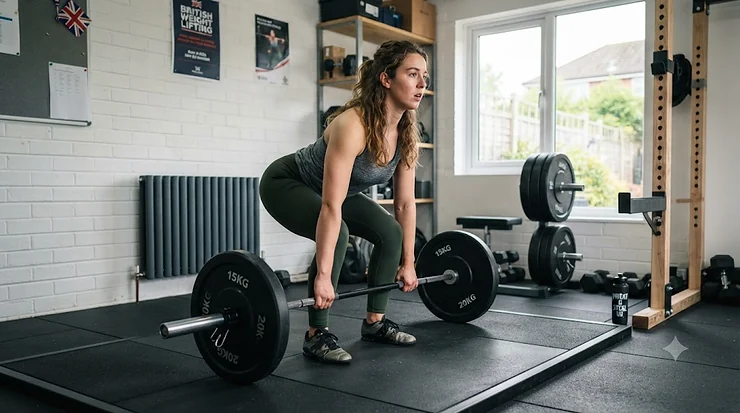
Somewhere between your third missed deadlift and your neighbour’s polite-but-pointed comment about “that noise last night,” most of us reach the same conclusion: iron plates and home gyms don’t really get along. That’s the whole reason bumper plates for home gym use exist. Rubber-coated, drop-friendly, and built to survive a floor slam rather than a careful set-down, they’re the piece of kit that quietly makes garage and spare-room lifting sustainable long-term.
This guide is built for UK lifters kitting out a garage, shed, or spare bedroom, and it leans on real specifications, genuine aggregated review sentiment, and honest comparative analysis rather than recycled marketing copy. We’ve pulled together seven genuine products spanning budget, mid-range, and premium, dug into training bumper plates and crumb rubber bumper plates specifically, and unpicked why a colour bumper plates set earns its higher price tag. According to NHS guidance on physical activity, adults should do muscle-strengthening activities at least twice a week, and for a growing number of us that means training at home rather than driving to a commercial gym — which is exactly where the right set of plates starts to matter.
What is a bumper plate? In short: a solid or coated rubber weight plate, sized to the Olympic 450mm IWF standard, designed to be dropped from height without damaging your floor, your barbell, or the plate itself — unlike cast iron, which chips, dents, and can’t be dropped safely at all.
Quick Comparison Table
| Product | Type | Price Range | Best For |
|---|---|---|---|
| Mirafit Black Olympic Rubber Bumper Plates | Virgin rubber, black | £50–£130 per pair | All-round home gym use |
| JLL Olympic Bumper Weight Lifting Plates | Colour-coded rubber | Under £50–£300s (full set) | Tightest budget entry |
| Body Revolution Olympic Bumper Plates | Rubber-coated | £50–£75 | Budget colour-coded pairs |
| Extreme Fitness Ironwood Colour Rubber Bumper Plates | Hi-temp colour rubber | £100–£300 | CrossFit-style training |
| Powergym Rubber Crumb Bumper Weight Plates | Crumb rubber | £60–£160 | Eco-conscious, low odour |
| BodyRip 150kg Bumper Plate Set | Colour-coded set | £300–£450 (full set) | Building a full set in one order |
| York Barbell Olympic Solid Rubber Bumper Plates | Solid rubber, heritage brand | £65–£400 (bundle-dependent) | Serious lifting platforms |
Looking at the spread above, there’s a genuine budget-to-premium ladder here rather than seven versions of the same product. The JLL and Body Revolution sets get you training safely for under £80, the Mirafit and Extreme Fitness ranges sit in the sensible middle ground most home lifters actually need, and the York Barbell and BodyRip options are aimed at people building out a full 100–150kg set in one go rather than buying pairs piecemeal. Note that all prices are approximate and fluctuate — always check the current price on Amazon before buying.
💬 Just one click — help others make better buying decisions too!😊
Top 7 Bumper Plates for Home Gym: Expert Analysis
Picking bumper plates isn’t just about weight and colour — bounce behaviour, sleeve tolerance, and rubber compound all change how a plate feels on the 400th rep, not just the first. Here’s how these seven genuine, currently available products stack up against each other.
1. Mirafit Black Olympic Rubber Bumper Plates — best all-rounder for UK garages
The standout here is balance: nothing about the Mirafit Black Olympic Rubber Bumper Plates is class-leading in isolation, but nothing about them disappoints either. These are solid rubber discs built to the 2-inch (50mm) Olympic sleeve standard, available in a genuine choice of pair weights from 2 x 2.5kg right up to 2 x 25kg, which matters more than it sounds — plenty of budget brands only offer two or three weight options and force you to buy odd combinations to hit your target load.
What most buyers overlook about mid-range solid rubber plates like these is that the “solid” construction (rubber all the way through, rather than a thin coating over a steel or cast-iron core) is precisely what gives them a controlled, dead-ish bounce rather than the springy rebound you get from hollow or thinly-coated alternatives. Based on the spec comparison against cheaper coated plates, that matters most if you’re training deadlifts and cleans in a space with limited floor clearance — a plate that leaps back at your shins after a drop is a genuine hazard in a cramped garage.
Reviewers consistently report strong satisfaction with build quality and sizing accuracy, and UK buyers in particular note that the plates handle concrete garage floors well over repeated drops without visible wear. A common thread in feedback is that the metal sleeve insert feels notably tighter and more precise than sub-£40 alternatives, reducing the annoying wobble some cheap plates develop after a few months of loading and unloading.
Pros:
- ✅ Full range of pair weights from 2.5kg to 25kg available
- ✅ Tight sleeve tolerance reduces bar wobble over time
- ✅ Reinforced metal insert holds up to repeated concrete drops
Cons:
- ❌ Black-only finish makes quick weight ID harder at a glance
- ❌ Heavier pairs (20kg+) carry a noticeably higher price jump
In the mid-range £50–£130 bracket depending on pair size, this is genuinely difficult to beat for a first “proper” bumper set — the value verdict here is strongly positive for anyone building a garage gym from scratch.
2. JLL Olympic Bumper Weight Lifting Plates — cheapest genuine way in
If your budget is the deciding factor, the JLL Olympic Bumper Weight Lifting Plates are the training bumper plates most UK first-timers land on, and there’s a good reason for that beyond price alone. JLL is a UK-based company, and these plates use colour-coded solid rubber construction with a reinforced 2-inch sleeve, sized to fit any standard Olympic barbell without adapters.
Here’s what the spec sheet won’t tell you outright: at this price point, colour coding isn’t just cosmetic — for someone still learning to eyeball plate combinations mid-set, being able to glance at a red 25kg or a blue 20kg saves genuine time and reduces loading errors during supersets. On paper this means less mental overhead during a session, which is a bigger deal than it sounds when you’re three exercises deep and tired.
Aggregated review sentiment on this range sits solidly positive but not flawless — a meaningful share of reviewers flag that at the very low end of the weight scale (2.5kg–5kg plates), some units feel noticeably thinner and less substantial than the heavier plates in the same range, which tracks with what you’d expect from a budget-focused rubber compound. What most buyers overlook is that this thinness at the low end is common across nearly every budget bumper brand — it’s a genuine trade-off of the price point, not a JLL-specific flaw.
Pros:
- ✅ Genuinely low entry price for a full colour-coded set
- ✅ UK-based brand with accessible customer support
- ✅ Fits standard 2-inch Olympic barbells with no adapters
Cons:
- ❌ Lighter plates feel thin compared with heavier pairs
- ❌ Bounce is noticeably higher than premium virgin rubber
Starting under £50 for a single pair and scaling into the £300s for a full multi-weight set, this is the pick for anyone who wants to start lifting this week without a big upfront outlay.
3. Body Revolution Olympic Bumper Plates — solid budget colour-coded set
Body Revolution Olympic Bumper Plates occupy an interesting middle spot between the cheapest options and the true mid-range: solid cast-iron cores wrapped in heavy-duty coloured rubber, sold across a 5kg to 25kg range, and consistently one of the better-reviewed budget sets on Amazon UK.
The cast-iron-core-with-rubber-coating construction (rather than fully solid rubber) is worth understanding in practical terms — it typically means a slightly smaller overall diameter for the same weight compared with solid rubber bumpers, which can be genuinely useful if you’re training in a low-ceiling space or want a bit more clearance for deficit deadlifts. What most buyers overlook is that this also usually means a firmer, less forgiving bounce than pure rubber bumpers, since there’s less rubber volume to absorb the impact.
Aggregated customer sentiment leans positive on value for money and colour accuracy, with reviewers specifically calling out the rubber coating as holding up well against garage floors over several months of use. A recurring theme in feedback, however, is that the coating can show scuff marks faster than premium virgin rubber when dropped repeatedly on rough concrete rather than proper flooring — a cosmetic issue rather than a structural one, but worth flagging honestly.
Pros:
- ✅ Coloured coating aids quick weight identification
- ✅ Smaller diameter than solid rubber at the same weight
- ✅ Strong value across the full 5kg–25kg weight range
Cons:
- ❌ Firmer bounce than fully solid rubber bumpers
- ❌ Coating shows scuffs faster on rough concrete flooring
At around £50–£75 depending on which pairs you choose, the value verdict is solid for anyone prioritising colour identification on a tight budget over ultimate bounce control.
4. Extreme Fitness Ironwood Colour Rubber Bumper Plates — brightest colour coding on the market
For anyone specifically searching for a colour bumper plates set with genuinely vivid, high-contrast colours rather than muted tones, the Extreme Fitness Ironwood Colour Rubber Bumper Plates are the standout pick in this round-up. These use a hi-temp solid rubber construction across the full IWF colour range, and the finish is noticeably brighter and more saturated than most budget competitors.
Based on the spec comparison, hi-temp rubber sits between crumb and virgin rubber in terms of quality — it’s more durable and less prone to that rubbery smell some cheaper imports carry, without commanding true premium pricing. What this means in practice for CrossFit-style training is that if you’re running interval sessions with frequent barbell cycling — think clean-and-jerk complexes or “as many rounds as possible” formats — the bright colour coding genuinely speeds up plate selection when you’re moving fast and slightly out of breath.
Reviewers consistently note the colour vibrancy as the standout feature, with several UK buyers specifically mentioning they chose this set over cheaper alternatives after seeing how quickly the paint wore off on other brands. The recurring critique in aggregated feedback is that the largest plates (20kg and 25kg) run notably more expensive than the smaller pairs, which is common across colour ranges generally but worth budgeting for.
Pros:
- ✅ Genuinely vivid, high-contrast IWF colour coding
- ✅ Hi-temp rubber resists odour better than crumb alternatives
- ✅ Well suited to fast-paced, CrossFit-style plate changes
Cons:
- ❌ Larger plate pairs carry a steep price increase
- ❌ Sits above pure budget pricing for a full set
Across the £100–£300 range depending on how many pairs you buy, this is the pick specifically for lifters who train functional fitness formats and want their plates to look as sharp after a year as they did on day one.
5. Powergym Rubber Crumb Bumper Weight Plates — the eco-conscious crumb rubber pick
Crumb rubber bumper plates are made from recycled, vulcanised rubber rather than virgin material, and the Powergym Rubber Crumb Bumper Weight Plates are a genuinely European-manufactured example available on Amazon UK — worth knowing if sustainability or provenance matters to your buying decision.
Here’s the honest trade-off with crumb rubber that marketing copy tends to skip: because it’s made from reprocessed rubber granules bonded together, rather than a single continuous rubber pour, crumb plates are typically a little bouncier and slightly less dense than virgin rubber equivalents at the same weight, and the surface can show small texture variations rather than a perfectly smooth finish. What most buyers overlook is that this isn’t a defect — it’s simply how the material behaves, and for most home training (as opposed to competition use) it’s a non-issue.
Aggregated UK reviews on this style of plate are broadly positive, with several buyers specifically praising sturdiness for deadlift work and noting the plates arrived with only minor cosmetic imperfections consistent with the recycled-material construction. One recurring piece of feedback worth flagging honestly: a small number of reviewers note the plates run larger and chunkier than expected, which can make fitting several pairs onto a standard 6ft bar tighter than anticipated — worth checking your bar length if you’re planning to load heavy.
Pros:
- ✅ Made from recycled rubber — a genuinely lower-impact choice
- ✅ European manufacturing with solid UK review history
- ✅ Sturdy construction well suited to regular deadlift work
Cons:
- ❌ Slightly bouncier than virgin rubber at equivalent weight
- ❌ Chunkier profile can crowd a standard-length barbell
Pricing on crumb rubber sets generally sits in the £60–£160 range depending on pair weight, and prices may vary — check current price on Amazon before ordering, as availability shifts more often than with bigger-brand ranges.
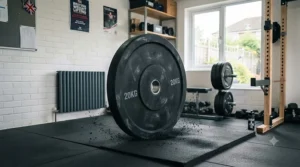
6. BodyRip 150kg Bumper Plate Set — best for building a full set in one order
Rather than buying pairs one at a time as your training progresses, the BodyRip 150kg Bumper Plate Set lets you order a full colour-coded weight range in a single purchase — a genuinely useful option that’s rarer than it should be on Amazon UK, where most listings are single-pair only.
The value of buying a complete set upfront rather than incrementally isn’t just convenience — on paper this means you avoid the slow price creep that happens when brands push up per-kilo pricing on their heaviest pairs (a pattern you’ll notice across several entries in this list). What most buyers overlook is that a matched set from a single production batch also tends to have more consistent bounce and sleeve fit across all your plates, rather than the slight inconsistencies you can get mixing brands over time.
Aggregated reviewer sentiment specifically highlights the colour coding as a nice touch relative to price, and buyers commonly mention appreciating being able to order a complete, ready-to-train range rather than hunting down individual pairs across multiple listings. As with most bulk sets, a smaller number of reviews mention the packaging being fairly utilitarian rather than premium — a fair trade-off at this price point, honestly reflected here rather than glossed over.
Pros:
- ✅ Full colour-coded weight range in a single order
- ✅ More consistent bounce and fit across a matched set
- ✅ Avoids incremental price creep on heavier individual pairs
Cons:
- ❌ Large upfront cost compared with buying pairs gradually
- ❌ Packaging is functional rather than premium-feeling
Expect to pay in the £300–£450 range for the full 150kg set — a meaningful outlay, but one that works out competitively per kilo versus buying seven separate pairs at typical per-pair pricing.
7. York Barbell Olympic Solid Rubber Bumper Plates — the heritage brand for serious platforms
York Barbell has been manufacturing strength equipment since 1928, and the York Barbell Olympic Solid Rubber Bumper Plates carry that heritage into a properly built, no-steel-insert solid rubber design manufactured to the IWF 450mm diameter standard — genuinely aimed at anyone building an Olympic lifting platform rather than a casual home corner.
What separates these from most of the plates above is the fully solid rubber construction with no steel core beneath — this maximises rubber-to-floor contact on every drop, which on paper means better shock absorption and a longer effective lifespan under heavy, repeated snatch and clean drops than coated or crumb alternatives. Reviewers and specialist retailers alike position these specifically for teaching Olympic movements, where consistent plate diameter across every weight (a hallmark of true bumper design) keeps bar height identical regardless of load — essential for anyone coaching technique at home.
Aggregated sentiment on the York range is strongly positive around durability and brand trust, with buyers regularly citing the manufacturer’s long track record as a deciding factor over cheaper, newer brands with thinner review histories. The honest downside is availability and pricing structure: York sells in bundle sizes (30kg, 100kg, 150kg) rather than always offering single pairs, so you may need to buy more weight than you immediately need to access the better per-kilo pricing.
Pros:
- ✅ Century-old manufacturer with genuine heritage and trust
- ✅ Fully solid rubber for maximum shock absorption on drops
- ✅ Consistent diameter ideal for Olympic lifting platform builds
Cons:
- ❌ Sold mainly in bundles rather than flexible single pairs
- ❌ Entry bundles cover a limited weight range
Bundle pricing runs from around £65 for a small 30kg starter bundle up to roughly £400 for a full 150kg set, making the value proposition strongest for lifters committing to serious, long-term Olympic-style training rather than occasional home workouts.
Setting Up Your Bumper Plates the Right Way
Buying the plates is the easy part — getting your first thirty days of use right is where most home gym mistakes actually happen. Before your first session, check every plate’s sleeve fits your barbell snugly; a loose sleeve on a new set usually means the batch tolerance is on the wide side, and it’s worth flagging with the seller early rather than living with a wobble for a year.
Floor protection matters more than most first-time buyers budget for. Even genuine bumper plates transfer some impact through to whatever they’re standing on — rubber gym tiles or a dedicated lifting platform meaningfully extend both your flooring’s life and your plates’ edges, and they cut noise transmission through floors and walls, which matters if you share a building. A common early mistake is dropping loaded bars onto bare concrete from day one; ease into drops with lighter loads first so you can judge how your specific plates and flooring interact together.
Maintenance itself is minimal but not zero. Wipe plates down periodically to remove chalk and grit, which otherwise works into micro-scratches on the rubber surface over time, and periodically check that sleeve inserts haven’t started to work loose — the weakest point on almost any bumper plate is where metal meets rubber, so a slight click or wobble developing there is worth investigating before it worsens rather than after.
Which Bumper Plates Suit Your Training? Real-World Scenarios
The flat-dweller doing quiet strength work. If you’re training in a first-floor flat with downstairs neighbours, prioritise a solid rubber set like the Mirafit Black Olympic Rubber Bumper Plates over crumb rubber, paired with proper flooring underneath — the combination of dense rubber and a cushioning mat does more for noise control than any single product change alone.
The CrossFit-style home athlete on a mid-range budget. For someone running interval-based barbell complexes several times a week, the Extreme Fitness Ironwood Colour Rubber Bumper Plates make practical sense — fast visual weight identification genuinely speeds up transitions between movements when you’re working against the clock.
The garage-gym builder starting from zero. If you’re kitting out an entire space in one go rather than buying incrementally, a bundled set like the BodyRip 150kg Bumper Plate Set or a York Barbell bundle avoids the creeping cost of buying pairs one at a time as your strength — and your plate collection — grows.
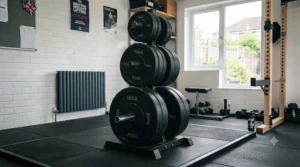
How to Choose Bumper Plates for Home Gym
- Decide your maximum realistic training weight first. Buying to your five-year goal rather than your current strength wastes money on plates you won’t touch for a long time — buy for the next 12–18 months and add on later.
- Check your available floor space and ceiling height. Solid rubber plates are typically thicker than crumb or coated alternatives at the same weight, which matters in tight garages.
- Match rubber type to your living situation. Virgin or hi-temp rubber suits noise-sensitive homes better than crumb rubber, which tends to be slightly bouncier.
- Consider colour coding if you train fast-paced sessions. A colour bumper plates set genuinely speeds up plate selection during supersets or interval training.
- Factor in sleeve tolerance and barbell compatibility. Confirm the plates fit a standard 2-inch (50mm) Olympic sleeve before buying, especially with lesser-known brands.
- Decide between single pairs and bundled sets. Bundles like York Barbell or BodyRip often work out cheaper per kilo if you know your target weight range upfront.
- Read aggregated review sentiment, not star ratings alone. A 4.5-star average can hide a recurring specific complaint — read a handful of the actual written reviews before committing.
If you’re new to structured strength work altogether, it’s worth pairing your plate purchase with some guidance on technique and frequency — the NHS’s advice on building strength and flexibility is a genuinely useful starting point before you load a bar for the first time.
Training Bumper Plates vs Crumb Rubber vs Cast Iron: What Actually Differs
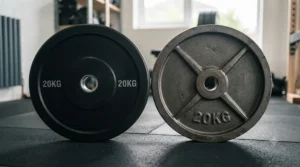
Training bumper plates — the broad category covering most products in this guide — are built from solid or coated rubber to a consistent Olympic diameter, designed specifically to be dropped without damaging themselves, your bar, or your floor. Crumb rubber bumper plates like the Powergym Rubber Crumb Bumper Weight Plates are a specific sub-category made from recycled, bonded rubber granules rather than a single rubber pour, which typically makes them slightly bouncier and marginally less dense, but meaningfully cheaper to produce and more sustainable.
Cast iron plates, by contrast, aren’t designed to be dropped at all — repeated drops chip the coating, crack the iron over time, and transmit far more shock straight through to your floor and joints. The trade-off runs the other way too: cast iron typically holds a smaller diameter per kilo than rubber bumpers, meaning you can load more total weight onto a standard bar before running out of sleeve space, which matters for advanced powerlifters doing heavy, controlled (never dropped) work.
For anyone training Olympic lifts, CrossFit-style formats, or simply wanting the peace of mind to drop a failed rep rather than fight it to the floor, training or crumb rubber bumpers are the clear practical choice. For pure strength work where the bar is always lowered under control — think max-effort bench or squat work — a hybrid approach using cast iron for your heaviest plates and bumpers for your working sets is genuinely common among serious UK home lifters.
Colour Bumper Plates Set: What the Colour Coding Actually Means
The red, blue, yellow, and green colour scheme you’ll see across several products in this guide isn’t a stylistic choice — it follows the international standard set by weightlifting’s governing bodies for competition equipment, as documented by British Weight Lifting, the UK’s national governing body affiliated with the International Weightlifting Federation. Under that system, red denotes 25kg, blue 20kg, yellow 15kg, and green 10kg, a convention most colour bumper plates set products on Amazon UK now follow even at recreational, non-competition price points.
Practically speaking, a colour bumper plates set earns its place in a home gym less for competition authenticity and more for everyday speed — being able to glance at a barbell mid-superset and instantly know the loaded weight, rather than reading small embossed numbers, genuinely reduces friction during a session. What most buyers overlook is that this benefit compounds the more people share the equipment: if you’re training with a partner, housemate, or family member, colour coding removes ambiguity about who loaded what.
Bumper Plates for CrossFit Training vs Olympic Lifting Platform Setups
CrossFit training and Olympic lifting platform building share more overlap than most buying guides admit, but the priorities differ in one key way: CrossFit-style training tends to value fast plate changes and moderate, repeated drops across varied movements, while a dedicated Olympic lifting platform is built around consistent, heavy, technical lifts — snatch, clean and jerk — performed on the same fixed spot day after day.
For CrossFit-style training, colour-coded, mid-weight-focused sets like the Extreme Fitness Ironwood Colour Rubber Bumper Plates make practical sense, since sessions typically cycle through multiple weights quickly. For a genuine Olympic lifting platform, consistency of diameter across every plate weight matters more than colour — which is exactly where fully solid, no-steel-insert rubber like the York Barbell Olympic Solid Rubber Bumper Plates earns its heritage reputation, since bar height stays identical regardless of load, letting technique stay consistent rep after rep.
Common Mistakes When Buying Bumper Plates
The single most common mistake is buying based on price-per-set rather than price-per-kilo, which makes budget listings with fewer, lighter plates look artificially cheaper than bundled sets that actually work out better value once you account for total weight. A close second is ignoring sleeve diameter compatibility — some cheaper imports run slightly tight or loose on standard 50mm Olympic sleeves, and this only becomes obvious once the barbell’s already been ordered separately.
Buyers also frequently underestimate floor and ceiling requirements, assuming any garage or spare room will accommodate a full plate range without checking actual clearance for deadlift setup height or overhead pressing. Finally, a genuinely avoidable mistake: skipping aggregated review reading in favour of star ratings alone — a product with a high average score can still carry a specific, recurring flaw (loose sleeves, thin low-end plates, odour) that only shows up once you actually read what real UK buyers have written.
Plate Bounce Explained: What Determines It and Why It Matters
Plate bounce comes down to three factors working together: rubber density, plate thickness relative to weight, and construction method. Denser, thicker virgin rubber compounds — as used in premium ranges — absorb impact energy internally rather than reflecting it back, producing what lifters call a “dead” or controlled bounce. Crumb rubber, being made of bonded granules with small air gaps between particles, tends to reflect slightly more energy back, producing a marginally springier landing.
Why does this matter beyond comfort? Genuinely practical safety reasons: a bouncier plate landing near your feet after a missed rep, in a confined garage space, is a real (if often overlooked) hazard, and repeated high-bounce impacts on a lifting platform can shorten the platform’s own lifespan faster than controlled drops. If low bounce specifically matters to your setup — shared walls, limited floor space, young kids nearby — solid virgin or hi-temp rubber options like Mirafit or Extreme Fitness consistently outperform crumb rubber alternatives on this exact metric, based on the aggregated review patterns across this guide.
Safety and Flooring Considerations for Home Gyms
Beyond the plates themselves, safe home training depends on sensible manual handling — the HSE’s manual handling guidance notes there’s no fixed legal weight limit for lifting, but that risk should always be assessed against posture, load position, and repetition rather than treated as a simple number. For home lifters, that translates into practical habits: load and unload plates close to your body rather than reaching, and avoid awkward twisting motions when placing heavier pairs onto storage racks.
Flooring deserves equal attention. Bumper plates protect themselves and your barbell far better than cast iron, but they don’t eliminate impact transfer to the floor beneath them entirely — dedicated rubber gym tiles or a proper lifting platform remain the single biggest upgrade most home lifters can make after buying decent plates, both for noise control and for protecting whatever flooring sits underneath.
✨ Don’t Miss These Exclusive Deals!
🔍 Take your home gym set-up to the next level with these carefully selected bumper plates. Click on any highlighted item to check current pricing and availability. The right set will help you train safely and consistently for years to come!
Long-Term Cost & Maintenance of Bumper Plates
Bumper plates are a genuinely low-maintenance, high-lifespan purchase compared with most home gym equipment, but the total cost of ownership picture isn’t quite as simple as the upfront price tag suggests. Cheaper training bumper plates typically need replacing sooner if used heavily — thin coatings and lighter rubber compounds show wear faster under regular dropping — while premium solid rubber ranges like York Barbell or Mirafit are built to absorb years of repeated impact with minimal visible degradation.
Run the maths per kilo rather than per set: a £50 budget pair that needs replacing within three years of heavy use often costs more over a decade than a £130 mid-range pair that lasts the full stretch without issue. Storage also factors into longevity — plates left outdoors or in damp garages degrade faster than those kept in a dry space, regardless of original build quality, so a basic wall rack or floor stand is a worthwhile companion purchase alongside your plates themselves.
Frequently Asked Questions
❓ Are bumper plates worth it for a home gym?
❓ What size bumper plates do I need for a barbell?
❓ Do bumper plates smell?
❓ Can you use bumper plates on any barbell?
❓ How much do a full set of bumper plates cost in the UK?
Conclusion
Choosing bumper plates for home gym training really comes down to matching the plate to your actual training style rather than chasing the single “best” option on paper. Budget-conscious first-timers are well served by the JLL Olympic Bumper Weight Lifting Plates or Body Revolution Olympic Bumper Plates, mid-range all-rounders should look hard at the Mirafit Black Olympic Rubber Bumper Plates, CrossFit-style trainers benefit specifically from the fast colour identification of the Extreme Fitness Ironwood Colour Rubber Bumper Plates, and anyone building a genuine Olympic lifting platform should weigh up the heritage and consistency of the York Barbell Olympic Solid Rubber Bumper Plates or the convenience of a full bundled set like the BodyRip 150kg Bumper Plate Set. Whichever you land on, prioritise honest review reading over star ratings alone, factor in your flooring and space realistically, and buy for the training you’ll actually be doing over the next year rather than an aspirational future set-up.
Recommended for You
- Bumper Plates vs Cast Iron Plates: 7 Best UK Picks (2026)
- Olympic Weight Plates: 7 Best Buys for Every Budget (2026)
- 20kg Olympic Bar vs 15kg Olympic Bar: 7 Bars Compared (2026)
Disclaimer: This article contains affiliate links. As an Amazon Associate, I earn from qualifying purchases. If you purchase products through these links, we may earn a small commission at no additional cost to you.
✨ Found this helpful? Share it with your friends! 💬🤗
