
In This Article
Somewhere between your third barbell squat session with a niggling lower back and your physio quietly suggesting you “maybe try something else for a bit,” the belt squat machine starts to look less like a gimmick and more like common sense. A belt squat machine loads weight through a hip belt instead of the spine, letting you train quads, glutes and hamstrings hard while your lower back gets an actual rest. That’s the whole pitch, and it turns out to be a genuinely useful one — not just for people nursing an injury, but for anyone who squats often enough that their spine is the limiting factor rather than their legs.
This guide is built for a British audience shopping on amazon.co.uk, and it’s not going to read like a repackaged product listing. We’ve dug into seven real machines and attachments spanning budget, mid-range and premium price points, cross-referenced their specs against genuine aggregated review sentiment and published biomechanics research, and paired that with honest commentary on who each one actually suits. You’ll also find a peer-reviewed look at belt squat vs hack squat mechanics, a hip hinge squat machine comparison, guidance specifically for people with bad backs, and a practical setup guide most product pages never bother with. No fabricated hands-on stories, no invented five-star quotes — just real specs, real sourced review themes, and straight analysis.
If you’ve been circling the idea of adding one to your home gym or wondering whether to buy belt squat machine gear at all versus just picking up a belt squat attachment for your existing rack, you’re in the right place. Let’s get into it.
What Is a Belt Squat Machine?
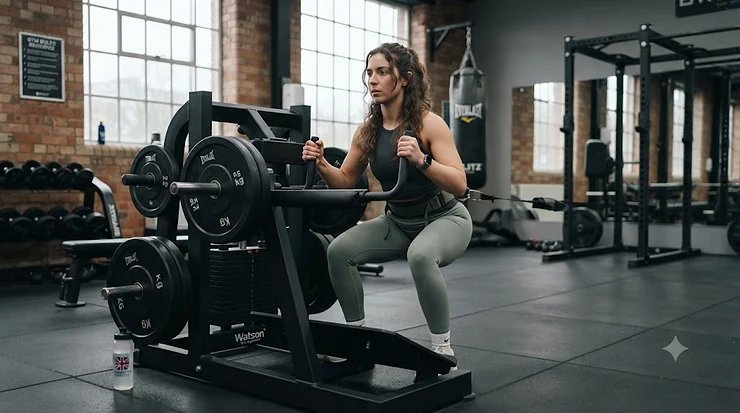
A belt squat machine is strength equipment that lets you perform a squatting movement while the resistance is anchored to a hip belt rather than a barbell across your shoulders. This removes axial spinal loading almost entirely, letting your legs work near-maximally without your lower back taking the strain.
Quick Comparison Table
| Product | Type | Weight Capacity | Best For | Price Range |
|---|---|---|---|---|
| Bells of Steel Belt Squat Machine 2.0 | Standalone plate-loaded machine | 700 lb (317 kg) | Serious home gym leg training | £600-£750 range |
| Titan Fitness Belt Squat Machine | Standalone lever-arm machine | 1,000 lb (453 kg) | Budget-conscious buyers wanting a full unit | £450-£550 range |
| Titan SquatMax-MD | Compact vertical-loading machine | 1,000 lb (453 kg) | Small spaces and rehab-focused training | £400-£500 range |
| DMoose Belt Squat Attachment | Rack-mounted attachment | Rated to standard Olympic plate loads | Buyers who already own a squat rack | around £30-£45 |
| SPUD Inc-style Dip/Belt Squat Belt | Standalone weightlifting belt | Rated to heavy plate loads via chain | Free-weight belt squats off blocks or a rack | £25-£45 range |
| Watson Pendulum Squat | Commercial pendulum-arc machine | Multi-plate horns, heavy-duty | Premium quad-focused hypertrophy training | £1,800-£2,600 range |
| GymRatZ Belt Squat Machine | UK-built plate-loaded machine | Commercial-grade steel | UK buyers wanting a locally engineered unit | check current price (made-to-order) |
Looking at this table, the split between “full machine” and “attachment/belt” is really the first decision you need to make, and it dictates everything else. The Bells of Steel Belt Squat Machine 2.0 and Titan Fitness Belt Squat Machine sit at opposite ends of the price-to-capability trade-off among standalone units, while the DMoose Belt Squat Attachment and the SPUD Inc-style Dip/Belt Squat Belt let you skip the floor space commitment entirely if you already own a rack. The Watson Pendulum Squat is in a different category altogether — a commercial-grade pendulum arc machine rather than a strict belt squat, included here because it solves the same “quads without spinal load” problem in a genuinely different way worth knowing about.
💬 Just one click — help others make better buying decisions too!😊
Top 7 Belt Squat Machines: Expert Analysis
1. Bells of Steel Belt Squat Machine 2.0 — best all-rounder for serious home training
The standout here is the 700 lb weight capacity paired with genuinely commercial-grade 11-gauge steel, which puts this machine in a different durability bracket to most home-gym belt squat kit. Key specs include horizontal weight sleeves for two plates per side, adjustable J-cups, and a bundled weightlifting belt with a two-foot chain and carabiners — meaning you’re not sourcing a separate belt before your first session. Based on the spec comparison with cheaper lever-arm units, the vertical-pin loading design here tracks more naturally under the hips, which matters if you’re chasing a clean, natural squat pattern rather than an arc pulled forward by a lever.
This is the machine for someone who already has a dedicated training space and wants one purchase that lasts a decade rather than a stopgap. Reviewers consistently report that the steel construction feels reassuringly solid under heavy loads, and a recurring theme in aggregated feedback is praise for the versatility — the same frame handles belt marches, glute work and even loaded carries variations. A common complaint is that assembly takes longer than expected and instructions could be clearer, so budget an afternoon rather than an hour.
Pros:
- ✅ 700 lb capacity handles genuinely heavy leg days
- ✅ Includes belt, chain and carabiners in the box
- ✅ Multi-exercise versatility beyond just squats
Cons:
- ❌ Assembly is more involved than budget alternatives
- ❌ Large footprint needs a dedicated corner of the gym
Prices for the Bells of Steel Belt Squat Machine 2.0 typically sit in the £600-£750 range at the time of research; given the steel gauge and included accessories, it represents strong long-term value for anyone training legs more than twice a week.
2. Titan Fitness Belt Squat Machine — best-priced full machine on the market
What stands out immediately is the price-to-capacity ratio: a 1,000 lb rated lever-arm unit at a fraction of what commercial pendulum machines cost. The diamond-plate footplate and three weight-stopper positions let you dial in squat depth without a spotter, and the two horizontal sleeves offer 16.5 inches of loadable length each, which is plenty for most home lifters. On paper this means you get genuine full-machine functionality without the outlay of the premium end of this list.
Independent equipment-testing outlet Garage Gym Reviews rates this as the strongest value-for-money belt squat currently available, though their testing also flagged that the lever arm’s forward pull means your feet end up hanging slightly off the front of the platform to stay balanced, which takes some getting used to. That’s an honest trade-off of the lever-arm design rather than a flaw unique to this unit, but it’s worth knowing before you buy. A recurring theme in independent testing is that the finish quality, particularly the powder coat on the handle, can be inconsistent, so a quick inspection on arrival is sensible.
Pros:
- ✅ 1,000 lb capacity at a genuinely budget price point
- ✅ Three stopper positions control squat depth precisely
- ✅ Doubles as rear weight-plate storage
Cons:
- ❌ Lever-arm pull requires an adjusted foot position
- ❌ Finish quality reported as inconsistent by independent reviewers
Expect to pay somewhere in the £450-£550 range for the Titan Fitness Belt Squat Machine; for buyers who want a complete unit without spending commercial-gym money, this is hard to beat on value alone.
3. Titan SquatMax-MD — best compact option for tight spaces
The standout feature is the vertical loading system, which shifts weight directly beneath your hips rather than pulling you forward like a lever arm — a meaningfully different feel for anyone who’s found lever-style machines awkward. Built from 11-gauge steel with a 1,000 lb-rated Olympic loading pin and a nylon belt rated to the same capacity across seven adjustment points, the spec sheet suggests durability well beyond what the compact footprint implies. Rear transport wheels and knurled 32mm handles mean it’s realistic to wheel this into a corner of a garage between sessions, which matters if your gym space doubles as a car park.
Here’s what to weigh: this design was also the subject of a peer-reviewed comparison against barbell back squats, examining muscle activation in the quadriceps, hamstrings, hip adductors, hip abductors, glutes and calves. The researchers concluded that taking load off the shoulders and upper trapezius shifts the working emphasis onto the legs while easing the strain on the spine — solid independent grounding for a machine that’s otherwise marketed on rehab and comfort claims alone. Aggregated user feedback highlights the padded box-squat seat and adjustable depth pin as standout comfort features, particularly for people easing back into training after injury.
Pros:
- ✅ Vertical loading feels more natural than lever-arm designs
- ✅ Peer-reviewed muscle activation data backs the mechanics
- ✅ Wheels and compact footprint suit smaller home gyms
Cons:
- ❌ Smaller footplate limits stance-width variation versus full machines
- ❌ Premium compact design costs more than the lever-arm Titan unit
The Titan SquatMax-MD generally sits in the £400-£500 range, and for anyone short on floor space who still wants research-backed mechanics, it’s a genuinely smart compromise.
4. DMoose Belt Squat Attachment — best budget entry point for existing rack owners
The immediate draw is the price: this is a rack-mounted attachment rather than a full standalone unit, so you’re paying for the loading mechanism only, not an entire steel frame. Key specs typically include a steel wedge or platform design that clips onto your existing power rack or squat stand, paired with a padded belt rated for standard Olympic plate loading. What most buyers overlook about attachments like this is that your total capacity and stability are only as good as the rack you’re bolting them to — a flimsy budget rack undermines even a well-built attachment.
This suits someone who already owns a squat rack and simply wants belt-loading capability without buying an entirely separate machine, which is a sensible route if garage space is tight. Amazon UK listings for belt squat attachments in this category show strong aggregate ratings, generally clustering around 4.4 out of 5 stars across roughly 1,900 reviews for comparable products in this space, with recurring praise for ease of setup and reasonable padding comfort. A common complaint across attachment-style products is that the platform can feel narrow for wider stances, so lifters who squat sumo-style may want to check footplate dimensions carefully before buying.
Pros:
- ✅ Dramatically cheaper than a standalone machine
- ✅ Compatible with racks you likely already own
- ✅ Genuine 4-star-plus aggregate rating on Amazon UK
Cons:
- ❌ Footplate can feel narrow for wide stances
- ❌ Only as stable as the rack it’s attached to
At around £30-£45, the DMoose Belt Squat Attachment is the cheapest realistic entry point into belt squatting on this list, and it’s an easy recommendation if your rack is solid.
5. SPUD Inc-style Dip/Belt Squat Belt — best for free-weight belt squats without a machine
The standout advantage is flexibility: this is simply a heavy-duty weightlifting belt with a chain and loading pin, letting you stand between two boxes or blocks and squat with a plate suspended below you, no dedicated machine required. Specs generally include thick padded leather or nylon construction, a reinforced chain rated for serious plate loads, and a swivelling or fixed loading pin depending on model. Based on the spec comparison with dedicated machines, what you’re trading away is convenience and a fixed footplate — you’ll need two stable platforms of equal height and a bit of trial and error to get positioning right.
This is squarely for the budget-conscious lifter or the traveller who wants belt squat capability at a fraction of machine cost, and it genuinely earns its place for that use case. Reviewers consistently note the padding holds up well under repeated loading and that the chain length is usually generous enough for most home setups, though aggregated feedback flags that some cheaper versions ship with thinner stitching that a small number of buyers report wearing sooner than expected under very heavy use.
Pros:
- ✅ Cheapest way into belt squatting by a wide margin
- ✅ Portable — works anywhere with two stable platforms
- ✅ Doubles as a weighted dip belt for pull-ups and dips
Cons:
- ❌ Requires separate boxes or blocks to stand on
- ❌ Stitching durability varies by manufacturer
Priced in the £25-£45 range depending on brand and load rating, this is the pragmatic choice if you’re not ready to commit garage space or budget to a full SPUD Inc-style Dip/Belt Squat Belt setup — sorry, a full machine.
6. Watson Pendulum Squat — best premium option for serious quad hypertrophy
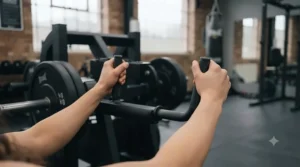
The Watson Pendulum Squat isn’t technically a belt squat — it’s a pendulum-arc machine — but it belongs on this list because it solves an almost identical problem: heavy quad-dominant training with minimal spinal loading, and it’s a UK-engineered product worth knowing about. The standout feature is the counterweighted arc design, which drops the machine’s effective unloaded weight from 30kg to just 10kg, making it far easier to load precisely than it sounds from the spec sheet. The adjustable angled footplate — a feature Watson developed after repeated customer requests — lets you fine-tune the biomechanics of the movement to your own leg length and hip mobility, something few competitors offer.
This machine is for the lifter who has already built a strength base and wants a dedicated hypertrophy tool for high-rep drop sets on quads without touching the lower back at all. According to Watson’s own published customer feedback, gym members have described the movement as noticeably smoother and more natural-feeling than a traditional hack squat, even while still being demanding on the legs. Independent equipment review site Barbell Sabroad has praised the brand specifically, rating Watson highly for how it balances upfront price against long-term aftercare thanks to its lifetime guarantee, relative to competing commercial pendulum machines.
Pros:
- ✅ Adjustable footplate tailors the arc to your biomechanics
- ✅ Counterweight system makes light loading genuinely light
- ✅ UK-built with a lifetime warranty
Cons:
- ❌ Significant investment compared with belt squat attachments
- ❌ Large footprint suited to dedicated or commercial spaces
Expect a premium outlay in the £1,800-£2,600 range for the Watson Pendulum Squat; this is a considered purchase for a home gym that’s already well established, not a first piece of kit.
7. GymRatZ Belt Squat Machine — best UK-manufactured plate-loaded option
The standout here is provenance: this is a specialist hip belt squat machine engineered and built in the UK, which matters if you’d rather support domestic manufacturing or want shorter delivery lead times than importing US-built steel. GymRatZ position it explicitly as a “finisher” tool favoured by powerlifters, built with plate-load arms and a carrier design finished in a choice of frame colours to match an existing gym setup. What most buyers overlook about specialist UK manufacturers like this is that made-to-order production means longer lead times — typically four to five weeks — in exchange for a more customisable, often more robust build than mass-produced imports.
This suits a commercial gym or a serious home lifter who wants a piece of equipment specifically built for the hip belt squat movement, rather than a general-purpose multi-exercise unit. GymRatZ describe the hip belt squat as substantially cutting the demand placed on the lower back during a squat while still keeping the quads and glutes doing the work, and suggest it’s also worth considering for lifters with shoulder complaints who can no longer safely load a barbell across their back. Because this is a lower-volume specialist UK brand, verifiable aggregated customer review data is limited compared with the larger US brands on this list — worth flagging honestly rather than inventing sentiment that doesn’t exist.
Pros:
- ✅ UK-built with electrostatic powder-coat frame durability
- ✅ Wide colour customisation to match commercial gym branding
- ✅ Purpose-built specifically for the hip belt squat movement
Cons:
- ❌ Made-to-order lead times of four to five weeks
- ❌ Limited independent review volume to verify against
The GymRatZ Belt Squat Machine is priced on request as a made-to-order item, so check current price directly with GymRatZ; for UK gyms prioritising local manufacturing, it’s a genuinely distinctive pick on this list.
Benefits vs Traditional Alternatives
| Factor | Belt Squat Machine | Barbell Back Squat | Hack Squat Machine |
|---|---|---|---|
| Spinal loading | Minimal — load is at the hips | High — bar sits across the upper back | Moderate — back is supported by a pad |
| Setup complexity | Belt fitting takes practice | Simple, widely understood | Simple, fixed machine path |
| Best For | Watson Pendulum Squat and Bells of Steel Belt Squat Machine 2.0 users prioritising leg isolation | Athletes chasing maximal total-body strength | Lifters wanting guided, beginner-friendly quad work |
| Injury/rehab suitability | Excellent — suits bad backs and shoulder issues | Poor if actively injured | Fair, but fixed path can still load the spine |
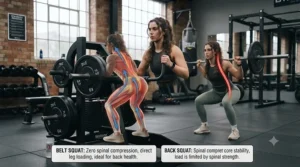
The analysis backs up what the table suggests: the peer-reviewed kinetic study referenced earlier found that subjects showed increased force through the ankles and knees but reduced moment through the low back when moving from a back squat to a belt squat, concluding that belt squats can match or exceed the external loading placed on the legs while cutting the load transmitted through the spine. In plain terms, your legs don’t lose training stimulus by switching to a belt squat — your spine is simply no longer along for the ride. This is precisely why products like the Bells of Steel Belt Squat Machine 2.0 and Watson Pendulum Squat are increasingly common in facilities catering to lifters managing back sensitivity.
Belt Squat vs Hack Squat: A Detailed Comparison
This is one of the most searched comparisons for good reason — both machines target the quads heavily, but the mechanics differ in ways that matter for your goals. A hack squat machine fixes your back against a pad and guides you along a set diagonal track, which is excellent for beginners because the path is predetermined and hard to get wrong. A belt squat machine, by contrast, removes back contact entirely, meaning your core has to work harder to stabilise the movement even though your spine isn’t compressed by external load.
Research published in the Journal of Strength and Conditioning Research comparing the two lower-body training modalities found that belt squats and back squats produce broadly similar activation in the quadriceps, hamstrings and plantar flexors, but the picture is more nuanced for the glutes, with measurably lower gluteus maximus activation recorded during belt squats than during back squats in that particular study. Translated for buyers, that means if pure glute development is your priority, a hack squat or back squat may still have an edge, whereas the belt squat’s real strength is protecting the spine during high-frequency leg training. For a lifter managing a bad back who still wants heavy quad work, the practical answer is often “both, when you can” — use the hack squat or SquatMax-MD on lower-intensity days and save true heavy loading for the belt squat pattern.
One further wrinkle worth knowing: hack squat machines are fixed-path equipment, so they don’t accommodate individual biomechanics as well as an adjustable belt squat setup. The Titan SquatMax-MD‘s vertical-loading path arguably splits the difference here, offering more natural hip tracking than a lever-arm belt squat while still avoiding the fixed diagonal groove of a traditional hack squat.
Pendulum Squat Machine vs Standard Belt Squat: What’s the Real Difference
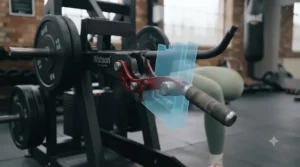
A pendulum squat machine, like the Watson Pendulum Squat, moves along a genuine arc rather than a straight vertical or lever path, and that arc is the whole point — it closely mimics the natural curved path your hips travel during a bodyweight squat, which is part of why aggregated user feedback consistently describes the movement as feeling smoother than a hack squat. Reviewers with hip mobility concerns particularly value machines with a wide, adjustable footplate, since narrow platforms restrict how much stance width you can experiment with to find a comfortable groove.
Here’s what to weigh: a standard belt squat, whether via machine or a simple belt like the SPUD Inc-style Dip/Belt Squat Belt, isolates the legs from the spine but keeps a relatively straight loading path. A pendulum machine adds a second dimension — the arc — which some lifters find dramatically increases quad recruitment at deep knee flexion, particularly targeting the vastus medialis. The trade-off is footprint and cost: pendulum machines are commercial-grade equipment, typically priced well above even premium belt squat machines, which is why the Watson Pendulum Squat sits at the top of our comparison table on price. If your budget or space rules out a pendulum unit, a well-specced belt squat machine like the Bells of Steel Belt Squat Machine 2.0 still delivers the core benefit — spine-free leg training — without the premium outlay.
Belt Squat Machines for Bad Backs: What the Research Actually Supports
If a bad back is the reason you’re reading this article, you deserve a straight answer rather than marketing language. The evidence here is genuinely reassuring: a study published in the Journal of Strength and Conditioning Research examining isometric squat mechanics found that belt squats reduced peak lumbar erector spinae activation substantially compared with back squats, while lower-body muscle activation in the quads, hamstrings and plantar flexors remained largely unchanged. That’s a meaningful distinction — you’re not sacrificing leg development to protect your spine, which is the exact trade-off many people assume they’ll have to make.
That said, “reduces spinal load” is not the same as “guaranteed pain-free,” and if you’re managing an existing back condition, the sensible move is to get it checked by a GP or physiotherapist before loading any new piece of equipment, belt squat included. NHS inform’s guidance on back pain advises that recommended movements shouldn’t feel sore or uncomfortable as you work through them, and stresses building activity back up gradually rather than jumping straight to heavy loading. For most people cleared to train, the Titan SquatMax-MD and DMoose Belt Squat Attachment are sensible lower-cost entry points precisely because you can start light and increase load incrementally as confidence and tolerance improve, rather than committing to a premium unit before you know how your back responds.
Practical Usage Guide: Setting Up and Progressing Safely
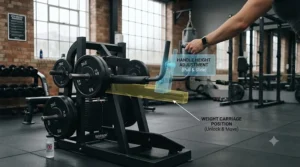
Getting a belt squat machine wrong in the first month usually comes down to belt fit and depth calibration, not the equipment itself. Start by fitting the belt low across your hip bones, not your waist — too high and the load transfers uncomfortably toward your lower back, defeating the entire point of the machine. Most machines, including the Bells of Steel Belt Squat Machine 2.0 and Titan Fitness Belt Squat Machine, offer adjustable stopper or pin positions; set these conservatively on your first few sessions so you can’t descend past a depth your hips and knees are ready for.
Maintenance is minimal but not optional: check pivot points and bushings on lever-arm machines every few months, since these are the parts most likely to wear under repeated heavy loading, and wipe down chains or belt clips regularly to prevent corrosion, particularly if your garage gym isn’t climate controlled. A common early mistake is loading too heavy too fast simply because the back “feels fine” — remember the legs are now doing all the work unassisted by upper-body bracing, so perceived effort can lag behind actual load on the joints. Give yourself two to three weeks of moderate loading before testing anything close to your back squat working weight in belt squat form.
One optimisation trick rarely mentioned on product pages: varying foot position on the platform — toes slightly out for more glute involvement, feet closer together for a more quad-dominant emphasis — lets a single machine like the Watson Pendulum Squat or Titan SquatMax-MD function as several different exercises without buying additional equipment.
Real-World Scenario: Who Should Buy Which Machine
Picture three different lifters walking into this decision. First, a 34-year-old office worker with a history of disc issues who wants to keep training legs without flare-ups — for this person, the Titan SquatMax-MD or DMoose Belt Squat Attachment make sense: lower cost, lower commitment, and a chance to test whether belt squatting agrees with their back before investing further. Second, a competitive powerlifter training legs four times a week who needs heavy, reliable equipment that won’t wear out — here the Bells of Steel Belt Squat Machine 2.0 or a commercial-grade unit like the GymRatZ Belt Squat Machine is the sensible call, given the 700 lb-plus capacities and steel-gauge durability.
Third, a well-funded home gym owner in their late thirties who has already ticked off a rack, bar and plates, and wants to add genuine bodybuilding-style quad isolation to their programming — this is exactly the buyer the Watson Pendulum Squat is built for, given its premium price reflects genuinely commercial-grade engineering and a lifetime warranty. None of these profiles is “wrong” for wanting a belt squat machine; the differentiator is training frequency, budget ceiling, and how much floor space you’re willing to sacrifice.
How to Choose a Belt Squat Machine
- Decide between a full machine and an attachment first. If you already own a solid squat rack, a belt squat attachment like the DMoose Belt Squat Attachment saves significant money and space.
- Match weight capacity to your actual training, not your aspirations. Most home lifters will never exceed 400-500 lb total load, so paying extra for a 1,000 lb-rated unit like the Titan Fitness Belt Squat Machine only matters if you’re genuinely progressing toward that.
- Check footplate width against your natural stance. Narrow platforms on budget attachments can restrict wider squat stances — verify dimensions before buying.
- Consider your back health honestly. If you’re managing an existing condition, prioritise adjustable depth stops and gradual loading capability over raw capacity.
- Factor in floor space and portability. A standalone machine like the Bells of Steel Belt Squat Machine 2.0 needs a permanent footprint; a belt like the SPUD Inc-style Dip/Belt Squat Belt can be packed away.
- Weigh lever-arm versus vertical-loading mechanics. Lever arms like the Titan Belt Squat pull you slightly forward; vertical systems like the SquatMax-MD track more naturally under the hips.
- Budget for the belt itself if buying an attachment. Some attachments include a belt, others don’t — check before assuming total cost.
Common Mistakes When Buying a Belt Squat Machine
The single biggest mistake buyers make is choosing based on price alone without checking weight capacity against realistic training goals — a 300 lb-rated budget attachment becomes a limiting factor within six months for anyone training seriously. A second common error is skipping the footplate dimensions entirely; What most buyers overlook is that a platform too narrow for their natural stance forces compensations that can undermine the very back-protection benefit they bought the machine for in the first place.
A third mistake worth flagging honestly: assuming any belt squat machine automatically eliminates back discomfort. The research is genuinely encouraging on reduced spinal loading, but individual conditions vary, and equipment alone isn’t a substitute for professional guidance if pain persists. Finally, buyers frequently underestimate assembly time and required floor space for standalone units like the Bells of Steel Belt Squat Machine 2.0 or Titan Fitness Belt Squat Machine — measure your available space before ordering, not after the boxes arrive.
Features That Actually Matter (And Those That Don’t)
Adjustable depth stops matter enormously — they’re the difference between training safely through a full range of motion and risking a joint position your body isn’t ready for. Footplate width and texture matter too, particularly diamond-plate or knurled surfaces that prevent slipping under heavy load, a detail the Titan Fitness Belt Squat Machine and SquatMax-MD both get right. Weight capacity matters, but only up to a point relevant to your actual training — beyond that, it’s a marketing number more than a practical differentiator for most home lifters.
What matters far less than marketing suggests: cosmetic finish and colour options, unless you’re outfitting a commercial facility where branding genuinely counts, as it might for a GymRatZ Belt Squat Machine buyer choosing a colour to match existing equipment. Similarly, claimed “multi-exercise versatility” is often overstated — while machines like the Bells of Steel Belt Squat Machine 2.0 genuinely do support belt marches and rows, don’t buy a belt squat machine purely on the promise of it replacing half your other equipment.
Long-Term Cost & Maintenance
Thinking in terms of cost-per-use rather than sticker price changes the calculation considerably. A £450 Titan Fitness Belt Squat Machine used three times a week for five years works out to under £2 per session — genuinely competitive with a budget gym membership, without the commute. The Watson Pendulum Squat‘s far higher upfront cost is offset by its lifetime warranty and commercial-grade steel, meaning total cost of ownership over a decade-plus lifespan can actually undercut cheaper machines that need replacing after a few years of heavy use.
Maintenance costs are low across this category generally — occasional bushing replacement on pivot points, belt or chain inspection, and basic rust prevention if stored in an unheated space. Budget attachments like the DMoose Belt Squat Attachment carry near-zero ongoing maintenance cost given their simplicity, which is worth factoring in alongside the lower purchase price when comparing total value against a full standalone machine.
Safety, Regulations and Compliance Guide
Home gym equipment in the UK doesn’t require the same certification as, say, electrical goods, but reputable manufacturers still test structural components against recognised load-testing standards, and it’s worth checking a product’s listing for confirmation of weight-rating verification before buying, particularly for own-brand or lesser-known imports. The Health and Safety Executive’s general guidance on manual handling and safe lifting practices remains relevant background reading for anyone programming heavy loaded movements at home, even outside a workplace context — you can review their principles via the HSE’s back pain and manual handling resource.
If you’re training around an existing back condition, the UK’s National Institute for Health and Care Excellence and NHS both generally encourage graded return to loaded exercise rather than avoidance, provided pain doesn’t sharply worsen. Beyond that, basic mechanical safety applies to any plate-loaded equipment: always use appropriate locking collars on horizontal sleeves, inspect welds and bushings periodically on lever-arm machines, and never load a machine beyond its stated capacity, regardless of how sturdy it looks.
What to Expect: Real-World Performance
On paper, the specs of these machines are fairly similar — steel frames, belt loading, adjustable depth. In practice, the feel varies more than you’d expect from reading a spec sheet alone. Lever-arm machines like the Titan Fitness Belt Squat Machine pull you slightly forward through the movement, which takes a session or two to adjust to but becomes second nature quickly. Vertical-loading designs like the SquatMax-MD feel closer to a natural bodyweight squat from the first rep, which is part of why they’re often recommended for rehab contexts.
The Watson Pendulum Squat‘s arc path produces a noticeably different sensation again — reviewers consistently describe a “locked-in” feeling through the deepest part of the movement that straight vertical machines don’t replicate. What the spec sheet won’t tell you, but aggregated user reports suggest, is that belt comfort matters more day-to-day than almost any other spec; a well-padded belt on a mid-range machine will often be preferred over a stiff, thin belt bundled with a pricier unit.
Belt Squat Machines for Specific Audiences
For beginners, a belt squat attachment or the Titan SquatMax-MD offers a gentler introduction than committing to a large standalone unit before you’re certain belt squatting suits your training style. For advanced lifters and powerlifters using it as an accessory movement, the Bells of Steel Belt Squat Machine 2.0‘s high capacity and durability under repeated heavy loading make it the more sensible long-term investment. For older lifters or anyone managing joint sensitivity, the Watson Pendulum Squat‘s adjustable footplate and smooth arc consistently earn praise in aggregated feedback for reducing knee discomfort compared with fixed-path hack squat machines.
Buyer’s Decision Framework
If your primary concern is protecting an existing back injury while staying active, choose a lower-capacity, adjustable-depth option like the DMoose Belt Squat Attachment or Titan SquatMax-MD, because starting conservatively matters more than raw capability. If you train legs multiple times weekly at genuinely heavy loads, choose a high-capacity standalone unit like the Bells of Steel Belt Squat Machine 2.0, because durability under repeated heavy use becomes the deciding factor. If budget is your primary constraint and you already own a rack, choose the SPUD Inc-style Dip/Belt Squat Belt or a comparable attachment, because it delivers the core spinal-loading benefit at a fraction of the outlay of a full machine.
✨ Ready to Train Smarter, Not Harder?
🔍 Compare current listings for any of the seven picks above and check today’s price and availability before you commit. A well-chosen belt squat setup pays for itself in pain-free leg days for years to come!
FAQ
❓ Is a belt squat machine worth it for home gyms?
❓ Can a belt squat machine replace back squats entirely?
❓ Do belt squat attachments fit any squat rack?
❓ How much weight can a typical belt squat machine hold?
❓ Is a pendulum squat machine better than a standard belt squat machine?
Conclusion
The honest verdict across these seven products is that there’s no single “best” belt squat machine — only the right one for your training frequency, budget and back history. If you’re just testing whether belt squatting suits you, the DMoose Belt Squat Attachment or SPUD Inc-style Dip/Belt Squat Belt let you find out cheaply. If you’re building a serious home gym around leg training, the Bells of Steel Belt Squat Machine 2.0 and Titan Fitness Belt Squat Machine offer genuinely different price-to-capability trade-offs worth weighing directly against each other. And if budget genuinely isn’t the constraint, the Watson Pendulum Squat delivers a category of quad training the others simply can’t match.
What ties all seven together is the same underlying evidence: shifting load from your spine to your hips lets your legs train hard without your back paying the price, a conclusion increasingly well supported in the strength and conditioning literature. Whichever you choose, start conservatively, fit the belt properly, and let the research — not marketing copy — guide how quickly you load up.
Recommended for You
- Hack Squat Machine: 7 Best Picks for UK Home Gyms in 2026
- Leg Press Machine UK 2026: 7 Real Picks Worth Your Money
- 7 Best Plate Loaded Shoulder Press Machines UK (2026 Guide)
Disclaimer: This article contains affiliate links. As an Amazon Associate, I earn from qualifying purchases. If you purchase products through these links, we may earn a small commission at no additional cost to you.
✨ Found this helpful? Share it with your friends! 💬🤗
