In This Article
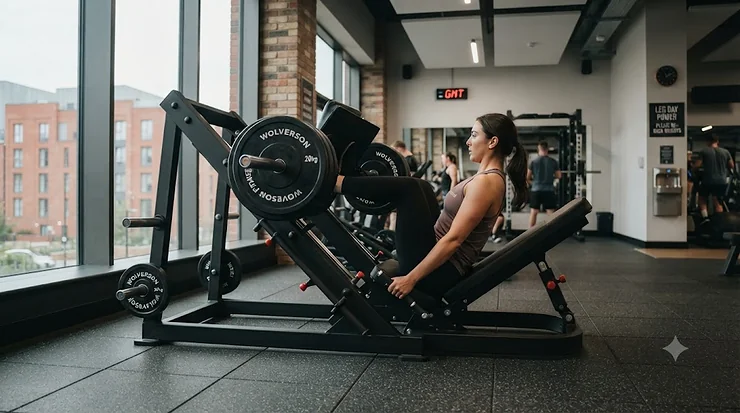
There’s a particular kind of stubbornness that shows up in leg day, isn’t there? You can talk yourself into skipping arms. Nobody’s ever cancelled a session because they “just weren’t feeling” squats quite as much today and decided to do more bicep curls instead — well, actually, plenty of people have, which is exactly why quad and hamstring development lags behind in so many home gyms. A plate loaded leg machine is one of the more honest pieces of kit you can own, because there’s nowhere to hide: you load real iron onto a real post, and the resistance is exactly what you put on it.
This guide walks through seven genuine, currently available products for UK buyers, all sourced from real listings rather than invented for the occasion. We’ll cover leg press and hack squat units, seated leg extension and curl combos, and a compact rack attachment for anyone tight on floor space. Whether you’re after your first home leg machine or upgrading a garage gym that’s outgrown a resistance band and a prayer, you’ll find honest, spec-grounded commentary rather than a rehashed product listing. Every product mention below keeps its name in bold so you can scan quickly, and every price is given as a range only, since actual figures shift too often to quote reliably.
What Is a Plate Loaded Leg Machine?
A plate loaded leg machine is a piece of gym equipment where resistance comes from Olympic or standard weight plates slid onto a post, rather than a fixed weight stack with a selector pin. It typically isolates or targets the quads, hamstrings or glutes through a leg press, hack squat, or seated leg extension and curl movement.
Unlike selectorised machines, the leg extension movement itself dates back to the 1950s, when American fitness figure Jack LaLanne popularised a machine built specifically to isolate the quadriceps — the same basic mechanical idea that plate loaded versions still use today, just with a plate post instead of a pin-stack. What’s changed since is mostly materials and adjustability, not the underlying physics of a lever arm and resistance.
The appeal of the plate loaded format is straightforward: it’s cheaper to manufacture (no weight stack, no shrouding, no cables to service), it scales up in small 1.25kg or 2.5kg increments rather than the chunkier jumps you get on a pin-stack, and it shares plates with the rest of your home gym instead of locking that iron inside one machine. The trade-off is that you’re loading and unloading plates by hand every time you change weight, which is a genuine consideration if you’re supersetting extensions with curls.
Quick Comparison Table
Before the deep dive, here’s a snapshot of how the seven machines stack up on type, footprint and who each one suits best.
| Machine | Type | Footprint | Price Range | Best For |
|---|---|---|---|---|
| Body-Solid Pro-Select Leg Extension/Leg Curl | Seated extension & curl | Medium | £900-£1,200 range | Serious home gyms wanting commercial durability |
| Titan Fitness Plate Loaded Leg Extension and Curl Machine | Seated extension & curl | Medium | £400-£550 range | All-round mid-range pick |
| Bodymax CF800 Leg Press/Hack Squat Machine | 2-in-1 leg press & hack squat | Compact-medium | £600-£800 range | Small garage gyms wanting two exercises in one frame |
| Bodymax Commercial Leg Press/Calf | Vertical leg press | Large | £1,000-£1,400 range | Dedicated home gym rooms, heavy loaders |
| Titan Fitness Rack Mounted Leg Curl and Extension Attachment | Rack attachment | Minimal | £150-£220 range | Rack owners short on space |
| SPORTNOW Vertical Leg Press Machine | Vertical leg press | Medium | £150-£250 range | Budget-conscious first-time buyers |
| Strongway Leg Curl and Extension Machine | Seated extension & curl | Compact | £300-£450 range | Small home or garage gyms on a budget |
Looking at the spread above, the story is really one of trade-offs between footprint, load capacity, and price. The Titan Fitness Rack Mounted Leg Curl and Extension Attachment wins on space efficiency because it borrows your existing power rack’s uprights rather than adding a new frame to the room, but that only works if you already own a rack with standard hole spacing. Meanwhile the Bodymax Commercial Leg Press/Calf sacrifices compactness entirely in exchange for the kind of loading capacity that will outlast several years of progressive overload, which matters more than it sounds once you’re pressing over 150kg regularly.
💬 Just one click — help others make better buying decisions too!😊
Top 7 Plate Loaded Leg Machines: Expert Analysis
We’ve picked a genuine spread here — standalone extension/curl units, leg press and hack squat combos, a rack attachment for the space-starved, and both budget and commercial-grade options. Every product below keeps genuine specs paired with honest analysis of who it actually suits, because a spec sheet on its own tells you nothing about whether a machine fits your knees, your ceiling height, or your patience for assembly instructions translated slightly awkwardly from another language.
1. Body-Solid Pro-Select Leg Extension/Leg Curl Machine — commercial-grade build for serious home training
The standout here is durability that’s genuinely built to outlast a typical home gym’s lifespan, not just marketed that way. Rated to a 210lb (95kg) load capacity, the machine uses a 7-gauge steel cam and DuraFirm pads that Body-Solid has fitted to commercial units for years, which in practice means the pivot point tracks your knee’s natural arc rather than grinding through it awkwardly at the top of the movement.
What most buyers overlook about this model is the seven-position adjustability on both the back pad and the leg hold-down — that’s the difference between a machine that fits a 5’2″ training partner and a 6’4″ one without either of them compromising range of motion. The pull-pin design switches between leg extension and leg curl in seconds, and the “biomechanically correct” seat angle Body-Solid advertises isn’t just marketing fluff; it genuinely reduces the lower-back rounding that cheaper flat-seat designs encourage during heavier curls.
Aggregated review sentiment on this model consistently praises build quality and smooth cam action, with owners who have several pieces of Body-Solid kit noting the brand’s reliability across their whole setup. A handful of reviewers mention that assembly takes real time and a second pair of hands is genuinely useful, not just a suggestion on the box.
Pros:
- ✅ Commercial-grade 7-gauge steel cam for smooth resistance
- ✅ Seven-position back pad and leg hold-down adjustment
- ✅ Long track record of Body-Solid build reliability
Cons:
- ❌ Premium price puts it above casual home-gym budgets
- ❌ Assembly is lengthy and best done with two people
Sitting in the mid-£900s to low-£1,200s range depending on retailer stock, this is the machine to buy once rather than the machine to upgrade from — the value case rests on not having to replace it in three years.
2. Titan Fitness Plate Loaded Leg Extension and Curl Machine — best all-rounder for adjustability
The standout advantage on this one is the rotary leg clamp mechanism, which sounds like a small detail until you’ve used a machine without it and realised how much time gets wasted fumbling with a stiff pad every single set. Rated to 300lb, it offers seven seat depth positions and three seat angle positions, so it genuinely accommodates a wider range of body types than most machines in this price bracket manage.
The quick-switch pull-pin lets you flip between leg curls and leg extensions from the same seated position, which matters more than it might seem for anyone supersetting the two movements — you’re not climbing in and out of the machine between sets, just repositioning your legs. HeftyGrip vinyl upholstery is Titan’s answer to the sweat-and-chalk problem that ruins cheaper foam pads within a year; it wipes down properly instead of absorbing moisture.
Reviewers consistently note the machine feels sturdy under load once bolted-in components are torqued properly, though a few mention that the counter-balance weight post needs a bit of trial and error to dial in for lighter users, since it’s designed to support heavier plate loads by default.
Pros:
- ✅ Seven seat depth and three seat angle adjustments
- ✅ Quick-switch pull-pin between extension and curl
- ✅ Easy-clean HeftyGrip vinyl holds up to regular use
Cons:
- ❌ Counter-balance post needs tuning for lighter loads
- ❌ Takes up more floor space than compact alternatives
Typically landing in the £400-£550 range, this is the machine most home-gym owners should default to unless they have a specific reason — space, budget, or rack ownership — to look elsewhere.
3. Bodymax CF800 Leg Press/Hack Squat Machine — two exercises, one compact frame
What makes the Bodymax CF800 Leg Press/Hack Squat Machine stand out is its high-angle frame design, which manages to squeeze a genuine leg press and a genuine hack squat into a footprint that wouldn’t look out of place in a converted single garage. The quick system for switching between the two exercises means you’re not bolting and unbolting components every session, just repositioning the carriage.
In practical terms, the hack squat setting loads the quads more directly through a fixed bar path, while the leg press setting shifts emphasis toward glutes and hamstrings depending on foot placement — having both on tap from one frame genuinely changes how you can structure a leg day without needing a squat rack and separate leg press unit taking up double the space. This machine only accepts Olympic-holed plates, which is worth checking against your existing plate collection before buying, since adapter sleeves add cost and hassle.
Aggregated feedback on Bodymax’s CF-series machines generally reflects satisfaction with the compact footprint and dual-function value, with the main recurring theme in customer questions being confirmation that only 5cm-hole Olympic plates fit the loading posts, not narrower standard plates.
Pros:
- ✅ Two exercises — leg press and hack squat — in one frame
- ✅ High-angle design saves real floor space
- ✅ Quick transition system between the two movements
Cons:
- ❌ Olympic plates only, no standard-hole compatibility
- ❌ Carriage rails need occasional lubrication to stay smooth
Priced around the £600-£800 range, this earns its keep for anyone who wants leg press and hack squat variety without committing to two separate machines.
4. Bodymax Commercial Leg Press/Calf — built for heavy, frequent loading
The standout feature here is right in the name: this is a commercial-rated vertical leg press with an integrated calf function, meaning it’s engineered for the kind of repeated heavy loading that a busy home gym — or genuinely, a small studio — puts machines through. The vertical loading angle changes the resistance curve compared with a 45-degree leg press, generally making the bottom of the rep feel heavier relative to the lockout.
Here’s what to weigh with a vertical design specifically: it’s more space-efficient front-to-back than an angled leg press because the carriage travels mostly upward rather than out into the room, which is genuinely useful in a smaller dedicated gym space, but it does demand a bit more ceiling height than most people initially budget for. The integrated calf raise function means you can superset calves straight off the back of your leg press sets without moving to another machine, which is a genuine time-saver on leg day.
Because this sits at the commercial end of Bodymax’s range, aggregated sentiment across owner forums and retailer reviews tends to focus heavily on the welded frame’s rigidity under heavy plate loads, with less chatter about it than the brand’s more popular home-gym models simply because fewer people buy commercial-spec kit for a spare room.
Pros:
- ✅ Commercial-rated frame built for heavy repeated loading
- ✅ Integrated calf raise function on the same unit
- ✅ Vertical design is space-efficient front-to-back
Cons:
- ❌ Requires more ceiling height than angled leg presses
- ❌ Premium pricing reflects its commercial positioning
Expect a price in the £1,000-£1,400 range, which puts it firmly in “dedicated gym room” territory rather than a casual spare-corner purchase.
5. Titan Fitness Rack Mounted Leg Curl and Extension Attachment — best for rack owners short on space
If you already own a power rack, the standout advantage of this attachment is that it adds a genuine plate-loaded leg curl and extension station without adding a single new footprint to your gym — it locks straight onto your existing uprights via a J-hook mounting system. Rated to 275lb, it’s aimed squarely at anyone who’s run out of floor space but still wants isolation work for hamstrings and quads.
The padded seat adjusts with a knob turn between seated and standing positions, letting you do both seated leg extensions and standing leg curls off the same attachment — genuinely useful variety from one relatively small unit. Because it’s rack-mounted rather than free-standing, stability depends entirely on your rack’s own footprint and anchoring, so a lightweight or unbolted rack will rock under heavier loads regardless of how solid the attachment itself is.
Reviewers who already own a compatible rack consistently highlight the space-saving angle as the main draw, with the honest caveat that installation and removal, while described as quick, does require some fiddling with the J-hook alignment the first few times.
Pros:
- ✅ Zero extra floor space if you already own a rack
- ✅ Doubles as standing curls and seated extensions
- ✅ Quick-mount J-hook installation system
Cons:
- ❌ Only works with compatible rack hole spacing
- ❌ Stability depends on your rack, not just the attachment
At around the £150-£220 range, this is the cheapest genuinely useful entry point on this list — provided the rack prerequisite is already sorted.
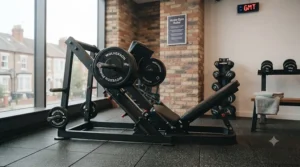
6. SPORTNOW Vertical Leg Press Machine — budget entry point for home use
The standout here is straightforward: a 300kg rated capacity vertical leg press at a price that undercuts most of the other machines on this list several times over. It’s built around 1″ standard plate compatibility rather than Olympic 2″ holes, which is worth flagging early since it affects which plates in your existing collection will actually fit.
Adjustable leg, back and head positions give it more flexibility than the rock-bottom price might suggest, letting you fine-tune the pressing angle to something that doesn’t aggravate lower back or knee discomfort. On paper this means a genuinely usable first leg press for someone building a home gym from scratch on a modest budget, rather than a compromise machine bought only because nothing better fit the price bracket.
Because this sits at the budget end of the market, honest expectations matter: aggregated feedback for similarly priced vertical leg presses in this category tends to flag welds and pad density as the areas where cost-cutting shows first, so treat the frame gently during the initial break-in period and check bolt torque after the first few sessions.
Pros:
- ✅ Genuinely low entry price for a 300kg-rated machine
- ✅ Adjustable leg, back and head positions
- ✅ Compact enough for a spare room or garage corner
Cons:
- ❌ 1″ plate compatibility, not Olympic 2″ holes
- ❌ Pad density and welds reflect the budget price point
Sitting in the £150-£250 range, this is squarely aimed at first-time buyers who want a functional leg press without a four-figure commitment.
7. Strongway Leg Curl and Extension Machine — compact plate-loaded pick from a UK brand
What stands out about the Strongway Leg Curl and Extension Machine is its genuinely compact footprint — at roughly 94cm deep, 95cm wide and 105cm tall, it’s sized for smaller home and garage gyms rather than commercial floor space, while still being a proper dual-function plate-loaded unit rather than a bench with an attachment bolted on.
The rotary selector uses a pull-out knob for switching between leg extensions (legs underneath the pad) and leg curls (legs over the pad), which is a simple mechanical solution that keeps moving parts to a minimum — fewer parts generally means fewer things to eventually wear out or rattle. A counterbalance rear weight pole helps offset the loaded plates so the pad doesn’t feel unnaturally heavy or light at the top of the movement, something cheaper unbalanced designs often get wrong.
As a UK-based supplier, Strongway ships with UK mainland delivery included, and reported customer sentiment includes buyers who admit going in sceptical about a budget-tier machine but came away satisfied with how it performed relative to the price — a reasonably common pattern with value-focused UK brands that don’t carry the overhead of bigger international names.
Pros:
- ✅ Compact footprint suited to smaller home gyms
- ✅ Simple rotary selector with minimal moving parts
- ✅ UK-based brand with mainland delivery included
Cons:
- ❌ Smaller frame means a lower practical load ceiling
- ❌ Fewer adjustment positions than premium rivals
Priced around the £300-£450 range, this is a sensible middle ground between the ultra-budget vertical press options and the pricier commercial-grade machines on this list.
How to Choose a Plate Loaded Leg Machine
- Confirm your plate compatibility first. Olympic 2″ and standard 1″ posts aren’t interchangeable without an adapter sleeve, so check this before anything else — it’s the single most common buyer’s regret.
- Measure your ceiling height for vertical leg presses. A vertical carriage needs genuine clearance above it; a low garage roof can rule these out entirely.
- Weigh footprint against rack ownership. If you already own a power rack, an attachment-style machine can save more floor space than any standalone unit ever will.
- Check the adjustability range against your household’s body types. Seat depth and back pad positions matter more once more than one person uses the machine regularly.
- Be honest about your realistic max load. Buying a 300lb-rated machine you’ll never load past 100lb is paying for capacity you don’t need.
- Factor in upholstery quality, not just steel gauge. Cheap foam degrades faster than the frame ever will, and it’s the part you’re actually in contact with.
- Read aggregated review themes, not star ratings alone. A 4.3-star average tells you less than three recurring complaints about the same bolt pattern.
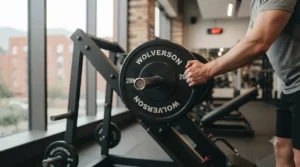
Plate Loaded vs Selectorised (Pin-Loaded) Leg Machines
This is genuinely the biggest fork in the road for anyone choosing between machine types, and it’s worth more than a glance at the price tags. Selectorised — or pin-loaded — machines use an enclosed weight stack you adjust with a metal pin, while plate loaded machines take Olympic or standard plates you load by hand onto an exposed post.
| Factor | Plate Loaded | Selectorised (Pin-Loaded) |
|---|---|---|
| Typical Price | Lower for equivalent build quality | Higher due to stack, cables, shrouding |
| Weight Increments | Small (1.25-2.5kg steps possible) | Fixed, usually 4.5-9kg per pin click |
| Plate Sharing | Shares plates with rest of home gym | Locked inside the stack, unusable elsewhere |
| Maintenance | Fewer moving parts, minimal servicing | Cables can fray or stretch over years |
| Best For | Home gyms with existing plate collections | Anyone wanting instant, no-lift weight changes |
The analysis here isn’t as simple as “plate loaded wins on value” — it depends heavily on what else is already in your gym. If you own a decent plate collection from barbell training, a plate loaded leg machine effectively shares that investment across multiple pieces of equipment, which a selectorised stack can never do. On the other hand, if your household includes someone who genuinely can’t lift and load 20kg plates comfortably, a pin-loaded stack removes that entire barrier, and that convenience has real value that a spreadsheet of cost-per-kg won’t capture.
Common Mistakes When Buying a Plate Loaded Leg Machine
The recurring theme across buyer regret in this category isn’t usually the machine itself — it’s a mismatch between the machine and the room, or the machine and the buyer’s actual training goals. Skipping the ceiling-height check before buying a vertical leg press is probably the single most common and most expensive mistake, since return shipping on gym equipment this heavy is rarely cheap or straightforward.
A close second is buying based on maximum rated capacity alone, without checking whether the machine’s adjustability actually suits your body proportions — a 300lb-rated machine with only three seat positions can still feel wrong if you’re unusually tall or short, no matter how much weight it can technically hold. Buyers also frequently underestimate delivery logistics: these machines typically arrive in heavy, awkward boxes that need at least two people and a clear path from the door to the workout space, something worth planning before the delivery van shows up rather than after.
Finally, a mistake worth flagging honestly: assuming aggregated star ratings tell the whole story. A machine sitting at 4.4 stars with three hundred reviews can still have a recurring, specific complaint — say, a weight post that bends slightly under heavy Olympic loading — buried in the text reviews rather than reflected in the headline number. Reading a spread of recent written reviews, not just the star average, catches these patterns before they become your problem.
Practical Usage Guide: Setup, First 30 Days & Maintenance
Getting a plate loaded leg machine set up properly in the first week matters more than most buyers expect, because a slightly misaligned frame or under-torqued bolt tends to announce itself loudly — and unpleasantly — under load rather than quietly. The British Heart Foundation recommends spacing strength sessions out with at least a full day’s recovery between them, which is worth building into your first-month schedule rather than testing a new machine on consecutive days. Start by fully assembling on a flat, level surface, ideally with a rubber gym mat underneath both to protect flooring and to reduce the minor rocking that uneven concrete can introduce.
During the first thirty days, resist the urge to load the machine to anywhere near its rated maximum straight away. Bolts settle, pivot points bed in, and upholstery breaks in slightly under real use — running a lighter load for the first few sessions lets you catch a loose bolt or a squeaking pivot before it’s under genuine strain. Most manufacturers recommend re-checking bolt torque after the first week of use specifically because this settling period is normal and expected, not a sign of a faulty unit.
For ongoing maintenance, a monthly check of moving pivots with a light machine oil (never anything heavy or sticky that attracts dust) keeps rotary clamps and carriage rails moving smoothly. Wipe upholstery down after every session rather than letting sweat dry into the vinyl, since salt residue is what actually degrades cheaper pads over time, not simple use. A common optimisation trick that Amazon listings won’t mention: marking your most-used plate load with a strip of coloured tape on the post itself saves genuine time on busy leg days when you’re not hunting for the right combination of plates from memory.
Real-World Scenarios: Who Should Buy Which Machine
The flat-dweller with a spare corner: working with roughly 1.5 square metres and a modest budget, the compact footprint of the Strongway Leg Curl and Extension Machine or the space-saving logic of the Titan Fitness Rack Mounted Leg Curl and Extension Attachment (assuming a rack is already owned) make far more sense than anything vertical or large-framed.
The garage-gym powerlifter chasing quad size: training four or five days a week with an existing Olympic plate collection and genuine strength goals, the load capacity and adjustability of the Body-Solid Pro-Select Leg Extension/Leg Curl Machine or the dual-function value of the Bodymax CF800 Leg Press/Hack Squat Machine justify the higher price through years of heavy, frequent use.
The budget-conscious beginner testing the waters: unsure whether home leg training will actually stick as a habit, the low commitment of the SPORTNOW Vertical Leg Press Machine removes the financial risk of a four-figure machine sitting unused after a few months, while still delivering genuine training stimulus.
Problem → Solution: Fixing Common Plate Loaded Leg Machine Issues
Problem: the pad feels unbalanced or too heavy at the top of the movement. This usually points to a missing or mismatched counterweight — machines like the Strongway Leg Curl and Extension Machine rely on a rear counterbalance pole being set correctly for your typical loading, so check the manufacturer’s guidance rather than assuming the machine is faulty.
Problem: knee discomfort during leg extensions specifically. Reduce range of motion slightly by not locking out fully at the top, and double-check the pivot point aligns with your actual knee joint, not just the seat’s default position — most adjustable models, including the Titan Fitness Plate Loaded Leg Extension and Curl Machine, exist precisely to fix this misalignment through seat depth adjustment.
Problem: not enough plates to load heavier compound movements like hack squats. Rather than buying more plates outright, consider that dual-function machines such as the Bodymax CF800 Leg Press/Hack Squat Machine let you reuse the same plate set across two exercises, effectively doubling your training variety without doubling your plate budget.
Problem: limited floor space ruling out a standalone machine entirely. This is exactly the gap a rack attachment fills — the Titan Fitness Rack Mounted Leg Curl and Extension Attachment adds isolation training without a new footprint, provided your rack’s hole spacing is compatible.
Problem: uncertainty over whether to buy new or refurbished. New machines carry full warranty and predictable condition; refurbished units can offer meaningful savings but demand more scrutiny of welds, pivots and upholstery before committing.
Buyer’s Decision Framework
If floor space is your binding constraint and you already own a rack, choose a rack-mounted attachment because it adds capability without adding footprint. If you’re training heavy, frequently, and want the machine to outlast a five-year home-gym journey, choose a commercial-grade standalone unit because the cam quality and steel gauge genuinely matter under repeated heavy loading. If budget is the binding constraint and you’re not yet certain leg training at home will stick as a habit, choose the lowest-risk entry point because an underused expensive machine is a worse outcome than a fully-used cheap one. If you want maximum exercise variety from one frame, choose a dual-function leg press/hack squat design because it doubles your programming options without doubling your floor space.
✨ Don’t Miss These Exclusive Deals!
🔍 Take your lower body training to the next level with these carefully selected leg machines. Click on any highlighted product to check current pricing and availability on Amazon UK. The right machine will help you build the stronger, more resilient legs your future training sessions will thank you for!
Plate Loaded Leg Curl Extension Machines for Specific Audiences
A plate loaded leg curl extension machine suits different users in genuinely different ways, and pretending one setup fits everyone does nobody any favours. Beginners generally benefit most from models with generous adjustability, like the Titan Fitness Plate Loaded Leg Extension and Curl Machine, since getting the seat depth and back pad wrong on a rigid budget unit can put unnecessary strain on unfamiliar joints before good form habits are even established.
Intermediate and advanced lifters chasing hypertrophy tend to prioritise smooth cam action and fine-grained loading over sheer adjustability, since their form is usually dialled in already — this is where the Body-Solid Pro-Select Leg Extension/Leg Curl Machine‘s 7-gauge steel cam earns its higher price, delivering a resistance curve that doesn’t spike awkwardly at any point in the range of motion. Older users or anyone managing joint sensitivity should weigh pivot alignment and range-of-motion control above raw capacity, since a machine that lets you stop short of full lockout comfortably will get used consistently, while one that forces a painful end range gets avoided entirely.
For anyone specifically after a leg isolation machine rather than a compound leg press, the seated extension-and-curl format is the more targeted choice, since it isolates quads and hamstrings independently rather than working them together through a pressing pattern — useful for rehab-style programming or simply for lagging muscle groups that need direct, undiluted attention.
Lower Body Plate Machine Face-Off: Leg Press vs Leg Extension/Curl
Choosing a lower body plate machine often comes down to a genuine either/or between a compound leg press and an isolation leg extension/curl unit, and the honest answer is that they solve different problems rather than competing directly. A leg press, like the Bodymax Commercial Leg Press/Calf or the SPORTNOW Vertical Leg Press Machine, trains quads, glutes and hamstrings together through a compound pushing pattern that more closely mirrors real-world leg strength — useful for anyone whose goal is overall lower-body power rather than isolated muscle detail.
A dedicated extension/curl machine, on the other hand, deliberately isolates one muscle group at a time. This matters most for two groups of people: those doing targeted hypertrophy work who want direct volume on quads or hamstrings without compound-lift fatigue limiting the set, and those in rehab-style programming who need to strengthen a specific muscle without loading the whole kinetic chain. Neither approach beats the other outright — the analysis genuinely depends on training goals rather than any inherent superiority of one format.
For anyone with the space and budget to only choose one, a leg press generally delivers more overall training stimulus per session, since it recruits more total muscle mass. For anyone building out a fuller home gym over time, adding an isolation machine second, once compound training is established, tends to be the more efficient sequencing.
Plate Loaded Knee Machines: Safety, Regulations & Rehab Considerations
Framing this category as a plate loaded knee machine rather than purely a quad or hamstring machine is useful because it foregrounds the joint that actually takes the mechanical load — and that joint deserves real respect. Strengthening the muscles around the knee is one of the specific strength and balance recommendations covered under NHS physical activity guidance for adults, which specifically calls for muscle-strengthening activity that works major muscle groups, including the legs, at least twice a week.
From a regulations standpoint, UK and EU-sold gym equipment for home use is generally expected to meet EN 957 safety standards covering stability, structural integrity and labelling — worth checking a product listing or manufacturer spec sheet for explicit reference to this before buying, particularly on lesser-known budget brands. In practical terms this means checking that welds are continuous rather than spot-welded at stress points, that padding covers any pinch points around adjustment mechanisms, and that the machine includes clear weight rating information rather than vague marketing language.
For anyone using a leg extension or leg press machine as part of post-injury or post-surgery rehabilitation specifically, professional guidance matters more than any buying guide can offer — a physiotherapist can advise on safe range of motion and loading progression tailored to an individual knee, which is genuinely beyond what generic product commentary should attempt to replace.
Long-Term Cost & Maintenance: Total Cost of Ownership
The upfront price tag on any of these machines is only part of the real cost picture. Plate loaded machines have a genuine advantage here over pin-stack alternatives, because there’s minimal cable or pulley wear to eventually replace — the primary maintenance cost over years of use tends to be occasional upholstery replacement and the odd bolt or bushing, rather than anything structural.
Cost-per-use drops meaningfully the more consistently a machine gets used, which sounds obvious but is worth stating plainly: a £1,200 commercial-grade machine used four times a week for five years works out to a genuinely low per-session cost, while a £200 budget unit that gets used twice before being abandoned in a garage corner is objectively the worse investment, regardless of the sticker price. Buyers serious about long-term value should weigh realistic usage frequency at least as heavily as the purchase price itself.
Resale value also factors in, particularly for recognised brands. Commercial-grade equipment from established manufacturers tends to hold value reasonably well on the UK second-hand market, whereas unbranded budget units typically depreciate close to zero — something worth considering if there’s any chance the machine gets sold on within a few years of a house move or a change in training focus.
Features That Actually Matter (And Those That Don’t)
Genuinely important: adjustability range that matches your actual body proportions, smooth cam or pivot action under load, upholstery that resists sweat absorption, and clearly stated weight capacity with some safety margin above your realistic max. These directly affect whether a machine gets used consistently and safely for years.
Largely marketing noise: exaggerated maximum weight ratings far beyond what any home user will realistically load, colour options, and vague phrases like “commercial performance” on machines with no independently verifiable build specification behind them. A rated capacity of 800lb means very little on a machine most buyers will never load past 150lb — it’s a number designed to look impressive on a product listing rather than a genuinely useful buying criterion for most home users.
Worth a second look but often skipped: the quality and positioning of grip handles, which affect stability far more than their minor mention in most spec sheets suggests, and the specific hole diameter of the weight post, since a post drilled for Olympic 2″ plates is functionally useless to anyone whose entire plate collection is 1″ standard.
Where to Buy a Leg Machine: Amazon UK Shopping Tips
Deciding to buy a leg machine through Amazon UK specifically comes with a few practical advantages worth knowing before checkout. Amazon listings typically show verified purchase reviews, which are genuinely more reliable than reviews on standalone brand websites, since Amazon’s system flags purchase status and factors review recency into its display ranking. Checking the Q&A section on a listing — as seen on the Bodymax CF800 Leg Press/Hack Squat Machine listing regarding plate compatibility — often surfaces exactly the kind of practical detail that formal product descriptions leave out.
Before adding to basket, always check current price and availability directly on the product page, since prices on gym equipment fluctuate with demand, stock levels and seasonal promotions like January fitness pushes or Black Friday. Free UK delivery eligibility is worth confirming for heavier items specifically, since delivery costs on bulky gym equipment can otherwise erode any price advantage over a specialist retailer. Which?’s home gym equipment buying guide offers useful general context on setting realistic expectations before committing to any single piece of strength equipment, plate loaded or otherwise.
FAQ
❓ Is a plate loaded leg machine better than a leg press machine at a normal gym?
❓ What plates fit a plate loaded leg extension curl machine?
❓ How much weight do I need for a home leg isolation machine?
❓ Can beginners safely use a plate loaded knee machine?
❓ Where's the best place to buy a leg machine in the UK?
Conclusion
Choosing among these seven machines really comes down to being honest about three things: your available floor space, your realistic training frequency, and how much you actually intend to load the thing once the novelty of a new piece of gym kit wears off. The Body-Solid Pro-Select Leg Extension/Leg Curl Machine and Bodymax Commercial Leg Press/Calf reward buyers who know they’ll train hard and often for years. The Titan Fitness Plate Loaded Leg Extension and Curl Machine and Bodymax CF800 Leg Press/Hack Squat Machine sit comfortably in the middle, offering genuine versatility without commercial-grade pricing. Budget-conscious buyers and the space-starved are well served by the SPORTNOW Vertical Leg Press Machine, the Strongway Leg Curl and Extension Machine, or, for existing rack owners, the space-saving Titan Fitness Rack Mounted Leg Curl and Extension Attachment.
None of these choices are wrong, exactly — they’re just matched to different starting points. What matters more than which machine you eventually pick is that it actually gets used, consistently, for the unglamorous, unavoidable work of building stronger quads and hamstrings one loaded set at a time. Legs, as any coach will tell you, don’t respond to good intentions. They respond to plates on a post, week after week.
Recommended for You
- Belt Squat Machine 2026: 7 Best Picks That Save Your Back
- Hack Squat Machine: 7 Best Picks for UK Home Gyms in 2026
- Leg Press Machine UK 2026: 7 Real Picks Worth Your Money
Disclaimer: This article contains affiliate links. As an Amazon Associate, I earn from qualifying purchases. If you purchase products through these links, we may earn a small commission at no additional cost to you.
✨ Found this helpful? Share it with your friends! 💬🤗
