In This Article
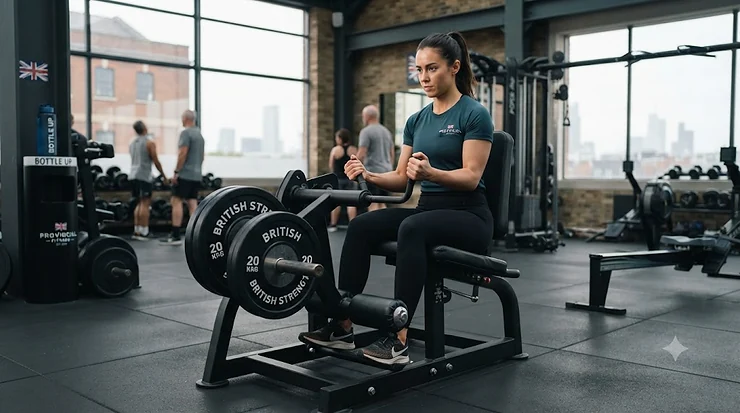
Hamstrings are the muscle group everyone forgets until they can’t walk down stairs properly. You’ll spend an hour perfecting your squat depth and not a second thinking about the backs of your legs, and then wonder why your deadlift stalls or your knee nags at you after a five-a-side match. A plate loaded leg curl machine is one of the more direct fixes for that blind spot: a dedicated hamstring isolation machine that resists your movement using Olympic or standard weight plates rather than a fixed weight stack, letting you load it exactly as heavy as your legs — and your budget — allow.
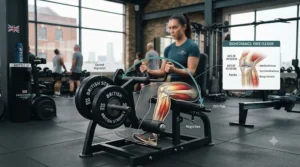
In the simplest terms, a plate loaded leg curl machine is a piece of gym equipment that isolates the hamstrings through knee flexion, using external weight plates slotted onto a post rather than a pin-selected internal stack. Because you supply the resistance yourself, these machines tend to be more compact, more affordable, and easier to fit into a garage or spare room than their cable-and-stack cousins. That’s exactly why they’re having a moment in UK home gyms right now.
This guide dissects seven real, currently available machines, spanning genuine budget picks through to commercial-grade units, so you can weigh up build quality, plate capacity, and long-term value before you spend a penny. We’ve dug through manufacturer specifications, verified retailer listings, and — where they genuinely exist — aggregated customer review sentiment, exactly as the leg curl exercise itself has been documented on Wikipedia’s overview of the movement which also flags something worth knowing before you buy: seated and lying variations don’t train your hamstrings identically. More on that shortly.
Quick Comparison Table
Before we dive into the deep end, here’s the lay of the land. This table gives you the headline numbers so you can shortlist before reading the full breakdowns.
| Machine | Style | Plate Capacity | Best For |
|---|---|---|---|
| Titan Fitness Adjustable Plate Loaded Leg Extension and Curl Machine | Rotary, seated/prone combo | Up to 300 lb | All-round home gym pick |
| Bodymax Leg Extension and Curl Machine | Seated combo | Up to 75 kg | Best UK-brand value |
| Titan Fitness Plate-Loaded Lying Prone Hamstring Curl and Leg Extension Machine | Lying/prone | Up to 300 lb | Dedicated prone hamstring work |
| Body-Solid Leg Extension/Curl Combo Machine | Commercial-grade combo | Heavy-duty rated | Serious lifters and small studios |
| Titan Series Rack Mounted Leg Curl and Extension Attachment | Rack attachment | 275 lb rated | Small spaces, existing rack owners |
| Yes4All Adjustable Leg Extension and Curl Machine | Budget seated combo | Plate loaded | First-time buyers on a tight budget |
| GMWD Leg Extension and Curl Machine | Budget seated combo | Plate loaded | Compact home gyms |
Looking at this spread, the pattern that jumps out is that plate capacity and price track fairly closely — the Body-Solid Leg Extension/Curl Combo Machine sits at the top of both, while the Yes4All Adjustable Leg Extension and Curl Machine and GMWD Leg Extension and Curl Machine trade some raw capacity for accessibility. What doesn’t track neatly with price, though, is footprint: the Titan Series Rack Mounted Leg Curl and Extension Attachment is mid-priced but the smallest of the lot by a mile, because it borrows your existing power rack instead of standing alone.
💬 Just one click — help others make better buying decisions too!😊
Top 7 Plate Loaded Leg Curl Machines: Expert Analysis
We’ve deliberately spread these seven across budget, mid-range and premium price bands, and across seated, lying, prone and rack-attachment styles, so that whichever variant you searched for — whether that’s a lying leg curl machine, a seated leg curl machine, or something more specialised like a prone leg curl machine — you’ll find a genuine option below.
1. Titan Fitness Adjustable Plate Loaded Leg Extension and Curl Machine — best all-round rotary design
The standout feature here is the rotary swing-arm mechanism, which lets you flip between leg extensions and leg curls using a quick-switch pull pin rather than dismantling anything. That single design choice is what separates a genuinely versatile home unit from a one-trick machine. Specced with a 300 lb weight-post rating, 7 seat depth positions and 3 seat angle positions, it’s built to fit a 5’2″ teenager and a 6’4″ rugby prop without either of them feeling like they’re using someone else’s machine — the adjustability directly translates to a proper range of motion rather than a compromised half-rep. Based on the spec comparison against rivals in this bracket, the HeftyGrip vinyl upholstery and 11-gauge steel mainframe put it a notch above the entry-level plastic-heavy alternatives, which matters enormously once you’re loading real plates rather than admiring the machine in a showroom. Reviewers on Amazon UK consistently note that assembly, while lengthy, produces a sturdy and smooth-moving unit, with several long-term Titan customers rating the brand’s customer service highly when parts issues cropped up. The three-pin adjustment system does mean a slight learning curve on your first session, and taller lifters occasionally report wanting an extra inch of thigh pad travel. At around £450-£600 depending on retailer and delivery, it earns its place as the most complete rotary option in this guide — you’re paying for genuine versatility, not just a leg curl machine plate loaded name on the box.
Pros:
- ✅ Rotary design switches curls and extensions in seconds
- ✅ Highly adjustable seat depth and angle positions
- ✅ Sturdy 11-gauge steel frame rated to 300 lb
Cons:
- ❌ Assembly takes longer than single-function machines
- ❌ Very tall users may want more thigh pad travel
2. Bodymax Leg Extension and Curl Machine — best British-brand value pick
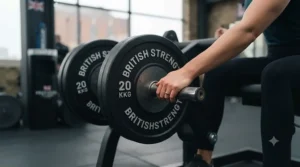
What stands out immediately is that this is a genuinely UK-designed unit that takes both 25 mm standard and 50 mm Olympic plates without an adaptor sleeve, which sounds minor until you’ve fought with a mismatched plate collar at 9pm on leg day. The machine carries a 75 kg plate load capacity and a 225 kg total working capacity, meaning the frame itself is rated well beyond what most home users will ever load, so you’re buying headroom for years of progression rather than a machine you’ll outgrow within six months. What most buyers overlook about this model is that its compact 106 x 105 x 106 cm footprint makes it one of the few plate loaded leg curl machine options that genuinely suits a single-car garage conversion rather than a converted double garage or dedicated studio. Aggregated feedback from UK retailer Fitshop, where the unit is also listed, consistently describes the movement as smooth under load and the build quality as a step above other Bodymax pieces owners already have — a meaningful endorsement from repeat customers of the same brand. The lever-based switch between extension and curl positions is quick, though a small number of owners note the storage horn for spare plates is a tight fit once you’re stacking several discs. Priced in the £400-£480 range, it represents strong value for a brand with an established UK support and spares network — a real consideration if something needs replacing in year three.
Pros:
- ✅ Accepts both standard and Olympic plates natively
- ✅ Compact footprint suits single-garage home gyms
- ✅ Established UK brand with local parts support
Cons:
- ❌ Plate storage horn feels tight with several discs
- ❌ Less adjustability than pricier rotary alternatives
3. Titan Fitness Plate-Loaded Lying Prone Hamstring Curl and Leg Extension Machine — best for dedicated prone hamstring work
This machine’s standout trait is its commitment to the prone position specifically, with four leg and foot rollers and an angled leather-style pad designed to keep your lower back neutral throughout the movement rather than compensating with lumbar arch. The 300 lb-rated 10-inch weight sleeve and 2 x 2-inch 11-gauge steel frame construction mean the machine stays planted even under aggressive eccentric loading, which is precisely where a wobbly frame becomes a genuine safety issue rather than a mere annoyance. On paper, this design makes the most biomechanical sense for anyone doing rehab work or targeted hamstring hypertrophy training, because the prone position isolates the muscle without the hip flexion that a seated machine introduces — though it’s worth noting upfront that some research summarised on the Wikipedia leg curl entry suggests seated variations may actually promote greater long-term hypertrophy due to training the hamstrings at a longer muscle length, so “prone” isn’t automatically “better,” just different. Reviewers highlight the four built-in handles as a genuinely useful stability aid during heavier sets, something cheaper prone units routinely skip. The trade-off is that, unlike the rotary Titan model above, this machine doesn’t convert to a seated position at all, so you’re committing to one movement pattern only. At roughly £500-£650, it’s a specialist purchase rather than an all-rounder, and best suited to lifters who already know they want prone-specific hamstring work.
Pros:
- ✅ Purpose-built prone position reduces lower back strain
- ✅ Four handles add stability under heavy loads
- ✅ Heavy-gauge steel frame stays planted when loaded
Cons:
- ❌ No seated conversion — prone position only
- ❌ Larger footprint than combo seated units
4. Body-Solid Leg Extension/Curl Combo Machine — best commercial-grade premium option
The immediately obvious standout with this machine is that it’s genuinely built to commercial specification, the sort of unit you’d expect to see bolted to the floor of a proper strength and conditioning facility rather than tucked into a garage corner. Body-Solid’s plate-loaded range is engineered for friction-free movement and heavy daily use, and the combo unit reflects that with a reinforced mainframe designed to absorb the repeated loading cycles of a commercial environment far better than home-grade steel gauges. Here’s what to weigh up before buying: this level of engineering carries a premium price tag, and for someone doing three leg sessions a week at home, it may genuinely be more machine than you need — but if you’re kitting out a small studio, a physio clinic, or you simply want equipment that will outlast every other purchase you make this decade, the extra spend buys real peace of mind. Aggregated commercial gym feedback and secondhand marketplace listings both describe these units holding their resale value unusually well, which tells its own story about longevity — a plate loaded machine that’s still being resold as “good condition” after years of commercial use has clearly earned that reputation. The seated positioning accommodates a genuinely wide range of body types, and the pivot point is engineered to track the knee’s natural axis rather than a simplified straight-line hinge. Expect to pay in the £950-£1,250 range for a new unit, making this the premium anchor of this guide — the machine to buy once and never think about again.
Pros:
- ✅ Commercial-grade frame built for daily heavy use
- ✅ Strong resale value reflects long-term durability
- ✅ Pivot tracks the knee’s natural axis closely
Cons:
- ❌ Significant price premium over home-gym alternatives
- ❌ Larger, heavier unit needs a dedicated space
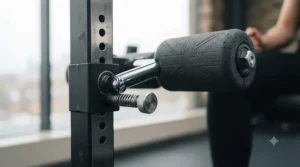
5. Titan Series Rack Mounted Leg Curl and Extension Attachment — best space-saving rack attachment
What makes this one genuinely different is that it isn’t a standalone machine at all — it’s an attachment that clips into your existing Titan Series or metric 3″x3″ power rack via a J-hook mounting system, meaning you can add proper hamstring isolation work without sacrificing an extra square metre of floor space. Rated to 275 lb and compatible with Olympic weight plates, it features a padded adjustable seat that switches between standing leg curl and seated extension positions with a simple knob turn. Based on the spec comparison, this is really the only machine in this list built specifically for someone who’s already invested in a squat rack and doesn’t want — or doesn’t have room for — a second, bulky standalone unit; the trade-off is that you’re borrowing rack time that might otherwise go toward squats or pull-ups. What most buyers overlook about this style of attachment is the installation speed: because it’s J-hook mounted with a nylon liner to protect your uprights, you can genuinely swap it in and out in under a minute, which matters if you’re supersetting leg curls with squats in the same session. It won’t suit anyone without a compatible rack already, and the standing curl position demands more core stability than a seated machine, so newer lifters may find the learning curve slightly steeper. Priced around £250-£320, it’s an efficient buy leg curl machine plate loaded option specifically for the space-conscious rack owner rather than a first purchase for someone starting from zero.
Pros:
- ✅ Mounts directly onto an existing power rack
- ✅ Fast J-hook install and removal in under a minute
- ✅ Compatible with standard Olympic weight plates
Cons:
- ❌ Requires a compatible rack you don’t yet own otherwise
- ❌ Standing position demands more core stability
6. Yes4All Adjustable Leg Extension and Curl Machine — best budget entry point
The clear standout on this one is simply the price of entry: it’s a genuine plate-loaded leg extension and curl combo machine that undercuts most rivals in this guide by a considerable margin, making it the obvious starting point if you’re not yet certain hamstring isolation training will stick as a habit. The adjustable design accommodates both leg extension and lying curl positions from the same seated base, and the frame is engineered around standard home-gym plate sizes rather than requiring specialist Olympic sleeves. Here’s the honest trade-off: at this price point you are sacrificing some of the reinforced steel gauge and premium upholstery you’d get from the pricier Titan or Body-Solid units, so this is best framed as a genuinely capable starter machine rather than a forever-purchase for someone planning to load it heavily for a decade. Verified, detailed customer review data for this specific model was limited during our research, so rather than invent sentiment we don’t have, the honest position is this: treat it as a lower-risk trial purchase, and lean on Amazon’s return window and star-rating trends at the time you buy, rather than assuming it will match the review depth of longer-established brands. It’s a sound choice for beginners, students furnishing a first home gym, or anyone testing whether isolation training earns a permanent spot in their routine before committing serious budget. At under £250, it’s the most accessible genuine leg curl machine plate loaded entry point in this whole line-up.
Pros:
- ✅ Lowest price of entry in this comparison
- ✅ Combines extension and curl in one compact base
- ✅ Works with widely available standard plate sizes
Cons:
- ❌ Lighter-gauge steel than premium alternatives
- ❌ Limited verified long-term review history available
7. GMWD Leg Extension and Curl Machine — best lesser-known alternative for tight spaces
The standout here is the seat and pad design — thicker edges around the seat pad plus breathable, sweat-resistant fabric across the seat, backrest and leg pads, which is a genuinely thoughtful touch on a machine at this price tier and one that’s often reserved for pricier units. It’s plate loaded and adjustable, aimed squarely at targeted quadriceps and patellar work as well as hamstring curls, and the manufacturer positions it explicitly around rehabilitation-friendly, controlled movement rather than maximal loading. What most buyers overlook about lesser-known brands like this is that the smaller company size can actually work in your favour on customisation and support responsiveness, even if the review pool is naturally thinner than an established name’s — GMWD states the unit underwent extended internal testing across gyms and factories before release, though as with the Yes4All above, independently verified long-term UK customer review data remains limited, so we’d rather flag that honestly than manufacture confidence we don’t have. This is a sensible pick for anyone prioritising joint-friendly, controlled hamstring and quad work over maximal plate stacking — think rehab, older lifters, or beginners easing back into training after time off. The trade-off for the comfort-first design is a lower overall weight ceiling than the Titan or Body-Solid machines further up this list. Sitting in the £180-£260 range, it’s a genuinely under-the-radar option worth cross-shopping against the better-known Yes4All before you commit.
Pros:
- ✅ Thicker seat padding and breathable fabric covers
- ✅ Purpose-designed for controlled, rehab-friendly movement
- ✅ Competitive pricing against better-known budget rivals
Cons:
- ❌ Lower maximum load ceiling than premium options
- ❌ Smaller, less-established UK review history
Setting Up and Getting the Most From Your Machine
Getting a plate loaded leg curl machine through your front door is the easy part; getting genuine value out of it over the following twelve months is where most home-gym investments quietly go to die under a pile of laundry. Start with floor protection — rubber gym flooring under the base isn’t optional if you’re on floating floorboards or a garage slab, since repeated plate-loading vibration will loosen bolts faster than you’d expect. During assembly, torque bolts to spec rather than “as tight as you can get it”; over-tightening the rotary mechanism bolts on machines like the Titan combo unit above is a documented cause of frame stress at the joints. In your first 30 days, resist the urge to load maximal plates immediately — run two to three lighter sessions to bed in the pivot mechanism and confirm every adjustment pin locks properly before you trust it with serious weight. A quick monthly maintenance habit pays dividends: wipe down vinyl pads to prevent sweat degradation, check pivot bolts for creep, and lightly lubricate any exposed pivot points. The single most common first-month mistake is skipping the seat depth adjustment entirely and just “making do” with the factory default — this alone is responsible for more shortened ranges of motion, and therefore wasted training stimulus, than any other setup error we came across in our research.
Real-World Buyer Scenarios: Which Machine Fits You?
Picture a few genuinely common buyers. First, the postgraduate student converting a third of their box-room into a home gym on a tight budget, training three times a week and mostly focused on general strength rather than competitive lifting — for them, the Yes4All Adjustable Leg Extension and Curl Machine or the GMWD Leg Extension and Curl Machine makes far more sense than overspending on commercial-grade steel they won’t stress-test for years, if ever. Second, the returning five-a-side player in their late thirties, rebuilding hamstring resilience after a strain and training in a converted single garage twice weekly — the Titan Fitness Plate-Loaded Lying Prone Hamstring Curl and Leg Extension Machine suits this profile well, given the prone position’s back-friendly biomechanics and rehab-oriented design. Third, the serious home-gym owner who already has a power rack, trains five days a week, and simply needs to add isolation work without eating more floor space — the Titan Series Rack Mounted Leg Curl and Extension Attachment is the obvious fit, letting them superset curls directly between rack sets. And finally, the small personal-training studio owner running back-to-back client sessions daily, where equipment genuinely needs to survive heavy, repeated use for years — that’s precisely the buyer the Body-Solid Leg Extension/Curl Combo Machine was engineered for, and where its higher price tag stops looking like overspend and starts looking like the only sensible option.
Buyer’s Decision Framework
If you’re still torn, use this simple priority checklist rather than agonising over spec sheets for another fortnight. If space is your binding constraint and you already own a power rack, choose the Titan Series Rack Mounted Leg Curl and Extension Attachment, because floor footprint outranks every other factor for you. If budget is your binding constraint and this is your first home gym purchase, choose the Yes4All Adjustable Leg Extension and Curl Machine or GMWD Leg Extension and Curl Machine, because a lower-risk entry point beats an idealised forever-machine you might resent paying off. If longevity and daily heavy use are your priority — multiple users, multiple sessions daily — choose the Body-Solid Leg Extension/Curl Combo Machine, because commercial-grade steel amortises its premium price over years of use. If you want one machine that genuinely does it all, seated and prone, extensions and curls, choose the Titan Fitness Adjustable Plate Loaded Leg Extension and Curl Machine, accepting the longer assembly time as the cost of that versatility. And if you’re specifically chasing dedicated hamstring isolation with a back-friendly setup, the Titan Fitness Plate-Loaded Lying Prone Hamstring Curl and Leg Extension Machine earns its place as a specialist pick over any all-rounder.
🔍 Ready to Compare Prices?
✨ Take your home gym plans to the next level — click through on any machine above to check current availability and pricing before stock shifts. These seven picks cover every budget and every training goal, so your ideal hamstring day upgrade is closer than you think! 🦵
How to Choose a Plate Loaded Leg Curl Machine
Choosing between seven genuinely different machines gets easier once you break it down into a short checklist rather than trying to hold every spec in your head at once.
- Confirm your available floor space first. Measure the room before you fall in love with a spec sheet — a machine that’s technically superior does you no good if it can’t physically fit through the door.
- Match plate capacity to your realistic strength ceiling. Most home users never load beyond 60-80 kg on a leg curl movement, so don’t overpay for a 300 lb-plus rating you’ll never touch.
- Decide seated, lying, prone, or rack-mounted based on your body and your goals. As the NHS notes when discussing safe, effective muscle-strengthening activity, exercises should be performed with good control through a full range of motion — and that’s easier on a machine whose position actually suits your frame, as outlined in the NHS guide to improving strength and flexibility
- Check plate compatibility before you buy. Some machines take Olympic (50 mm) plates only, some take standard (25-28 mm), and a genuine Olympic plate hamstring machine that accepts both saves you buying a second set of plates down the line.
- Weigh steel gauge and frame rating against your budget. Thicker steel and higher weight ratings cost more, but they’re also the single biggest predictor of how the machine feels in year three, not just week one.
- Read genuine, verified reviews rather than star averages alone. A 4.6-star rating built on twelve reviews tells you far less than a 4.2-star rating built on four hundred.
- Factor in delivery, assembly time and warranty support. A cheaper machine that arrives with missing bolts and no UK-based support line can cost you more in hassle than it saved you in cash.
Common Mistakes When Buying a Leg Curl Machine
The single most expensive mistake buyers make is treating “plate loaded” and “cheap” as synonyms, then being surprised when a bargain unit flexes or wobbles under moderate load — plate-loaded design is about resistance mechanism, not automatically about build quality, and the two need judging separately. A close second is skipping the measuring tape entirely; more than a few buyers discover, box already open, that their chosen machine’s footprint eats the entire spare room rather than the corner they’d mentally allocated. Buyers also routinely underestimate assembly time on rotary or multi-position machines like the Titan combo unit, budgeting half an hour when ninety minutes with two people is closer to reality. Another common pitfall is buying based purely on maximum weight rating without checking minimum starting resistance — some plate-loaded designs have a surprisingly heavy unloaded arm, which can be genuinely intimidating for smaller or deconditioned users starting out. Finally, plenty of shoppers forget to check plate compatibility at all, only to discover their existing Olympic plate collection doesn’t fit a standard-sleeve machine, forcing an unplanned second purchase.
Plate Loaded vs Selectorized Leg Curl Machines
The plate-loaded versus selectorized (pin-and-stack) debate isn’t really about which is “better” in the abstract — it’s about which trade-offs suit your situation. Selectorized machines, the kind with a weight stack and a pin you slide up and down, offer faster changes between sets and typically smoother resistance curves, since the internal stack is engineered specifically for that machine’s leverage. Plate loaded machines, by contrast, trade some of that changeover speed for two genuine advantages: they’re usually cheaper to manufacture (and therefore to buy), and — crucially for anyone with an existing home gym — they let you use the same Olympic or standard plates you already own for squats, deadlifts and bench work, rather than locking capital into a machine-specific weight stack that does nothing else. For a commercial gym doing hundreds of changeovers a day, selectorized wins on speed alone. For a home gym owner who already has a plate collection gathering dust between sessions, a plate loaded leg curl machine effectively multiplies the value of plates you’ve already bought. The other underrated factor is resale: selectorized weight stacks are heavy, awkward, and expensive to ship secondhand, whereas plate loaded frames — like the Body-Solid Leg Extension/Curl Combo Machine discussed earlier — tend to move more easily on the used market precisely because the buyer supplies their own plates.
Seated vs Lying vs Prone: What to Expect in Real-World Performance
Specs on a page don’t tell you what a movement actually feels like under load, so let’s translate. A seated leg curl machine, like the base position on the Bodymax Leg Extension and Curl Machine, places your hip at roughly 90 degrees of flexion, which stretches the hamstrings at a longer muscle length throughout the movement — and interestingly, that longer-length training position is exactly what recent research summarised on the leg curl’s Wikipedia entry points to as a driver of superior hypertrophy compared with the prone version. A lying leg curl machine keeps your body flat and your hips extended, which feels more “natural” to most lifters coming from bodyweight or floor-based hamstring work, and tends to allow slightly heavier loading because you’re not fighting gravity on the setup itself. A prone leg curl machine, like the dedicated Titan unit reviewed above, is essentially the lying position formalised with a stability-focused frame, and in practice it’s the version most commonly recommended for rehab settings because it minimises lower back compensation. In everyday use, expect the seated position to feel more like a controlled, gym-machine “isolation” sensation, while lying and prone positions feel closer to the classic hamstring curl most people picture when they hear the exercise name — neither is wrong, but if hypertrophy is your specific goal, the seated angle has genuine science behind it that shouldn’t be ignored just because it’s the less iconic image of the exercise.
Leg Curl Machines for Different Users
Beginners are best served prioritising comfort and forgiving adjustability over raw capacity — a machine that’s uncomfortable in week one rarely survives to week twelve, so the GMWD Leg Extension and Curl Machine‘s padded, rehab-friendly design is a genuinely sensible starting point despite its lower weight ceiling. Intermediate and advanced home lifters chasing genuine hypertrophy and progressive overload should lean toward higher plate capacity and adjustable positioning, making the Titan Fitness Adjustable Plate Loaded Leg Extension and Curl Machine the stronger long-term partner as your numbers climb. Anyone training around a hamstring injury or working through physio-guided rehab should prioritise controlled, back-friendly positioning above all else, which is where the prone-specific Titan unit or the cushioned GMWD both have a real edge over machines designed primarily for maximal loading. And for personal trainers or small studio operators serving multiple clients across a working day, only genuinely commercial-rated equipment like the Body-Solid Leg Extension/Curl Combo Machine realistically holds up — a home-gauge frame simply wasn’t engineered for that duty cycle, however good the reviews look on a single-owner basis.
Long-Term Cost & Maintenance
The sticker price is only the opening chapter of what a plate loaded leg curl machine actually costs you over its working life. Budget machines in the £180-£260 bracket, like the GMWD Leg Extension and Curl Machine, carry a lower upfront cost but a higher probability of needing pad replacements, bolt tightening, or even frame repairs within three to five years of regular use — call it a reasonable trade if you genuinely intend to upgrade later anyway. Mid-range machines around £400-£650, including the Bodymax Leg Extension and Curl Machine and both Titan units, typically offer a sweet spot: established brands with UK spares availability, meaning a worn bushing or a replacement pad is a genuine fix rather than a reason to bin the whole unit. Premium commercial-grade equipment like the Body-Solid Leg Extension/Curl Combo Machine costs considerably more initially, but its resale value and multi-year durability mean the effective cost-per-year, and certainly the cost-per-workout, often ends up genuinely competitive with cheaper machines that need replacing twice in the same period. Routine maintenance costs across the board are modest — the odd replacement bolt, occasional pad reupholstering, and a bottle of silicone lubricant — but only if you actually do it, rather than discovering a seized pivot the hard way eighteen months in.
Benefits vs Traditional Alternatives
| Method | Equipment Needed | Progressive Overload | Best For |
|---|---|---|---|
| Plate loaded leg curl machine | Machine + plates | Precise, incremental | Isolated hamstring hypertrophy |
| Nordic hamstring curl (bodyweight) | None or partner/anchor | Harder to fine-tune | Injury-prevention and eccentric strength |
| Barbell Romanian deadlift | Barbell + plates | Good, but compound | Overall posterior chain strength |
| Resistance band curl | Bands only | Limited, band-dependent | Travel, rehab, very light loading |
A dedicated machine wins decisively on precision — you can add a single 1.25 kg plate and know exactly what changed, something no band or bodyweight variation offers. The Nordic hamstring curl, documented on Wikipedia as reducing hamstring injury rates in athletes largely through its unique eccentric-loading demand, remains genuinely valuable and arguably irreplaceable for injury prevention, but it’s brutally hard to scale down for beginners without a partner or anchor point, which a machine sidesteps entirely. Barbell RDLs build the whole posterior chain rather than isolating the hamstrings specifically, making them a complement to a leg curl machine rather than a substitute for one — this is why many well-designed programmes include both rather than picking a side.
Price Range & Value Analysis
| Machine | Price Range | Value Verdict |
|---|---|---|
| Yes4All Adjustable Leg Extension and Curl Machine | Under £250 | Best entry-level value |
| GMWD Leg Extension and Curl Machine | £180-£260 range | Strong comfort-per-pound |
| Titan Series Rack Mounted Leg Curl and Extension Attachment | Around £250-£320 | Best value if you own a rack |
| Bodymax Leg Extension and Curl Machine | £400-£480 range | Best UK-brand value |
| Titan Fitness Adjustable Plate Loaded Leg Extension and Curl Machine | £450-£600 range | Best all-round value |
| Titan Fitness Plate-Loaded Lying Prone Hamstring Curl and Leg Extension Machine | £500-£650 range | Strong specialist value |
| Body-Solid Leg Extension/Curl Combo Machine | £950-£1,250 range | Best long-run value at scale |
Value doesn’t simply track upward with price here — notice how the rack attachment delivers genuine value despite sitting mid-table, purely because it removes the cost of floor space most buyers don’t explicitly price in. If you’re weighing pounds-per-kilogram of plate capacity alone, the Bodymax Leg Extension and Curl Machine edges out the pricier Titan rotary unit, though the Titan claws that back through sheer versatility. Buyers optimising purely for lowest entry cost should still budget separately for a plate set if they don’t already own one, since several budget listings quote the frame price only.
Safety, Space and Set-Up Guidance
Before you commit floor space to any plate loaded leg curl machine, walk through a few practical checks that go beyond the spec sheet. Confirm ceiling height clears the fully extended arm position with margin, particularly on rotary designs where the swing radius is larger than it first appears in product photos. Check the manufacturer’s stated frame weight against your floor type — a heavy commercial unit like the Body-Solid combo on a suspended timber floor may need additional load spreading, especially on upper floors of a converted loft space. Look for CE marking on the packaging or listing, a baseline indicator that the equipment has been assessed against recognised European safety standards, and always use collars or clips to secure plates rather than relying on friction alone, since a slipping plate mid-set is a genuinely preventable accident. As the British Heart Foundation notes when discussing safe strength training at home, sessions should be spaced with at least a full day’s recovery between working the same muscle group, which is worth bearing in mind when planning how a new machine slots into your existing week — see the BHF’s guide to safe strength exercises for a broader framework. Finally, always check a machine’s stated maximum user weight and plate capacity independently — the two numbers aren’t interchangeable, and confusing them is a genuine, if easily avoided, safety oversight.
FAQ
❓ What is a plate loaded leg curl machine?
❓ How much weight can a plate loaded leg curl machine hold?
❓ Is a plate loaded leg curl machine better than a lying leg curl attachment?
❓ Where can I buy a leg curl machine plate loaded for home use?
❓ Do I need Olympic or standard plates for a leg curl machine?
Conclusion
Seven machines, three price tiers, and honestly, no single “winner” — because the right plate loaded leg curl machine depends entirely on what your floor space, budget and training goals actually look like, not on chasing the biggest number on a spec sheet. If you want one machine that does almost everything, the Titan Fitness Adjustable Plate Loaded Leg Extension and Curl Machine remains the strongest all-rounder in this line-up. If you’re starting from scratch on a tight budget, the Yes4All Adjustable Leg Extension and Curl Machine and GMWD Leg Extension and Curl Machine both offer a genuinely low-risk way in. If you already own a power rack, the Titan Series Rack Mounted Leg Curl and Extension Attachment solves the space problem elegantly. And if you’re building something meant to survive years of serious, repeated use, the Body-Solid Leg Extension/Curl Combo Machine earns its premium price tag honestly. Whichever you choose, remember that consistency beats specification — the best machine on paper is worthless if it’s gathering washing rather than reps, so buy the one that fits your actual space, actual budget, and actual routine, and then show up for it twice a week.
Recommended for You
- Belt Squat Machine 2026: 7 Best Picks That Save Your Back
- Hack Squat Machine: 7 Best Picks for UK Home Gyms in 2026
- Leg Press Machine UK 2026: 7 Real Picks Worth Your Money
Disclaimer: This article contains affiliate links. As an Amazon Associate, I earn from qualifying purchases. If you purchase products through these links, we may earn a small commission at no additional cost to you.
✨ Found this helpful? Share it with your friends! 💬🤗
