In This Article
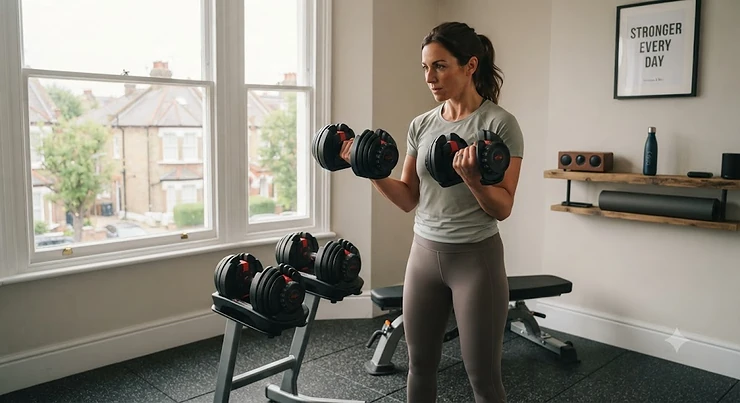
There’s a very specific moment every home-gym story starts with: standing in the spare room, looking at a patch of empty carpet, and thinking “right, I need some weights.” And then you open a shopping app and get hit with forty near-identical black rubber blobs, three different definitions of “adjustable,” and prices ranging from £15 to £400 for what looks, frankly, like the same lump of metal. A dumbbell is simply a pair (or several pairs) of handheld weights used for resistance training — either fixed at one weight each, or adjustable via plates, spinlock collars or a dial system so a single pair covers a whole range. Under £200, you genuinely don’t have to compromise on the fundamentals; you just have to know which fundamentals matter.
That £200 ceiling turns out to be a sweet spot, not a limitation. It’s roughly the point where cast iron spinlock sets, comfort-focused neoprene hex weights, and even genuine selectorised adjustable dumbbells all become realistic options — you’re choosing a type, not just settling for whatever’s cheapest. The trouble is that most “buying guide” content out there either pushes premium kit you don’t need or lists five nearly identical Amazon straps of weight with zero actual analysis. This guide does neither: seven real, currently available products, judged on genuine specs and aggregated review themes, plus the practical stuff nobody tells you — how weight increments actually affect beginner progress, how to store the things without your hallway turning into an obstacle course, and how to build a proper budget home gym setup around whichever set you land on.
Strength training itself isn’t a fad you need talking into — the NHS’s physical activity guidelines recommend adults do muscle-strengthening activity on at least two days a week as part of general physical activity, so whatever you buy here is going toward something genuinely worth doing.
Quick Comparison Table
| # | Product | Type | Max Weight (per hand) | Best For |
|---|---|---|---|---|
| 1 | Opti Vinyl Dumbbell and Barbell Set – 50kg | Spinlock vinyl | 25kg | Rock-bottom budget, total beginners |
| 2 | Amazon Basics Adjustable Dumbbell | Selectorised tray | ~11kg (25lb) | Simplest possible adjustable option |
| 3 | JLL 20kg Cast Iron Dumbbell & Barbell Set | Spinlock cast iron | 10kg | Best British-brand budget pick |
| 4 | PROIRON 30kg Cast Iron Adjustable Dumbbell Set | Spinlock cast iron | 15kg | Best value with barbell conversion |
| 5 | Yes4All Neoprene Hex Dumbbell Set with Rack | Fixed hex, includes rack | 8lb (3.6kg) | Beginners, comfort, built-in storage |
| 6 | Braingain Adjustable Dumbbells | Selectorised dial | 24kg | Best sub-£200 selectorised alternative |
| 7 | MuscleSquad Adjustable Dumbbells | Selectorised, compact | 27.5-32.5kg | Best space-saving, top of the budget |
Scan that table and the story is pretty clear: the wider the weight range, the more the mechanism costs. A basic spinlock system like the ones on the Opti or JLL sets is cheap because it’s simple — plates, a bar, a collar — but changing weight takes a minute of unscrewing. Selectorised sets like the Braingain and MuscleSquad push right up against the £200 ceiling because you’re paying for the internal mechanism that swaps weight in seconds, not for more metal. Based on the spec comparison, nobody here is getting a bad deal; they’re getting a different trade-off between price, convenience and total weight capacity, and the right answer depends entirely on how you plan to train.
💬 Just one click — help others make better buying decisions too!😊
Top 7 Dumbbell Sets Under £200: Expert Analysis
Every product below is real and currently available in the UK — no invented models. Prices are shown as ranges, since retail pricing shifts constantly; always check current pricing before buying.
1. Opti Vinyl Dumbbell and Barbell Set – 50kg — cheapest genuinely usable starter set
The standout feature here is blunt: at around £60 for a full 50kg spinlock set including a barbell bar, this is about as little as you can spend and still get a proper, expandable weight-training system rather than a token pair of 1kg hand weights. Sold through Argos, it includes vinyl-coated plates in a mix of sizes, two dumbbell bars, a longer barbell bar, and spinlock collars to secure everything.
The vinyl coating matters more than it sounds like it should — based on the spec comparison with cast iron alternatives, vinyl is quieter when plates knock together and kinder to laminate or wooden flooring, which counts for a lot in a shared house or a flat with downstairs neighbours. What most buyers overlook about this style of set is that the barbell conversion effectively doubles its usefulness for the same £60: the same plates that make two dumbbells can be threaded onto the longer bar for squats, rows, and floor presses. Reviewers consistently describe the set as excellent value for total beginners, with the main gripe being that spinlock collars can work loose mid-set if not tightened firmly before every use — a five-second check that avoids the problem entirely.
Pros:
- ✅ Genuinely cheap full weight-training system, not a token starter pack
- ✅ Vinyl coating is quieter and gentler on flooring than cast iron
- ✅ Converts between dumbbells and a barbell using the same plates
Cons:
- ❌ Spinlock collars need regular re-tightening to stay secure
- ❌ 25kg max per dumbbell will be outgrown by consistent lifters within months
Typically priced around £55-£65, this is the obvious starting point if you’re not yet sure whether home weight training is going to stick.
2. Amazon Basics Adjustable Dumbbell — simplest possible adjustable option
Amazon’s own budget line strips adjustable dumbbells down to the basics: a compact tray system holding several small plates, sold as a single unit (you need two for a proper pair), maxing out around 25lb (roughly 11kg) per side. The standout feature is genuine simplicity — there’s no dial, no complicated locking mechanism, just a straightforward tray-based adjustment that’s about as foolproof as this category gets.
Here’s what the spec sheet won’t spell out directly: an 11kg ceiling is genuinely low for anything beyond light toning, upper-body isolation work, or rehab-style training, so this is very much an entry-level pick rather than a long-term solution for anyone planning serious progressive overload. That said, based on the spec comparison with pricier selectorised sets, the trade-off is refreshingly honest — you’re not paying for a weight range you won’t use for months. Aggregated reviewer sentiment consistently praises the compact footprint and the “no fuss” adjustment mechanism, with several buyers specifically noting it as the cheapest way to try adjustable dumbbells before committing to a pricier system.
Pros:
- ✅ Very low price point for genuine adjustable functionality
- ✅ Compact tray design takes up minimal floor space
- ✅ Simple mechanism, nothing to learn or fiddle with
Cons:
- ❌ 11kg per side ceiling limits long-term progression
- ❌ Sold individually, so you need to buy two to make a pair
Sold in the £35-£50 per unit range (so budget for two), this suits anyone whose main goal is trying adjustable dumbbells cheaply rather than chasing serious strength numbers.
3. JLL 20kg Cast Iron Dumbbell & Barbell Set — best British-brand budget pick
JLL built its reputation as an established British fitness equipment brand, and this set is their answer to the classic starter question: solid cast iron plates (a mix of 0.5kg, 1.25kg and 2.5kg), two chrome-plated dumbbell bars, a connecting bar for barbell work, and spinlock collars with a hammertone finish that hides scuffs well over time.
What earns this set its place on the list is consistency rather than any single flashy feature — based on the spec comparison, the plate breakdown (particularly the inclusion of smaller 0.5kg increments) gives genuinely fine-grained progression that cheaper sets often skip in favour of chunkier 2.5kg-only jumps. Reviewers consistently rate this around 4.3 out of 5 across hundreds of ratings, with recurring praise for build quality that feels a notch above the price suggests, and the raised, wear-resistant numbering on each plate — a small detail that stops the classic problem of painted weight markings rubbing off within a year. A handful of buyers note the rubber grommets on the collars can perish slightly faster than the metal components, but that’s a cheap, easy part to replace rather than a reason to avoid the set.
Pros:
- ✅ Fine 0.5kg increments aid genuinely gradual progression
- ✅ Raised plate numbering won’t wear off like painted markings
- ✅ Established British brand with accessible customer support
Cons:
- ❌ 10kg per dumbbell ceiling suits beginners more than intermediates
- ❌ Rubber collar grommets wear faster than the metal hardware
Priced around £75-£85 at the time of research, this is a genuinely well-rounded budget pick, particularly for anyone who values a recognised brand behind a starter purchase.
4. PROIRON 30kg Cast Iron Adjustable Dumbbell Set — best value with barbell conversion
PROIRON’s standout feature is the sheer amount of kit for the money: two solid steel handles, a full spread of 0.5kg, 1.25kg and 2.5kg cast iron plates, four collars with a rubber O-ring anti-loosen design, and an extension tube that turns the pair into a genuine barbell capable of holding up to 33kg including bar weight.
Based on the spec comparison against the cheaper JLL and Opti sets, the extra £30-£40 buys real headroom: 15kg per dumbbell rather than 10kg, plus that rubber O-ring detail addressing the single most common complaint about spinlock systems generally — collars working loose mid-set. What most buyers overlook about the 20kg-versus-30kg choice PROIRON offers is that the price gap is small but the practical gap is large; the 20kg set caps out at 10kg per dumbbell, which most consistent beginners outgrow within three to six months, while the 30kg set’s 15kg-per-side ceiling buys meaningfully longer useful life for a relatively small extra outlay. Reviewers consistently highlight the professional-looking hammertone finish and chrome bars, and specifically call out that the anti-loosen collar design solves a problem they’d experienced with cheaper alternatives, though a few note they wouldn’t fully trust the extension bar loaded to its absolute maximum without a spotter present.
Pros:
- ✅ Rubber O-ring collar design genuinely reduces mid-set loosening
- ✅ 15kg per dumbbell ceiling gives longer useful life than 10kg rivals
- ✅ Barbell extension tube adds genuine versatility for the price
Cons:
- ❌ Weight changes still take 30-60 seconds of unscrewing plates
- ❌ Loading the barbell to its full 33kg needs care and ideally a spotter
Expect a price around £100-£120 depending on which of the two size options you choose — and PROIRON’s own sizing advice is worth following here: the 30kg set is the better buy for anyone planning to stick with training past the first few months.
5. Yes4All Neoprene Hex Dumbbell Set with Rack — best for beginners who want comfort and storage sorted
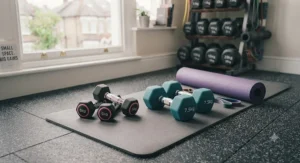
This set’s standout feature is that it solves two problems in one purchase: the dumbbells themselves (three pairs, at 3lb, 5lb and 8lb) come with a genuinely soft neoprene coating over a hexagonal, anti-roll head, and a compact rack is included specifically to keep them organised rather than rolling loose under the sofa.
For anyone newer to strength training, or training for general toning rather than heavy loading, the case here is straightforward. Based on the spec comparison, the neoprene coating is doing real work beyond comfort — it protects flooring from scratches and dents far better than bare cast iron, which matters enormously if the “home gym” in question is actually a corner of the living room. The hexagonal shape is a small design choice with an outsized practical benefit: dumbbells that don’t roll are dumbbells that don’t end up as a trip hazard halfway across the floor after a set. Aggregated review sentiment consistently praises the included rack for keeping the workout space genuinely tidy, and the range of three weights for supporting a sensible beginner progression across different exercises, though several reviewers note the top weight (8lb, around 3.6kg) will feel light fairly quickly for lower-body or compound movements.
Pros:
- ✅ Neoprene coating protects both hands and flooring
- ✅ Hexagonal anti-roll design prevents a genuine trip hazard
- ✅ Storage rack included, solving clutter from day one
Cons:
- ❌ Top weight of 8lb (3.6kg) is light for lower-body or compound work
- ❌ Fixed weights mean no progression beyond the three included pairs
Typically priced in the £30-£45 range, this is arguably the best all-in-one starter purchase on this list for anyone prioritising comfort, safety and tidiness over maximum load.
6. Braingain Adjustable Dumbbells — best sub-£200 selectorised alternative
Braingain is a smaller, less widely known fitness brand, but its standout feature has genuinely impressed independent reviewers: a selectorised dial system reaching 24kg per dumbbell, priced comfortably under £200, sitting in exactly the territory that premium brands like Bowflex occupy at nearer £250-£400 per pair.
This is precisely the product that answers a question a lot of budget-conscious buyers ask without quite phrasing it this way: “can I get Bowflex-style convenience without the Bowflex-style price?” Based on the spec comparison, the answer here is a genuine yes, with the trade-off being brand recognition rather than functionality — independent reviewers specifically noted a faultless adjusting mechanism during testing, which is the single component that makes or breaks a selectorised dumbbell, since a sticky or unreliable dial defeats the entire point of paying extra for one. What most buyers overlook about lesser-known selectorised brands is that the adjusting mechanism, not the branding, is what you’re actually paying the premium for compared with spinlock sets — and a 24kg top end comfortably covers most home strength-training needs for years, not months.
Pros:
- ✅ Genuine selectorised convenience at a meaningfully lower price than big brands
- ✅ 24kg per hand covers most home training needs long-term
- ✅ Independently reviewed adjusting mechanism performs reliably
Cons:
- ❌ Less brand recognition and support infrastructure than Bowflex or PowerBlock
- ❌ Sits near the top of the £200 budget, leaving little room for a bench
Priced under £200 for the pair, this is the set to consider if convenience matters more to you than a familiar logo.
7. MuscleSquad Adjustable Dumbbells — best space-saving pick at the top of the budget
MuscleSquad’s standout feature is genuinely impressive engineering: a compact selectorised design that packs 27.5kg to 32.5kg per hand (depending on the specific model) into a footprint as short as 42cm — noticeably shorter than most rival adjustable dumbbells at a similar weight range, which typically run closer to 50-55cm fully loaded.
That compactness isn’t just a nice-to-have. Based on the spec comparison, shorter dumbbells sit more naturally in the hand during pressing and rowing movements, where a longer adjustable dumbbell can feel unwieldy or knock against the body. Independent home-gym reviewers have specifically flagged MuscleSquad as the pick for tighter spaces, precisely because the compact design doesn’t come at the cost of a reduced weight range — you’re still getting genuine intermediate-to-advanced loading capacity, not a scaled-down “space-saving” compromise. Sitting right at the top of the £200 budget, this is very much the premium choice within this list rather than a true bargain, but the case for it is specific and genuine: anyone training in a box room, a shared flat, or anywhere floor space is at a premium gets meaningfully more usable weight per square foot than any other set here.
Pros:
- ✅ Genuinely compact 42cm footprint at full weight
- ✅ Reaches intermediate-to-advanced weight range, not just beginner loads
- ✅ Selectorised convenience without the bulkier length of rivals
Cons:
- ❌ Sits at the very top of the £200 budget, less room for accessories
- ❌ Overkill in weight range for genuine beginners just starting out
Priced around £190-£200 per pair, this is the set to stretch to if space is your binding constraint rather than price.
How to Choose the Best Dumbbell Set Under £200
What’s the best dumbbell set under £200 for most people? For most beginners building a first home gym, a cast iron spinlock set with fine increments — like the JLL or PROIRON options above — offers the best balance of progression, durability and price, leaving budget spare for a bench or mat.
Beyond that general answer, work through these steps:
- Decide fixed or adjustable first. Fixed sets (like the Yes4All) are simpler and safer for total beginners; adjustable sets (spinlock or selectorised) suit anyone expecting to get stronger within months rather than years.
- Check the actual top weight, not just the set name. “20kg set” usually means 10kg per hand, not 20kg per hand — a genuinely common point of confusion worth double-checking on every listing.
- Prioritise increment size for beginners. Sets offering 0.5kg or 1.25kg plates allow smoother progression than those jumping straight in 2.5kg or 5kg steps.
- Weigh convenience against cost. Selectorised systems change weight in seconds but cost more; spinlock systems are cheaper but take a minute or two to adjust between exercises.
- Factor in storage from day one. A set without a rack or case tends to end up scattered across the floor — decide where the weights will actually live before they arrive.
- Think about flooring and noise. Vinyl and neoprene coatings are quieter and gentler on floors than bare cast iron, which matters in flats and shared houses.
- Leave room in the £200 for a mat or bench if possible. A genuinely useful home gym setup often benefits more from a £30 bench addition than from squeezing out the last few kilograms of dumbbell capacity.
Weight Increments for Beginners Explained
Weight increments for beginners is one of those topics that sounds like a minor spec but quietly determines whether a set actually gets used in six months’ time. The core idea: smaller jumps between available weights let you increase load gradually as strength improves, rather than being stuck between “too easy” and “too hard” with nothing in between.
Here’s what the spec sheet won’t tell you plainly: a set that jumps straight from 5kg to 7.5kg to 10kg (2.5kg steps) can feel fine for larger compound movements like squats, but becomes a genuine obstacle for smaller isolation exercises — bicep curls or lateral raises — where a 2.5kg jump can represent a 30-50% increase in resistance for a smaller muscle group, which is a huge, uncomfortable leap rather than gradual progression. Sets with finer 0.5kg or 1.25kg plates, like the JLL and PROIRON options above, sidestep this problem entirely, letting you add small amounts of resistance as your muscles adapt rather than forcing an uncomfortable overshoot.
| Increment Size | Best Suited To | Found On |
|---|---|---|
| 0.5kg-1.25kg steps | Isolation moves, genuine beginners, rehab-style training | JLL, PROIRON |
| 2.5kg steps | Compound moves, intermediate lifters | Opti, most fixed hex sets |
| Selectorised (dial-based, varies) | Fast switching between exercise types | Braingain, MuscleSquad |
| Fixed pairs only | Simplicity over progression, general toning | Yes4All, Amazon Basics |
Reading across that table, the practical rule of thumb is this: the smaller the muscle group and the newer the lifter, the more finer increments matter. Someone doing heavy squats with a barbell conversion can tolerate 2.5kg jumps without issue; someone doing shoulder raises with a fresh set of dumbbells generally can’t, and will simply stop progressing — or worse, stop training altogether — if the next available weight feels like too big a leap.
Adjustable vs Fixed vs Cast Iron Dumbbell Sets: What’s the Difference
These three categories get used loosely in casual conversation, and untangling them properly makes shopping considerably easier. A fixed set — like the Yes4All — is exactly what it sounds like: each dumbbell is permanently one weight, so a “set” is really several pairs bundled together. It’s simple, safe, and has zero moving parts to fail, but progression means buying more dumbbells later rather than adjusting existing ones.
An adjustable set changes weight using either a spinlock system (plates you manually add or remove, secured with a collar, as on the JLL, PROIRON and Opti sets) or a selectorised system (a dial or pin mechanism that swaps internal plates automatically, as on the Braingain and MuscleSquad). Cast iron specifically refers to the plate material rather than the adjustment method — it’s simply the most common, durable, and budget-friendly metal used for weight plates, valued for its density (meaning more weight in a smaller size) over vinyl or neoprene-coated alternatives, which trade some density for quieter, floor-friendly coatings.
| Comparison | Fixed | Spinlock Adjustable | Selectorised Adjustable |
|---|---|---|---|
| Change speed | N/A (buy new pairs) | 30-90 seconds | 2-5 seconds |
| Typical price at this weight range | £30-£50 | £55-£120 | £160-£200 |
| Storage footprint | Larger (multiple pairs) | Compact | Very compact |
| Best for | Total beginners, toning | Budget progression | Fast-paced training |
Looking at that comparison, the practical takeaway is that fixed sets suit anyone unsure whether home training will stick, spinlock sets suit anyone confident they’ll progress but not fussed about switching weight mid-workout, and selectorised sets earn their higher price specifically for people doing supersets or circuit-style training where seconds between exercises actually matter.
Building a Home Gym Budget Setup: A Practical Usage Guide
A dumbbell set alone doesn’t make a home gym — it makes a pair of weights sitting in a corner. Building a genuine home gym budget setup around one of the sets above starts with floor protection: even vinyl or neoprene-coated weights benefit from a rubber gym mat underneath, both to protect flooring and to give a stable, non-slip surface for standing exercises.
For the first thirty days with a new set, the most common mistake is buying too much weight too soon — starting heavier than necessary “to save money later” often backfires, because poor form under too much load builds bad habits faster than it builds strength. The better approach with any of the adjustable sets above is to start conservatively, nail the movement pattern, then add weight incrementally as the numbered plates or dial settings allow. Maintenance is minimal: wipe down grips after sweaty sessions to stop rust forming on cast iron handles, check spinlock collars are snug before each session, and store weights somewhere dry rather than a damp garage or shed, since moisture is the single biggest threat to uncoated cast iron. Optimisation tricks worth knowing early include pairing your dumbbell set with a simple adjustable bench once budget allows — it unlocks presses, rows and step-ups that floor-only training simply can’t replicate — and keeping a basic log of weights and reps, since progressive overload is far easier to track than to remember.
Real-World Scenarios: Matching the Set to the Lifter
Consider three genuinely different starting points. First, a total beginner in their twenties working from a shared flat, wanting to start strength training without a big investment or commitment — for them, the Yes4All neoprene set with its included rack solves the two biggest early barriers (cost and clutter) in one purchase, and the fixed weights remove any temptation to jump straight to heavy loads before technique is solid.
Second, someone in their thirties who used to lift regularly at a gym and wants to rebuild a home routine around supersets and circuit-style training, where switching weight quickly between exercises genuinely matters — here, either the Braingain or MuscleSquad selectorised sets make far more sense than a spinlock set, because the time cost of unscrewing collars between every exercise adds up fast across a real session and can break workout flow.
Third, a budget-conscious student or someone testing the waters before committing serious money, wanting the broadest possible weight range for the lowest possible spend — the Opti 50kg vinyl set or the PROIRON 30kg set both deliver genuine progression headroom without threatening the whole £200 budget, leaving money spare for a mat, resistance bands, or a basic bench.
Dumbbell Storage Solutions That Don’t Cost a Fortune
Dumbbell storage is the part of this whole purchase that gets thought about last and causes the most day-to-day irritation. Left loose, weights end up under sofas, at the bottom of wardrobes, or — worse — as genuine trip hazards on a bedroom floor at 2am. A few of the sets above solve this from the outset: the Yes4All set ships with its own compact rack, which is a meaningful part of its value even before you factor in the dumbbells themselves.
For sets that don’t include storage, a dedicated dumbbell rack doesn’t need to be expensive or commercial-grade. JLL’s own RK200 two-tier rack, for example, is built to hold ten pairs of dumbbells and rated for genuinely heavy total loads, which is overkill for a single starter set but shows the kind of build quality available even at accessible prices if a household plans to expand its collection over time. For anyone not ready to buy a dedicated rack, a simple under-bed storage box, a sturdy shelf bracket, or even the original cardboard packaging (as several PROIRON reviewers mention doing) works perfectly well as an interim solution — the goal is simply getting weights off the floor and into one consistent, out-of-the-way spot, not necessarily buying specialist furniture on day one.
✨ Don’t Miss These Exclusive Deals!
🔍 Take your home gym setup to the next level with the carefully researched options above. Click through to check current pricing and availability — a properly chosen dumbbell set is a small purchase that pays off in every session that follows.
Common Mistakes When Buying a Budget Dumbbell Set
The single most common mistake is buying based on the advertised “set weight” rather than the actual per-hand weight — a “20kg set” is 10kg per dumbbell, and confusing the two leads to a genuinely underwhelming first workout. Close behind that is underestimating how quickly beginners outgrow low-ceiling sets; a 10kg-per-side maximum feels generous on day one and limiting within three to six months of consistent training, so it’s worth paying slightly more upfront for extra headroom where the budget allows.
A third common error is ignoring increment size in favour of raw top weight — a set that goes all the way to 20kg per hand but only in 5kg jumps can actually be harder to progress with day-to-day than a lower-ceiling set with 1.25kg steps. Fourth, buyers regularly skip floor protection entirely, assuming a mat is an optional extra rather than a genuine safety and flooring consideration, particularly with cast iron plates that can chip laminate or crack tiles if dropped. Finally, it’s easy to spend the entire £200 budget on the heaviest, most feature-packed dumbbells available and have nothing left over for a mat, gloves, or a bench — often a worse outcome for a genuinely useful home gym than a slightly lighter dumbbell set paired with one or two of those supporting extras.
Safety & Standards: What to Check Before You Buy
Free weights are simple objects, but a few safety basics are worth checking before you buy rather than after something goes wrong. First, always confirm the stated maximum user or equipment weight rating where relevant — spinlock bars and collars have their own load limits, and loading a barbell conversion beyond its rated maximum, as flagged by several PROIRON reviewers, is a genuine risk rather than overcaution. Second, check the collar or locking mechanism specifically, since a plate that comes loose mid-exercise is one of the more common causes of dropped-weight injuries in home settings — sets with rubber O-ring or anti-loosen designs, like PROIRON’s, are worth the small premium for this reason alone.
Third, think about your training surface: a hard floor with no matting increases both the risk of a dropped weight bouncing unpredictably and the risk of slipping mid-exercise, which is precisely why the British Heart Foundation’s home strength exercise advice emphasises slow, controlled movement and a stable stance throughout every rep. Finally, if you’re returning to exercise after a break, managing a health condition, or simply unsure where to start, checking the NHS’s guidance on strength exercises before ramping up load is a sensible, free first step — strength training is recommended for nearly everyone, but starting sensibly matters more than starting heavy.
Buyer’s Decision Framework
If you’re a genuine beginner unsure whether home training will stick, choose a fixed neoprene set like the Yes4All, because low commitment and built-in storage remove the two biggest early barriers to actually using it. If you want maximum weight range for minimum spend, choose the Opti 50kg set or the PROIRON 30kg set, because spinlock systems deliver the most kilograms per pound spent, even if changing weight takes a little longer. If speed between exercises matters — supersets, circuits, time-pressured sessions — choose a selectorised set like the Braingain or MuscleSquad, because the seconds saved per switch add up across a real workout. And if floor space is your binding constraint rather than budget, choose the MuscleSquad, because its compact footprint delivers more usable weight per square foot than anything else on this list.
Long-Term Cost & Maintenance
Treat a dumbbell set as durable equipment rather than a disposable purchase, and the cost-per-year math becomes genuinely favourable versus an ongoing gym membership. A £60 Opti set used consistently for three years works out at roughly £20 a year — a fraction of even a budget gym membership — while a £190 MuscleSquad set, expected to last considerably longer thanks to its more robust selectorised mechanism, can work out even cheaper annualised over a five-to-ten-year lifespan.
| Set Type | Typical Price Range | Expected Lifespan | Approx. Annual Cost |
|---|---|---|---|
| Fixed neoprene (Yes4All) | £30-£45 | 5+ years | £6-£9 |
| Spinlock vinyl (Opti) | £55-£65 | 3-5 years | £11-£22 |
| Spinlock cast iron (JLL, PROIRON) | £75-£120 | 5-10+ years | £8-£24 |
| Selectorised (Braingain, MuscleSquad) | £160-£200 | 8-15+ years | £13-£25 |
Reading across that table, cast iron spinlock sets come out as remarkably strong long-term value, since the plates themselves rarely wear out meaningfully — it’s usually the rubber grommets or collars that need occasional replacing, and those are cheap, small parts rather than reasons to replace the whole set. Selectorised sets cost more upfront but their internal mechanisms are generally built for heavy cycling, meaning the higher price buys genuine decade-plus durability rather than just convenience.
FAQ
❓ What weight dumbbell set should a total beginner buy?
❓ Is cast iron or vinyl better for a dumbbell set?
❓ Can I build a full home gym for under £200?
❓ How much space does a dumbbell set need?
❓ Do adjustable dumbbells wear out faster than fixed ones?
Conclusion
The honest takeaway from all this comparison is that “best” depends far more on how you plan to train than on which set has the most impressive-looking spec sheet. A fixed neoprene set like the Yes4All removes every barrier for a genuine beginner; a cast iron spinlock set like the JLL or PROIRON delivers the most progression headroom per pound spent; and a selectorised set like the Braingain or MuscleSquad earns its higher price specifically through speed and compactness, not through being inherently “better” weights.
None of these decisions need to be agonised over for weeks. Work out whether convenience or raw weight range matters more to you, check the actual per-hand maximum rather than the headline set weight, factor in somewhere to store the thing once it arrives, and leave a little of that £200 budget spare for a mat if you can. Get those basics right, and the specific brand becomes a much smaller decision than the endless listings would have you believe.
✨ Don’t Miss These Exclusive Deals!
🔍 Ready to build your setup? Check current pricing and availability on the dumbbell sets covered above, and get your home gym genuinely started rather than staying stuck on the “which one” question.
Recommended for You
- Plate Loaded Leg Extension Machine: 7 Best Picks for 2026
- Plate Loaded Leg Curl Machine: 7 Brilliant Picks for 2026
- Plate Loaded Leg Machine: 7 Best Picks Ranked for 2026 UK
Disclaimer: This article contains affiliate links. As an Amazon Associate, I earn from qualifying purchases. If you purchase products through these links, we may earn a small commission at no additional cost to you.
✨ Found this helpful? Share it with your friends! 💬🤗
