In This Article
There’s a moment early in most home-gym journeys where the penny drops: dumbbells aren’t just dumbbells. That set your gran had in the loft, the chrome ones your gym uses, the neon vinyl-coated pair from a big-box shop, and the black hexagonal weights lined up neatly at any serious training studio, they’re all doing different jobs, at wildly different price points, with wildly different consequences for your floor and your ankles.
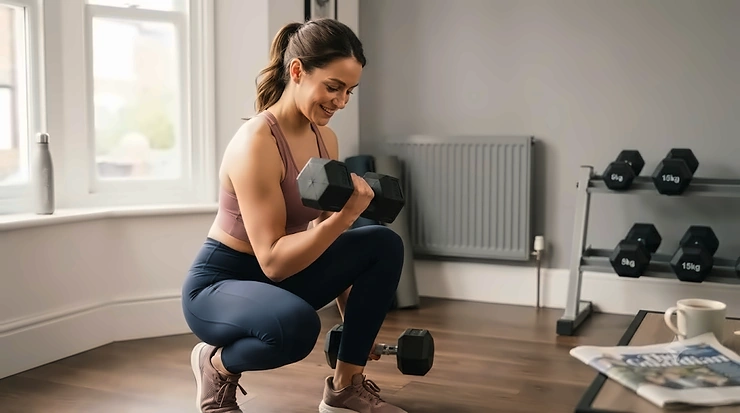
If you’ve landed here wanting to buy rubber hex dumbbells specifically, you’ve already made the sensible call. They don’t roll away mid-set, the rubber coating spares your floor and your furniture, and a well-made pair will genuinely outlast most other home-gym purchases you’ll make. Strength training with free weights is also one of the activities specifically named in the UK Chief Medical Officers’ physical activity guidelines, which recommend muscle-strengthening exercise for all major muscle groups at least twice a week. The harder question is which set, at which weight increments, and from which UK retailer, actually deserves your money.
This guide is built from real product research rather than a rewritten shopping list: manufacturer specs, verified owner reviews, and independent expert testing, all cross-checked so you get an honest picture rather than marketing copy. What is a rubber hex dumbbell? It’s a fixed-weight dumbbell with a cast iron core encased in moulded rubber, shaped into a hexagon so it can’t roll, designed to protect flooring, reduce noise, and offer a comfortable, consistent grip session after session.
Quick Comparison: 7 Rubber Hex Dumbbells At A Glance
| Set | Weight Range | Handle | Increments | Price Range | Best For |
|---|---|---|---|---|---|
| Mirafit Rubber Hex | 2.5kg-50kg | Knurled chrome | 2.5kg or 5kg sets | £15-£200+ per pair | Serious lifters wanting commercial feel |
| York Fitness Rubber Hex | 1.25kg-22.5kg | Knurled steel | Sold individually or in pairs | £15-£125 range | Trusted brand on a budget |
| Strongway Hex Set with Rack | 2.5kg-25kg | Knurled chrome | Full set with storage tree | £150-£300 range | All-in-one starter kit |
| HOMCOM Rubber Hex | 4kg-20kg | Knurled steel | Sold in pairs | Under £100 for most pairs | Lightest entry price |
| Gallant Rubber Encased Hex | 1kg-30kg | Knurled steel | Wide single-unit range | £10-£150 range | Buying odd/custom increments |
| PhysKcal Odourless Hex | 2.5kg-30kg | Knurled steel | Single or pair | £20-£180 range | Sensitive to rubber smell |
| Amazon Basics Rubber Hex | 1kg-22.5kg | Knurled steel | Sold individually | Under £90 per unit | Widest single-brand availability |
Looking at this table, the split is fairly clear: Mirafit and Strongway target buyers who want to build a proper long-term collection with a rack included, while HOMCOM, Gallant, PhysKcal and Amazon Basics suit people buying a single pair or two to start, without committing to a full weight ladder immediately. York Fitness sits comfortably in the middle, a household UK name with decades of credibility behind it and pricing that undercuts most rack-included bundles.
💬 Just one click — help others make better buying decisions too!😊
Top 7 Rubber Hex Dumbbells: Expert Analysis
1. Mirafit Rubber Hex Dumbbells — best for commercial-grade durability
Mirafit has built a loyal UK following over the years, and the reason becomes obvious once you handle a pair: the heads are moulded from natural rubber with genuinely thick chrome knurled handles, built to a standard that owners repeatedly describe as feeling closer to a commercial gym set than a home purchase.
Weights span 2.5kg right up to 50kg per dumbbell, available as single pairs or as full sets with a storage rack, and the rubber coating is dense enough to survive repeated floor drops without the head loosening from the bar, a common failure point on cheaper hex dumbbells. Based on the spec comparison against budget alternatives, the extra cost buys genuinely thicker rubber and a more securely bonded handle, which matters most if you’re training hard enough to occasionally drop weight rather than always setting it down gently.
Reviewers consistently note two things: the build quality is excellent and holds up for years, but a strong rubber odour on arrival is a very common complaint, caused by the silicone oil coating applied to preserve the rubber during shipping. A quick wipe-down with a damp cloth resolves this for most buyers within a day or two, though a handful of owners report the smell lingering longer than expected.
Pros:
- ✅ Commercial-grade rubber and knurled chrome handles
- ✅ Wide 2.5kg-50kg range covers beginner to advanced
- ✅ Industry-leading 30-day money-back guarantee
Cons:
- ❌ Strong rubber odour on first unboxing
- ❌ Pricier per kilo than several budget rivals
Prices vary widely by weight, from around £15 for the lightest pairs to £200 or more for heavier ones, so check current pricing for your specific increment before committing.
2. York Fitness Rubber Hex Dumbbells — trusted British brand at a fair price
York Fitness has been manufacturing weights and gym equipment for more than 80 years, and that heritage shows in the straightforward, no-nonsense design of their rubber hex range. Sold individually rather than only in matched pairs, they cover a genuinely wide span from 1.25kg through to 22.5kg, which makes building an oddly specific increment ladder considerably easier than brands that only sell fixed pairs.
What most buyers overlook about buying single units rather than pre-matched pairs is that it actually gives more flexibility for progressive overload training, where you might want one extra 1.25kg dumbbell rather than committing to a full new pair at the next increment. The knurled steel handle isn’t chrome-finished like the Mirafit range, but reviewers report it grips just as securely during sweaty sessions, and the rubber-encased head reliably prevents rolling and floor damage.
Aggregated review sentiment places York Fitness firmly in the “reliable and fairly priced, nothing flashy” category, with several buyers directly comparing it against Mirafit and noting the York units as the more budget-conscious choice for near-identical practical performance. The main criticism that surfaces is that at the very heaviest end of the range, availability can be patchy across UK retailers depending on stock.
Pros:
- ✅ 80-year-old British fitness brand with strong reputation
- ✅ Sold individually for flexible increment building
- ✅ Reliable rubber coating and rolling prevention
Cons:
- ❌ Heaviest weights occasionally out of stock
- ❌ Handle finish less premium than chrome rivals
Typical prices sit in the £15-£125 range depending on weight, with the 22.5kg single unit commonly found around £40-£50.
3. Strongway Hex Dumbbells Set With Storage Rack — best all-in-one starter kit
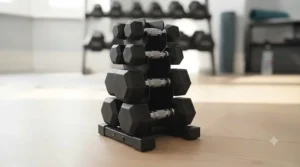
Buying loose pairs works fine if you already know your training plan, but many first-time buyers actually want the decision made simpler. The Strongway Hex Dumbbells Set bundles multiple pairs, typically spanning 2.5kg to 25kg, together with a compact storage tree rack, solving the “where do I even put these” problem before it becomes one.
Here’s what to weigh: buying a complete set is almost always cheaper per kilo than assembling the same range from individually purchased pairs, and the included rack keeps a spare room or garage corner genuinely tidy rather than becoming a trip hazard. The cast iron core is fully rubber-coated in the same style as the standalone brands above, so floor protection and noise reduction are comparable.
Reviewers consistently highlight the rack’s usefulness as the standout feature, describing it as sturdy enough to hold the full set without wobbling, though a few owners note that the rack itself takes up more floor space than expected in smaller rooms, so it’s worth measuring your intended spot before ordering. The spec sheet won’t tell you this, but user reports suggest the assembly of the rack is the fiddliest part of the whole purchase, typically taking 20-30 minutes with basic tools.
Pros:
- ✅ Complete weight range plus rack in one purchase
- ✅ Better value per kilo than buying pairs separately
- ✅ Keeps a home gym corner genuinely organised
Cons:
- ❌ Rack has a larger footprint than expected
- ❌ Rack assembly reported as slightly fiddly
Full sets with rack typically fall in the £150-£300 range depending on the weight span chosen, representing solid value against buying the equivalent pairs individually.
4. HOMCOM Rubber Hex Dumbbells — lightest entry price for casual training
Not everyone starting out needs a 30kg dumbbell on day one. HOMCOM‘s rubber hex range, typically sold in pairs from 4kg through to 20kg, targets exactly the buyer who wants to try structured strength training without a significant upfront outlay. The rubber-coated hexagonal heads follow the same anti-roll, floor-protecting design as the pricier brands on this list, just without the commercial-grade finishing touches.
Practically speaking, this means the HOMCOM range suits home users training two or three times a week with moderate weights, rather than serious lifters chasing heavy compound movements. The knurled handle grip is reported as adequate rather than exceptional, and several reviewers note the rubber has a noticeably softer feel compared to the denser compound used by premium brands, which some prefer for comfort during high-rep sets and others find less durable long-term.
What most buyers overlook about entry-level hex dumbbells generally is that for lighter weights, particularly under 10kg, the difference in build quality between budget and premium brands matters far less, since the forces involved in dropping or knocking a light dumbbell are considerably lower than with heavier pairs. The HOMCOM range reflects that logic reasonably well, delivering solid value specifically at the lighter end of its range.
Pros:
- ✅ Lowest typical price point on this list
- ✅ Well suited to lighter, moderate-frequency training
- ✅ Same anti-roll hex design as premium brands
Cons:
- ❌ Softer rubber compound than commercial-grade rivals
- ❌ Fewer heavy weight options above 20kg
Most pairs land under £100, with lighter pairs like the 2x4kg or 2x6kg often available for £25-£40.
5. Gallant Rubber Encased Cast Iron Hex Dumbbells — best for building a custom increment ladder
Gallant‘s rubber hex range stands out for sheer breadth: individually purchasable units spanning roughly 1kg through to 30kg, making it one of the more flexible options here for anyone wanting to fill very specific gaps in an existing collection rather than buying a fixed set. The cast iron core follows the standard hex dumbbell construction, encased in rubber and finished with a knurled steel handle for grip.
Reviewers consistently note that the single-unit purchasing model is the range’s biggest practical advantage, particularly for buyers who already own some weights and just need to bridge a gap, say a single 6kg unit to complement an existing 5kg and 8kg pair. Aggregated feedback on build quality places Gallant roughly on par with HOMCOM: solid and functional, without quite matching the density and knurl quality of Mirafit’s commercial-grade range.
Based on the spec comparison against similarly priced rivals, Gallant‘s main differentiator isn’t premium materials but genuine flexibility in how you buy. For households building a mixed-use free weight collection over time rather than all at once, that flexibility can meaningfully reduce total spend by avoiding duplicate weights that come bundled into fixed sets.
Pros:
- ✅ Very wide 1kg-30kg range sold individually
- ✅ Easy to fill specific gaps in an existing set
- ✅ Standard hex anti-roll design and rubber protection
Cons:
- ❌ Handle knurling less aggressive than premium rivals
- ❌ No official rack or storage bundle available
Prices scale with weight from around £10 for the lightest units up to roughly £150 for the heaviest, generally competitive against similarly specced rivals.
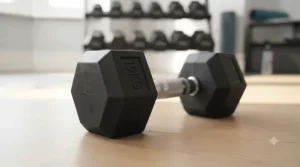
6. PhysKcal Odourless Poly Rubber Hex Dumbbells — best for sensitivity to rubber smell
If the strong rubber odour reported across several other brands on this list sounds like a dealbreaker, particularly relevant for anyone training in a smaller flat or bedroom-based home gym, PhysKcal‘s range addresses that specific complaint head-on. Using a poly rubber compound marketed specifically as low-odour, the heads still deliver the same anti-roll hexagonal shape and floor protection as standard rubber compounds, spanning roughly 2.5kg to 30kg.
Here’s what to weigh: odourless or low-odour rubber compounds are typically achieved through a different manufacturing process than standard SBR rubber, and reviewers report the difference is genuinely noticeable, without the sometimes overpowering smell that leads other-brand buyers to leave dumbbells airing out in a garage for days before first use. This makes PhysKcal a sensible pick specifically for shared living spaces, home offices doubling as gym corners, or anyone with a sensitivity to strong chemical smells.
The trade-off, based on aggregated owner feedback, is that the poly rubber compound is a newer entrant compared to the decades-proven SBR rubber used by Mirafit and York Fitness, so long-term durability data over five-plus years of heavy use is less established. Early reviews are positive on grip feel and anti-roll performance, with no widespread reports of premature wear so far.
Pros:
- ✅ Genuinely low-odour rubber compound
- ✅ Suits shared or smaller living spaces
- ✅ Sold as single units or pairs for flexibility
Cons:
- ❌ Less long-term durability data than established brands
- ❌ Slightly pricier than equivalent standard-rubber units
Expect to pay in the £20-£180 range depending on weight, sitting roughly on par with mid-range rivals despite the specialised compound.
7. Amazon Basics Rubber Hex Dumbbell — widest single-brand availability
There’s a reason Amazon Basics dumbbells appear so consistently in comparison guides: straightforward specs, dependable stock levels, and a cast iron core with rubber coating that does exactly what’s promised without unnecessary extras. Sold as individual units from roughly 1kg through to 22.5kg, the textured, contoured handle is specifically designed to maintain grip through high-rep sets, and the hexagonal shape reliably prevents rolling on both hard floors and gym mats.
What most buyers overlook about the Amazon Basics range is that because it’s sold and fulfilled directly through Amazon rather than a smaller specialist retailer, returns and replacements tend to be considerably more straightforward if a unit arrives damaged or doesn’t match the listing. Reviewers frequently mention this practical convenience alongside consistently solid build quality for the price bracket.
Based on the spec comparison against branded fitness-specific competitors like York Fitness or Gallant, the Amazon Basics range doesn’t claim any standout premium feature, no odourless compound, no rack bundle, no commercial-grade density, but it consistently delivers reliable mid-range performance with fewer stock availability issues than smaller UK brands, which matters if you’re trying to complete a full increment ladder without weeks of waiting for restocks.
Pros:
- ✅ Consistently available stock across most weights
- ✅ Straightforward Amazon returns process
- ✅ Textured contoured handle for secure grip
Cons:
- ❌ No standout premium feature over rivals
- ❌ Sold individually only, no set bundles
Typical single-unit prices sit under £90 for most weights, making it a dependable mid-range default when a specific brand isn’t a priority.
Rubber Hex Dumbbells Price: What You’re Actually Paying For
Price per kilogram is the most useful way to compare rubber hex dumbbells fairly, since a single heavy pair will always cost more in total than a light one regardless of build quality. As a rough UK benchmark, budget brands like HOMCOM and Amazon Basics typically land around £3-£4.50 per kilo, mid-range brands like Gallant and PhysKcal sit closer to £4-£5.50 per kilo, and premium brands like Mirafit and York Fitness commonly reach £5-£7 per kilo at the heavier end, where the extra rubber density and handle quality matter most.
What most buyers overlook about this pricing structure is that the price-per-kilo gap narrows considerably at lighter weights, since the manufacturing cost difference on a 4kg pair is small regardless of brand, but widens noticeably above 15-20kg per dumbbell, where premium rubber compounds and thicker knurled steel genuinely cost more to produce. If your training plan realistically tops out under 15kg per hand, a budget brand delivers close to the same practical experience as a premium one. Above that, the extra investment in a brand like Mirafit becomes easier to justify through improved longevity under repeated heavy use.
Practical Setup Guide: Getting Your Dumbbells Ready
New rubber hex dumbbells almost universally arrive with a thin coating of preservative silicone oil on the rubber, applied during manufacturing to prevent cracking during storage and transport. Wipe every unit down with a damp cloth and mild detergent before first use; this single step resolves the majority of the “strong smell” complaints reported across nearly every brand reviewed above, and typically only takes a few minutes per pair.
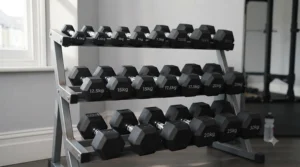
Storage matters more than most first-time buyers expect. Leaving dumbbells scattered across a floor is a genuine trip hazard and also means they’re never sitting flat, which can very gradually distort a wooden handle sleeve over years of pressure on one edge. A basic dumbbell rack, whether a dedicated purchase or a simple shelf unit, keeps weights organised, visible, and easy to grab mid-superset without hunting through a pile.
In the first 30 days, resist the temptation to jump straight to your heaviest comfortable weight for every exercise. Grip strength and wrist stability typically lag behind the muscles you’re actually training, particularly for pressing and overhead movements, so building up gradually across a few sessions reduces the risk of early strain. The UK Health and Safety Executive’s guidance on safe manual handling technique, while written for workplace lifting, offers genuinely useful principles for home training too: keep the load close to your body, avoid twisting while lifting, and don’t attempt to lift more than feels comfortably manageable.
Real-World Scenarios: Which Set Actually Suits You
Three realistic buyer profiles help translate specs into an actual decision. The complete beginner starting a home strength routine with no existing equipment is best served by a Strongway or similar all-in-one set with rack, since it removes the guesswork around increments and storage in a single purchase, typically covering everything needed for the first six to twelve months of progressive training.
The intermediate lifter who already owns a few pairs and wants to fill specific gaps, say a 6kg or 9kg unit missing from an existing ladder, is better served by York Fitness, Gallant, or Amazon Basics, all of which sell individual units rather than forcing a full pair or set purchase. Finally, the flat or apartment dweller training in a shared or noise-sensitive space should prioritise PhysKcal‘s low-odour compound alongside proper floor protection underneath, since rubber smell and impact noise are the two most common complaints from neighbours or housemates in these situations.
Rubber Hex Dumbbells vs Vinyl-Coated Dumbbells
| Factor | Rubber Hex Dumbbells | Vinyl-Coated Dumbbells |
|---|---|---|
| Core material | Cast iron, dense | Concrete or sand-filled |
| Floor protection | Excellent | Moderate |
| Anti-roll shape | Yes, hexagonal | Rarely, usually round |
| Durability | High, lasts years | Lower, coating can crack |
| Typical weight range | Wide, 1kg-50kg+ | Narrow, usually under 10kg |
| Best for | Serious progressive training | Light toning, beginners |
The core difference comes down to what’s inside. Rubber hex dumbbells use a dense cast iron core, which keeps the physical size of the weight relatively compact even at higher loads, while vinyl-coated dumbbells typically use cheaper concrete or sand fill, meaning a 5kg vinyl dumbbell is often noticeably bulkier than a 5kg rubber hex equivalent. For anyone planning to progress much beyond light toning work, the hexagonal anti-roll shape and superior floor protection of rubber hex dumbbells like the Mirafit or York Fitness ranges make them the more sensible long-term purchase, even though vinyl-coated pairs are often slightly cheaper at the very lightest weights.
Hex Dumbbell Weight Increments: How To Choose
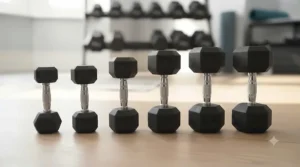
- Start with your realistic starting weight, not your goal weight. Most beginners overestimate; a comfortable starting point for many exercises sits between 4kg and 10kg per hand.
- Plan for 2.5kg increments if you’re serious about progression. Jumping from 10kg to 15kg in one step is a large percentage increase; 2.5kg steps, as offered by Mirafit and Strongway sets, allow smoother progressive overload.
- Buy individual units rather than fixed pairs if your budget is tight. Brands like York Fitness, Gallant, and Amazon Basics let you add one unit at a time rather than committing to a full new pair.
- Consider your heaviest realistic compound lift. Goblet squats and Romanian deadlifts typically need heavier dumbbells than curls or lateral raises, so plan your top-end weight around your biggest movement.
- Don’t ignore the middle of your range. Many buyers overspend on very light and very heavy pairs while skipping the 10-15kg middle ground that gets used most often across a typical session.
- Factor in storage from the start. A wide increment range without a rack or dedicated shelf quickly becomes a cluttered, trip-hazard floor pile.
- Check whether your chosen brand sells single units or only pairs. This materially affects how cheaply and precisely you can fill gaps later.
Common Mistakes When Buying Rubber Hex Dumbbells
The most frequent mistake is buying too narrow a weight range upfront, then needing to purchase again within months as strength improves. A slightly wider initial range, even if it costs a little more, is almost always better value than buying twice. A close second is ignoring floor protection entirely, assuming the rubber coating on the dumbbells alone is sufficient, when in reality a 20kg dumbbell dropped from height still transmits significant force through even rubber-coated heads into an unprotected floor beneath.
Buyers also commonly underestimate storage needs, ordering a full weight ladder without a rack or shelving plan, which typically results in dumbbells scattered across a floor within weeks. Another overlooked detail is handle diameter: heavier dumbbells, generally above 20kg, often use a thicker handle than lighter pairs, which some buyers with smaller hands find noticeably harder to grip securely, so checking handle diameter specifically for heavier purchases is worth the extra few minutes of research.
Finally, some buyers assume all rubber hex dumbbells are functionally identical and simply buy on price alone, when the differences in rubber density, handle knurling quality, and head-to-bar bonding genuinely affect both comfort and long-term durability, particularly once training moves beyond light, occasional use into a regular weekly habit.
Floor Protection For Dumbbells: What Actually Works
Rubber hex dumbbells protect floors far better than round cast iron or chrome dumbbells, but they don’t eliminate the need for dedicated flooring, particularly for anyone training with heavier weights or dropping dumbbells between sets. According to UK gym flooring specialists’ buying guidance, interlocking rubber tiles between 15mm and 20mm thick are widely recommended as the sweet spot for home setups combining dumbbells with general strength training, handling most realistic training scenarios while balancing cost against protection.
For context on the forces involved, a 20kg dumbbell dropped from around 1.2 metres hits the floor with roughly 240 joules of energy; 15mm rubber flooring can reduce peak transmitted force by 60-70%, protecting both the subfloor beneath and the dumbbells themselves from repeated impact damage. Thinner options, such as 6-10mm mats, suit lighter dumbbell work and general movement but aren’t rated for heavier weights or intentional drops. At the other end, anyone training with dumbbells above 25-30kg per hand, or doing dynamic movements where drops are likely, should look toward 25-30mm flooring for genuinely adequate impact absorption.
Budget-wise, a typical home gym corner of around 4-6 square metres can be covered with quality 15-20mm interlocking rubber tiles for roughly £150-£300, a sensible companion purchase alongside a mid-range or premium dumbbell set. It’s also worth noting that rubber flooring, like new dumbbells, often carries a noticeable smell on arrival that fades with ventilation over a week or two.
Home Gym Flooring: A Practical Buying Guide
Choosing home gym flooring alongside your dumbbells comes down to three main decisions: material, thickness, and installation format. Rubber, whether SBR (styrene-butadiene rubber) or the higher-grade EPDM compound, consistently outperforms foam or carpet for a dumbbell-focused home gym, offering better impact absorption, noise reduction, and long-term durability, with a realistic lifespan of 15-20 years under normal home use.
Interlocking tiles, typically sold in 500mm or 1m squares, are the most popular DIY-friendly format, connecting via jigsaw-style edges without requiring adhesive, which also means the flooring can be lifted and taken with you if you move house. Rolled rubber flooring is a reasonable alternative for larger, uninterrupted spaces, though it’s heavier and more awkward to install without help. For most dumbbell-focused home gyms combining free weights with occasional cardio equipment, 15-20mm rubber tiles strike the right balance between protection and cost, while dedicated deadlift or Olympic lifting platforms genuinely warrant 30mm or thicker flooring given the far higher impact forces involved.
Before installing any flooring, check your subfloor is clean, dry, and reasonably level; a spirit level check for dips over 5mm is a sensible five-minute step that prevents tiles rocking or shifting once weighted. New tiles also benefit from 24-48 hours acclimatising in the room before fitting, allowing the rubber to settle to room temperature and reducing the chance of gaps appearing at the seams later.
Long-Term Cost & Maintenance
Rubber hex dumbbells are, refreshingly, one of the lowest-maintenance pieces of home gym equipment you can buy. There’s no motor to service, no belt to replace, and no consumable parts, the entire ongoing cost is essentially zero once the initial silicone oil coating is cleaned off. A well-made pair from Mirafit or York Fitness, stored properly and kept away from excessive damp, can realistically last decades rather than years.
The real long-term cost consideration is less about the dumbbells themselves and more about the total home gym setup around them. Factor in a rack or storage solution, appropriate flooring, and the very real possibility of buying additional increments as strength improves, and the true total cost of ownership sits meaningfully higher than the price of the first pair alone. Budgeting for this from the outset, rather than treating each purchase as a separate, unplanned expense, tends to result in a more coherent and cost-effective home gym over time.
Features That Actually Matter (And Those That Don’t)
Rubber density, handle knurling quality, and head-to-bar bonding strength genuinely affect your day-to-day experience and long-term durability, and are worth prioritising when comparing brands. A wide, flexible weight range, particularly the option to buy individual units rather than only fixed pairs, matters enormously for anyone building a collection gradually rather than all at once.
What matters considerably less than marketing copy suggests: cosmetic colour coding beyond basic weight labelling, since most buyers memorise their own increments within a few sessions regardless; branded storage bags or cases bundled with lighter sets, which rarely see practical use once a proper rack is in place; and claims of “gym quality” on budget sets, a phrase used so broadly across nearly every brand that it carries little genuine comparative meaning without checking actual specs.
Buyer’s Decision Framework
If you’re a complete beginner wanting the simplest possible start, choose the Strongway all-in-one set because it removes every decision except which weight range to select. If you value a trusted British brand at fair pricing, choose York Fitness for its reputation and flexible single-unit purchasing. If your budget is the overriding priority and you’re training with lighter weights, choose HOMCOM or Amazon Basics. If you’re building a custom increment ladder around existing equipment, choose Gallant for its wide individually purchasable range. If rubber smell is a genuine concern in a shared or small space, choose PhysKcal. If you want the most durable, commercial-grade option and plan to train heavy for years, choose Mirafit.
FAQ
❓ How much do rubber hex dumbbells cost in the UK?
❓ What weight increments should I buy first?
❓ Do rubber hex dumbbells protect floors on their own?
❓ Why do new rubber dumbbells smell strongly when they arrive?
❓ Is it cheaper to buy a dumbbell set or individual pairs?
Conclusion
Buying rubber hex dumbbells ultimately comes down to matching the set to your actual training stage, not the biggest range you can find. Beginners setting up a home gym from scratch get the smoothest start with an all-in-one bundle like Strongway‘s rack set. Buyers wanting a trusted, flexible brand should look to York Fitness or Gallant, both of which sell individual units for precise increment building. Tight budgets are well served by HOMCOM or Amazon Basics, while anyone training in a shared or noise-sensitive space should weigh up PhysKcal‘s low-odour compound. For serious, long-term training, Mirafit‘s commercial-grade build remains the standout.
Whichever set you choose, pair it with proper flooring underneath and a sensible storage plan from day one, both genuinely extend the life of your dumbbells and keep your training space safe. Following the UK’s NHS strength training guidance for adults, which recommends muscle-strengthening activity at least twice a week alongside your regular cardio, a well-chosen set of rubber hex dumbbells is genuinely one of the most versatile purchases you can make for a home gym.
Recommended for You
- Plate Loaded Leg Extension Machine: 7 Best Picks for 2026
- Plate Loaded Leg Curl Machine: 7 Brilliant Picks for 2026
- Plate Loaded Leg Machine: 7 Best Picks Ranked for 2026 UK
Disclaimer: This article contains affiliate links. As an Amazon Associate, I earn from qualifying purchases. If you purchase products through these links, we may earn a small commission at no additional cost to you.
✨ Found this helpful? Share it with your friends! 💬🤗
